
Here is a piece of knowledge that could genuinely matter one day, and that most American travelers never think about until the worst possible moment. The emergency number burned into your instincts, 911, is not the number to call in Europe. If you find yourself in trouble in Paris or Rome or a quiet village in Spain and you dial 911 out of habit, you may not reach help. What you want instead is three different digits, 112, the single emergency number that works across the whole of Europe, and it is worth knowing cold before you ever need it. The reassuring news is that 112 is remarkably well designed, free, and easy to use, and once you understand what it is and what happens when you call it, one of the quiet anxieties of traveling abroad simply lifts. It is one of those pieces of knowledge that weighs nothing to carry and would be worth a great deal in the one moment you ever needed it, which is the best kind of thing to tuck away before a trip.
What follows is what 112 actually is, whether your instinct to dial 911 will save you anyway, why the number is so cleverly built, what actually happens when you call, and how to be ready before you travel.
The One Number to Know
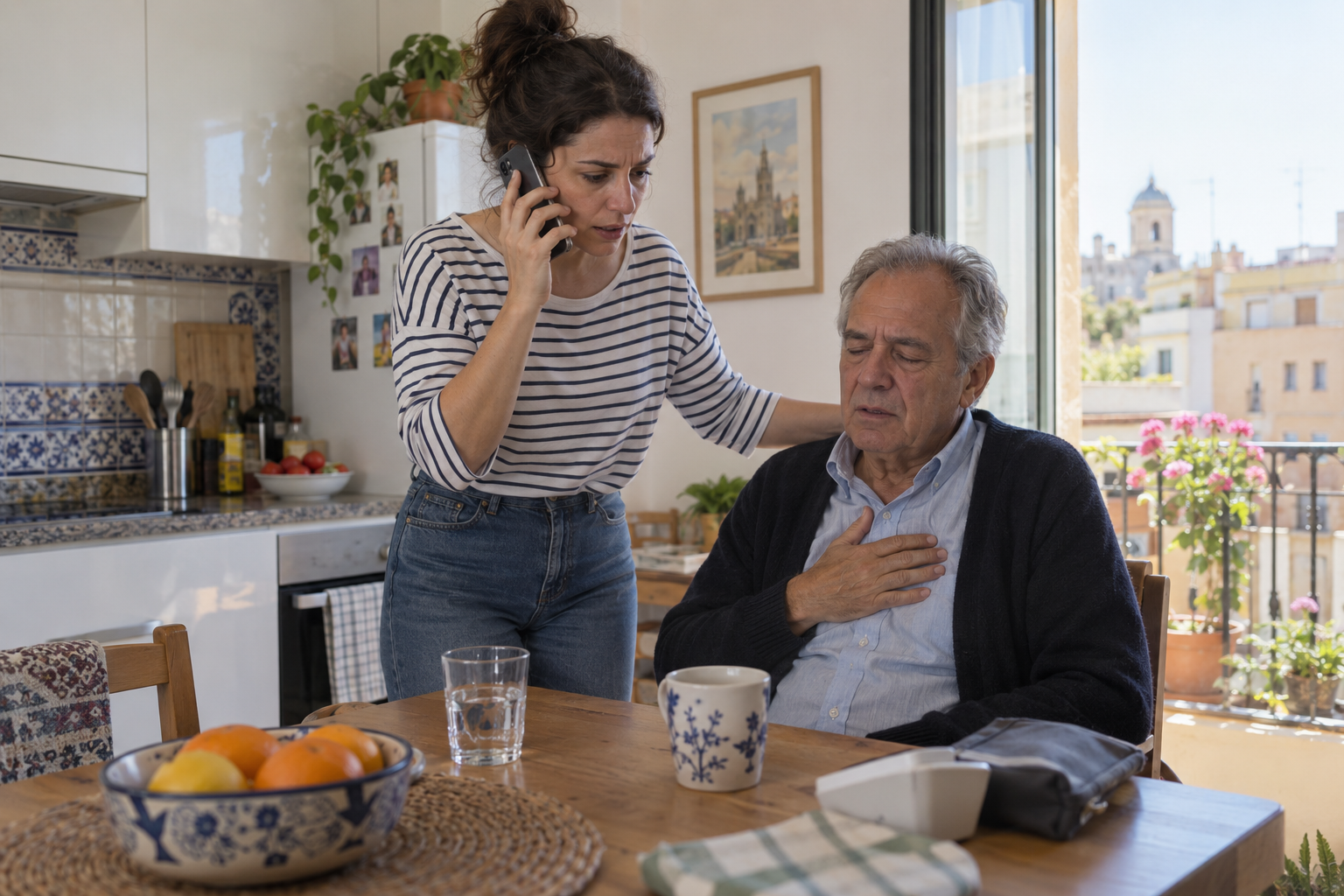
The single most useful thing to fix in your memory is the number itself: 112. It is the common emergency number across the entire European Union, all twenty-seven member states, and it works in many other European countries too, including the United Kingdom, Switzerland, Norway, and Iceland, as well as a long list of nations beyond Europe. It was introduced back in 1991 for a simple, sensible reason, that as people travelled more between European countries, relying on a different emergency number in each one created dangerous confusion in exactly the moments when confusion is most costly. Someone in real trouble a few hours’ drive across a border should not have to remember a whole new set of digits, and before 112 that is exactly what the patchwork of national numbers demanded of them. One number for the whole continent solves that.
It is a rare example of a genuinely good, genuinely simple idea that a great many countries agreed to adopt together, and it has quietly saved untold trouble for travelers ever since. Not every piece of cross-border cooperation works so cleanly, which is part of why this one is worth appreciating. The countries kept their old national numbers too, so nothing was taken away, but everyone gained a single shared line that any visitor could rely on. It is cooperation at its most practical, invisible until the day it matters.
Dial 112 anywhere it operates and you reach emergency services, the operator connecting you to police, ambulance, or fire depending on what you need.
That is the whole point of it, a single, memorable number that means help across dozens of countries, so you never have to stand in a crisis trying to recall whether the local police number is different from the fire number or where you even are. For an American abroad, replacing the deeply ingrained 911 with 112 is the single most important travel-safety fact to carry, more useful than any amount of general worry, because it turns a moment of panic into a simple, known action. In a real emergency the mind narrows and old reflexes take over, which is exactly why the number has to be learned in advance rather than reasoned out on the spot, since there is no reasoning to be done when adrenaline has taken the wheel. Learn the three digits, and you have done the most important part. Everything else about calling for help in Europe is detail; the number itself is the one thing you cannot look up in the middle of a crisis, so it is the one thing to know cold. Fumbling to search for an emergency number while an emergency is actually happening is precisely the scenario the whole single-number system was designed to prevent, and it only works if the number is already in your head.
Will Dialing 911 Save You Anyway
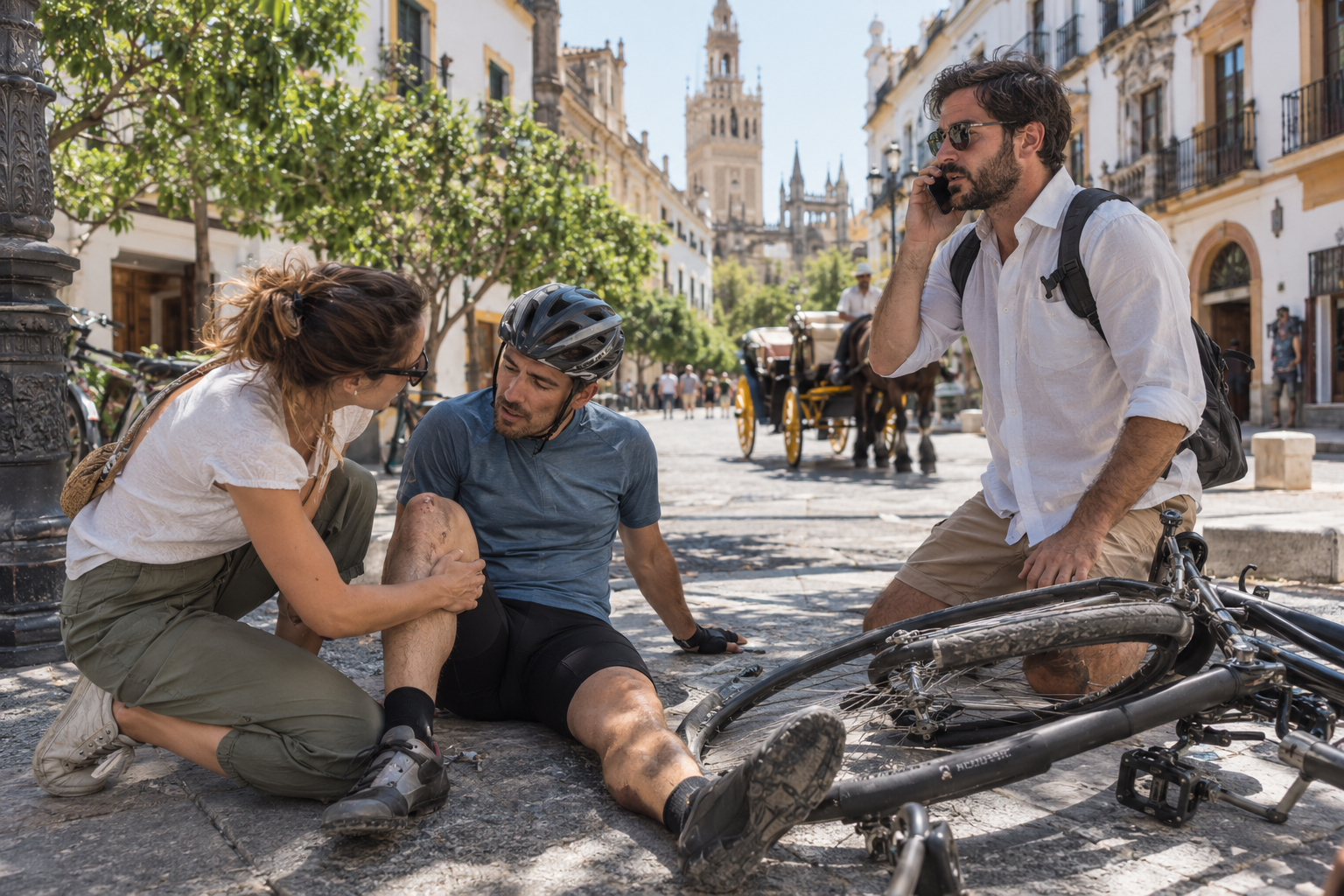
There is a comforting wrinkle worth understanding, because modern phones are cleverer than they used to be. Many current smartphones are built to recognize the common emergency numbers of the world, so that if an American dials 911 while standing in Europe, the phone may quietly route the call to the local emergency service anyway, and likewise dialing 112 in the United States often connects you to 911. This is a genuine safety net, and it means an instinctive 911 in a European crisis is not guaranteed to fail. It is a sensible bit of engineering, built precisely because phone makers know that people fall back on the number they grew up with when they are frightened, and it has quietly rescued plenty of travelers who never knew about 112 at all.
But, and this is the important part, it is a backup, not something to rely on. Whether that automatic redirection works depends on your phone, your carrier, the network, and the country, and none of that is anything you want to be gambling on in an actual emergency. The sensible approach is simple: learn 112 as your deliberate, primary choice for Europe, and treat any 911 redirect as a lucky fallback rather than the plan.
You would not set out to drive in a foreign country trusting that the car would somehow correct your mistakes, and the same logic applies here: know the right thing to do, and let the technology’s cleverness be a bonus rather than a crutch. The few seconds it takes to fix 112 in your mind before a trip removes the entire question, so you never have to hope your phone is smart enough to save you. Know the right number, and you do not need the safety net at all. Relying on your phone to guess correctly in a crisis is a strange bet to make when the alternative is simply memorizing three digits, and the whole appeal of 112 is that it removes the guesswork entirely.
Why 112 Is So Cleverly Built
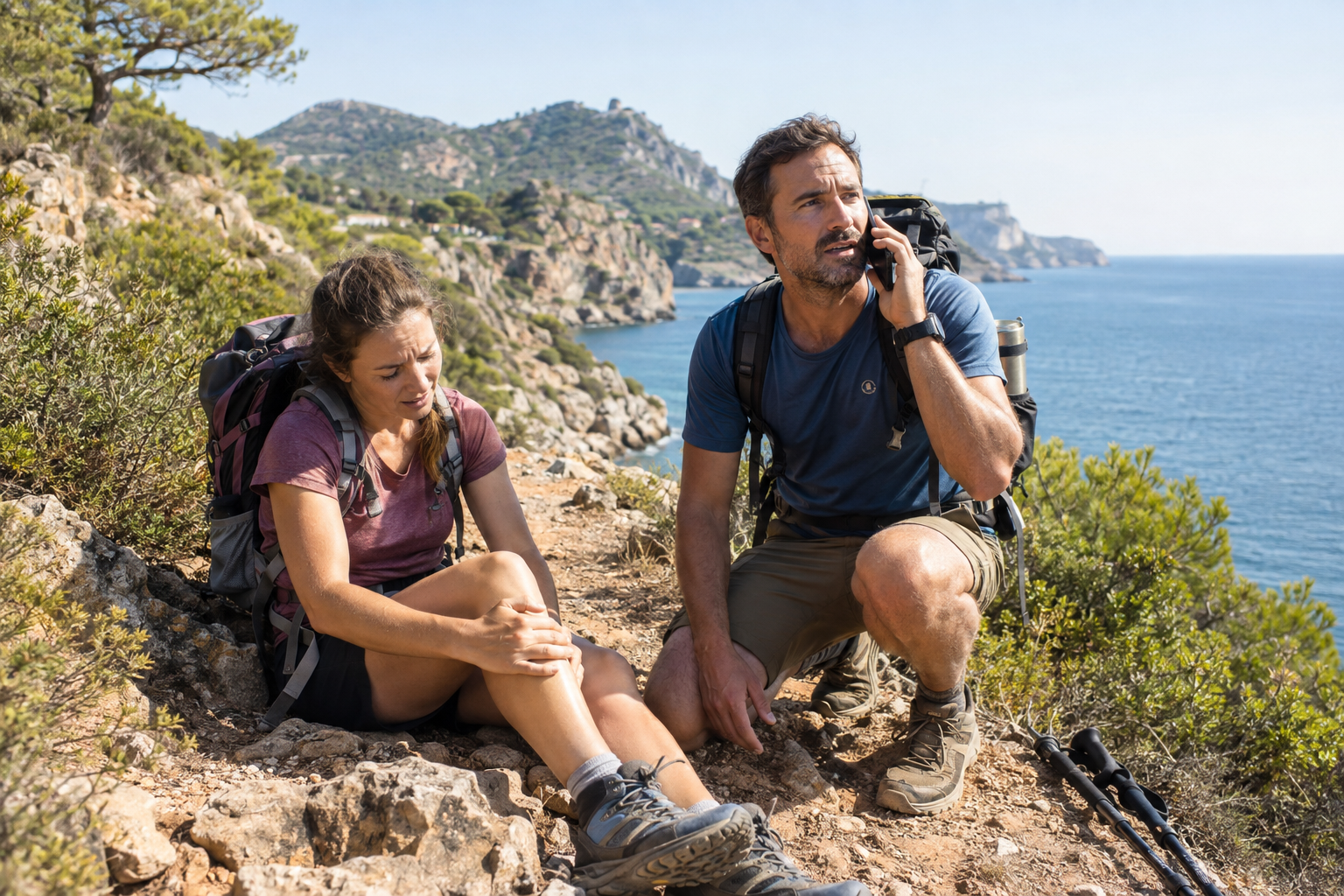
What makes 112 genuinely impressive is how much thought has gone into making it work when everything else has gone wrong. To begin with, it is always free, from any phone, mobile or landline or payphone, and European law flatly forbids charging anyone for an emergency call, even when you are roaming in a country far from home. Cost is never a reason to hesitate, and it is worth saying plainly because the fear of a huge roaming charge does stop some travelers from making calls abroad. That fear has no place here, since an emergency call to 112 cannot cost you anything, roaming or not.
More striking is how it works around the usual barriers. The designers clearly assumed the worst about the phone in your hand, and built around every failure they could imagine. You can dial 112 from a phone with a locked screen, using the emergency call option that appears without unlocking the device, and you can reach it even with no credit on your account.
Perhaps most reassuring for a traveler, if your own mobile provider has no coverage where you are standing, your phone will connect the 112 call over any available network it can find, so a signal from any carrier at all is enough to reach help. In most European countries you can even call without a SIM card in the phone at all, though a few, such as Germany, do still require one, so it is not quite universal. Taken together, these features mean 112 is designed to get through in precisely the degraded, stressful, far-from-home conditions in which an emergency tends to happen, which is exactly when you need it to.
A great deal of careful thought clearly went into imagining the worst moments, the dead phone, the foreign network, the locked screen, the panic, and building a number that still works through all of them.
What Actually Happens When You Call
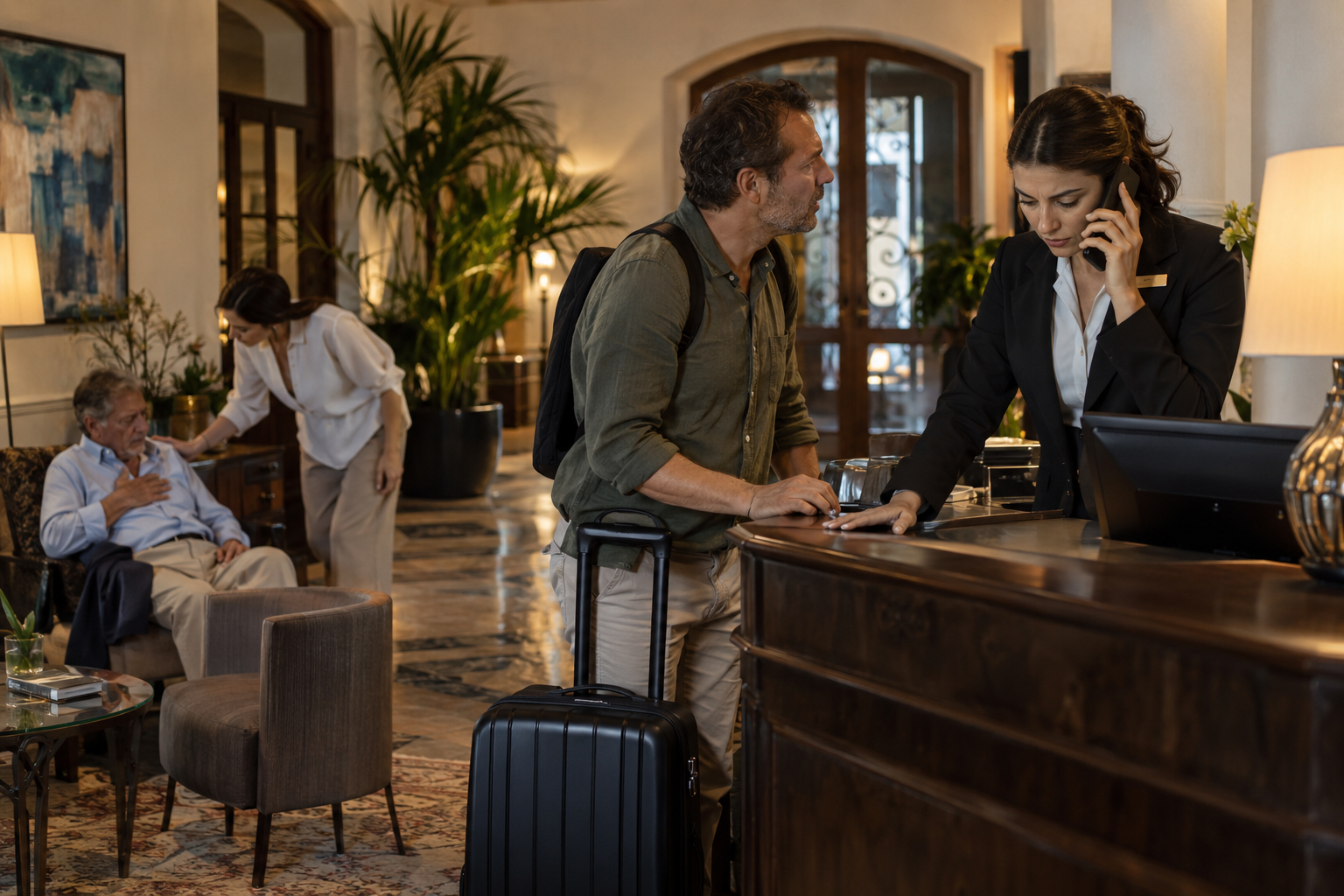
Knowing what to expect on the line takes away much of the fear of dialing, so it is worth walking through. When your call connects, a trained operator answers and, rather than expecting you to know which service you need, asks you questions to work out whether to send police, an ambulance, or the fire brigade, and then routes you accordingly. You do not have to diagnose the situation yourself, only describe it. This takes a real weight off, because in a frightening moment the last thing you want is to be forced to decide whether a situation is a matter for the police or the paramedics; you simply say what is wrong, and a trained person makes that call for you. Their whole job is to translate a panicked description into the right response, so your only task is to speak.
The language worry, which stops many travelers from imagining they could ever call, is largely unfounded. Operators naturally speak the local language, but there is at least one English speaker on duty in every country’s system, and in tourist areas English help is routine, so you are far more likely to be understood than you fear, and the operators are practised at drawing the essential facts out of frightened, fumbling callers who share no common language. Your location matters enormously in an emergency, and here too the system is built to help, since European rules require that your phone’s location be sent to the dispatch center when you call, drawn from the network and, on modern phones, from GPS, so they can find you even if you cannot name exactly where you are.
The single most important thing to do, once you are connected, is to stay calm and stay on the line, giving your location and the nature of the emergency as clearly as you can and not hanging up until the operator tells you to, because they can keep help coming and even guide you through what to do while it arrives.
When to Actually Use It
It helps to be clear about what 112 is for, so that you neither hesitate when you should call nor tie up the line when you should not. The number is for genuine emergencies, situations where someone’s life, health, or safety is at immediate risk, or a crime is happening in front of you. A serious accident, a person collapsing or badly hurt, a fire, a violent incident, someone in the water, a break-in in progress, these are exactly the moments 112 exists for, and in any of them you should call without a second thought and let the operator sort out which service to send.
What it is not for is the everyday problem that feels urgent but is not truly an emergency, the kind of thing that rattles you but threatens no one’s safety.
Travelers sometimes reach for the emergency line out of stress or unfamiliarity when what they really need is a police station, a pharmacy, or a phone call to their hotel or embassy. A stolen wallet discovered after the fact, a noise complaint, a lost passport, a minor issue that can wait, these are better handled through non-emergency police lines or your embassy or hotel, since flooding the emergency line with non-emergencies can slow help to someone whose life genuinely depends on it. The honest guide is simple: if there is real and immediate danger to life, health, or safety, call 112 at once and never worry that you are overreacting, because the operators would far rather take a call that turns out to be minor than have you hesitate in a real crisis. Hesitation, not overreaction, is the mistake that actually costs people, and no trained dispatcher will ever scold you for calling about something that mattered to you in the moment. When it is not that, look for the local non-emergency options instead. And if you are ever genuinely unsure whether your situation qualifies, err toward calling, describe what is happening, and let the trained person on the other end make that judgment, which is precisely their job.
Being Ready Before You Travel
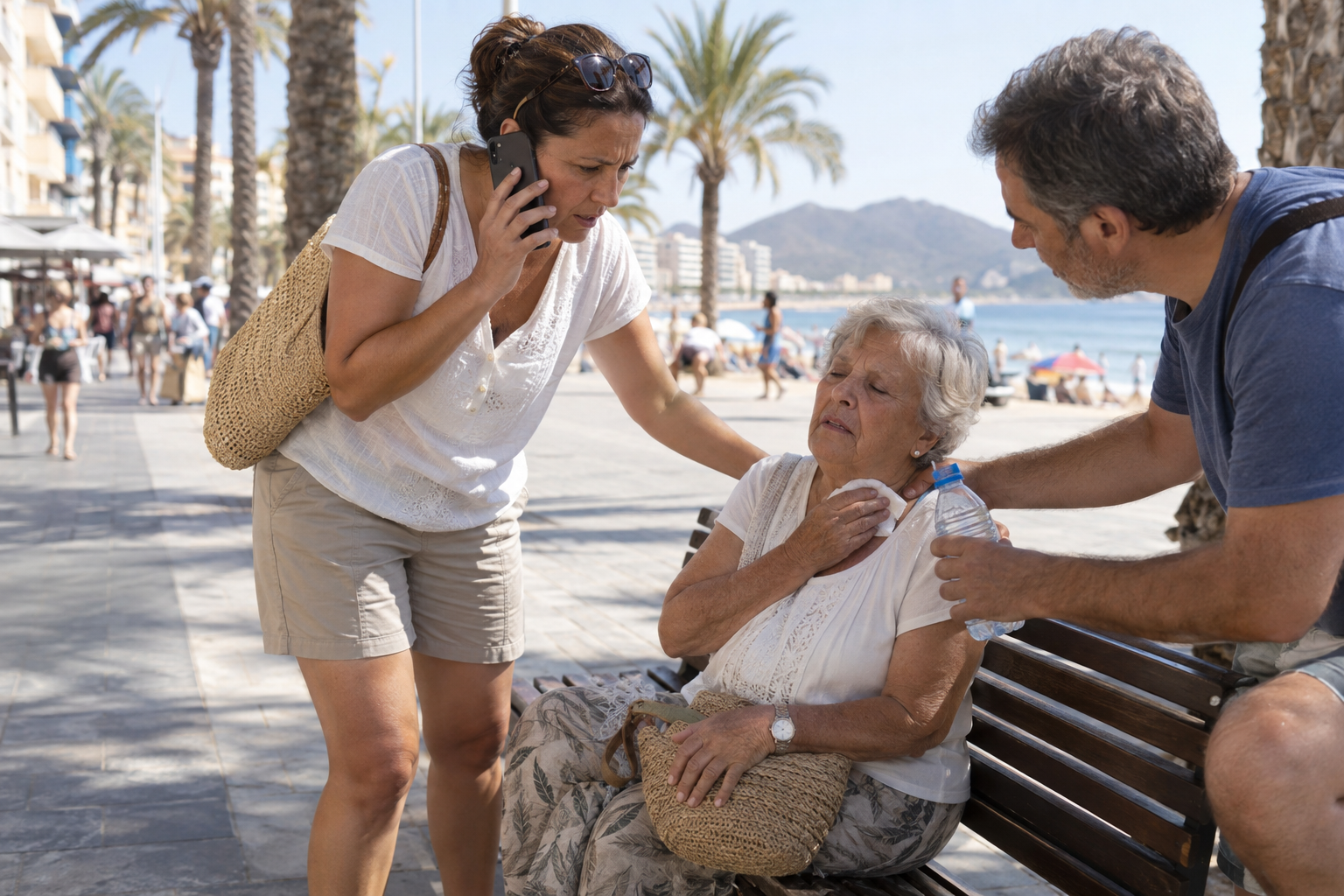
The whole point of knowing this in advance is that an emergency is the worst possible time to be learning it, so a few minutes of preparation before a trip pays off out of all proportion. The main task is simply to commit the number to memory, to make 112 as automatic for your time in Europe as 911 is at home, perhaps by saying it to yourself a few times or noting it somewhere you will see it. That single act covers the vast majority of what you need, since the number is the one irreplaceable piece. The rest is helpful context that you can look up at leisure, but the digits themselves have to be ready before the moment arrives.
Beyond the number itself, a little context helps.
It is worth knowing that the United Kingdom and Ireland also accept their traditional 999 alongside 112, so both work there, a small redundancy that means you cannot really go wrong in either country. It is a reminder that the old national numbers mostly still function, and 112 sits alongside them rather than replacing them.
Once you leave Europe the number changes again, with the United States on 911, Japan splitting police and ambulance across different numbers, and Australia on triple zero.
So it is always worth a quick check of the local emergency number for wherever you are headed. A thirty-second search before a trip settles it, and many travelers simply save the local number in their phone alongside their hotel and their airline. It is a tiny task with an outsized payoff, and one easily done from your sofa before you go.
If you are driving, it is also good to know that European motorways have orange emergency phones spaced along them that connect straight to help and automatically reveal your location, often a better bet than a mobile call when you do not know exactly where you are.
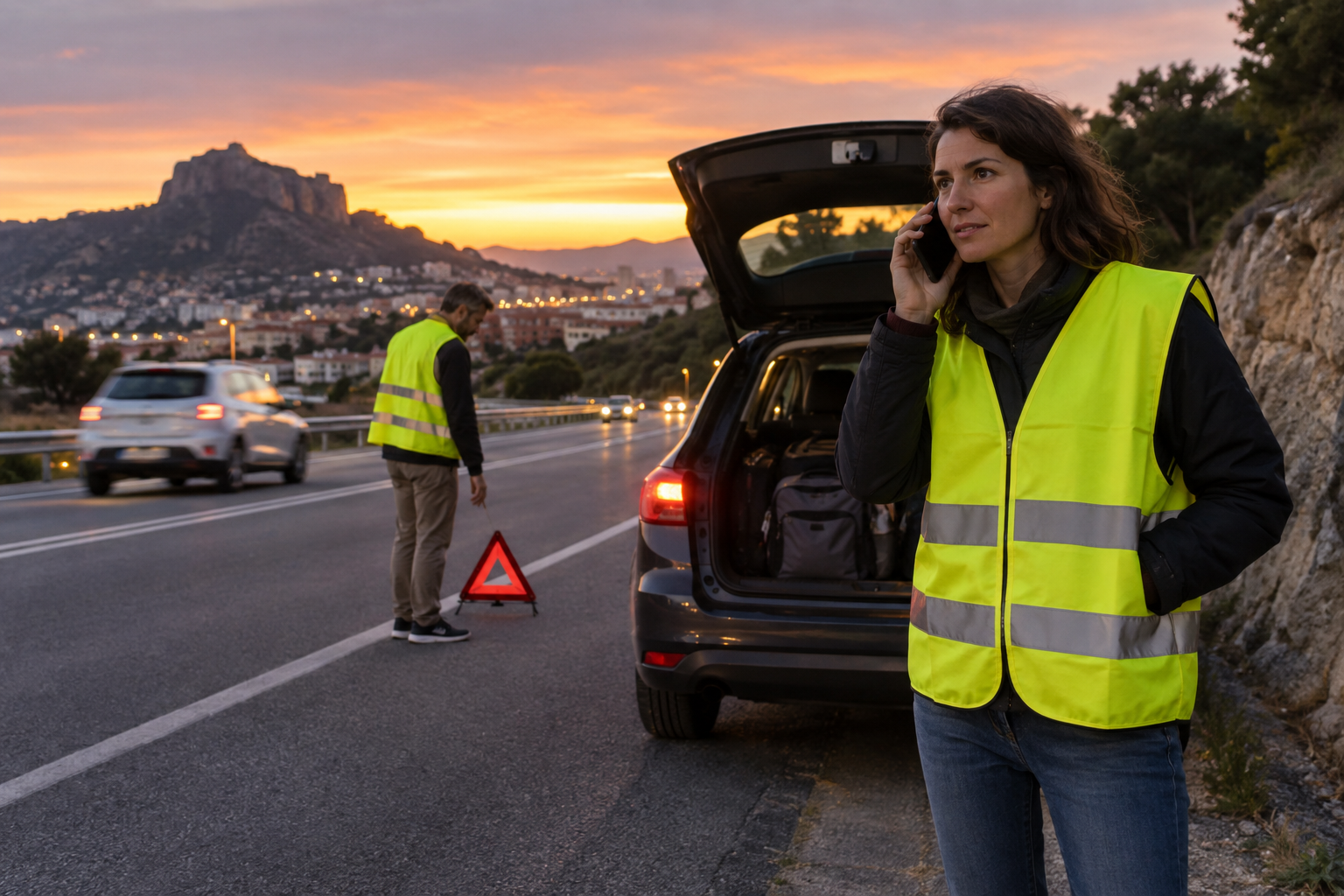
On a fast road in an unfamiliar country, being unable to say where you are is a real problem, and those roadside phones solve it instantly by identifying their own position to the dispatcher the moment you pick one up.
They are spaced closely enough that one is rarely far, and following the little arrows on the marker posts points you to the nearest one. It is old technology, but on a motorway it can be quicker and surer than any smartphone. None of this takes long to learn, and carrying it quietly in the back of your mind is one of those small pieces of preparation that you hope never to use and would be very glad to have. It sits in the same category as knowing where the exits are or keeping a copy of your passport, the sort of quiet groundwork that costs a few minutes and buys a great deal of peace of mind. For a traveler, and especially for anyone who worries about being far from home when something goes wrong, knowing 112 is a genuine and lasting reassurance. It is the difference between a vague, unfocused anxiety about emergencies abroad and a specific, confident answer to the question of what you would actually do, and that shift from worry to knowledge is worth far more than the few seconds it takes to learn three small digits.

About the Author: Ruben, co-founder of Gamintraveler.com since 2014, is a seasoned traveler from Spain who has explored over 100 countries since 2009. Known for his extensive travel adventures across South America, Europe, the US, Australia, New Zealand, Asia, and Africa, Ruben combines his passion for adventurous yet sustainable living with his love for cycling, highlighted by his remarkable 5-month bicycle journey from Spain to Norway. He currently resides in Spain, where he continues sharing his travel experiences with his partner, Rachel, and their son, Han.