
We wanted to answer a simple question that a lot of people daydreaming about a life in Europe actually care about: how much does it really cost to feed yourself, and how much does that change depending on which European city you land in.
So we built one realistic basket of twenty everyday groceries, the sort of ordinary weekly shop just about anyone might do, and we priced the exact same basket in four popular and much-dreamed-about cities, Madrid, Paris, Rome, and Lisbon. Same items, same quantities, four very different receipts. The result is a clear and sometimes surprising picture of where your grocery euro stretches furthest, and it is not always where you would guess. Reputations can mislead here, since a city famous for being glamorous and pricey is not always the dearest for a bag of basics, and a place people assume is cheap has quietly grown less so, so the actual receipts are worth having rather than the impressions. Lisbon in particular has changed fast in recent years, still a bargain on food while its rents have climbed, which is exactly the sort of nuance a single grocery basket helps make concrete. This is the receipt showdown, told in real numbers, with the honest caveats about what those numbers do and do not mean.
What follows is the basket we used, the four totals side by side, where the biggest gaps hide, why the differences exist, and what it actually means for anyone weighing up these cities.
The Basket
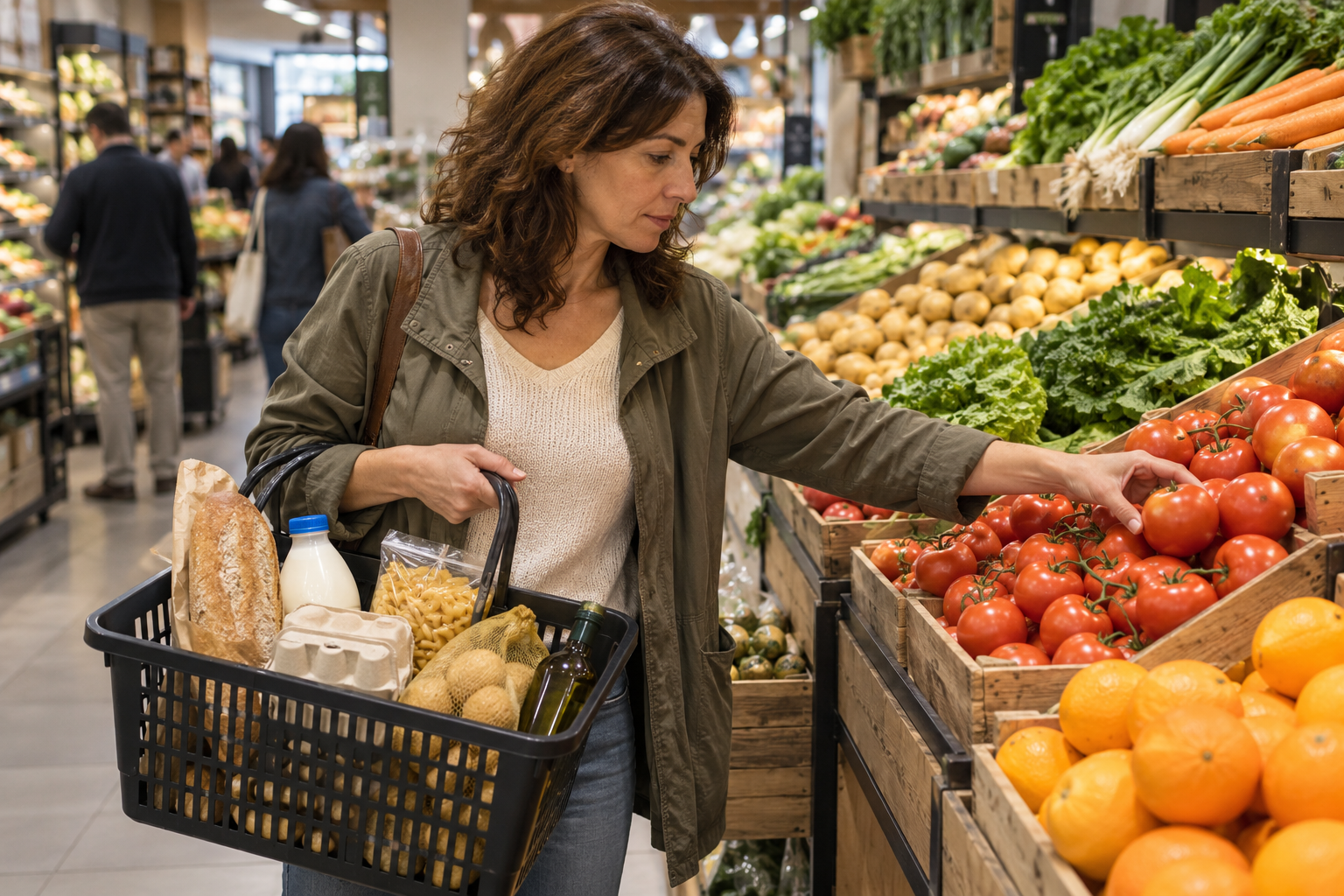
To make this a fair fight, we used a single fixed basket of twenty common items and priced that identical list in each city, drawing on current supermarket price data for 2026. The basket is a realistic mix of staples: milk, bread, eggs, rice, and pasta, a block of local cheese and some chicken and beef, a spread of fruit and vegetables including apples, bananas, oranges, tomatoes, potatoes, and onions, plus store-cupboard and everyday extras like olive oil, coffee, bottled water, a bottle of mid-range wine, and some local beer. It is not a lavish shop or a bare-bones one, just the kind of ordinary week’s groceries a household actually buys.
We kept it deliberately normal precisely so the comparison would mean something, since a basket of luxuries or of nothing but the cheapest staples would tell you far less about ordinary daily life than a plain, representative trolley does.
A couple of honest notes before the numbers. These are representative supermarket prices rather than the receipt from any one shop on any one day, since real prices swing with the store, the brand, the season, and whether you shop at a budget discounter or a smart city-center supermarket. Buy at a local market or a discount chain and you will beat these figures; shop at a convenient upmarket grocer and you will exceed them. The same is true in every one of the four cities, so the comparison holds even though your own particular receipt might land higher or lower than the numbers here. So treat the totals as a like-for-like comparison between the cities, which is where the real value lies, rather than as the precise amount you personally would pay. The point is not the exact cent but the gap between the cities, and that gap turns out to be both large and remarkably consistent from item to item.
The Four Receipts
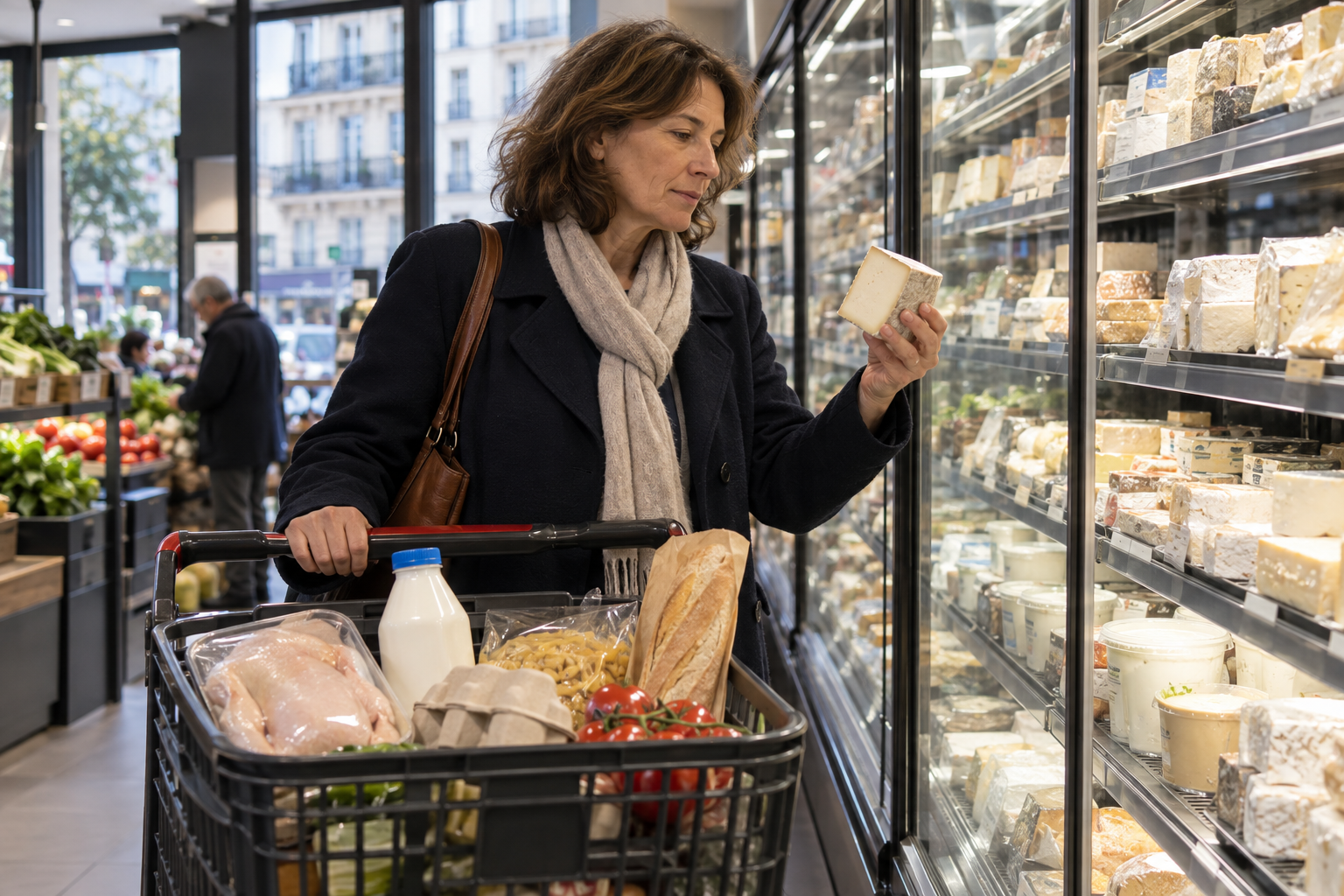
Here is how the same twenty-item basket came out across the four cities, from most to least expensive.
| City | Basket total (approx.) | Compared to Lisbon |
|---|---|---|
| Paris | around 107 euro | about 70 percent more |
| Rome | around 80 euro | about 30 percent more |
| Madrid | around 73 euro | about 20 percent more |
| Lisbon | around 62 euro | baseline, cheapest |
The headline is stark. Paris is comfortably the most expensive of the four, with the same basket costing well over a hundred euro, while Lisbon is the clear bargain at a little over sixty. That is a difference of some forty-five euro on a single ordinary shop, which, repeated week after week, adds up to a very real gap in the cost of simply eating. Rome and Madrid sit in the middle and close together, with Madrid a touch cheaper than Rome, both far below Paris and both noticeably above Lisbon. If groceries alone were the deciding factor, the ranking would be plain: Lisbon first, Madrid and Rome a comfortable second and third, and Paris a distant and pricey fourth.
What is striking is how wide the spread is for cities that all sit within a short flight of one another and share so much else, a reminder that Europe, for all its integration, is still a patchwork of very different price worlds.
Where the Gaps Are
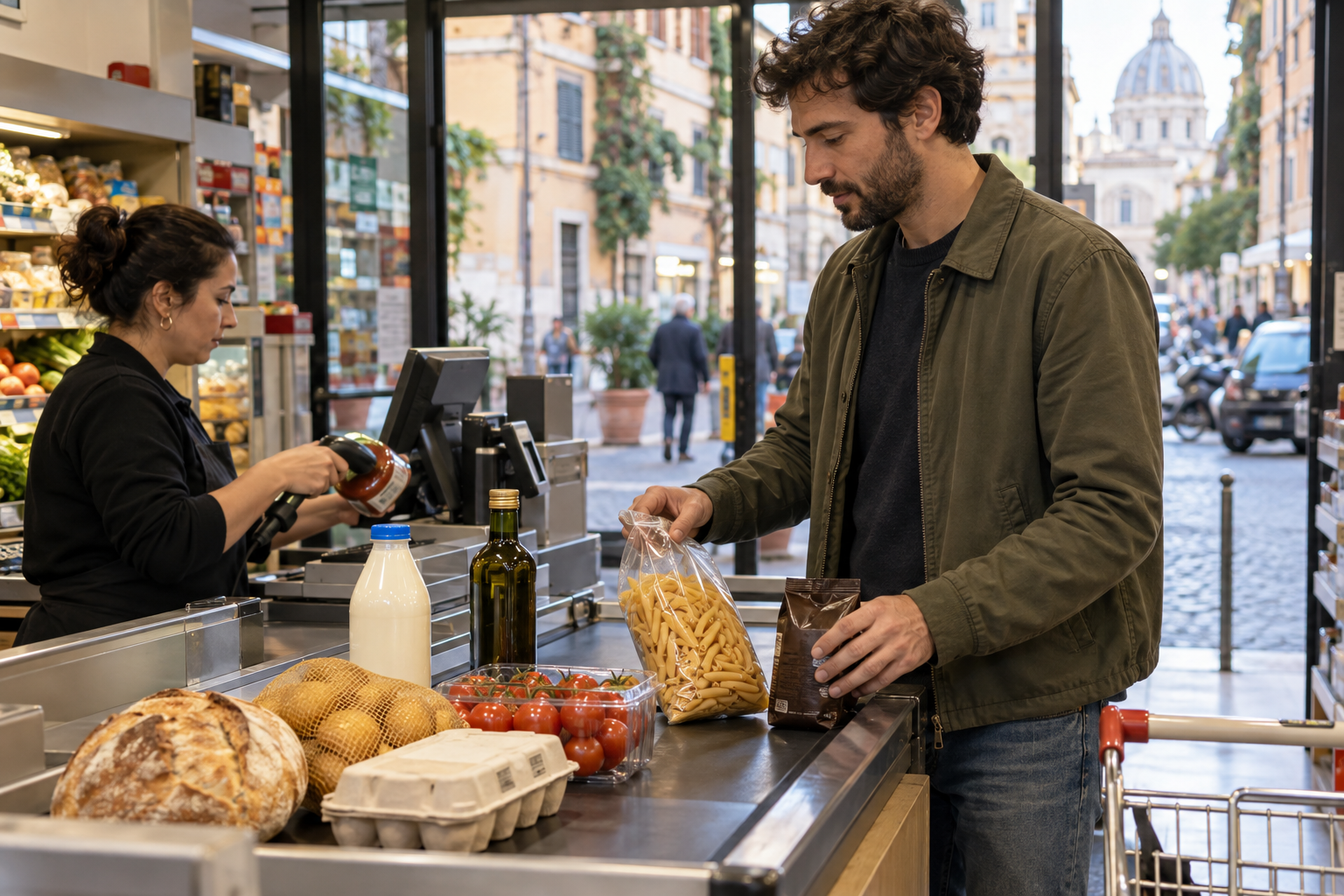
The overall totals tell one story, but the individual items tell a richer one, because the cities do not simply scale up and down uniformly. Paris is dear almost across the board, but it is on the animal products, the dairy and the meat, that it really pulls ahead of the pack, with cheese, chicken, and beef all markedly pricier than in the south. A block of local cheese or a kilo of good chicken in Paris can cost half again what it does in Lisbon, and those heavier items are much of what drives the French total so high. Because meat and dairy are among the priciest things in any trolley, a city that runs dear on them will run dear overall, which is much of the Paris story in a nutshell.
Down south, the pattern flips in the shopper’s favor, especially on fresh produce and the pleasures of the table. Fruit and vegetables are strikingly cheap in Lisbon and Madrid, where a warm climate and abundant local growing keep tomatoes, oranges, and the like down to a euro or two a kilo, often a fraction of the Paris price.
Wine is the happiest example of all: a perfectly good bottle that might cost a fair bit in Paris can be had for just a few euro in Lisbon or Madrid, since in the great wine-producing south, decent wine is an everyday staple rather than a treat. Rome lands in between on most things, Italian in its love of good cheap pasta and produce but a little dearer than Iberia overall. Staples like pasta, tomatoes, and coffee remain very reasonable there, in keeping with a food culture built on simple ingredients, even as the total creeps above the Spanish and Portuguese figures. The lesson of the item-by-item view is that the southern cities win most decisively on exactly the fresh, everyday, sun-grown things that make daily eating a pleasure.
The Best and Worst Buys
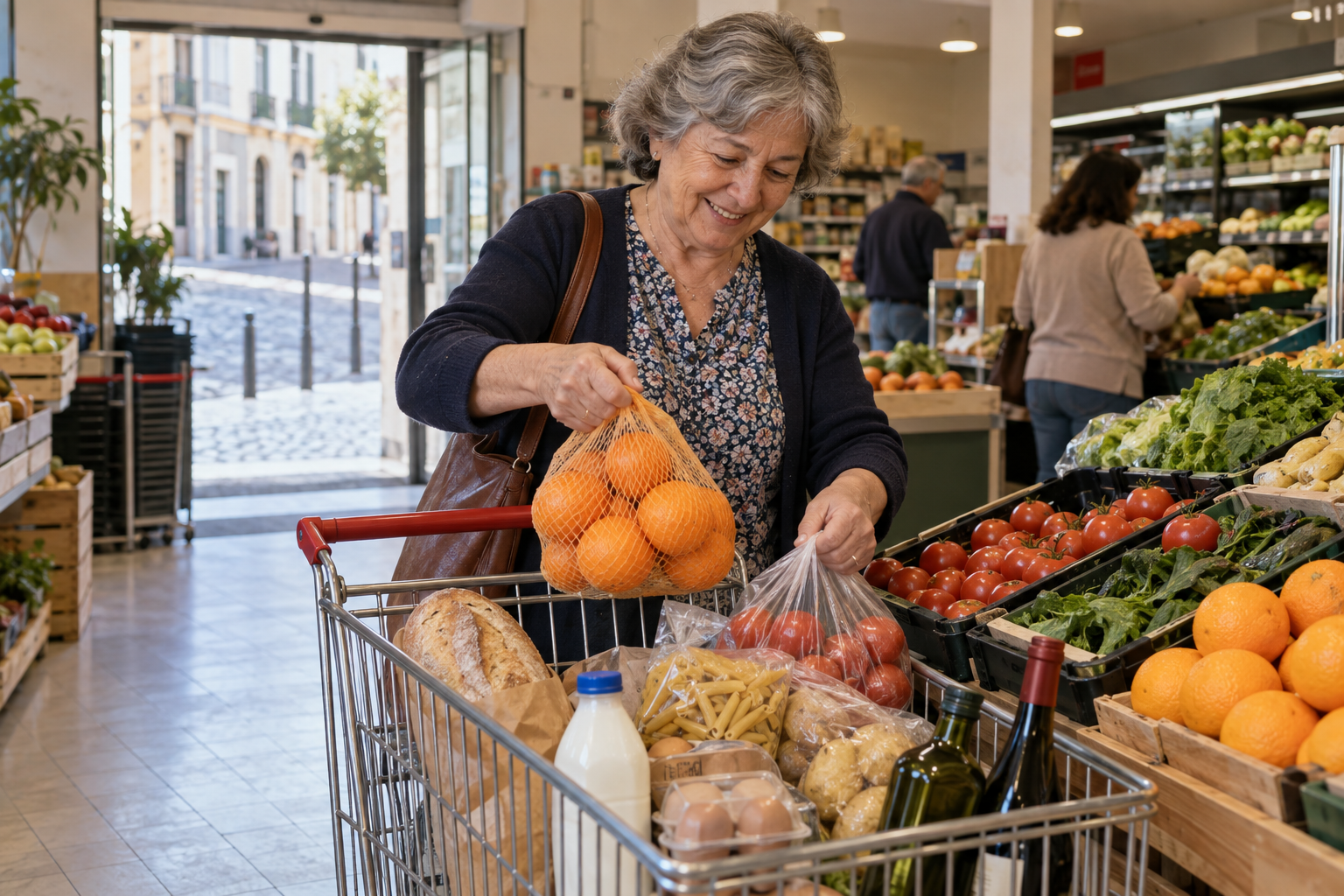
It is worth pulling out a few specific items, because the averages hide some standout bargains and some genuine shocks. The clearest bargains, unsurprisingly, are in the south and in the categories those countries produce in abundance. A bottle of decent wine is the star, costing so little in Lisbon and Madrid that it barely registers on the receipt, while the same quality in Paris is a proper purchase. It is one of the small daily luxuries that the south hands you almost for free and the north makes you think about. Olive oil, another southern staple pressed close to home, is far kinder to the wallet in the Iberian cities than in France. And the everyday fruit and vegetables, the tomatoes and oranges and potatoes that fill much of any basket, are cheap enough in Lisbon and Madrid that you can eat well and healthily for very little.
The shocks run the other way, and they cluster in Paris. Cheese, in the country most famous for it, is dear at the supermarket, a reminder that a national specialty is not the same as a cheap one. Meat is the other sting, with chicken and beef both noticeably pricier in Paris than in the south, so a household that eats a lot of either will feel the French premium keenly. Rome sits in a comfortable middle on most of these, neither the bargain of Lisbon nor the sting of Paris, with its own strengths in cheap pasta, good tomatoes, and reasonable coffee. The practical upshot is that what you eat, not just where you shop, shapes how these cities treat your budget: a diet heavy on southern produce and wine rewards the Iberian cities enormously, while one built on cheese and meat narrows the gap and makes Paris hurt most of all.
Why the Differences Exist
The gaps are not random, and a few clear forces explain most of them. The biggest is local production. Spain, Portugal, and Italy grow an enormous amount of their own food, with the fruit, vegetables, olive oil, and wine of southern Europe produced close to where it is sold, so it arrives cheap and fresh, whereas Paris sits farther from that abundance and pays to bring much of it in. Sunshine and soil, in other words, show up on the receipt. The short distance between a Portuguese orchard or a Spanish greenhouse and the shop shelf is money not spent on transport, storage, and import, and it lands directly in the shopper’s favor.
Wages and the general cost base do the rest. Paris is simply an expensive, high-wage, high-rent city, and those higher costs of doing business feed through into what a supermarket must charge, on top of France’s taxes and the premium of the capital itself.
Lisbon, by contrast, remains a relatively lower-wage city where the overall cost base is gentler, which keeps grocery prices down even as its rents have climbed. Madrid and Rome sit between the two extremes on both counts, prosperous but not Paris-expensive, and blessed with plenty of nearby production. They enjoy much of the southern advantage in cheap fresh food while carrying somewhat higher costs than Portugal, which is why they land where they do, comfortably below Paris but a step above Lisbon. Competition matters too, since countries with strong networks of hard-discount supermarkets tend to hold prices down. Put together, local growing, local wages, taxes, and competition account for most of why the same trolley of food costs so differently just a couple of hours’ flight apart.
How to Shop It Cheaper
Before anyone despairs at the Paris total or celebrates the Lisbon one, it is worth saying that these supermarket figures are only a starting point, and how you shop can move them dramatically in any of the four cities. The single biggest lever is where you buy. Europe is rich in hard-discount supermarket chains, the no-frills stores where the same staples cost a good deal less than at a mainstream or upmarket grocer, and shopping there rather than at a convenient city-center supermarket can shave a large slice off any of these baskets without any real loss of quality on basic goods.
The other great money-saver, and one of the quiet pleasures of southern European life, is the local market. In Madrid, Lisbon, and Rome especially, the neighborhood markets and produce stalls sell fruit, vegetables, fish, and cheese that are often both fresher and cheaper than the supermarket equivalent, particularly when you buy what is in season. Eating with the seasons is itself a saving, since produce at its local peak is abundant and cheap, while the same item flown in out of season is dear everywhere, Paris included. Buying local brands rather than international names, cooking from raw ingredients rather than packaged convenience food, and shopping a little more often so less spoils all help too. None of this is exotic knowledge, just the ordinary habits of people who live in these cities rather than visit them, and taken together they mean the real gap between your own receipts in these places is yours to influence, not simply fixed by the city you happen to be in.
What It Means for You

So what should you take from four different receipts for the same twenty items? The clearest and most useful lesson is that groceries are a genuine, ongoing cost that varies far more between European cities than most people expect, and it is worth factoring into any daydream about where to live. Over a year, the difference between feeding yourself in Lisbon and feeding yourself in Paris runs to a serious sum, real money that quietly shapes how comfortable a given budget will feel, and it deserves a place in the calculation alongside rent and everything else. Forty-odd euro a week is well over two thousand euro a year on food alone, enough to cover a flight home, a chunk of rent, or simply a more relaxed relationship with your bank balance.

That said, keep it in proportion, because a grocery basket is only one slice of the cost of living and should never be the whole basis of a decision. Paris offers a great deal that Lisbon does not, and vice versa, and rent, healthcare, transport, taxes, and simple personal preference all weigh just as heavily as the price of cheese.
Plenty of people happily pay the Paris premium for what Paris uniquely gives them, and that is an entirely reasonable trade, just one made with eyes open to the cost. It is also worth remembering how much you can move these numbers yourself, since shopping at local markets and discount chains rather than premium supermarkets can meaningfully cut the bill in any of these cities. Use the showdown for what it is, a clear, like-for-like signal of how far your food euro travels in each place, and let it inform the bigger picture rather than decide it. Think of it as one honest number to slot into a much larger sum, useful precisely because it is concrete and comparable when so much of the moving-abroad daydream is vague.
We picked these four cities because they are among the ones Americans dreaming of a move actually shortlist, close enough in appeal to be genuine rivals and far enough apart in price to make the comparison worth running. As always, this is general information rather than financial advice, and prices shift constantly, so check current local figures before you count on any of them.

About the Author: Ruben, co-founder of Gamintraveler.com since 2014, is a seasoned traveler from Spain who has explored over 100 countries since 2009. Known for his extensive travel adventures across South America, Europe, the US, Australia, New Zealand, Asia, and Africa, Ruben combines his passion for adventurous yet sustainable living with his love for cycling, highlighted by his remarkable 5-month bicycle journey from Spain to Norway. He currently resides in Spain, where he continues sharing his travel experiences with his partner, Rachel, and their son, Han.