
Ask a German where they went on the weekend, and one common answer is the spa, by which they do not mean a place to get a facial in a fluffy robe, but a sprawling temple of saunas, steam rooms, and thermal pools where they will spend hours relaxing, mixed together with strangers of both sexes, and entirely without clothes. To Germans this is all utterly unremarkable, a normal, healthy, thoroughly wonderful way to unwind that many of them have enjoyed since childhood. To a first-time American visitor it can be, to put it mildly, a shock. The German mixed spa is one of the great culture-clash experiences of European travel, a place where the rules are the opposite of everything an American assumes about public nudity, and the reports from those who brave it for the first time are remarkably consistent, and rather encouraging. It is the kind of thing worth understanding before you go, both so you are not blindsided and so you can decide, clear-eyed, whether to try it.
What follows is what a German spa actually is, the two rules that surprise Americans most, the etiquette that keeps it comfortable, the Aufguss ritual at its heart, and what first-timers consistently say once they have tried it.
What a German Spa Actually Is
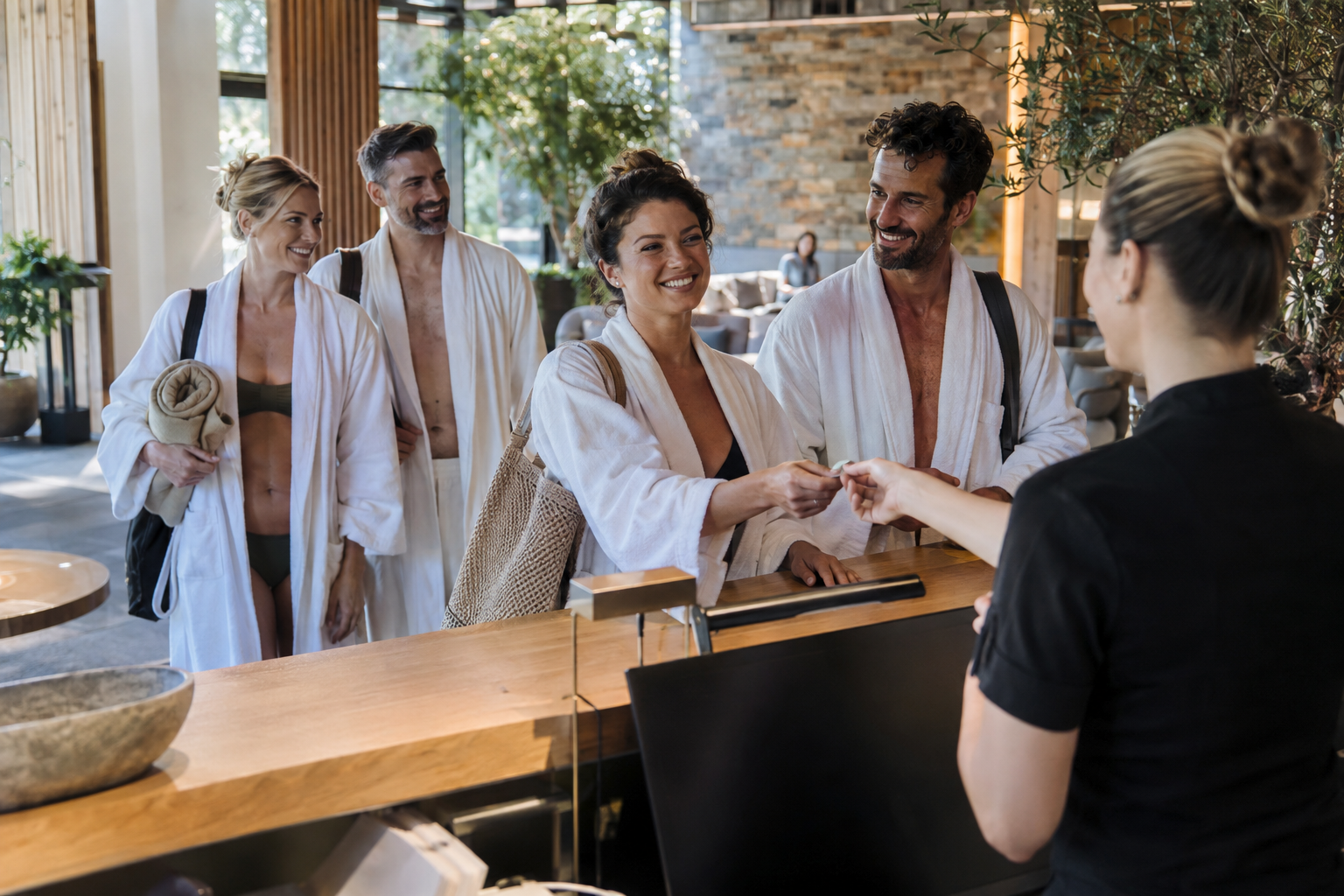
The first thing to understand is that a German spa, often called a Therme or a sauna complex, is a serious wellness destination, not the light pampering an American might picture. These are large, often beautiful facilities built around a whole circuit of experiences: numerous saunas at different temperatures, steam rooms, thermal and cold plunge pools, relaxation lounges, gardens, and often cafes and restaurants where guests linger between sessions. People come for hours, moving through a slow rhythm of heat, cold, and rest, and treat the whole thing as a restorative ritual rather than a quick treatment. A weekend at one is a genuine leisure activity, the way an American might spend a day at the beach. Families go, couples go, friends go, and older people go, all treating a long afternoon of sweating and swimming and resting as one of the ordinary good pleasures of life rather than an indulgence.
This is wellness culture taken seriously, with deep roots in the German conviction that heat, water, fresh air, and rest are genuinely good for body and mind. The spa is where that belief is practiced, a place to sweat out the week’s stress, cycle between hot and cold to invigorate the body, and simply do nothing for a long, unhurried stretch. The hot-and-cold cycling in particular is treated almost as a discipline, a hot sauna followed by a cold plunge and a rest, repeated through the afternoon, and devotees swear by how alive it leaves them feeling. Understanding that the whole enterprise is about health and relaxation, rather than anything remotely titillating, is the essential first step to understanding everything else about it, including the parts that make newcomers nervous.
Germans would find the assumption that a spa is somehow risque genuinely puzzling, since to them it is about as erotic as a swimming pool or a doctor’s office, a place you go to feel better, not to be looked at. The spirit of the place is calm, communal, and wholesome, which is exactly what makes the two big surprises easier to accept. Once you feel that atmosphere for yourself, unhurried, quiet, entirely unsexual, the things that sounded alarming in the abstract start to make a kind of obvious sense.
The Two Rules That Surprise Americans
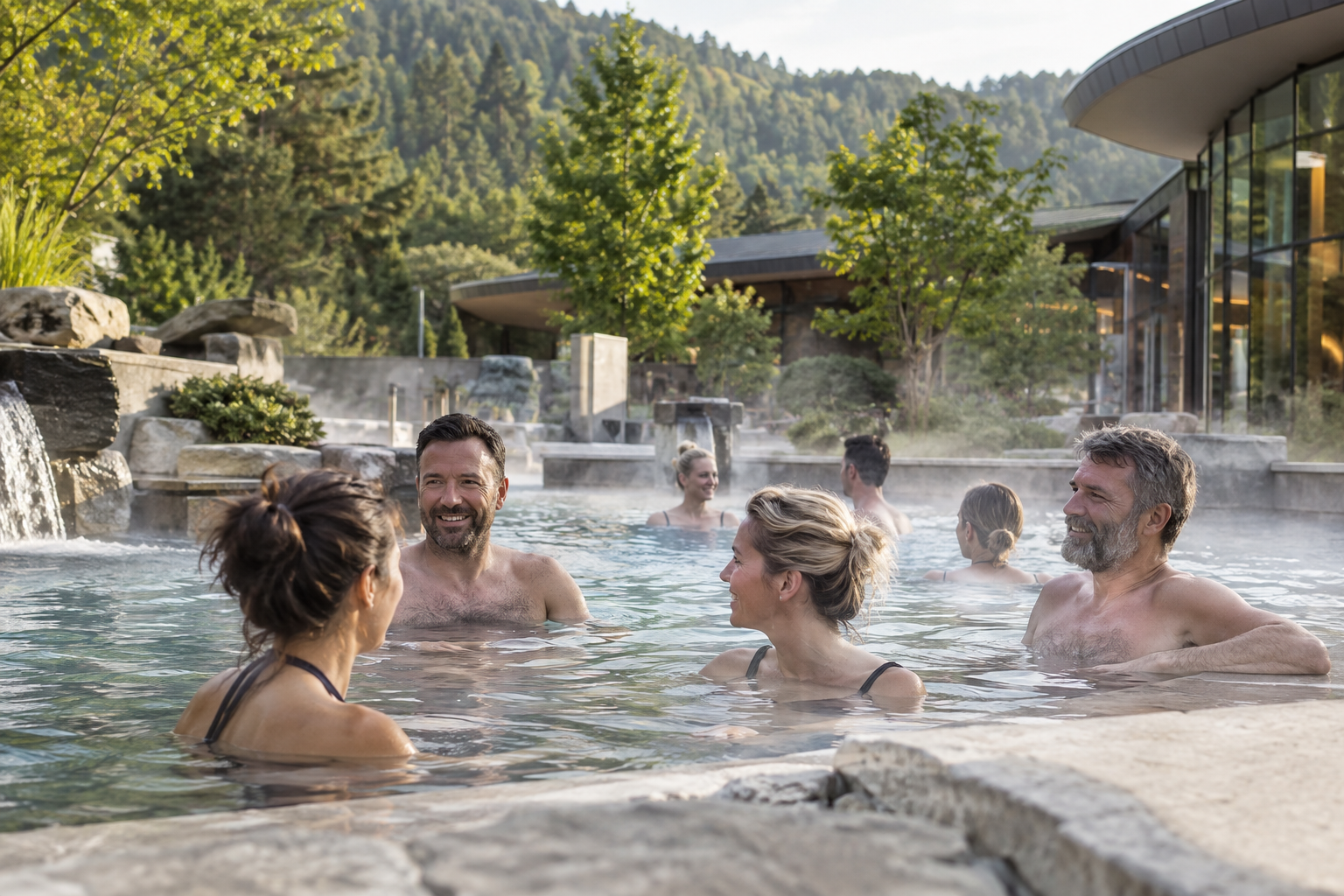
Now for the two things that stop American visitors in their tracks, because they run directly against everything they are used to. The first is that the sauna areas are textile-free, which is to say you must be fully nude, and swimsuits are not merely optional to remove but actively forbidden in the saunas and steam rooms, for reasons of hygiene and tradition. A swimsuit in a German sauna is a genuine faux pas that will draw disapproval and possibly a request to remove it, since the local view holds that synthetic fabric traps sweat and bacteria and has no place against the clean wood of a sauna bench. Nudity is not the daring option here, it is the required one, which is a genuine inversion of the American assumption that clothing is the default and nudity the transgression. In the German sauna it is precisely the other way around, and the swimsuited visitor, not the naked one, is the one out of step.
The second surprise compounds the first: these spaces are almost always mixed-gender, so you will be nude among both men and women, strangers and all, sharing the same saunas, pools, and often the same changing and shower areas. For an American accustomed to strict swimsuit rules and gender-separated everything, the combination of mandatory nudity and mixed company is a double shock that can feel almost unimaginable beforehand. It is the single detail that makes many Americans decide, sight unseen, that the German spa is simply not for them, and it is also the detail that, in practice, turns out to matter far less than anyone expects. It is worth knowing that most German spas do offer women-only days or hours for those who prefer them, a useful option for the truly uncomfortable, but the default, the normal German spa experience, is exactly this: everyone, of both sexes, undressed together, treating it as the most natural thing in the world.
The Etiquette That Makes It Work
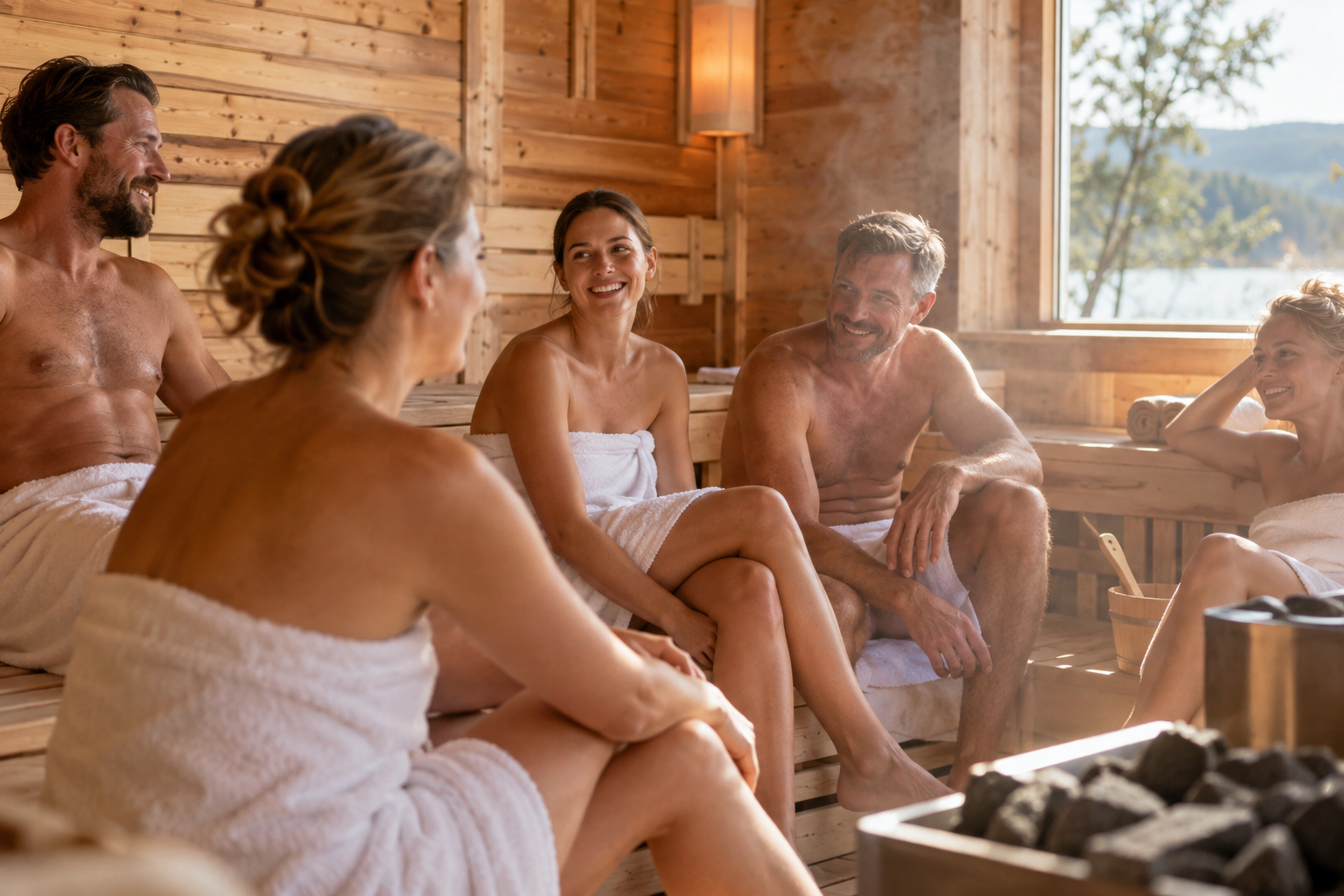
What makes all of this not only tolerable but genuinely comfortable is a firm code of etiquette, and the single most important rule is the one Germans live by without thinking: the nudity is functional, not sexual, and everyone behaves accordingly. The golden rule, as regulars put it, is to act as though everyone were fully clothed, which means you do not stare, you do not comment on anyone’s body, and you keep your eyes at face level in conversation. This shared, scrupulously observed norm is what transforms a room full of naked strangers from something charged into something utterly matter-of-fact, and it works precisely because everyone honors it. The whole system depends on a kind of collective agreement to be unbothered, and because everyone keeps that agreement, the room genuinely feels as unremarkable as everyone is pretending it is.
The practical etiquette is just as important and easy to follow. You shower thoroughly before entering any sauna or pool, every time, since cleanliness is close to sacred here. This is non-negotiable and often quietly enforced, and it is part of what makes the shared nudity feel clean and comfortable rather than off-putting, since everyone in the water and on the benches has just scrubbed down.
You always carry a large towel and sit or lie on it in the sauna, so that no bare skin touches the shared bench, a strict hygiene rule. You keep quiet, speaking in low voices or not at all, since the saunas are places of calm. And crucially, while nudity is required inside the sauna itself, you are expected to cover up with a robe or towel when walking around the wider complex, so the undress is confined to the wellness areas rather than worn everywhere. This detail reassures a lot of nervous newcomers, since it means you are not padding around fully exposed for hours on end, only in the saunas and pools themselves, with a robe to slip into the moment you step out. Follow these simple rules, and you will blend in as someone who understands how the place works.
The Aufguss at the Heart of It
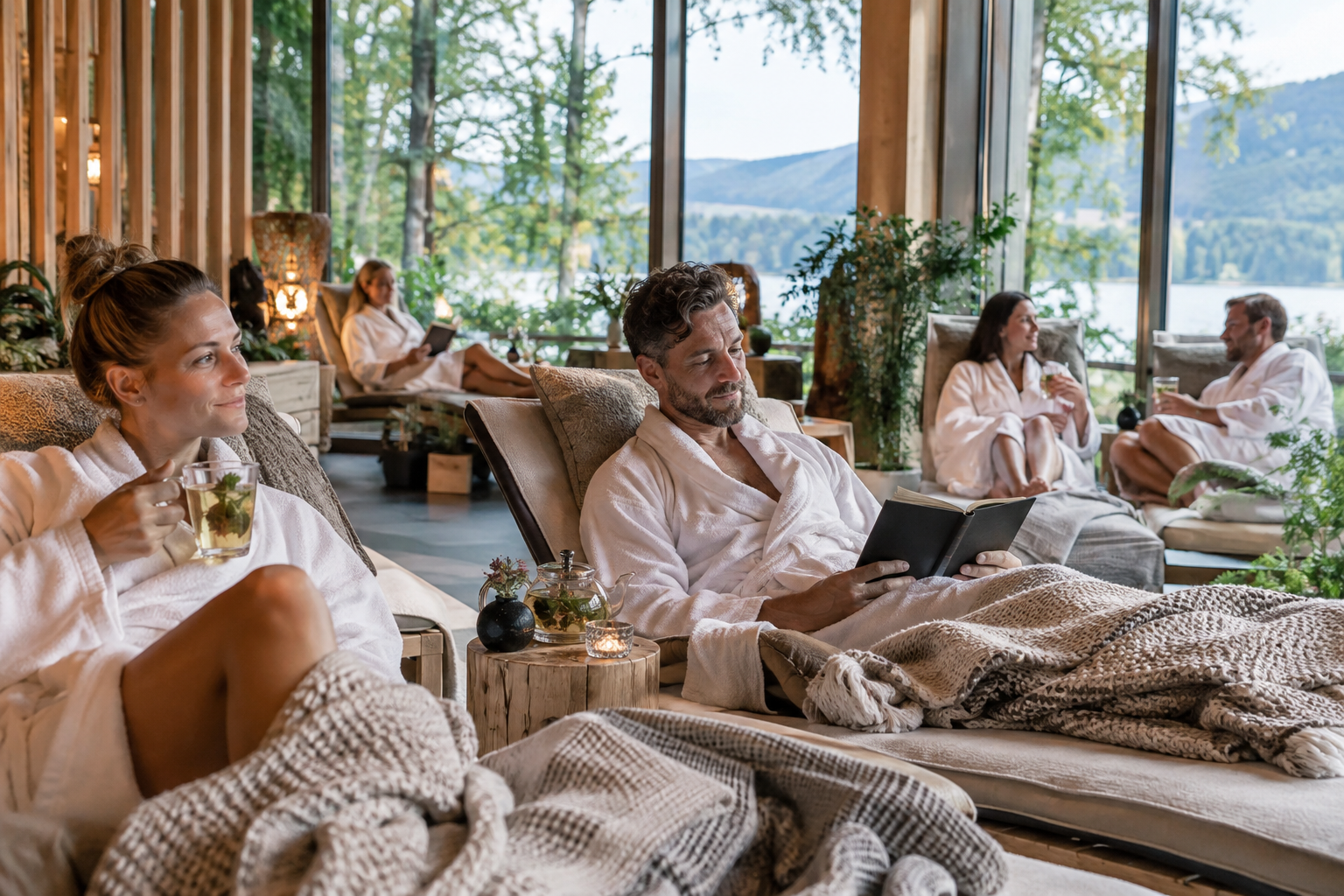
No account of the German spa is complete without its signature ritual, the Aufguss, which is often the highlight of the whole experience and a genuine spectacle. At scheduled times, announced by a bell, a sauna master called the Saunameister enters the hot sauna and performs a ceremony: they ladle water infused with essential oils, eucalyptus, mint, citrus, or pine, over the hot stones, releasing great clouds of fragrant steam, and then, with a large towel, they theatrically wave and whip the air to circulate the intense heat and scent around the room in waves. It is part performance, part endurance, and wholly memorable.
The Aufguss is taken seriously, and there is real etiquette to it, chiefly that once it begins you stay for the whole session rather than slipping out midway, which is considered disruptive and a little rude. The heat builds dramatically as the Saunameister works, often to the point where you feel you can barely take it, and then it ends and you emerge to plunge into cold water or step into the cool air, the contrast leaving you tingling and gloriously alive. There is a genuine physical thrill to that hot-to-cold jolt, a rush that regulars chase and that first-timers rarely forget, and it is a large part of why people leave a good spa feeling reborn rather than merely relaxed. First-timers often find the Aufguss the moment the whole strange experience clicks into place, an intense, communal, oddly joyful ritual that reveals why Germans love this so much, and why the nudity, by that point, has become the last thing on anyone’s mind. Sitting in a packed sauna, everyone gasping and laughing a little as the heat rolls over them in scented waves, you stop noticing bodies entirely and simply share the experience, which is rather the whole point.
What First-Timers Report
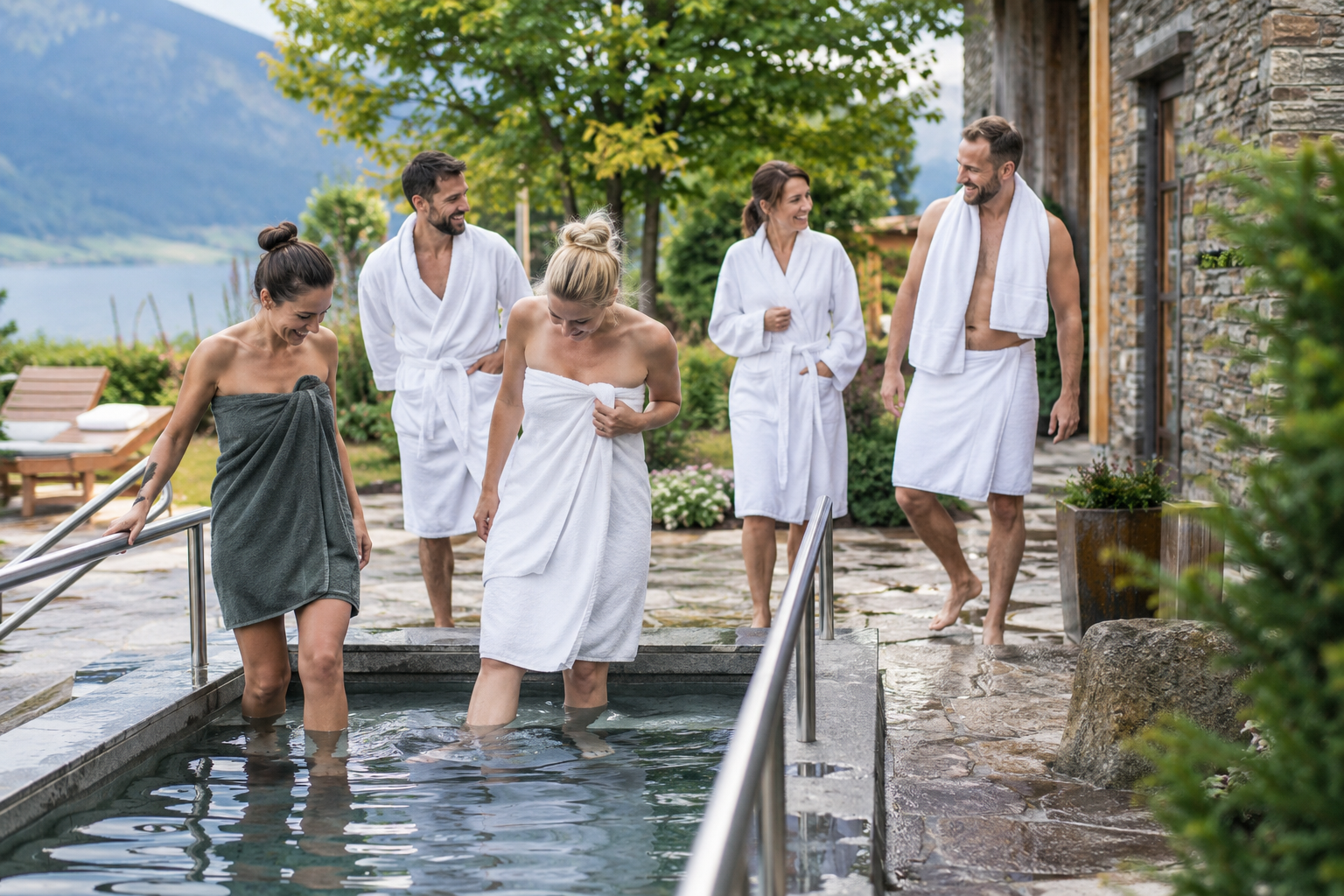
Here is the genuinely reassuring part, because the accounts of Americans and other nervous first-timers are strikingly consistent. Almost everyone describes real anxiety beforehand, a mounting dread at the prospect of undressing completely among strangers of both sexes, and often a few excruciating minutes at the start when it feels every bit as awkward as they feared. The build-up in the changing room, that last moment before you commit, is the part people remember as the hardest, and it is over almost as soon as it begins. This initial discomfort is universal and entirely normal, and no one should feel odd for dreading it, since it runs against a lifetime of very different conditioning. Americans in particular are raised to treat public nudity as either shameful or sexual and almost never as neutral, so the German premise that it can be simply ordinary takes a genuine mental adjustment to accept.
But then comes the twist that nearly every account shares: the discomfort fades astonishingly fast, usually within minutes. Visitors report that once they are in, and they see that absolutely no one is looking at them, that everyone is simply relaxing and minding their own business exactly as promised, the self-consciousness melts away and is replaced by a surprising and total ease. The fear, it turns out, was almost entirely about being looked at, and once it becomes clear that nobody is looking, the whole basis for the anxiety quietly evaporates.
Many describe an unexpected sense of liberation, of bodies of every age and shape treated as unremarkable, of a freedom from the usual self-scrutiny that they had never felt before. Seeing the full ordinary range of human bodies, young and old, treated with complete indifference has a quietly reassuring effect, a reminder that real people look nothing like the edited images we compare ourselves to, and that this was never anything to be anxious about in the first place. By the end, the very people who arrived terrified are often the ones raving about it, calling it one of the most relaxing experiences of their trip and wondering why their own country insists on doing things so differently. It is one of those rare travel experiences that genuinely shifts something in how a person sees the world, a small, warm education in how differently, and how sanely, another culture can approach something you thought was fixed. The near-universal verdict, repeated in account after account, is that the anticipation is far worse than the reality, and that the German spa, once you surrender to it, is a genuinely wonderful thing.
A Note for the Curious Traveler
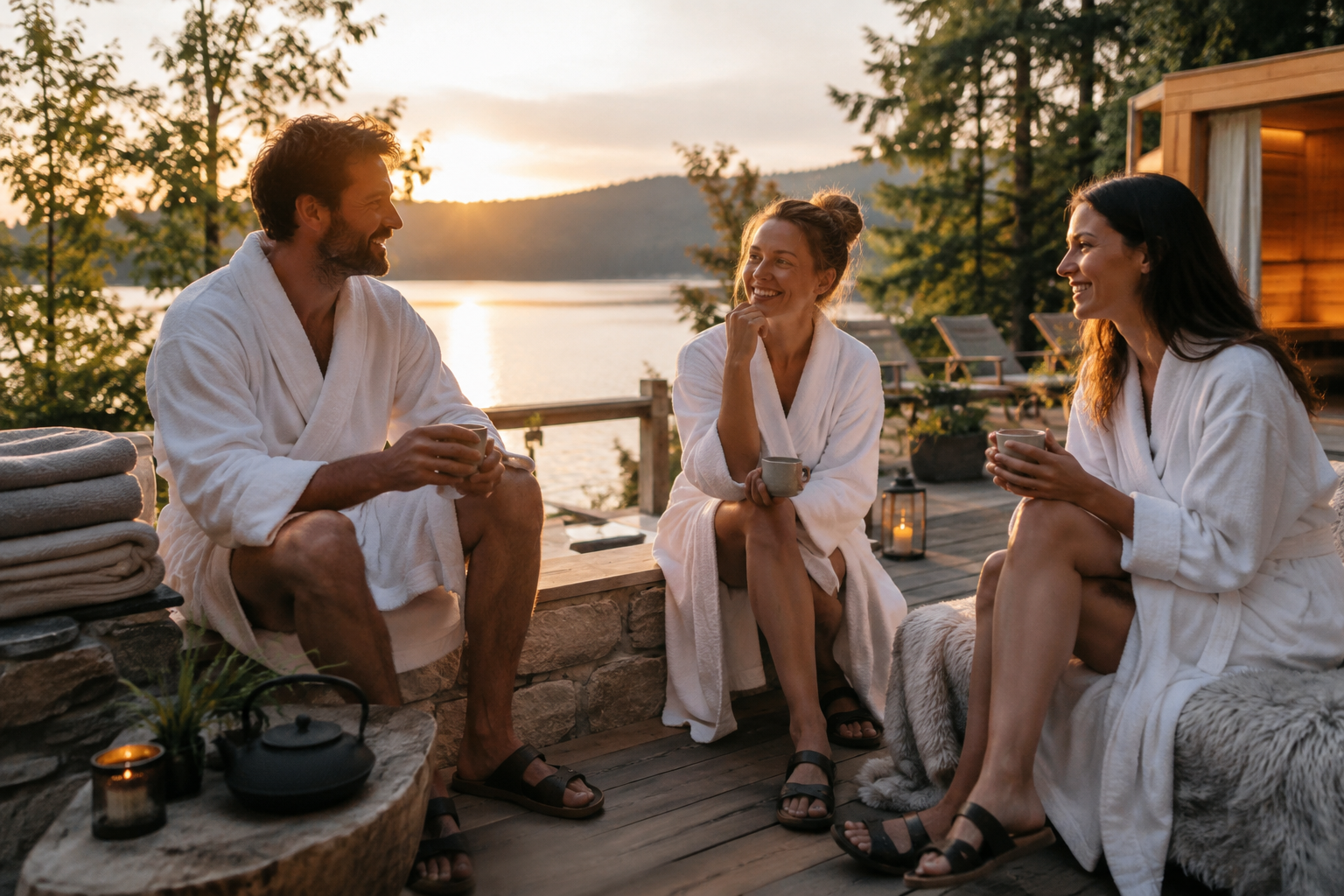
If your travels take you to Germany, Austria, or Switzerland, where this culture runs deepest, a spa visit is one of the most authentic and memorable things you can do, provided you go in prepared. Know before you arrive that the saunas will be textile-free and mixed, so you are not blindsided, and decide in advance whether you would rather ease in via a women-only session if one is offered. Walking in already knowing the rules, rather than discovering them at the sauna door, removes most of the shock, and a great deal of the first-timer’s anxiety is simply the anxiety of not knowing what to expect. Bring or rent a robe and a large towel, plan to shower first, and remember the golden rule about eyes and behavior, and you will be equipped to handle the whole thing gracefully.
Most of all, go in with an open mind and a sense of humor, because the initial awkwardness is part of the experience and, as the countless first-timer accounts confirm, it passes quickly into something genuinely lovely. Treat the first uncomfortable minutes as a small toll to be paid once, at the door, and you will find the reward on the other side of it well worth the price. You do not have to become a convert, and if it truly is not for you, that is entirely fine and no one will mind, and the women-only sessions exist precisely so that the reluctant can still enjoy the saunas and pools on their own terms. There is no wrong choice here, only the one that leaves you comfortable. But a great many travelers who arrived certain they would hate it came away understanding exactly why every German considers a weekend at the spa one of life’s simple, wholesome pleasures, and wishing, a little, that they could bring the whole unselfconscious ritual home with them.

About the Author: Ruben, co-founder of Gamintraveler.com since 2014, is a seasoned traveler from Spain who has explored over 100 countries since 2009. Known for his extensive travel adventures across South America, Europe, the US, Australia, New Zealand, Asia, and Africa, Ruben combines his passion for adventurous yet sustainable living with his love for cycling, highlighted by his remarkable 5-month bicycle journey from Spain to Norway. He currently resides in Spain, where he continues sharing his travel experiences with his partner, Rachel, and their son, Han.