
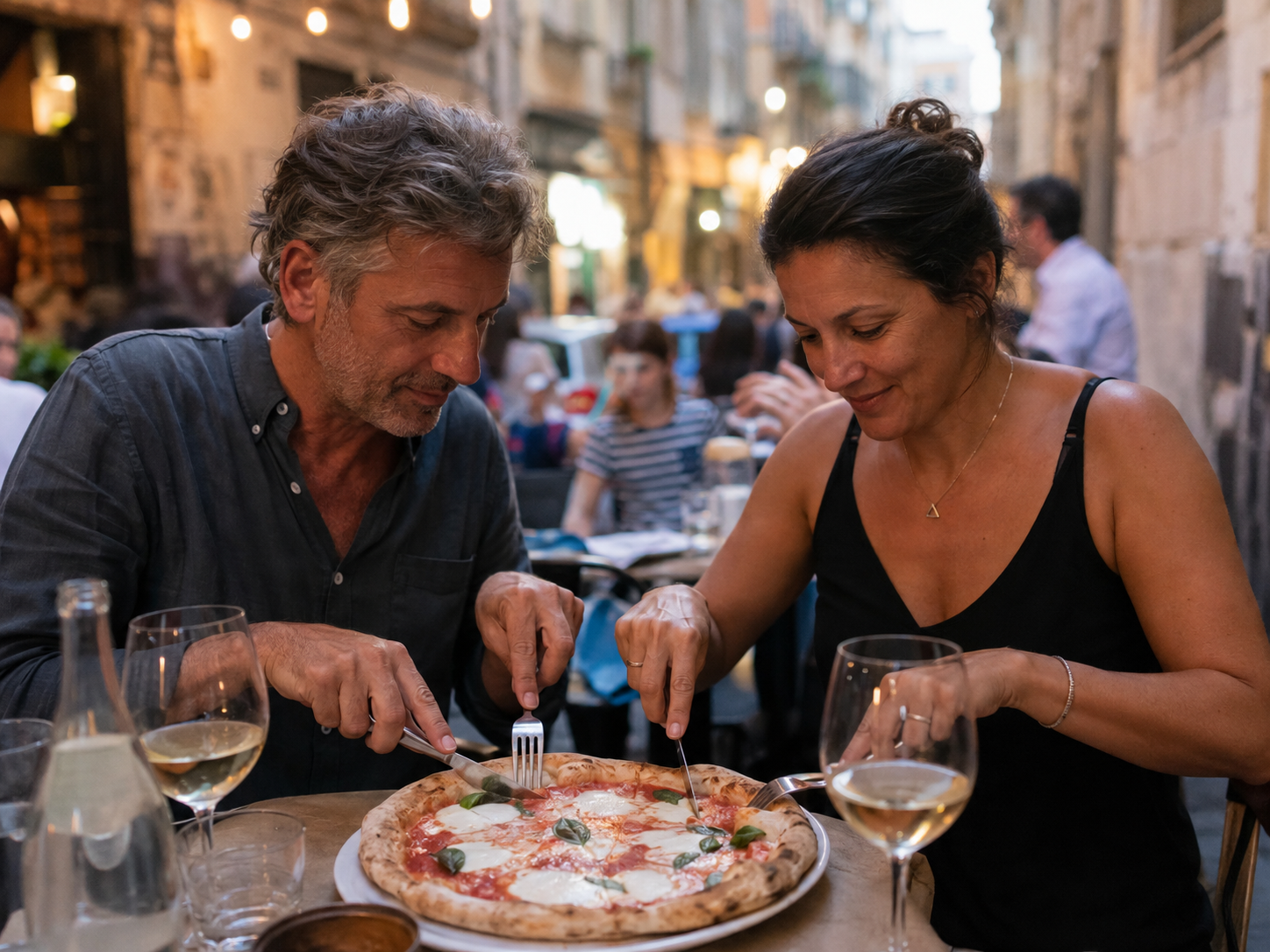
There is a small habit that separates the American table from the European one, and it is easy to miss until you look for it: Europeans eat almost everything with a knife and fork, sitting down, at a table, including foods an American would happily eat with their hands on the move. Pizza gets cut into bites. A sandwich is often approached with cutlery. Fruit is peeled and sliced rather than bitten. I spent thirty days eating this way, knife and fork on everything, even pizza, partly to see whether it felt absurd, which it sometimes did, and partly because there is real research suggesting that the simple act of slowing down how you eat changes how much you eat and how full you feel. The research turned out to be right, and the effect was more noticeable than I expected.
What follows is why eating slowly works, what the science actually shows, what thirty days of compulsory cutlery did, and why the European habit is quietly clever. The short version is that a slightly ridiculous experiment landed on a genuinely useful truth.
The Twenty-Minute Lag
The whole thing rests on one piece of physiology that everyone should know, because it explains an enormous amount about overeating. When you eat, your gut releases fullness hormones that tell your brain you have had enough, but this signal takes roughly fifteen to twenty minutes to travel and register. The trouble is that most people finish a meal in eight to twelve minutes, which means the fullness signal arrives after the meal is already over, often after you have eaten considerably more than your body actually needed.
This lag is the mechanism behind the miserable feeling of realizing, twenty minutes after clearing your plate, that you are uncomfortably stuffed, because the fullness caught up only once it was too late. Fast eating outpaces your own satiety system, letting you shovel in more food than you would have chosen had your brain been keeping up in real time. Slow eating simply closes that gap, giving the signal time to arrive while you are still eating, so you notice you are full before you have overshot, which is the entire principle in a sentence. It is a rare case where the fix is not a matter of willpower or knowledge but purely of pace, since the same person eating the same food can end up comfortably satisfied or uncomfortably stuffed depending on nothing more than how fast they went.
What the Research Actually Shows
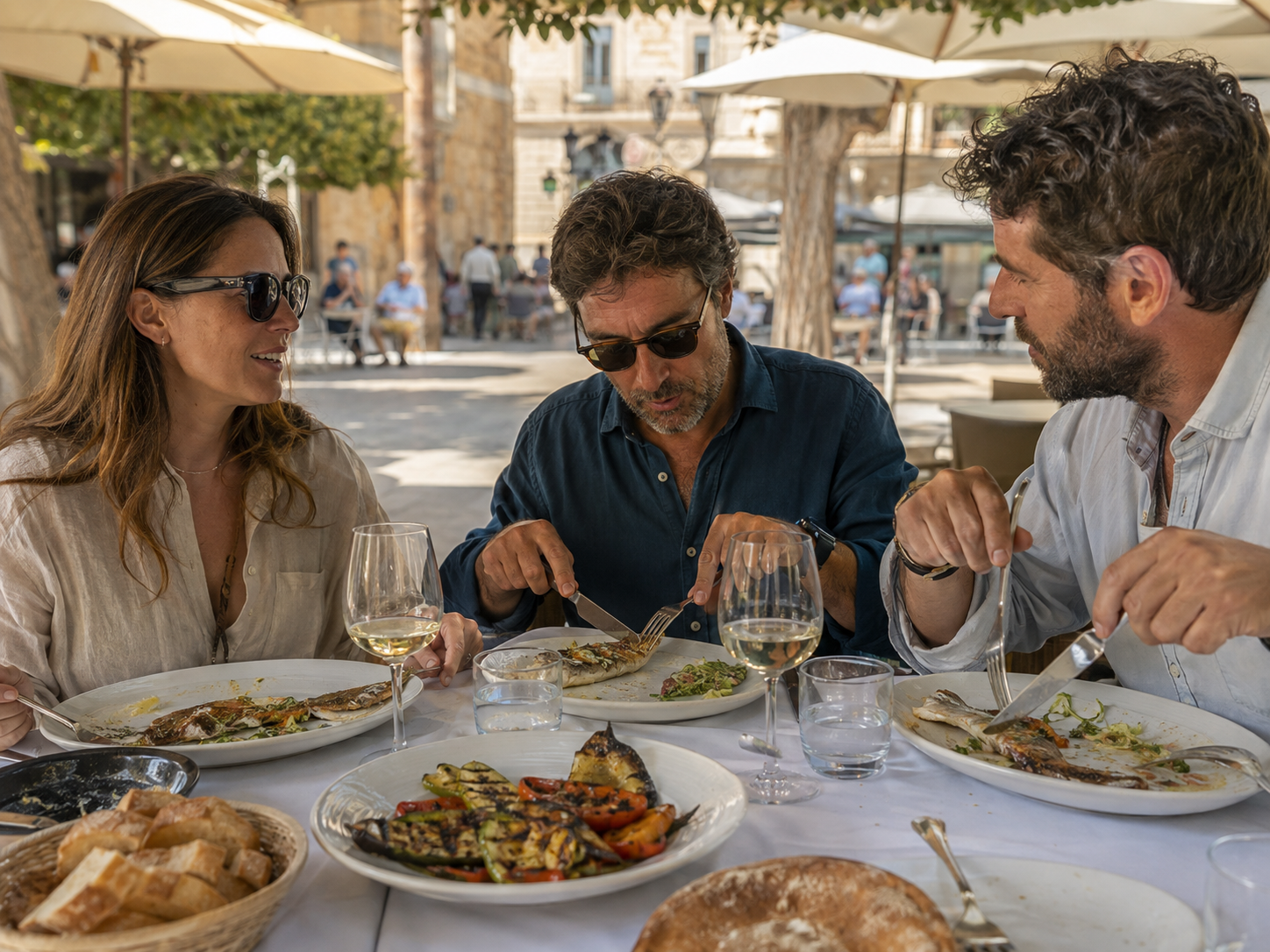
The evidence that eating slowly reduces intake is, by the standards of nutrition science, unusually consistent. In a much-cited experiment, women who were told to eat quickly consumed 646 calories in nine minutes, while the same women eating the same food slowly, pausing between bites and chewing thoroughly, ate just 579 calories over about half an hour, and reported feeling fuller. Study after study has found the same pattern, that slower eating leads to lower calorie intake and greater fullness, an effect confirmed across different foods and settings, including a rigorous 2024 crossover trial that saw slower eating cut intake across dozens of meals.
Chewing turns out to matter in its own right too. Research asking people to chew each bite more found that increasing the number of chews meaningfully reduced how much they ate, with one study seeing calorie intake fall by around fifteen percent when people roughly doubled their chewing.
And the population data lines up, since large studies have repeatedly found that self-described fast eaters tend to weigh more and to gain more weight over time than slow eaters, with one large study linking fast eating to a substantially higher rate of metabolic syndrome. The effects in any single meal are modest, but they are real, repeatable, and they add up. What makes this body of research stand out is its consistency, since nutrition science is famous for contradicting itself from one study to the next, yet the finding that eating slower means eating less has held up across decades, populations, and study designs, which is about as close to a reliable result as the field offers. When something is this well replicated, it is worth taking seriously even if the effect in any one sitting is small.
What Thirty Days of Cutlery Did
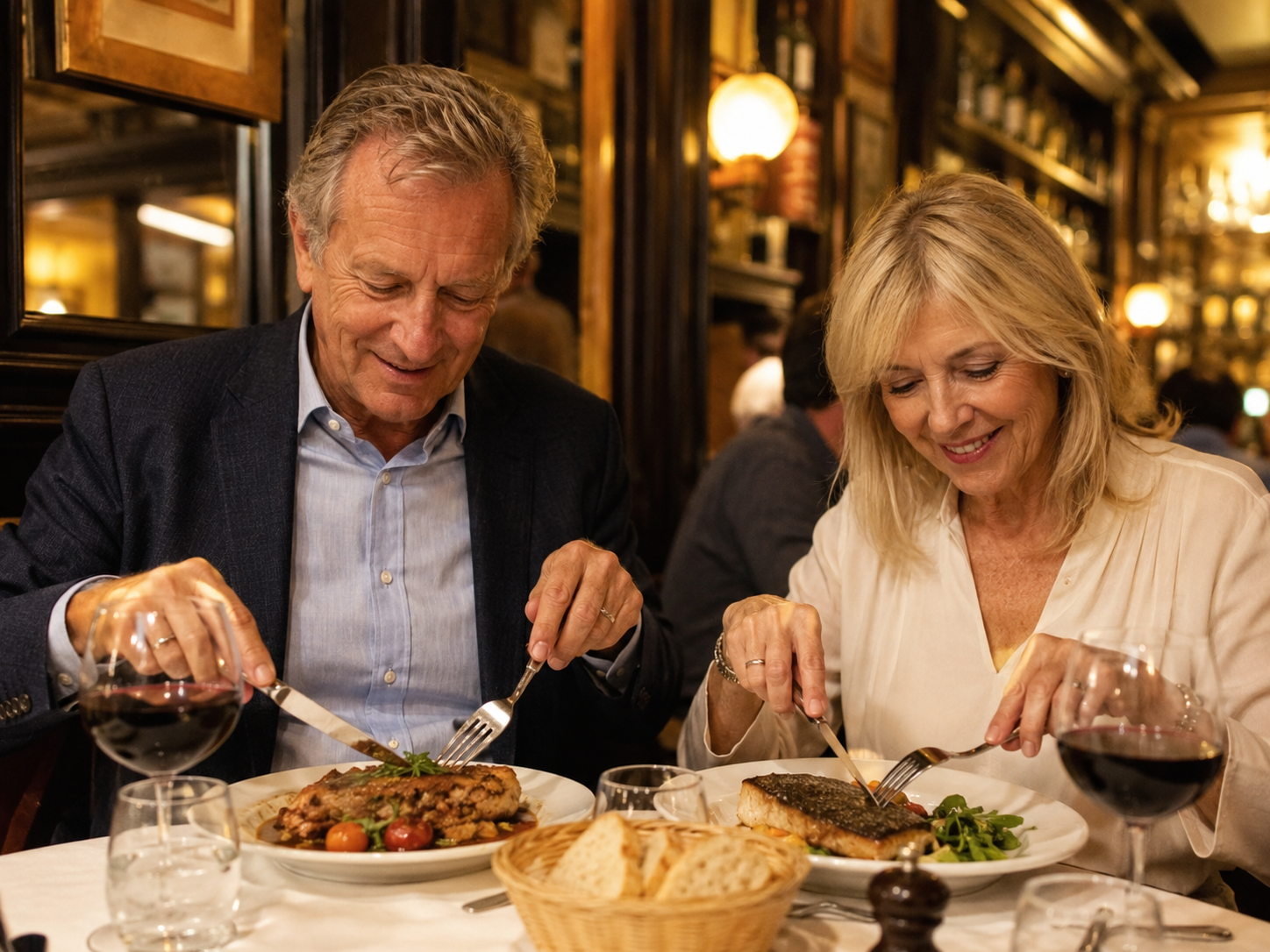
Eating everything with a knife and fork is, it turns out, a wonderfully effective way to be forced to slow down, which is the whole point even if it looks fussy. You cannot bolt a pizza you have to cut into bites, and the simple mechanics of setting down and picking up cutlery, cutting, and spearing put natural pauses into a meal that eating with your hands does not. Over the month, my meals genuinely took longer, and the effect the research predicted showed up in the most ordinary way, which is that I found myself full before I had cleared the plate more often than I used to.
It was not dramatic, and I want to be honest about that, since nobody should expect cutlery to transform them. But the small, repeated experience of noticing fullness partway through a meal, and stopping there because I actually felt satisfied rather than because the plate was empty, was real and consistent across the month. Eating more slowly also, unexpectedly, made the food more enjoyable, because I was tasting it rather than inhaling it, and a meal that takes twenty minutes and is actually noticed is simply a better experience than one that vanishes in eight. The knife and fork were a slightly ridiculous tool for a genuinely useful job. What surprised me most was how quickly it stopped feeling like a chore and started feeling normal, so that by the end of the month the deliberate, cut-and-spear pace had become just how I ate, and going back to grabbing and bolting felt faintly frantic by comparison. A habit that felt like a costume at the start had quietly become a preference by the end.
Why the European Habit Works

Seen through this lens, the European insistence on cutlery and the table stops looking like mere formality and starts looking like accidental wisdom. Eating with a knife and fork, sitting down, without a screen, is a set of habits that all push in the same direction, slowing the meal, adding pauses, and turning eating into a deliberate activity rather than a thing done automatically while doing something else. The European who eats a leisurely sit-down meal is, without trying, giving their satiety signals time to work.
Contrast that with the fast American pattern the research implicitly warns against, eating quickly, often with the hands, frequently on the move or in front of a screen, food inhaled with no pauses and little attention. That pattern is practically engineered to defeat the fullness system, letting a person eat past satisfaction before the body can object. The European habits are not healthier because Europeans are more disciplined, they are healthier because the habits themselves slow the meal down, and slowing the meal down is one of the few genuinely effective and effortless things a person can do to eat a more sensible amount without counting a single thing. This is the crucial point, that the benefit is structural rather than moral, built into the shape of the meal rather than requiring any act of restraint from the person eating it. You do not have to be a disciplined eater to benefit, you only have to eat in a way that happens to be slow, and the cutlery and the table and the sitting down do that work for you.
It Is About Fullness, Not Restriction
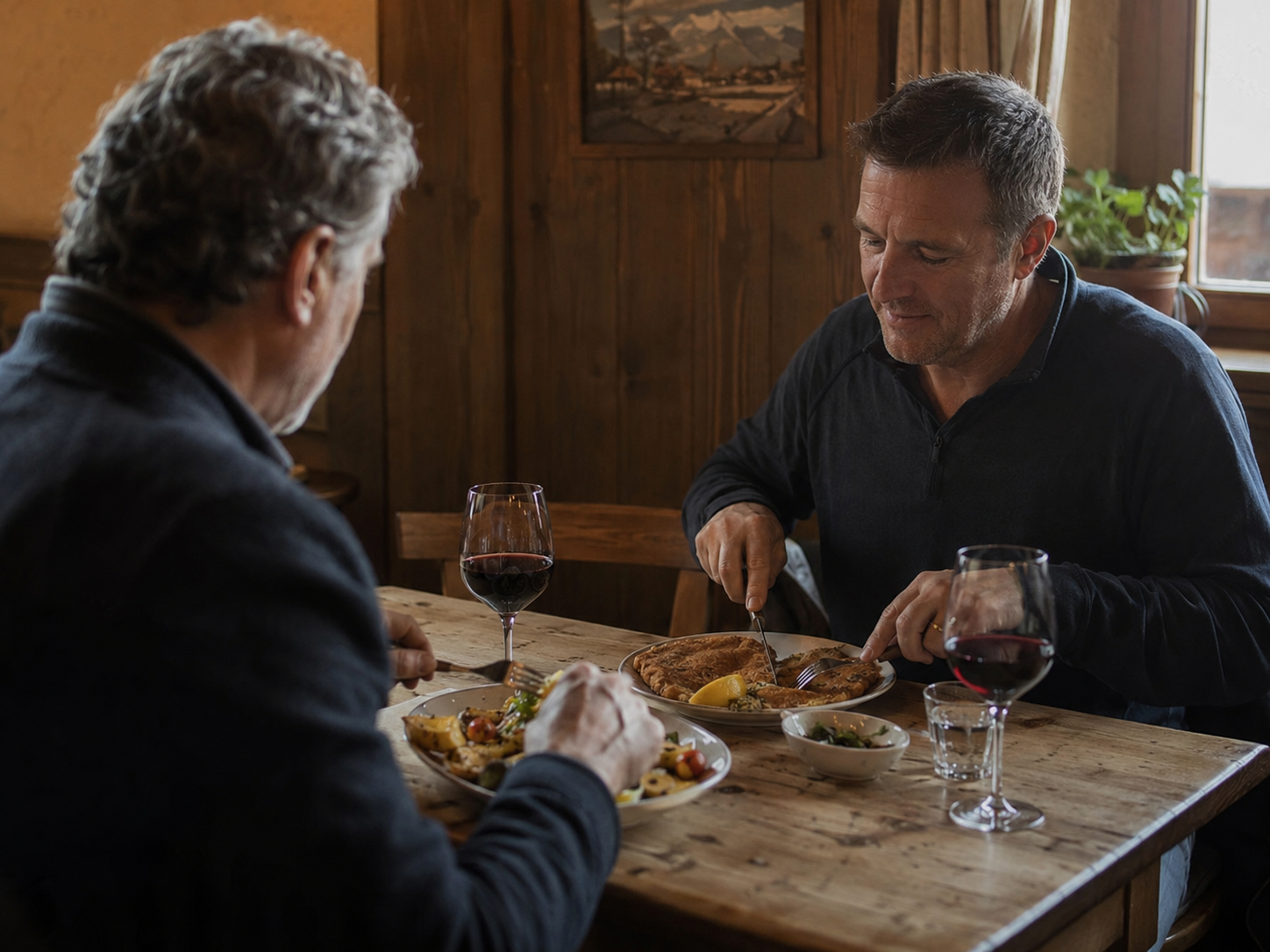
This is worth saying clearly, because slowing down is the opposite of a diet. Eating slowly does not ask you to eat less by willpower or to forbid any food, it simply lets you eat until you are genuinely satisfied and then notice that you are, which means you stop at your body’s actual signal rather than overshooting it. There is no deprivation in this, only better timing between your stomach and your brain, and you finish a meal comfortably full rather than either stuffed or hungry.
That gentleness is exactly why it is worth doing and easy to keep, since a habit that works by helping you feel satisfied sooner asks nothing unpleasant of you and carries none of the strain of restriction. If eating slowly ever tipped into anxiously policing every bite, that would miss the point entirely, because the whole value of it is relaxed, unhurried, attentive eating, the kind that feels good and happens to leave you eating a sensible amount. It is a way of listening to your fullness rather than overriding your hunger, which is a far kinder and more sustainable thing than any rule about quantity. That is perhaps the deepest reason the habit is worth having, because so much of the trouble people have with food comes from ignoring the body’s own signals, eating past fullness because the plate is not empty or the show is not over, and slowing down does the simple, gentle work of putting those signals back in charge.
The Foods a European Would Never Grab
Part of what makes the cutlery habit so striking to an American is how far it extends, to foods we consider finger food by definition. In Italy, pizza eaten in a restaurant is very often cut and eaten with a knife and fork rather than folded and grabbed, and no one thinks it odd. Across Europe a sandwich or a pastry may be eaten with cutlery, fruit is peeled and sliced on a plate rather than bitten out of hand, and even a burger might arrive with a knife and fork expected.
To an American this can look absurdly formal, and there were moments in my month when I felt faintly ridiculous sawing at a slice of pizza. But the effect is not really about manners, it is about mechanics, since every one of these habits forces the food onto a plate, onto a table, and through the slow choreography of cutlery, which is exactly what puts the brakes on eating speed. The formality is almost beside the point, a cultural wrapper around a practice whose real value is that it makes fast, mindless, hand-to-mouth eating physically awkward. The European is not being fussy so much as unknowingly eating in the way the satiety research would recommend. There is a lovely irony in that, since the very formality an American might dismiss as stuffy or pretentious turns out to be the practical thing, the habit doing quiet good work while the casual, hands-and-hurry approach we think of as relaxed is the one working against us.
More Than Eating Less
Slowing down turned out to do more than help me stop at fullness, and the other benefits are worth naming because they are the reasons the habit is pleasant rather than a chore. The first is simple enjoyment, since food actually tasted better when I was eating it slowly and paying attention, rather than inhaling it while thinking about something else. A meal noticed is a meal enjoyed, and there is a real, quiet pleasure in tasting your food that fast eating skips right past.
There is a digestive angle too, since eating slowly and chewing thoroughly means food arrives in the stomach better broken down, which can ease the bloated, heavy feeling that bolting a meal sometimes brings. And there is the social dimension, because a slower meal is a longer one, more room for conversation and company, which is a large part of why European meals feel more like occasions and less like refueling stops. So the knife and fork bought me not just a more sensible amount of food but a more pleasant relationship with eating itself, which is the part I did not expect and the part most worth keeping. It reframed the whole thing, so that what began as an experiment about eating less quietly turned into a lesson about eating better, more slowly, more attentively, and with more actual pleasure, and those turn out to be the same habit seen from two angles. The amount takes care of itself once the attention is there.
How to Slow Down Without the Cutlery Theater
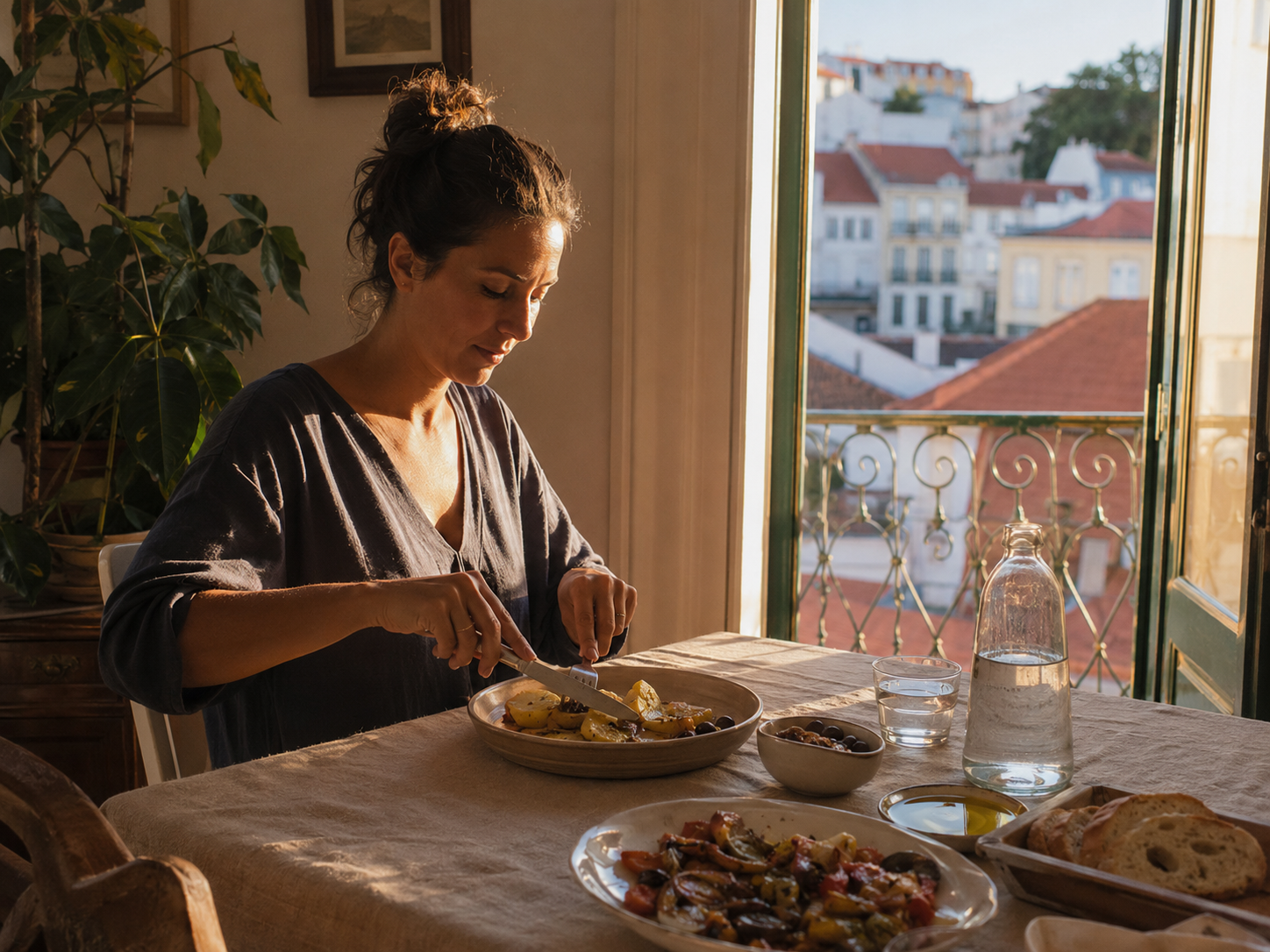
You do not actually need to eat pizza with a knife and fork for the rest of your life, though I found it strangely satisfying, and there are simpler ways to get the same slowing effect. The single most effective trick is to put your utensils down between bites, since an empty hand naturally paces you and stops the automatic reload that fast eaters do without noticing. Chewing each bite a few more times than feels natural does the same job, as the research on chewing shows directly.
Beyond that, the European habits themselves are the method, so sit down to eat rather than standing or driving, put the screen away since distraction makes people eat faster and notice less, and let conversation set the pace at a shared meal, since talking is one of the most natural brakes on eating speed there is. None of this requires counting, weighing, or forbidding anything, which is what makes it such an easy and pleasant change. Slow the meal down by whatever means suits you, let your fullness catch up, and you get most of the benefit of the compulsory cutlery without ever having to explain to anyone why you are cutting a slice of pizza into tidy little squares.

About the Author: Ruben, co-founder of Gamintraveler.com since 2014, is a seasoned traveler from Spain who has explored over 100 countries since 2009. Known for his extensive travel adventures across South America, Europe, the US, Australia, New Zealand, Asia, and Africa, Ruben combines his passion for adventurous yet sustainable living with his love for cycling, highlighted by his remarkable 5-month bicycle journey from Spain to Norway. He currently resides in Spain, where he continues sharing his travel experiences with his partner, Rachel, and their son, Han.