
There is a small Greek island in the Aegean where people routinely live into their nineties and beyond, and where one of the most ordinary daily rituals is a tiny cup of thick, unfiltered coffee boiled in a little pot. The island is Ikaria, one of the world’s celebrated Blue Zones, and back in 2013 a study of its elderly residents found something that made headlines around the world, that the ones who drank this traditional boiled Greek coffee had healthier blood vessels than those who drank other kinds. The press promptly called it the elixir of life, which it is not, but the real finding underneath the hype is genuinely interesting and worth understanding honestly, both for what it shows and for what it very much does not.
What follows is the island, the study, what it actually measured, why the coffee might matter, and why none of it makes a cup of coffee a fountain of youth. The short version is that there is a real, interesting finding here, and it is smaller and quieter than the headlines made it, which is usually how these things go.
The Island That Ages Slowly
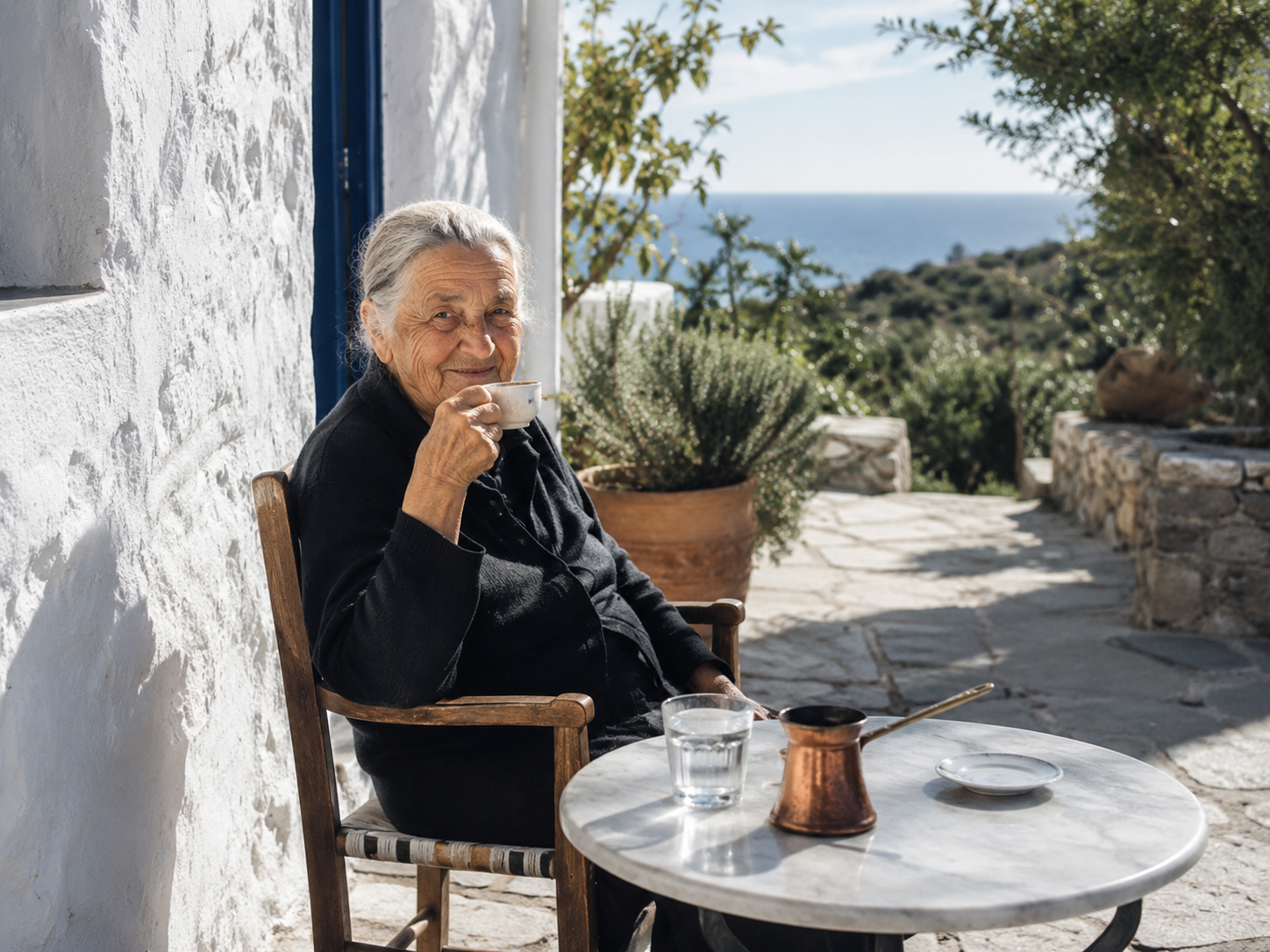
Ikaria is one of the five places in the world that the longevity researcher Dan Buettner grouped as Blue Zones, alongside Sardinia, Okinawa, Costa Rica’s Nicoya Peninsula, and Loma Linda in California, all of them home to unusually high numbers of people who reach ninety and a hundred. Ikaria’s residents live markedly longer than most of the world, with a far higher share reaching old age in good health, and researchers have spent years trying to understand why. The answers are many, a Mediterranean diet heavy on vegetables and beans, constant gentle physical activity on the island’s hills, afternoon naps, strong community ties, herbal teas, and an unhurried, low-stress way of life.
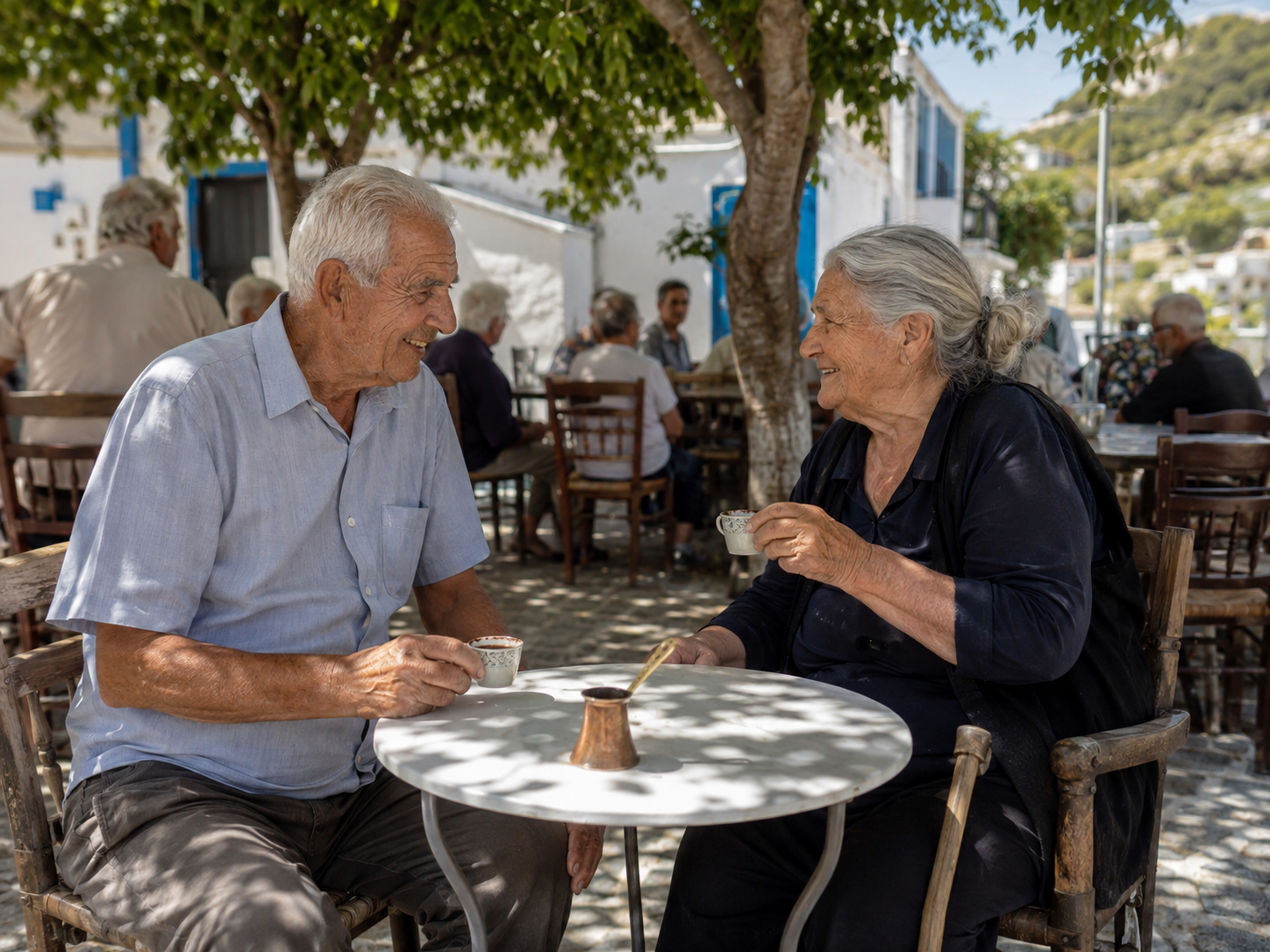
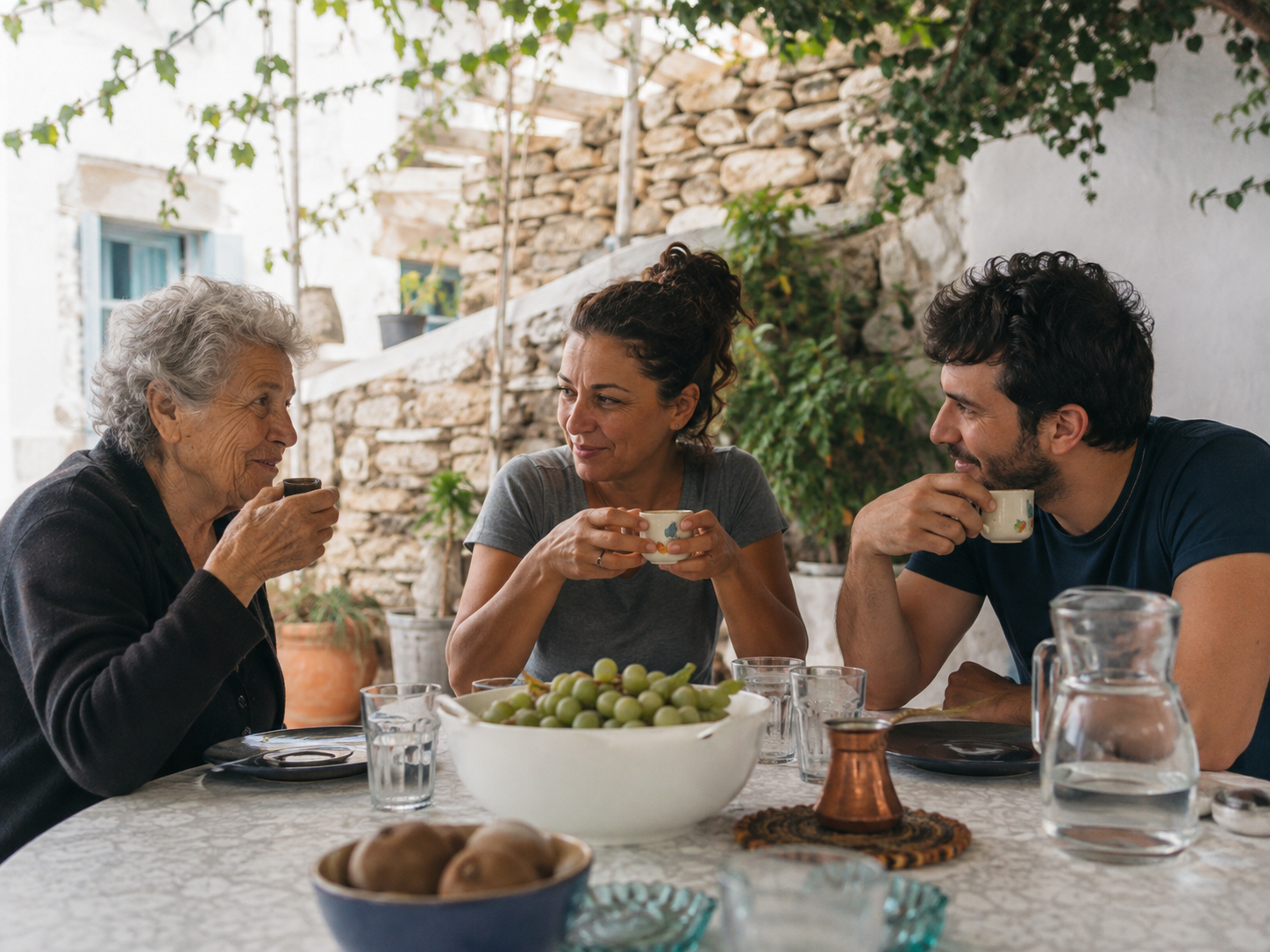
Woven through all of that is the daily coffee. On Ikaria the little cup of boiled Greek coffee is not a rushed morning fuel-up but a social ritual, taken slowly, often with company, sometimes several times a day. When researchers went looking at the island’s habits, this near-universal one stood out, and they decided to test whether the coffee itself might be part of the longevity picture. It was a reasonable question, because the coffee was everywhere and the people were remarkably well. And unlike a supplement someone might take for its supposed benefits, the coffee on Ikaria was simply part of the culture, drunk for pleasure and companionship long before anyone thought to study it, which is exactly the kind of deeply embedded habit that longevity researchers find most interesting.
The Study Everyone Quoted
The research that made the news was led by Professor Gerasimos Siasos and colleagues at the University of Athens Medical School, published in the journal Vascular Medicine in 2013 as part of the broader Ikaria Study. The team looked at 142 elderly islanders, aged between 66 and 91, and measured the health of their blood vessels while recording their coffee-drinking habits. A striking 87 percent of them drank boiled Greek coffee every day, which tells you how deeply the habit is woven into island life, so common that it was almost the default rather than a choice worth remarking on.
The finding was clear and dose-dependent. The people who drank the boiled Greek coffee had significantly better endothelial function, a key measure of blood-vessel health, than those who drank other types of coffee, and the more of it they drank across the low, moderate, and high categories, the better that measure tended to be. Even among participants with high blood pressure, the Greek-coffee drinkers showed healthier vessels. It was exactly the kind of tidy, quotable result that travels fast, and travel it did, which is precisely why it needs to be held with some care.
What the Study Actually Measured
To read the finding honestly you have to know what endothelial function is, because it is not the same thing as living longer. The endothelium is the thin layer of cells lining your blood vessels, and how well it works, measured by a technique called flow-mediated dilation that watches how an artery widens in response to blood flow, is a recognized marker of cardiovascular health. Poor endothelial function is associated with higher cardiovascular risk, so it is a meaningful thing to measure, and better function is genuinely a good sign.
But it is a marker, a surrogate, not an outcome. The study did not show that Greek coffee made anyone live longer or prevented a single heart attack, it showed that the coffee drinkers had a better score on a test that correlates with heart health. That is a real and encouraging association, but it is a step removed from the dramatic claims that followed, since a healthier vessel-widening response on an ultrasound is not the same as a proven extra decade of life. Keeping that distinction in view is the whole difference between reading the study accurately and swallowing the elixir headline whole. Researchers use markers like endothelial function precisely because following thousands of people for decades to count heart attacks is slow and expensive, so a quick vessel measurement is a reasonable stand-in, but a stand-in is what it is, and a good score on it is a hopeful sign rather than a guarantee of anything.
Why the Boiling Might Matter
There is a plausible reason the specific preparation could matter, and it comes down to what boiling does versus filtering. Boiled Greek coffee, close cousin to Turkish coffee, is made from very finely ground, almost powdery beans simmered in a small tapered pot called a briki, and crucially it is unfiltered, so the grounds and their compounds stay in the cup rather than being caught in paper. That means the drink is especially rich in the polyphenols and antioxidants, compounds like chlorogenic acid, that coffee carries and that a paper filter strips away. It is the same reason unfiltered coffees have a fuller, heavier body in the cup, since the very compounds that give the drink its character are the ones the filter removes.
These polyphenols are the leading suspect for any vascular benefit. Researchers think they may support blood-vessel health by reducing harmful oxidative stress and helping the vessels relax and widen, and boiled Greek coffee also tends to carry only a moderate amount of caffeine, so it delivers the beneficial compounds without an enormous stimulant load. The contrast the study drew was with the filtered, larger-cup coffee common elsewhere, which loses more of those compounds to the filter and is often drunk in far greater volume. So the hypothesis is not that coffee is magic but that this particular unfiltered, polyphenol-rich, moderate preparation, drunk in small amounts as a ritual, may be a gentler and richer way to take it. There is a certain logic to it that goes beyond the chemistry, too, since a tiny cup savored slowly is a very different thing from a large one drunk fast and refilled all morning, both in what it contains and in how the body meets it.
Why It Is Not the Elixir
Here is the part the headlines skipped, and it matters. The study was small, it looked at a single moment in time rather than following people for years, and it measured a marker rather than actual lifespans or heart attacks, all of which means it can show an association but cannot prove that the coffee causes better health, let alone longer life. It is entirely possible that the coffee drinkers differed from the others in some other way the study could not fully separate out.
More importantly, Ikaria’s famous longevity is the product of a whole way of living, not a single beverage. The islanders’ long lives rest on their diet, their constant movement, their naps, their tight community, their calm, and very likely their genes, and the coffee is at most one small thread in that rich tapestry.
To pull that one thread out and sell it as the secret is to badly misread both the study and the island, because no one on Ikaria lives to a hundred because of coffee alone, and drinking Greek coffee in an otherwise unhealthy life will not import their longevity. The honest reading is modest and still lovely, that a traditional, polyphenol-rich coffee is associated with better vessel health in a place where people live unusually well, and that it is a pleasant, harmless, possibly mildly beneficial ritual, not a cure for aging. That modesty does not make it a disappointing story, because a genuinely interesting association reported accurately is worth far more than a miracle reported falsely, and the true version leaves you with a lovely cup of coffee and your expectations intact.
The Wider Blue Zone Picture
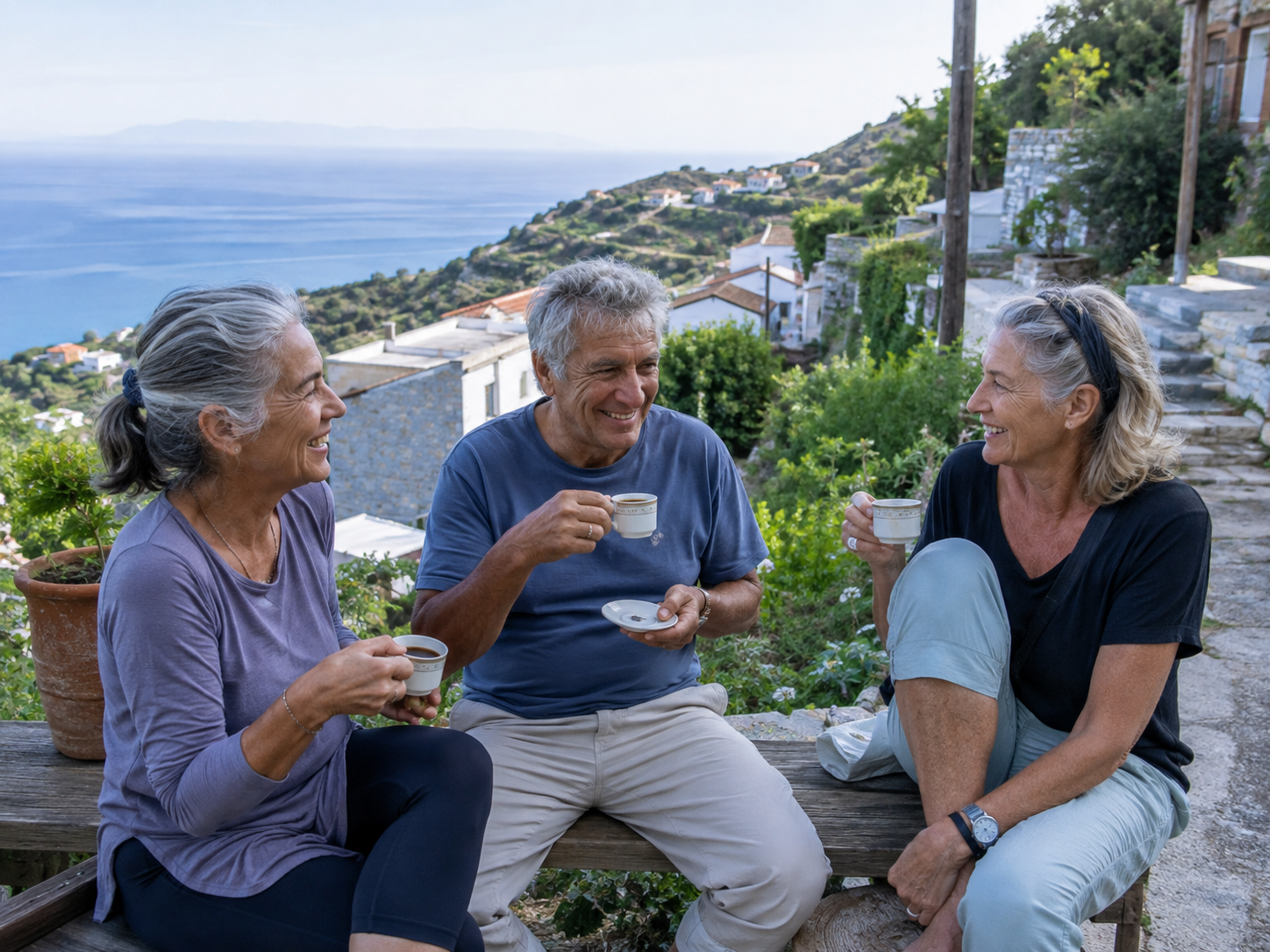
It is worth sitting with the rest of what Ikaria does, because it is the context that keeps the coffee in proportion. The islanders eat a largely plant-based Mediterranean diet, heavy on wild greens, beans, vegetables, olive oil, and fish, with meat as an occasional thing rather than a centerpiece. They move constantly and gently, walking the island’s steep terrain and tending gardens well into old age, so exercise is woven into daily life rather than scheduled. They nap in the afternoon, they keep strong ties to family and neighbors, they drink herbal teas made from local plants, and they live at a pace that treats time as abundant rather than scarce.
Set the coffee against all of that and its place becomes clear. It is one pleasant, healthful habit among a dozen, sharing a table with the greens and the walking and the naps and the company, and it would be strange to credit the coffee for what the whole pattern produces. This is the honest way to read every single-food longevity story, not just this one, because the places where people live longest are never living long because of one magic ingredient but because of an entire way of life that is hard to bottle and harder still to sell. The coffee is real and lovely, and it is a footnote, not the headline. Reading it any other way does a disservice both to the islanders, whose long lives are an achievement of a whole culture, and to the reader hoping a single cup might do what only a life can.
What the Broader Coffee Research Says

The Ikaria finding does not stand entirely alone, which is worth knowing, because moderate coffee drinking has a reasonably encouraging track record in the wider research. Large population studies have associated moderate coffee consumption with a modestly lower risk of several conditions and even with lower all-cause mortality, and coffee is a leading source of antioxidants in many people’s diets. So the idea that a moderate coffee habit is compatible with good health, and possibly mildly supportive of it, is not fringe.
But the same cautions apply across all of it. This is largely observational research, tangled up with the fact that coffee drinkers differ from non-drinkers in many ways, and the effects, where real, are modest rather than transformative. The sensible synthesis is that moderate coffee is, for most people, a harmless and possibly slightly beneficial pleasure, that the unfiltered Greek preparation may deliver more of the good compounds, and that none of this rises to the level of a health intervention you would undertake for its own sake. You drink coffee because you enjoy it, and the science offers reassurance rather than a prescription. That is a genuinely freeing way to hold it, since it means you can enjoy your daily cup without either guilt or grand expectations, knowing the evidence leans gently in coffee’s favor without needing to pretend it does more than it does. The Ikaria study fits neatly into that picture as a small, specific, encouraging data point, one island’s traditional cup showing up alongside better vessels, no more and no less.
How the Islanders Actually Make It
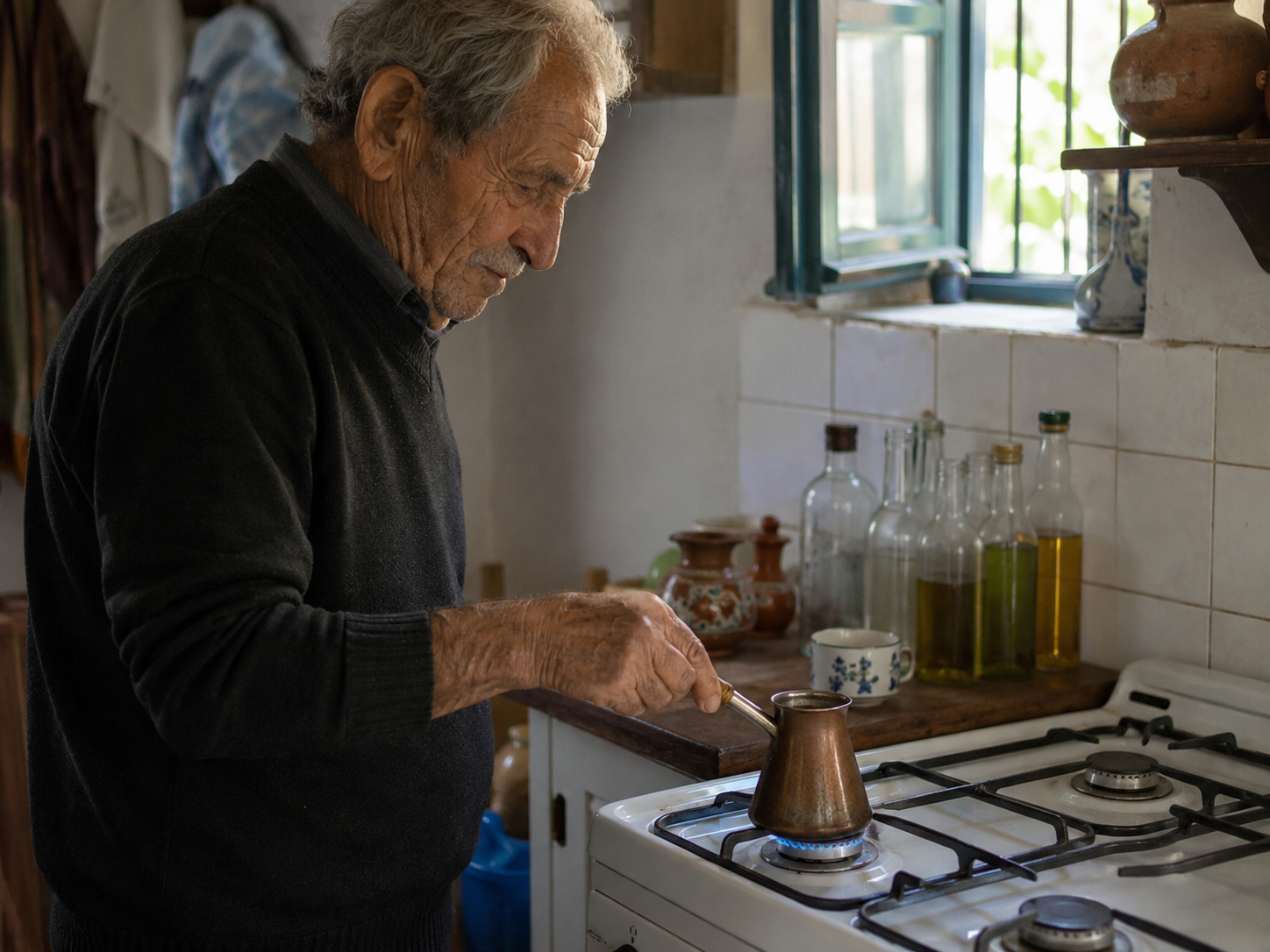
If the ritual appeals, and it is a genuinely lovely one, making it is simple and part of the pleasure. You measure a small demitasse of cold water into a briki, the little long-handled pot, add a heaped teaspoon or two of very finely ground coffee and as much sugar as you like, and stir it over low heat. The trick is patience and low heat, because you do not let it reach a rolling boil but bring it slowly until a foam, the kaimaki, rises to the top, and then you pour it, foam and all, into a small cup and let the grounds settle before you sip.
The point is as much the ritual as the drink. A tiny cup of strong coffee, sipped slowly rather than gulped from a travel mug, taken as a pause in the day and often shared, is a different relationship with coffee than the hurried American one, and that unhurried, social quality may be as much a part of the Ikarian pattern as anything in the cup. Made this way, boiled Greek coffee is a small daily pleasure with a whiff of good science behind it, which is plenty of reason to enjoy it, as long as you enjoy it as exactly that. Serve it with a glass of cold water on the side, the way the Greeks do, take it after a meal or in the quiet middle of the afternoon, and let it be a reason to sit down for ten minutes rather than another thing to consume on the move. That, more than any compound in the cup, may be the healthiest thing about it.
Do enjoy the coffee for what it is and hold the health claims lightly, since the study is small and observational, it measured a marker of vessel health rather than lifespan itself, and Ikaria’s long lives rest on far more than what is in the cup, so treat a good boiled coffee as a pleasant, polyphenol-rich daily ritual rather than an elixir, and go easy if caffeine or blood pressure is a concern for you.

About the Author: Ruben, co-founder of Gamintraveler.com since 2014, is a seasoned traveler from Spain who has explored over 100 countries since 2009. Known for his extensive travel adventures across South America, Europe, the US, Australia, New Zealand, Asia, and Africa, Ruben combines his passion for adventurous yet sustainable living with his love for cycling, highlighted by his remarkable 5-month bicycle journey from Spain to Norway. He currently resides in Spain, where he continues sharing his travel experiences with his partner, Rachel, and their son, Han.