
The French cafe is one of the great pleasures of travel, and it is also a quiet minefield of unwritten rules that an American can trip over before the coffee even lands on the table. None of them are written on any menu, but all of them are enforced by the servers and the regulars through the oldest tool in France, silent judgment, and getting them wrong turns a warm welcome into a cool one. The good news is that the rules are simple, logical once you understand them, and easy to get right, and knowing them is the difference between being treated like a tourist and being treated like someone who belongs. Here are the nine that Americans break most often, most of them before the first sip. Learn them and you will not just avoid the cool treatment, you will unlock the warm one, because a French server who sees a visitor doing things right tends to open up in a way that makes the whole experience better.
Rule One: Say Bonjour First, Always
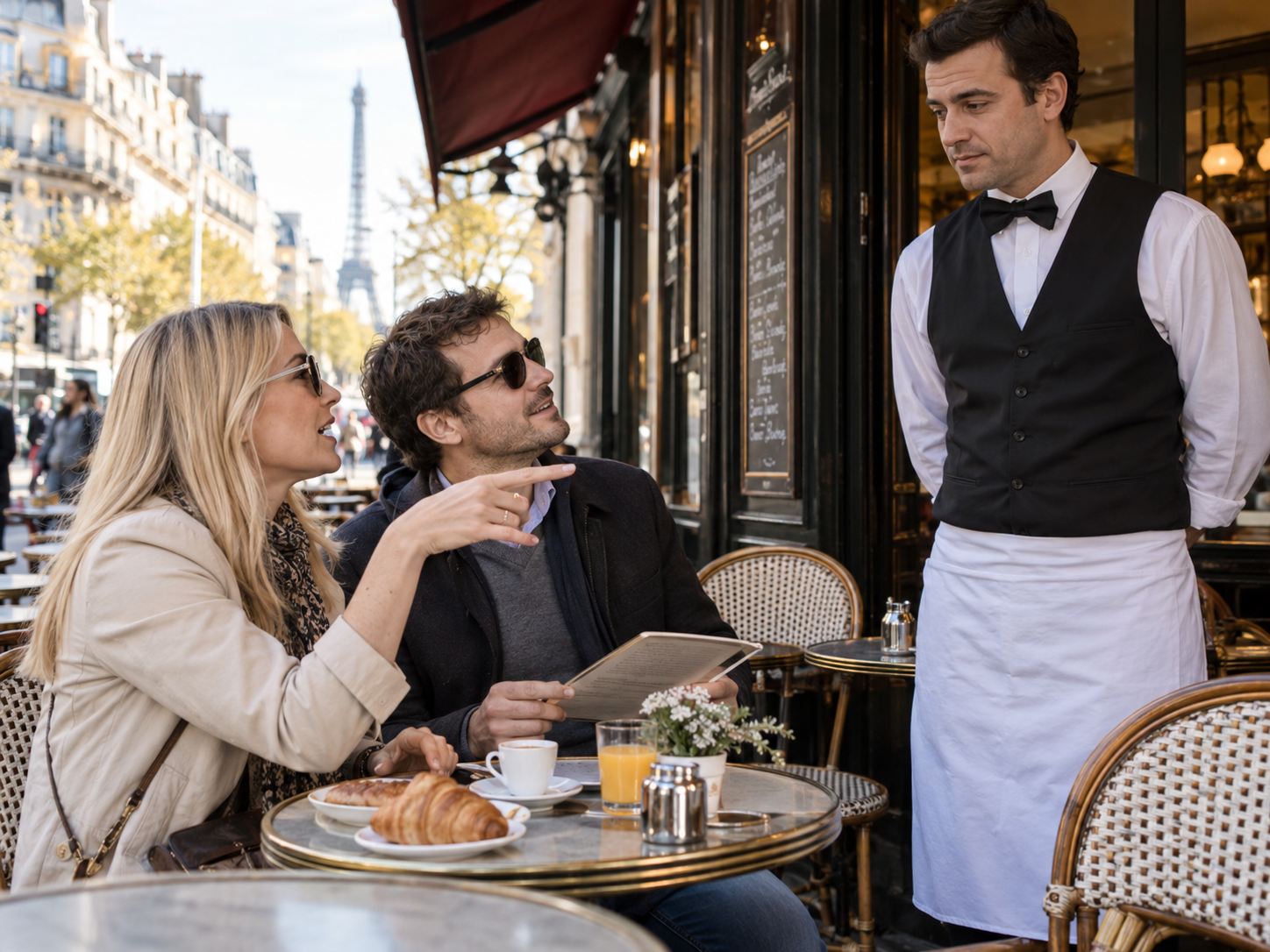
This is the single most important rule in all of French social life, and breaking it undoes everything that follows. You must greet the staff with a bonjour before you say anything else, before you order, before you ask a question, before you sit down and expect service. Walking up and launching straight into a request, even a polite one, reads to a French server as startlingly rude, because you have skipped the small human acknowledgment that French culture treats as non-negotiable.
The fix could not be easier, and it transforms your entire experience. A simple “bonjour,” or “bonjour madame” or “bonjour monsieur,” said warmly before anything else, and “bonsoir” in the evening, opens every door. The French are not cold, but they are formal about this one thing, and a visitor who greets first is met with a completely different level of warmth than one who forgets. Say it every single time, to every server, and watch the whole cafe soften toward you. Think of it less as a rule to remember and more as a tiny door you knock on before entering, since that is exactly how the French experience it, as basic courtesy rather than optional friendliness. It costs nothing and takes a second, and it is genuinely the closest thing to a magic word that travel offers, so of all nine rules this is the one to fix first and never forget.
Rule Two: Un Cafe Means an Espresso
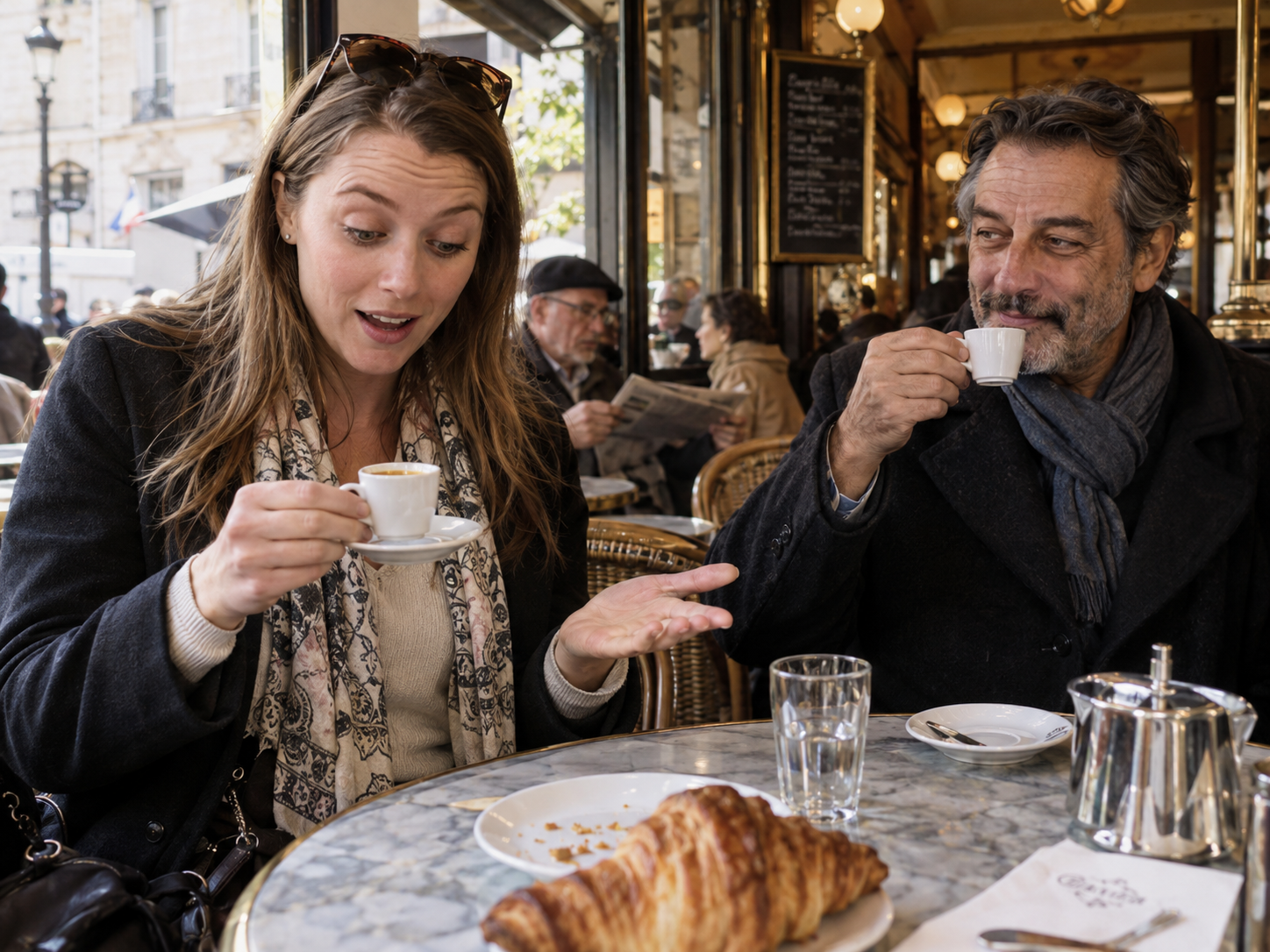
Order “a coffee” the American way and you will be surprised by what arrives. In France, un cafe means a single espresso, small and strong, served in a little cup, not the large mug of filter coffee an American pictures. This is not the cafe getting it wrong, it is simply what coffee means in France, and expecting a big American drip coffee is where a lot of visitors start their confusion. The small strong espresso is not a lesser coffee but simply the French idea of what coffee is, and most visitors who lean into it end up rather enjoying the ritual of the little cup.
If you want something closer to what you are used to, you have to ask for it specifically. A cafe allonge is an espresso lengthened with hot water, the nearest thing to an Americano, and a cafe creme is the French version of a milky coffee, an espresso with steamed milk. Learn those three, un cafe for an espresso, un cafe allonge for a longer coffee, un cafe creme for a milky one, and you can order exactly what you want anywhere in France without disappointment. It also helps to know that a cappuccino is treated as a foreign drink and often a breakfast one, so the safest bet after a meal is always the plain espresso the locals default to.
Rule Three: The Seat Decides the Price
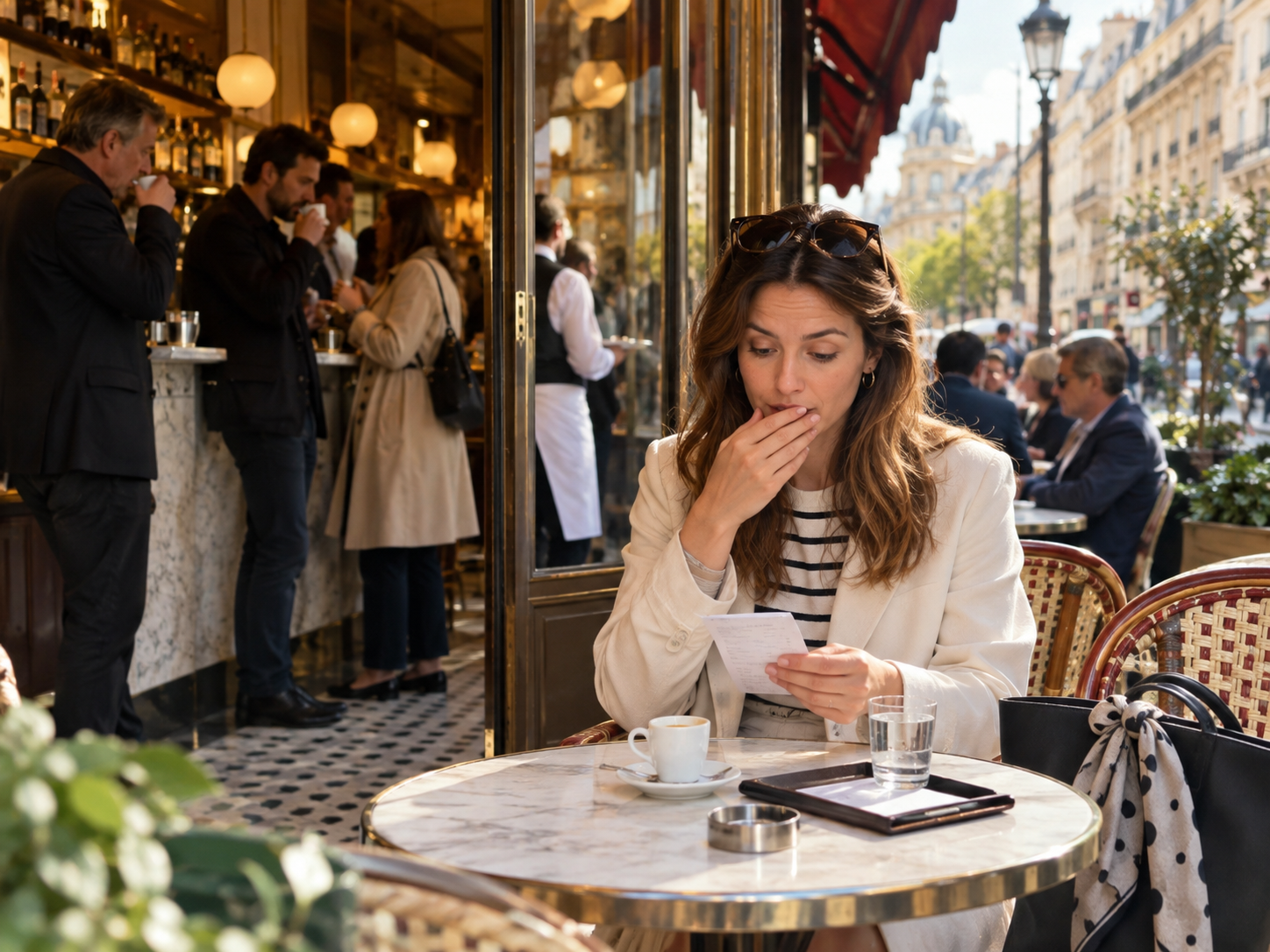
Here is the rule that startles Americans when the bill comes, and it is not a trick. In many French cafes the same coffee costs different amounts depending on where you drink it, cheapest standing at the counter, more sitting inside, and most out on the terrace. You are not being overcharged, you are paying for the seat, the space, and the right to sit as long as you like, and the cafe is selling you time as much as coffee.
The tiers are worth knowing so nothing surprises you. Standing at the bar, au comptoir, is the cheapest and the way many locals take a quick morning espresso, sitting inside, en salle, costs a bit more, and the coveted terrasse table facing the street is the most expensive of all. None of this is a scam, it is a century-old system, and once you understand it you can choose your spot on purpose, a fast cheap espresso at the bar or a leisurely pricier one on the terrace, both perfectly good depending on your mood. Once you know the seat is the product, the price differences stop feeling arbitrary and start feeling like a menu of experiences, and you pick the one you actually want. A quick espresso au comptoir on your way past is a completely different thing from an afternoon watching the street from a terrace chair, and the cafe charges accordingly because it is selling you two different pleasures.
Rule Four: Milky Coffee Is a Morning Thing
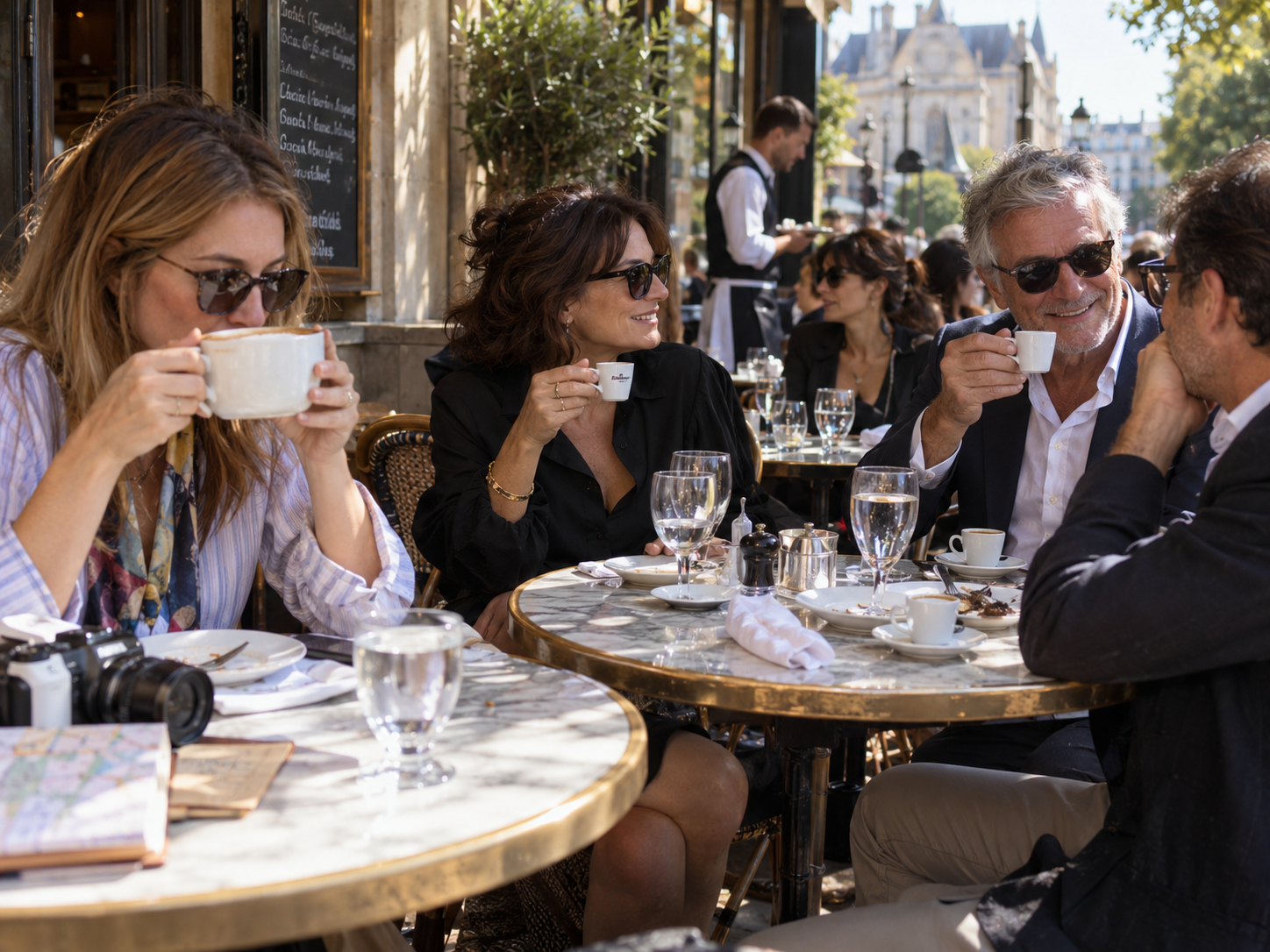
This one is subtle and marks a tourist instantly to anyone paying attention. In France, milky coffees like a cafe creme or a cafe au lait are morning drinks, taken with breakfast, and ordering one after lunch or dinner quietly signals that you are not local. The French take their milky coffee early and then switch to plain espresso for the rest of the day, so a cafe creme at three in the afternoon is a small, harmless tell.
Nobody will stop you or say a word, and if you genuinely want a milky coffee in the afternoon you should absolutely order one, since this is a soft custom rather than a hard rule. But if blending in matters to you, the move is simple, milky coffee in the morning and a plain espresso after meals, the way the locals do it. Ordering an espresso after dinner also happens to sit better on a full stomach than a big milky drink, so the custom has a certain logic behind it beyond mere habit. It is the kind of tiny detail that, once you know it, makes ordering feel effortless and native. It is exactly the sort of small local rhythm that no guidebook shouts about but every regular simply knows in their bones, and picking it up costs you nothing but attention.
Rule Five: Ask for the Free Tap Water
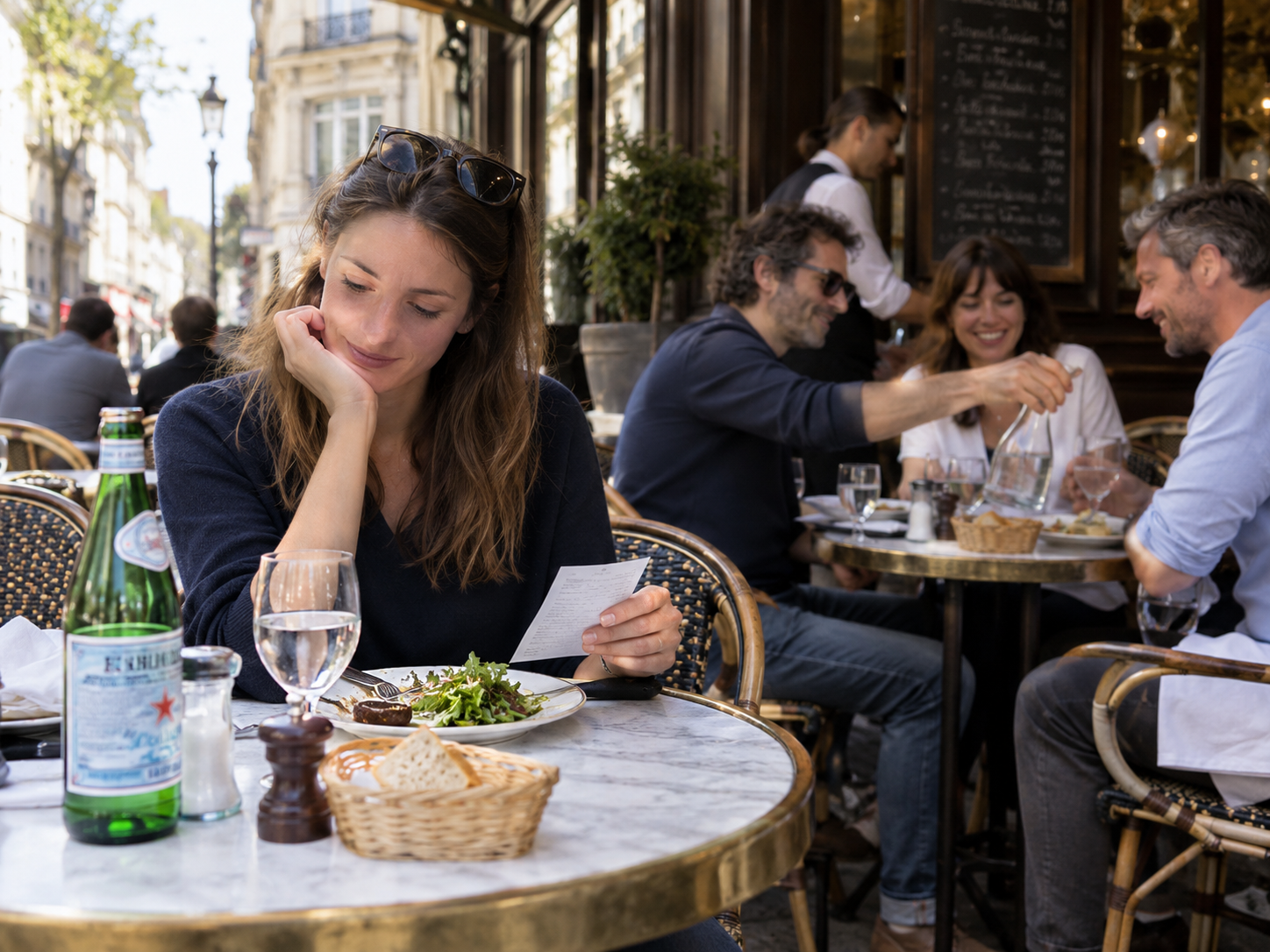
Americans routinely pay for water in France without realizing they never had to. Tap water is free and it is your right, but you have to ask for it by the correct name, une carafe d’eau, which brings a jug of perfectly good tap water at no charge. Simply asking for water, or “de l’eau,” will often get you an expensive bottle of mineral water and a bill to match, which is where visitors quietly overpay.
The locals nearly always order the carafe, and it is completely polite to do so, not a cheapskate move at all. Ask for it alongside your coffee or your meal rather than on its own, since asking for water entirely by itself can read a little oddly, and you will have all the water you want for free. It is one of the easiest euros you will ever save, and it marks you as someone who knows how things work rather than someone to be gently upsold. Over a week of coffees and meals, ordering the carafe instead of bottled water quietly saves a real amount, and it is better water politics too, since you are not paying to import a plastic bottle you never needed.
Rule Six: Service Is Included, So Relax About Tipping
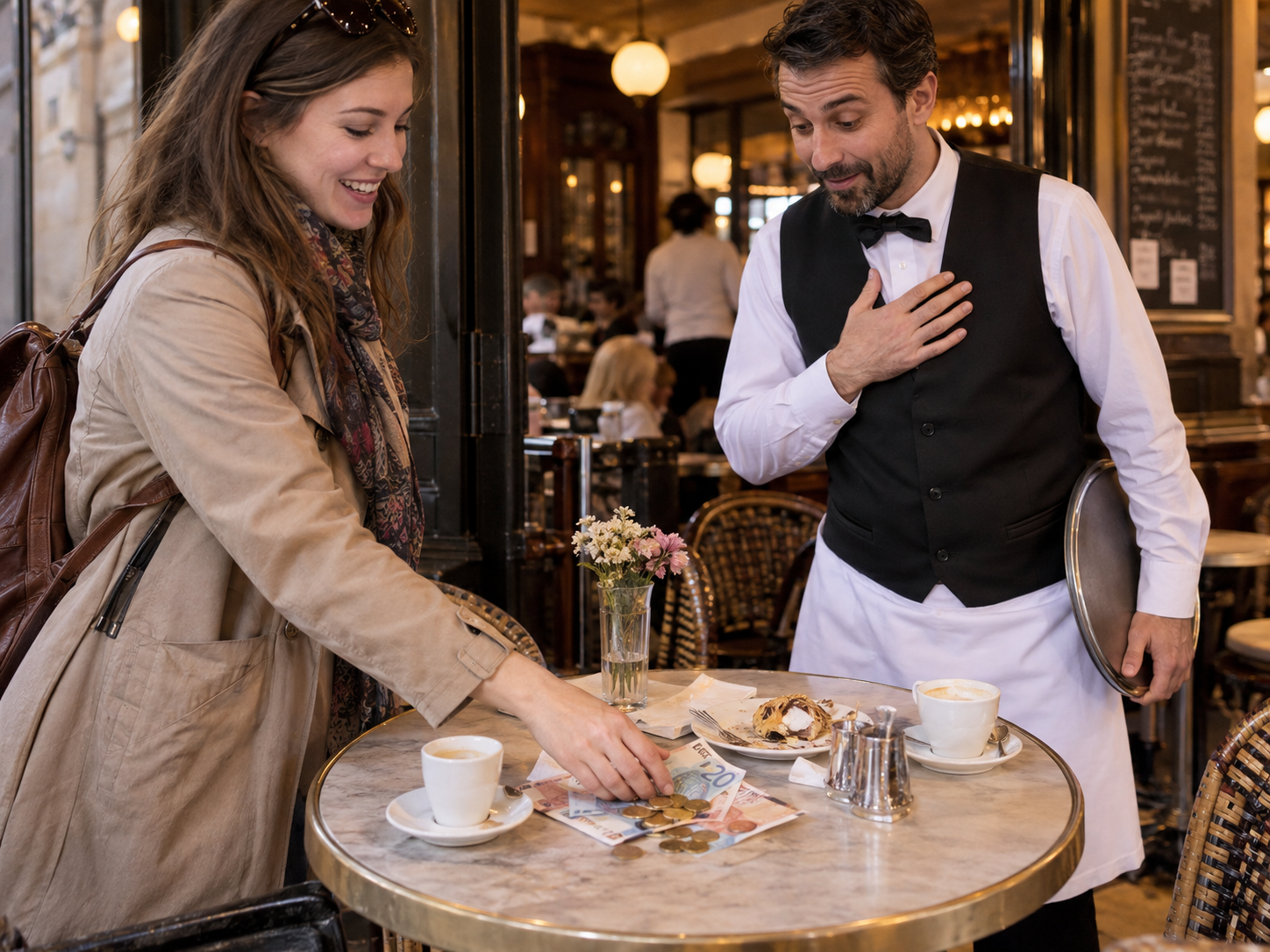
The American tipping reflex causes real confusion in France, and the truth is freeing once you understand it. Service is included in the price by law, shown as service compris, which means the server earns a proper wage and a large American-style tip of fifteen or twenty percent is simply not expected. You are not being cheap by not leaving one, you are behaving completely normally.
That said, a small gesture for good service is a kind touch, so rounding up to the nearest euro or leaving a bit of loose change, perhaps a euro or two for a nice coffee, is a generous and appreciated thing without being obligatory. The mental shift for an American is to stop calculating a percentage and simply round up a little if you feel like it, or not, since either is perfectly acceptable. Tipping in France is a small kindness, not a social tax. Understanding that removes a low hum of anxiety a lot of Americans carry into every European meal, the constant mental arithmetic of what is expected, and lets you simply enjoy the coffee.
Rule Seven: The Table Is Yours, So Take Your Time
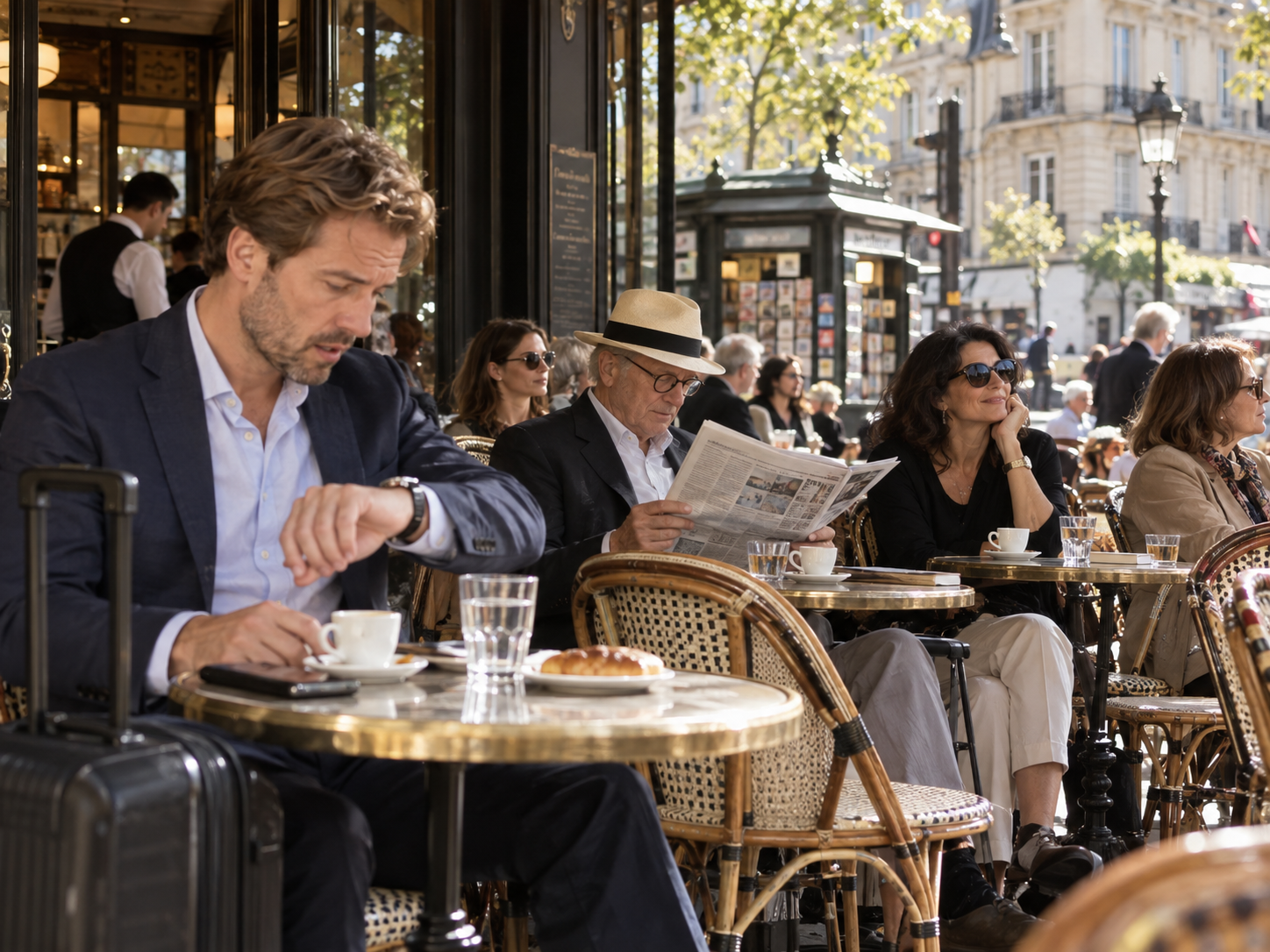
The American habit of eating and leaving quickly has no place in a French cafe, and fighting the slower rhythm only frustrates you. Once you have ordered, the table is yours for as long as you want it, and nursing a single coffee for an hour or two while you read, write, or watch the street is not just tolerated but is the entire point. There is no table-flipping, no hovering server trying to turn your seat, and no expectation that you will hurry, which for many visitors is the single most relaxing discovery of a trip to France.
This is why the cafe chairs so often face outward toward the street, because people-watching is a large part of what you are paying for with that seat. Settle in, slow down, and let the time stretch, since the cafe is built for exactly that and rushing through it wastes the best thing about it. The one small courtesy is to free up a prime terrace table during a busy peak if you have been camped there for hours, but otherwise the unhurried lingering is yours to enjoy. For an American used to the subtle pressure to order more or move on, this permission to simply exist over one coffee can feel almost radical, and it is one of the deepest pleasures the cafe has to offer, a small daily luxury the French have never given up.
Rule Eight: You Must Ask for the Bill
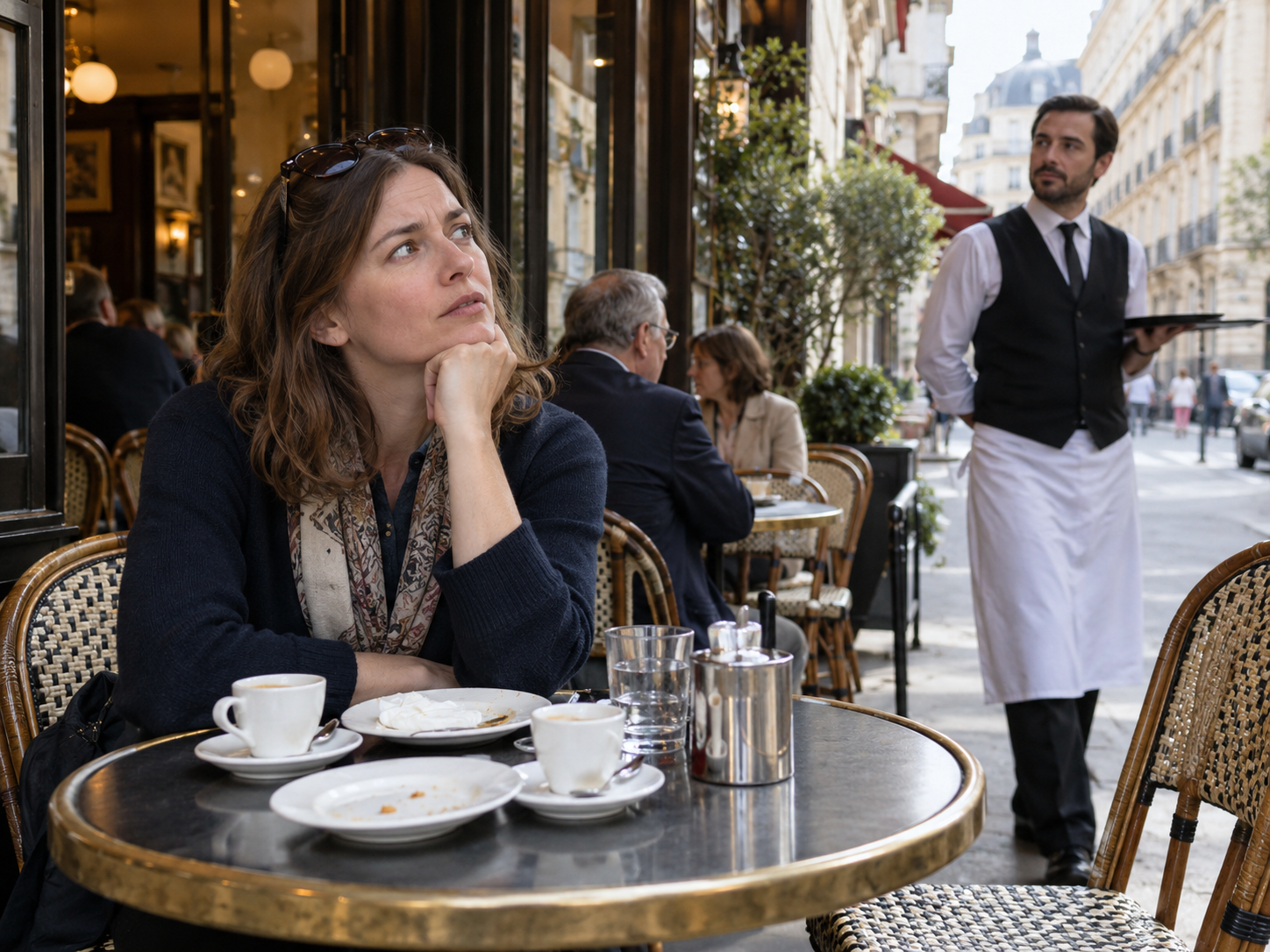
Waiting for the check to arrive on its own in France will leave you sitting a very long time. The bill, l’addition, does not come until you ask for it, and this is a deliberate courtesy rather than neglect, since bringing it unbidden would feel like the cafe was rushing you out the door. To an American used to the check appearing the moment the plates are cleared, the wait can feel like being forgotten, when in fact you are being left in peace.
When you are ready, simply catch the server’s eye and ask for “l’addition, s’il vous plait,” and it will come. Do not sit fuming that you have been ignored, because the server is being polite by their own rules, not rude by yours. Knowing this one phrase and the custom behind it turns a frustrating wait into a relaxed one, and it is the natural close to the unhurried cafe rhythm the whole experience is built around.
Rule Nine: Don’t Wave, Snap, or Shout
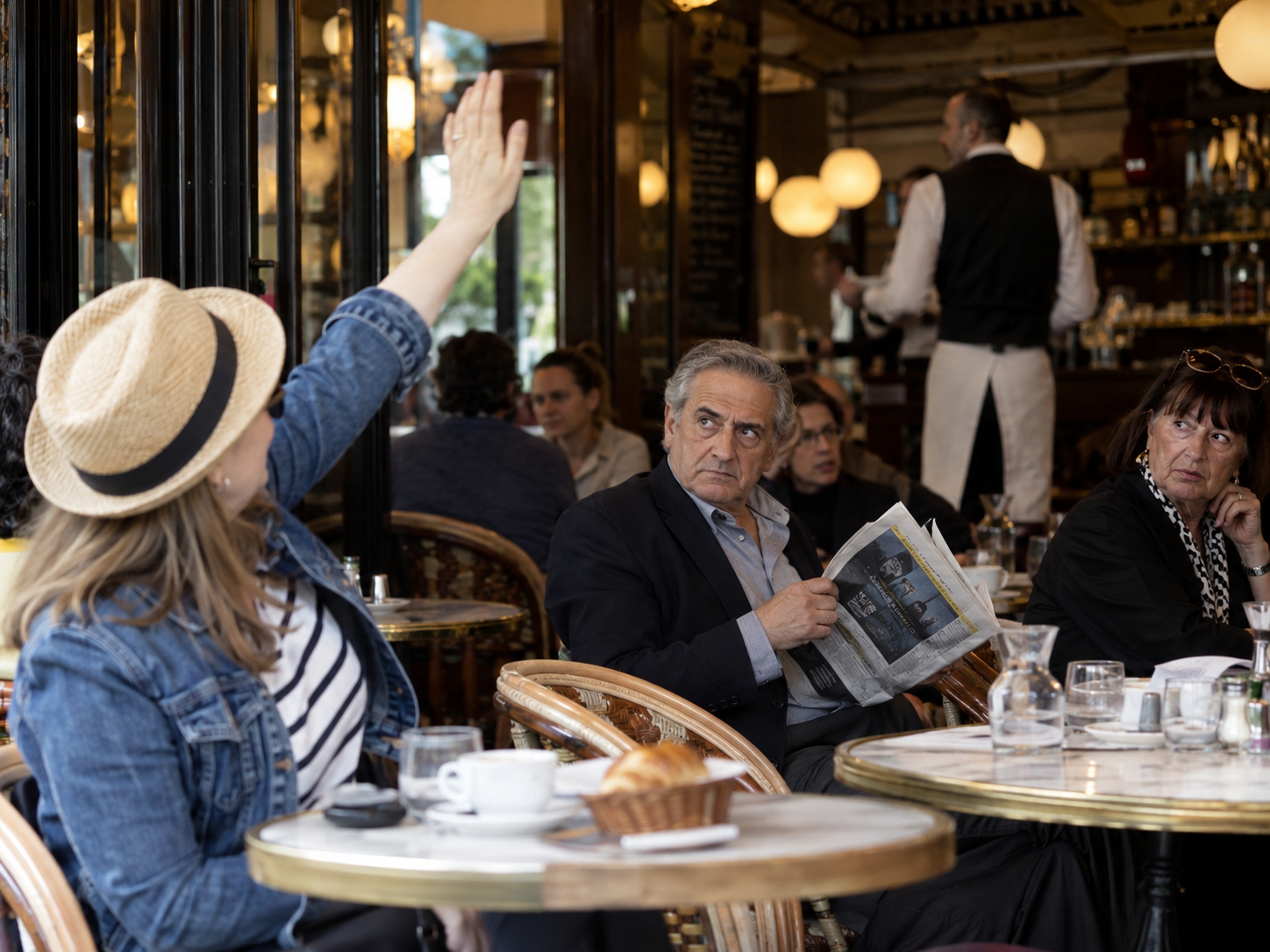
The way an American summons a server can land badly in France, where the approach is quieter and more patient. Do not wave your arm, snap your fingers, or call out loudly across the room, all of which read as brusque and a little imperious, and none of which is how the French do it. Instead you catch the server’s eye with a look and perhaps a small nod, and wait, and if you hear “j’arrive,” it simply means they are on their way and have not forgotten you.
Related to this is volume, since a loud conversation carrying across a quiet cafe is one of the fastest ways to mark yourself, and lowering your voice to match the room is a small courtesy that goes a long way. The whole spirit of the French cafe is unhurried and low-key, so summoning service gently and keeping your voice down are not stuffy rules but simply the register the place runs at. Match it, and you slip right in. None of it requires perfect French or any performance, only a slightly quieter, slightly more patient version of how you might already behave, which is a small adjustment for a large payoff in how you are treated.
The Whole Secret Is Slowing Down
Look at the nine together and a single thread runs through all of them, which is that the French cafe runs on a slower, more courteous, more human rhythm than the American coffee run, and nearly every rule is just a way of respecting that. Greet before you order, take your coffee as it comes, pay for your seat, linger without rushing, ask gently for what you need, and keep your voice low, and you have understood not just the etiquette but the entire point of the place.
None of it is hard, and none of it is designed to catch you out, since a visitor who gets even half of these right is welcomed warmly and treated like a regular. The cafe is one of the loveliest institutions in France, a place to sit and watch the world go by over a small strong coffee for as long as you please, and these nine small rules are simply the key that unlocks it, and none of them takes more than a moment to honor. Get them right and a stranger’s cafe becomes, for an hour, a place that feels a little like your own. Learn them, relax into the slower pace, and the French cafe becomes exactly the pleasure it was always meant to be.

About the Author: Ruben, co-founder of Gamintraveler.com since 2014, is a seasoned traveler from Spain who has explored over 100 countries since 2009. Known for his extensive travel adventures across South America, Europe, the US, Australia, New Zealand, Asia, and Africa, Ruben combines his passion for adventurous yet sustainable living with his love for cycling, highlighted by his remarkable 5-month bicycle journey from Spain to Norway. He currently resides in Spain, where he continues sharing his travel experiences with his partner, Rachel, and their son, Han.