
Americans tend to think of grilling as something close to a national invention, the backyard barbecue being as much a part of a Labor Day weekend as the flag itself. But the truth is that people have been cooking meat over fire everywhere fire and meat exist, and Europe grills with just as much passion as America, only differently. In Spain the tradition is the parrillada, the mixed grill, and while it shares the smoke and the sizzle of an American cookout, what lands on a Spanish grill and how it gets there follow a completely different philosophy. It is a philosophy worth knowing, both because the food is spectacular and because it might quietly change how you think about your own grill.
What follows is how the Spanish grill differs from the American one, what actually goes on it, from the famous Iberico pork to the fish and the vegetables, and what the whole approach can teach an American griller. It is one of the great grilling traditions of the world, and most Americans have never heard of it.
The Fire Is Different
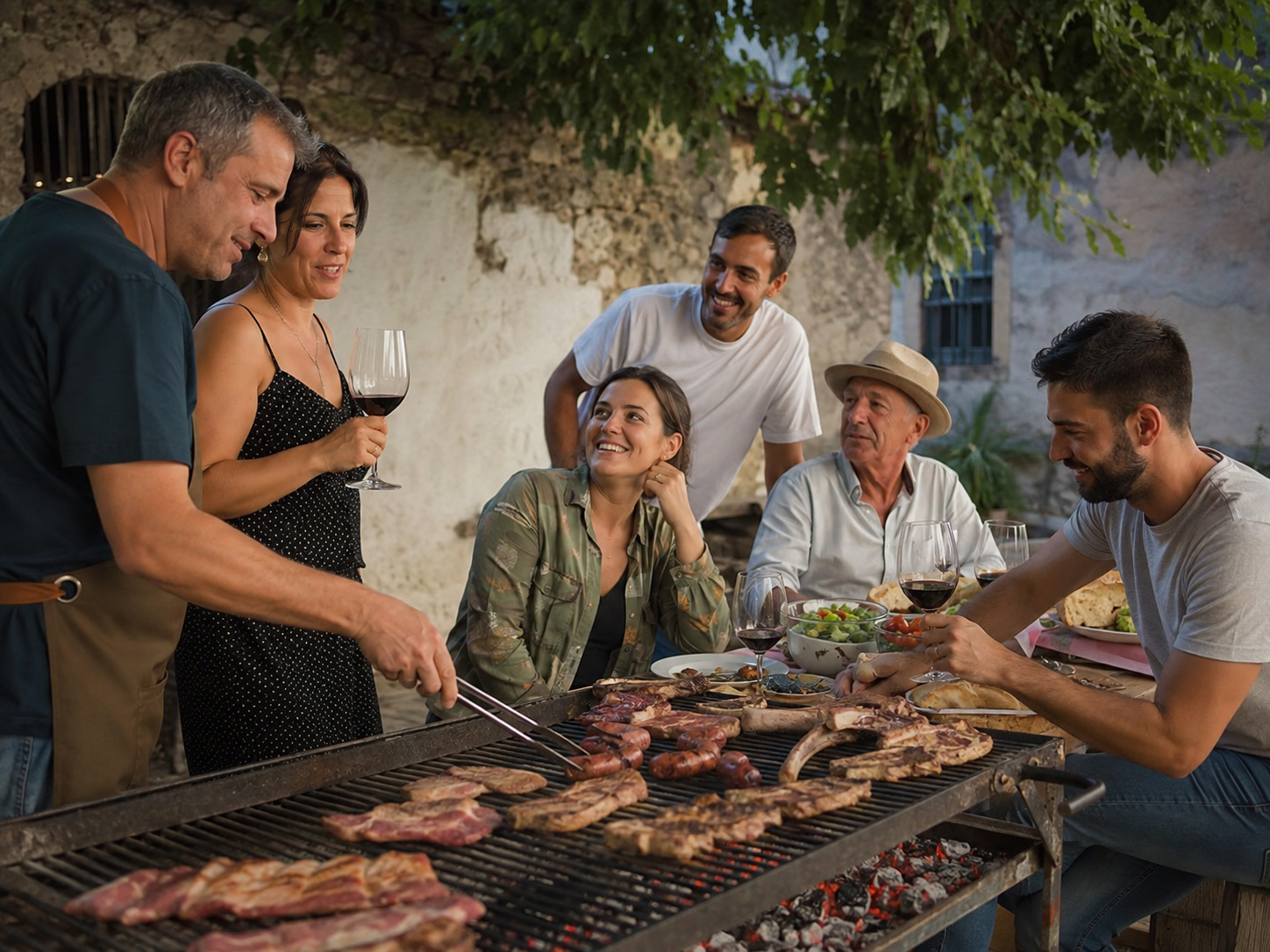
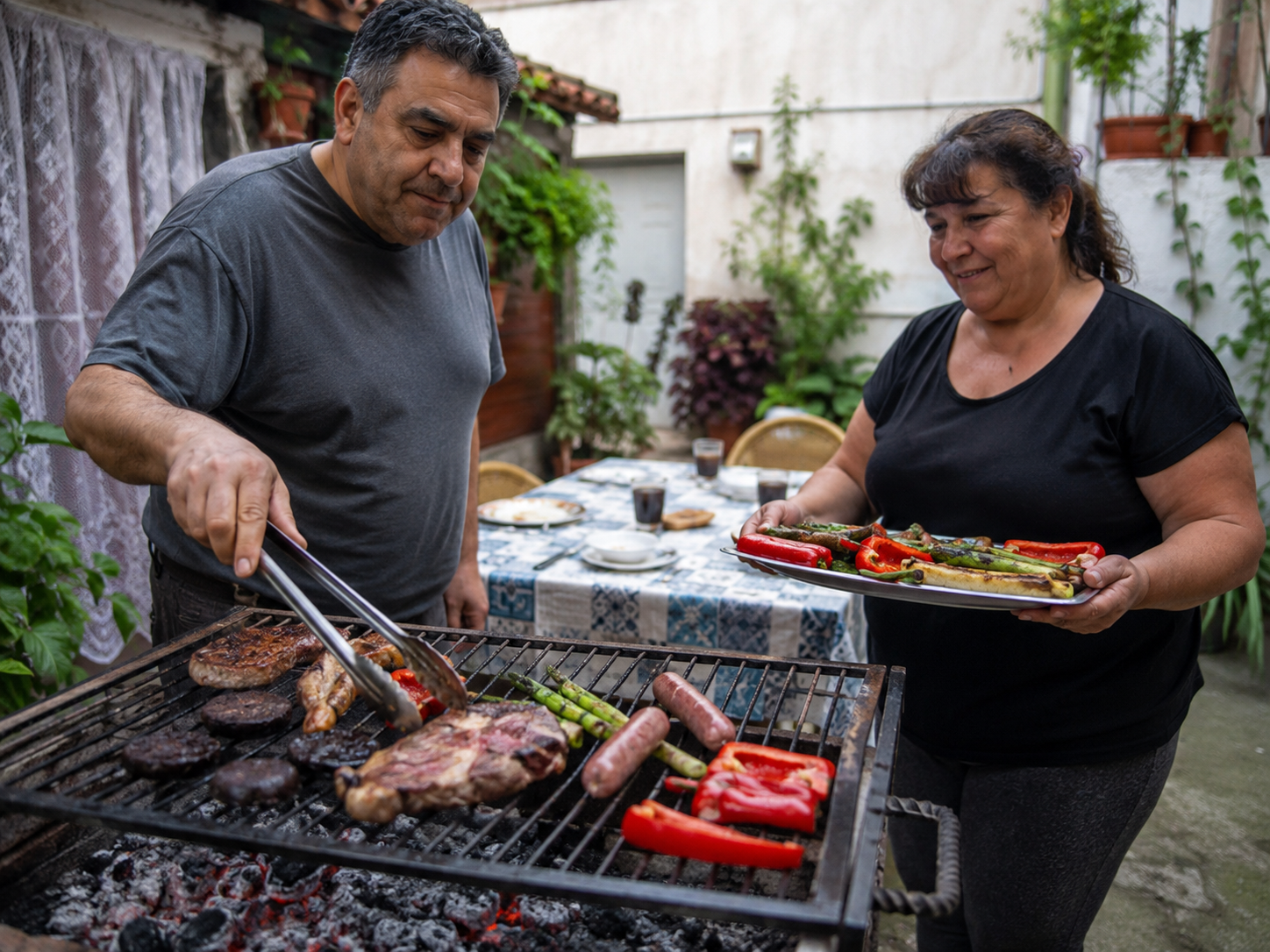
The first difference is the fire itself, because the Spanish grill, the parrilla, is built around a particular idea of heat. Where an American might reach for gas or briquettes, the Spanish tradition favors natural charcoal or, in the wine regions, dried grapevine cuttings, the sarmientos left over from pruning, which burn down to fragrant embers and lend the food a faint, distinctive smokiness. And crucially, the Spanish cook grills over the glowing embers rather than a direct flame, waiting for the fire to settle before the food ever touches the grate.
This reflects the whole spirit of the parrillada, which is patience and respect for the ingredient rather than aggression. The goal is a steady, even heat that cooks the meat through beautifully without charring it to cinders, coaxing flavor out rather than blasting it. It is a gentler, more attentive kind of grilling than the roaring-flame theatrics of some American barbecues, and it produces food that tastes of itself and of good smoke rather than of scorch. The fire, in the Spanish view, is a tool for revealing the ingredient, not for dominating it. That single principle, waiting for calm embers rather than chasing tall flames, is probably the most useful thing an American griller could take from the whole tradition, because the flames that look most impressive are exactly the ones that scorch the outside of the meat before the inside is done, and the patient Spanish approach quietly avoids that trap.
The Iberico Pork That Steals the Show
If the Spanish grill has a superstar, it is Iberico pork, and it is worth understanding why, because it is unlike any pork most Americans have met. Iberico comes from a special breed of black-footed pigs that roam free in the oak forests of western Spain, fattening on acorns, and that diet and lifestyle give the meat an extraordinary marbling and a rich, nutty, almost beefy flavor. Grilled simply, it is one of the great pleasures of Spanish food, and a genuine argument that pork, so often the plain workhorse of the American grill, can be something to seek out rather than settle for.
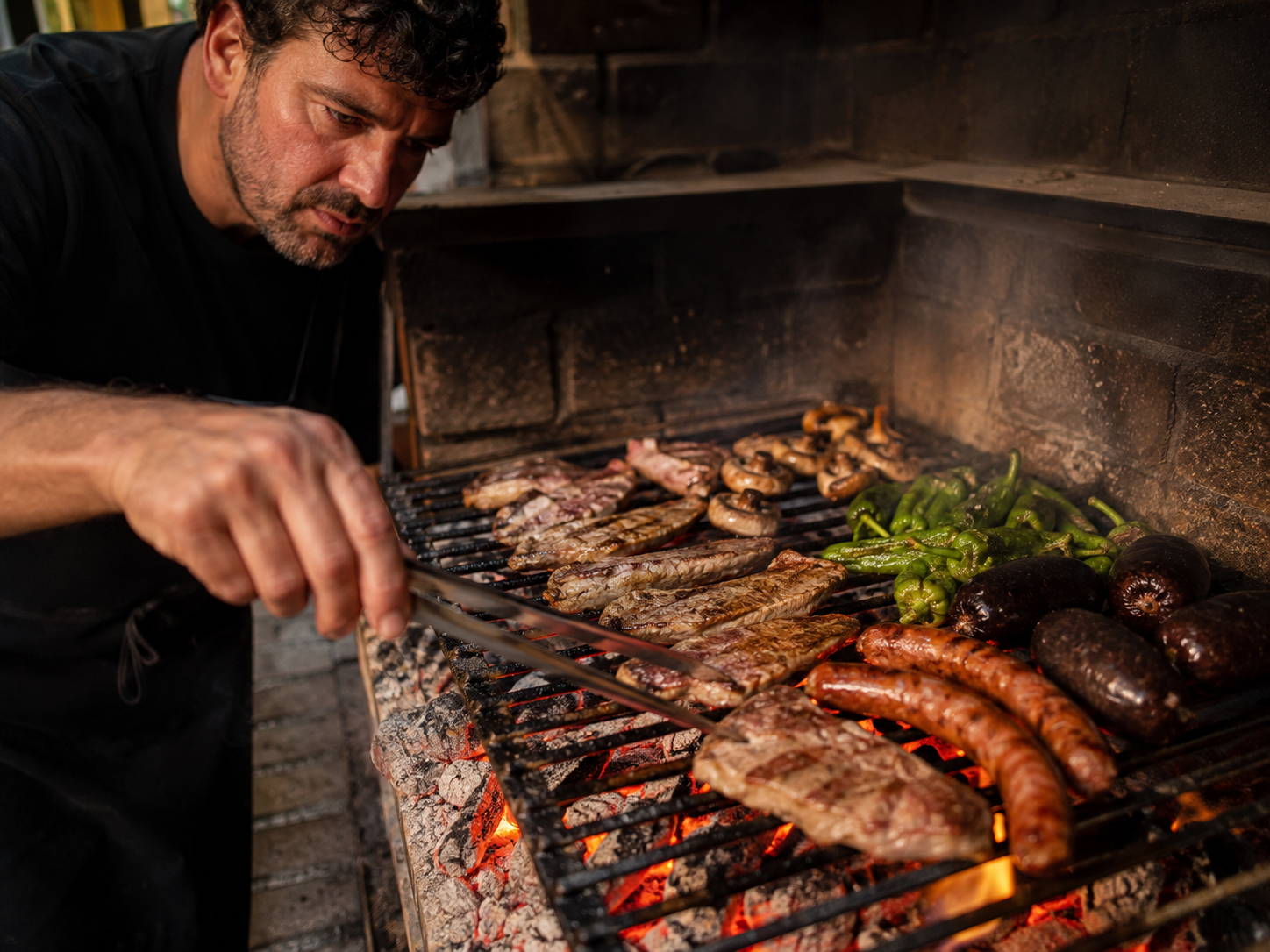
The cuts have their own poetry and their own devoted followings. The secreto, or butcher’s secret, is a hidden, heavily marbled cut from near the shoulder that grills to juicy, umami-rich perfection, while the presa, the solomillo, and the little cut called the lagarto each have their champions. What unites them is that gorgeous fat, which keeps the meat succulent over the coals where a leaner pork would dry out, and which drips and flares and perfumes the whole grill. An Iberico secreto, seasoned with nothing but salt and grilled over embers, is the dish that converts skeptical Americans to the Spanish way in a single bite. It tastes almost nothing like the lean, mild pork most Americans know, and that surprise is half the pleasure, the discovery that pork can be as rich and satisfying and worth savoring as a good steak, when it comes from the right pig and meets the fire with a light hand.
The Sausages and the Chops
Beyond the Iberico, a Spanish grill loads up with the country’s magnificent sausages and its beloved chops. Fresh chorizo, the paprika-spiced pork sausage, sizzles and crisps over the coals until its red fat runs, and alongside it go morcilla, the rich Spanish blood sausage, and chistorra, the thin, fast-cooking sausage of the Basque north, each bringing its own smoky, spiced character to the platter. These are not the mild hot dogs of an American cookout but sausages with real personality and centuries of tradition behind them. Each one carries the stamp of the region that makes it, the paprika of one, the smoke of another, so that a platter of Spanish grilled sausages is a small tour of the country in itself.
The meat cuts run to the simple and the excellent. Chuletillas de cordero, little lamb chops grilled quickly over high heat until crisp outside and pink within, are a genuine Spanish favorite, eaten with the fingers straight off the bone. For beef there is the mighty chuleton, a great aged, bone-in steak of the sort the Basque Country is famous for, seared over embers and served rare and sliced. Add some grilled chicken or rabbit, and the meat side of a Spanish parrillada is a feast built on quality rather than quantity, each cut chosen and cooked to let its own character come through. There is a lesson buried in that word rabbit, too, because the Spanish grill happily embraces meats an American cookout rarely sees, treating the whole animal as fair game for the fire rather than defaulting to burgers and dogs, and that breadth is part of what makes a Spanish grill spread feel so generous and so different.
Yes, Fish Too
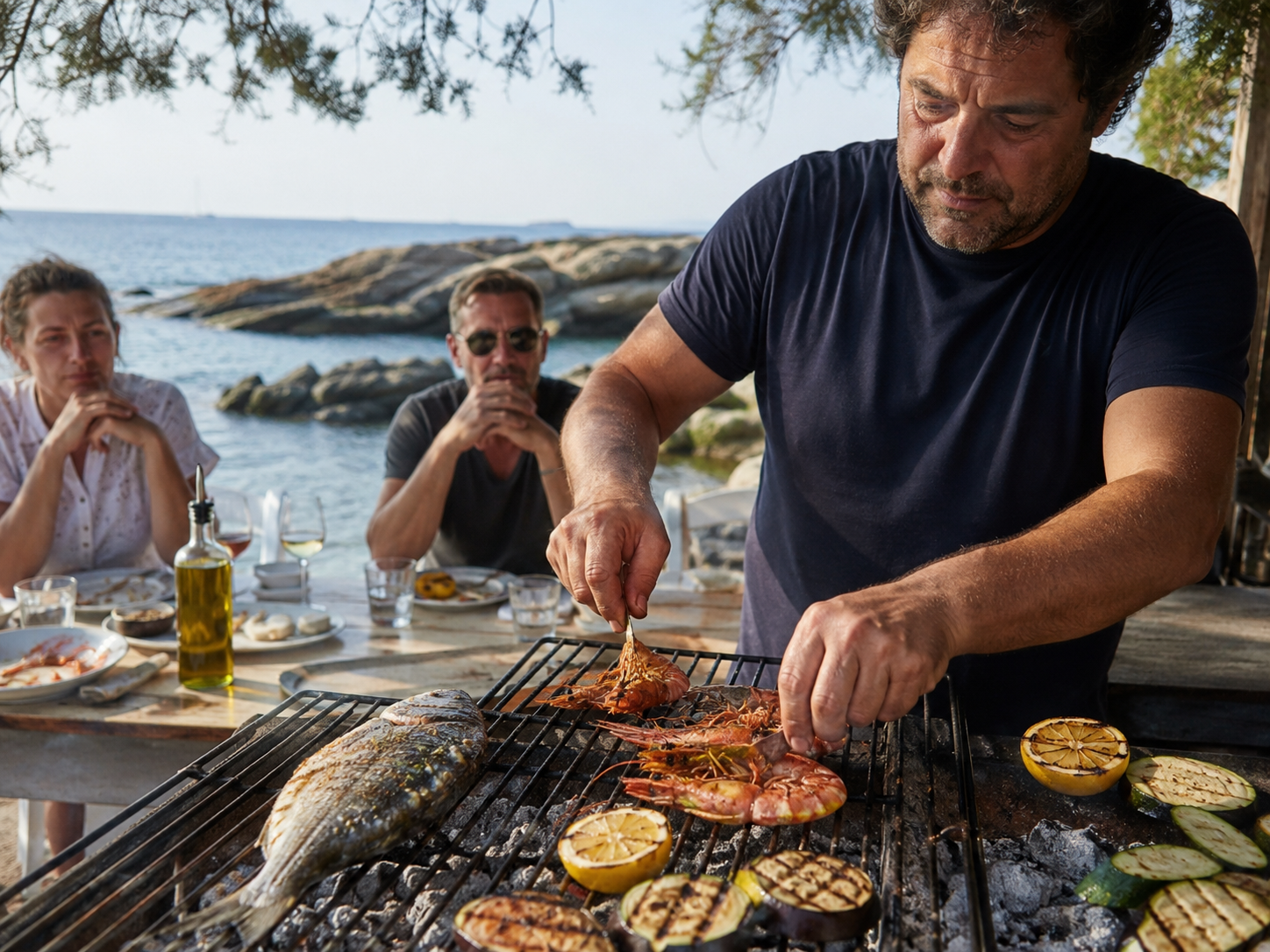
Here is where the Spanish grill parts company most sharply with the American one, because in Spain, fish and seafood are as natural on the grill as any steak. This is a country with an enormous coastline and a deep love of the sea, and a Spanish parrillada, especially near the coast, very often features grilled sardines, whole and glistening, along with sea bream, sea bass, and slabs of rich tuna belly, all cooked simply over the coals. The idea of grilling fish, which many American grillers avoid as too fussy, is second nature in Spain.
The treatment, as ever, is gentle and minimal. A whole fish is scored, brushed with olive oil, seasoned with salt, and grilled until the skin crisps and the flesh turns tender, then finished with nothing more than a squeeze of lemon. Grilled prawns, sizzling in their shells, are another beloved feature, sweet and smoky and eaten with the hands. For an American used to thinking of the grill as a place for meat alone, the ease and prominence of grilled fish in Spain is a revelation, and one of the most delicious habits worth borrowing. The fear that fish will stick or fall apart on the grill keeps many Americans from ever trying it, but the Spanish show that a whole fish, left in its skin and given a clean hot grate and a little patience, is one of the simplest and most rewarding things a fire can do, and far more forgiving than its reputation suggests.
The Vegetables and the Calcots
Vegetables are not an afterthought on a Spanish grill but a proper part of the spread, and Spain grills them beautifully. Peppers blister and sweeten over the coals, eggplant and asparagus char and soften, and mushrooms, in season, turn smoky and rich, all of them dressed simply with good olive oil and salt. This is the same instinct that produces the smoky roasted-vegetable dishes of Spanish cooking, applied straight to the grill.
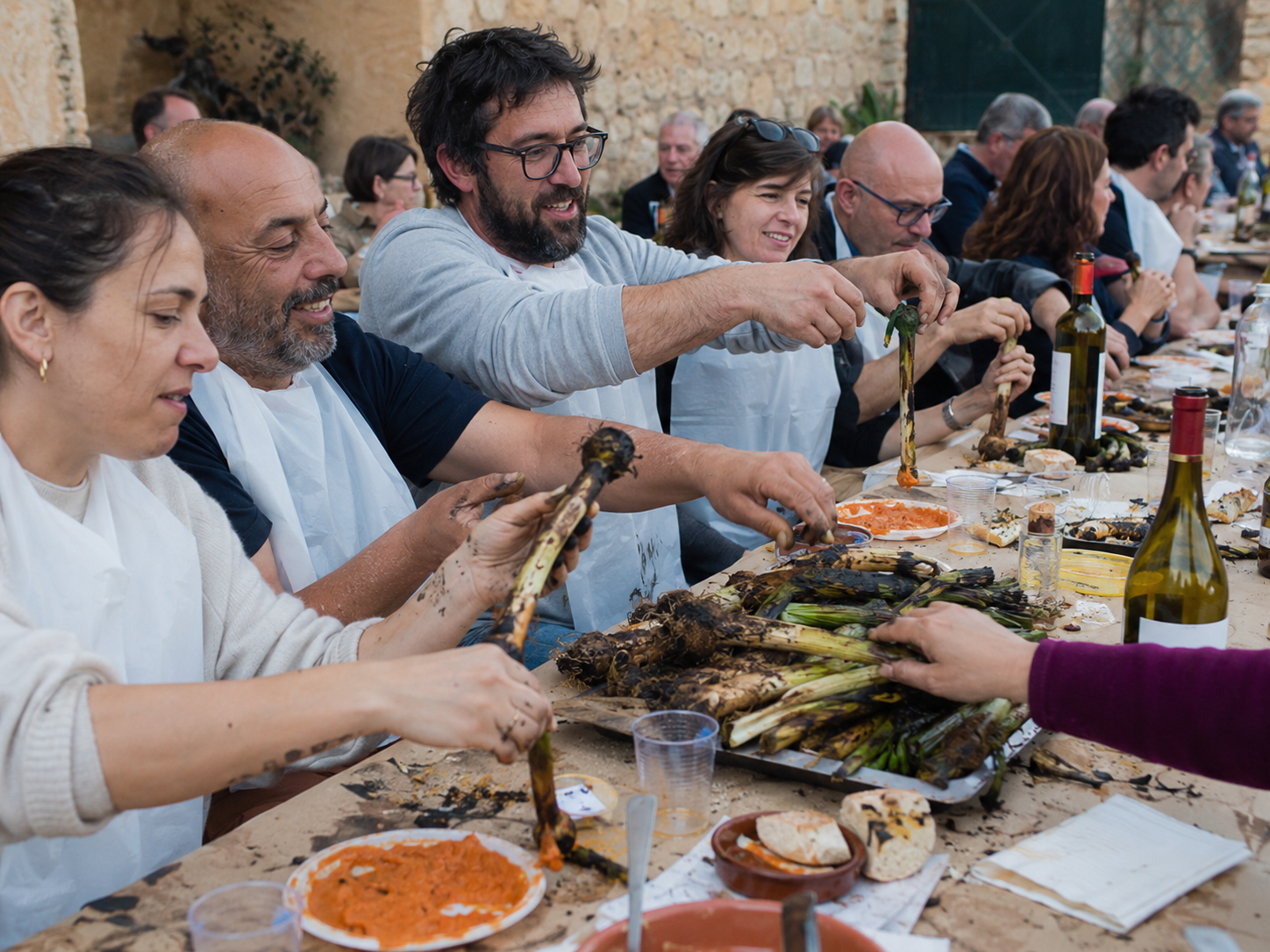
The most charming vegetable tradition of all belongs to Catalonia, where the calcots, a kind of sweet, long spring onion, are grilled over open flames until blackened outside and meltingly soft within, then peeled and dipped into a nutty, garlicky romesco sauce. The whole event, the calcotada, is a beloved late-winter feast, messy and communal, eaten with the fingers and bibs and a great deal of wine. Whole towns turn out for it, the air thick with smoke and the tables piled with blackened onions, and it is one of those food traditions so specific and so joyful that it is worth planning a trip around, a reminder that a grill can be the center of a genuine cultural festival and not just a Saturday afternoon. It is proof that the Spanish grill is not only about meat and fish but about turning the humblest ingredients, even a spring onion, into an occasion. That generosity toward vegetables is another quiet lesson, since on many American grills the vegetables are an afterthought crowded to one corner, while in Spain they are given the same care as the meat and often steal the show, blistered and sweet and glossy with oil, good enough that no one misses the meat when they are gone.
Simple Seasoning, Great Sauce
The through-line of the entire parrillada is a philosophy that an American griller can learn a great deal from, which is to trust the ingredient and season it simply. The Spanish grill is not about elaborate marinades, sugary rubs, or bottled sauces slathered on to mask the meat, but about starting with a genuinely good product and seasoning it, most often, with nothing more than salt and a drizzle of olive oil. The quality of the ingredient does the work, and the fire and the salt let it shine.
Where sauce does appear, it comes on the side and it is made from scratch, adding flavor rather than hiding it. The great Spanish grilling sauces are the garlicky allioli and the Catalan romesco, that gorgeous blend of roasted peppers, tomatoes, nuts, and garlic, both served alongside for dipping rather than smothering. And the whole thing is rounded out simply too, with crusty bread, perhaps rubbed with tomato, a green salad, and plenty of Spanish wine. It is a way of grilling that puts almost all its effort into the shopping and almost none into the fussing, which is a genuinely liberating idea. For anyone who has ever felt that grilling had become a competitive sport of secret rubs and hours of tending, the Spanish way offers a kind of permission to relax, since if the meat is good enough, all it really asks of you is a fire, some salt, and the sense to get out of its way.
A Grill Built for Gathering
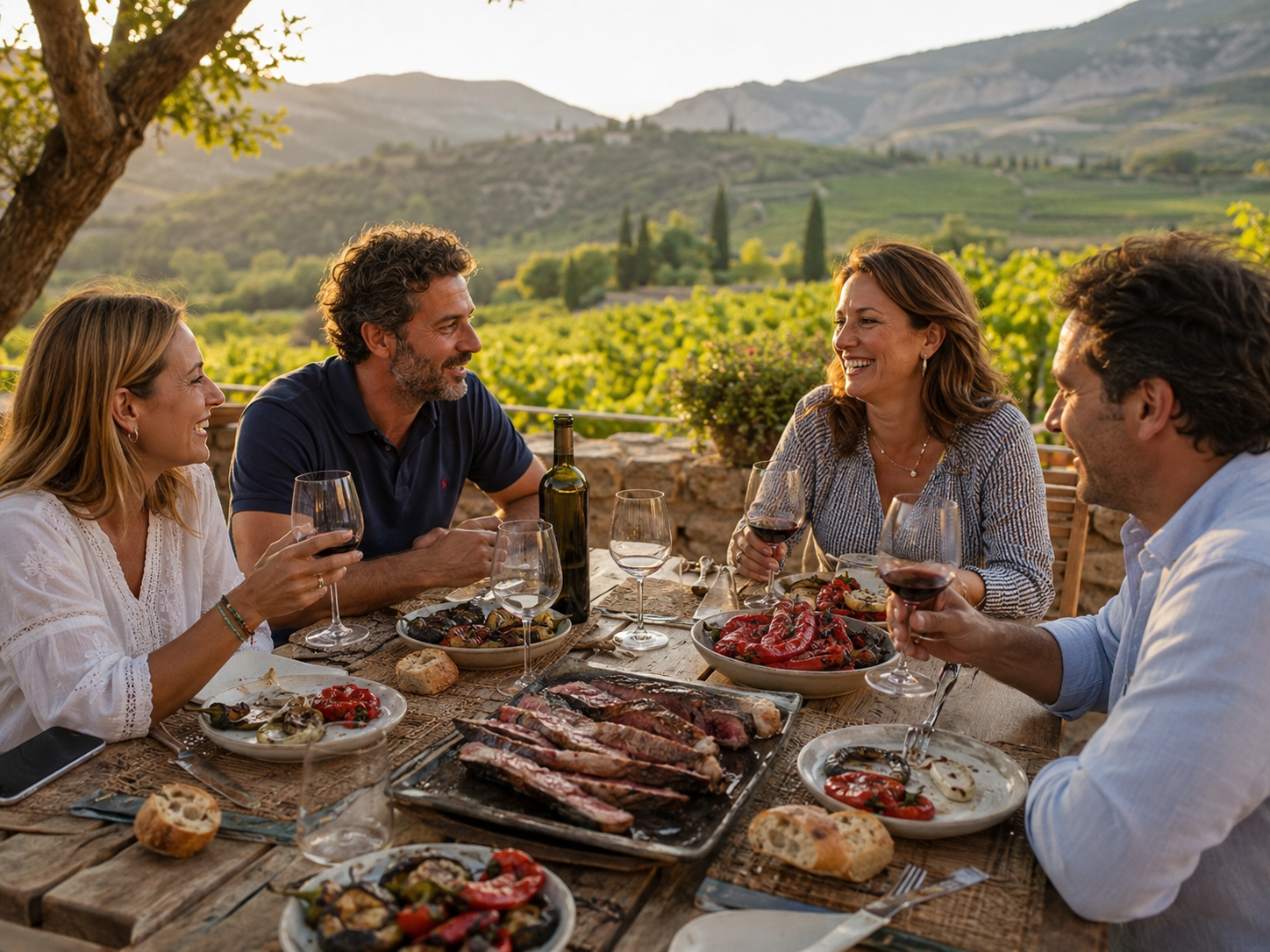
Like the American cookout, the Spanish parrillada is at heart a social event, but it unfolds at its own unhurried pace and with its own rhythm. It is a long, leisurely affair, the food coming off the grill in waves over hours rather than all at once, so that people graze and talk and drink and drift back for more as the coals slowly do their work. The grill is the center of the gathering, and the person tending it is not rushing to plate everything at a single moment but conducting a slow, delicious procession.
That pacing shapes the whole feel of the day. Because the food arrives gradually, the meal stretches into the long, wine-soaked Spanish afternoon, and nobody is expected to sit down formally and eat and be done, but rather to linger for the better part of a day around the fire and the table. It is grilling as an excuse to spend time together, which is of course exactly what an American cookout is too, and it is the deepest thing the two traditions share beneath all their differences of fuel and cut and sauce. Whatever is on the grill, the real point on both sides of the ocean is the gathering around it. Strip away the differences of fuel and cut and sauce and you are left with the same ancient scene, people drawn to a fire on a warm day, eating with their hands, talking too long, and letting the afternoon go where it will, which is perhaps why the smell of a grill feels like home to almost everyone, wherever they are from.
What It Can Teach Your Own Grill
Set the Spanish parrillada beside the American barbecue and you have two proud, delicious, and quite different grilling cultures, neither better than the other but each with something to teach. The American tradition leans toward low-and-slow smoking, sweet and spicy rubs, and generous sauces, a cuisine of transformation where cheaper cuts become magnificent over hours of patient smoke. The Spanish tradition leans the other way, toward quick, hot, simple grilling of superb ingredients, a cuisine of revelation where great product is coaxed to its best with fire and salt. One glorifies the sauce and the smoke, the other the meat and the market, and a table that borrows from both, a rack of American-style ribs beside a Spanish salt-and-embers steak, is a table that has the best of two of the world’s great grilling cultures at once.
You do not have to choose, and the fun is in borrowing. This Labor Day, alongside the usual burgers and the sauce-slicked ribs, you might throw a well-marbled cut seasoned with only salt over the coals, grill a whole fish brushed with olive oil, char some peppers and spring onions, and set out a bowl of romesco to dip into, and taste what the Spanish have known all along. Europe grills too, gloriously, and the parrillada is an invitation to grill a little more simply and let the ingredients speak, which is a lesson worth carrying to any fire. Do that once, taste what a great piece of pork or a whole fish becomes with nothing but salt and smoke, and you may find your own grilling quietly shifting toward the Spanish way, spending more at the market and less at the sauce shelf, and enjoying the results all the more for it.

About the Author: Ruben, co-founder of Gamintraveler.com since 2014, is a seasoned traveler from Spain who has explored over 100 countries since 2009. Known for his extensive travel adventures across South America, Europe, the US, Australia, New Zealand, Asia, and Africa, Ruben combines his passion for adventurous yet sustainable living with his love for cycling, highlighted by his remarkable 5-month bicycle journey from Spain to Norway. He currently resides in Spain, where he continues sharing his travel experiences with his partner, Rachel, and their son, Han.