
Every autumn, Americans pour into New England to watch the maples turn, a whole tourism industry built around the annual miracle of the leaves changing color, and it is genuinely beautiful. But there is a strange blind spot in how the world thinks about fall foliage. It is the widespread assumption that spectacular autumn color is a North American specialty, when in fact Europe puts on a leaf show every bit as dazzling and almost nobody talks about it. From the golden larch forests of the Italian Dolomites to the fiery tundra of the Arctic north, Europe in October turns as gold and crimson and copper as any Vermont hillside, just without the crowds, the traffic, and the leaf-peeper tour buses. If your fall trip could be pointed at color rather than sun, this is where to find Europe at its most quietly spectacular.
What follows is where Europe turns gold in the fall, from the alpine showstoppers to the underrated forests, along with why this glorious season goes so oddly unmarketed and how to catch it at its peak. The short version is that the leaves you crossed an ocean to avoid missing at home are waiting for you here too, only lonelier and lovelier.
The Dolomites, Europe’s Fall Showstopper
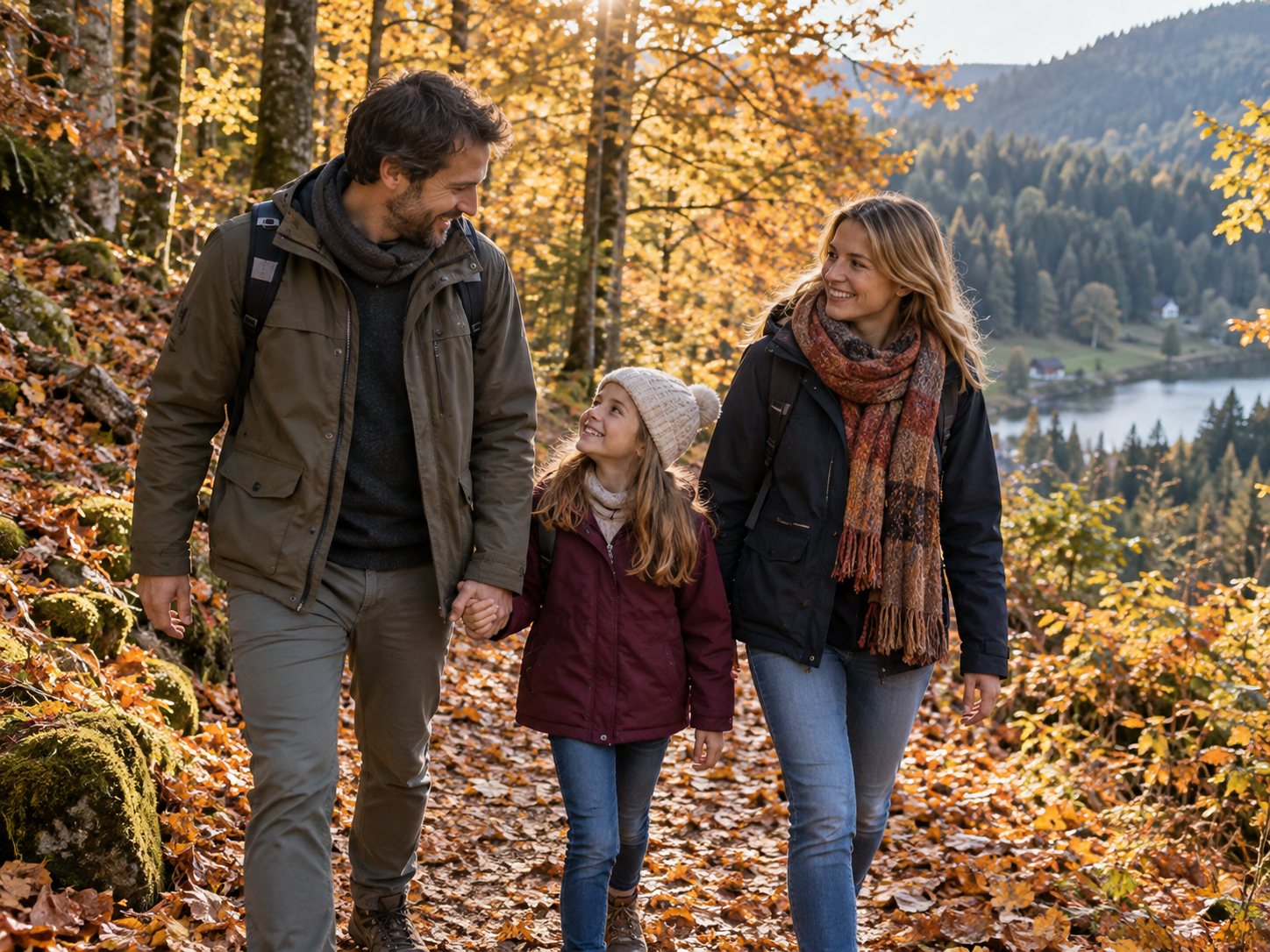
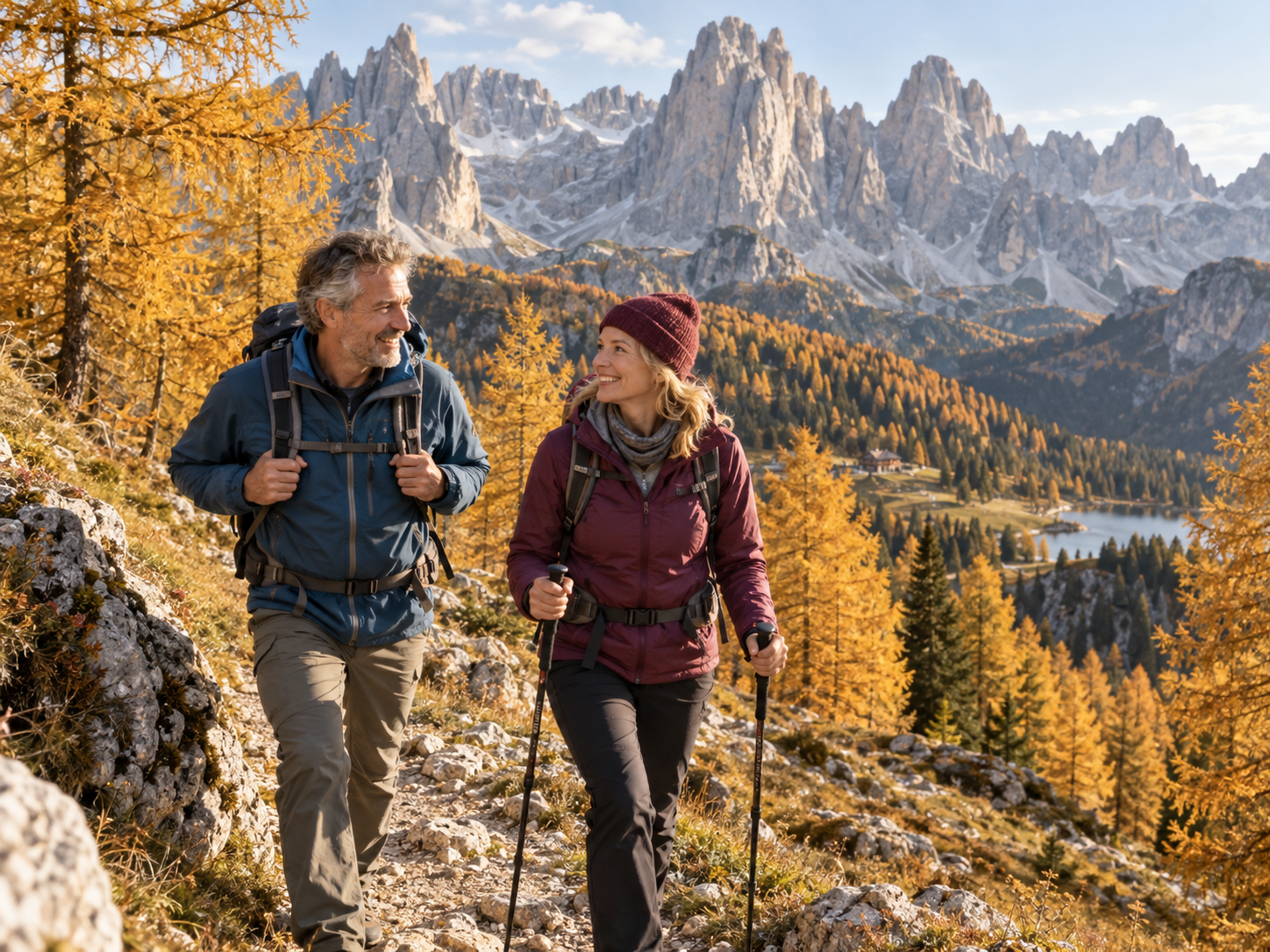
If Europe has one autumn destination to rival New England, it is the Dolomites in northern Italy, and for many who have seen it, the comparison runs the other way. What makes the Dolomites special is the larch, a rare deciduous conifer whose needles turn a brilliant gold and burnished orange in autumn, so that entire mountainsides of forest glow honey and amber against the pale gray of the jagged limestone peaks. Set that color beside the region’s mirror-still alpine lakes and you have some of the most breathtaking fall scenery anywhere on earth. Unlike the maples of New England, which turn and drop quickly, the larches hold their gold for a good stretch of weeks, and because the color climbs and descends the mountains with the temperature, a patient visitor can chase peak color up and down the valleys for far longer than a single New England weekend allows.
The show peaks from around the middle of October into early November, later than most European foliage because of the altitude, and the region is wonderfully set up to enjoy it. Base yourself near Cortina d’Ampezzo or in Val Gardena, and you can ride cable cars up to golden ridgelines, drive the dramatic mountain passes lined with glowing larches, or hike to lakes like the famous Lago di Sorapis, cradled in autumn color. For anyone who thinks fall foliage means a drive through New Hampshire, the Dolomites are a revelation, alpine grandeur and autumn gold in a combination North America simply cannot match. The scale of it is what stuns people, whole valleys and ridgelines turned to gold beneath peaks that look like they were carved by a giant, so that the color is not just pretty but genuinely dramatic, set against some of the most spectacular mountain scenery in the world.
Scandinavia’s Fiery Ruska
At the other end of the continent, the far north puts on a different but equally astonishing autumn display, and it even has its own name. In Finnish it is called ruska, the brief, blazing season when the vast tundra and forests of Lapland and the wider Nordic north erupt into reds, oranges, and yellows, the low arctic vegetation turning the whole landscape into a rolling carpet of fire. Because the north cools first, this is the earliest of Europe’s great foliage shows, arriving in September while the rest of the continent is still green. The Finns take ruska so seriously that they track it region by region and plan hikes around it, a rare case of Europeans marketing their own autumn, and for good reason, since there is nothing quite like the sight of an entire arctic landscape, from ground-hugging berry bushes to distant fells, all turned to flame at once.
Sweden, Norway, and Finland all share in it, and places like Abisko in Swedish Lapland become pilgrimage sites for those who want to see the color at its most intense. There is a magical bonus, too. This far north the autumn nights are drawing long and dark enough that a ruska trip can be paired with the northern lights, so you can spend your days walking through fiery landscapes and your nights watching the aurora dance overhead. It is a wilder, lonelier, more elemental kind of autumn than the cozy New England version, and utterly unforgettable. This is fall foliage for the traveler who wants awe rather than coziness, the vast empty north rather than a charming country lane, and for those who fall under its spell, nothing else quite compares.
Slovenia, Austria, and the Alpine Lakes
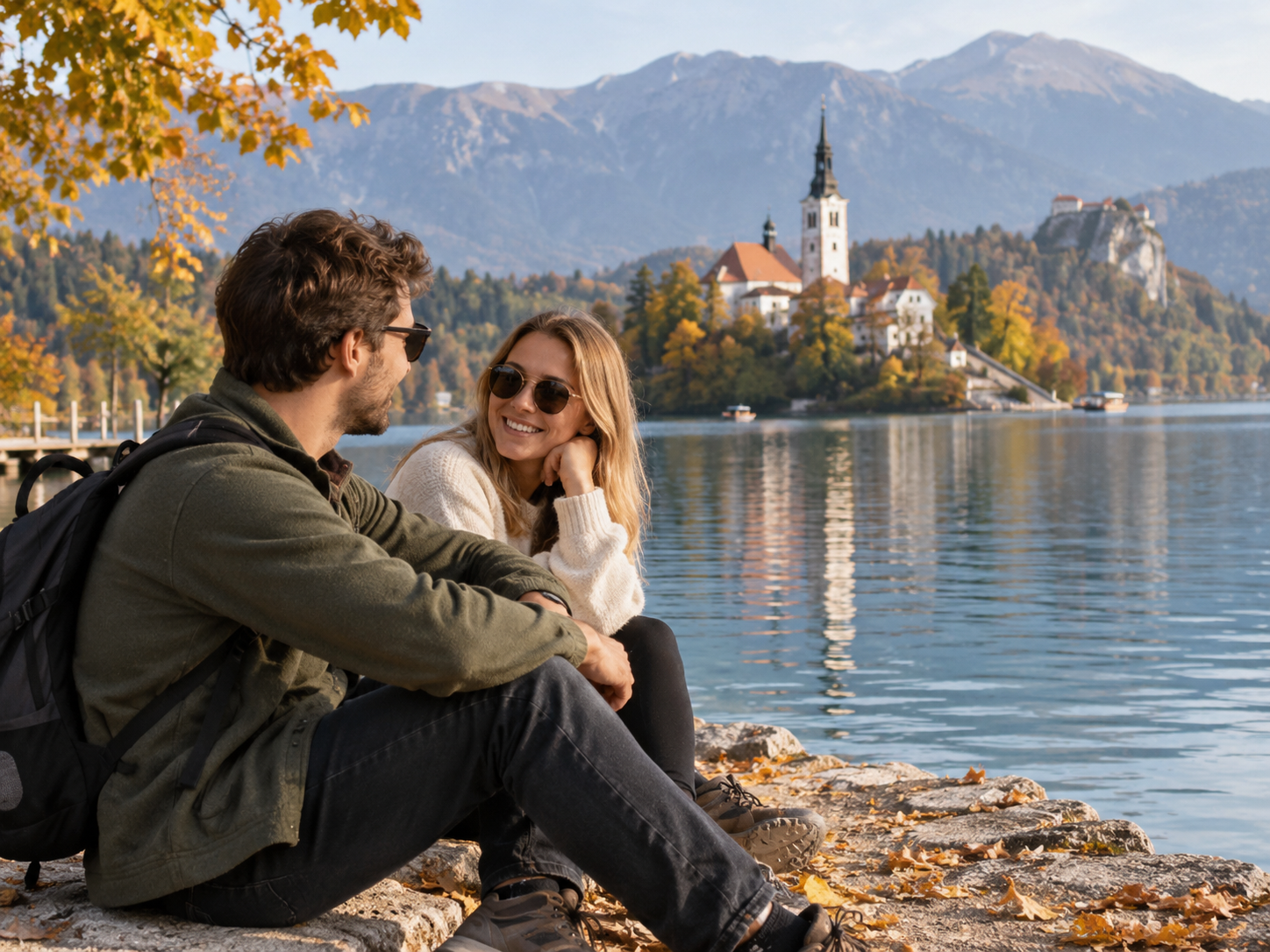
Between the Dolomites and the Arctic lies a whole band of alpine and lake country that turns glorious in the fall, and it is some of the most photogenic scenery in Europe. In Slovenia, the Julian Alps around Lake Bled and Lake Bohinj transform between mid-September and early October, the forests turning gold and copper above emerald water, with the little island church on Bled framed in autumn color like something from a fairy tale. It is compact, affordable, and still gloriously under-visited compared to the famous names farther west. A few days here in early autumn, walking the shore of a mirror-still lake beneath copper forests, feels like discovering a corner of the Alps that the crowds have not yet found, which in fall is very nearly the truth.
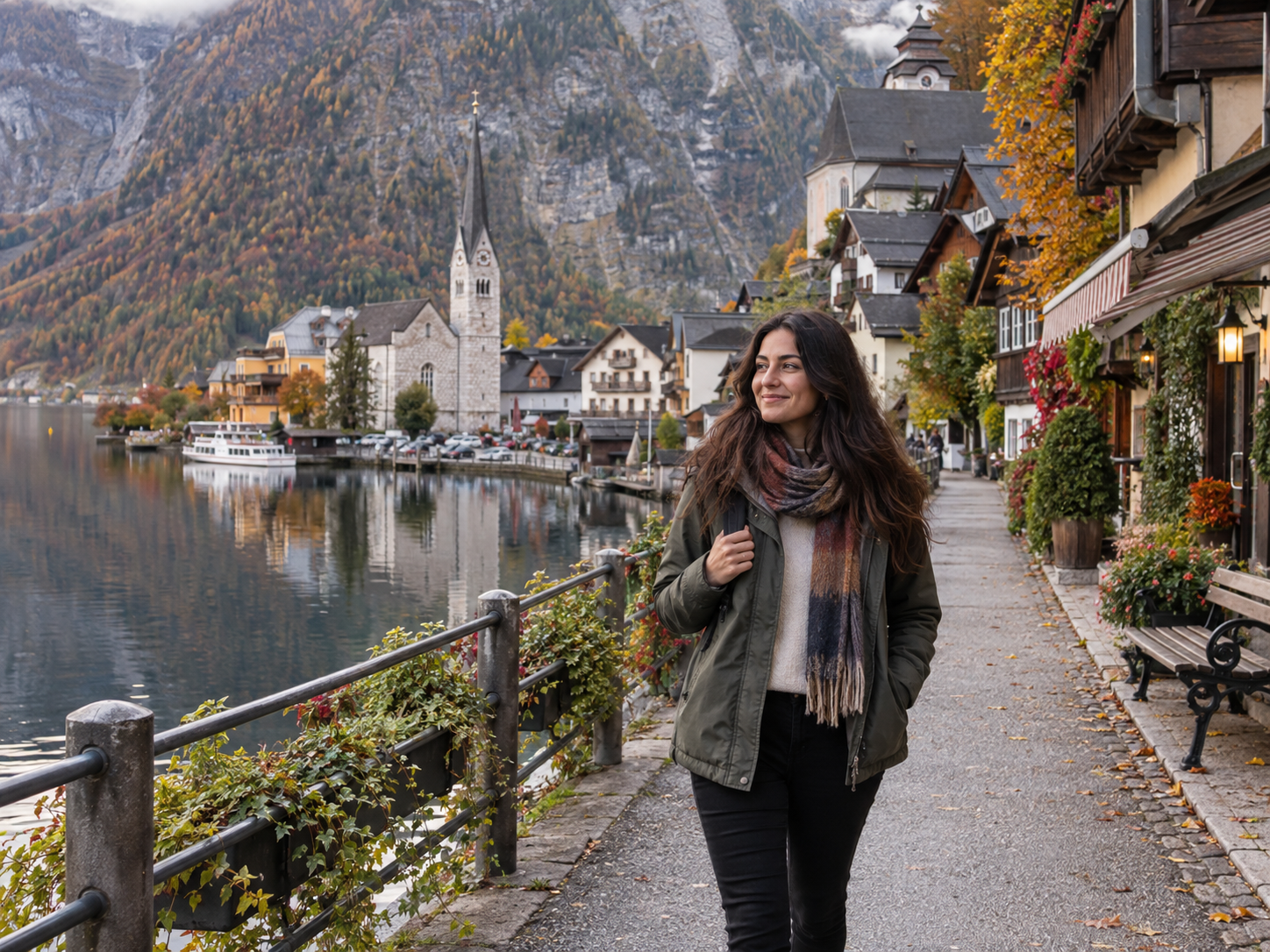
Neighboring Austria offers the same magic around the lakes of the Salzkammergut, where the storybook village of Hallstatt sits reflected in still water ringed by autumn woods. And the Swiss Alps deliver golden larches set against snow-dusted peaks, best seen from one of the country’s spectacular scenic trains. This whole alpine middle of Europe, from Slovenia through Austria to Switzerland, is a chain of lakes and mountains and forests that light up in the fall, and a trip that strings a few of them together is one of the great autumn journeys anywhere. Because the region is compact and well connected, a single unhurried week can take in Slovenian lakes, an Austrian village, and a Swiss mountain railway, each turning color at its own pace, which gives a foliage trip here a variety that a single destination cannot.
The Forests, Cities, and Vineyards
Not all of Europe’s autumn beauty is in the high mountains, and some of the loveliest fall color is far more accessible than a cable car up a peak. Germany’s Black Forest lives up to its name in reverse each autumn, its dense woodlands running with color, best enjoyed from a cozy base like Baden-Baden with its thermal baths and its roast goose and pumpkin soup. Up in Scotland, the Highlands turn to gold and russet and purple heather, and even a city like Edinburgh becomes a storybook of autumn color, its parks and old stone streets glowing in the low northern light. Scotland in autumn has a moody, atmospheric beauty all its own, the color threaded through mist and castle and loch, which is a very different mood from the crisp alpine gold but no less magical for it.
Then there is the color that comes not from forests but from farms, because across the wine regions of Europe, from Tuscany to the vineyards of France, autumn sets the vines ablaze in gold and red just as the harvest comes in.
A fall trip through the Tuscan hills or the French wine country pairs that glowing vineyard color with the season’s new wine, fresh olive oil, and the whole rich harvest table, which is a different and gentler kind of leaf-peeping, one you can do with a glass in your hand. Europe’s autumn, in short, comes in every form, mountain and forest and farmland alike. Whatever kind of traveler you are, whether you want to hike a golden peak, wander a colorful city, or simply drink new wine among glowing vines, there is a version of the European fall shaped exactly to your taste, which is more than can be said for the single dominant image of the American leaf-peeping drive.
The Autumn That Comes With a Table
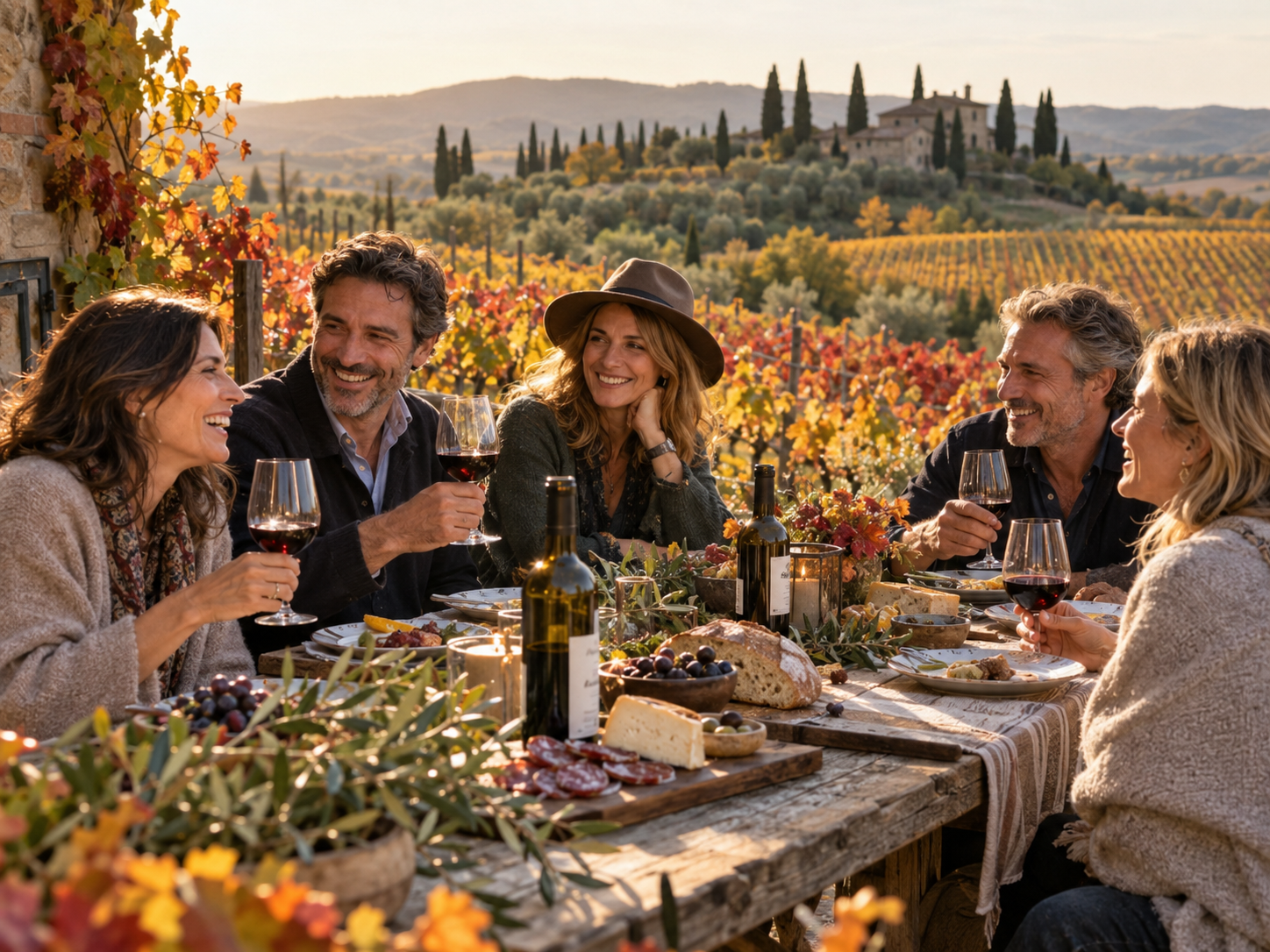
One of the loveliest things about chasing color in Europe rather than New England is how much comes with it, because the European fall is not only a visual season but a culinary and cultural one. October across the continent is harvest time, the season of the grape and the olive and the chestnut, so a foliage trip naturally arrives in the middle of festivals, markets, and tables groaning with the year’s new bounty. You are not just looking at the season, you are eating and drinking it. The changing light and the chill in the air seem to send everyone indoors and to the table at the same moment, so a fall trip in Europe tends to fold sightseeing and feasting together in a way summer never quite does, the golden afternoons outdoors giving way to long, warm, generous evenings within.
This is where Europe quietly pulls ahead of a pure leaf-peeping drive. In Tuscany or the French vineyards, the golden vines come with new wine and fresh-pressed oil; in the alpine valleys, the color comes with mountain cheeses, game, and mushroom season; in Germany and Austria, the woods turn while the beer halls fill and the kitchens turn to roast goose and dumplings. The color is the backdrop, but the whole warm, abundant, festive machinery of the European harvest is the real trip, so you come home having not merely seen the autumn but genuinely lived inside it, which is more than a scenic overlook can ever offer.
Why Nobody Seems to Talk About It
Given how spectacular all this is, the real puzzle is why Europe’s fall foliage is such a well-kept secret, and the answer says something about marketing rather than nature. In the United States, leaf-peeping is a major, heavily promoted tourism season, with foliage forecasts on the news, dedicated leaf-tracking websites, and whole regional economies built around the autumn rush, so Americans grow up knowing that fall means driving somewhere to see the leaves. Europe has never marketed its autumn color that way, so even many Europeans do not think of it as a travel season at all. There is no equivalent of the American foliage forecast on European television, no leaf-tracking apps in most countries, no sense that fall is a reason to travel rather than simply a thing the trees do, which is strange given how magnificent the color can be, and lucky for the traveler who knows better.
That gap between how good the color is and how little it is hyped is, for the traveler, an enormous gift. It means you can stand among the golden larches of the Dolomites or walk the fiery tundra of Lapland with a fraction of the crowds that pack New England’s scenic roads every October, and at shoulder-season prices to boot. The very fact that nobody markets Europe’s fall foliage is precisely what makes it such a rewarding thing to seek out, a world-class autumn show that has somehow escaped becoming a tourist circus, still there for anyone who thinks to look. There is a particular pleasure in seeing something magnificent that most people have overlooked, and Europe’s autumn offers exactly that, the sense of being in on a secret that is hiding in plain sight across half a continent.
When to Go, and How to Catch the Peak
Timing is the one real challenge with a foliage trip, because peak color is a moving target that shifts with latitude, altitude, and the year’s particular weather. The broad rule is that the color moves from north to south and from high to low. So the Arctic ruska comes first, in September, followed through late September and October by the alpine and central regions, with high-altitude spots like the Dolomites peaking latest, from mid-October into early November. A late-September trip suits the far north and the alpine lakes, while mid-to-late October is the sweet spot for the mountain larches. If you can be flexible, watching the color reports and going where the season has actually arrived rather than committing months ahead is the surest way to hit peak, since a foliage trip rewards chasing the color more than sticking to a plan.
The honest caution is that nature keeps its own schedule, and an early frost or a warm spell can shift the peak by a week or two in either direction, so a foliage trip always carries a little gamble. Build in some flexibility if you can, check recent color reports for your destination before you lock in dates, and remember that even a few days off peak, the shoulders of the season are still beautiful. A forest just short of peak or just past it is still a forest turning gold, so the gamble is rarely between glory and nothing but between glory and merely lovely, which is a gamble worth taking. Point your fall trip at Europe’s gold, go with realistic expectations about the timing, and you may well come home wondering why anyone ever thought they had to cross to New England to watch the leaves turn, when the whole of Europe was quietly turning gold the entire time. The maples of Vermont are lovely, and they will always have their season, but they are no longer the only autumn worth crossing an ocean for, and arguably never were. Europe’s gold was there all along, waiting quietly for anyone willing to look east instead of north.

About the Author: Ruben, co-founder of Gamintraveler.com since 2014, is a seasoned traveler from Spain who has explored over 100 countries since 2009. Known for his extensive travel adventures across South America, Europe, the US, Australia, New Zealand, Asia, and Africa, Ruben combines his passion for adventurous yet sustainable living with his love for cycling, highlighted by his remarkable 5-month bicycle journey from Spain to Norway. He currently resides in Spain, where he continues sharing his travel experiences with his partner, Rachel, and their son, Han.