
Read enough studies on aging and the brain and you start to notice the same quiet hobbies turning up again and again. Knitting. Crochet. Wood carving. Quilting, pottery, embroidery, playing an instrument, kneading bread. The grandmother crafts, the ones that were never marketed as brain training and never needed to be, keep appearing in the research associated with sharper minds later in life.
It is a genuinely striking pattern, and the most interesting thread running through it is that these activities all share one feature, which is that they use both hands at once, in coordinated, repetitive, slightly demanding ways. Researchers have a name for the idea, the two-hand or bimanual bonus, and it is worth understanding both what the science actually shows and, just as importantly, what it does not.
What follows is the pattern the research keeps finding, the appealing theory behind it, and an honest fence around how much any of it really proves.
The Pattern That Keeps Repeating
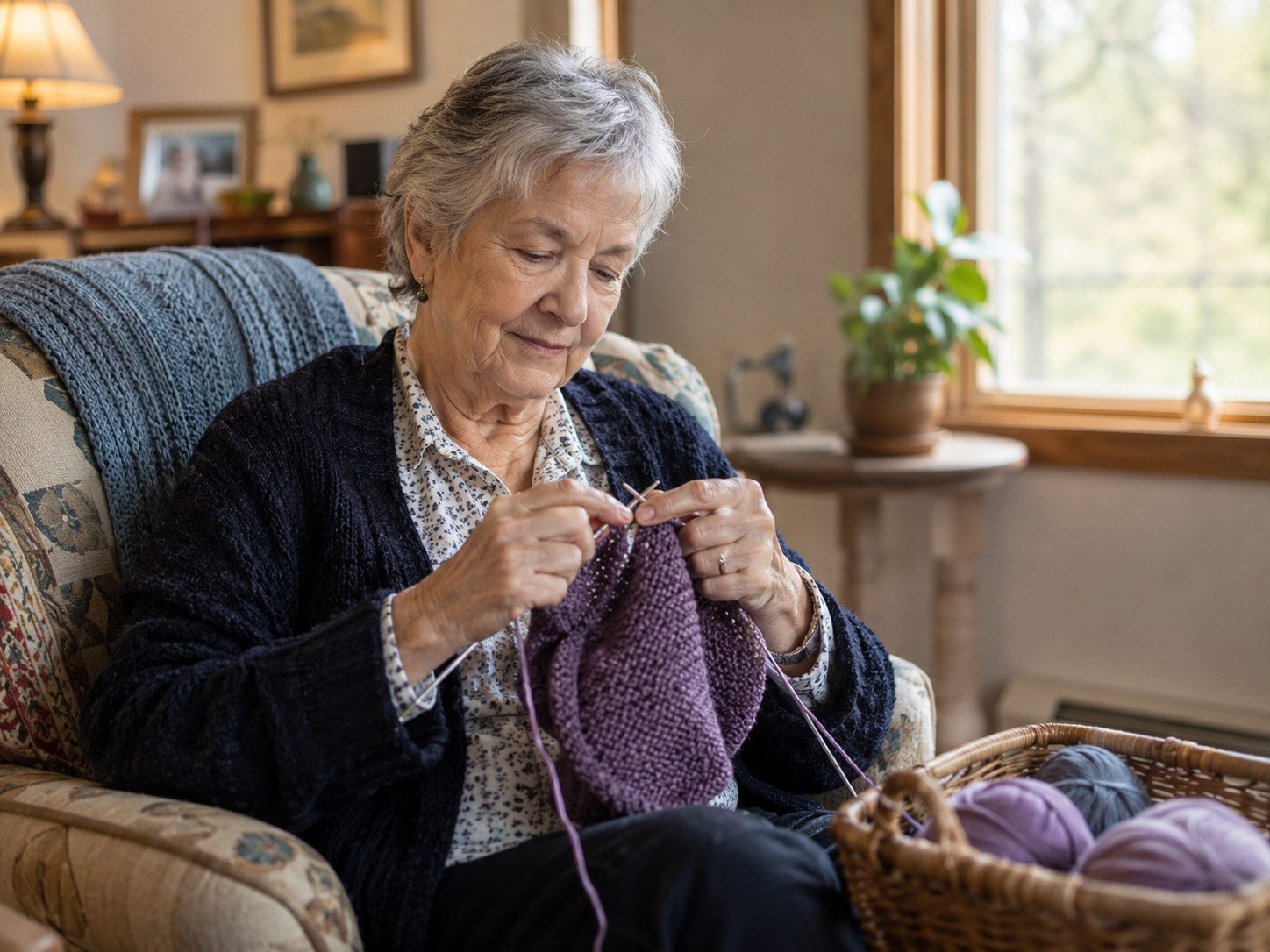
The single most cited piece of evidence comes from the Mayo Clinic Study of Aging, which followed a large group of older adults and looked at what they did with their time. People who engaged in crafting activities like knitting, quilting, woodworking, and ceramics were found to be roughly 30 to 50 percent less likely to have mild cognitive impairment, the fuzzy stage between normal aging and dementia, than people who did not. A related finding put the protective association even higher for those who had been making things with their hands since midlife rather than only taking it up late, on the order of 45 percent.
It is not a one-study fluke, either, because the pattern shows up across different research. Work published in geriatric journals has linked craft and hobby engagement to lower dementia risk in older adults, surveys of thousands of knitters have tied frequent knitting to better wellbeing and higher self-reported cognitive function, and imaging studies point to greater brain connectivity in people who do tactile, hands-on work.
The 2024 Lancet Commission on dementia, reviewing the whole field, concluded that a large share of dementia cases are potentially linked to modifiable factors and specifically recommended cognitively stimulating activity in midlife, exactly the sort of thing these hobbies provide. The pattern is real and it repeats, which is what makes it worth taking seriously even before anyone explains why. When the same humble activities keep surfacing across different research teams, different countries, and different decades, that consistency is itself a kind of evidence, the sort that earns a closer look even if no single study is decisive on its own. It is the difference between one witness and a crowd all describing the same thing.
The Two-Hand Idea
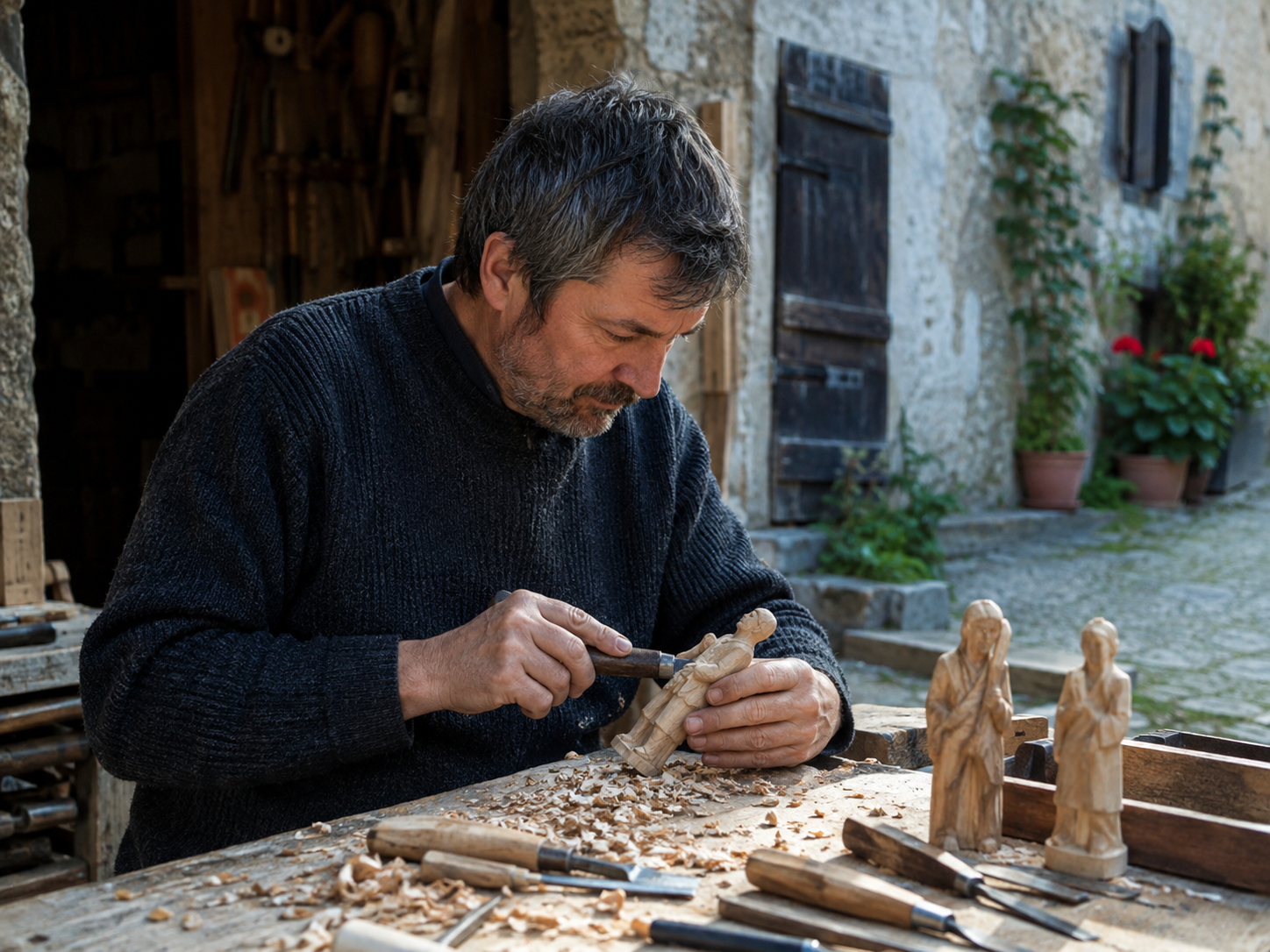
The appealing theory behind the pattern is the bimanual one, and it goes like this. Using both hands together in a coordinated way, especially when the hands cross the body’s midline, the way they do in knitting or carving or kneading, demands that both hemispheres of the brain talk to each other constantly. That cross-hemisphere chatter is thought to build and maintain neural connections, keeping the wiring active and flexible in a way that a one-handed or passive activity does not, so the idea is that the very awkwardness of coordinating two hands is doing the brain a favor.
Layered on top of that is everything else these hobbies demand at the same time. They involve fine motor control, which lights up the somatosensory cortex, they require sequence-based thinking to follow a pattern or plan a cut, and they nearly always carry a learning curve, since there is always a new stitch or technique or joint to master.
The theory holds that this particular combination, two coordinated hands plus focused attention plus continual learning, is unusually good exercise for an aging brain, closer to a full workout than the single muscle a crossword or a passive screen works. It is a genuinely elegant idea, and the way these hobbies keep outperforming passive pastimes in the studies fits it neatly. It also has an intuitive pull, since anyone who has tried to learn to knit or to carve knows the odd feeling of the two hands having to negotiate with each other, one holding and tensioning while the other loops or cuts, a coordination that feels distinctly like mental effort rather than mere movement. That felt difficulty is exactly what the theory says is doing the work.
Why Association Is Not Proof
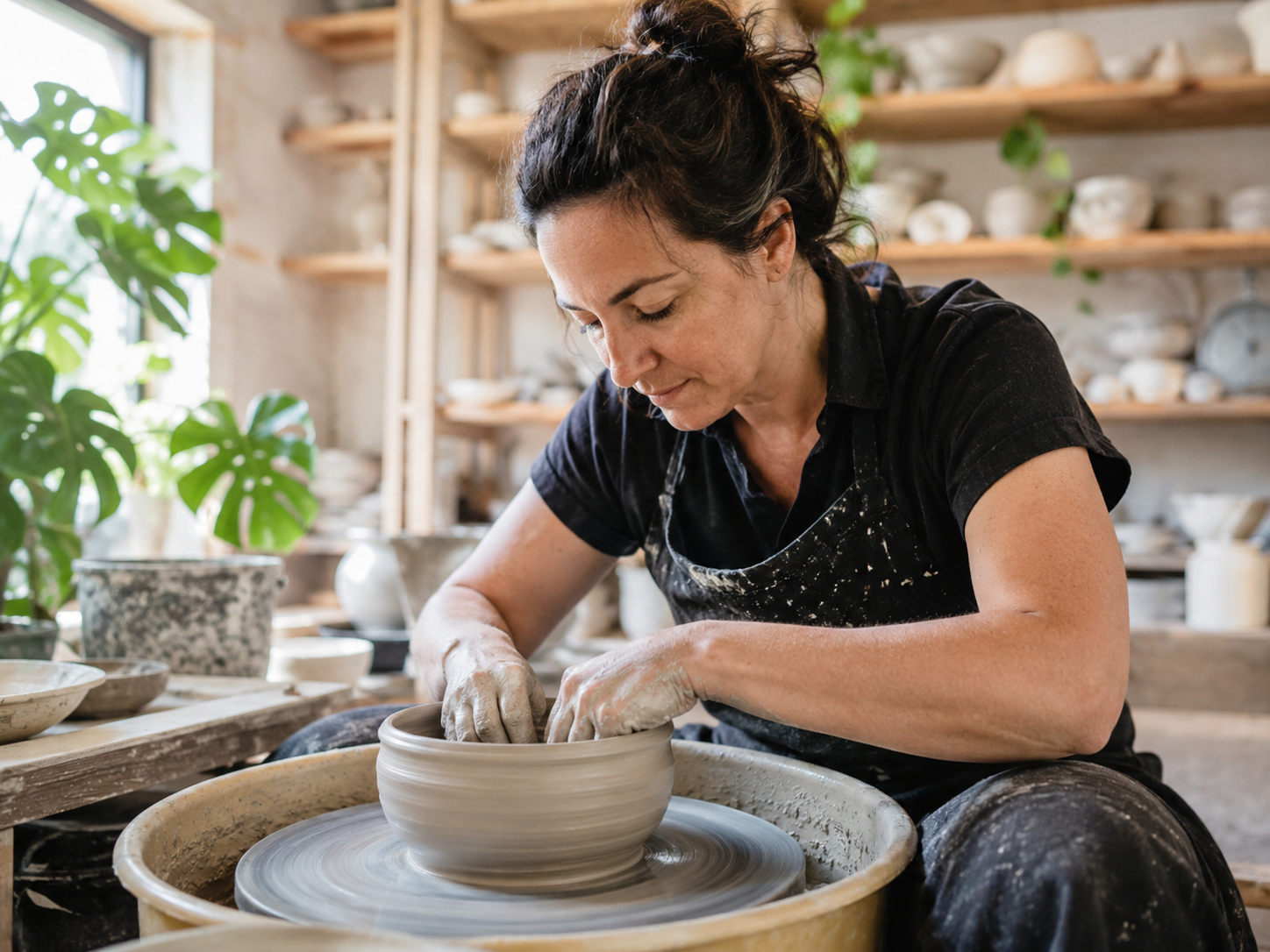
Here is where honesty has to slow the enthusiasm down, because the research supporting all of this is overwhelmingly the kind that shows things happening together, not one thing causing another. The studies are observational, meaning they watched who did what and who stayed sharp, and that design can reveal a link but cannot prove that the knitting caused the sharper mind rather than the other way around. That distinction is not a technicality, it is the whole question.
The most obvious alternative explanation is reverse causation. People in the early, invisible stages of cognitive decline tend to drop demanding hobbies precisely because those hobbies have become harder, so a study might be picking up that healthy brains keep knitting rather than that knitting keeps brains healthy. There is self-selection too, since the people who craft may differ from those who do not in dozens of ways, more education, more social contact, more general activity, any of which could be the real protective factor hiding behind the yarn.
And the specific two-hand mechanism, the elegant business about crossing the midline and lighting up both hemispheres, is largely a plausible hypothesis that researchers themselves describe with words like may and speculate, not a proven chain of cause and effect. The honest summary is that these hobbies are reliably associated with better brain aging, that the bimanual theory is a reasonable and attractive explanation, and that none of it amounts to proof that taking up crochet will protect anyone’s memory. That is not a reason to dismiss the pattern, only a reason to hold it at the right strength, as an encouraging lead rather than a closed case.
What These Hobbies Actually Share
Set the unproven mechanism aside and look at what these activities genuinely have in common, because that is useful regardless of the exact biology. Every one of them asks you to learn something and keep learning, since there is always a harder pattern, a finer stitch, a trickier cut, and that continual gentle challenge is the opposite of the passive consumption most downtime has become. They demand real focus, the kind that pulls you into a state close to what researchers call flow, where time disappears and worries quiet down, which is good for mood and stress whatever it does for memory.
They are also physical and tactile in a way screens are not, engaging the hands and the senses together, and they produce something real at the end, a scarf, a bowl, a carved spoon, which brings a small hit of accomplishment that a finished level of a game rarely matches. Whether or not the two-hand theory holds up perfectly, an activity that combines learning, focus, dexterity, and a sense of making something is a genuinely rich thing to give an aging brain, and it costs almost nothing and feels like pleasure rather than medicine.
That combination is worth having on its own terms, which is the safest and truest reason to take one of these hobbies up. Compare it to the way most of us spend downtime now, scrolling a screen that asks nothing of the hands, demands no learning, and leaves nothing behind, and the contrast is stark. An hour of knitting and an hour of scrolling both pass the time, but only one of them ends with a made thing, a new skill inched forward, and a mind that was gently stretched rather than gently numbed.
The Social Thread Nobody Should Skip
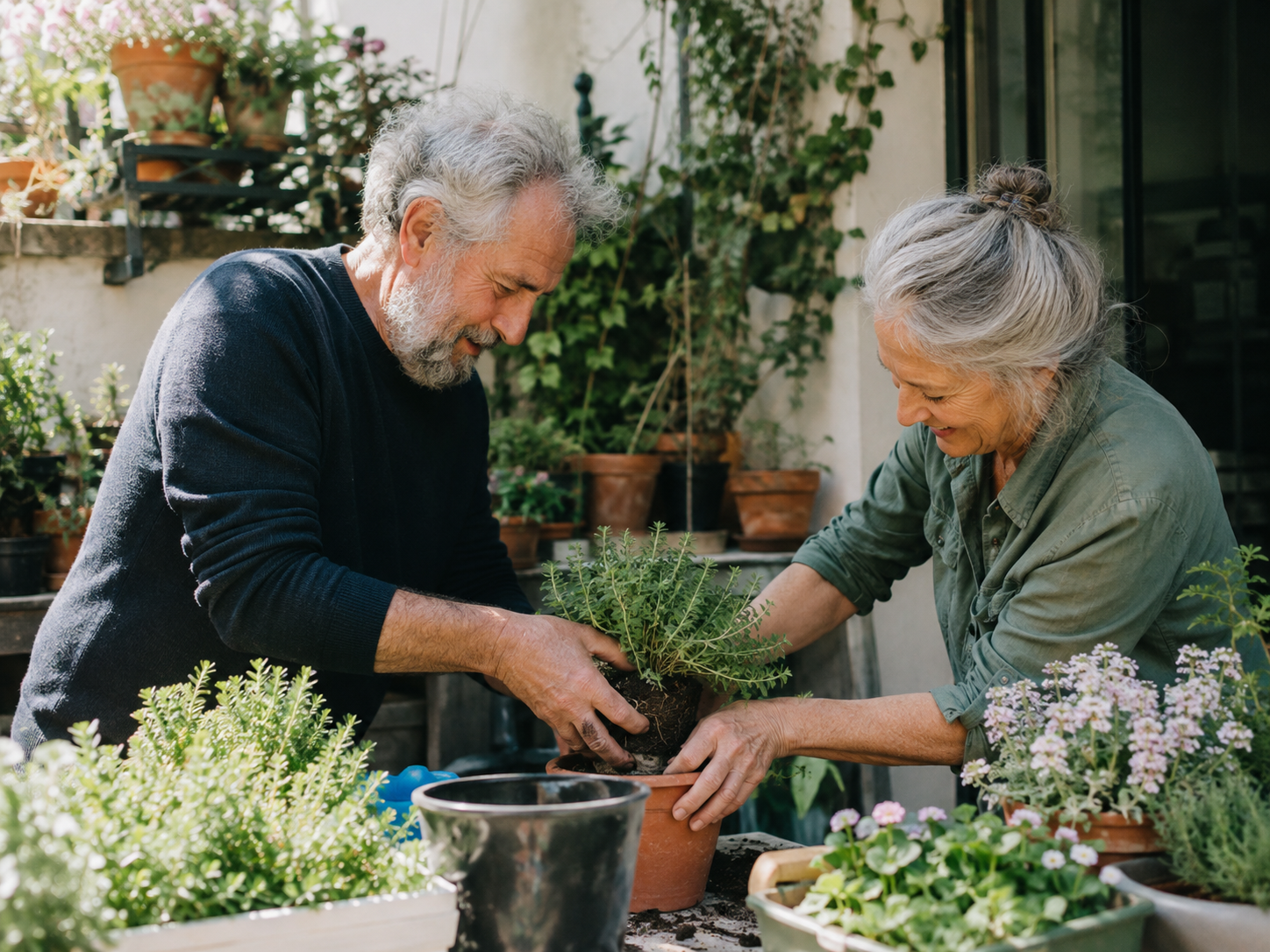
There is one more ingredient that the research is increasingly clear about, and it has nothing to do with the hands. Many of these crafts are done in company, in knitting circles, woodworking clubs, quilting bees, pottery classes, and that social dimension may matter as much as the making. Loneliness and social isolation are among the modifiable risk factors the Lancet Commission flags for dementia, so a hobby that regularly puts you in a room with other people is quietly working on two fronts at once, the hands and the company.
This is worth saying because it changes the advice slightly. If you are choosing a hobby partly with your long-term brain in mind, choosing one you can do with others, or joining a group for one you already do alone, stacks the deck further in your favor. The scarf and the sharpened chisel are lovely, but the friendships around the table may be doing as much good as the stitches, and unlike the two-hand mechanism, the value of company in later life is about as well established as anything in the whole field. A craft is a wonderful excuse to be regularly, warmly, unremarkably around other people.
It Is Never Too Late to Start
One of the genuinely encouraging findings is that the door does not close with age. While the research suggests that a lifetime of making things offers the strongest association, studies also found meaningful benefit in people who only picked up crafting in their seventies, and creative interventions have shown gains even in people already living with conditions like Parkinson’s. The aging brain retains a real capacity to build new connections, and giving it something demanding and enjoyable to chew on appears to help at any starting point.
So the fact that you have never knitted a row or held a carving knife is not a reason to skip this, it is simply a longer learning curve, which from the brain’s point of view is a feature rather than a flaw, since the learning is a good part of the benefit. Beginning at sixty-five or seventy-five means more to learn, more novelty, more of exactly the mental work the hobby is thought to provide.
The most useful time to start was decades ago, and the second most useful time is this week, with a cheap ball of yarn or a block of soft wood and a willingness to be clumsy for a while. That willingness to be bad at something new is, if anything, the most valuable part, because the stretch of fumbling incompetence at the start is exactly the novel, effortful mental work the whole theory prizes, and it fades soon enough into the easy pleasure that keeps you coming back.
Where the Hype Runs Ahead of the Evidence
It is worth naming how these findings get oversold, because the gap between the studies and the headlines is where people get misled. A single observational study reporting a 30 to 50 percent association becomes, by the time it reaches a craft-supply blog, a claim that knitting cuts your dementia risk in half, which is not what the research says at all. The number describes a difference between groups in one study, hedged with caveats the headline drops, and repeating it as a promise does a disservice to the genuinely interesting truth underneath.
The honest version is less dramatic but more trustworthy. Hands-on hobbies show up, again and again, associated with better brain aging, and there are several plausible reasons they might help, so the sensible response is mild, cheerful, and unhurried, to fold more of this kind of thing into your life because it is pleasant and the evidence leans encouraging. What the sensible response is not is anxiety, or the purchase of an expensive brain-training program, or the belief that a scarf a week buys immunity from a disease nobody fully understands yet. Treating a hopeful association as a guarantee is how good research turns into false comfort, and the crafts deserve better than that.
Hobbies That Fit the Bill
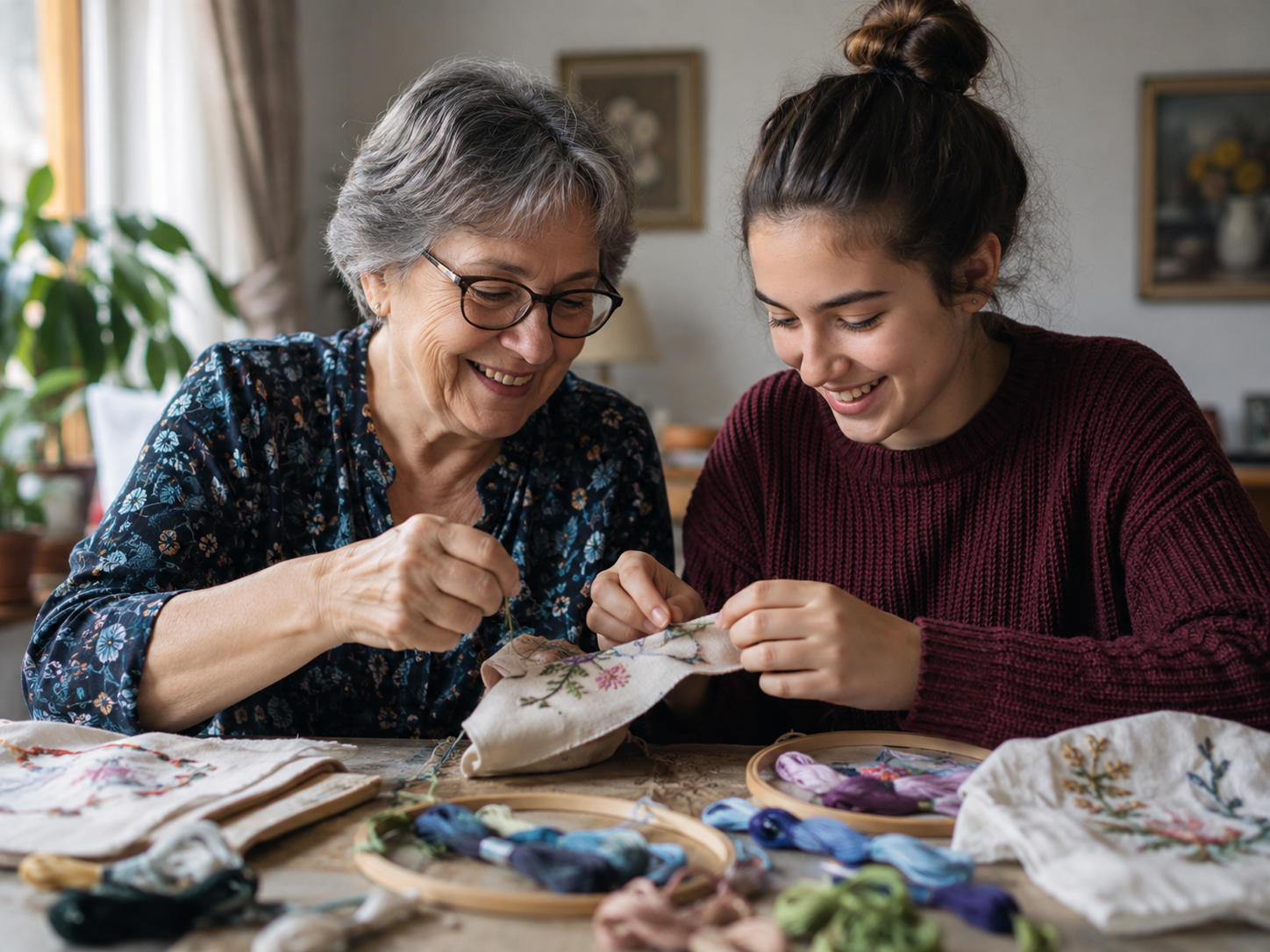
If the pattern has tempted you, the field is wide and there is something for every taste and every pair of hands. The fiber crafts, knitting, crochet, and embroidery, are the classic examples, cheap to start, endlessly deepening, and portable, and they hit every note in the theory, two hands, fine motor work, pattern-following, and a steady learning curve. Working with wood, whether carving, whittling, or joinery, does the same with more muscle and a satisfying physical result, and pottery and ceramics add the whole-body engagement of the wheel and the clay.
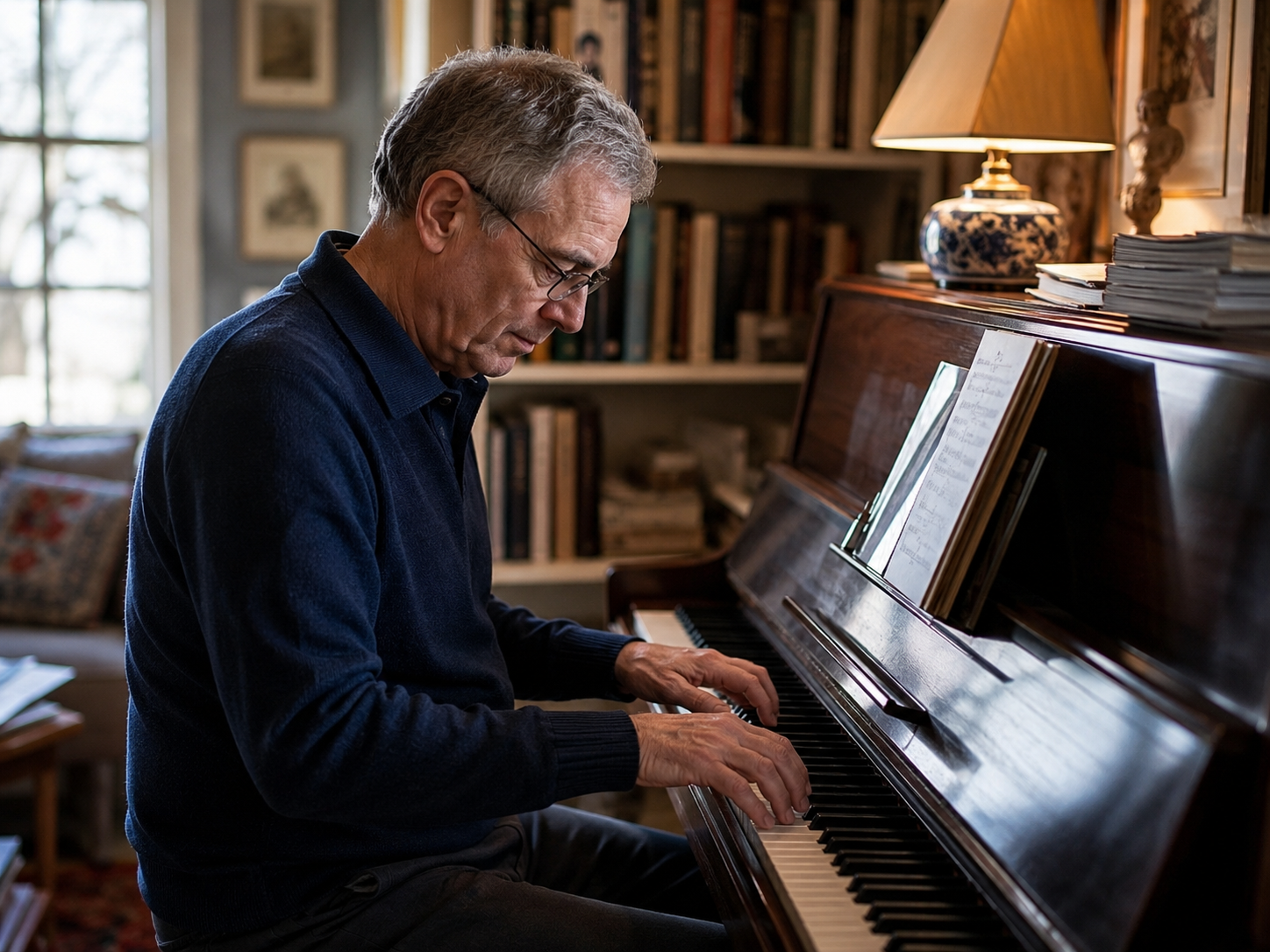
Beyond the obvious crafts, plenty of everyday two-handed pursuits count. Playing a musical instrument is perhaps the purest bimanual brain workout of all, demanding independent coordinated movement from both hands plus reading, listening, and memory all at once. Quilting, beadwork, model-building, calligraphy, and even the humble kneading of bread by hand all ask for coordinated hands and focused attention. The common thread is simple: choose something that uses both hands, that you have to keep getting better at, and that you actually enjoy enough to keep doing, and you have the essence of what the research keeps pointing to. The enjoyment matters as much as the mechanics, because the hobby that helps is the one you actually do, and a craft you love and return to for years beats a more theoretically perfect one you abandon in a month.

About the Author: Ruben, co-founder of Gamintraveler.com since 2014, is a seasoned traveler from Spain who has explored over 100 countries since 2009. Known for his extensive travel adventures across South America, Europe, the US, Australia, New Zealand, Asia, and Africa, Ruben combines his passion for adventurous yet sustainable living with his love for cycling, highlighted by his remarkable 5-month bicycle journey from Spain to Norway. He currently resides in Spain, where he continues sharing his travel experiences with his partner, Rachel, and their son, Han.