
I set myself a small challenge one month: cook a different dinner every night for thirty nights, keep each one under €3 a serving, and buy everything from the same neighborhood Spanish market. Not a supermarket, not a discount chain, just the ordinary covered mercado where the same families have sold vegetables and fish and eggs for decades. The point was not to eat as cheaply as humanly possible, which would have meant a grim month of plain rice, but to eat genuinely well, real Spanish home cooking, three euros or less on the plate, and to see how far the market could carry me. It carried me the whole way with room to spare.
What follows is the complete list of thirty dinners, grouped by what they are built on, with the rough costs I paid. The figures are a composite of that month rather than an exact receipt, so read them as the shape of the thing, but the shape is real, and the thing it shows is that eating well in Spain is astonishingly cheap.
Here is how a single market fed a household for a month of dinners, none of them costing more than a fancy coffee.
The Market That Makes It Possible
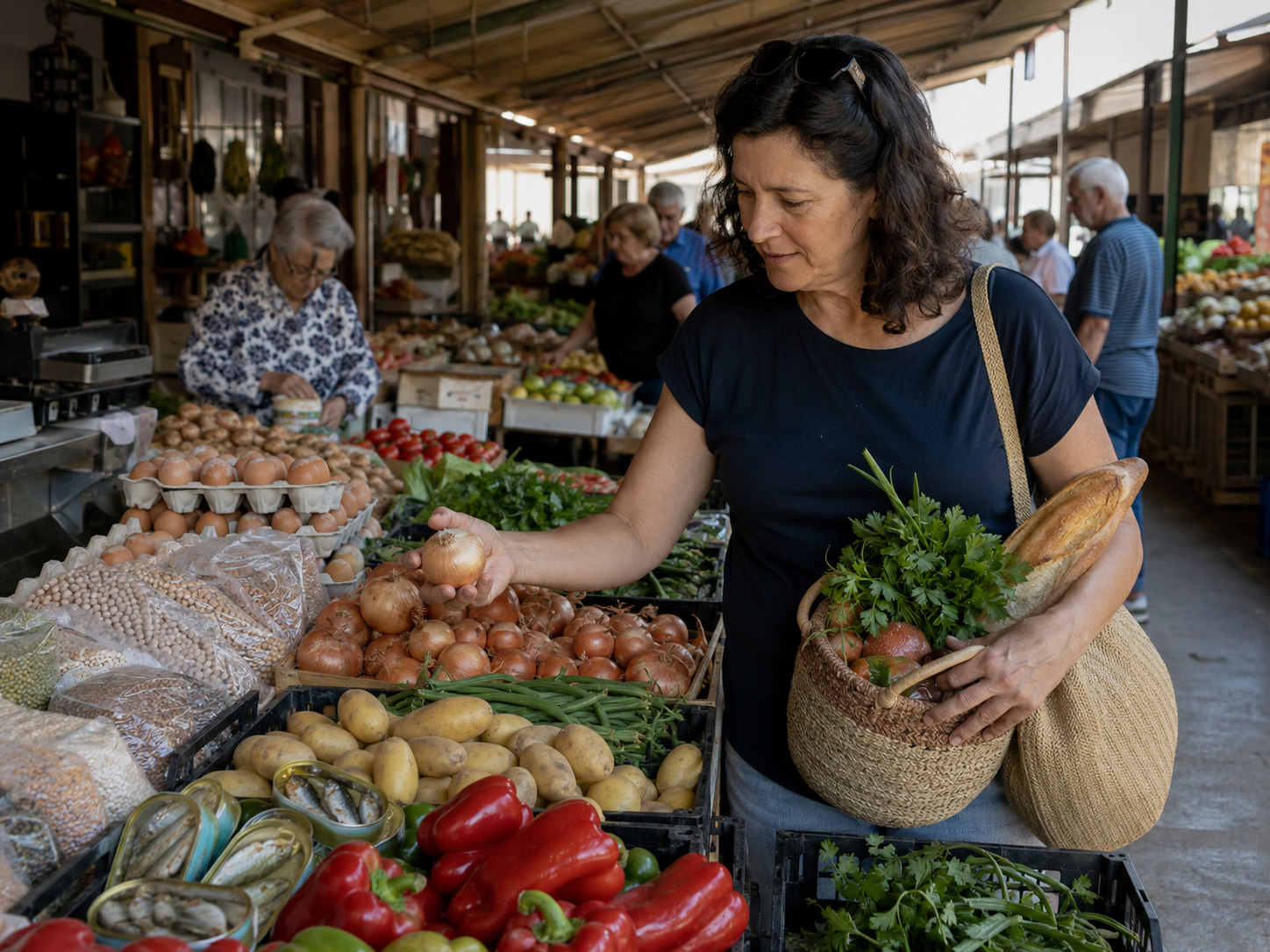
The reason this works at all is the Spanish market itself, where the raw materials of good cheap cooking are absurdly affordable. A dozen eggs, a bag of dried lentils or chickpeas, a kilo of potatoes, seasonal vegetables at their peak, a tin or two of good fish, olive oil, bread, all of it costs a fraction of what the same things run in much of the world, and a little of each stretches across several meals.
The market rewards the person who buys what is in season and cooks from scratch, which is exactly what Spanish home cooking has always done. There is also a rhythm to shopping this way that a supermarket never gives you, since you buy what looks good and cheap that day rather than what a recipe demanded in advance, and you let the market decide the menu instead of the other way around. That single shift, cooking from what is cheap and fresh rather than shopping to a fixed list, is most of the secret, because the cheapest ingredient on any given day is usually also the one at its seasonal best, so thrift and quality point the same direction.
The trick that keeps every dinner under three euros is that the base of each one is cheap and filling, legumes, eggs, potatoes, rice, bread, or pasta, and the more expensive ingredients arrive in small supporting amounts rather than as the centerpiece. A tin of fish flavors a whole plate, a little chorizo seasons a whole pot of lentils, a handful of good vegetables lifts a plain base into a real meal.
None of these dinners is a sad economy version of something better, because this is simply how the food is meant to be made, and the low cost is a feature of the cuisine rather than a compromise on it. That distinction matters, because a cheap month built on plain rice and instant noodles is a punishment, while a cheap month built on Spanish home cooking is just Tuesday. The difference is entirely in the tradition you cook from, and Spain happens to have one of the great cheap-and-delicious traditions in the world, refined over centuries by people who never had money to waste and never let that stop them from eating well.
The Egg Dinners
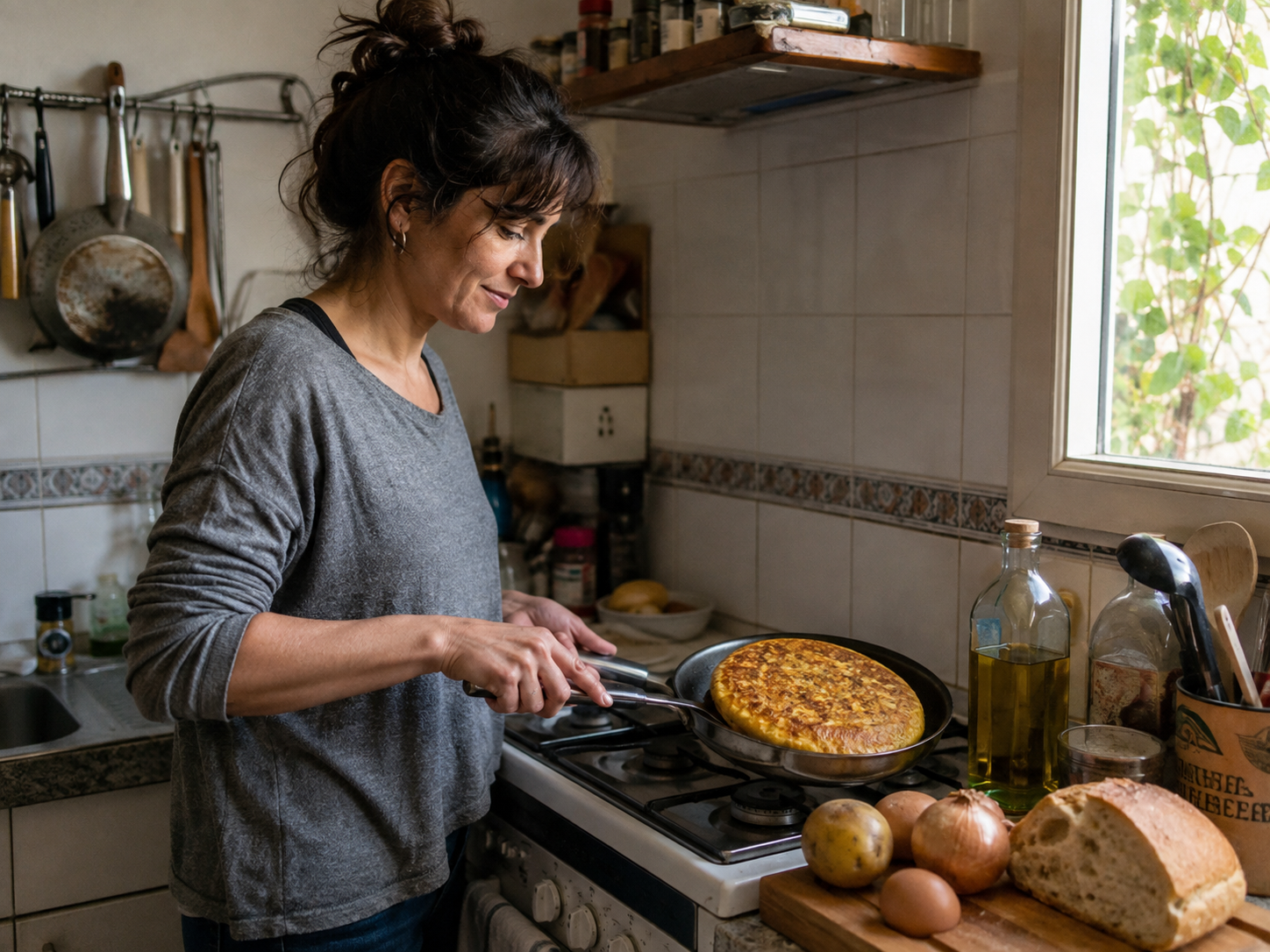
Eggs are the cheapest luxury in the market, and they anchored the first five dinners. A classic tortilla de patatas, the thick Spanish potato omelette, feeds a family from a few eggs, some potatoes, and an onion, and lands around €1.50 a serving while tasting like far more. Huevos rotos, fried eggs broken over a bed of fried potatoes so the yolk runs through, is even simpler and just as satisfying, at roughly the same price.
The other three lean on eggs plus whatever is around. A revuelto, soft scrambled eggs folded with mushrooms or tender garlic shoots, makes an elegant supper for well under €2. Huevos a la flamenca, eggs baked in a tomato sauce with peas and a little diced chorizo, turns a handful of cheap things into something that looks like a restaurant dish. And a simple fried egg served over pisto, the Spanish stewed-vegetable mix, with bread to mop the plate, closes out the egg dinners at about €2 and proves how far five eggs and a good pan will take you.
The Legume Dinners
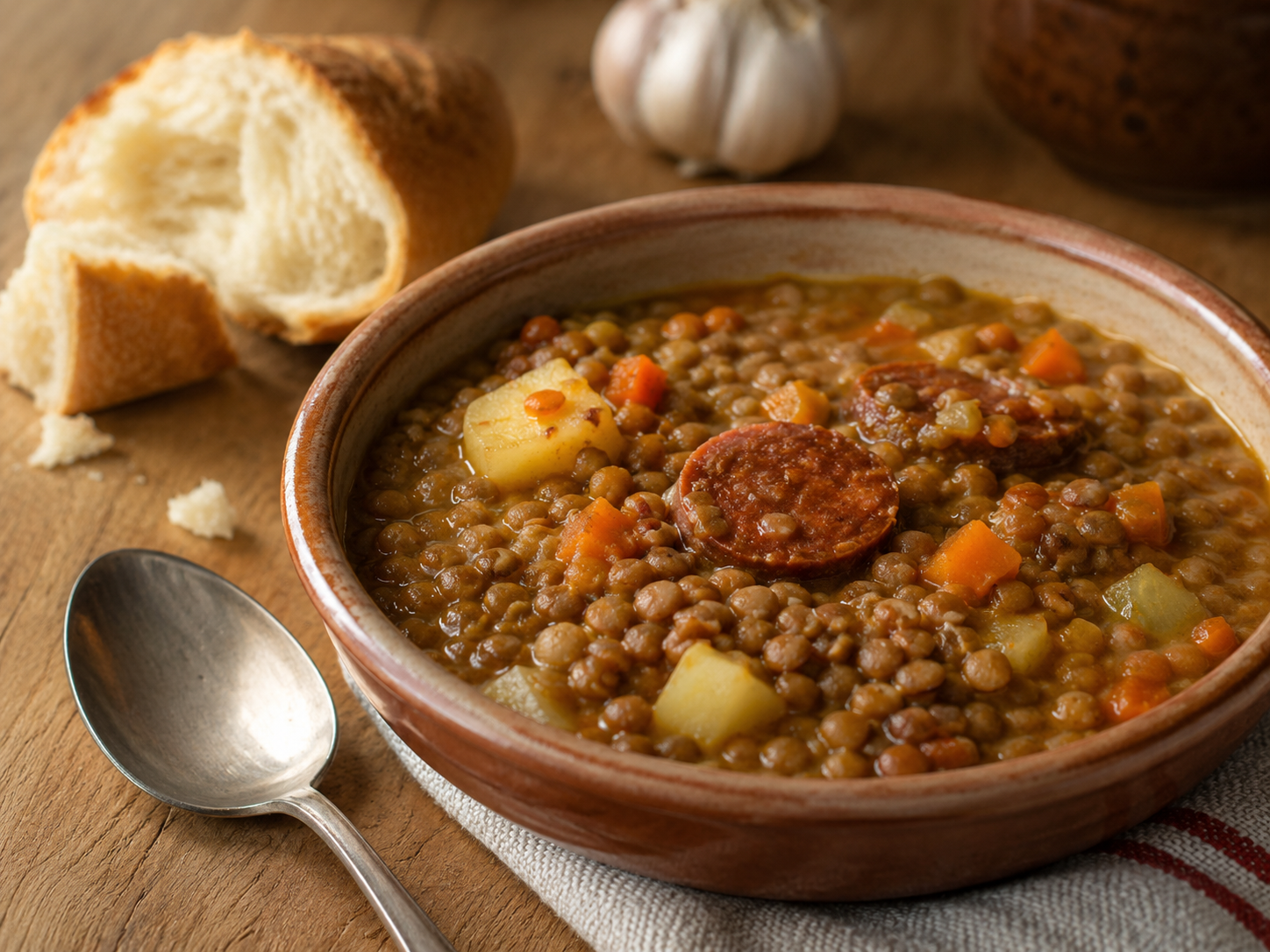
Dried legumes are the true backbone of cheap Spanish eating, and the second five dinners cost the least of the whole month. A pot of lentejas guisadas, lentils stewed with carrot, potato, and a little chorizo or none at all, makes several servings for well under €1 each and is arguably the national weeknight dinner. Garbanzos con espinacas, chickpeas with spinach and a little garlic and cumin, is a Lenten classic that eats like comfort food for around €1.20.
The rest of the legume dinners follow the same cheap, hearty logic. A potaje, a thicker chickpea-and-vegetable stew, stretches a bag of chickpeas across a week, and a pot of alubias blancas, white beans simmered with a bit of onion and paprika, does the same for a different bean. Finish the group with lentejas over rice, last night’s lentils spooned over a little rice to make a second, different meal, which is the whole aprovechamiento spirit of Spanish cooking in one bowl, and costs almost nothing at all.
The Tinned-Fish Dinners
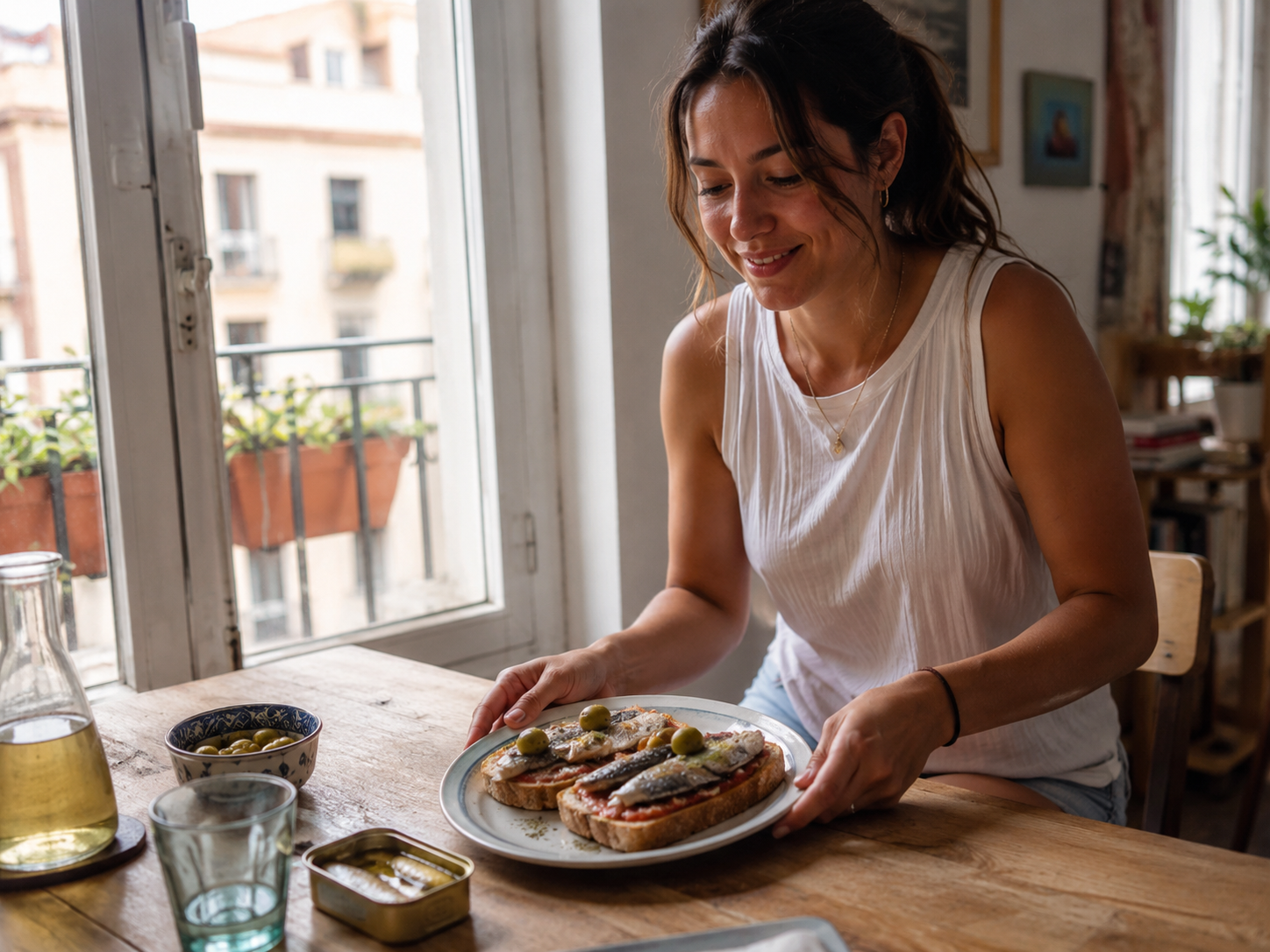
Spain takes its tinned fish seriously, and a good tin turns a cheap base into a real dinner. Sardinas on toast, tinned sardines laid over bread rubbed with tomato and good oil, is a five-minute supper for about €2. Ensalada de bonito, a hearty salad of tinned tuna with tomato, onion, egg, and olives, is a full plate for roughly the same, and eats like summer.
The other three pair the tin with a cheap starch. Tinned bonito with white beans, the two tossed with a little onion and oil in the Spanish style, is protein-rich and filling for under €2.50. Boquerones or anchovies laid on bread make a quick and punchy plate, and a simple tuna pasta with tomato sauce feeds a family for well under €2 a head. In each one the tin does the flavoring while the bread, beans, or pasta does the filling, which is exactly why the cost stays low and the plate stays satisfying.
The Vegetable Dinners
When vegetables are in season at a Spanish market they are cheap enough to build a dinner around, and the next five did exactly that. Pisto, the Spanish answer to ratatouille, peppers, courgette, onion, and tomato stewed slowly in oil, is a glorious plate for around €1.50, especially with an egg on top or bread alongside. Escalivada, smoky roasted peppers and aubergine dressed in oil, served on bread, is barely more.
The rest keep the vegetables at the center. A menestra, a mixed vegetable stew of whatever the season offers, makes a light and pretty dinner. Judias verdes con patata, green beans and potato dressed with oil and garlic, is a humble Spanish staple for well under €1.50. And setas al ajillo, mushrooms sauteed hard with garlic and a little chili, served with bread, turns a cheap punnet into something you would happily serve a guest. None of these misses the meat, because the vegetables at their peak are the point.
The Rice and Pasta Dinners
Rice and pasta are the cheapest fillers of all, and the market’s flavorings turn them into proper dinners. Arroz a la cubana, rice topped with a fried egg and tomato sauce, is a beloved cheap Spanish supper for about €1.20. Arroz con verduras, rice cooked with whatever vegetables are around, saffron or paprika for color, is a one-pan meal for barely more.
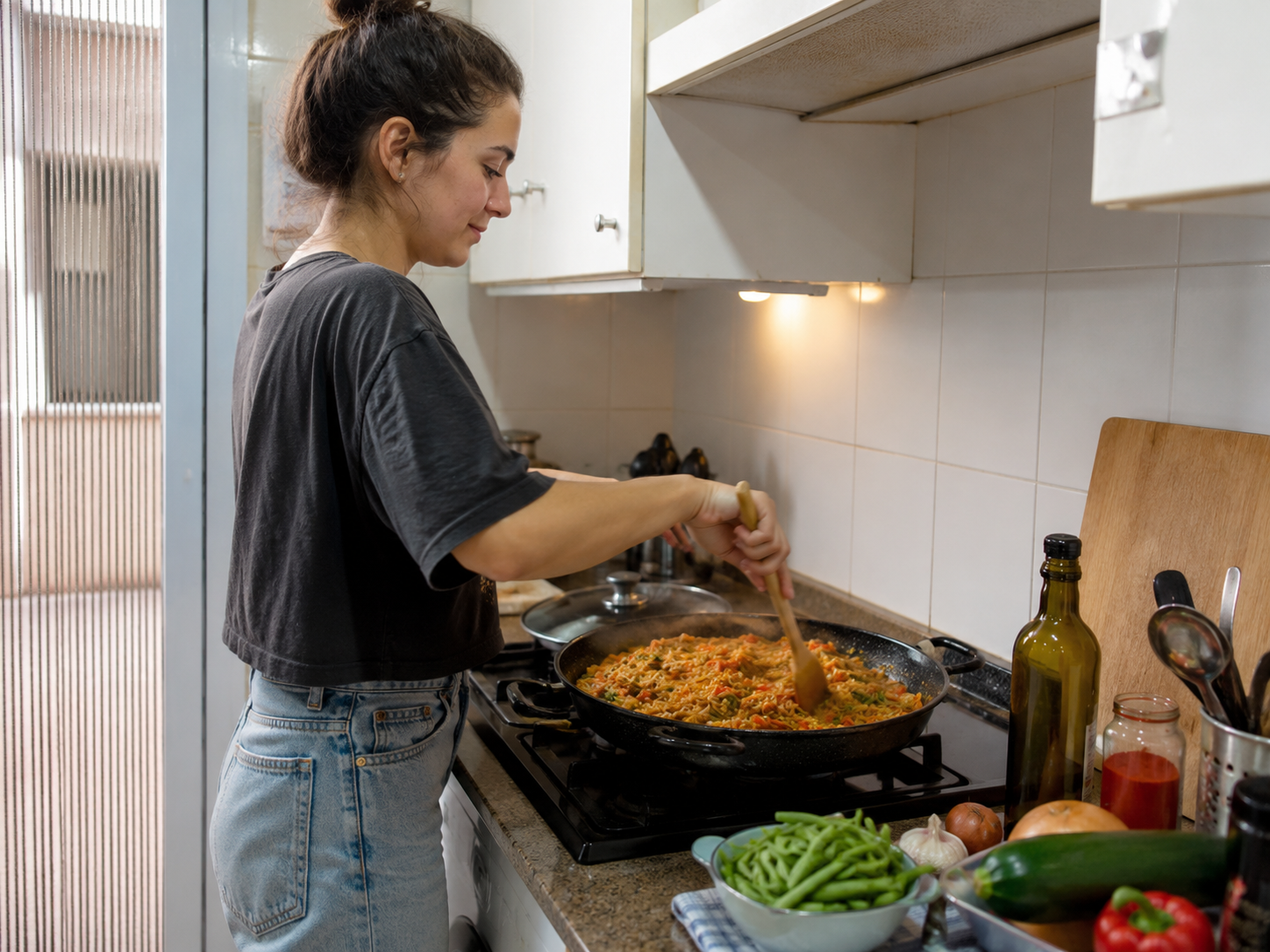
Pasta closes the group cheaply and well. A plate of pasta al ajillo, spaghetti with garlic, good oil, and chili, costs almost nothing and eats like a treat. Macarrones con tomate, macaroni in a proper slow tomato sauce with a little cheese, is the Spanish childhood dinner for around €1. And a pan of fideos con verduras, the short Spanish noodles cooked with vegetables in the paella style, rounds out the five for well under €2. Cheap starch plus market flavor is the whole formula, repeated in a dozen happy variations.
The Soup and Bread Dinners
The final five lean on bread and on Spain’s genius for making something from very little. In summer, gazpacho, the cold blended soup of tomato, pepper, cucumber, and bread, is a whole light dinner for under €1.50, and salmorejo, its thicker Cordoban cousin topped with egg and a few bits of jamon, is barely more and even more filling.
The colder-weather versions are just as cheap. Sopa de ajo, the humble garlic soup of bread, paprika, water, and an egg poached in it, is a warming dinner for well under €1. A simple caldo con verduras, broth with greens and a little bread, does the same. And a plate of pan con tomate topped with a little cheese or a slice of embutido makes an honest light supper to end the month. Bread, garlic, tomato, oil, and an egg, the cheapest things in the market, turn out to make some of the best-loved food in the country.
How It Stays Under Three Euros
Look back over the thirty and the pattern that keeps every plate cheap is clear. Each dinner is built on an inexpensive, filling base, eggs, legumes, potatoes, rice, pasta, or bread, all of which cost very little per serving, and the flavor and interest come from small amounts of more characterful things, a tin of fish, a little chorizo, seasonal vegetables, garlic, good oil. Because the pricey ingredient is always the supporting act and never the star, no single plate ever climbs far, and most sit comfortably under two euros rather than three.
Buying from the market rather than a supermarket helps in ways that add up, since seasonal produce at a mercado is cheaper and better, dried legumes bought loose cost almost nothing, and the fishmonger’s cheaper tins and the odd bag of bones or trimmings for stock stretch a budget further still.
Cooking from scratch is the other half of it, because the moment food is processed or pre-made the price jumps, and every one of these thirty dinners is made from raw ingredients with your own hands. That is the quiet secret the numbers reveal, that cheap and good are the same thing in Spanish home cooking, not opposites to be traded off. The month never once felt like a budget exercise from the inside, because the food on the plate was food anyone would want to eat, and the low total only became visible when I added it up at the end. That is the opposite of most cheap-eating advice, which asks you to endure something lesser in exchange for the saving, where here the saving is simply what good honest cooking costs when you make it yourself from a market.
Eating Well, Not Eating Less
The thing worth saying plainly at the end is that this was a month of eating richly, not sparely. Thirty different dinners, full of variety and flavor and color, protein and vegetables and good bread, is the opposite of deprivation, and at no point did keeping to three euros mean going without or shrinking a plate. It meant cooking the way most of the world has always cooked, from cheap staples turned into real meals by a little skill and a good market, which happens to be both the most affordable way to eat and one of the most pleasurable.
That is the real lesson of the thirty nights, that eating well and eating cheaply are not in tension in Spain but the same habit seen from two sides. The market makes it possible, the cuisine makes it delicious, and the total for a whole month of dinners lands somewhere most people would spend on a single restaurant meal. Anyone can cook this way, in Spain or anywhere with a decent market and a bag of lentils, and the reward is not just money saved but a table that tastes like somewhere real.
It is worth adding that a month like this is also quietly good eating in the ordinary sense, heavy on legumes and vegetables and fish, light on processed food, cooked fresh each night. That is more or less what a nutritionist would draw up if you asked them to, and it happens to fall out of the cheapest way to shop rather than being aimed at on purpose. The frugal table and the healthy one turn out to be the same table, which is another of those coincidences that is not really a coincidence, since both come from cooking real ingredients from scratch rather than buying convenience by the packet.
None of that was the goal, but it came free with the saving, the way so much does when you cook the old way. And the variety is the part that surprises people most, because thirty different dinners from one small market is not a hardship stretched thin but a genuine abundance most modern kitchens, with all their choice, rarely manage across a month. That, more than the money, is what stays with you afterward, the discovery that the cheapest way to eat turned out to be one of the best.

About the Author: Ruben, co-founder of Gamintraveler.com since 2014, is a seasoned traveler from Spain who has explored over 100 countries since 2009. Known for his extensive travel adventures across South America, Europe, the US, Australia, New Zealand, Asia, and Africa, Ruben combines his passion for adventurous yet sustainable living with his love for cycling, highlighted by his remarkable 5-month bicycle journey from Spain to Norway. He currently resides in Spain, where he continues sharing his travel experiences with his partner, Rachel, and their son, Han.