
Most people think a Spanish winery visit means standing in a cellar, swirling a glass, nodding along to talk of oak and tannins, and then getting back in the car. But the best of them do not end at the tasting room. They end at a table, with a long, unhurried, multi-course lunch served right there at the bodega, each dish paired with the wines you just watched being explained, looking out over the very vineyards the grapes came from. It is one of the great pleasures of traveling in wine country, and in Spain it is quietly bookable, affordable, and far less known to foreign visitors than it should be. And there is no better month to do it than September, when the harvest is on and the vineyards are at their most alive.
What follows is how the Spanish winery lunch actually works, which regions do it best, what it costs, and how to book one properly, because this is a booking you genuinely need to make in advance.
More Than a Tasting
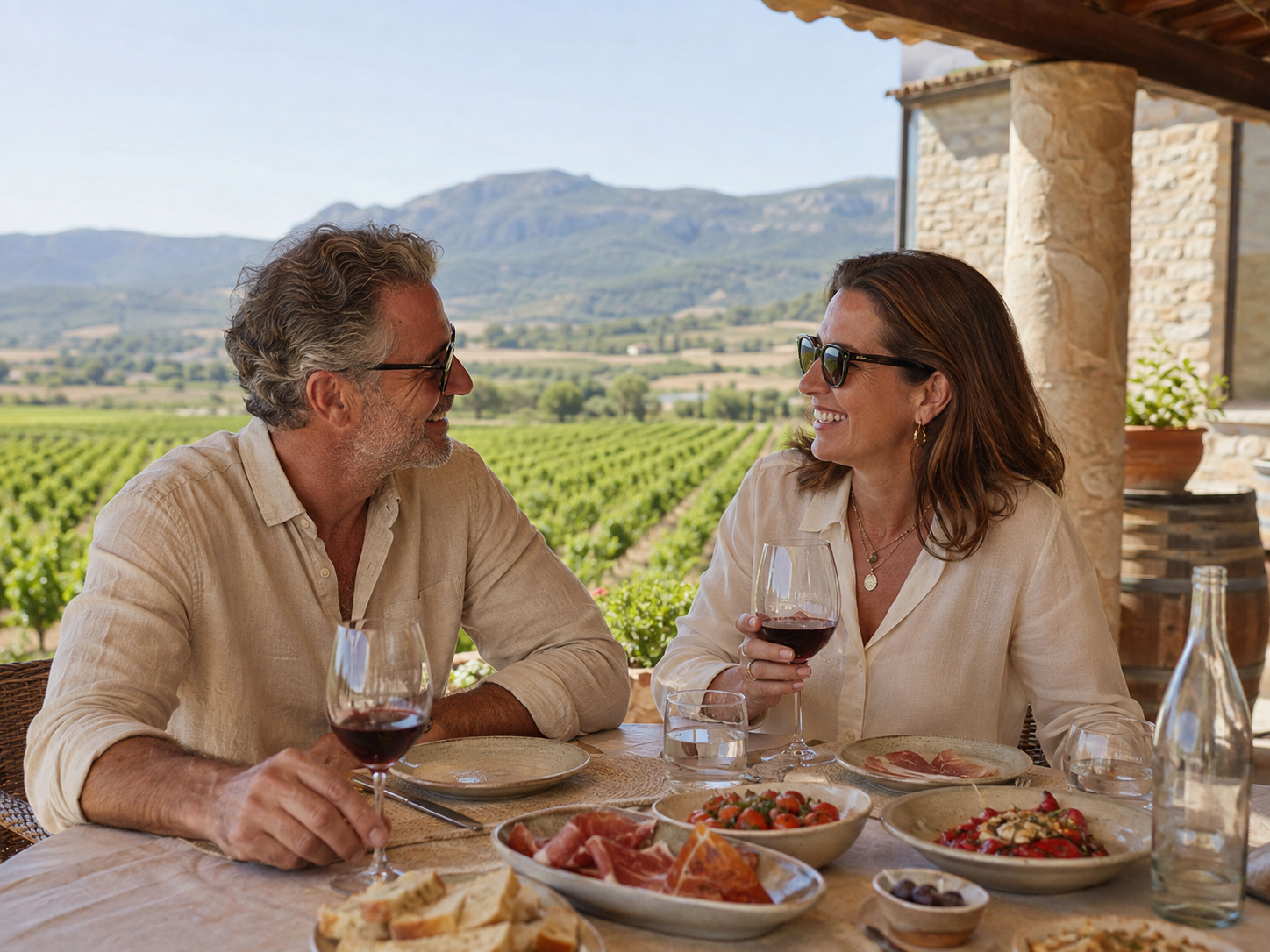
The thing that separates a winery lunch from an ordinary tasting is that the food is the destination, not an afterthought. At many Spanish bodegas you can book an experience that runs a guided tour of the cellars and vineyards, a proper tasting of several wines, and then a full sit-down meal, often three, four, or even six courses, each one paired with a different wine from the estate. It is a half-day event built around a table rather than a quick stop built around a counter, and the difference in pleasure is enormous. You leave not just having tasted a few wines but having eaten a real meal, met the people who made it, and spent unhurried hours in a beautiful place, which is a different order of experience altogether.
The setting is a large part of the magic, because you are not eating in a restaurant that happens to sell wine but at the source itself, surrounded by the barrels and the vines. The lunch might be served in a handsome dining room built into the winery, on a terrace overlooking the rows, or even out among the vines themselves during harvest, and the food is unfailingly regional, the local dishes that grew up alongside these particular wines over centuries. Eating cordero, roast lamb, with a Rioja made a hundred meters from your plate is a different thing entirely from ordering the same pairing in a city restaurant, because here the wine, the food, and the landscape are all one place, and the meal tastes of exactly where you are sitting.
Why September Is the Moment
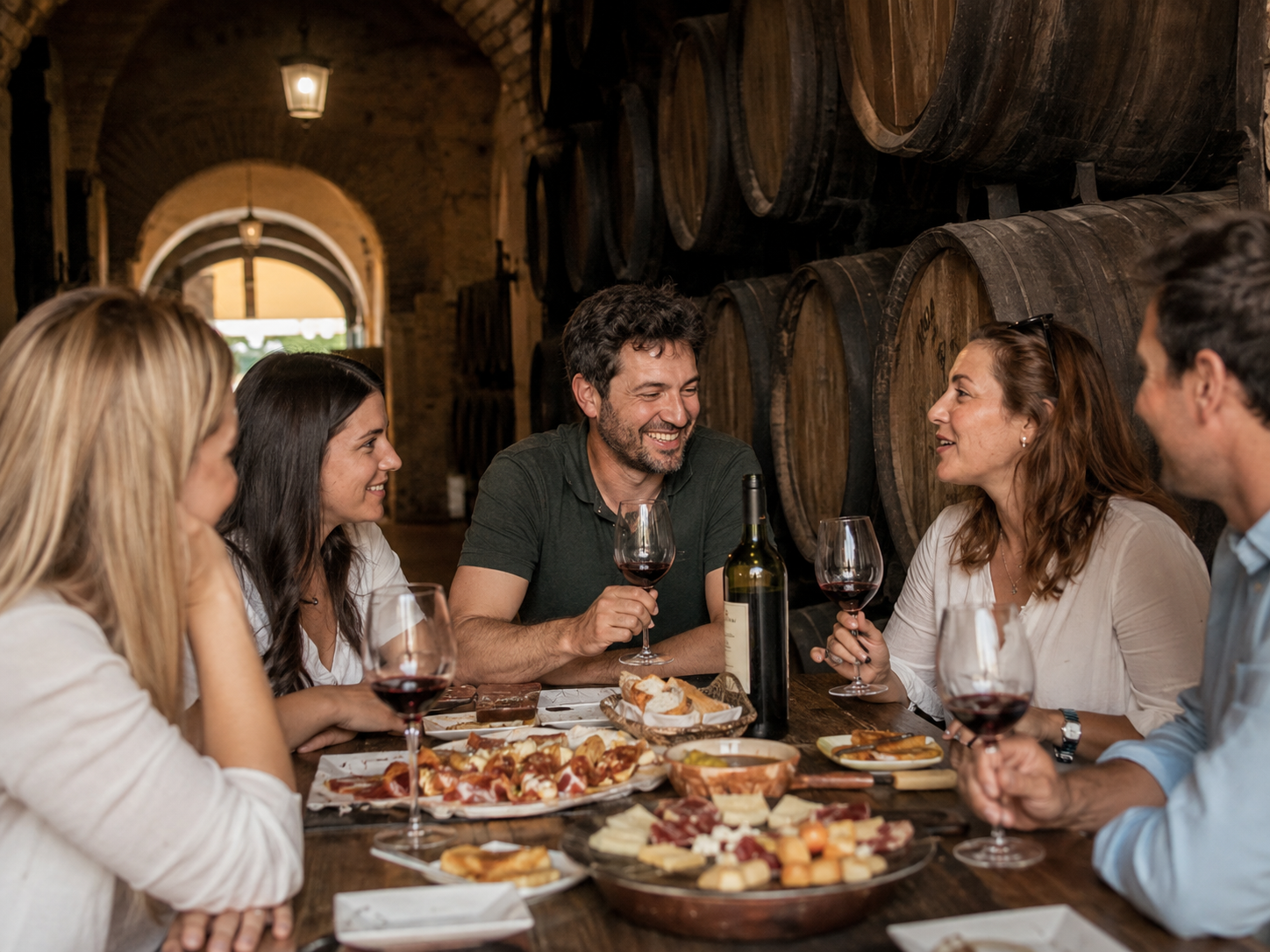
There are two ideal windows for visiting Spanish wine country, late spring around May and June, and early autumn through September and October, and the autumn one has a particular magic. September brings la vendimia, the grape harvest, the most alive and atmospheric time in any wine region, when the vineyards turn gold and green and busy, the air smells of fermenting fruit, and the whole year’s work comes to its climax. Many bodegas host special harvest events, harvest tasting menus, and the chance to see the crush actually happening, so a lunch booked in September comes with a side of the real working drama of winemaking.
It is also simply beautiful, since the vineyards in September and October are at their most photogenic, the leaves beginning to turn, the light going golden, the rows heavy or freshly picked. The one catch, and it is a real one, is that harvest is the busiest stretch of the entire year for these wineries, so the very thing that makes September special also makes it the moment when tables and tour slots fill fastest. That is the whole reason this is a booking to lock in early rather than a thing to try to arrange once you have arrived, because the best bodegas will already be full. September rewards the traveler who planned ahead and quietly turns away the one who did not.
The Regions to Aim For
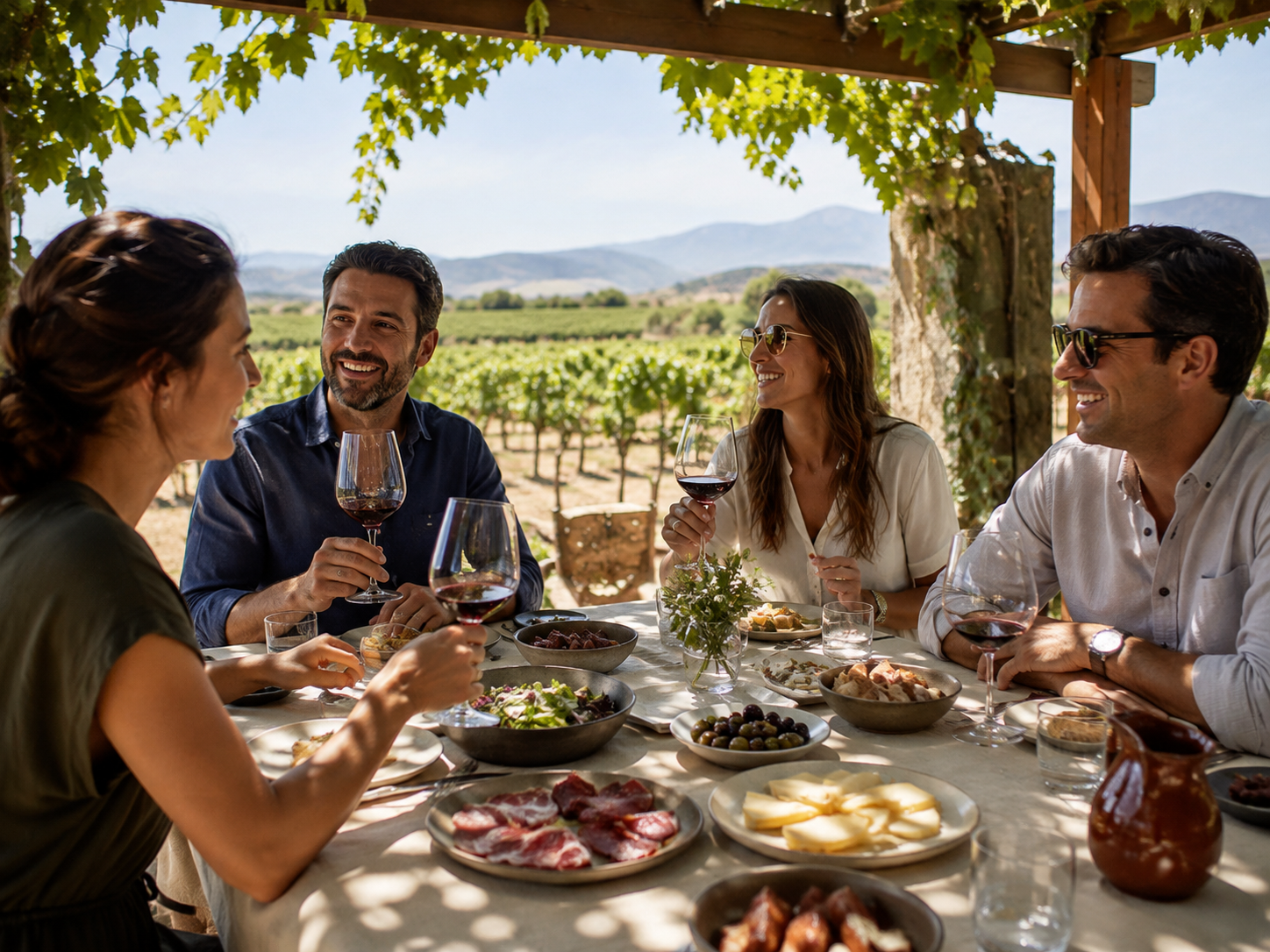
Spain is covered in wine regions, but a handful stand out for the quality of their winery-lunch experiences. Rioja is the obvious flagship, the country’s most famous red-wine region, dense with bodegas both historic and strikingly modern, and built for wine tourism in a way that makes the lunch experience easy to find and reliably excellent. Its towns like Haro, Logrono, and the beautiful walled village of Laguardia make perfect bases, and some of its wineries are architectural spectacles in their own right, like the Frank Gehry-designed hotel and bodega at Marques de Riscal.
Beyond Rioja, several other regions reward the effort. Ribera del Duero, in Castilla y Leon, produces some of Spain’s most prestigious reds and pairs them with the hearty roast-lamb cooking of the high plains. Penedes, near Barcelona, is the heart of Spain’s cava country, where the sparkling-wine houses offer their own elegant tours and lunches, while nearby Priorat draws serious wine lovers to its dramatic terraced hills.
Farther afield the experience changes character entirely. Down in Galicia, Rias Baixas offers a completely different day built around crisp white albarino and the seafood of the Atlantic coast, and in the deep south, the sherry bodegas of Jerez pair their remarkable fortified wines with Andalusian food and flamenco. Each region is its own world, but all of them share the same lovely institution of the visit that ends at a table. Which one to choose comes down to the wine and the food you love most, since a red-wine devotee will gravitate to Rioja or Ribera del Duero, a lover of bubbles to the cava houses of Penedes, and anyone who dreams of chilled white wine with fresh seafood to the Atlantic coast of Rias Baixas. There is no wrong answer, only different pleasures, and any one of them makes a worthy centerpiece for a few days of a Spanish trip.
What the Day Actually Looks Like
A typical winery-lunch day has a shape worth knowing so you can picture it. It usually begins mid-morning with a walk through the vineyards, where a guide or sometimes the winemaker themselves explains the terroir, the grape varieties, and, in September, the harvest underway around you. From there you move into the cellars, often genuinely old and atmospheric, some dating back centuries, to see the barrels and learn how the wine is made and aged, before sitting down for a guided tasting of several of the estate’s wines.
Then comes the part that makes it all worthwhile, the lunch, which unfolds slowly across several courses each matched to a different wine. This is not a rushed affair, and you should plan for it to take a couple of hours or more, because the whole point is to linger, to let the winemaker’s stories and the pairings and the view all work on you at the pace they were meant to. By the time you finish, coffee in hand and a little sleepy in the afternoon light, you will have spent the better part of a day inside the world of a single wine, which is a far richer thing than ticking off three quick tastings in a hurry. It is slow travel at its very best, and it leaves you feeling you actually understood a place rather than merely passed through it.
Booking It Right
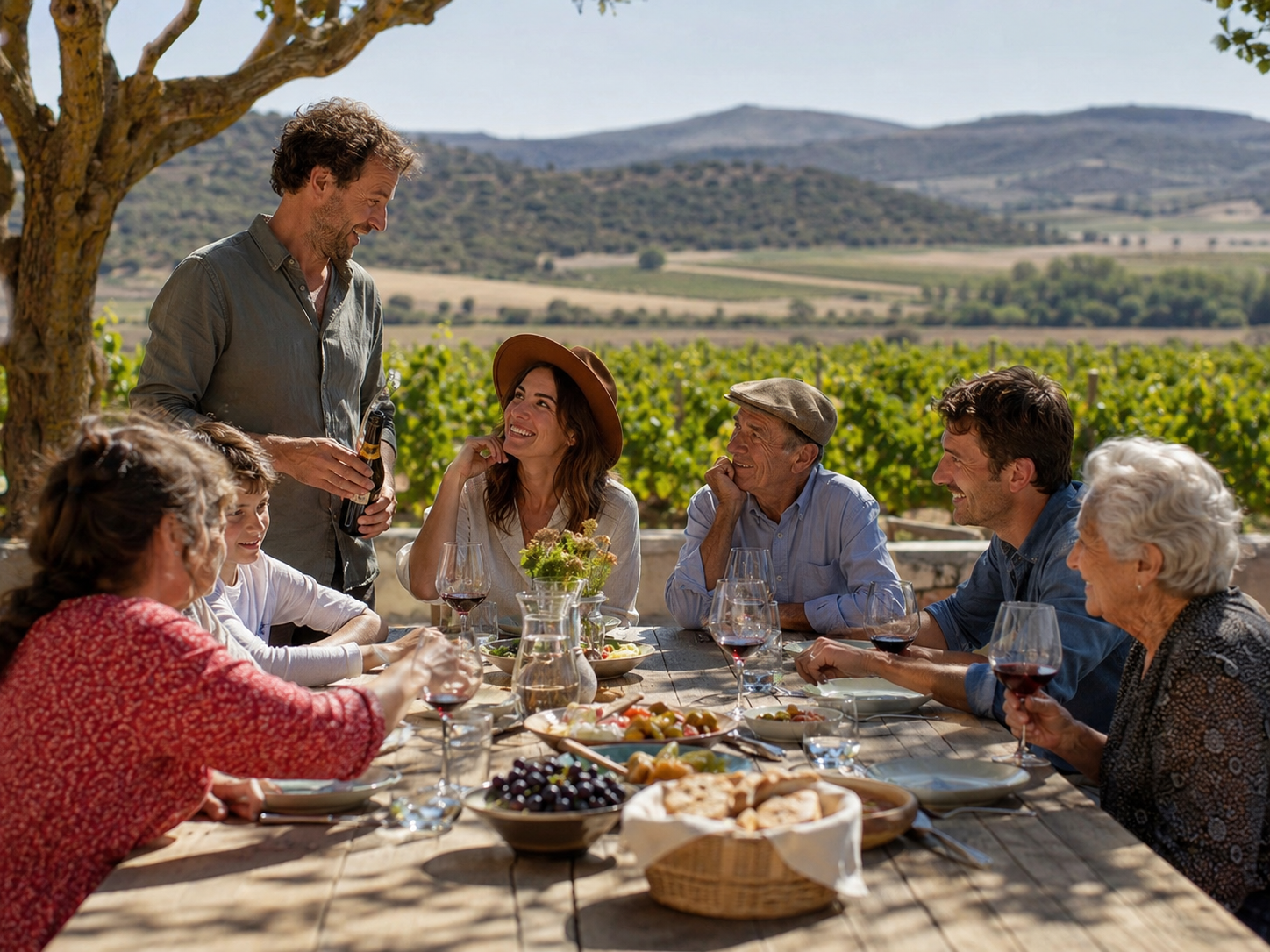
Here is the single most important practical fact about Spanish wineries, the one that catches out unprepared visitors again and again. These places are almost never walk-in, and their cellar doors run by appointment only, so you cannot simply turn up at a famous bodega and expect to be let in, and the lunch experiences in particular must be reserved in advance. This is true year-round and doubly true in the September harvest crush, when the flagship names fill their calendars weeks ahead.
Booking is thankfully not difficult once you know to do it. Most wineries take reservations directly through their own websites, and many offer tours and tastings in English, which you can usually select when you book, so language is rarely a barrier at the tourism-focused estates. For a smoother day, especially if you want to visit more than one winery, a local guided tour is worth considering, since companies across every wine region run small-group day trips that handle the bookings, the driving, and the translation for you, and often get access to family-run bodegas that are hard to arrange alone. Whichever route you choose, the rule is the same, which is to book before you go, ideally as soon as your dates are set, because the winery lunch is a planned pleasure and not a spontaneous one.
What It Costs
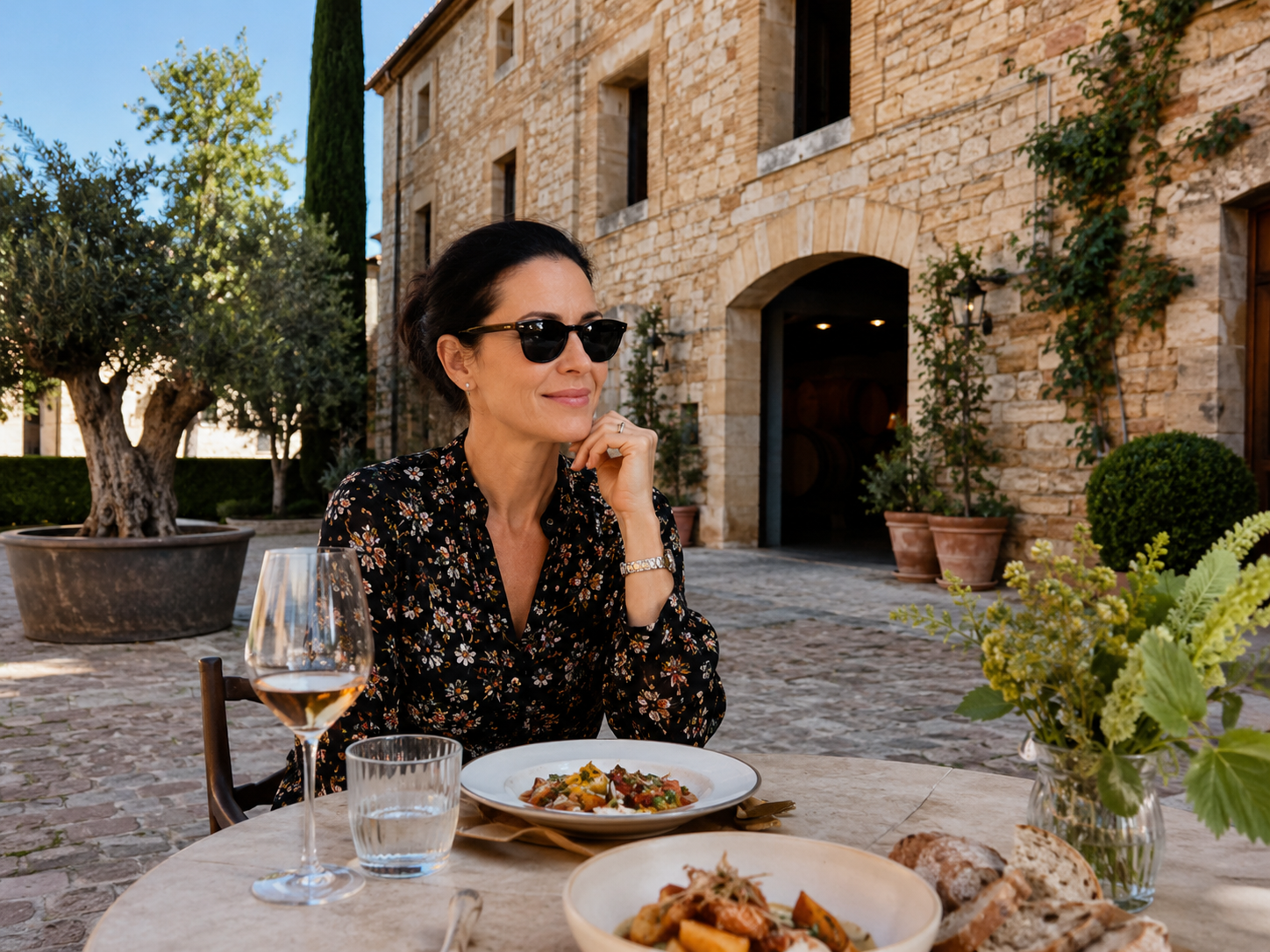
The prices are genuinely reasonable for what you get, which is part of why this is such a well-kept secret. A straightforward guided tour with a tasting of a few wines often runs in the region of €40 to €70 per person, roughly $43 to $75, at many bodegas, which is remarkable value for an hour or two with a knowledgeable guide and several good wines. The full lunch experiences cost more, naturally, since you are adding a multi-course paired meal, but they remain a fraction of what an equivalent experience would cost in much of the wine world.
For the elaborate tour-and-tasting-menu packages at the more famous wineries, expect to pay more per person for the six-course paired lunches, and for a full-day guided tour visiting several wineries with lunch included, prices vary by region and group size but represent, for most travelers, one of the better-value special days of a whole trip. Set against the cost of a comparable day in the wine regions of France, California, or Italy, the Spanish winery lunch is a genuine bargain, delivering world-class wine, serious regional cooking, and beautiful surroundings for prices that still feel fair. It is one of those rare travel experiences that manages to be both a highlight and an economy at once.
The Bodegas You Can Sleep At
One especially lovely option solves the transport problem and deepens the whole experience at once, which is to stay the night at the winery itself. A growing number of Spanish bodegas are also winery-hotels, offering rooms right on the estate, so you can tour, taste, and enjoy the long paired lunch or dinner without ever needing to drive anywhere afterward, simply walking a few steps to bed among the vines. It turns a day trip into a proper immersion, and it removes the drink-and-drive worry entirely.
Rioja has several famous examples, including the striking Frank Gehry-designed hotel at Marques de Riscal, but the idea runs throughout Spanish wine country, from grand architectural statements to small family estates with a handful of simple rooms. Waking up surrounded by vineyards, wandering out for breakfast overlooking the rows you tasted from the day before, is a genuinely special way to travel, and in September it means opening your window to the sights and sounds of the harvest itself. If your budget stretches to one memorable splurge on a Spanish trip, a night at a winery-hotel built around one of these long lunches is a strong candidate, since it folds the meal, the wine, the setting, and the stay into a single seamless experience.
Getting There Without Driving
One real practical wrinkle deserves its own mention, because it trips people up: this is a day built around drinking wine, which does not mix with driving yourself home afterward. Spain enforces its drink-driving limits seriously, and a day of tastings and a wine-paired lunch will put you well over any sensible line, so planning your transport in advance is not optional but essential. The worst outcome is a wonderful lunch followed by the problem of how to get back to your hotel safely.
The good solutions are easy. Basing yourself in a wine-town like Haro or Laguardia in Rioja lets you reach several wineries by short taxi rides or even on foot in the compact station districts, so you never need a car at all. Alternatively, a guided tour with a driver solves the whole thing at once, letting everyone in your party drink freely while someone sober handles the road, which is exactly why the organized day trips are so popular for this kind of outing. However you arrange it, sort the transport before you sort the wine, and the day becomes pure pleasure with none of the worry.
A Table Worth Booking For
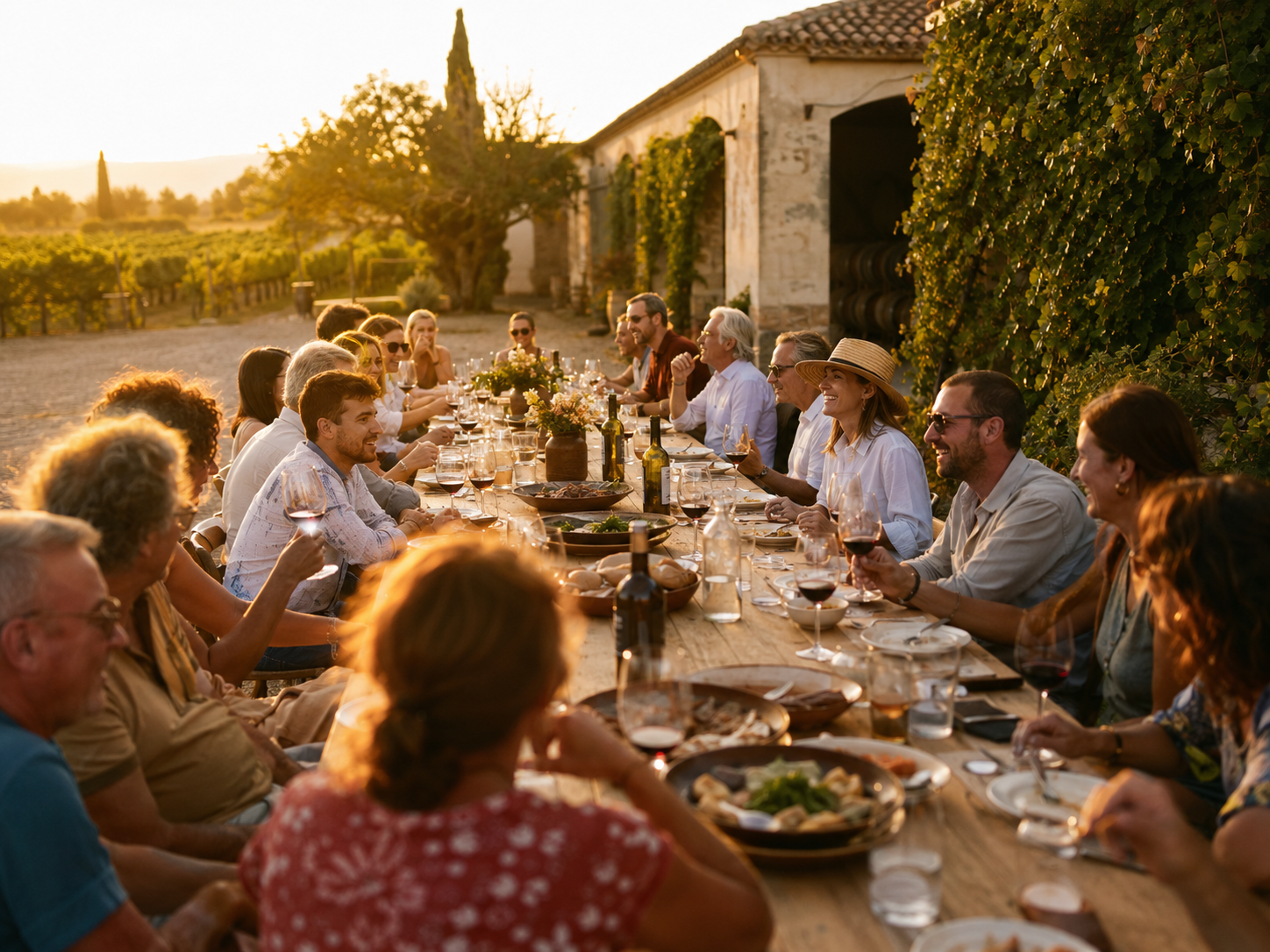
The Spanish winery lunch sits at a lovely intersection of things travelers say they want, authentic regional food, excellent wine, beautiful countryside, and a slower pace, and yet many visitors never think to seek it out. It asks only a little planning in return for one of the most memorable days a trip through Spain can offer, and in September, with the harvest in full swing and the vineyards glowing, it is at its absolute best. This is the kind of experience people remember years later, long after the cities and the museums have blurred together.
So if a Spanish trip is anywhere in your future, look at the wine regions, pick a bodega or two whose wines you love or want to know, and book the visit that ends at a table well before you go. Choose September if you can, plan the transport, reserve the lunch, and then simply show up and let a winemaker feed you their food and pour you their wine among the vines that made it. Few days of travel repay the small effort of booking ahead quite so generously as this one. It is the sort of day you find yourself describing to friends for years, and quietly planning to do again.
A word of practical caution before you get swept up in the idea: these bodegas book up fast, harvest is their busiest season of all, and the prices here are a rough 2026 guide that shifts with the winery, the region, and the exact experience, so reserve early and confirm the current cost and menu directly with each place before you count on it.

About the Author: Ruben, co-founder of Gamintraveler.com since 2014, is a seasoned traveler from Spain who has explored over 100 countries since 2009. Known for his extensive travel adventures across South America, Europe, the US, Australia, New Zealand, Asia, and Africa, Ruben combines his passion for adventurous yet sustainable living with his love for cycling, highlighted by his remarkable 5-month bicycle journey from Spain to Norway. He currently resides in Spain, where he continues sharing his travel experiences with his partner, Rachel, and their son, Han.