
Portugal eats more fish per person than almost anywhere else in Europe, and after years of watching my Portuguese neighbors work their way through sardines and grilled sea bass and salt cod without a second thought, I got curious enough to copy them on purpose. For sixty days I ate the Portuguese way, which mostly meant fish at least twice a week, olive oil doing the cooking, and a lot less of the red meat I had drifted toward. I bracketed the whole thing with bloodwork so I would have something more honest than a feeling to report at the end. This account is lightly composited from that stretch, so read the numbers as the shape of what happened rather than a clinical record, but the direction was real and one particular line on the panel moved more than I expected.
The line that moved was my triglycerides, and the story of why is less about any miracle food than about what a fish-forward week quietly crowds off the plate.
The Portuguese Way, Actually
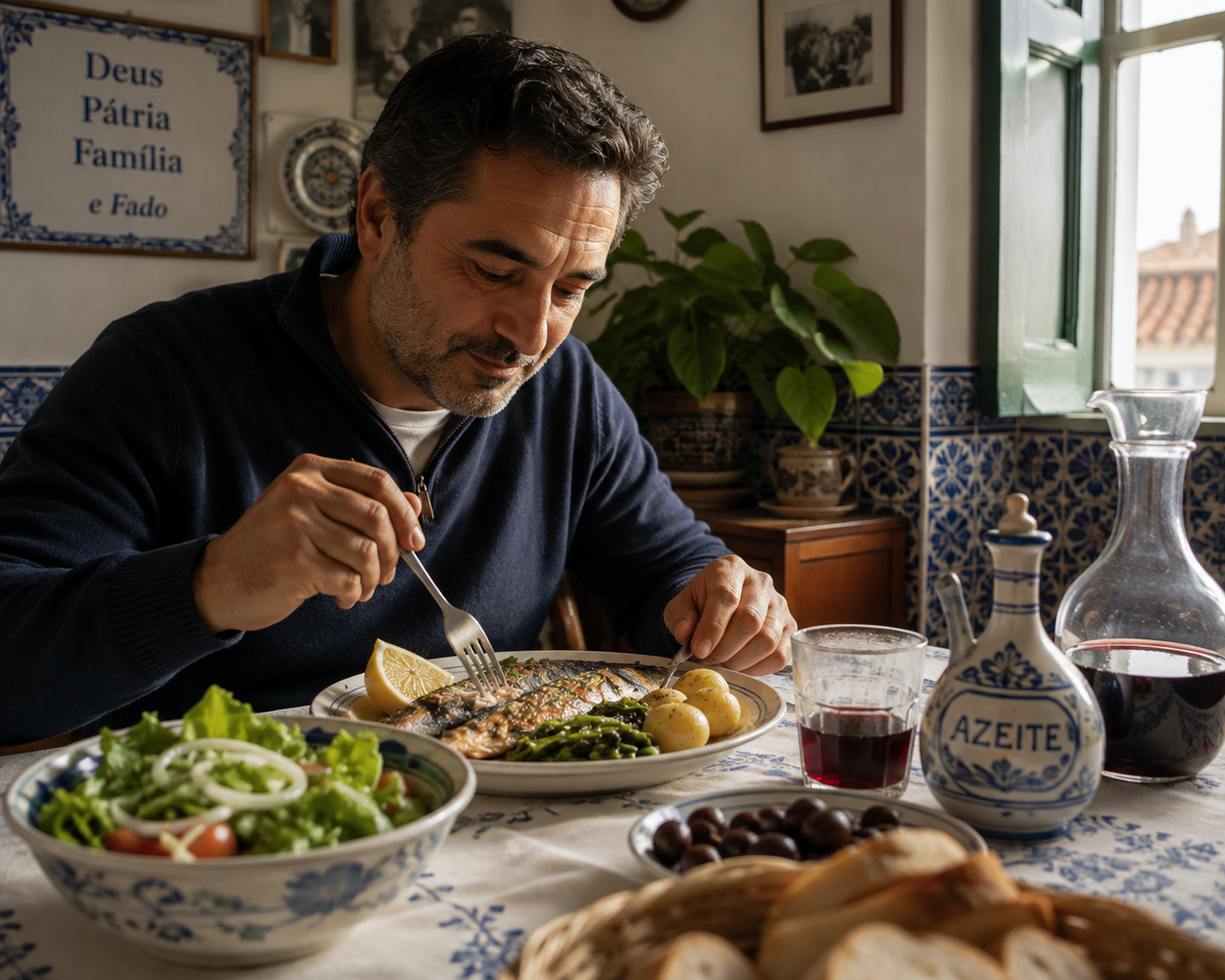
The Portuguese relationship with fish is not a health project, it is just dinner, and that ordinariness is the whole point. In an average week here the fish is grilled simply over charcoal, dressed with nothing more than olive oil, salt, and a wedge of lemon. It shows up as sardinhas in summer, as everyday sea bass and mackerel and horse mackerel the rest of the year, and as bacalhau, the salt cod that appears in a hundred forms, whenever the mood calls for it. Nobody counts the omega-3s or frames the meal as a supplement in edible form; the fish is cheap, it is fresh off a small Atlantic coast, and it is simply what a normal person eats.
Around the fish sits a plate that leans the way the whole Mediterranean and Atlantic coast leans: vegetables and pulses carrying real weight, bread that actually tastes of something, olive oil rather than butter doing most of the cooking, and red meat present but not central. What struck me copying it was how little willpower the pattern demanded, because the fish was genuinely good and genuinely easy, and the healthy shape of the plate was a side effect of eating well rather than the grim result of eating carefully. That distinction turned out to matter more than any single nutrient.
The 60-Day Rules I Followed
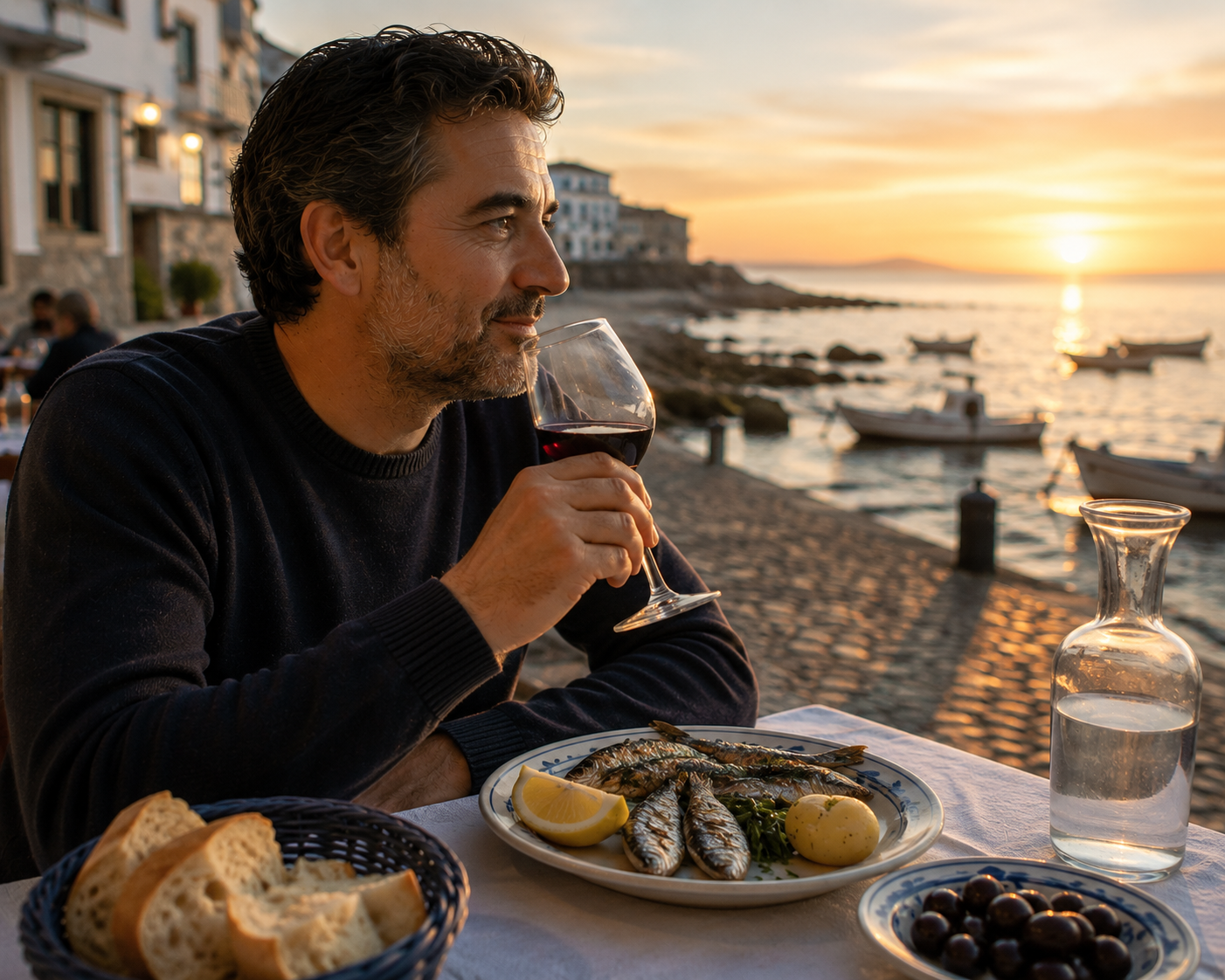
I kept the rules deliberately simple, because a plan you have to consult is a plan you eventually abandon. The core rule was fish on the plate at least twice a week, and ideally the oily kind, so sardines, mackerel, and the occasional bit of salmon rather than only the leaner white fish, since the oily fish is where the omega-3 actually lives. The second rule was that olive oil did the cooking and butter mostly sat down, which is less a health edict than simply how the food here is made. The third was that red meat moved from a default to an occasional guest, showing up maybe once a week instead of most nights.
Beyond that I did not count anything, weigh anything, or forbid anything, and there were no calorie targets or portion rules involved, partly because that is not how Portuguese people eat and partly because restrictive counting is exactly the kind of plan that curdles into misery and quitting. I ate bread, I had wine with dinner some nights, I did not treat any food as contraband. The only real change was the center of the plate shifting from meat toward fish and the cooking fat shifting toward olive oil, and everything else followed from those two small moves rather than from any act of grim discipline.
The Line That Moved
I pulled a fasting panel at the start and another at day sixty, changing no medication and adding no supplement in between, so that whatever moved could be pinned on the food rather than on anything else. Most of the numbers drifted around the way numbers do, small changes in either direction that mean little on their own, but the triglycerides moved with real conviction, dropping from around 150 to about 105 across the two months. In the framework labs use, that is the difference between sitting at the upper edge of normal and settling comfortably inside it, and it was the one change large enough that I trusted it rather than shrugging it off as noise.
It is worth being careful about what that does and does not prove, because a single person over sixty days is an anecdote wearing a lab coat, not a study. Triglycerides are also the blood marker most responsive to short-term diet changes, so a drop over two months is exactly where you would expect a fish-forward, less-red-meat, less-processed pattern to show up first, which is reassuring rather than mysterious. I did not suddenly rebuild my arteries in sixty days, and I would not claim to, but the direction of that one line matched the direction the research would predict, and feeling the change reflected in an actual number was more persuasive than any amount of reading had been.
Why Fish, and Why Twice a Week

The twice-a-week figure is not something I invented, since it is roughly what the major heart associations have recommended for years, two servings of fish a week with an emphasis on the oily kind, precisely because that is the intake tied to lower cardiovascular risk in the research. The long-chain omega-3 fats in oily fish, the ones labelled EPA and DHA, are the active part of the story. Among the effects most consistently attached to them is a lowering of triglycerides, which is exactly the line that moved on my own panel. The rough target the nutrition bodies point to, around 250 mg a day of combined EPA and DHA, is met by only a portion or two of oily fish a week. Large reviews pooling many studies have linked eating roughly one to two servings of oily fish a week to a meaningfully lower chance of dying from heart disease, on the order of a third in some analyses, which is a large effect for so ordinary a change.
The mechanism is not magic, and it is not only the fish itself. Omega-3s appear to steady the heart’s rhythm, nudge blood pressure down a little, and ease the inflammation that sits underneath a lot of cardiovascular trouble, but a fish-forward week also quietly displaces things, because every dinner built around sardines is a dinner not built around processed meat or a heavy restaurant plate. So part of the benefit is the fish arriving, and part is what the fish shows the door, and the Portuguese plate happens to get both halves right without anyone thinking of it as a health strategy at all.
A Week on the Plate
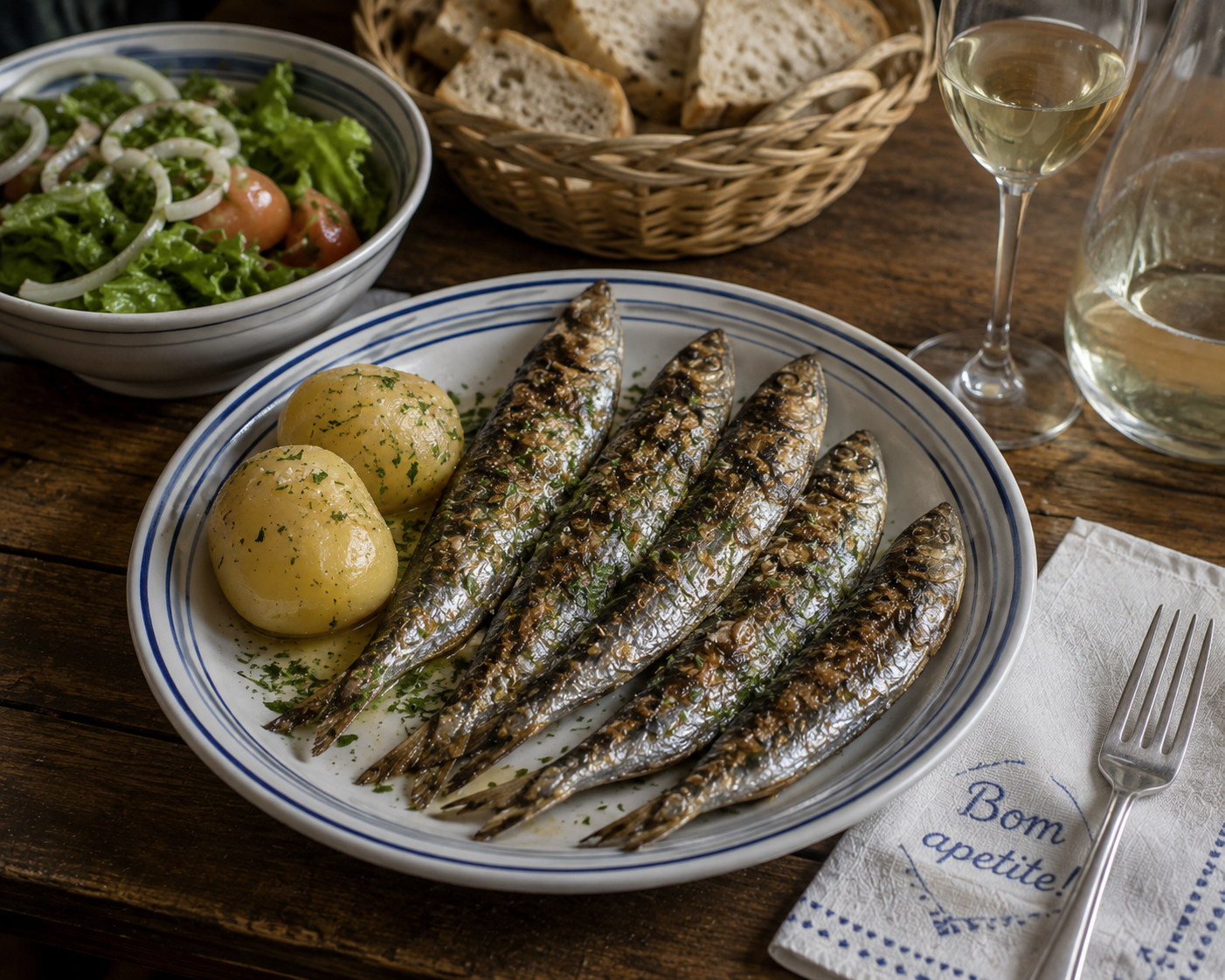
To make it concrete, a typical week looked less like a diet plan and more like ordinary, slightly lazy home cooking. Two of the dinners were the anchor, one of grilled sardines with boiled potatoes and a tomato-and-onion salad, the other of mackerel or sea bass done the same simple way over heat with olive oil and lemon, both of them on the table in under fifteen minutes.
A third night usually turned to bacalhau in one of its endless forms, often the homely bacalhau à brás of shredded salt cod, onion, potato, and egg, which stretches a little fish into a full and satisfying plate. The rest of the week filled in around them without any rule at all. A pot of chickpeas or white beans with greens, an omelette with a salad, a bowl of vegetable soup, the odd bit of chicken, and red meat showing up maybe once, as a Sunday sort of pleasure rather than a Tuesday habit.
Lunches were where the tinned fish earned its keep, because a couple of tins of sardines on good bread with sliced tomato and a drizzle of olive oil is a genuinely fast, cheap, and satisfying midday meal that requires no cooking and almost no thought. None of it felt like restraint, which is the entire reason it held for the full sixty days rather than collapsing in the second week the way stricter plans tend to.
What It Cost at the Market
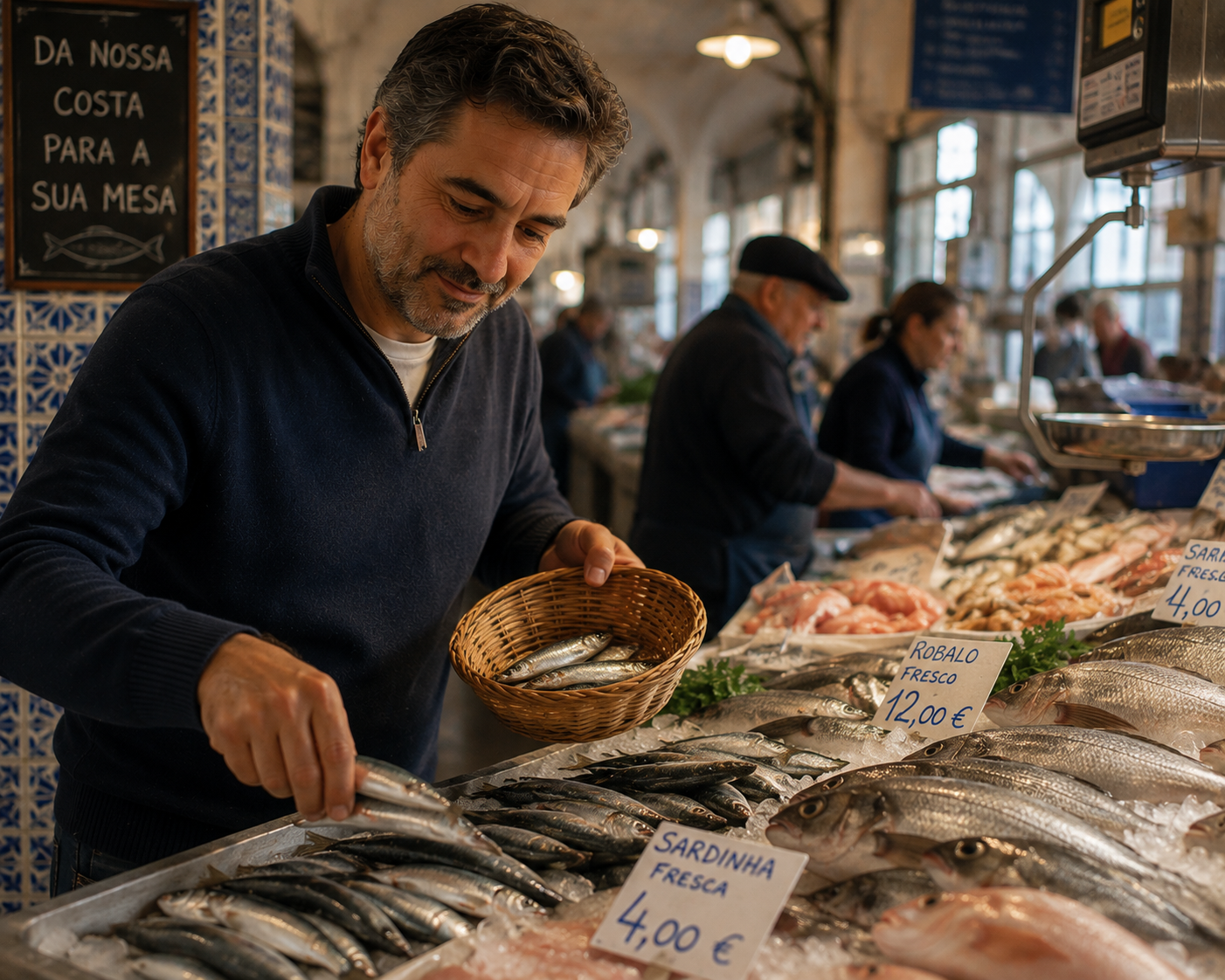
One of the quiet joys of copying this particular cuisine is that the healthiest part of it is also the cheapest, which is rarely how these things go. Tinned sardines, genuinely good ones packed in olive oil, run somewhere around €1.50 to €3 a tin here, and a couple of tins make a real lunch on bread with tomato, so the oily fish at the center of the whole experiment cost less than almost anything else I could have eaten. Fresh fish varies with the season and the species, but the humble, oily, unglamorous kinds, the mackerel and the horse mackerel and the summer sardines, are consistently the affordable end of the counter rather than the expensive one.
Compare that to the red meat it partly replaced and the math tilts further, because a week leaning on fish and pulses and vegetables simply costs less than a week built on steak and chops, even before you count the olive oil doing cheap, cheerful work in the pan. The point worth taking from this is that the Portuguese pattern is not a boutique wellness diet with a boutique price tag. It is genuinely peasant food in the best sense, built from what a small coastal country had cheaply to hand, which is exactly why it survived long enough to become a habit worth copying. A week of it landed my grocery bill somewhere near €45 to €55 for one person’s dinners, less than the meat-heavy weeks it replaced, which is the rare case of the healthier basket also being the lighter one on the receipt.
What Surprised Me and What Fell Away
The pleasant surprise was how quickly fish stopped being a special occasion and became just Tuesday, because once you have grilled a few sardines and realized the whole thing takes eight minutes and one lemon, the imagined hassle evaporates. My energy through the afternoons felt steadier, though I hold that loosely since mood and sleep muddy any such claim, and the one change I can point to with confidence is simply that I stopped defaulting to meat without ever feeling like I was going without. Fish turned out to be a substitution, not a sacrifice, which is the only kind of food change that ever lasts. That single reframe, from giving something up to simply swapping the center of the plate, is probably the most useful thing I took from the whole two months, and it is the reason the habit outlived the experiment instead of ending with it.
What fell away was the idea that I needed to be strict about it. Around week three I briefly tried to push toward fish nearly every day, treating the good result as something to chase harder, and it promptly made the pattern feel like a regimen rather than a way of eating. Meals got repetitive, the shopping got fiddly, and the whole thing lost the easy ordinariness that made it work in the first place, so I dropped back to the honest twice-a-week rhythm the Portuguese actually keep. Sometimes the experiment tells you that more is worse, and the sensible move is to listen to it rather than to your own enthusiasm.
Where the Neat Story Breaks Down
It would be easy to hand you a clean before-and-after and call fish a cure, and it would also be dishonest, so here is the honest version. My triglycerides were the marker that moved, and triglycerides respond to a whole cluster of things at once, so the fish, the dropped red meat, the olive oil, and simply cooking at home more all pushed in the same direction, and no single one of them earns the full credit. Anyone whose numbers are driven by genetics, by a medical condition, or by a very different starting diet might see less, or nothing, or should be changing things under a doctor’s eye rather than a blogger’s.
There is also the plain fact that sixty days is short and one body is one body, so the right way to read this is as a nudge to try a well-studied pattern and check your own numbers, not as a promise about what yours will do. Fish is not a medicine, and it will not undo everything else a life contains, but it is a genuinely good, genuinely cheap thing to move toward the center of the plate, and the research behind twice-a-week fish is about as solid as everyday nutrition advice ever gets.
Start With Two Tins of Sardines
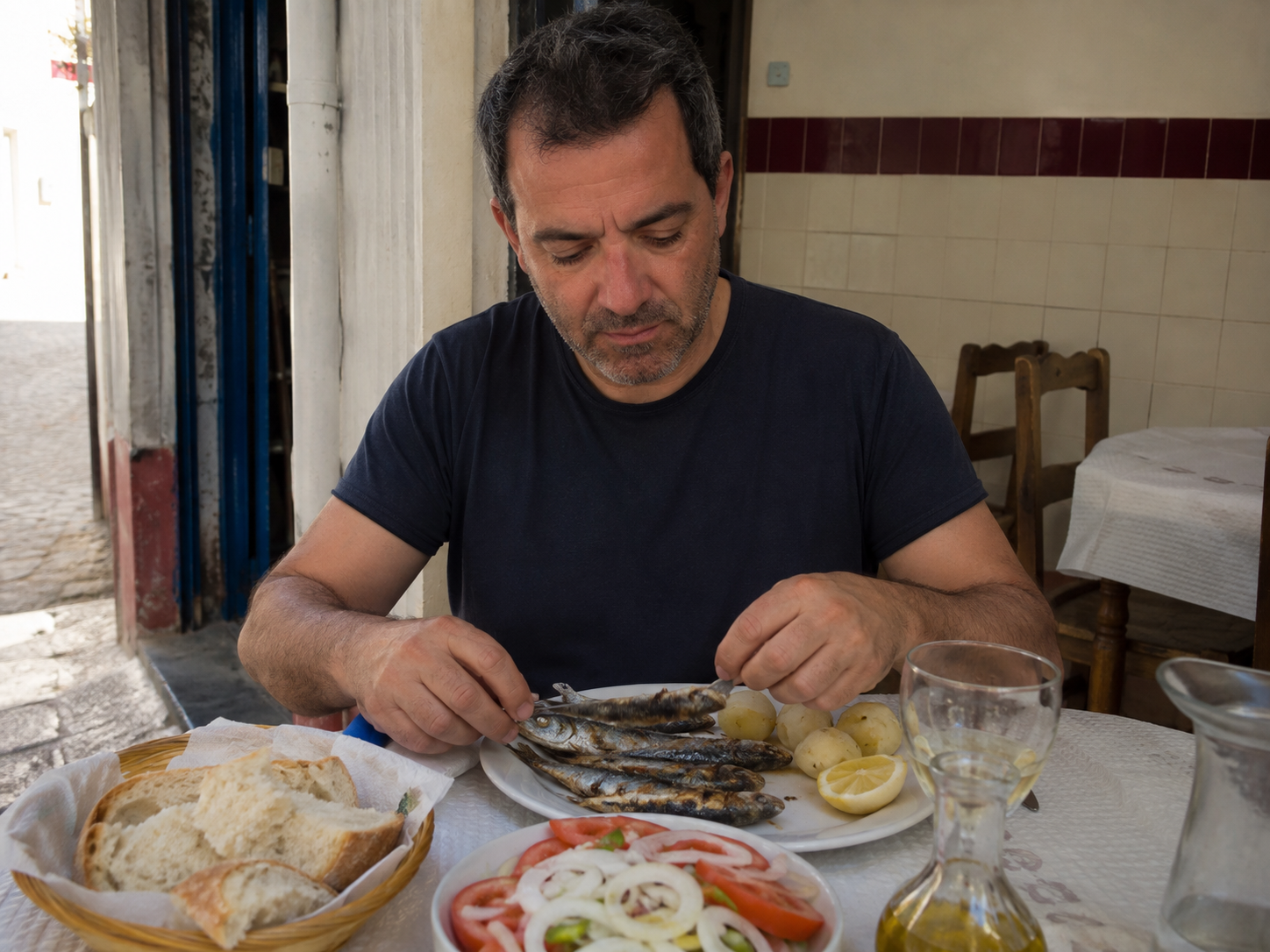
If you want to try the Portuguese way without turning your kitchen into a project, the whole thing collapses into one small move: put oily fish on the plate twice a week and let it displace something heavier, and do not overthink the rest. Buy a few tins of good sardines in olive oil, keep them in the cupboard, and let a couple of them become lunch on bread with sliced tomato on the days you cannot be bothered, which turns the healthiest habit into the laziest one available. Grill fresh mackerel or sardines when you have the time and the appetite, cook in olive oil, and let red meat become the occasional treat rather than the nightly default.
Do that for a couple of months and then, if you are curious the way I was, look at your own bloodwork rather than taking my word for any of it, because the only panel that matters is yours. The Portuguese did not build this way of eating to lower anyone’s triglycerides; they built it because fish was cheap and the coast was right there, and the health simply came along for the ride, which is the most durable kind of health there is.

About the Author: Ruben, co-founder of Gamintraveler.com since 2014, is a seasoned traveler from Spain who has explored over 100 countries since 2009. Known for his extensive travel adventures across South America, Europe, the US, Australia, New Zealand, Asia, and Africa, Ruben combines his passion for adventurous yet sustainable living with his love for cycling, highlighted by his remarkable 5-month bicycle journey from Spain to Norway. He currently resides in Spain, where he continues sharing his travel experiences with his partner, Rachel, and their son, Han.