
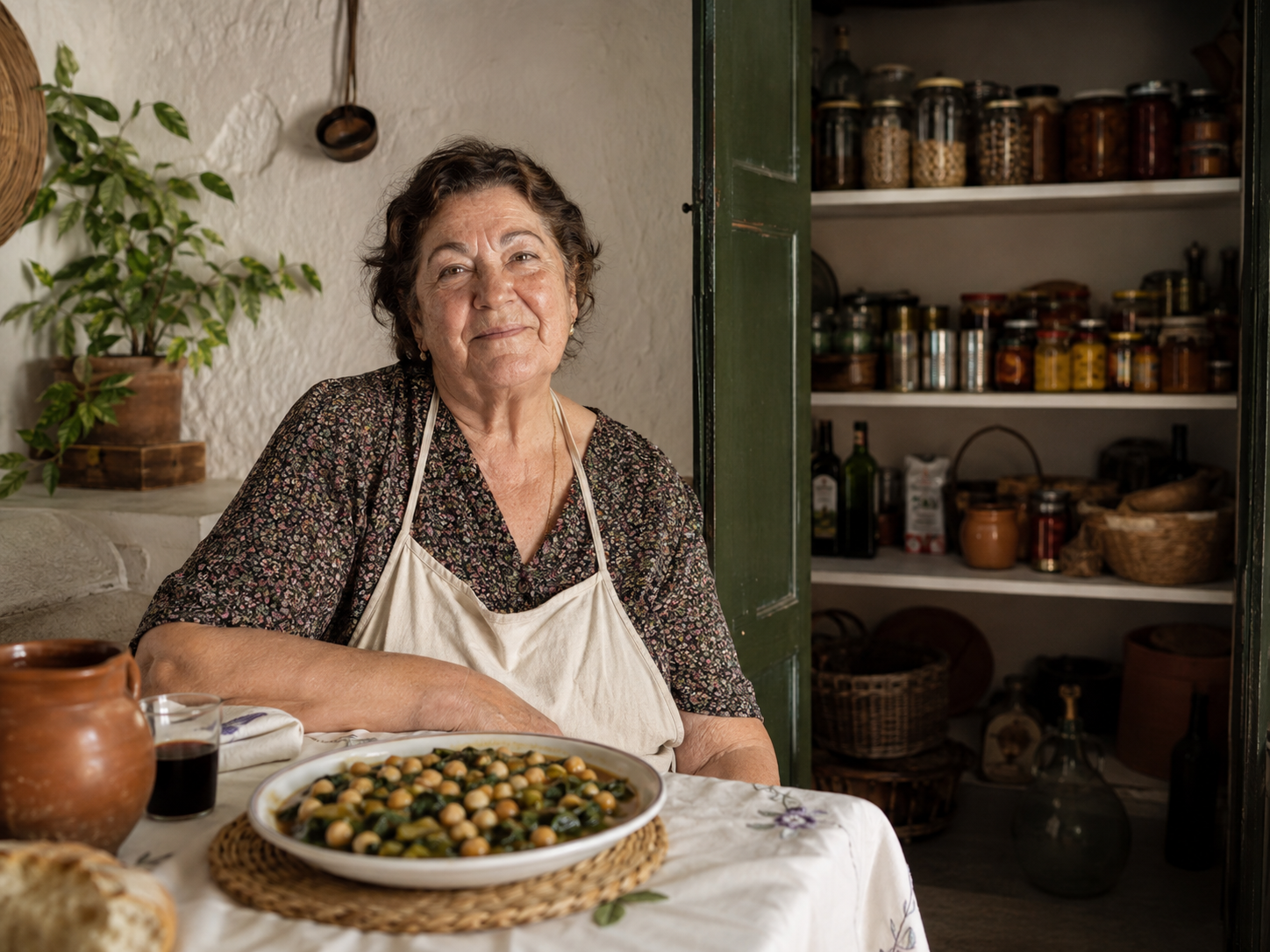
The Spanish grandmothers I have watched cook here all seem to run their kitchens the same way, out of a cupboard rather than out of a shopping list. There is always a jar of dried chickpeas, a row of good tins, a bottle of olive oil doing far more work than seems fair, and almost nothing thrown away, and the food that comes out of it is somehow both cheaper and better than what I was managing with a fridge full of fresh things going soft. So for a month I copied that cupboard on purpose, stocking it the way an abuela would and cooking mostly from what was already on the shelf, and this is what a month of it actually did. The account is lightly composited from that stretch, so take the details as the shape of the experiment rather than a strict daily log.
What surprised me was not the money, though the money was real. It was how much calmer cooking became when the decisions were mostly already made, sitting on a shelf, waiting. The whole month quietly rearranged what I thought a well-run kitchen even was.
What Was Actually in the Cupboard
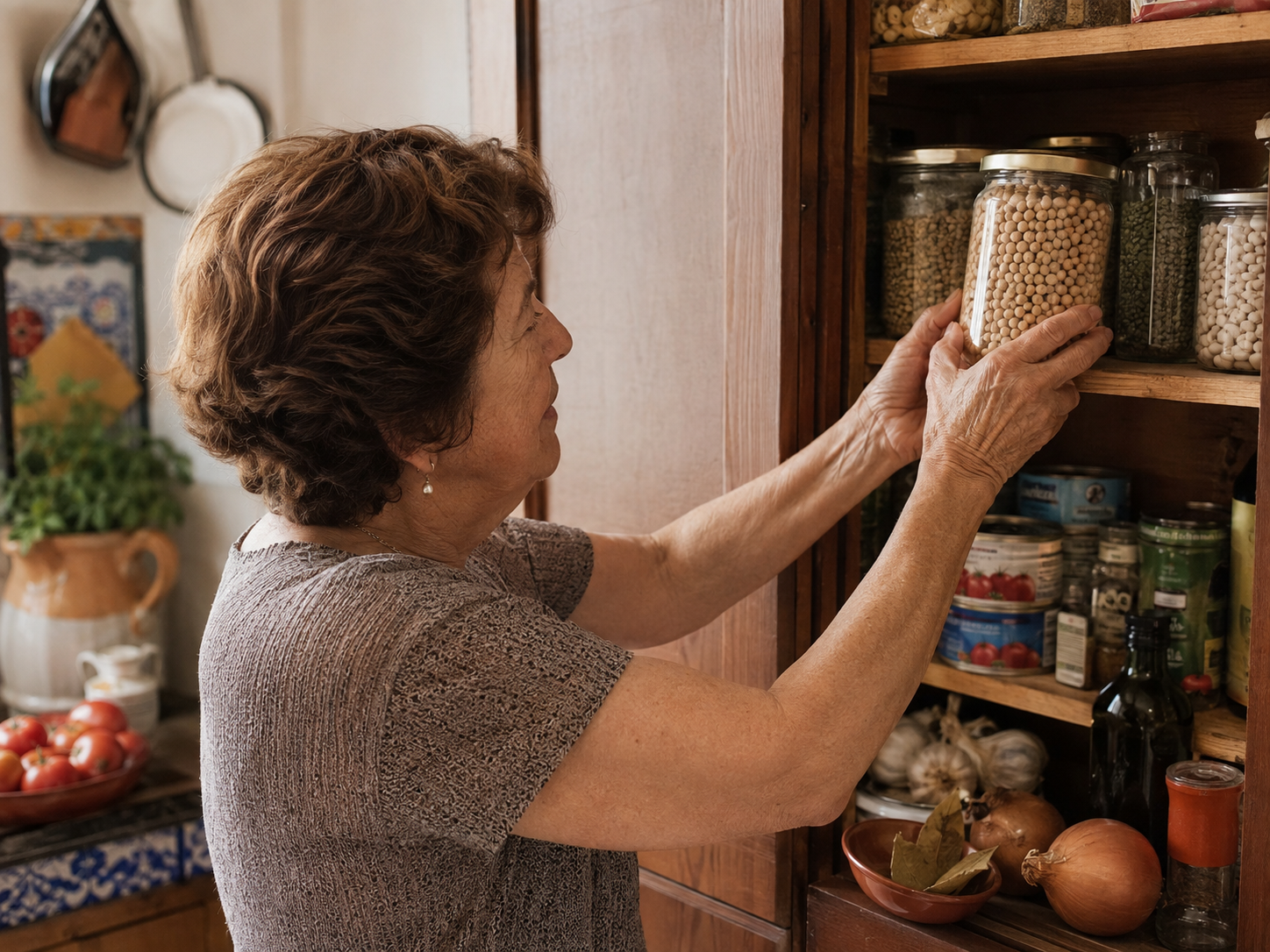
A Spanish grandmother’s cupboard is not fancy, and its whole power is in a small set of things kept always in stock. The foundation is the dried pulses, jars of chickpeas, lentils, and white beans that cost almost nothing and turn into the backbone of a dozen meals, from a full cocido to a quick pot of lentejas on a weeknight. Beside them sit the tins, and the tins are where the cleverness lives, because a Spanish larder leans on tinned tomatoes, tinned tuna and sardines, jarred piquillo peppers, white asparagus, and often a tin or two of good bonito that a grandmother would never call cheap food even though it is.
Then there is the oil, real olive oil used freely rather than hoarded, because in Spain it is the medium the whole cuisine swims in rather than a luxury drizzle. Around those pillars gather the humble aromatics that make everything taste of somewhere, the garlic and onions kept in a basket, the pimentón that gives Spanish food its warm red soul, a bay leaf, a strip of dried ñora pepper, and a hunk of hard cheese and some cured chorizo that keep for weeks. None of it is perishable in a hurry, none of it is expensive, and together it is enough to build real meals without a single trip to the shop.
The Zero-Waste Instinct
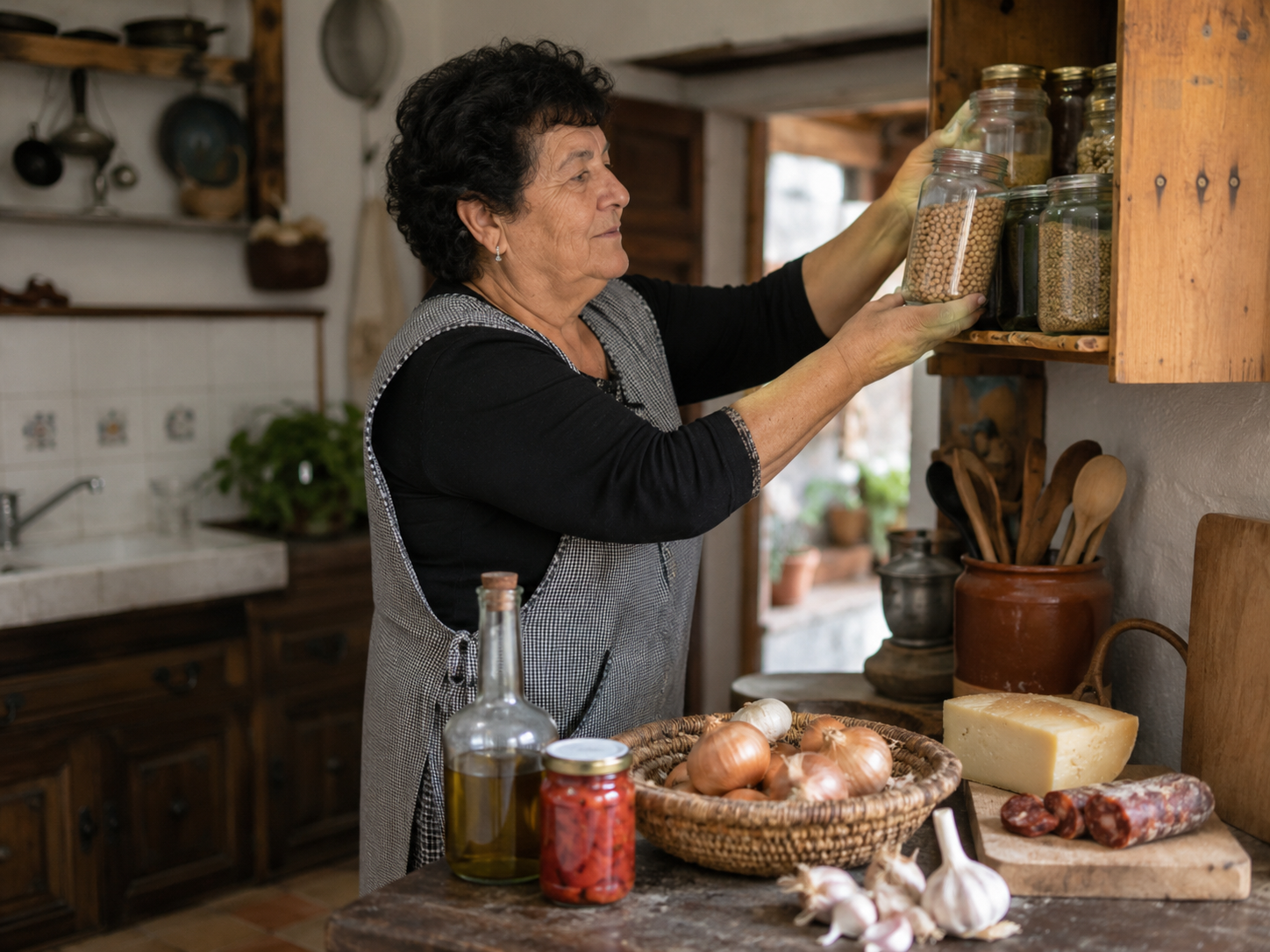
The thing I underestimated was how deeply the not-wasting is built into how these grandmothers cook, and it turns out to be the other half of the whole system. Nothing is thrown out, and the Spanish even have a word for the cooking that turns yesterday into today, aprovechamiento, the art of making good use of everything. Stale bread does not go in the bin; it becomes migas, fried with garlic and pimentón, or torrijas soaked in milk and egg, or simply the crumbs that thicken a soup or crown a dish.
The same instinct runs everywhere once you start looking. The leftover meat and vegetables from a cocido come back the next day as croquetas or a filling for peppers, the water the chickpeas cooked in becomes the base of a soup, the vegetable ends and the chicken carcass become stock rather than rubbish. It is not a moral performance about sustainability; it is simply how someone cooks who lived through lean years and never lost the habit, and the happy accident is that a kitchen run this way throws away almost nothing and spends almost nothing while eating genuinely well. I had thought of thrift and good food as opposites, and the cupboard quietly showed me they are the same thing seen from two angles. The waste I used to generate was invisible to me until it stopped, a steady background loss I had simply accepted as the cost of eating, and watching the bin stay nearly empty for a month was its own small revelation about how much money I had been quietly composting.
A Week from the Shelf
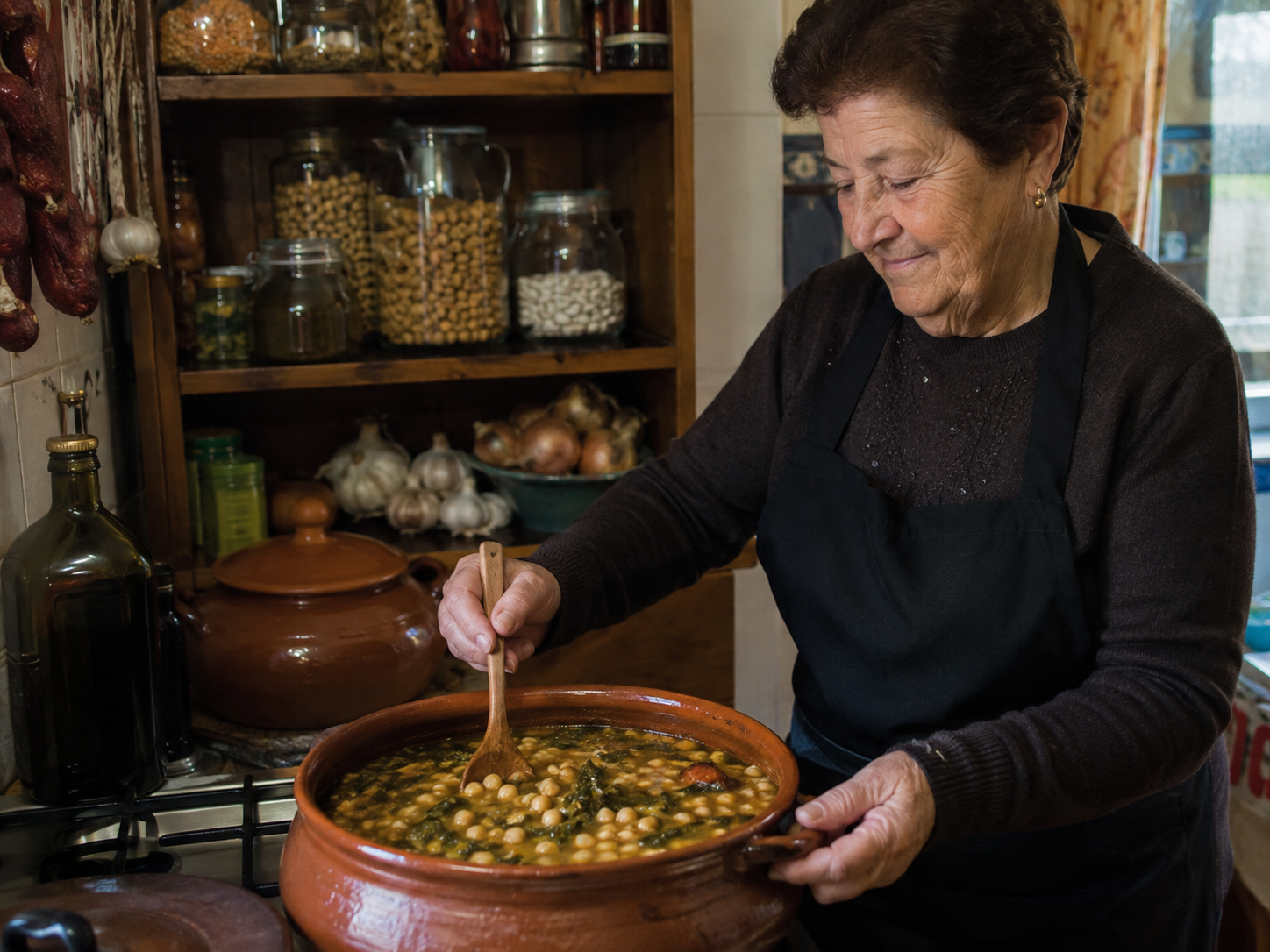
To make it concrete, a week living out of the cupboard looked varied in a way I had not expected from so few ingredients. Monday was lentejas, lentils stewed slow with onion, garlic, pimentón, and a bit of chorizo, the kind of pot that costs almost nothing and feeds you twice. Another night was a tortilla de patatas, the potato omelette that turns eggs, an onion, and a potato into a proper supper, and another leaned on the tins entirely, a plate of piquillo peppers stuffed with tuna, or white beans dressed with good oil and the bonito from a jar.
Chickpeas carried the heaviest lifting of the week, soaked overnight and turned into garbanzos con espinacas, the chickpea-and-spinach stew that is one of the great cheap dishes of Spain, needing only a handful of fresh spinach to complete a cupboard the rest of which never expires. Bread anchored every meal and its stale ends fed the next one, and the fresh element each day was small and cheap, an onion, some spinach, a couple of eggs, the things you can buy for coins rather than the fridge-filling haul I was used to. The cupboard did the structural work, and the fresh food just finished it.
What It Did to the Grocery Bill
The money was genuinely striking, even though I went in skeptical that beans and tins could really move the needle that far. My weekly grocery spend fell by something close to half, because the expensive part of my old shopping, the meat, the fish counter, the fresh things I bought hopefully and binned sadly, mostly disappeared, replaced by pulses and tins that cost a fraction as much and never went off. A bag of dried chickpeas that feeds a family several times costs about €2, a tin of good tomatoes well under a euro, and a month built on that base simply cannot run up the bill that a fridge-led kitchen does.
The deeper saving, though, was the waste I stopped generating, and it turned out to be a bigger leak than I had realized. The old fridge-led way meant a steady trickle of soft peppers, forgotten herbs, and greying meat going into the bin, each one a small sum quietly thrown away, and the cupboard kitchen barely produces that at all because almost nothing in it can spoil before you get to it. Between spending less and wasting less, the month landed my food costs somewhere I had frankly not thought possible while still eating three real, satisfying meals a day. Cheap food had always sounded like a punishment, and this was the opposite, which is the whole quiet trick of the Spanish larder. The pulses and tins that cost almost nothing turn into some of the most satisfying food in the whole cuisine, so the saving never once felt like a sacrifice, only like a better way of arriving at the same full plate.
What It Did to How I Cooked
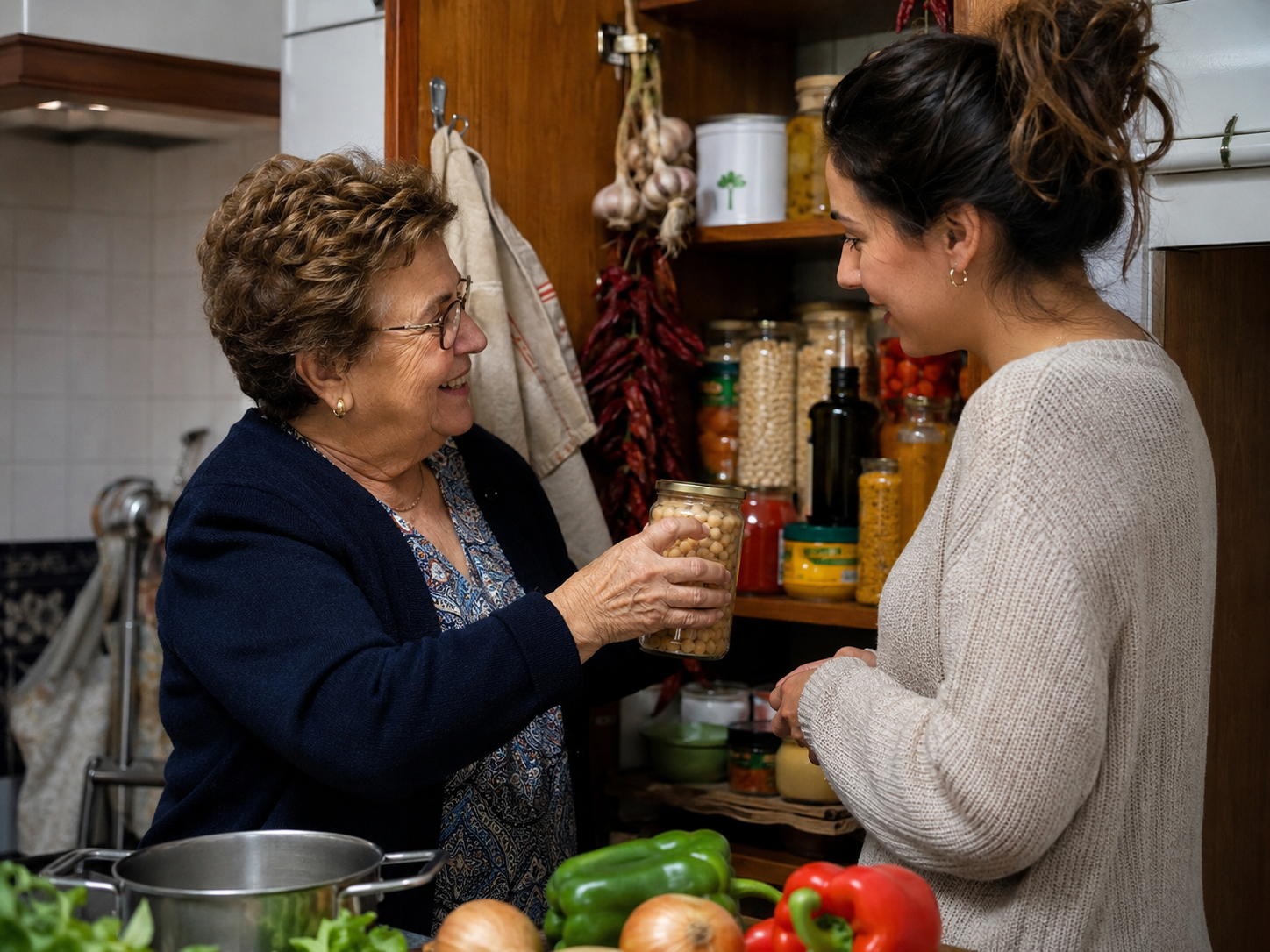
Beyond the money, the cupboard changed the daily experience of cooking in a way I did not see coming and now would not give up. The old question, the tired six o’clock what-is-for-dinner that sends people to a delivery app, mostly went away, because there was always an answer already sitting on the shelf, a pot of something bean-based only ever forty minutes off. Cooking became less about deciding and shopping and more about simply reaching for what was there, and that removed a small daily friction I had not even known was wearing on me.
It also made me a better and more patient cook, oddly, because a cupboard of pulses rewards slow, unhurried methods, the gentle simmer that turns a hard dried bean into something silky, and there is no rushing it. I found myself planning less and improvising more, looking at what the shelf held and building a meal from it the way the grandmothers do, which is a genuinely different and more relaxed relationship with feeding yourself than chasing recipes and their shopping lists. The cupboard did not just feed me cheaply; it handed back a kind of ease at the stove that the fridge-and-list way had quietly taken. There is a real calm in opening a cupboard and knowing dinner is already possible, a small daily certainty that adds up to something bigger than it sounds over a month of evenings.
Where It Strained
A cupboard alone is not the whole answer, though, and the month did have real friction worth being honest about. The obvious limit is freshness, because you cannot live well out of tins and jars without some fresh green thing arriving too, and the grandmothers know this perfectly well, topping up the shelf with a little spinach, a few tomatoes, whatever the season and the market offer cheaply. A cupboard is the foundation, not the whole house, and treating it as the entire diet would tip it from thrifty into monotonous and, over a long stretch, poorer for you.
There was a monotony risk in the second and third weeks too, a sense that the pulses were circling back around a little often, and the honest fix was variety within the system rather than abandoning it, cooking the chickpeas Andalusian one day and Castilian the next, leaning on the pimentón and the bay and the garlic to make the same base taste different. It also takes a little planning that a fridge does not, the overnight soak, the awareness that the good stuff is slow, and a cook who wants dinner in ten minutes will chafe against a bean that wants two hours. The system is wonderful, but it belongs to someone willing to think a day ahead, which is exactly the habit the grandmothers have and most of the rest of us have lost. Rebuilding that one small habit, the soak the night before, the glance at the shelf in the morning, was most of what the month actually asked of me.
How to Stock It from Scratch
If you want to build this cupboard yourself, the good news is that it costs very little to assemble and then lasts for months. Start with the pulses, a few jars or bags of dried chickpeas, brown lentils, and white beans, since these are the engine of the whole thing and cost only a euro or two each while feeding you many times over. Add the tins next, a stack of good chopped tomatoes, a few tins of tuna or bonito, some sardines in oil, and a jar of piquillo peppers, all of which sit happily on a shelf for a year and turn into a meal on the laziest night.
Then come the flavor-makers, the cheap aromatics that make plain food taste of Spain, so a decent bottle of olive oil, a head or two of garlic, a few onions, a tin of pimentón, some bay leaves, and a piece of cured chorizo and a wedge of hard cheese that both keep for weeks. That is genuinely the whole list, and stocking it from nothing might cost the price of a single restaurant meal, after which the cupboard quietly feeds you for a month. The one thing to buy little and often is the fresh finishing touch, the spinach or the eggs or the seasonal vegetable, and even that stays cheap because you are only ever buying a handful to complete what the shelf already holds.
Why the Cupboard Beat the Fridge
The deeper lesson of the month was about the difference between a fridge and a cupboard as a way of thinking. A fridge is a place of hope and decay, filled optimistically with fresh things that must be used soon or lost, so it runs on a quiet clock of guilt and waste that most of us have simply stopped noticing. A cupboard is the opposite, a place of patience and certainty, where the food waits without judgment and nothing is lost by not cooking it tonight.
That difference turns out to shape how you feel about feeding yourself far more than any recipe does. A fridge-led kitchen is a series of small deadlines, each softening vegetable a tiny reproach, while a cupboard-led kitchen is a standing invitation with no deadline attached, which is a calmer and frankly kinder way to eat. The grandmothers built their kitchens around the shelf not because they lacked fridges but because the shelf is simply a better foundation, steadier, cheaper, and far less wasteful, and a month of copying them was enough to move the center of my own kitchen from the cold box to the cupboard for good.
What I Kept
When the month ended I did not go back to the old way, because too much of this was simply better. The cupboard stayed stocked, the tins and the pulses and the good oil now a permanent foundation rather than an experiment, and my fridge shrank to the small, fast-moving fresh things that genuinely need to be fresh. The waste stayed low, the bill stayed down, and the six o’clock panic mostly never came back, because there is always something on the shelf.
If you take one idea from all of this, build the cupboard before you worry about recipes, because a shelf holding pulses, good tins, olive oil, garlic, onions, and pimentón is a kitchen that can feed you cheaply and well on almost any night with almost no notice. The Spanish grandmothers are not performing frugality or chasing wellness; they are simply cooking the way people cook who respect food and money both, and the astonishing thing is how much better you eat once you stop filling a fridge and start keeping a cupboard.
Of course, every kitchen is different, and what a Spanish larder holds will not map exactly onto your own tastes or what your shop stocks, so treat this as a way of thinking about food rather than a list to copy, and build the cupboard around the cheap, slow, unspoilable things you will actually cook.

About the Author: Ruben, co-founder of Gamintraveler.com since 2014, is a seasoned traveler from Spain who has explored over 100 countries since 2009. Known for his extensive travel adventures across South America, Europe, the US, Australia, New Zealand, Asia, and Africa, Ruben combines his passion for adventurous yet sustainable living with his love for cycling, highlighted by his remarkable 5-month bicycle journey from Spain to Norway. He currently resides in Spain, where he continues sharing his travel experiences with his partner, Rachel, and their son, Han.