
There are really two Europes when it comes to paying for things, and the border between them is invisible until you are standing at a counter doing it wrong. In one half, you pull out a card at a small bakery and get a flat, faintly annoyed no, cash only, and in the other half you offer a handful of coins at a shop and get the same no in reverse, because they simply do not take cash anymore. Most travel advice pretends Europe is one place with one payment culture, and it is not, so getting caught on the wrong side of the divide can mean a stalled line, a missed purchase, or a small daily friction that follows you across a trip. Here is the 2026 map of who wants your cash, who wants your card, and how to carry both so neither one strands you.
The Cash Half of Europe
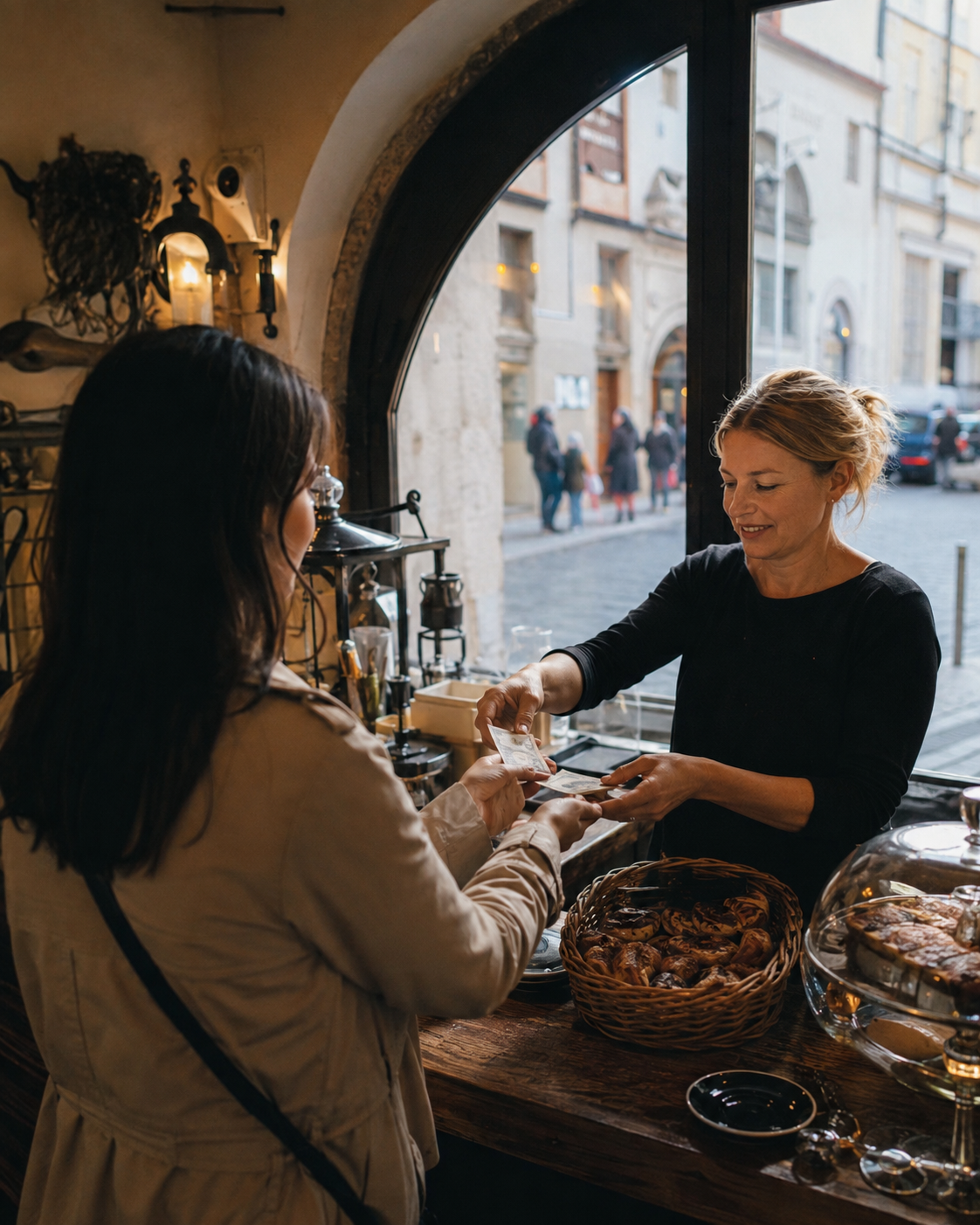
A surprising amount of Europe still runs on physical money, and the champion is the country everyone assumes would be most modern. Germany remains stubbornly attached to cash, with 2026 surveys showing roughly 73% of Germans still reaching for notes and coins for everyday purchases, and plenty of small shops, bakeries, and restaurants that will not take a card at all. Austria sits right beside it, sharing the same deep cultural preference, and the reasons there are as much about privacy and control as anything else, a genuine discomfort with the idea of every purchase leaving a digital trail.
The Mediterranean south is the other great stronghold of cash. Malta leads the whole continent, with more than 90% of transactions still done in physical money, and Greece, Spain, Italy, and Cyprus all sit near the top of the cash rankings, each around 85 to 88%. In these countries a card works fine in a city hotel or a chain, but the neighborhood taberna, the market stall, the tiny family restaurant, and the rural everything still often want euros in hand. The pattern holds across most of Eastern Europe too, where the big capitals like Prague or Budapest take cards easily but the smaller towns and the countryside quietly make cash the safer bet.
What ties the whole cash half together is a preference for the tangible and the private. In these countries people often speak of cash as freedom, money that no bank can freeze, no system can lose, and no company can watch, and that instinct runs deep enough that predictions of cash disappearing keep proving wrong. The European Central Bank’s own studies have repeatedly found cash more resilient in these places than experts expected, year after year, which tells you the attachment is cultural rather than a lag that is about to correct itself.
The Cashless Half of Europe
Cross into the Nordic countries and the world flips completely. Sweden is the extreme case, so far down the cashless road that fewer than 5% of transactions now involve physical money, many banks no longer handle cash at all, and a real number of shops, cafés, and even some public services will simply refuse the notes in your pocket. Norway, Denmark, and Finland are close behind, largely tap-and-go societies where a traveler can pass an entire trip without touching a coin, and where the infrastructure so assumes a card or a phone that cash starts to feel like the awkward, slow option rather than the reliable one.
The Netherlands belongs firmly in this camp as well, along with pockets of Belgium and Luxembourg, where debit cards and contactless payments dominate daily life, and Iceland is another effectively cashless outpost where visitors are often surprised to find they never needed to change money at all. In all of these countries the failure mode simply reverses, because it is not the card machine that is out of paper, it is your cash that nobody wants, and standing there holding correct change while a cashier shakes their head is its own particular travel frustration.
Why the Split Exists at All
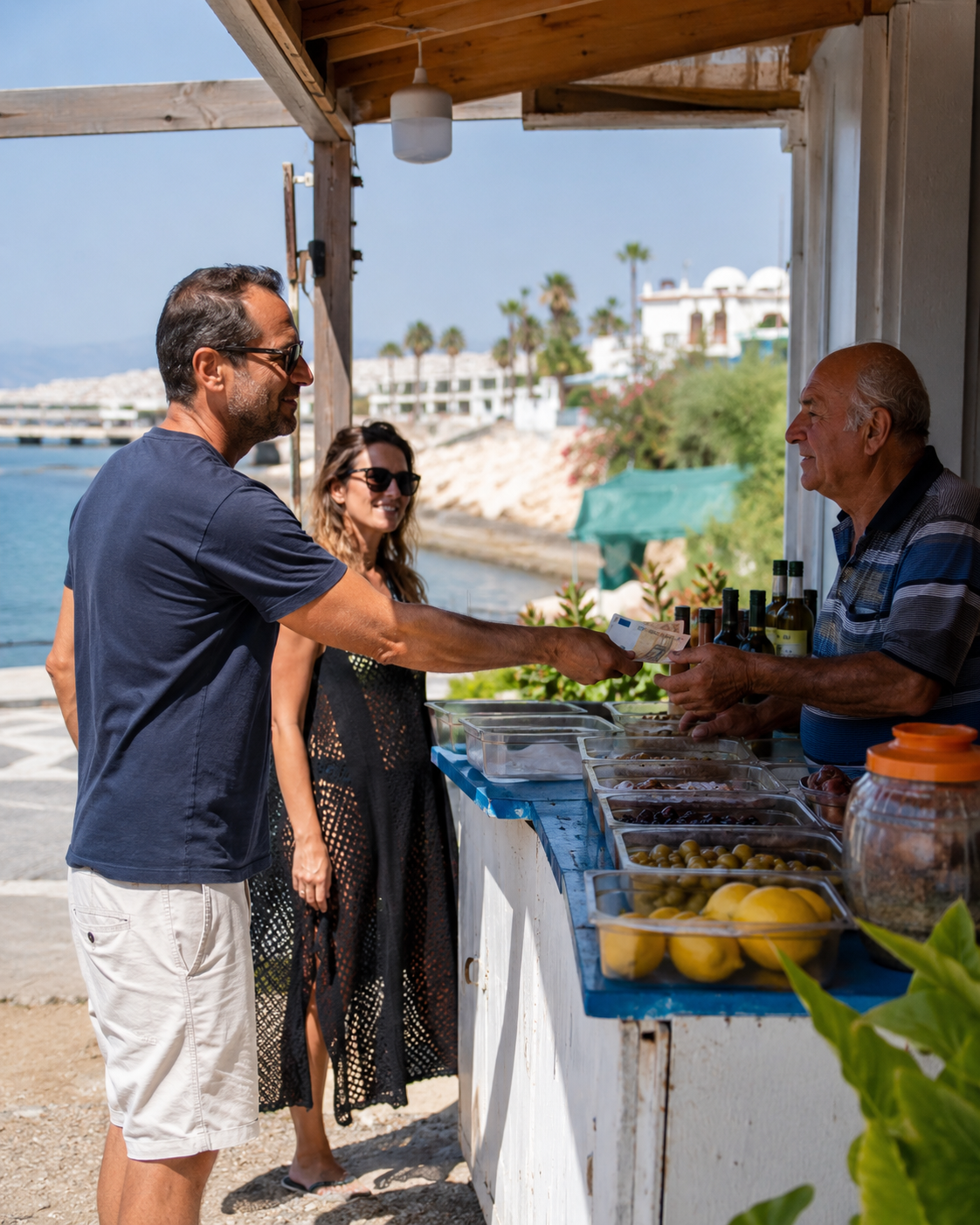
The divide is not really about wealth or how modern a country is, which is exactly why it surprises people. Germany and Sweden are both rich, advanced, and technologically capable, yet they sit at opposite ends of this map, so the explanation lies in culture and history rather than economics. A big part of it is trust and memory, because countries that lived through episodes of hyperinflation, surveillance, or banking collapse in the last century, Germany among them, tend to value the anonymity and solidity of cash, money you can hold that does not depend on a working system or a company’s goodwill.
The cashless countries went the other way for practical reasons. The Nordics built excellent digital banking infrastructure early, their populations trusted institutions and adopted the technology fast, and some governments actively nudged the whole society toward electronic payment. Small businesses in those places embraced cards to avoid the cost and risk of handling cash. In the cash-loving countries, by contrast, many small merchants still quietly prefer notes to dodge card fees and keep their books their own business, which is worth saying plainly because it explains a lot of the cash-only signs in the south. A card payment is traceable and taxable and carries a fee, and a cash payment is none of those things, so a small family business has real reasons to prefer the euros in your hand.
Age and habit then reinforce the whole pattern. Older populations across the cash countries grew up trusting physical money and never fully switched, and a culture does not turn over its payment habits in a decade, which is why these maps change slowly even as the technology races ahead of them.
Where You Will Actually Get Caught Out
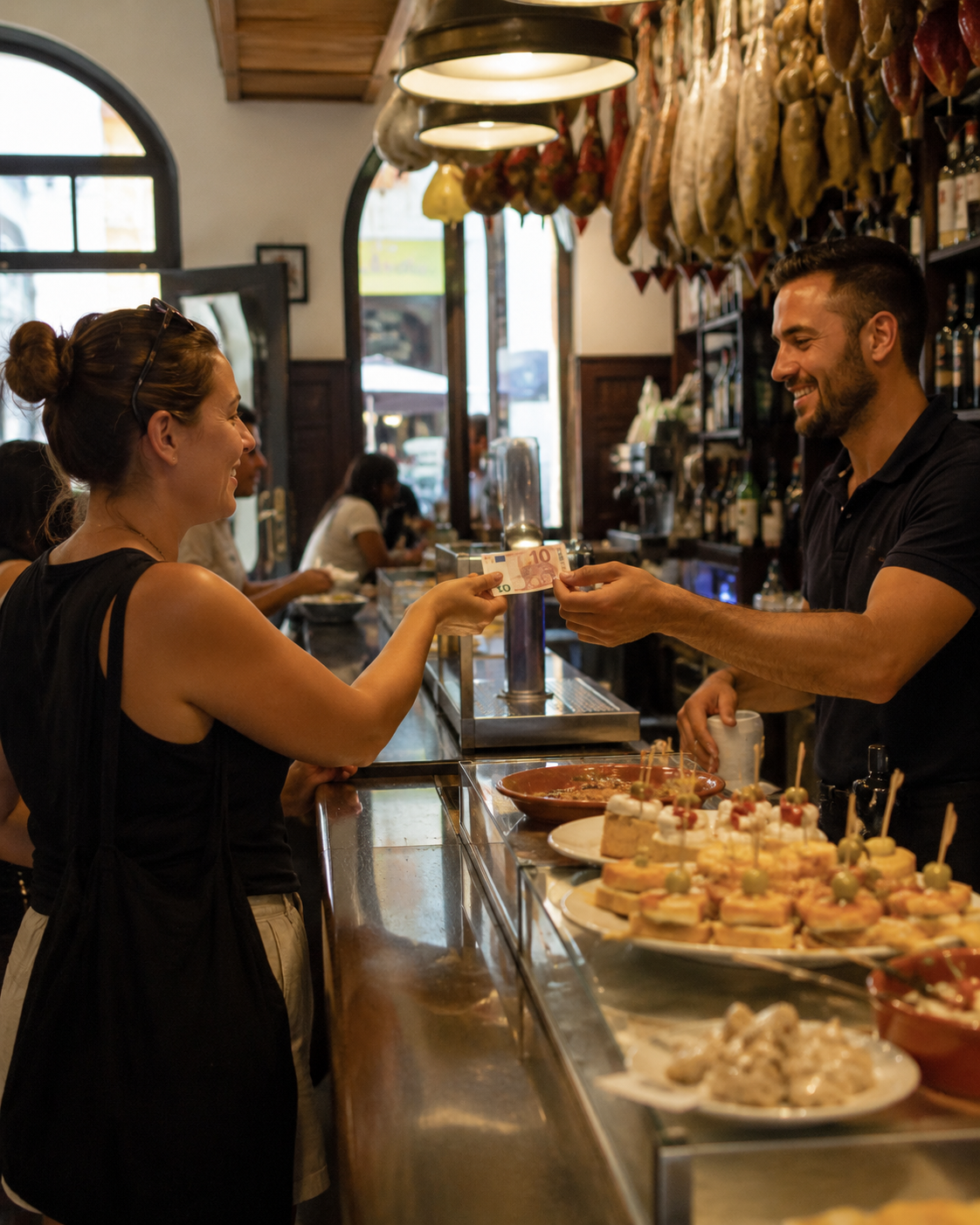
Knowing the map matters most in the specific moments it bites, and those moments are predictable. Small purchases are the classic trap, since a great many card-friendly places in the cash half still set a minimum spend of a few euros, so a single coffee or a pastry has to be paid in cash even where cards are otherwise fine. You order one coffee for a couple of euros, reach for your card, and are told the machine only runs for purchases over five, leaving you either buying something you did not want or fishing for coins you do not have, while the locals know the threshold by heart and simply carry change for it.
Transport catches people just as often, because some local buses, small-town trains, and parking machines take only cash in the cash countries and only cards or apps in the cashless ones, and neither warns you until you are standing there. Markets, bakeries, and family restaurants are the other reliable ambush, exactly the small, local, memorable places a good trip is built around, and exactly the ones most likely to be cash-only in the south and card-only in the north. The pattern is almost cruel that way, since the most authentic, least touristy spots are precisely where the divide bites hardest, while the chain hotel and the airport take anything you offer.
There is even a spiritual version of this, since travelers regularly report reaching a church or a small museum wanting to light a candle or leave a small donation, only to find a coin box and no card reader, a tiny moment a purely cashless wallet cannot handle.
Tipping runs on the same divide. In much of the cash south a tip is left in coins on the table, and a card machine may not even offer a tip line, so a cashless traveler ends up unable to leave one gracefully. Public toilets in many cash countries still charge a small coin for entry, too, a genuinely urgent reason to keep a few small coins in a pocket at all times. None of these are large sums, and the frustration is never the amount; it is being unable to complete a small, normal human transaction because you brought the wrong kind of money into the wrong half of the continent.
The Sweden Reversal Worth Knowing
Here is a twist that changes the advice slightly for 2026. Sweden, the poster child for going fully cashless, has started quietly walking part of the way back, because concerns about resilience, about what happens to payments in a crisis, a blackout, or a security emergency, led the Swedish central bank to begin urging merchants and citizens to keep accepting and holding some cash again. It is a reminder that the cashless frontier is not a one-way street, and that even the most digital societies are rethinking whether abandoning physical money entirely is wise, so for a traveler it means carrying a little cash even in Sweden is no longer as pointless as it sounded a couple of years ago.
The resilience worry is real and worth understanding, because it applies anywhere rather than only in Scandinavia. A payment system that runs entirely on electricity and networks fails completely when either goes down, and a card-only traveler in a blackout or an outage has no way to buy so much as a bottle of water, while cash keeps working when everything else stops. That is precisely the argument the Swedish authorities have started making to their own citizens, and it is a sensible one to carry in your own wallet wherever you travel.
What It Means If You Live There, Not Just Visit
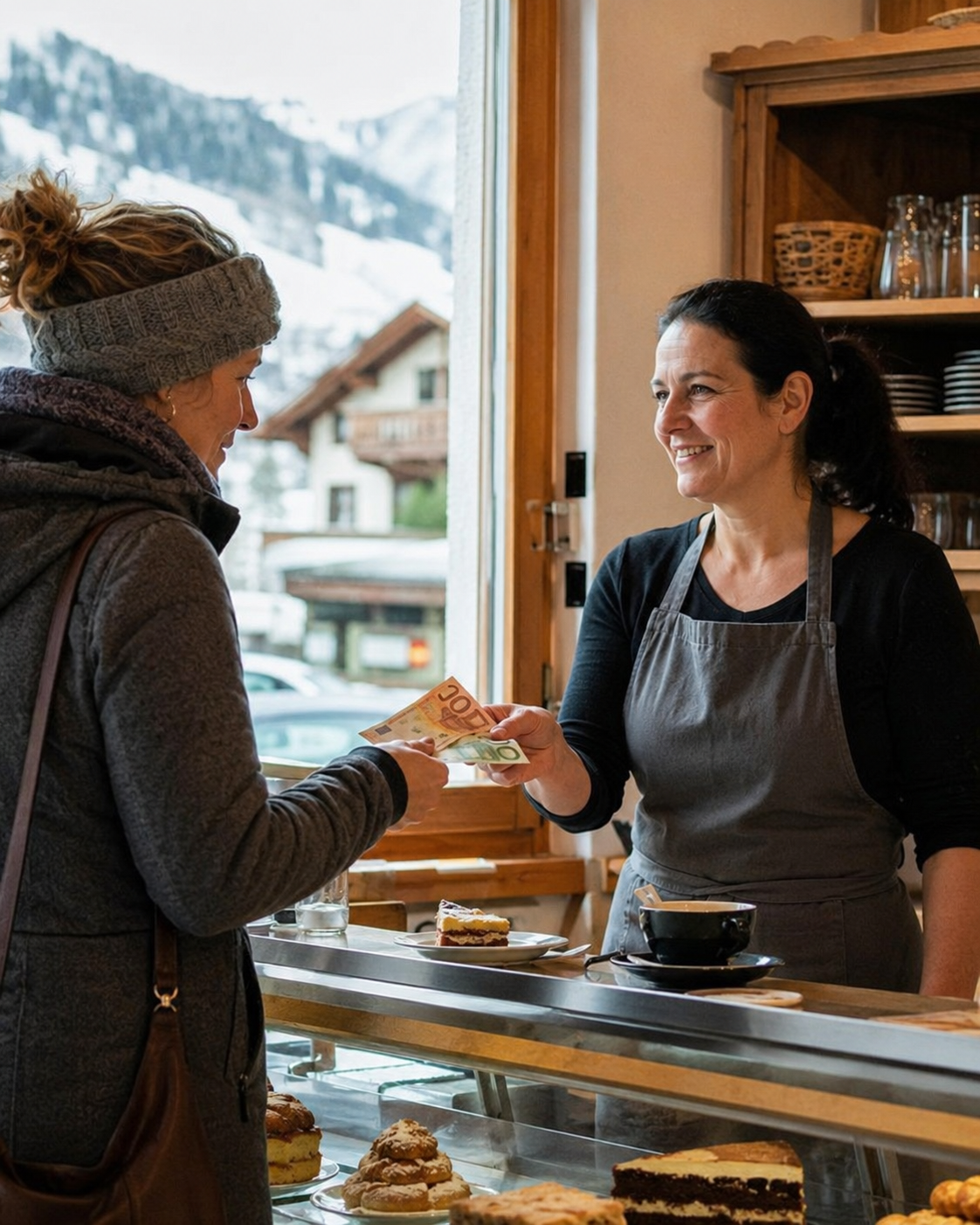
For anyone moving to Europe rather than passing through, the payment culture becomes part of daily life and shapes small habits more than you would expect. Settle in Germany and you learn quickly to keep cash on hand, to check whether a restaurant takes cards before you sit down, and to treat the ATM as a regular errand rather than an emergency. Settle in the Nordics or the Netherlands and the opposite becomes true, since you may go months without holding a banknote and a local bank card or payment app is close to essential for ordinary life, so setting one up early matters because some services and subscriptions simply assume you have local digital payment.
The southern countries add a wrinkle for residents around bills and rent, which are often still paid by bank transfer or direct debit rather than card, so opening a local account becomes a practical necessity fairly fast. Wherever you land, the first month teaches you the local payment rhythm, and after that it becomes invisible, just the way money works where you now live.
The Card That Actually Works Everywhere
The single most useful thing you can carry across both Europes is the right card, and the features that matter are easy to name. Look for no foreign transaction fees, since a card that charges a few percent on every purchase abroad quietly taxes your whole trip and those fees add up fast over weeks. Contactless and mobile wallets like Apple Pay and Google Pay are widely accepted across the continent now, and in the cashless north they are often the smoothest way to pay, faster even than inserting a card. A debit card tied to a fee-free account is ideal, because much of Europe runs on debit rather than credit and some smaller merchants are wary of credit cards specifically.
For cash, the best approach is an ATM withdrawal in local currency once you arrive, declining the machine’s offer to convert for you since that conversion is almost always a worse rate than your bank’s. Pull out a modest amount, use it for the cash-only corners, and top it up as you go rather than carrying a large wad you will struggle to spend before you leave.
The Traveler’s Rule That Covers Both Europes
The solution to a divided continent is refreshingly simple: carry both, and lean on the right one in the right place. A card, ideally one with no foreign transaction fees, handles the overwhelming majority of your spending across all of Europe, since even the cash-loving countries take cards in most larger or tourist-facing places. So you keep a modest cushion of physical euros only for the cash half, enough for the bakery, the market, the small restaurant, the bus, and the candle. You do not need much, and you can top it up from an ATM as you go, but going to zero cash in Germany or rural Spain is asking for a stalled morning.
In the cashless north, flip the emphasis entirely, letting the card and phone do everything, keeping only a token amount of cash for the rare holdout, and not bothering to change large sums you will struggle to spend. The whole trick is matching the tool to the territory and never assuming the half of Europe you are standing in works like the half you just left. A useful habit is to check as you cross a border which world you are entering and adjust your cash cushion up or down accordingly, more for Germany or Greece, almost none for Sweden or the Netherlands. Two minutes of thought at each border saves a dozen small frustrations later.
Carry a Little of the Other Half Everywhere
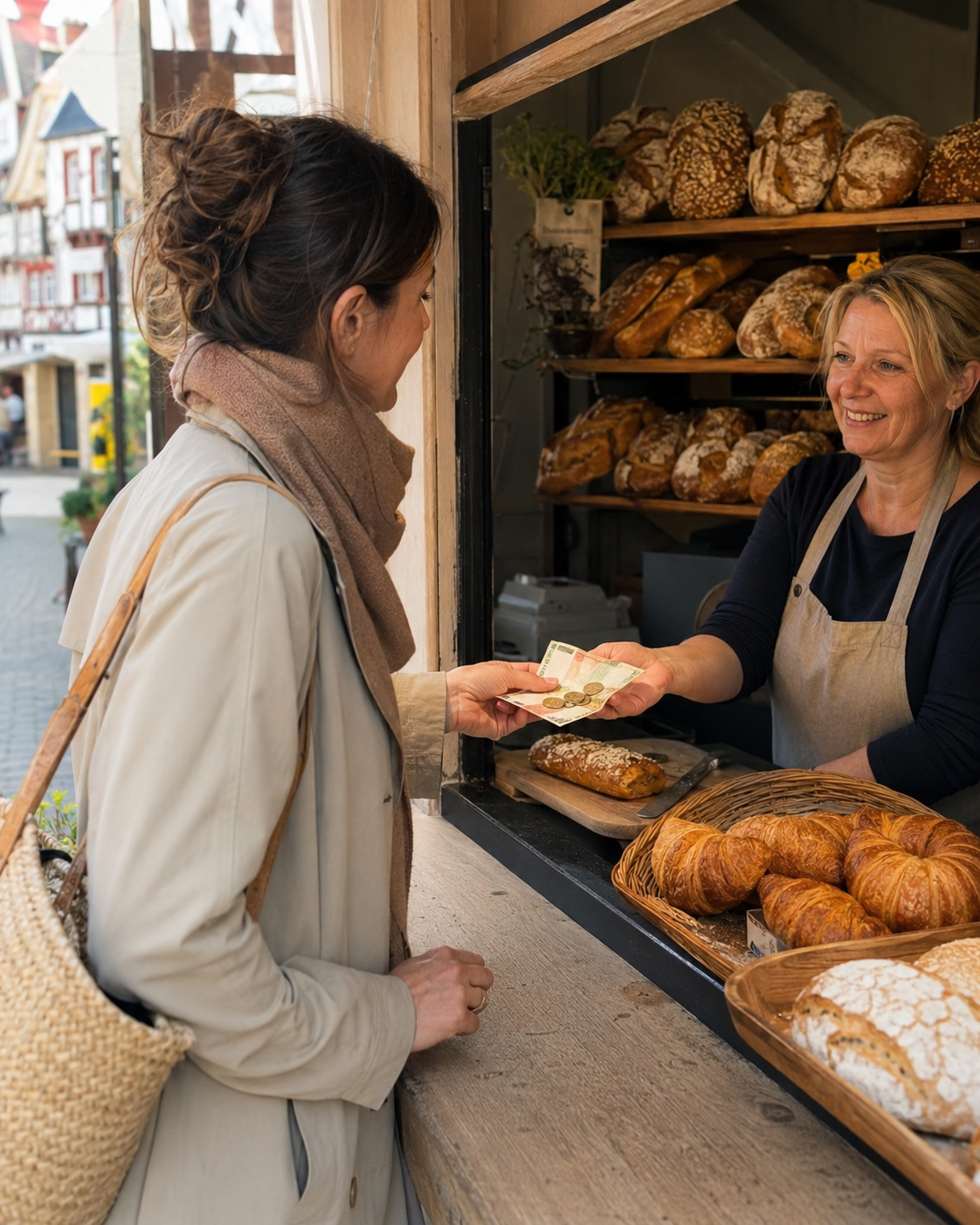
If there is one habit that dissolves the whole problem, it is refusing to fully commit to either camp. A cash-only traveler struggles in Stockholm, a card-only traveler struggles in a German village, and the person who carries both glides through both without thinking about it. So pack a good fee-free card and a small fold of euros, treat the card as your default and the cash as your backup in the south, and reverse the roles in the north. Do that and the invisible border between Europe’s two payment worlds stops being a trap and becomes something you barely notice, which is exactly how a well-prepared traveler wants it to feel.
The deeper lesson is that Europe is not converging on one way to pay, at least not yet. Two very different relationships with money are living side by side on one small continent, and the traveler who respects both, rather than betting everything on the future arriving early, is the one who never gets stuck at a counter.
Payment habits are shifting fast, of course, and minimum-card amounts and which shops take what vary town to town, so treat this as a 2026 snapshot rather than a fixed rule, and keep a small cash buffer wherever you are headed regardless of which half you think you are visiting.

About the Author: Ruben, co-founder of Gamintraveler.com since 2014, is a seasoned traveler from Spain who has explored over 100 countries since 2009. Known for his extensive travel adventures across South America, Europe, the US, Australia, New Zealand, Asia, and Africa, Ruben combines his passion for adventurous yet sustainable living with his love for cycling, highlighted by his remarkable 5-month bicycle journey from Spain to Norway. He currently resides in Spain, where he continues sharing his travel experiences with his partner, Rachel, and their son, Han.