
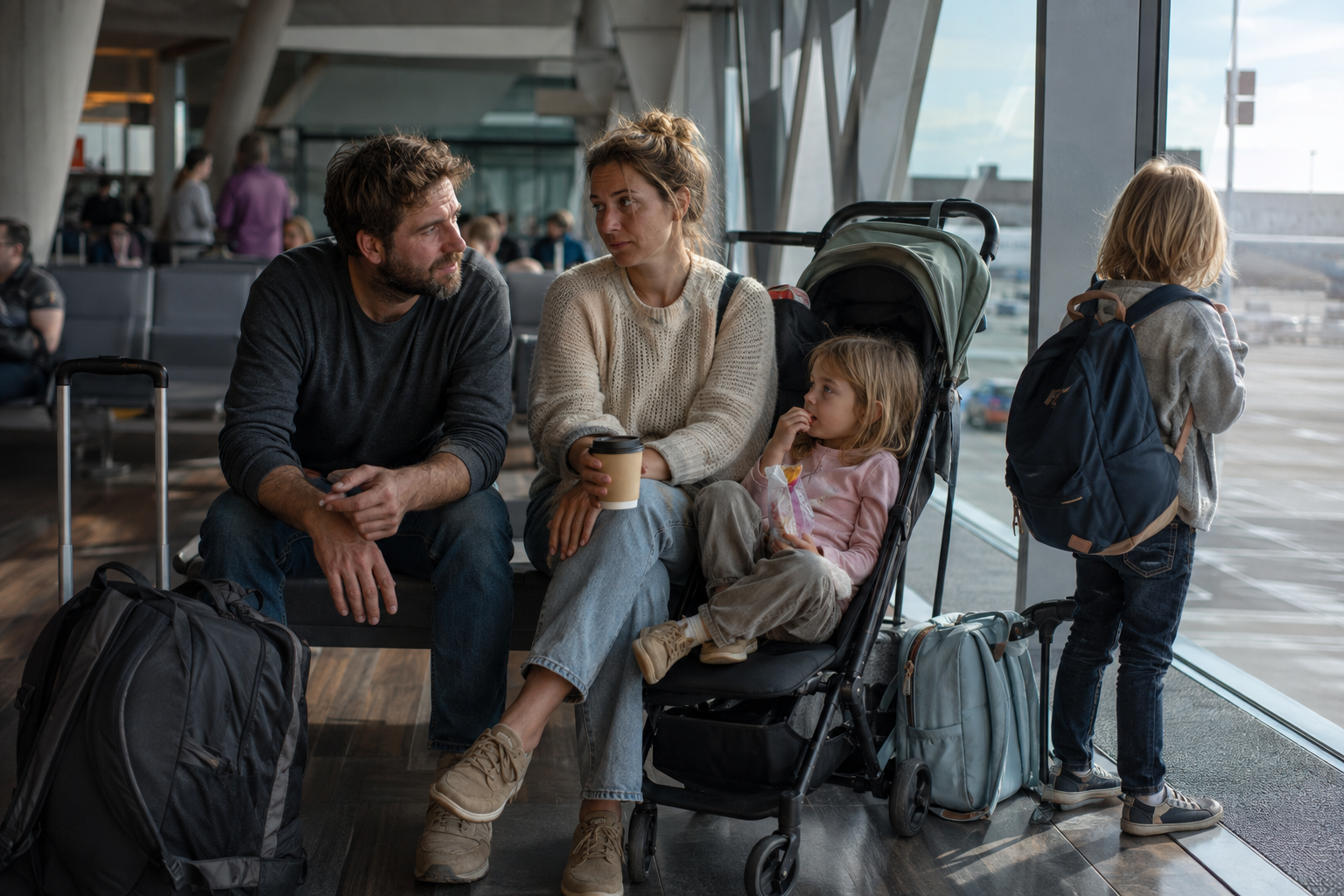
Every summer, millions of American travelers sit stranded in European airports, watching the departure board slide later and later, quietly assuming there is nothing at all to be done but wait and fume. Most of them have no idea that European law may owe them a substantial cash payment, often several hundred euros per person, and that a great many simply never claim it. The regulation is one of the most consumer-friendly passenger-rights laws in the world, and crucially, it protects travelers on flights leaving Europe regardless of nationality or airline. An American whose flight out of Madrid or Rome runs badly late may be owed real money, and the airline is in no hurry at all to mention it. The result is that a right designed to protect passengers goes quietly unused by the very people it was written for. Before going further, a necessary note, this is a general overview and not legal advice, and the rules are being actively revised through 2026, so anyone with a disrupted flight should confirm the current terms and their own eligibility with official sources before relying on any figure here.
With that said, understanding how this compensation works is one of the most valuable things a traveler to Europe can do, because it can turn a ruined travel day into a check for hundreds of euros. The amounts are fixed, the rules are clearer than most people realize, and claiming the money often costs nothing at all. So here is how the European flight compensation system works, what a delay is really worth, and why so much of this money goes unclaimed by the travelers who earned it. It is one of those rare cases where the law is squarely on the side of the ordinary traveler, and where a little knowledge translates directly into cash in hand. The airlines are well aware of the rules, but they have little incentive to volunteer them, which puts the responsibility on the passenger to know what they are owed and to ask for it plainly.
The Right Americans Do Not Know They Have
The single most important thing to understand is who this law actually protects, because the common assumption that it is only for Europeans is simply wrong. Its reach is far wider than most travelers imagine.
The nationality of the passenger does not matter. EU261 protects passengers on any flight departing an airport within the European Union, no matter which airline operates it or what passport the traveler holds, so an American flying home from Europe is fully covered. It also covers passengers arriving into the EU on a European airline.
Most eligible passengers never claim. Study after study finds that the great majority of travelers entitled to this compensation never claim it, whether because they do not know the law exists, assume it does not apply to them, or believe the process is too difficult. This is precisely why the money so often goes unclaimed, and precisely why knowing your rights is worth so much. The airlines rarely go out of their way to point a delayed passenger toward a payout that comes straight out of their own pocket. A traveler who understands the rules, keeps a calm record of what happened, and asks for the compensation directly holds all the cards, because the law itself is unusually clear and firmly on their side. That knowledge alone is often the entire difference between a payout and nothing at all. It costs nothing to note the flight number, photograph the departure board, and jot down the reason an agent gives for the delay, yet those few small habits can turn a vague sense of grievance into a solid, documented claim that an airline finds hard to refuse.
What the Delay Is Actually Worth
Once you know you are covered, the next question is how much a serious disruption is worth, and the answer follows a clear, fixed scale based on the distance of the flight. The sums are set by law rather than left to the airline.
The amount rises with distance. Under the regulation the compensation comes in three fixed bands, roughly €250 for flights up to 1,500 km, €400 for medium distances, and up to €600 for the longest journeys over thirty-five hundred kilometers. These are flat amounts fixed in law, paid on top of any ticket refund you are also due.
It is paid to every passenger. Crucially, these sums are per passenger, not per booking, and include children on their own ticket, so the totals for a family can climb quickly. A family of four on a badly delayed long-haul flight could be owed as much as €2,400, which is a serious sum by anyone’s measure. That is the kind of figure that can offset the cost of an entire leg of a trip, and it explains why the airlines are in no rush to advertise it. The rule treats each ticketed traveler as a separate claim, so a large group or a full family stands to recover a considerable amount from a single disrupted flight.
It Turns on When You Land, Not When You Leave
A common misunderstanding concerns exactly which delay counts, and getting this right is essential to knowing whether you qualify. The law cares about the end of your journey, not the beginning.
Arrival time is what matters. The compensation is triggered by how late you reach your final destination, not when you left the gate, which is measured from the moment the aircraft doors open and passengers are let off. This distinction matters enormously for connecting journeys, where a modest departure delay can snowball into a qualifying arrival delay. A traveler might leave the first airport only slightly behind schedule, miss a tight connection, and end up arriving many hours late, and it is that final arrival gap that decides the claim. This is why a passenger should always note the true time they finally reached their destination, not merely how late the first flight was, since the two can be very different numbers.
The thresholds depend on distance. For most flights, an arrival delay of three hours or more unlocks it, rising to four hours for the longest flights, and a long-haul delay of three to four hours is compensated at half the top rate. Knowing these thresholds lets a traveler judge in the moment whether a delay has crossed the line into a payable claim. It is worth keeping the three-hour mark firmly in mind while stranded at the gate, because the difference between a two-and-a-half-hour delay and a three-hour one is the difference between nothing and a few hundred euros. A passenger who is aware of exactly where the line sits can watch the clock with a clear sense of whether a claim is taking shape.
When the Airline Must Pay, and When It Escapes
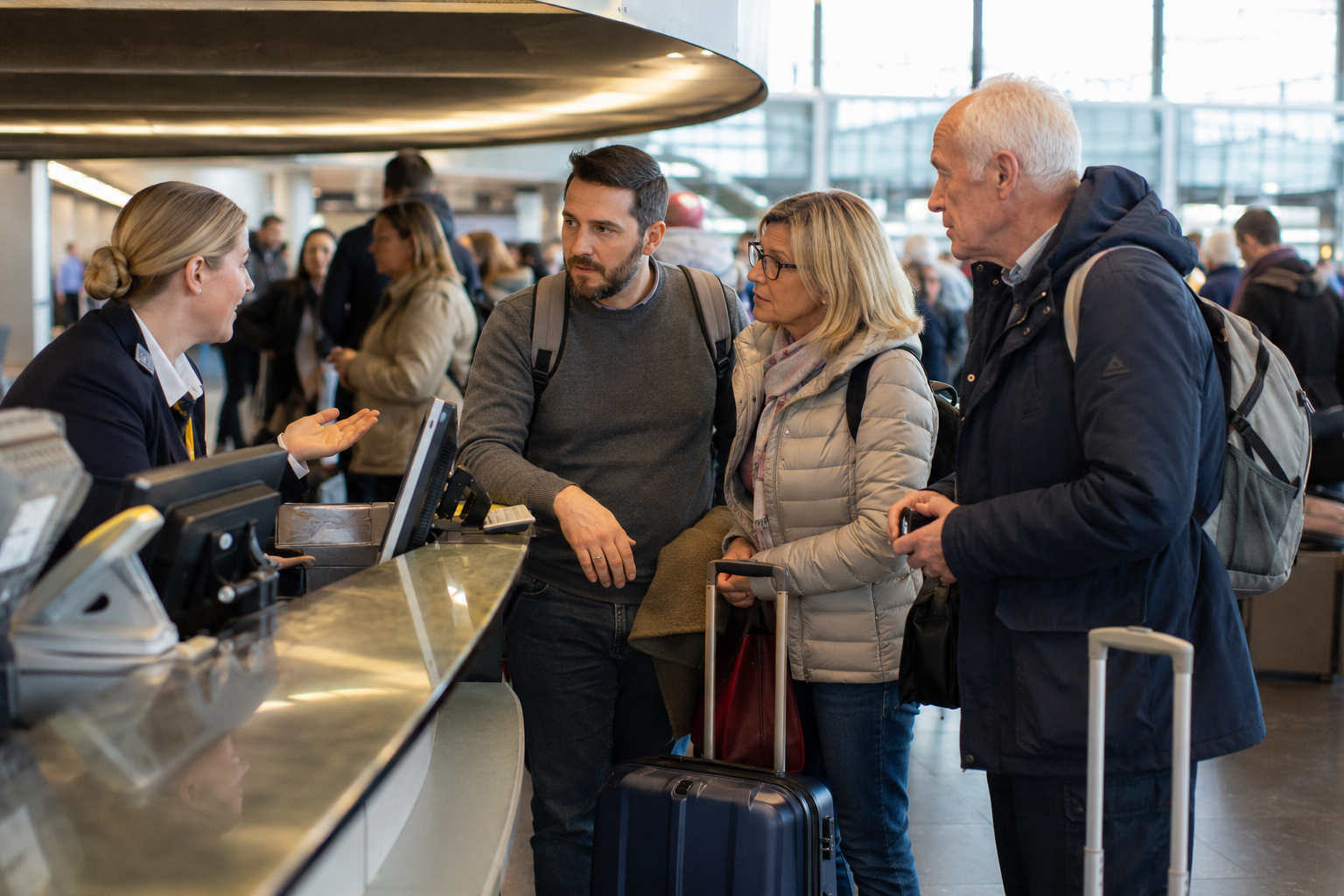
The compensation is not owed for every delay, and the crucial dividing line is whether the disruption was genuinely beyond the airline’s control. Understanding this line is the heart of a successful claim.
Ordinary failures mean you get paid. The compensation is owed when the delay is the airline’s own fault, and importantly, it includes what airlines most often blame, mechanical faults, crew shortages, and computer failures, none of which count as beyond their control. If the plane broke down or the airline could not staff the flight, in other words, the passenger is very likely owed the money. This is the point most travelers get wrong, assuming that any mechanical fault or staffing gap is simply bad luck that no one must answer for. In fact the law treats the reliability of the aircraft and the availability of crew as squarely the airline’s responsibility, so the very problems that feel like unavoidable misfortune are often exactly the ones that trigger a payout.
Truly extraordinary events let them off. The airline can avoid paying only when the disruption was caused by truly extraordinary circumstances outside its control, such as severe weather, air-traffic strikes, or security incidents, and even then it must prove it, a defense that recent court rulings have narrowed. A strike by the airline’s own staff does not usually count as extraordinary, so those disruptions can still be payable.
The Care Rights That Never Disappear

Separate from the cash compensation is a second set of rights that applies no matter what caused the delay, and these are valuable in their own right. Even a weather delay that blocks the cash payment leaves these rights fully intact.
Care is always owed. Regardless of the cause of a long delay, the airline must look after stranded passengers with meals, refreshments, and a hotel if needed, so a traveler is never simply abandoned to fend for themselves. This duty of care survives even when extraordinary circumstances remove the right to cash compensation. In other words, even a storm or an air-traffic strike that blocks the cash payout does not free the airline of its obligation to feed and house stranded travelers. This is a valuable protection in its own right, since a long overnight delay can otherwise leave a family facing airport prices for meals and a scramble for a room, all of which the airline is meant to cover. Travelers often assume they must simply absorb these costs themselves, when in reality the airline is obliged to step in, and where it fails to, the passenger can recover what they reasonably spent.
Keep every receipt. If the airline fails to provide this care and a passenger has to buy their own meal or book their own hotel during a long delay, keep all the receipts and claim back the reasonable costs afterward. Alongside the care rights sits the right to a full refund or to rerouting if a flight is cancelled, giving stranded passengers real, enforceable options. A traveler whose flight is scrapped can insist on being flown to their destination at the earliest opportunity, or can take back the full value of the unused ticket, and can do so on top of any cash compensation they are separately owed. Understanding that these strands of the law stack together, rather than replacing one another, is key to recovering everything you are entitled to. Many passengers accept a rebooking and consider the matter closed, not realizing that the cash compensation for the delay is an entirely separate right they can still pursue afterward. The refund or rerouting deals with getting you where you are going, while the compensation answers for the disruption itself, and a well-informed traveler claims both.
How to Claim Without Paying a Middleman
Knowing you are owed money is only half the battle, and how you go about collecting it determines how much of it you actually keep. The good news is that the direct route is free.
Claim directly, for free. A passenger can claim this compensation directly from the airline at no cost, simply by contacting it with the flight details and requesting the payment owed under the regulation, and there is no need to use a paid service to do so. Going direct means keeping the entire sum rather than surrendering a slice of it. The process is usually as simple as a clear email or an online form citing the flight, the date, and the regulation, followed by a firm but polite request for the compensation owed. Many airlines will pay a straightforward claim without much fuss, precisely because the law leaves them little room to argue when the cause was plainly within their control. Patience and persistence carry most honest claims across the line without any outside help at all. If a first request is refused on shaky grounds, a calm follow-up citing the specific rule, and if needed a complaint to the relevant national enforcement body, is usually enough to move a reluctant airline.
Get the cause in writing. One vital step is to ask the airline for written confirmation of the delay reason, to block a later excuse to dodge the payment. There are no-win, no-fee claim services that will pursue the money for a passenger, but they take a significant cut, so use them only for cases the airline refuses to settle.
The 2026 Reform, and Why Now Still Counts

Finally, it is worth knowing that this law is currently being updated, because the headlines about reform can create confusion about what applies today. The reassuring news is that the core protections are holding firm.
A deal was reached but is not yet law. European lawmakers reached a provisional agreement in 2026 to update the regulation, but crucially, the amounts stayed the same and the push to weaken the three-hour trigger was dropped. The improvements the deal brings, such as faster claim handling and clearer notice of passenger rights, are still working their way toward taking effect and are not fully in force yet. This is why the reform headlines can mislead, since they describe a future state of the law rather than the one that applies to a flight delayed this week. The practical takeaway is simply that the protections travelers rely on have not been watered down, and the useful additions are still to come. For anyone flying to or from Europe this year, the sensible course is to treat the familiar rules as fully live, to keep an eye out for official confirmation as the reform is finalized, and to claim confidently on the terms that apply today. A delayed flight is never welcome, but in Europe it need not be a total loss, and knowing that can take much of the sting out of a long wait at the gate.

About the Author: Ruben, co-founder of Gamintraveler.com since 2014, is a seasoned traveler from Spain who has explored over 100 countries since 2009. Known for his extensive travel adventures across South America, Europe, the US, Australia, New Zealand, Asia, and Africa, Ruben combines his passion for adventurous yet sustainable living with his love for cycling, highlighted by his remarkable 5-month bicycle journey from Spain to Norway. He currently resides in Spain, where he continues sharing his travel experiences with his partner, Rachel, and their son, Han.