
An invitation to a Spanish wedding is a wonderful thing, a full day and night of food, music and celebration that shames the tidy receptions of other countries. But it also comes with a set of customs that can quietly ambush the unprepared foreign guest, from how the gift is given to how late the party runs. A Spanish wedding is not a lightly scheduled afternoon affair but a marathon of eating, drinking and dancing that begins in the afternoon and does not end until the sun is coming up and a plate of churros arrives. Knowing the unwritten rules in advance is the difference between gliding through the day like a local and committing a string of small, memorable blunders. So before the next invitation lands, here are the essential rules of being a guest at a Spanish wedding, the ones every Spaniard knows and no one bothers to explain, covering the money, the dress, the food, and the glorious, exhausting length of it all.
None of these rules are difficult, but several of them run exactly opposite to what a guest from the United States or northern Europe might expect, which is precisely why they trip people up. The gift works differently, the timing works differently, and the sheer stamina required is on another level entirely. Get these right and you will not only avoid embarrassment but genuinely enjoy one of the great parties of European life. Here is what you need to know, rule by rule.
Rule One: Bring Cash, Not a Gift From a Registry
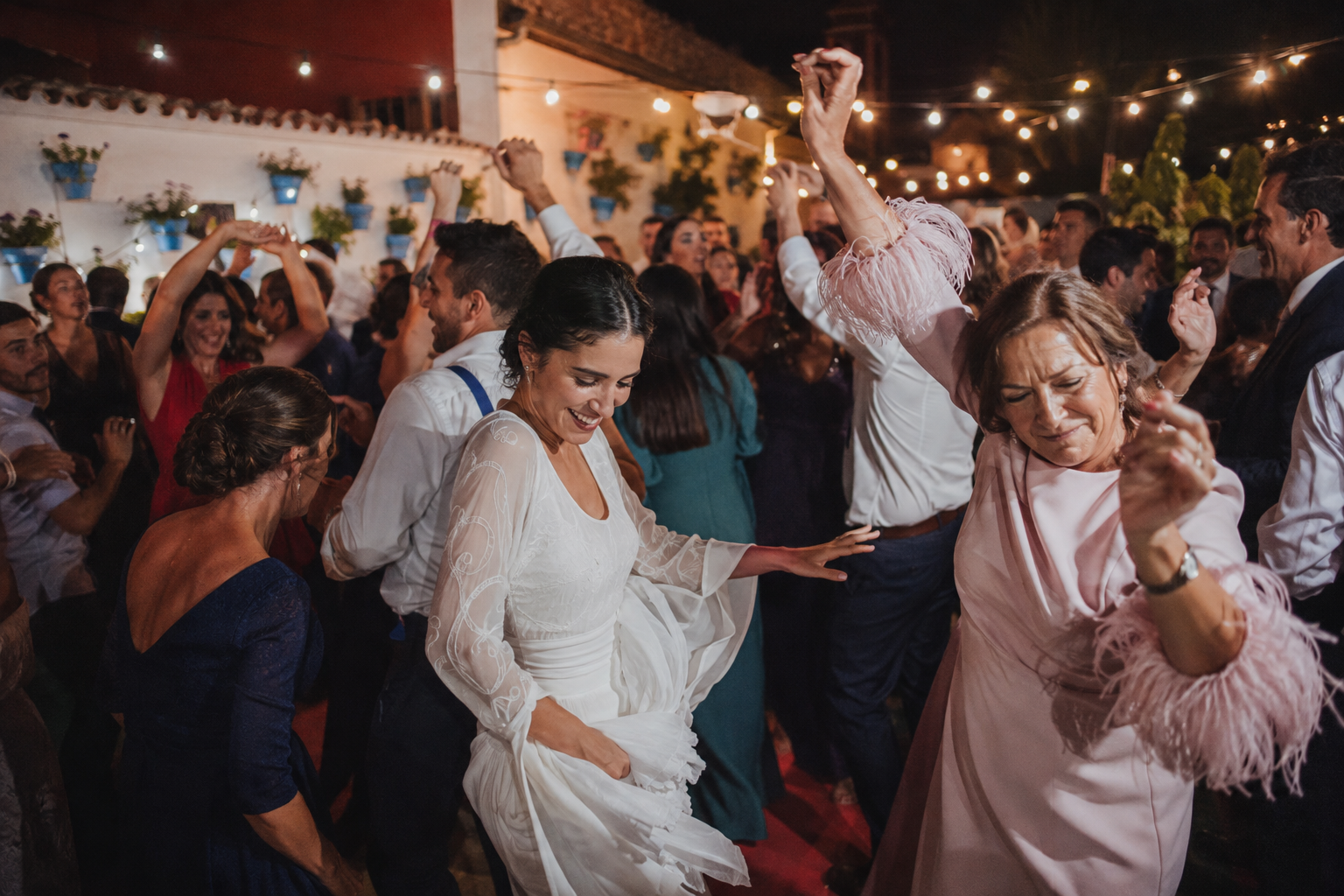
The single biggest difference for a foreign guest is that Spanish couples do not want a boxed present, they want a cash contribution, and offering the wrong thing marks you instantly as an outsider. The registry is not the way here.
The old-style registry has faded away. The traditional department-store wedding list has largely died out in Spain, because most couples already live together and own their household things long before marrying, so a physical gift is neither needed nor expected. What the couple is really funding is the wedding itself and the honeymoon, and cash is the way guests help with that.
The amount should cover your plate. The unwritten rule is that a guest gives at least enough to cover the cost of their own place at the banquet, commonly around one hundred to one hundred and fifty euros per person, and more if you are close to the couple or the celebration is a lavish one. A couple attending together will often give a combined three hundred euros or well beyond, and close family regularly gives more still. There is even a regional dimension to it, with guests in the wealthier north tending to give noticeably more than those in the south. The safest approach for a foreign guest is to think of the figure less as a present and more as your fair share of a very expensive party, and to give at the generous end if the couple are dear to you.
Rule Two: Send It Ahead, or Bring the Envelope
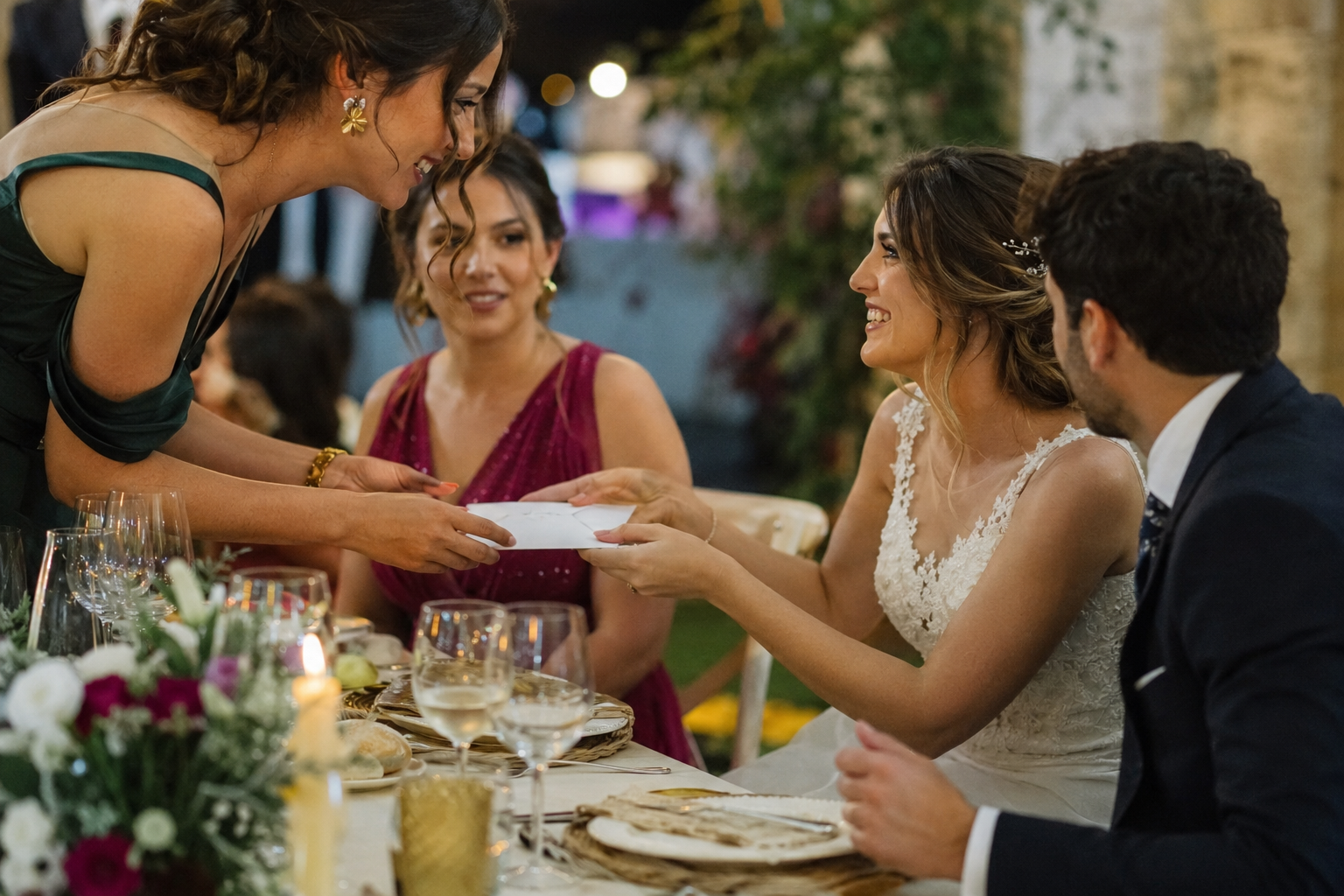
Once you accept that the gift is money, the next question is how to hand it over, and Spain has two accepted methods that both differ from simply mailing a check. Getting the mechanics right matters.
A bank transfer is now the norm. It has become completely normal for Spanish couples to print a bank account number on the invitation or wedding website, and for guests to send their gift by transfer, typically a week or two before the wedding itself. This is the modern default, tidy and expected, and no one considers it cold or impersonal in the slightest.
The cash envelope still works too. If you prefer the older way, or want to add a personal touch, bringing the money as cash in an envelope and handing it over at the reception is still fine, and at many weddings guests approach the head table to do exactly that. Either method is correct, so the choice is simply a matter of your own preference and the couple’s setup. If you send a transfer, the polite timing is a week or two before the wedding rather than after, so the couple are not left chasing gifts once the celebration is over. And if you go with the envelope, a nice touch is to write a short note or card to accompany the cash, which softens what might otherwise feel a touch transactional and adds the personal warmth that a bare transfer can lack.
Rule Three: Never, Ever Wear White
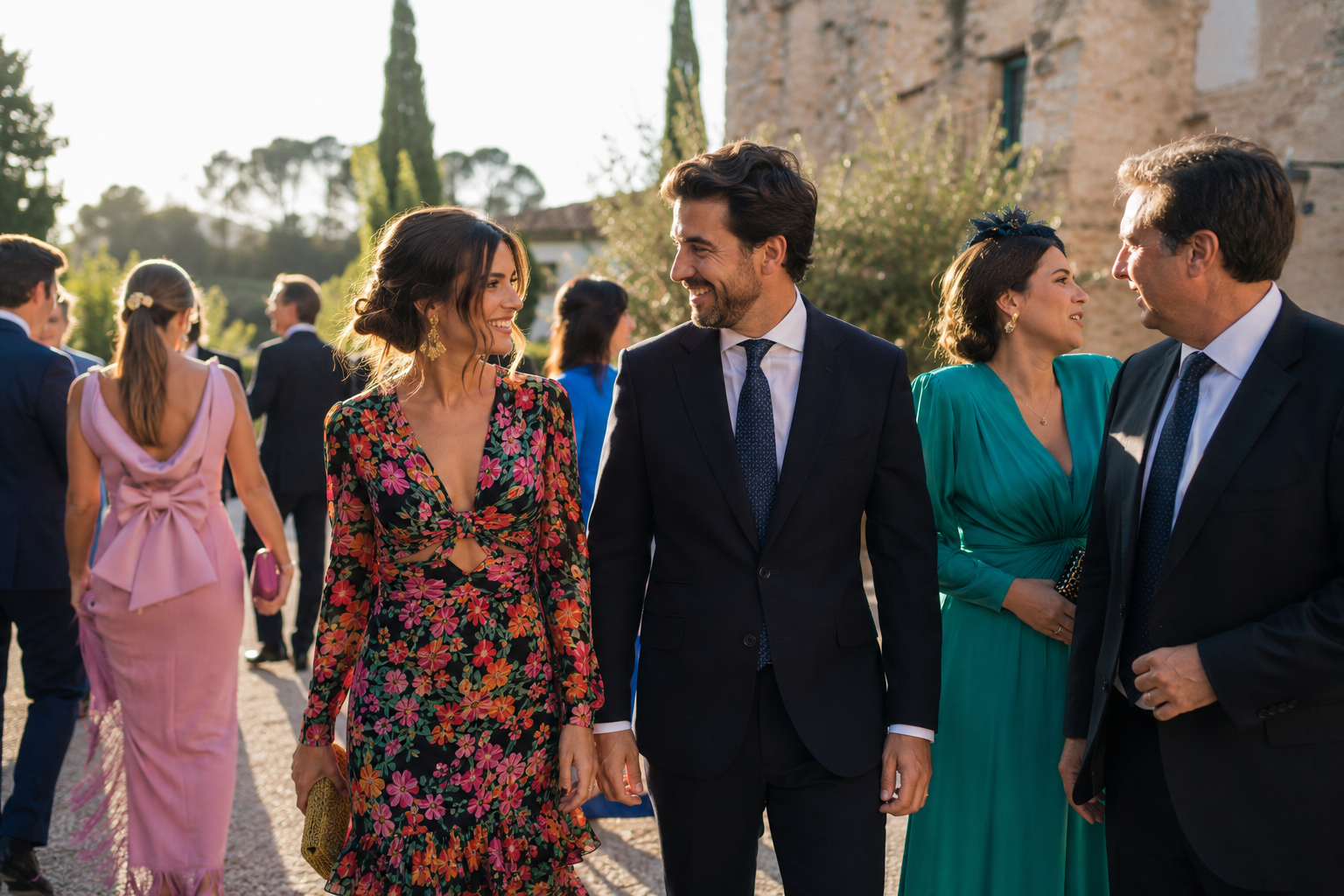
This rule is universal enough that many guests know it already, but it is worth stating plainly because breaking it in Spain is a serious social misstep. The color belongs to one person alone.
White is for the bride only. Under no circumstances should a guest wear white, or anything that reads as white in photos, since that color is reserved entirely for the bride and wearing it is seen as a genuine offense. This is the one rule about which there is no flexibility whatsoever, so when in doubt, choose another color entirely.
The rule protects the bride’s day. The logic is simple and worth respecting, a wedding is the bride’s moment, and nothing a guest wears should compete with her, least of all a dress that echoes her own. Steering well clear of white, cream and ivory is the surest way to honor that, and it costs a guest nothing to comply.
Rule Four: Dress Up, Because Casual Is Almost Unknown
Beyond the color rule, Spanish weddings call for a level of formality that can surprise guests used to more relaxed affairs, and underdressing is a common and avoidable mistake. This is a dressed-up culture.
Casual simply is not done. Casual weddings are almost unheard of in Spain, so a guest must make a real effort, women in cocktail dresses and men in dark suits and ties as the baseline rather than the exception. Turning up underdressed is far more of a faux pas here than overdressing ever could be, so err firmly on the side of elegance.
Day and night have their own codes. A useful finer point is that shorter dresses suit daytime weddings, longer gowns the evening, so the time of day shapes the choice. Matching your outfit to the hour in this way is a small touch that marks a guest as someone who understands the occasion. It is also worth remembering that many Spanish weddings are held outdoors or in the height of summer heat, so choosing fabrics and footwear that will survive hours on your feet, much of it dancing, is as practical as it is stylish. Elegant but comfortable is the ideal a seasoned guest aims for.
Rule Five: Do Not Tip
Here is a rule that catches out guests from tipping cultures in particular, because the instinct to leave something for the staff simply does not apply at a Spanish wedding. The gift covers everything.
Tipping is not part of the custom. At a Spanish wedding, service is included and there is no expectation whatsoever that guests tip the waiters or anyone else, so reaching for your wallet during the meal would be both unnecessary and slightly puzzling to those around you. The couple has arranged and paid for the celebration, and the guests contribute through their gift.
The cash gift is the contribution. The money you give the couple is understood to be your whole financial part in the day, quietly offsetting the considerable cost of feeding and entertaining you for hours. Once that is given, a guest is free to simply enjoy everything on offer without a thought for the bill. This is one of the more liberating aspects of a Spanish wedding for a visitor from a tipping culture, the knowledge that once the gift is handed over, nothing more is expected of your wallet all night. The drinks keep flowing, the food keeps coming, and none of it carries a hidden expectation of extra payment.
Rule Six: Come Hungry for a Marathon of Food
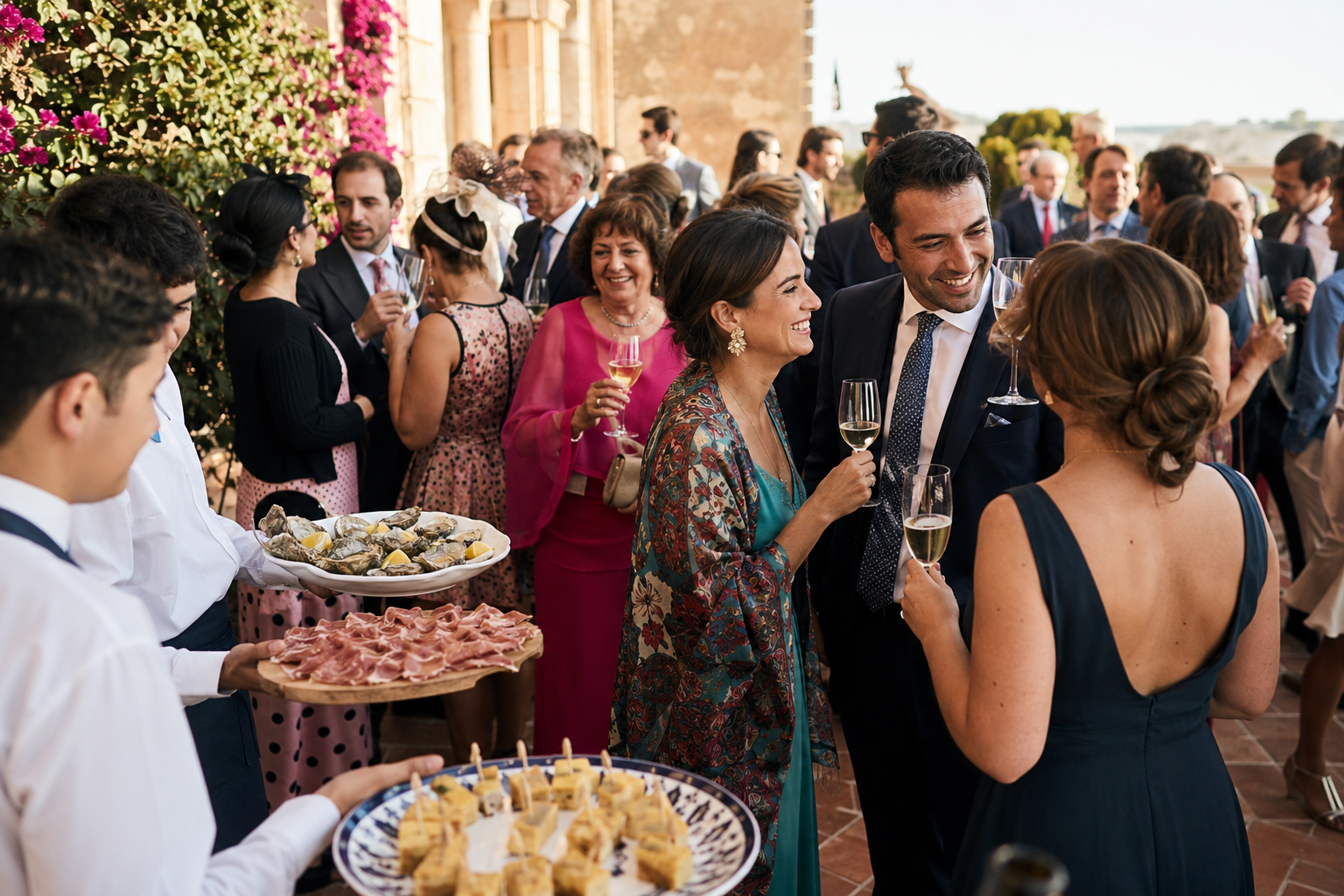
A Spanish wedding is, above all, a feast, and it unfolds in stages across many hours, so a guest who does not understand the sheer scale of the eating will be caught out early. Pacing yourself is essential.
The food arrives in waves. The celebration opens with a lavish standing cocktail of hams, croquettes, tortilla and seafood, followed by a seated banquet of several courses with fish, meat and dessert, all accompanied by flowing wine and cava. This is a great deal of food and drink, and it is only the beginning of the day rather than the whole of it.
Pace yourself from the start. Because the eating and drinking stretch across so many hours and there is much more to come, the wise guest keeps something in reserve for the long night ahead. Going too hard at the cocktail hour is a rookie error that a seasoned wedding guest never makes.
Rule Seven: Let Go of the Clock
Guests used to weddings that run on a crisp timeline often find the Spanish approach disorienting, because the day flows around food and music rather than a rigid schedule. Surrendering to that rhythm is part of the fun.
There is no tight timetable. Unlike weddings in many other countries, a Spanish celebration is rarely built around a minute-by-minute plan, and instead moves at its own unhurried pace from one pleasure to the next. A guest who keeps checking the time or expecting things to happen on a strict schedule will only frustrate themselves.
Settle in and go with it. The right approach is to relax completely, follow the flow of the celebration, and let the day carry you along without worrying about when each part will happen. This ease and lack of hurry is one of the great charms of a Spanish wedding, and embracing it is the surest way to have a wonderful time. Guests accustomed to a printed order of service and a car booked for a fixed hour can find the openness unsettling at first. The trick is to abandon the schedule entirely, accept that the day will end whenever it ends, and clear the following morning, and ideally the whole next day, of any plans at all.
Rule Eight: Join In When the Groom’s Tie Is Cut
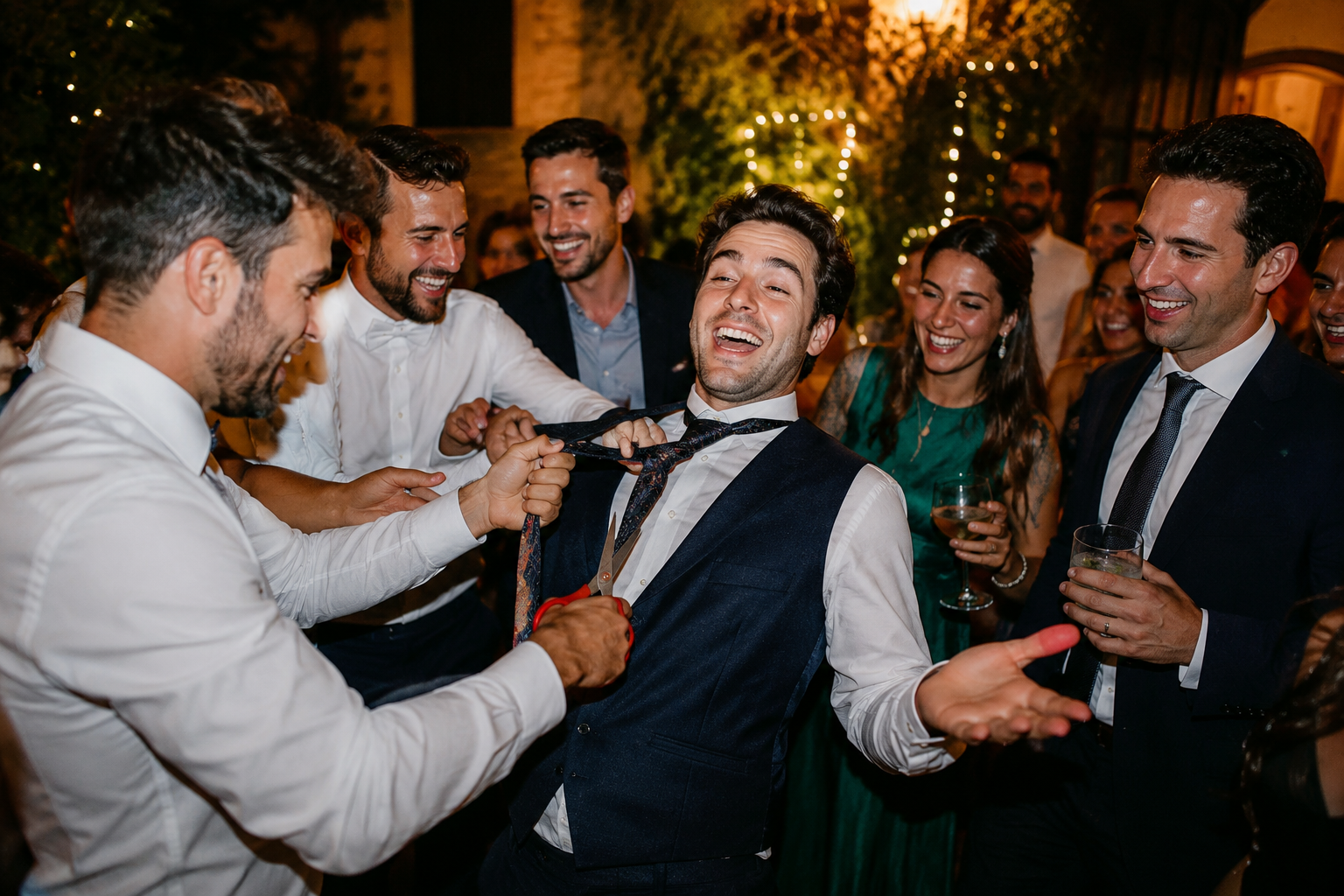
At many Spanish weddings a curious and delightful tradition unfolds partway through the night, one that directly involves the guests and their wallets in a lighthearted way. It pays to know it is coming.
The tie becomes a fundraiser. In a playful custom still alive at many celebrations, the groom’s friends cut his tie into small pieces and sell them to the guests, with the money raised handed to the couple as a fun extra gift. It is a moment of mischief and laughter rather than a solemn affair.
Buy a piece and enjoy the fun. When this happens, a good guest joins in cheerfully, buying a scrap of tie and adding to the couple’s kitty, treating it as the bit of silliness it is meant to be. Playing along with these small traditions, rather than standing awkwardly apart, is exactly what marks a guest as a good sport. Every region and every family has its own such customs, from throwing rice or petals as the couple leave the church to little rituals at the reception, and the details vary from one wedding to the next. A guest is never expected to know them all in advance, only to watch what everyone else is doing and join in warmly when the moment comes.
Rule Nine: Stay Until the Churros at Dawn
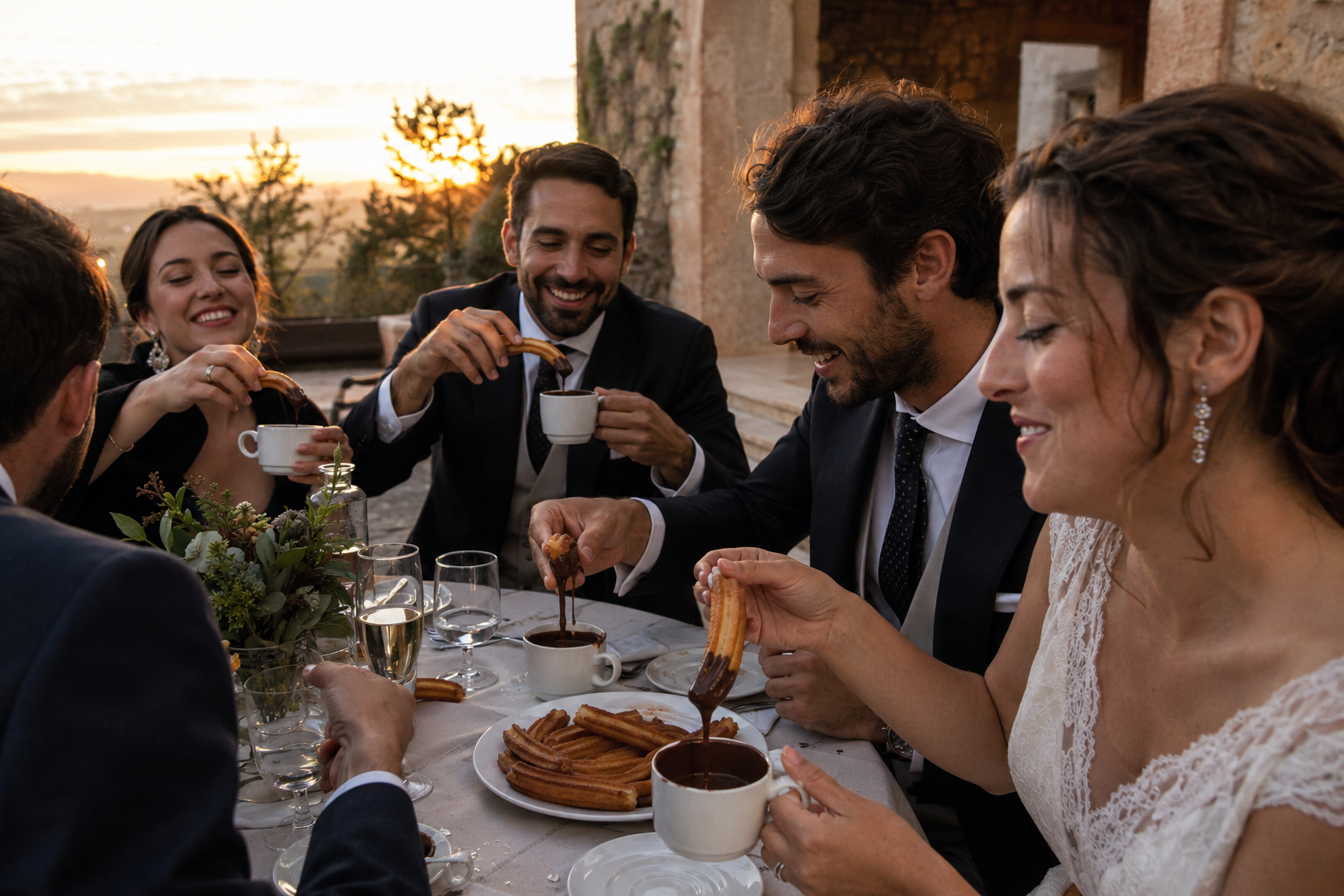
The final and perhaps most important rule concerns stamina, because a Spanish wedding does not politely wind down in the early evening, it powers on through the night to a legendary finish. Leaving early is the one thing a guest should not do.
The night runs very long. After the banquet comes hours of dancing, and in the small hours a second meal, the recena, appears to refuel the crowd, so the celebration keeps its momentum long past midnight. Guests are genuinely expected to dance and keep going into the small hours rather than slipping away after dinner. Leaving early is noticed, and in a warm Spanish family it can even mildly disappoint the hosts, who take real pride in a party that lasts. The dance floor is the heart of the second half of the night, and a guest who throws themselves into it, whatever their skill, will be far more warmly remembered than one who quietly disappears at a sensible hour.
Churros crown the dawn. The classic close to a Spanish wedding is a breakfast of fresh churros dipped in hot chocolate served as the sun comes up, the sweet, greasy, glorious reward for everyone who lasted the distance. Staying until those churros arrive is the mark of a guest who honored the celebration, so pace yourself, wear comfortable shoes, and do not leave before dawn.
The Last Word on Spanish Weddings
Taken together, these rules paint a picture of a celebration that is longer, warmer, and more generous than many guests expect, and that rewards anyone willing to throw themselves into it. Understanding them turns a potentially bewildering day into a joy.
Remember that the couple will also give you something, a small favor or detalle handed out as thanks, from sweets to a personal keepsake, so the generosity runs in both directions. Above all, a Spanish wedding is meant to be savored slowly and fully, from the first glass of cava to the last bite of churro at dawn. Follow these rules, give generously, dress well, pace yourself, and stay until the very end, and you will not only avoid every pitfall but come away having lived one of the great parties Europe has to offer. The Spanish know how to celebrate a marriage as few other cultures do, unhurried and abundant and stretched joyfully across an entire night, and a guest who understands the customs is free to give themselves over to it completely. That, in the end, is the real rule beneath all the others, to relax, join in, and let the celebration carry you all the way to the churros at dawn.

About the Author: Ruben, co-founder of Gamintraveler.com since 2014, is a seasoned traveler from Spain who has explored over 100 countries since 2009. Known for his extensive travel adventures across South America, Europe, the US, Australia, New Zealand, Asia, and Africa, Ruben combines his passion for adventurous yet sustainable living with his love for cycling, highlighted by his remarkable 5-month bicycle journey from Spain to Norway. He currently resides in Spain, where he continues sharing his travel experiences with his partner, Rachel, and their son, Han.