
There is a small object that sits beside nearly every toilet in Europe, in homes, in cafés, in the very humblest bar and the very grandest apartment alike, that many American visitors notice, register as slightly odd, and then completely fail to understand. It is the toilet brush. In the United States, a toilet brush is kept out of sight, hauled out occasionally for a proper cleaning, and never, ever thought of as a tool for daily personal use. In much of Europe, it is exactly that. The unwritten but iron rule of European bathroom etiquette is that you leave the bowl clean for the next person, every single time, using the brush right there for precisely that purpose. It is one of the most basic courtesies of European life, and one a surprising number of visitors from across the Atlantic have simply never learned. This is the bathroom rule Americans miss, why it matters so much, and the wider world of European bathroom customs it opens up.
What makes this worth talking about, awkward as the subject may be, is that it is a genuine and common source of quiet cultural friction, and of unwitting rudeness by visitors who mean no harm at all. An American guest may leave a bathroom in a state their host finds mildly shocking, entirely unaware that they have breached a firm social norm, simply because the expectation was never explained to them and does not exist anywhere back home. Understanding this small courtesy, and the bathroom culture around it, is a mark of respect for the places you visit and the people who host you, and it spares everyone concerned a moment of silent dismay.
Here is the essential rule about the toilet brush, why Europeans treat it as basic etiquette, the related bathroom customs worth knowing, and how to be a considerate guest. This is a practical and good-humored guide to a truly useful piece of cultural knowledge rather than anything indelicate, and norms vary from country to country and home to home, but grasping the general expectation will make you a more thoughtful traveler.
The Rule Americans Never Learned
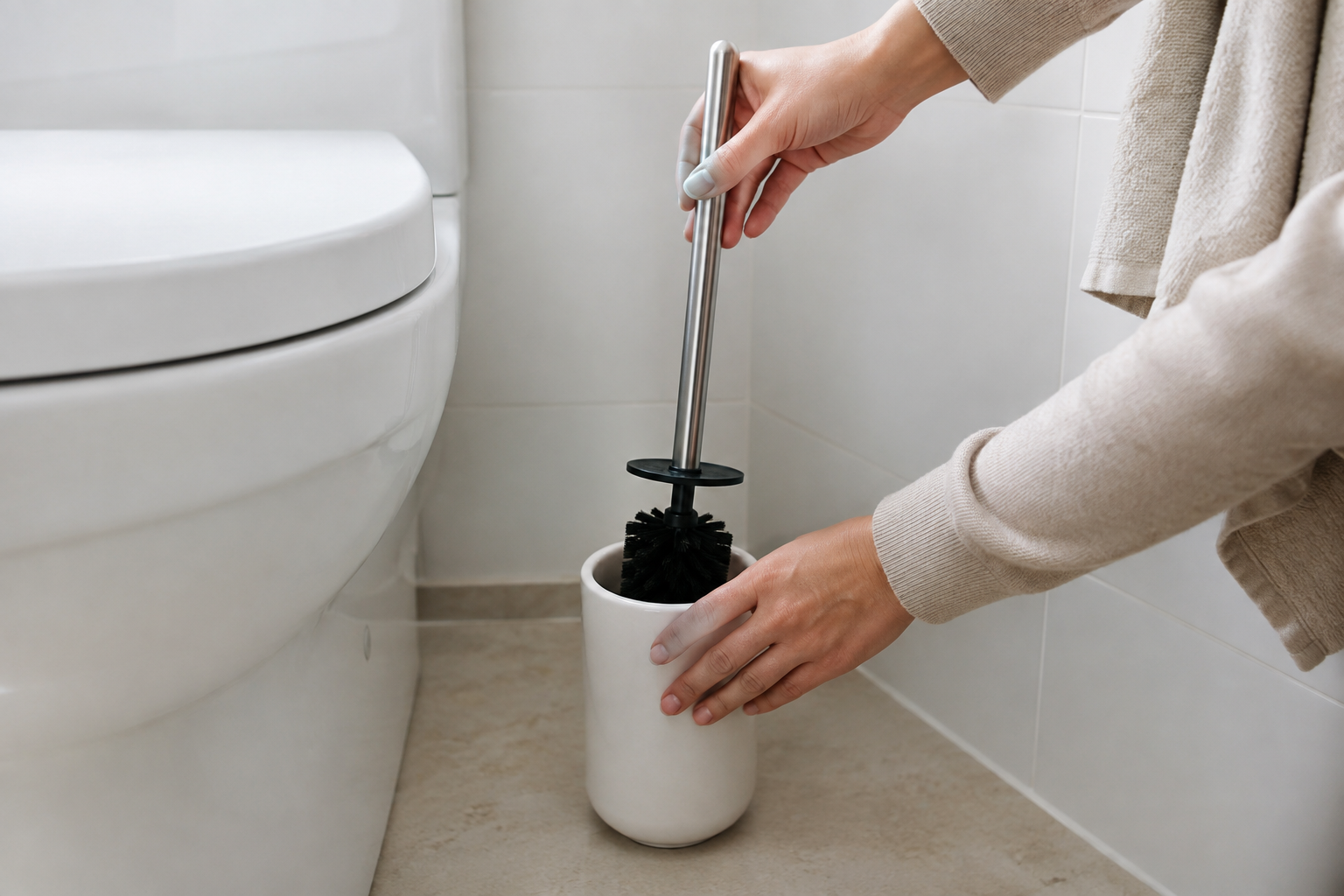
At its heart, the European bathroom rule is simple and easily stated, yet it is precisely the kind of thing that goes unspoken because everyone local already knows it. The rule is about leaving no trace.
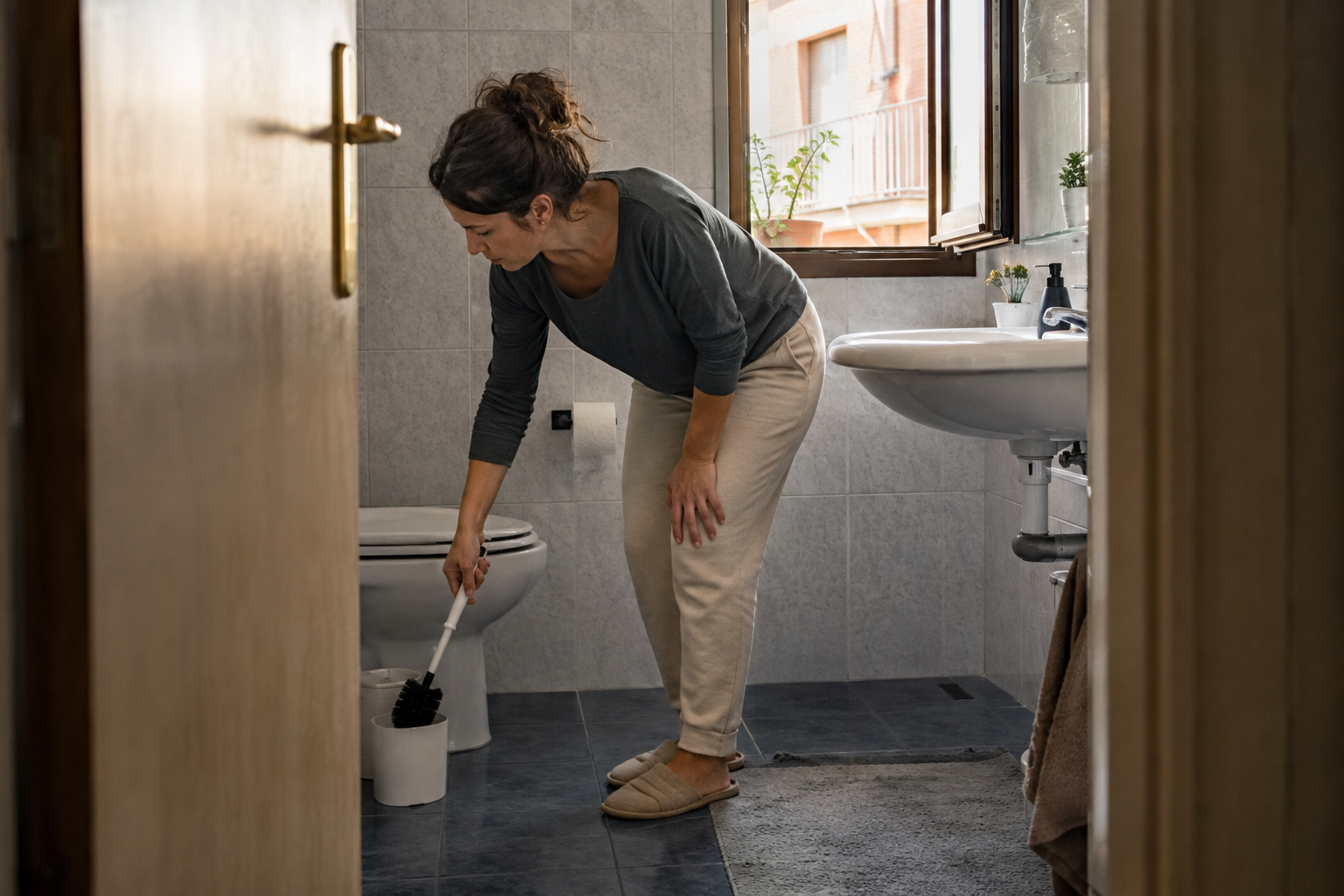
You leave the bowl as you would wish to find it. The core expectation across much of Europe is that after using the toilet, you check the bowl and, if needed, use the brush to leave it clean for the next person, so that no one ever encounters an unpleasant surprise. This is not an unusual nicety but the absolute baseline of bathroom courtesy, expected of everyone.
The brush is there for you, not just for cleaning day. The crucial thing Americans miss is that the brush beside the bowl is not for periodic deep cleaning but for immediate, personal use after each visit, so its presence is an invitation and an expectation, not just decoration. Once you understand the brush is meant for you to use then and there, the system makes sense. The confusion for Americans is entirely understandable, since in their own country the object looks identical but carries a completely different meaning, being associated only with the occasional heavy cleaning of the bowl rather than with everyday courtesy. It is not that Americans are less considerate, but that the tool never carried this meaning for them, and no one ever told them it should. The moment the expectation is made explicit, most visitors adopt it without difficulty, because the underlying logic of leaving things clean for the next person is one anyone can appreciate.
Why Europeans Treat It as Basic Courtesy
To an American, the idea can seem strangely fastidious at first, but there is a clear and considerate logic behind it, rooted in a particular way of thinking about shared spaces and consideration for others. It comes down to respect for the next person.
It is about the person after you. The rule flows from a simple principle, that you should never leave a shared facility in a state you would not want to encounter yourself, so tending to the bowl is an act of consideration for whoever uses it next. In this light, the etiquette is not fussiness but ordinary kindness, the same impulse that leads people to clean up after themselves anywhere. Europeans do not think of it as a special or delicate matter at all, but simply as one of the countless small considerations that make communal life pleasant, on a par with holding a door or clearing your dishes. The act takes only a few seconds and asks nothing beyond a moment’s attention, yet it spares the next person a decidedly unpleasant experience. That ratio, tiny effort for real benefit to someone else, is precisely what defines a good social custom.
Shared bathrooms demand shared responsibility. Because bathrooms in European homes, bars and cafés are used by many people in succession, often without a cleaner attending between each use, the responsibility for keeping them pleasant falls on each user in turn, and the brush is how it is met. The system works precisely because everyone participates in it, each person doing their small part. It is a quiet example of a shared social contract, the kind of unspoken agreement that keeps communal life running smoothly without any rules being posted or enforced. Everyone leaves the bowl clean because everyone else does, and because each has been on the receiving end of both the courtesy and its absence. Break the chain and the whole thing frays, which is exactly why a visitor who does not participate, however innocently, causes a small ripple of dismay.
The Toilet Brush Around Every Corner
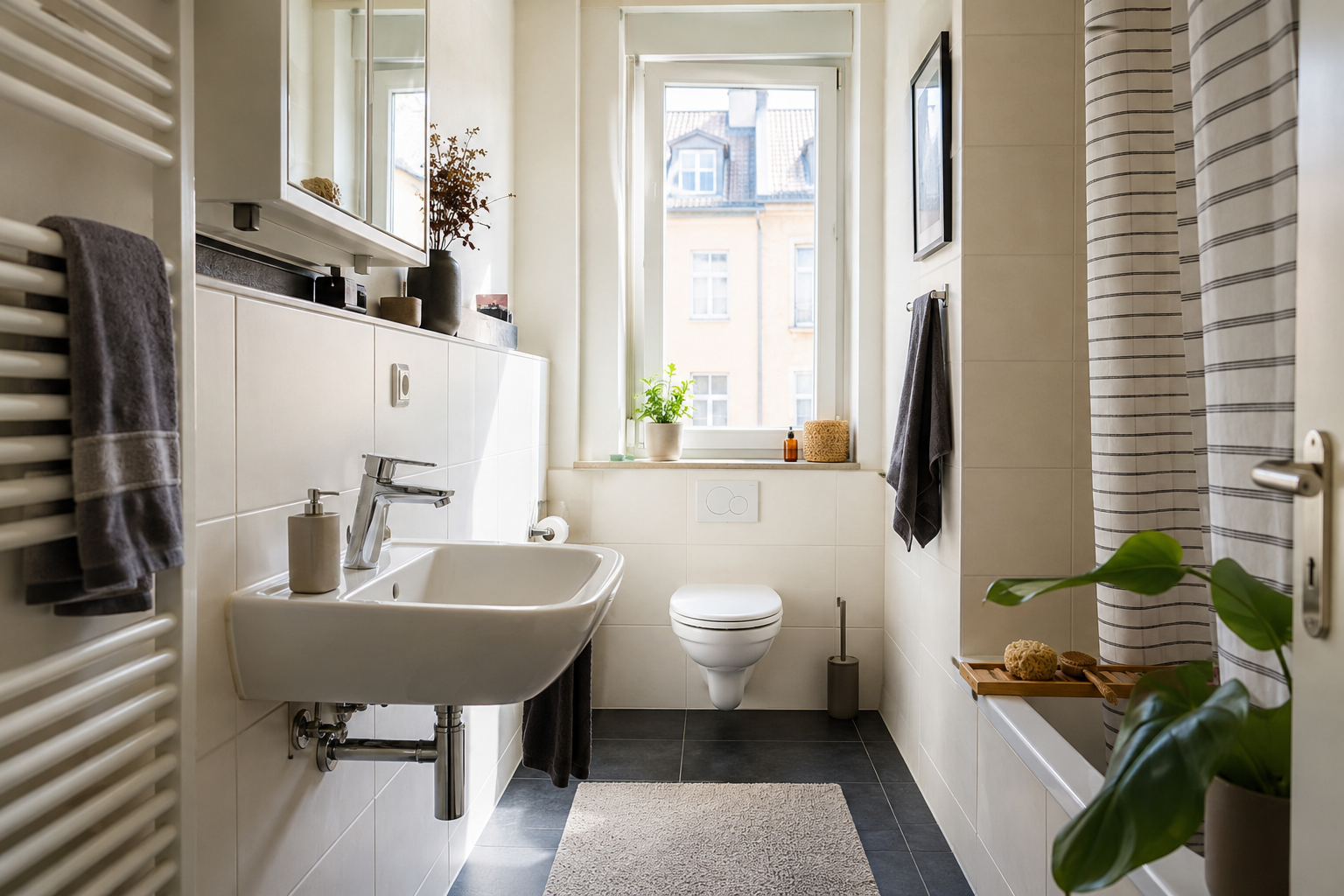
Once you know to look, you will notice that the toilet brush is genuinely everywhere in Europe, a near-universal fixture that reflects just how ingrained the expectation is. Its ubiquity tells the whole story.
It is a standard fixture, not an afterthought. In European bathrooms of every kind, from private homes to public establishments, a toilet brush stands ready beside the bowl as a matter of course, signaling that using it is assumed. You will rarely find a toilet without one, which is itself a quiet lesson in what is expected. The observant traveler can learn a great deal simply by noticing what a culture provides as standard, and the ever-present brush speaks clearly to anyone paying attention. Its placement, always within easy reach of the seated user rather than tucked away in a cupboard, further underlines that it is meant for immediate use. Once your eye is attuned to it, you will see the same arrangement repeated in bathroom after bathroom across the continent, a small but telling piece of shared culture.
Its absence in America explains the confusion. Part of why Americans miss the rule is that in the United States the brush is often hidden away or absent from guest and public bathrooms, so visitors arrive without the ingrained habit or even the awareness that daily use is expected. The cultural gap is not one of character but of simple, unexamined habit formed by different surroundings.
The Bidet, That Other Mystery
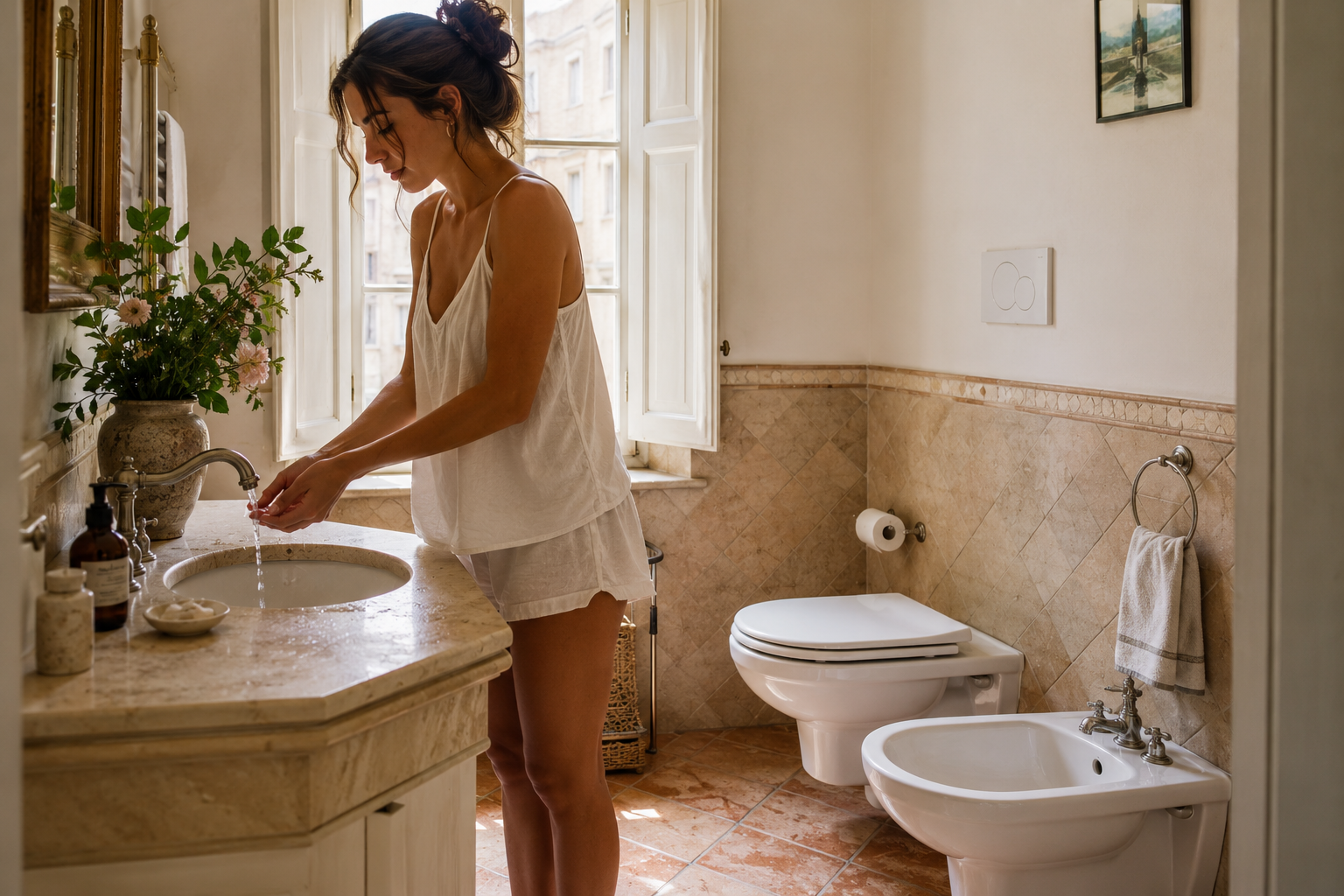
No discussion of European bathroom customs would be complete without the bidet, that second porcelain fixture which baffles so many American visitors and is, in its own way, part of the same culture of bathroom thoroughness. It deserves a clear explanation.
It is for personal cleanliness, not confusion. The bidet, common in southern Europe, is a low basin for washing oneself after the toilet, offering a level of personal cleanliness many Europeans consider simply standard, so it is a hygiene fixture rather than the mysterious object many Americans take it for. Understanding its straightforward purpose dispels the confusion at once. Generations of American visitors have puzzled over the bidet, inventing all manner of imaginative theories about what it might be for, when the reality is simply a practical fixture for washing. In the countries where it is common, it is regarded as no more remarkable than a sink, and its users would be surprised to learn how much bafflement it causes abroad. Far from being a luxury or an oddity, it reflects a matter-of-fact attitude toward personal hygiene that, once explained, tends to strike visitors as eminently sensible.
It reflects the same values. Like the toilet brush, the bidet expresses a European emphasis on thorough personal hygiene, so the two fixtures together reveal a culture that takes cleanliness in these matters seriously. Seen this way, the bidet is not an exotic curiosity but part of a coherent and considerate approach to the bathroom. The same cultural thread that puts a brush beside every toilet also puts a bidet in many bathrooms, and both express a shared conviction that these matters are worth attending to properly. It is a small window into a set of values around cleanliness and consideration that runs quietly through daily European life, visible to anyone who takes the time to notice rather than simply feeling confused.
The Separate Room and Other Layouts
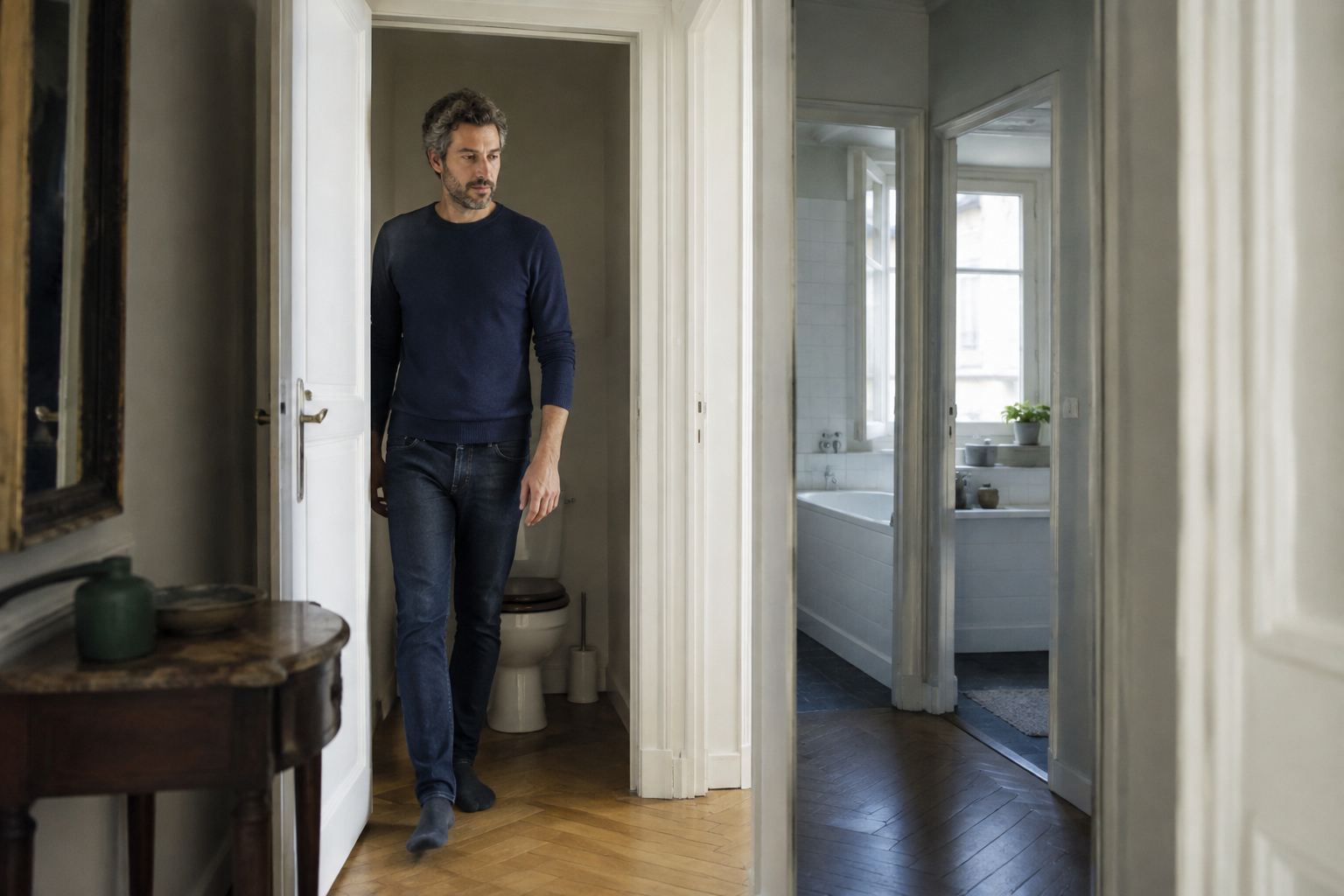
European bathrooms often differ from American ones in their very layout, and knowing what to expect can spare a visitor confusion, particularly the common arrangement in which the toilet occupies its own small separate room. These differences are worth anticipating.
The toilet is often in its own room. In many European homes, the toilet often sits in a small separate room, apart from the bath and sink, so a visitor accustomed to a single combined bathroom may be briefly puzzled, and would do well to know to look for two distinct spaces. This arrangement, once understood, is rather practical, allowing one person to bathe while another uses the toilet. In a household of several people sharing one set of facilities, separating the toilet from the bath is a sensible piece of design that eases the morning rush. A visitor accustomed to the single combined American bathroom may simply need to hunt a little to find where the toilet has been tucked, sometimes behind an unmarked door that gives no clue to what lies within. A moment’s exploration usually solves the mystery.
Small features can surprise the unprepared. From unfamiliar flush mechanisms to light switches placed outside the bathroom door, European bathrooms hold small differences that can momentarily stump a visitor, so a little observation goes a long way. None of these is difficult, but noticing how things work before you need them saves an awkward moment. The dual-button flush, which offers a choice between a smaller and a larger volume of water, is one small feature worth understanding, as is the occasional pull-cord or foot pedal in place of a familiar handle. The light switch mounted on the wall outside the bathroom door, rather than within, is another common surprise that has left many a visitor briefly patting the wall in the dark. None of it is hard, but a little curiosity spares you the small comedy of fumbling.
Being a Considerate Guest
Armed with an understanding of these customs, a visitor can navigate European bathrooms with ease and, more importantly, avoid unwittingly offending their hosts, which is what this knowledge is really for. Good manners here are simple to practice.
Follow the local lead. The considerate approach is simply to observe and adopt local bathroom habits, using the brush as expected, respecting the layout, and leaving every facility as clean as you found it, so that you cause no dismay and give no offense. Attentiveness to these small norms is a quiet but real form of politeness. There is no need to ask awkward questions or make a study of it, since simply watching how a household operates and matching your own behavior to it will carry you through almost any situation gracefully. The considerate traveler treats a foreign bathroom the way they would any unfamiliar custom, with a little observation and a willingness to do as the locals do, which is all that good manners anywhere really require.
When a guest, err toward care. In someone’s home especially, taking that extra moment to leave the bathroom immaculate is a courtesy hosts notice and appreciate, so the small effort pays off in goodwill. Nothing marks a thoughtful guest quite like leaving no trace behind, and few lapses register as quickly as the opposite.
A Small Courtesy That Says a Lot
The lasting point of all this is that the humble toilet brush, and the etiquette surrounding it, is really about something larger than bathrooms, a shared ethic of consideration for others and responsibility for the spaces we all use, expressed in one small daily act that Americans can easily learn to adopt. To use the brush is to think of the next person, which is courtesy in its purest form.
What makes this knowledge so worth having is that it lets a visitor move through Europe without committing a small but real social breach, and more than that, it invites them into a thoughtful cultural habit worth carrying home. The rule is easy to follow once you know it, and following it marks you as someone who leaves every place a little better than they found it.
So the next time you find yourself in a European bathroom and notice that brush standing quietly beside the bowl, remember that it is there for you, and using it is simply what a thoughtful person does. Learn this one small rule that so many visitors never do, practice it quietly as a matter of course, and you will not only spare your hosts a moment of dismay but join in one of the many small, civilized little courtesies that make daily life in Europe so quietly considerate. It is a tiny habit, but like many tiny habits, it says a great deal about how we treat one another, and about the quiet, unglamorous consideration that holds daily life together.

About the Author: Ruben, co-founder of Gamintraveler.com since 2014, is a seasoned traveler from Spain who has explored over 100 countries since 2009. Known for his extensive travel adventures across South America, Europe, the US, Australia, New Zealand, Asia, and Africa, Ruben combines his passion for adventurous yet sustainable living with his love for cycling, highlighted by his remarkable 5-month bicycle journey from Spain to Norway. He currently resides in Spain, where he continues sharing his travel experiences with his partner, Rachel, and their son, Han.