
When a couple from coastal Maine began planning their retirement abroad, they did something most people never think to do. Instead of chasing the sunniest, warmest place they could find, the way so many retirees do, they went looking for the place whose weather felt most like the home they already loved. They knew the cool, grey, salt-aired rhythm of the North Atlantic coast, the green hills and the sea mist and the rain, and rather than fleeing it for sunshine, they wanted to keep the feel of it while shedding only its harshest edges. Their search led them, a little unexpectedly, to the north of Portugal, to the cool, green, Atlantic-facing coast around Porto, where the maritime weather felt startlingly familiar and yet the brutal Maine winter never came. This is the story of their choice, and of the quiet, underrated strategy behind it: choosing a home abroad not for the best weather, but for the most familiar.
This couple is a composite, a representative example rather than a specific pair, assembled to illustrate a pattern more people would do well to consider. Their story is worth telling not because every detail is literally true but because the strategy it embodies is truly wise: the recognition that the weather you are used to is part of what makes a place feel like home, and that matching it, rather than maximizing sunshine, can make the enormous transition of moving abroad far gentler. It is a strategy hiding in plain sight, and this couple’s move to Portugal shows exactly how it works.
Here is what the familiar-climate strategy actually is, why a Maine couple found their weather echoed on the Portuguese coast, what the strategy gains them beyond mere comfort, and the honest limits of the idea. This is an illustrative look at a relocation approach rather than financial advice, and every situation differs, so anyone considering such a move should research thoroughly and consult professionals, but the strategy itself is worth understanding whatever climate you call home.
The Strategy Nobody Talks About
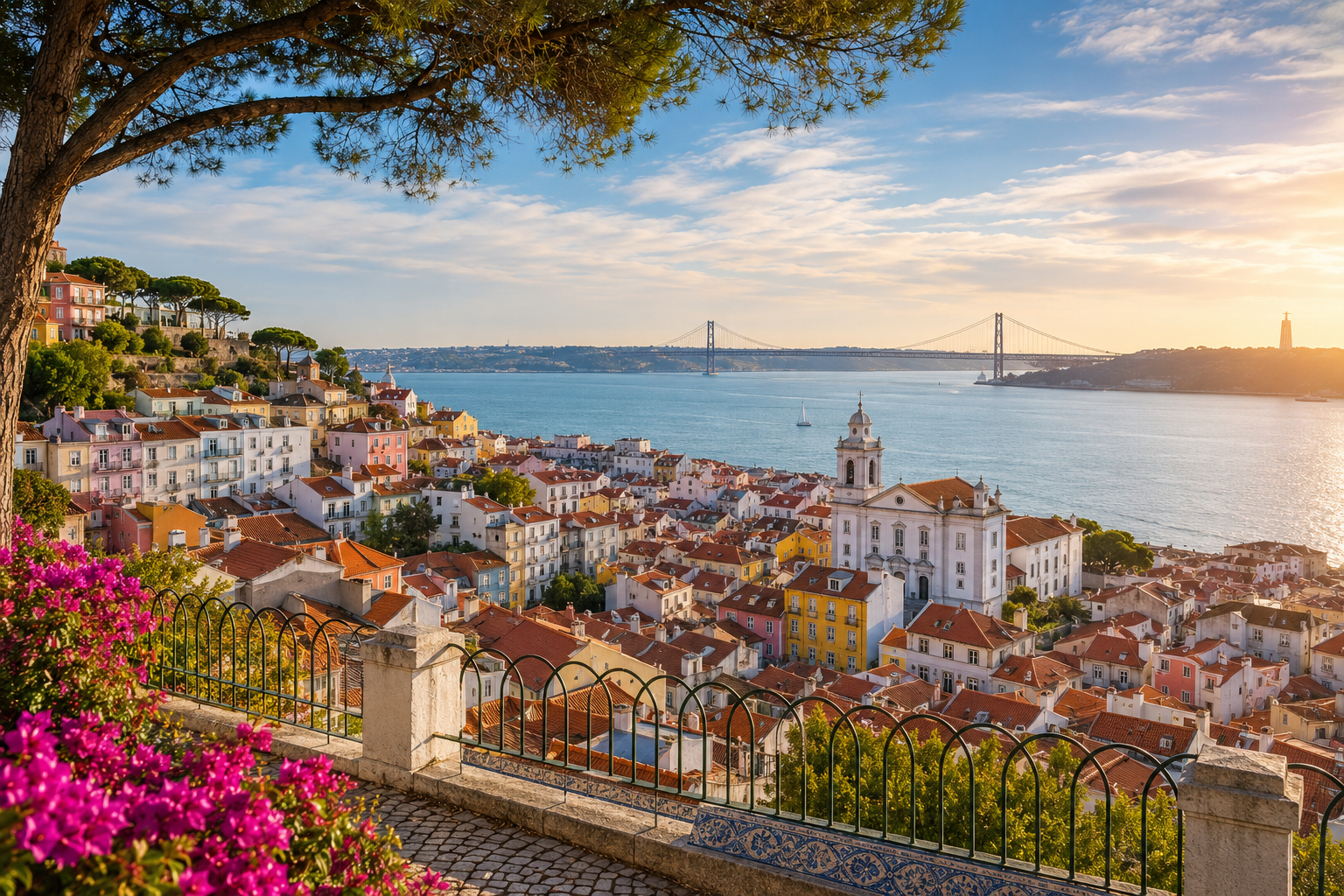
Most advice about retiring abroad points relentlessly toward sunshine and warmth, which is exactly why the familiar-climate strategy is so overlooked despite its quiet good sense. It starts from a different question entirely.
The usual approach chases the best weather. When people imagine retiring abroad, they typically picture escaping somewhere sunnier and warmer, treating endless sunshine as the obvious goal, so the entire conversation tends to orbit around finding the most pleasant possible climate. The assumption is that everyone wants more sun than they had before. And for a great many people it is perfectly true, since plenty of retirees have spent decades enduring winters they hated and dream of nothing but warmth. But it is not true for everyone, and the automatic equation of good weather with lots of sun quietly overlooks the many people who deeply love a cooler, greyer, more changeable climate and would be miserable baking under a cloudless sky. For them, the standard advice points in exactly the wrong direction.
The familiar-climate strategy asks something else. Instead of seeking the best weather, this approach seeks the most familiar weather, a climate resembling the one you already know, on the simple theory that familiar weather makes a foreign place feel more like home and eases the shock of the move, so the goal becomes continuity rather than contrast. It is a bet that comfort comes not from more sunshine but from the familiarity of a known sky. There is real psychology behind the wager. A great deal of what makes a place feel like home is sensory and half-conscious, the quality of the light, the smell of the air before rain, the particular way the seasons turn, and these things are woven deep into a person’s sense of belonging. Reproduce them in a new country and a surprising amount of home comes with you, even when everything else is foreign.
Why a Maine Couple Looked for Cool and Grey

To understand the strategy in action, you have to understand what this particular couple was really looking for, because it was the opposite of what most retirees seek. They were not trying to escape their climate but to keep its character.
They loved the North Atlantic coast. Having spent their lives on the cool, maritime coast of Maine, the couple had come to love the sea air, the greenery, the changing seasons, the grey skies and the rain, so they had no wish at all to trade it for a sun-baked landscape that would feel alien to them. To them, a cool and cloudy coast was not something to flee but something to cherish.
What they wanted was that feel without the brutal winter. The one thing they would give up was the harshness of the Maine winter, the deep snow and hard freezes, so their ideal was a place that kept the familiar cool, green, maritime character they loved while softening its most punishing extreme, which is a very specific thing to go looking for. They wanted the essence of their climate, not its cruelty.
Why Northern Portugal Fit

The reason the search led to Portugal, and specifically its northern coast, is that this corner of the country matches what the couple wanted with surprising precision. It offered the familiarity they sought and the mildness they craved.
The north of Portugal is cool, green, and Atlantic. The coastal north around Porto has a temperate maritime climate, with Atlantic rain, green landscapes and sea breezes, and summers that stay pleasantly mild rather than fiercely hot, so in its whole character it echoes the cool, damp, coastal feel the couple knew from Maine. The greenery, the grey skies, the smell of the ocean, all of it felt familiar to them in a way that surprised them. Visitors to northern Portugal who know the coasts of New England or the maritime provinces often report the same uncanny recognition, a sense of having arrived somewhere new that nonetheless feels oddly known. The rocky Atlantic shoreline, the fishing towns, the shifting weather rolling in off the sea, the deep green of a landscape that never dries out, all of it rhymes with a certain kind of northern coast, and for a Maine couple that rhyme was the whole appeal.
But its winters are far gentler. Crucially, while northern Portugal is cool and wet, its winters are dramatically milder than Maine’s, rarely bringing snow or hard freezes, so the region delivers the familiar maritime feel without the punishing cold. They got the cool, green coast they loved, kept the four seasons, and left the deep snow behind, which was precisely the point. It is worth being clear that this is not a claim that Portugal feels as cold as Maine, because it does not, and anyone expecting a New England winter would be pleasantly disappointed. The familiarity lies in the character of the climate rather than its severity, in the maritime coolness and the greenery and the rhythm of real seasons, while the punishing edge that makes a Maine February an ordeal is simply absent. That combination, familiar in feel and gentler in extreme, is exactly what the strategy is designed to find.
The Comfort of the Familiar

The deepest benefit of the familiar-climate strategy is psychological, and it is easy to underestimate until you have lived it, because the familiarity of weather does something quietly powerful to how at home a place feels. This is the real payoff.
Familiar weather softens the shock of moving. Relocating to a foreign country is a profound disruption, and everything unfamiliar, the language, the systems, the customs, adds to the disorientation, so keeping one thing familiar, the feel of the weather and seasons, gives a transplanted couple an anchor of continuity amid all the change amid all the change. When the sky and the air feel like home, the rest of the strangeness is easier to bear.
This is what most sunshine-seekers miss. A retiree who chases an unfamiliar sunny climate may find, after the novelty fades, that the alien weather only deepens their sense of being far from home, whereas the couple who kept a familiar climate feels grounded from the start, so the familiar-climate strategy quietly protects against a homesickness that pure sunshine can worsen. Comfort, it turns out, often lives in the familiar rather than the ideal.
The Practical Gains Beyond Weather
Beyond the psychological comfort, choosing Portugal brought this couple the same concrete advantages that draw so many retirees there, so the familiar-climate strategy cost them nothing in practical terms. They gained the weather they wanted and much else besides.
Portugal delivers on the fundamentals. The country offers a cost of living well below that of the United States, with a couple able to live comfortably in Porto on a modest monthly budget, alongside excellent affordable healthcare, notable safety, and a welcoming environment for retirees, so the familiar climate came bundled with real practical benefits. The couple did not sacrifice affordability or quality of life to get the weather they wanted.
The logistics work too. Portugal offers a residence route designed for retirees living on pensions or savings, direct flights connect its cities to the United States, and a large established community of English-speaking expats eases the transition, so the move was as practical as it was emotionally comfortable. Everything that makes Portugal a favorite for American retirees applied to this couple as much as to the sun-seekers, with the familiar weather as a bonus rather than a trade-off. This is part of what makes the familiar-climate strategy so quietly appealing: it does not ask you to sacrifice the practical advantages of a good retirement destination in order to get the weather you want. The couple did not have to choose between a sensible move and a comfortable climate, because northern Portugal happened to offer both at once, which is not something that can be said of every familiar-feeling place a person might long for.
The Honest Limits of the Idea
It is worth acknowledging where the familiar-climate strategy and this particular move have their limits, because the idea is powerful but not without caveats worth knowing. The familiar can carry its own costs.
The rain and damp are real. The same Atlantic weather that makes northern Portugal feel familiar to a Maine couple also brings genuine rain and damp, and older Portuguese homes often lack the insulation and heating Americans expect, so winters feel chilly and damp indoors even when they are mild outdoors, which is a real adjustment. The familiar cool-and-grey comes with the familiar downsides of cool-and-grey, softened but not erased. A newcomer used to well-heated, well-insulated American houses can be caught off guard by how cold a mild-sounding Portuguese winter feels inside a traditional stone or tiled home, and adapting often means investing in heating, dehumidifiers and warmer clothes indoors than the outdoor temperature would suggest. It is a manageable problem, and one many residents solve without much fuss, but it is a real one, and it deserves a clear place in any realistic account of moving to the damp Atlantic north.
And the strategy suits some people far more than others. The familiar-climate approach makes sense for people who truly love their home climate and want to keep it, but for someone longing to escape their weather, the better strategy may be the opposite, so the idea is a tool for a particular temperament rather than universal advice. Someone who dreams of sunshine should chase sunshine, not familiarity, and knowing which kind of person you are is the whole key. The strategy is not a claim that familiar weather is better than sunny weather in some absolute sense, only that it is better for the people who happen to love the climate they already have. The real work, before choosing any destination, is the clear-eyed self-assessment of what you truly want from the sky above your new home, because the answer varies enormously from one person to the next.
Choosing the Weather That Feels Like Home
The lasting insight of this couple’s story is that the familiar-climate strategy offers a genuinely different and often wiser way to choose where to retire abroad, trading the pursuit of ideal weather for the comfort of familiar weather, and thereby making a foreign place feel like home far faster. For people who love the climate they already have, it is a way to keep the feel of home while shedding only its harshest elements, which can make an overwhelming transition remarkably gentle.
What makes the strategy worth knowing is how neatly it sidesteps a common disappointment, the retiree who moves for perfect weather and ends up feeling more displaced than at home. By choosing continuity over contrast, a couple like this one arrives in a foreign country that already feels, in the most fundamental sensory way, like the place they came from, which is a powerful head start on belonging. The weather that feels like home is, for the right person, worth more than the weather that looks best on a postcard.
So if you are weighing a move abroad and instinctively picturing somewhere far sunnier than where you live now, pause and ask whether that is truly what would make you happy, or whether you might be more at home somewhere whose weather feels like the home you already know. For some, the pull of the sun is real and worth following. But for others, like this Maine couple who found their Atlantic coast echoed on the shores of Portugal, the wisest move is to chase not the best weather, but the most familiar, and to let the sky itself help a new country become home.

About the Author: Ruben, co-founder of Gamintraveler.com since 2014, is a seasoned traveler from Spain who has explored over 100 countries since 2009. Known for his extensive travel adventures across South America, Europe, the US, Australia, New Zealand, Asia, and Africa, Ruben combines his passion for adventurous yet sustainable living with his love for cycling, highlighted by his remarkable 5-month bicycle journey from Spain to Norway. He currently resides in Spain, where he continues sharing his travel experiences with his partner, Rachel, and their son, Han.