
Picture a couple in their early sixties, both from the Seattle area, looking at the arithmetic of their retirement and not quite liking the answer. They love the Pacific Northwest, the green hills and the grey skies and the sea air, but the cost of staying has climbed out of proportion to what they get for it, and their fixed retirement income does not stretch the way they once assumed it would. So they make an unusual bet. Rather than move somewhere sunnier and cheaper within the United States, they look across the Atlantic to a corner of Spain that most Americans have never heard of, a green, rainy, coastal region called Galicia that looks and feels startlingly like the home they are leaving, and they decide to build their retirement there instead.
This couple is a composite rather than a specific pair, a representative example built to illustrate a pattern that a growing number of Americans are quietly exploring. Their story is worth telling not because they are real in every detail but because the calculation they represent is real, and increasingly common: the discovery that a certain kind of green, mild, coastal life that has become punishingly expensive in parts of the United States can be had, in a strikingly similar setting, for dramatically less in northern Spain. It is a bet on geography, climate and value all at once, and it is worth itemizing carefully. What makes it interesting is that it inverts the usual logic of retiring abroad. Most people who leave a place like Seattle are trying to escape the weather, trading grey for gold somewhere in the American Southwest or on a Mediterranean coast. This couple wants the opposite. They want to keep their weather and change only its price, which turns out to be a surprisingly achievable goal once you know where to look.
Here is what the green-Spain bet really involves, why a place like Galicia appeals so specifically to people leaving the Pacific Northwest, what the move plausibly saves and what it costs, and the real trade-offs that come with it. This is an illustrative look at a relocation pattern rather than financial advice, and I am not a financial adviser and every real situation differs, so anyone considering such a move should run their own numbers and consult professionals, but the logic of the bet is worth understanding on its own terms.
Why Galicia, of All Places
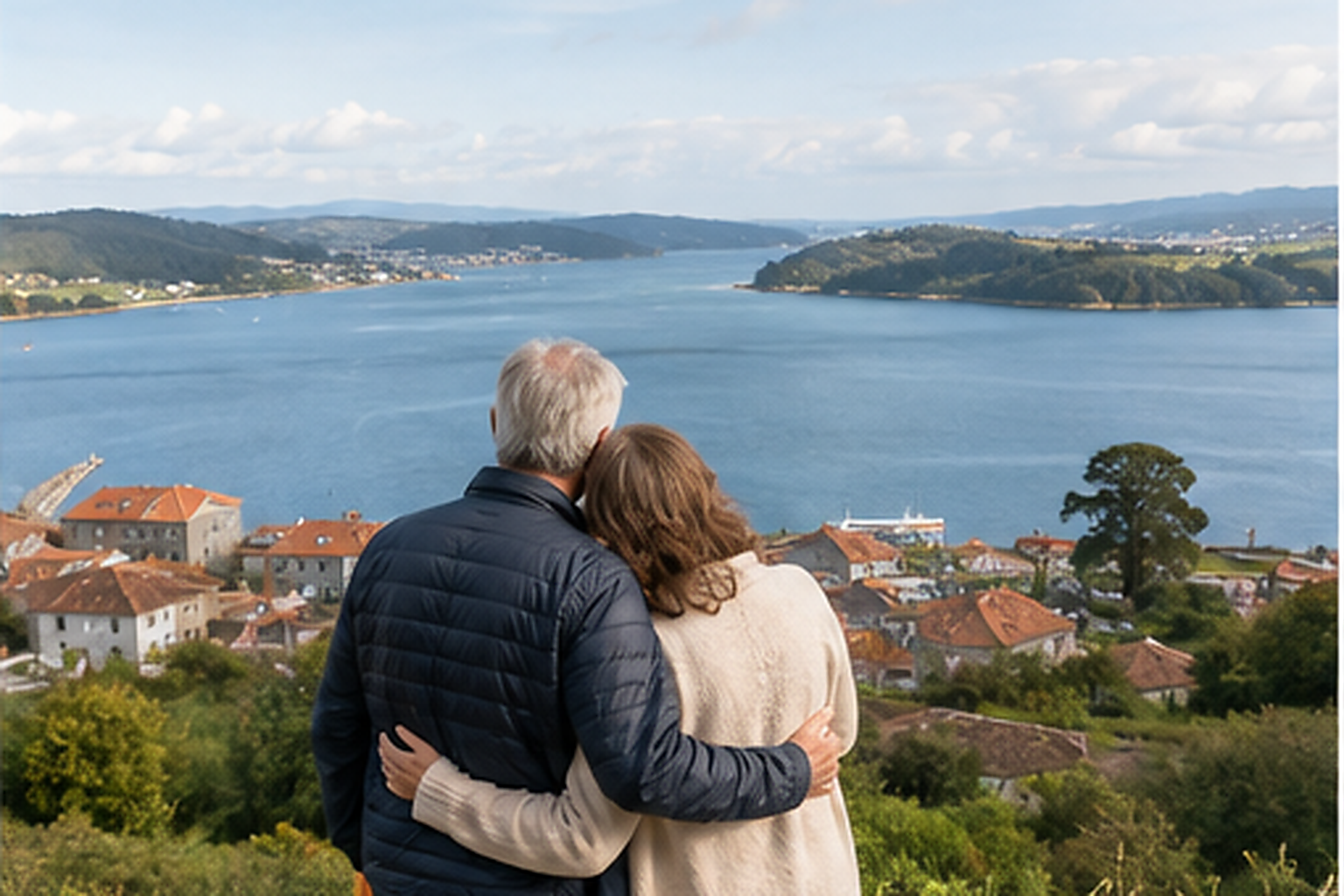
The first thing to understand is why a couple from Seattle would choose Galicia specifically, rather than the sunny Mediterranean Spain that draws most foreign retirees, because the answer explains the whole logic of their bet. They are not chasing a change so much as a continuity at a better price.
Galicia is Spain’s green northwest. Tucked into the country’s Atlantic corner, Galicia is a region of lush green hills, dramatic rocky coastline, frequent rain, and a mild, cool climate closer to Ireland than to the sun-baked Mediterranean, so it looks and feels remarkably unlike most people’s image of Spain. It is one of the wettest and greenest parts of the country, a landscape of misty forests, estuaries and a rugged coast. To an American picturing Spain as all sun-drenched plazas and orange trees, Galicia can come as a genuine surprise, closer in spirit to the coasts of Ireland or the Pacific Northwest than to the postcard south. The seafood is among the best in Europe, the pace is unhurried, and the whole region carries a distinct Celtic-tinged character quite unlike the rest of the country. It is Spain, but a Spain most visitors never see.
For someone from the Pacific Northwest, this is the point. The couple from Seattle are not seeking to trade their familiar grey-and-green world for relentless sunshine, but to keep the mild, rainy, coastal character they love while shedding the cost, so Galicia offers them a climate and landscape they already know and cherish. Where most retirees to Spain chase the sun, this couple is chasing the rain, and finding it far cheaper than at home.
The Housing Bet
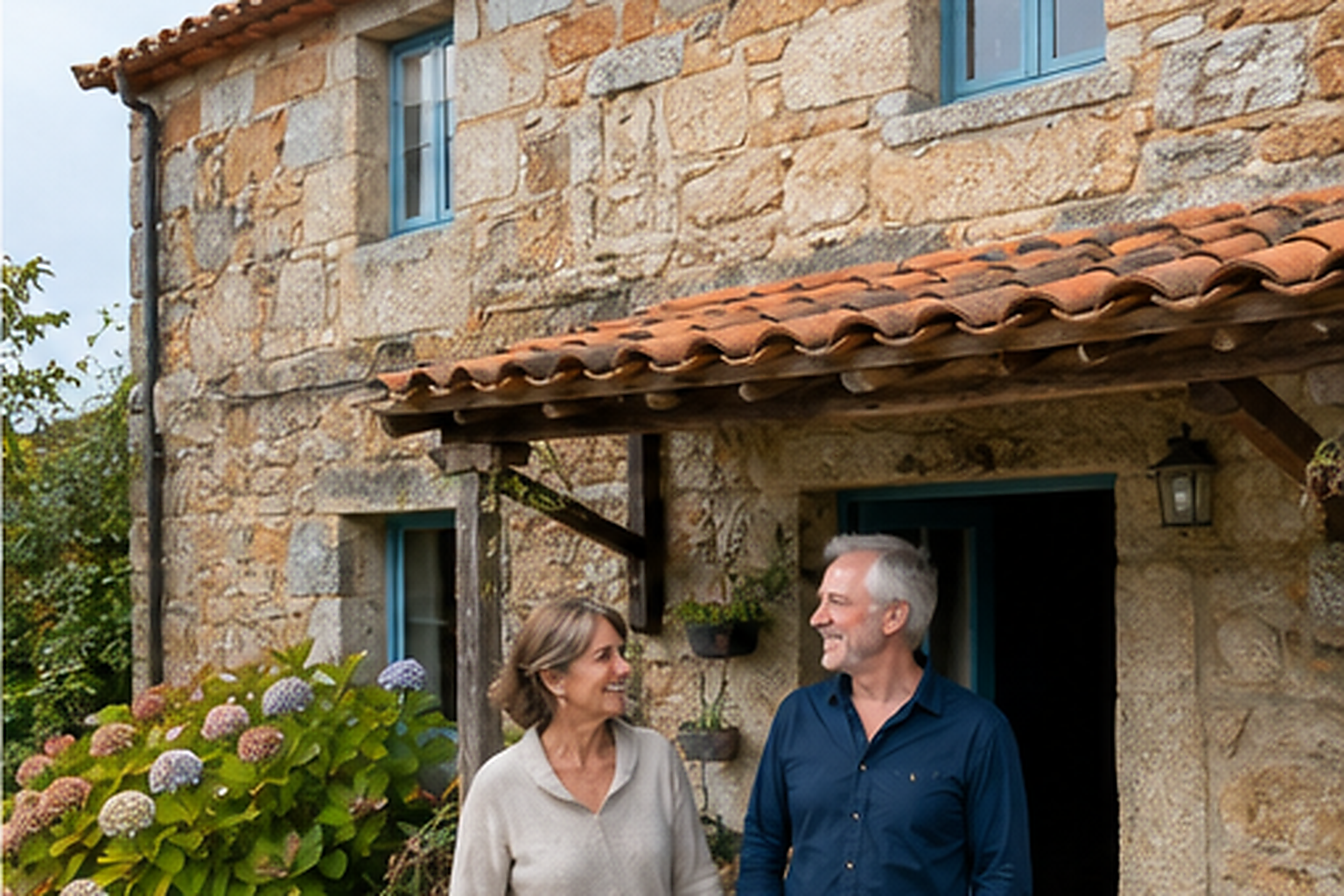
The heart of the financial case is housing, because it is in the cost of a home that the gap between Seattle and Galicia is widest and the savings most dramatic. This is where the bet is really won or lost.
Seattle has become truly expensive. Housing costs in the Seattle area have risen to levels that strain even comfortable retirement budgets, with home prices and rents that consume a large share of a fixed income, so a couple looking to stretch their retirement money finds their housing costs working against them at every turn. The very thing that makes the Pacific Northwest desirable has also made it costly to remain there.
Galicia sits at the opposite end of the spectrum. As one of Spain’s most affordable regions, Galicia offers housing at a small fraction of Seattle prices, whether renting or buying, so a couple can secure a comfortable home there for far less than the equivalent would cost back in Washington. The difference in housing cost is the single largest piece of the green-Spain bet, and the one that most transforms the retirement math.
The Daily Cost of Living

Beyond housing, the everyday cost of life in Galicia runs consistently lower than in the United States, and these smaller savings accumulate month after month into a meaningful difference. The bet is won not only at the point of buying a home but across every ordinary expense.
The daily arithmetic favors Spain. Groceries, dining out, and public transport tend to cost noticeably less in Spain than in most American metros, and in an affordable region like Galicia the effect is especially pronounced, so a fixed retirement income simply covers more of ordinary life. A couple who felt squeezed in Seattle can find the same income affording a comfortable, unhurried life in the Galician northwest.
The overall budget reflects this. While every situation varies, a couple can generally live comfortably in affordable Spain on a budget that would feel tight in a high-cost American city, so the same money buys a materially better standard of living. It is not that Galicia is free, but that the ratio of cost to quality of life shifts decisively in the retiree’s favor. This is the quieter half of the savings, less dramatic than the housing gap but relentless in its own way. Every restaurant meal, every trip to the market, every bus fare and utility bill and coffee comes in lower than its Seattle equivalent, and over a year those differences compound into real money. A retirement income that felt permanently stretched at home can feel, in Galicia, as though it has quietly gained a raise.
The Healthcare Piece

No honest accounting of a retirement move abroad can skip healthcare, and here Spain offers one of the strongest parts of the whole case, which matters enormously to a couple in their sixties. This is often the factor that tips the decision.
Spain’s healthcare is both excellent and affordable. Spain’s public healthcare system is widely regarded as one of the best in the world, and newcomers typically start with private insurance that, by American standards, is remarkably inexpensive, often costing a modest sum each month while providing quick appointments, so the healthcare that looms as a terrifying expense in American retirement becomes manageable and reassuring. The fear of a medical bill derailing one’s retirement, so familiar in the United States, largely evaporates. For many Americans this single factor does more than any other to make the whole idea thinkable, because healthcare cost and uncertainty loom so large in American retirement planning. To swap a system where a serious illness can threaten a lifetime’s savings for one where care is both excellent and affordable is not a minor convenience but a fundamental change in the risk one carries into old age.
This changes the whole risk profile of the bet. For a couple in their early sixties, the prospect of predictable, affordable, high-quality healthcare removes one of the largest uncertainties hanging over any retirement, so the Galician option looks not only cheaper but safer in the ways that matter most as one ages. Good, affordable healthcare is not a luxury in a retirement plan but a foundation, and Spain supplies it.
What the Bet Costs

The appeal has to be set against the real costs and trade-offs, because the green-Spain bet is not free of drawbacks, and pretending otherwise would do a disservice to anyone weighing it. The savings are real, but so are the sacrifices.
The trade-offs are genuine. Galicia is one of Spain’s rainiest regions, so the grey skies that feel like home to a Seattleite will feel like too much to others, and it is relatively remote within Spain, harder to reach from major hubs and with fewer direct international connections, so travel back to the United States or elsewhere in Europe takes more effort. Daily life in rural Galicia generally requires a car, and the region has its own language, Galician, spoken alongside Spanish, adding a further layer to settling in. These are not dealbreakers on their own, but they accumulate, and a couple who imagined a frictionless move can find the reality more demanding. The remoteness in particular deserves real weight, because visits home to see grandchildren or old friends become longer, more costly expeditions rather than easy trips, and that distance can wear on people in ways the spreadsheet never captures.
Then there is the weight of the move itself. Relocating to another country in one’s sixties means leaving behind family and the familiar, learning new systems and at least some new language, and navigating the bureaucracy of visas and residency, so the bet demands real emotional and practical effort on top of its financial logic. There is also the matter of building a new social world from scratch in one’s sixties, which is harder than it sounds and easy to underestimate from the comfort of the planning stage. The couples who succeed at this tend to be the ones who throw themselves into local life, learn the language, and treat the move as a genuine new chapter rather than a mere cost-cutting exercise, while those who stay half-in, pining for home, often find the savings poor compensation for what they miss. It is a genuine uprooting, not a simple swap, and that cost is paid in something other than money.
Making the Numbers Work
For the couple in our example, the bet comes down to weighing all these pieces together, the large housing savings and lower daily costs and affordable healthcare against the rain, the distance, and the effort of starting over. The itemized picture is what lets them decide with open eyes.
The math tends to favor the move for the right people. When the dramatic housing savings, the lower cost of daily life, and the affordable healthcare are added up against a fixed retirement income, the total cost of a comfortable life in Galicia comes out well below Seattle, so their money stretches dramatically further while their surroundings stay comfortingly familiar. That combination, familiar climate at unfamiliar value, is the whole appeal.
But it only works for the right temperament. The green-Spain bet suits people who truly love mild, rainy, green places and can embrace a slower, more remote life far from home, rather than those who would miss sunshine, convenience, or proximity to family too keenly, so it is very much a bet on fit as well as on finances. The couple who thrives on it is the couple for whom Galicia feels less like exile and more like coming home to a familiar landscape they could finally afford. For that couple, the rain is not a drawback but a comfort, the distance a fair price, and the whole adventure a homecoming to a version of their old life they had feared was slipping out of reach.
The Bet Worth Understanding

The lasting interest of this couple’s story is that it reveals a specific and underappreciated opportunity, the chance to keep the green, mild, coastal life that has grown so expensive in America while dramatically cutting its cost by finding it again in northern Spain. It is a reminder that the qualities people move for are not always tied to the places that have become expensive to enjoy them.
What makes the bet worth understanding, whether or not you would ever make it yourself, is how cleanly it separates the thing people really want, a certain kind of landscape and pace of life, from the price they have been paying for it. For a particular kind of person, one who loves the rain and the green and the sea and is willing to trade sunshine and proximity for value and adventure, the green-Spain bet can turn a strained retirement into a comfortable one without giving up the setting they love. The trade is real, the savings are real, and so are the costs.
So if you have ever looked at the rising price of the mild, green, coastal life and wondered whether it has to be that expensive, this composite couple’s bet is worth sitting with. Weigh the housing savings against the distance, the healthcare against the rain, the lower daily costs against the effort of starting over in your sixties, and see whether the arithmetic and the temperament line up for you as they do for them. The green-Spain bet is not for everyone, but for the right couple it offers something rare: the life they wanted, in the setting they loved, at a price they could finally afford.
This is an illustrative look at a relocation pattern rather than financial advice, and the couple described is a representative composite rather than a specific real pair, so anyone considering a move like this should research current costs, taxes, and visa requirements thoroughly and consult qualified financial and legal professionals about their own situation.

About the Author: Ruben, co-founder of Gamintraveler.com since 2014, is a seasoned traveler from Spain who has explored over 100 countries since 2009. Known for his extensive travel adventures across South America, Europe, the US, Australia, New Zealand, Asia, and Africa, Ruben combines his passion for adventurous yet sustainable living with his love for cycling, highlighted by his remarkable 5-month bicycle journey from Spain to Norway. He currently resides in Spain, where he continues sharing his travel experiences with his partner, Rachel, and their son, Han.
Tad Davis
Tuesday 11th of August 2026
Spain taxes resident worldwide income regardless of origin at higher rates than the US.