
Ask almost anyone how to keep their mind sharp into old age, and sooner or later someone will mention the crossword. Along with sudoku and word searches, the daily puzzle has become the single most popular symbol of brain health, the mental equivalent of a brisk morning jog, the reassuring thing that dutiful people do to hold dementia at bay. It is a comforting belief, and there is something to it, but it also rests on a misunderstanding that the science quietly corrects. Doing crosswords, it turns out, mostly makes you better at doing crosswords. The deeper protection people are really hoping for, the buffer that helps a brain resist decline, is built by something broader and more demanding than repeating the same familiar puzzle each morning. Understanding the difference between the two is one of the more useful and clarifying things you can know about keeping your mind resilient as you age.
This matters because the gap between what puzzles do and what people believe they do can lead to a false sense of security. Someone who does the same easy crossword every day, confident they are protecting their brain, may be doing far less for their long-term cognitive health than they think, while missing the activities that truly build resilience. The point is not that crosswords are worthless, because they are not, but that they are one small piece of a much larger picture, and mistaking the small piece for the whole can quietly leave a great deal of real protection sitting on the table.
Here is what the research really shows about crosswords and the brain, what cognitive reserve really is, why puzzles alone are not enough to build it, and what the evidence suggests truly does. This is a look at the science of brain health rather than medical advice, and I am not a doctor, so nothing here is a prescription, but understanding what truly builds cognitive resilience, as opposed to what merely feels productive, can help you spend your effort where it truly counts.
What Puzzles Actually Do
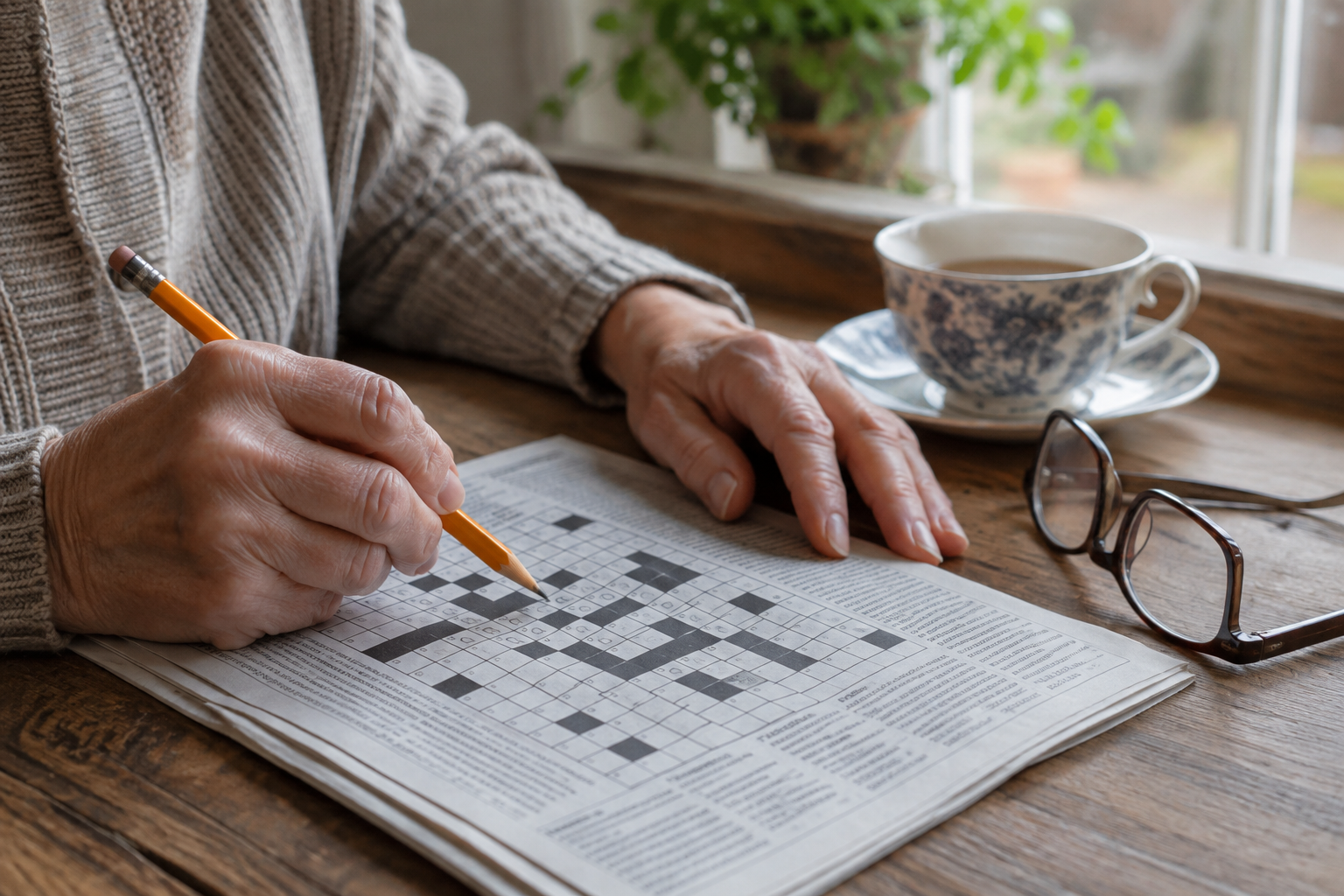
To understand the limits of the crossword, you have to understand a basic and slightly deflating principle of brain training, which is that practicing a specific mental task mostly makes you better at that specific task. This is the problem of transfer, and it is the crux of the whole matter.
The principle is intuitive once stated. If you practice crosswords every day, you will become better at crosswords, sharpening the particular skills they use, above all verbal fluency and word retrieval, but that improvement does not automatically spread to other, unrelated mental abilities. As one researcher put it, learning to play the violin does not make you better at the trumpet, and in the same way, mastering the crossword does not broadly upgrade the rest of your cognition.
This means the benefit of puzzles is real but narrow. Crosswords do exercise and can improve word-finding and verbal fluency, which are worthwhile functions, but these are just one small corner of the vast range of abilities that make up human cognition, so getting better at them leaves most of the mind untouched. The crossword sharpens a single tool, not the whole workshop, which is a useful thing but a limited one. This is the quiet disappointment at the center of the brain-training industry, which has often promised far more than the science can support. Games and puzzles marketed as workouts for the whole mind tend, when studied carefully, to make people better mainly at the games themselves, with little of that improvement carrying over into everyday thinking, memory, or judgment. The skill is real, but it stays stubbornly local, locked to the task that trained it rather than spreading outward into the general sharpness people are really paying for.
The Autopilot Problem
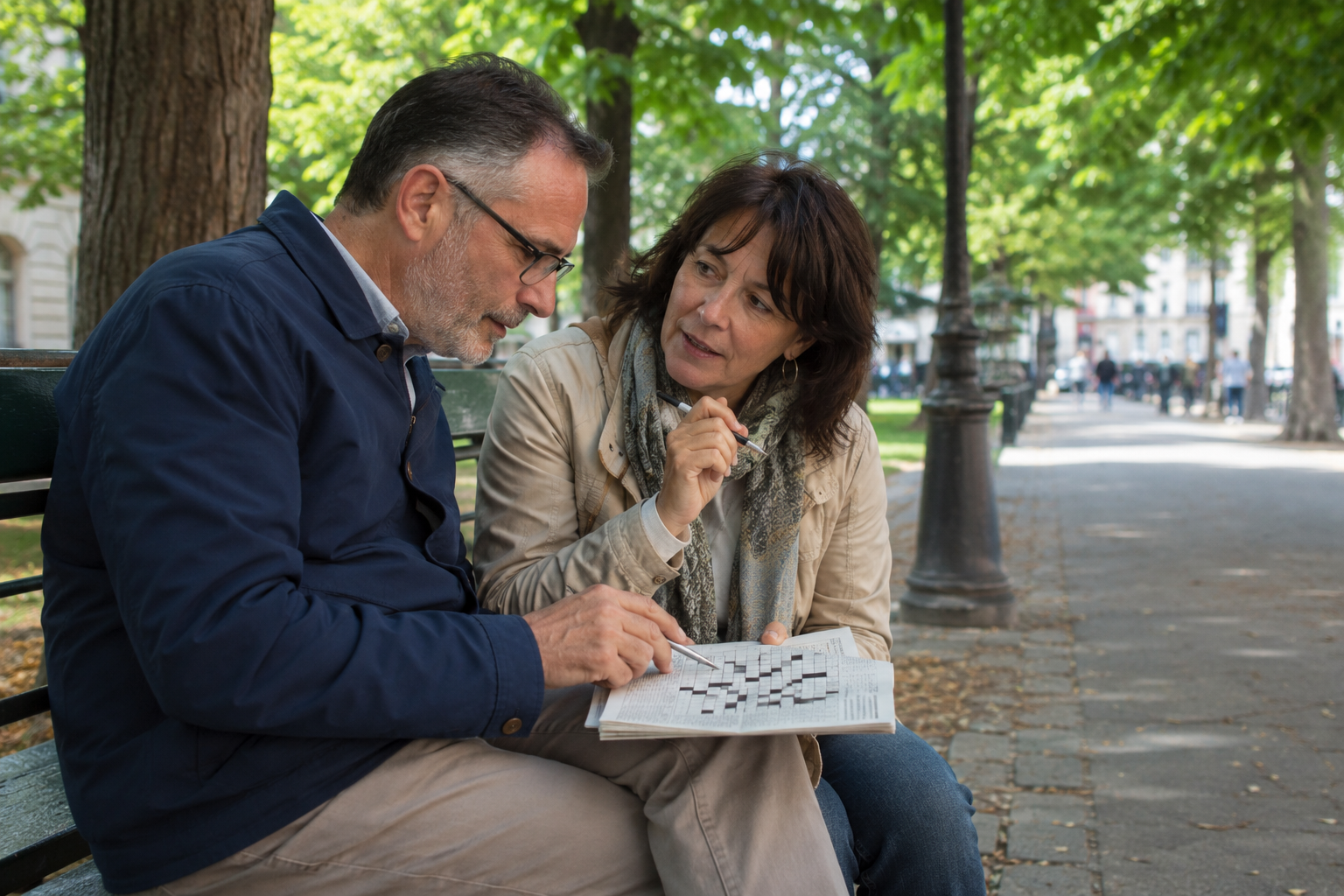
There is a second limitation that makes the familiar daily puzzle even less powerful than it might be, which is that the brain only benefits from challenge, and a routine you have mastered stops challenging you. This is the autopilot problem, and it undercuts much of what people assume they are getting from their puzzle habit.
The brain changes in response to difficulty and novelty. When a task truly stretches you, forcing you to learn and adapt, your brain is pushed to form new connections, but when a task becomes familiar and easy, you settle into automatic patterns that demand little and produce little growth, so an easy crossword done by rote is close to mental coasting. The comfortable puzzle you can finish without real effort is not doing much work.
This is why difficulty is essential to any cognitive benefit. Research suggests that only puzzles that really challenge you produce meaningful changes in the brain, while puzzles that are too easy offer little, so the person who breezes through the same simple grid each day gets far less than the one who keeps raising the difficulty. Comfort is the enemy of cognitive gain, and familiarity is a form of comfort. This is perhaps the most useful single idea to take from all of this, because it applies far beyond crosswords. Whatever mental activity you choose, the moment it becomes easy and automatic is the moment it stops giving you much, which means the value lies in continually moving on to harder versions or new challenges rather than settling comfortably into what you have already mastered. The discomfort of not quite being able to do something is, in cognitive terms, the feeling of your brain doing real work.
What Cognitive Reserve Really Is
To understand what people are really hoping puzzles will do, you have to understand the concept of cognitive reserve, the actual mechanism behind the idea that mental activity protects the aging brain. It is a subtle and important idea, and it is not quite what most people imagine.
Cognitive reserve is the brain’s resilience, its ability to keep functioning despite damage. The theory holds that a brain with more reserve has built up alternative pathways and greater capacity, so it can continue to work well even as age or disease begins to take a toll, effectively tolerating a certain amount of damage before it shows up as visible impairment. Reserve is a buffer, a cushion between the accumulation of harm and the appearance of symptoms.
Crucially, reserve does not stop the disease itself. In someone with strong cognitive reserve, the physical pathology of Alzheimer’s, the plaques and tangles, may still develop, but the brain compensates and stays functional for longer, so the clinical symptoms appear later than they otherwise would. Reserve does not halt the underlying process, but it can delay the point at which that process becomes disabling, sometimes by years, which is a profoundly valuable thing even though it is not a cure. It helps to picture reserve as a kind of structural redundancy, the way a building with extra supports can lose a beam and still stand. The damage is real and the beam is truly gone, but the structure has enough spare capacity to carry the load a while longer before anyone notices a problem. A brain rich in reserve works the same way, quietly rerouting around damage and drawing on deeper capacity, which is why two people with similar underlying pathology can differ enormously in whether, and when, they show symptoms at all.
Why Puzzles Alone Fall Short
With cognitive reserve properly understood, it becomes clear why a crossword habit, valuable as it may be, cannot build much reserve on its own. Reserve is built by broad, varied, sustained mental engagement across a lifetime, not by the narrow repetition of a single familiar task.
The mismatch is one of breadth. Cognitive reserve appears to come from a rich and varied pattern of mental challenge, the kind produced by demanding work, continual learning, and diverse activities over decades, whereas a single repeated puzzle exercises only a sliver of the brain in a narrow and increasingly automatic way, so it simply cannot supply the breadth that reserve requires. Building a buffer that protects the whole mind takes engagement across the whole mind. The lifelong quality of this matters as much as the breadth. Cognitive reserve is not something assembled in a few weeks of puzzle-solving before retirement, but the accumulated product of decades of education, demanding work, rich hobbies, and social and intellectual life, laid down slowly like sediment. This is not cause for despair for anyone starting later, since the evidence suggests it is never too late to add to your reserve, but it does explain why a single narrow habit taken up late cannot substitute for a lifetime of varied engagement.
Puzzles should not be dismissed entirely, and the evidence cuts both ways. Some real research, including a notable trial in people with mild cognitive impairment, found that crossword training can help, even outperforming certain computer brain games at slowing memory decline, so puzzles are not useless and can be a genuine part of a brain-healthy life. But even their defenders are clear that crosswords are one component of a broader strategy, never a standalone solution, and certainly not a substitute for the wider engagement that builds reserve.
What the Evidence Suggests Actually Works
If narrow puzzles are not the answer, what does the evidence point to as truly building cognitive reserve and protecting the aging brain? The candid answer is that no single activity is a proven shield, but a consistent picture emerges of several factors that, together, appear to matter most.
The strongest theme is novelty and effortful new learning. Because the brain grows in response to challenge and unfamiliarity, activities that involve really learning something new, a language, an instrument, a new subject, tend to do far more than repeating something already mastered, so the key is to keep stretching into the unfamiliar rather than settling into comfortable routine. Learning, in the real sense of struggling with something new, is the engine of cognitive growth.
Beyond novel learning, the evidence points repeatedly to a cluster of broader habits. Regular exercise, strong social connection, ongoing learning, good sleep, and a healthy diet appear again and again in the research as the factors most associated with lower dementia risk and greater cognitive resilience, and crucially they seem to work best in combination rather than alone. It is the whole pattern of an engaged, active, connected life, rather than any one activity, that the evidence most consistently rewards. This is quietly good news, because it means there is no single thing you are obliged to force yourself to do. If you dislike crosswords, you lose nothing by skipping them, provided you are learning, moving and connecting in ways you do enjoy. The brain does not care whether its challenge arrives as a language class, a dance lesson, a demanding book, a garden, or a circle of friends who argue about ideas, so long as the engagement is real, varied and sustained.
The Honest Caveats
Any responsible account of this subject has to be candid about the limits of what we know, because the science here is deeply uncertain in important ways. Much of the evidence linking mental activities to brain health is observational, which means it can show association but cannot prove that the activity causes the benefit.
The direction of cause is a real puzzle. When studies find that people who do more mentally stimulating activities have healthier brains, it is difficult to know whether the activities protected the brain, or whether people with healthier brains were simply more inclined to do those activities in the first place, so the arrow of cause may point the other way. People who do lots of crosswords also tend to be more educated and to lead healthier lives generally, which muddies the picture further.
The uncertainty does not make the advice worthless, but it does call for humility. The sensible reading is that keeping mentally and physically active is very likely good for the brain and carries little downside, so it is well worth doing, but that no activity, puzzles included, is a guaranteed defense against dementia, and anyone promising certainty is overselling. The honest position is one of encouraging but modest confidence, not false promises.
Spending Your Effort Wisely

The practical upshot of all this is not to abandon the crossword but to see it accurately and to broaden what you do around it. If you enjoy puzzles, keep doing them, since they are pleasant, they exercise real skills, and they may play a modest part in a healthy-brain life, but do not mistake them for a complete strategy or a reason to neglect the rest.
The wiser approach is to pursue variety and genuine challenge. Rather than grinding the same easy puzzle each day, keep learning truly new things, stay physically active, nurture your relationships and social life, and mix mental challenges so your brain keeps adapting instead of coasting, since it is this broad, effortful, varied engagement that the evidence most supports. The goal is to keep stretching the whole mind, not to perfect one narrow trick.
So the next time you finish your morning crossword and feel you have done your brain’s daily exercise, enjoy the small satisfaction but remember what it is and is not. The crossword has kept you good at crosswords, and that is fine, but the deeper resilience you want for your aging mind is built by learning, moving, connecting and continually challenging yourself in new ways. Do those things, keep the puzzles as a pleasure rather than a plan, and you will be spending your effort where the evidence suggests it truly counts. The crossword was never the enemy, only a small friend mistaken for a whole defense.

About the Author: Ruben, co-founder of Gamintraveler.com since 2014, is a seasoned traveler from Spain who has explored over 100 countries since 2009. Known for his extensive travel adventures across South America, Europe, the US, Australia, New Zealand, Asia, and Africa, Ruben combines his passion for adventurous yet sustainable living with his love for cycling, highlighted by his remarkable 5-month bicycle journey from Spain to Norway. He currently resides in Spain, where he continues sharing his travel experiences with his partner, Rachel, and their son, Han.