
Anyone who has fought through a European museum in August knows the feeling: the shuffling crowds pressed around the famous paintings, the forest of raised phones held aloft, the sense of being herded past masterpieces you can barely see. But there is a window, hiding in plain sight in the middle of the day, when many of those same crowds thin out and the galleries breathe, and remarkably few travelers think to use it. It is the long midday lunch hour, the stretch around two in the afternoon when Europe, and especially southern Europe, breaks to eat, and the crowds that clogged the museum all morning drift off in search of a table. For anyone willing to eat a little early or a little late, that lunch lull is one of the most underused quiet windows in European travel.
This is not to promise a magically empty Louvre, and clarity about how museum crowds really work matters here, because the busiest museums in the world can stay busy at almost any hour of a summer day. But the midday meal break creates a real and reliable dip in the crowds at a great many sights, a relative calm that the traveler who plans around it can slip into while everyone else is thinking about food. Understanding this rhythm, and being honest about its limits, is a small piece of knowledge that can transform a sweaty, crowded museum day into something far more pleasant and far more memorable.
Here is why the midday lunch hour empties out so many European sights, especially in the long-lunch cultures of the south, how to use that quiet window well, and the frank caveats about where it works and where it does not. This is a look at travel timing and crowd patterns rather than a guarantee, and the busiest attractions follow their own rules, but for a huge range of museums and sights, the two o’clock lull is a genuine quiet hour hiding in plain view, waiting for anyone who thinks to use it.
The Rhythm of the European Day
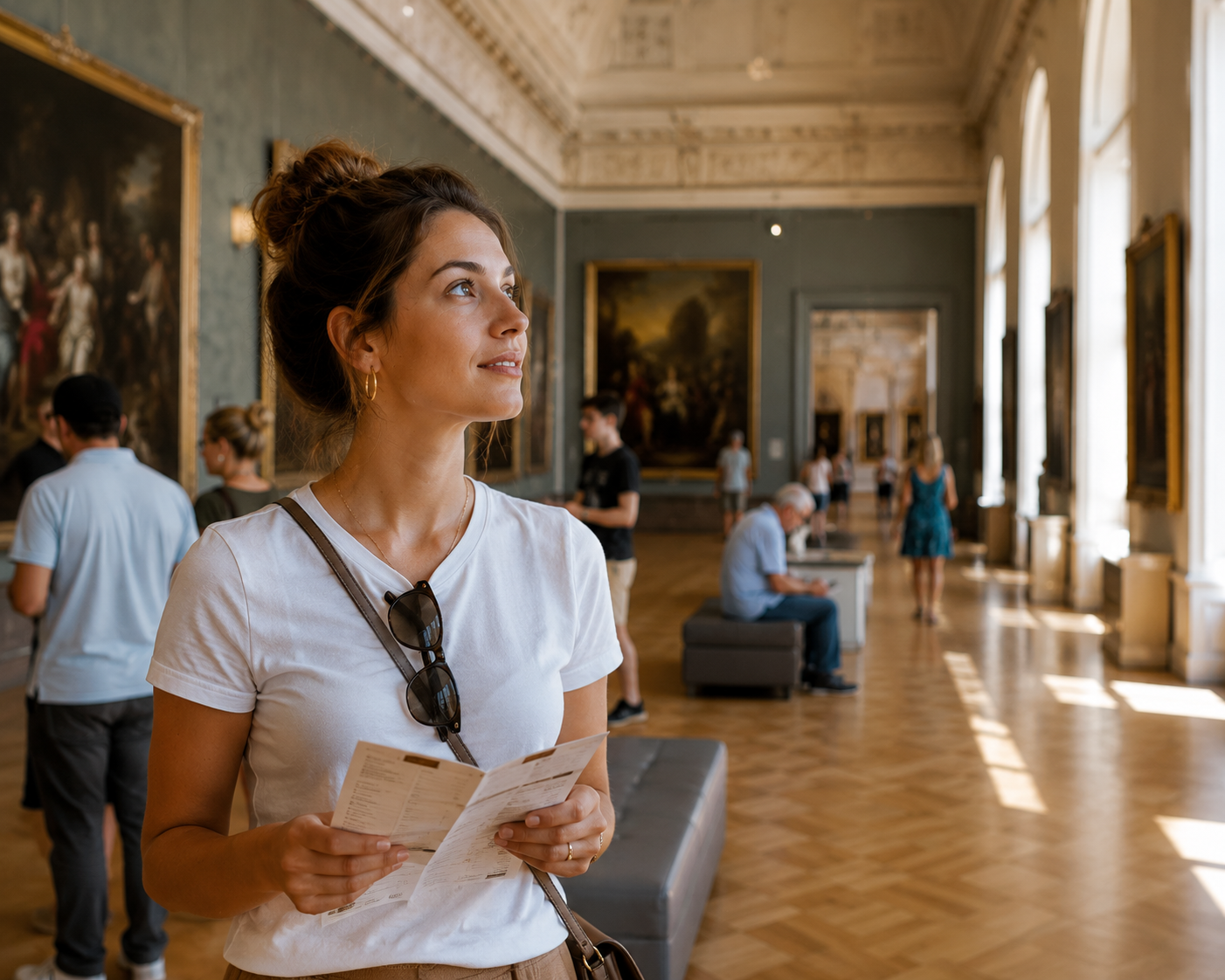
To understand the midday quiet, you have to understand the rhythm of the European day, which is shaped, especially in the south, around a long and serious lunch. In countries like Spain, Italy, and much of the Mediterranean, the midday meal is not a rushed sandwich but a substantial, unhurried affair, often the main meal of the day, taken well into the afternoon.
In Spain this rhythm is especially pronounced. The Spanish lunch, the comida, typically happens late, often around two in the afternoon or even later, and it is a leisurely, extended meal rather than a quick bite, so a large part of the population, locals and clued-in visitors alike, is at the table during exactly the hours others might expect them to be sightseeing. The whole society tilts toward the lunch table in the early afternoon.
This creates a predictable ebb in the flow of people through public places. When so many people break for a long, late lunch, the sights and streets they were crowding an hour earlier quiet noticeably, so the early afternoon becomes a natural lull in the rhythm of the day, a trough between the morning and evening peaks of activity. The crowd does not vanish, but it thins, pulled away by the powerful gravity of the midday meal. It is worth appreciating just how deeply this rhythm is woven into daily life in the south, because it is not a quirk but a genuine cultural institution. Shops shutter, offices empty, and the whole tempo of the afternoon slows around the meal, which is treated as something to be savored rather than squeezed in. A visitor who fights this rhythm, trying to sightsee and eat on a northern schedule, ends up out of step with everything, while one who learns to read it finds the day full of useful pockets of quiet.
Why the Crowds Break for Lunch
The reason this lull appears at museums specifically comes down to the behavior of the crowds that fill them, most of whom are on their own eating schedules and their own energy cycles. The morning brings a surge of visitors, fresh and eager, along with the organized tour groups that move in tight, scheduled waves, and by early afternoon much of that energy is spent.
Several forces pull the midday crowd away at once. Tour groups typically build a lunch break into their itineraries, releasing their members to eat around midday, independent travelers grow hungry and tired after a morning on their feet and head off to find food, and the general human instinct to eat at midday draws people out of the galleries and toward the restaurants, so the museum that was packed at eleven can feel appreciably calmer by two. The crowd disperses to lunch on a fairly reliable schedule.
The heat of an August afternoon reinforces the pattern. In the fierce summer heat, the early afternoon is also when many people most want to retreat somewhere cool to rest and eat, whether escaping into a long lunch or back to a hotel for a break, so the combination of hunger, fatigue and heat all conspire to empty out the sightseeing crowd in the early afternoon. The two o’clock hour becomes a moment when the tide of tourists goes out.
The Window Nobody Uses
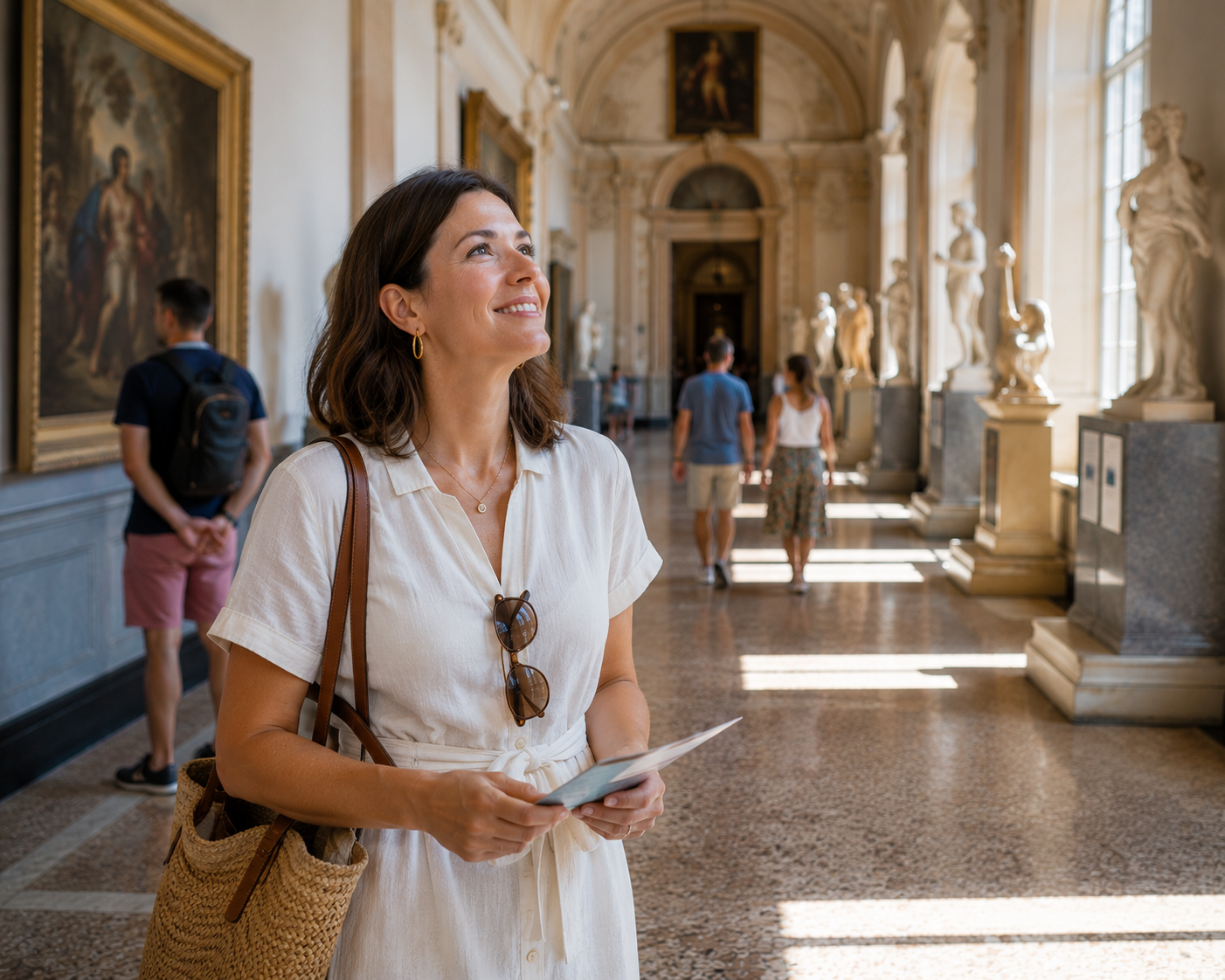
What makes this lull so valuable is precisely that so few travelers think to exploit it, meaning the traveler who does can often enjoy a sight in relative peace while the crowds are at lunch. Most visitors follow the same instinct as everyone else, breaking for lunch at the same time, which is exactly what leaves the midday window open for anyone willing to buck the pattern.
The strategy is simple and slightly contrarian. By eating lunch earlier or later than the crowd, and using the prime lunch hours to visit a sight instead, you trade a slightly off-schedule meal for a noticeably quieter museum, which for many people is a very good deal. Shifting your own lunch by an hour or two in exchange for calmer galleries and shorter lines is a small sacrifice for a real improvement in the experience. And it is a sacrifice that often turns out to be no sacrifice at all. Eating at the edges of the lunch rush, a little before or a little after, frequently means better service and a calmer restaurant too, since you are dodging the busiest table hours just as you dodge the busiest gallery hours. The traveler who lives slightly off the crowd’s schedule tends to find that nearly everything, from museums to meals, is more pleasant a beat away from the peak.
This is the kind of counterintuitive move that separates the savvy traveler from the crowd. Everyone knows to arrive early, and the early opening is truly valuable, but the midday lunch lull is a second, less obvious quiet window that most people walk right past, so learning to use it gives you an extra pocket of calm in the day. It is a quiet hour hiding behind the simple fact that the crowd has gone to eat.
How to Use the Lunch Lull
Making the most of this window takes only a little planning, starting with your own eating schedule. The key move is to time your meals around the crowd rather than with it, eating an early lunch before the rush or a late one after it, and reserving the peak lunch hours, roughly one to three in the afternoon, for sightseeing.
Choosing the right sights matters too. The lunch lull works best at museums and indoor sights, which also offer welcome air conditioning in the August heat, so pairing the midday hours with an indoor museum visit both dodges the crowd and escapes the worst of the day’s temperature, a double advantage. While others sweat outdoors or linger over lunch, you can be enjoying cool, calmer galleries. In the August heat this second benefit is nearly as valuable as the first, since an air-conditioned museum in the early afternoon is one of the most comfortable places to be in a hot Mediterranean city, quite apart from the shorter lines and thinner crowds.
A little local knowledge sharpens the strategy further. Checking a museum’s busiest times on tools like online maps, and noting the local lunch customs of the particular country you are in helps you target the quietest window precisely, since the exact timing of the lull shifts with local habits, later in Spain, a bit earlier elsewhere. Aligning your visit with the local mealtime, rather than your home country’s, is the key to catching the trough. This is the single most common mistake visitors make, and it is an easy one to correct. Someone arriving from a country where lunch is at noon will instinctively break at noon and return around one, walking straight back into the thick of the crowd, whereas the sight was quietest an hour or two later when the locals sat down to their own, later meal. Learning the local clock, and moving with it rather than against it, is most of the trick.
Where It Works, and Where It Doesn’t
Now for the essential honesty, because this pattern has real limits and overselling it would set you up for disappointment. At the very busiest, most famous museums in the world, the ones that draw enormous crowds all day, the midday lull may be modest or barely noticeable, since these blockbuster sights can stay crowded from opening to closing throughout the summer.
The truth about crowds is more nuanced than any single trick. At the most touristed museums, the very quietest times tend to be right at opening and in the last hours before closing, when tour groups have not yet arrived or have already left, so for those specific blockbuster sights, early and late still beat the middle of the day, and the lunch lull is only a partial help. It would be misleading to promise empty galleries at two o’clock at the world’s most crowded museum.
But for the vast majority of sights, the lull is real and useful. Beyond the handful of superstar museums, the great many less overwhelmed museums and sights do quiet noticeably during the midday meal, so the strategy pays off across most of what a traveler really visits, even if it bends at the very top of the tourist pyramid. The fair summary is that the lunch lull is a genuine and valuable pattern for most places, a smaller effect at the busiest few, and always worth combining with the early-and-late wisdom for the crowded icons.
Beyond the Museums
The midday quiet extends well past museum walls, which is worth knowing because it opens up more of the day than just gallery time. The same lunch-hour lull that thins the museums also quiets popular streets, viewpoints, squares and smaller sights, so the early afternoon can be a lovely time to wander a normally crowded old town or photograph a famous view with fewer people in the frame.
This broadens the strategy into a whole approach to the day. Rather than only swapping your lunch time for a museum, you can treat the midday hours as your window for whatever is usually most crowded, whether that is a busy plaza, a scenic overlook, or a photogenic street, while saving your own meal for the quieter edges of the afternoon. The principle is the same everywhere: go where the crowd is not, which at lunchtime means going where the crowd has just left.
There is a pleasant symmetry to living against the grain this way. When you shift your rhythm slightly off the tourist default, you find pockets of calm all through the day that the synchronized crowd never notices, so the lunch lull becomes one instance of a larger art, the art of doing things at the times most people do not. Mastering that art quietly improves nearly every part of a trip.
The Hour Hiding in Plain Sight
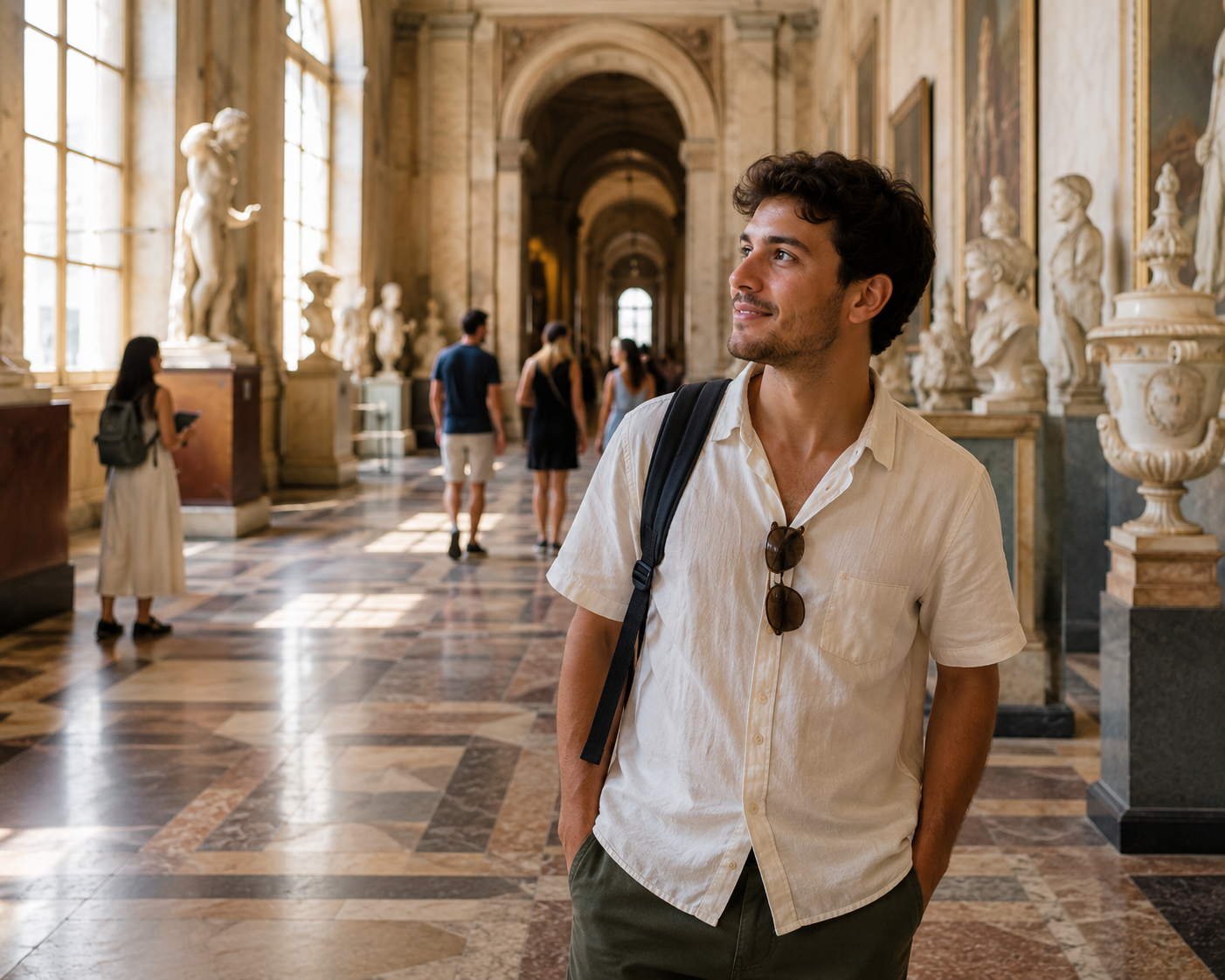
The lasting value of the midday lull is that it hands you a pocket of quiet in the middle of the busiest part of the year, available to anyone willing to shift a meal and think a little against the crowd. In the long-lunch cultures of southern Europe, and especially in Spain with its late, leisurely comida, the early afternoon empties out a great many sights precisely because everyone else has gone to eat, leaving the window open for you.
What makes it worth using is how little it costs and how much it can give, an early or late lunch traded for calmer galleries, shorter lines, and a cooler, more peaceful experience of the very sights the crowds are fighting over at other hours. It will not empty the single most famous museum on earth, but for the enormous range of places most travelers really go, it is a reliable and underused edge, doubly welcome in the August heat.
So the next time you are planning a summer day of sightseeing in Europe, do not simply follow the crowd to lunch at one o’clock and back to the museum at three. Eat early or eat late, use the long midday meal hours to slip into the quieter galleries while everyone else is at the table, and discover the quiet hours that hide in plain sight in the middle of the European afternoon. The crowd will be back by evening, but for a little while, with a little planning, the museum can feel almost like your own. That stolen hour of quiet, standing before a great painting with room to breathe, is exactly the experience the summer crowds make so hard to find, and it was waiting at lunchtime all along.

About the Author: Ruben, co-founder of Gamintraveler.com since 2014, is a seasoned traveler from Spain who has explored over 100 countries since 2009. Known for his extensive travel adventures across South America, Europe, the US, Australia, New Zealand, Asia, and Africa, Ruben combines his passion for adventurous yet sustainable living with his love for cycling, highlighted by his remarkable 5-month bicycle journey from Spain to Norway. He currently resides in Spain, where he continues sharing his travel experiences with his partner, Rachel, and their son, Han.