
Somewhere in the white-walled hill towns of inland Andalusia, away from the crowded coast, there are retirees living a comfortable and unhurried life on far less money than the conventional wisdom says is possible. Consider a representative case, the kind of story that recurs often enough among expats in this part of Spain to be worth examining closely: a man who left an expensive country at sixty-four with about eighty-five thousand dollars in savings and a modest monthly retirement income, settled in a quiet inland town, and five years on finds that the numbers still add up. His savings are largely intact, his life is good, and the math, against many people’s expectations, still works.
The point of examining a case like this is not to suggest that everyone can or should do the same, because retiring abroad involves real hurdles, genuine risks, and personal circumstances that vary enormously. It is rather to understand how, in a specific and affordable place, a combination of low costs and a modest income can produce a comfortable retirement that would be impossible in a pricier location. The story is illustrative rather than a promise, and the details are meant to show a pattern, not to guarantee a result.
Here is how the math of retiring to inland Andalusia on modest means can work, what makes it possible, what it realistically costs, and, just as importantly, the serious caveats and risks that anyone drawn to this idea needs to weigh with care. This is a look at a financial pattern rather than financial advice, and I am not a financial advisor, so nothing here should be taken as a recommendation, but the underlying arithmetic of low-cost living abroad is worth understanding on its own terms.
Why Inland, Not Coastal
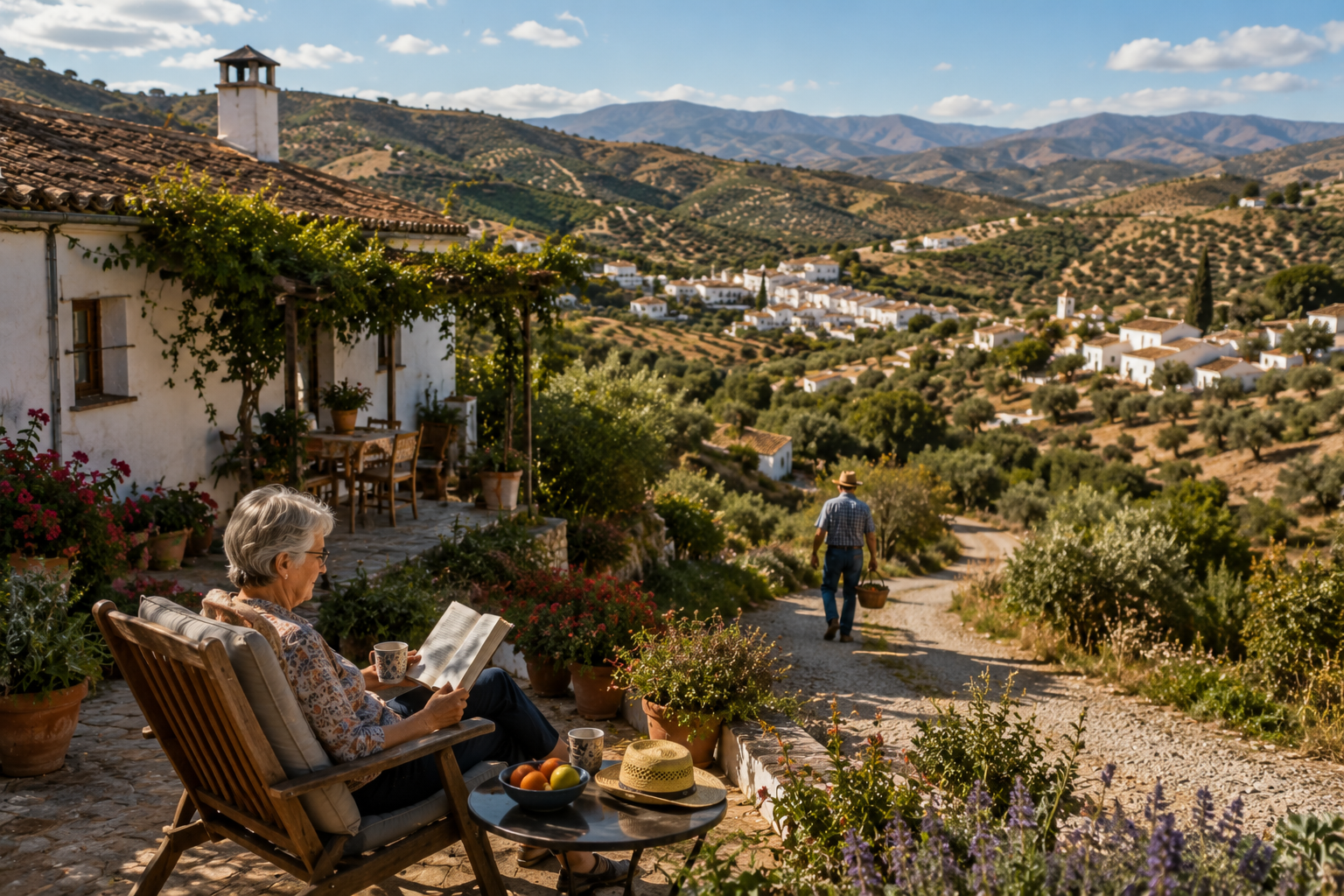
The first thing to understand about this pattern is that location within Spain makes all the difference, and specifically that inland Andalusia is a very different financial proposition from the famous Andalusian coast. The Costa del Sol and the other coastal hotspots have grown expensive, driven up by heavy foreign demand, so the bargain that many people imagine when they picture southern Spain has largely evaporated along the sea.
Move inland, though, and the picture changes completely. Away from the coast, in the interior towns and small cities of Andalusia, housing and daily costs drop substantially, because these places have not been subject to the same relentless demand from foreign buyers and holiday rentals, so they remain affordable in a way the coast no longer is. The same region contains both an expensive coastal strip and a much cheaper interior, and the whole pattern depends on choosing the latter. The gap between the two can be startling to newcomers who think of Andalusia as a single place. A one-bedroom apartment that might cost well over a thousand euros a month in a fashionable coastal town can be found for a few hundred in an inland one an hour’s drive away, offering the same sunshine, the same food culture, and often a more authentic slice of Spanish life. The premium on the coast buys proximity to the sea and to other foreigners, neither of which the inland retiree in this pattern particularly needs.
This distinction is the foundation of everything that follows. The comfortable-retirement-on-modest-means math simply does not work on the Costa del Sol, where rents and prices now rival those of many northern cities, but it works in the inland towns where a small apartment can still be found for a few hundred euros a month and the overall cost of living remains low. Anyone attracted to this idea has to internalize that the location is not incidental but essential, and that inland is where the arithmetic lives.
What It Actually Costs
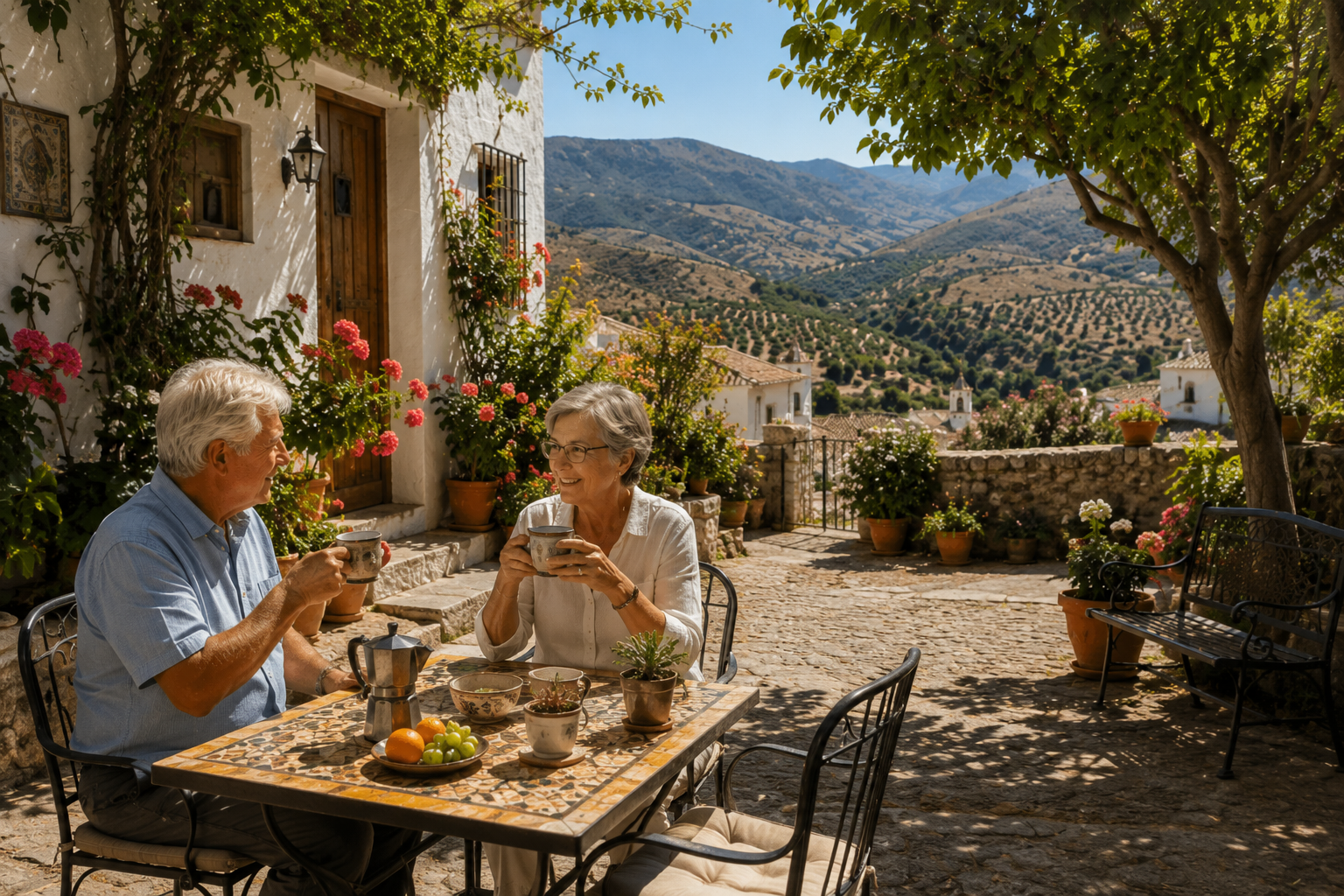
The heart of the matter is the real cost of living in inland Andalusia, and here the numbers are strikingly modest by the standards of most wealthy countries. Current estimates suggest that a single person can live comfortably in the affordable interior of Andalusia on roughly twelve to fifteen hundred euros a month, all told, a figure that includes rent and covers a decent, pleasant life rather than a bare-bones existence.
The individual pieces explain how that total stays low. Rent for a modest apartment inland can run from roughly three or four hundred euros a month up to perhaps six or seven hundred in the more sought-after small cities, food eating well from local markets runs around two to three hundred euros a month, and utilities add something like a hundred to a hundred and fifty euros, helped enormously by a mild climate that means little money spent on heating. These are real, current ranges rather than optimistic guesses.
The lifestyle those numbers buy is the surprising part. For that modest monthly sum, life in inland Andalusia includes fresh food from local markets, inexpensive and excellent wine, the famous menú del día lunch for a handful of euros, a warm climate, and the slow, sociable rhythm of Spanish town life, so the economy of it does not come at the cost of a pinched or joyless existence. This is the crux of the appeal, that a modest budget stretches into a truly good life rather than a merely survivable one. It is worth being clear that this is not the same as living cheaply in a grim sense. The person in this pattern is not scrimping and going without, but eating fresh food, drinking good wine, sitting in the plaza, and enjoying a mild climate and an unhurried pace, all of which happen to be inexpensive in this part of the world. The affordability is a feature of the place rather than a sacrifice by the person, which is precisely what makes the arithmetic feel less like deprivation and more like good fortune.
How the Savings Last

Now to the part that makes people skeptical, which is how someone can retire with only around eighty-five thousand dollars and not run out. The answer, and this is the key to the whole pattern, is that the savings are not meant to fund the entire retirement on their own, but to supplement a modest monthly income that covers most of the day-to-day costs.
This is the arithmetic that skeptics often miss. If a person has a regular retirement income, whether a pension or a government benefit, that covers the bulk of a low monthly cost of living, then their savings are not being steadily drained to zero but are serving as a cushion and a source of occasional larger expenses, which is an entirely different and far more sustainable situation than living off savings alone. When the income roughly matches the modest outgoings, the lump sum can sit largely intact.
That is why, five years on, the savings in a case like this can remain largely undepleted. With a low cost of living substantially covered by a steady monthly income, the eighty-five thousand dollars functions as a reserve for emergencies, travel and the occasional large purchase rather than as the primary fuel for daily life, so it depletes slowly if at all rather than vanishing in a few years. The magic, such as it is, lies not in the size of the savings but in how little they need to be touched. This is the single most important idea in the whole pattern, and the one most often misunderstood. People imagine retirement savings as a tank of fuel that empties as you drive, and on that mental model eighty-five thousand dollars sounds alarmingly small. But when a steady income covers the running costs, the savings are not the fuel at all, they are the spare tank in the trunk, opened only occasionally. Grasping that difference is what turns a number that sounds impossible into one that quietly works.
The Currency Question
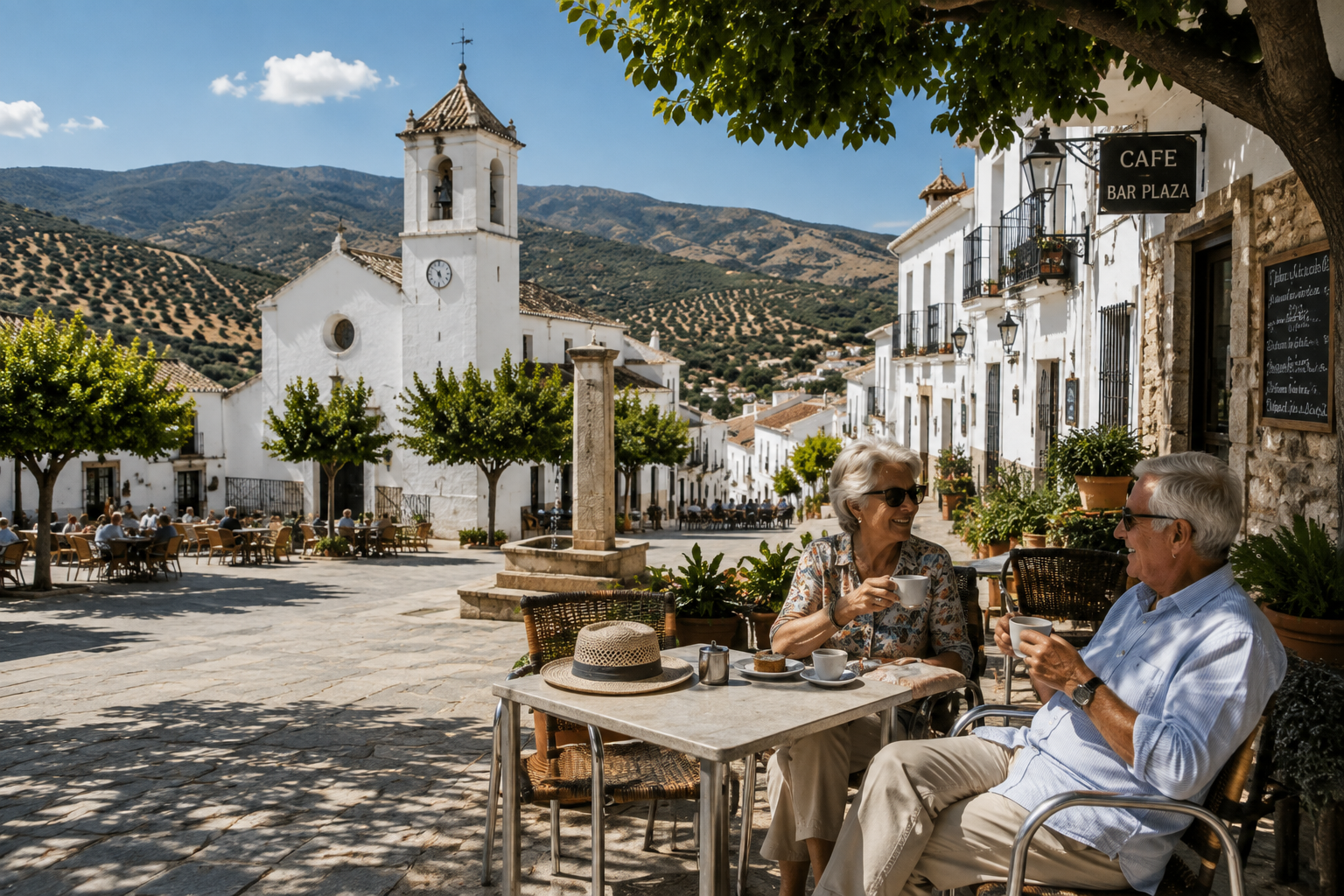
No honest account of retiring abroad on savings and income in one currency while spending in another can skip the issue of exchange rates, which is a real and sometimes serious risk. When your income and savings are in dollars but your life is priced in euros, the relationship between the two currencies directly affects how far your money goes, and that relationship moves.
The risk cuts both ways. A favorable exchange rate makes a dollar income stretch further and flatters the whole calculation, while an unfavorable shift does the opposite, quietly shrinking the real value of a fixed dollar income in euro terms and squeezing a budget that looked comfortable when the rate was kind. Anyone relying on this pattern is exposed to currency movements they cannot control, and a budget that works at one exchange rate can tighten meaningfully at another.
This is not a reason to dismiss the idea, but it is a reason to build in a margin. A sensible version of this plan does not assume the most favorable exchange rate will hold forever, but leaves room in the budget and the savings to absorb a period of unfavorable currency movement, treating the exchange rate as a variable to be cushioned against rather than a constant to be relied upon. The savings buffer, in this light, is partly a hedge against the currency turning against you.
The Hurdles Nobody Mentions First
Beyond the money itself, there are practical and legal hurdles to retiring in Spain that the romantic version of this story tends to leave out, and they are significant enough that they must be part of any full telling. Chief among them is the matter of visas and residency, which is not a formality.
Residency requirements are a real gate. Non-EU citizens who want to retire in Spain generally need to qualify for a residency visa, and the common route for retirees typically requires demonstrating a certain level of stable income or financial resources, which means the ability to move there at all depends on meeting official financial thresholds that are separate from, and sometimes higher than, what the day-to-day cost of living alone would suggest. This is a crucial complication, because it means modest savings by themselves may not satisfy the requirements even where they would comfortably cover living costs.
Healthcare is another essential piece. Access to healthcare as a foreign resident must be arranged, whether through private insurance or another route, and while healthcare in Spain is generally excellent and far cheaper than in some countries, it is a real cost and a real requirement that has to be planned for. These practical hurdles, residency and healthcare above all, are as important to the feasibility of the plan as the cost of groceries, and they are exactly the parts that enthusiastic accounts tend to gloss over.
The Real Balance Sheet
Weighing it all together, the fair conclusion is that this pattern is real and achievable for the right person in the right circumstances, but that it is neither as effortless nor as universally applicable as a simple success story might imply. The arithmetic does work when the pieces line up, a low-cost inland location, a modest but steady income covering most costs, savings as a cushion, and the visa and healthcare requirements satisfied.
But every one of those pieces is a condition, not a given. The plan depends on choosing an affordable interior location rather than the coast, on having a reliable income stream to carry the day-to-day costs, on savings sufficient to serve as a buffer and help meet residency thresholds, on managing currency risk, and on navigating the legal requirements of moving abroad, so it is a pattern that rewards careful planning rather than a scheme that works automatically. Remove any one of the conditions and the math can wobble.
What makes it worth understanding despite all the caveats is that, for those who can meet the conditions, the result is deeply appealing, a comfortable and dignified retirement in a beautiful place on means that would afford far less elsewhere. The story is not that anyone can retire abroad on almost nothing, which would be false, but that a specific and affordable place can make a modest retirement stretch remarkably far, which is true and worth knowing for anyone weighing their own later-life options.
The Math Behind the Dream
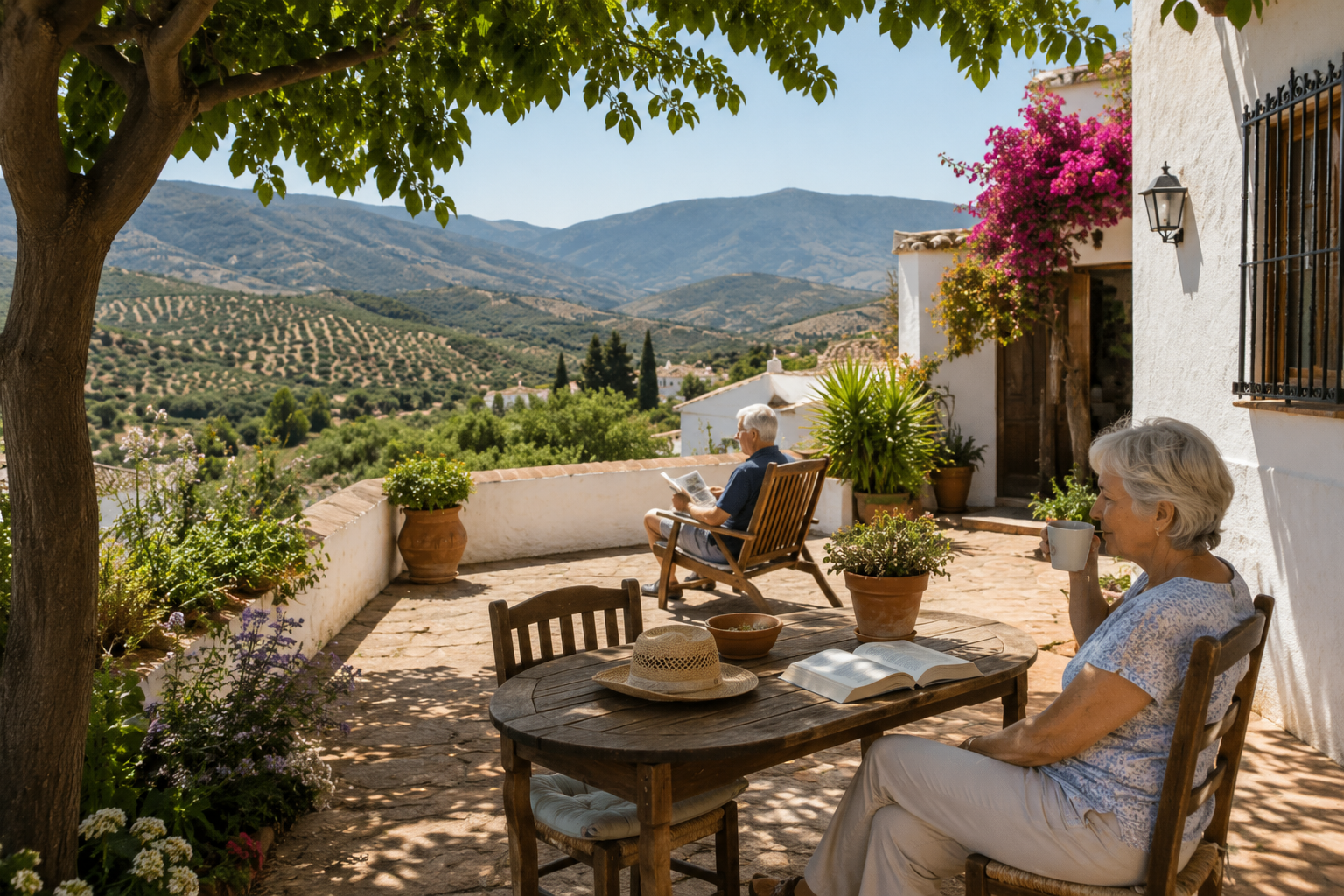
The lasting lesson of a case like this is that the cost of where you live can matter as much as the size of your savings, and that choosing a truly affordable place can transform what a modest income and a small nest egg are able to provide. Inland Andalusia, with its low costs and high quality of life, is one of the places where that transformation is possible, which is why stories of comfortable retirement there on surprisingly little keep recurring.
What the arithmetic really shows is the power of matching a modest income to a modest cost of living, so that savings become a reserve rather than a fuel gauge steadily falling toward empty. When a steady monthly income covers most of a low cost of living, a lump sum that would be quickly exhausted in an expensive country can last for many years, which is the quiet mechanism behind every one of these five-years-later-and-it-still-works stories. It is less a financial miracle than a matter of arithmetic and location.
So while no one should take a single illustrative story as a template for their own life, the underlying pattern is worth absorbing for anyone contemplating a retirement on modest means. The lesson is not to chase a specific number but to understand the relationship between income, cost of living, and place, and to plan carefully for the real hurdles of currency, residency and healthcare. Approached with open eyes and careful planning, a retirement in a place like inland Andalusia can indeed make the math work, not by magic, but by the simple and powerful logic of living well where living is affordable.

About the Author: Ruben, co-founder of Gamintraveler.com since 2014, is a seasoned traveler from Spain who has explored over 100 countries since 2009. Known for his extensive travel adventures across South America, Europe, the US, Australia, New Zealand, Asia, and Africa, Ruben combines his passion for adventurous yet sustainable living with his love for cycling, highlighted by his remarkable 5-month bicycle journey from Spain to Norway. He currently resides in Spain, where he continues sharing his travel experiences with his partner, Rachel, and their son, Han.