
Of all the things that quietly raise a person’s risk of dementia, one stands above the rest as the single largest that can be treated, and it is not what most people would guess. It is not diet or exercise or blood pressure, important as those are. It is hearing loss. A major international review of the evidence has concluded that hearing loss in midlife is the biggest modifiable risk factor for later cognitive decline, larger than any other single factor on the list, and yet it remains widely undertreated, dismissed as a normal nuisance of aging rather than the serious brain-health issue the science suggests it may be. And across much of Europe, where hearing care is more accessible and affordable, people tend to get their hearing treated years sooner than they do in places where the cost and hassle keep them from acting.
The connection between hearing and the mind is one of the most important and underappreciated findings in the science of brain aging, and it carries a rare kind of hope, because unlike genes or age, hearing loss is something that can be addressed. The evidence that treating it may help protect cognition is deeply promising, though, like all such research, it comes with real caveats about what has and has not been proven. Understanding both the strength of the finding and its honest limits is worth any adult’s attention, especially as the years accumulate.
Here is what the research says about hearing loss and cognitive decline, why the link exists, what the evidence does and does not establish, and why Europeans so often get their hearing treated sooner than their American counterparts. This is a look at the science rather than medical advice, and hearing and cognition are matters for a doctor, but the story of what may be the most treatable threat to the aging brain is one everyone approaching later life should know.
The Finding That Surprised the Experts

The headline conclusion comes from a standing international commission that periodically reviews all the evidence on what raises and lowers dementia risk, and its most striking finding concerns hearing. In its major 2024 review, the commission identified hearing loss in midlife as the largest single modifiable risk factor for dementia, meaning that of all the risk factors a person can do something about, hearing loss carries the greatest weight across the population.
That ranking is what makes it so notable. The same review estimated that addressing all the modifiable risk factors together could potentially prevent a large share of dementia cases, and among that whole list of factors, spanning education, blood pressure, smoking, diabetes and many more, hearing loss stood at the top as the most impactful one that treatment can reach. For a factor so often shrugged off as a minor inconvenience, that is a remarkable place to land. It is worth pausing on how counterintuitive this is. Ask most people to name what threatens the aging mind and they will reach for the usual suspects, genetics, diet, keeping mentally active, and almost no one will mention their ears. Yet the evidence places hearing at the very front of the modifiable list, ahead of every factor the popular imagination fixates on. That gap between what the science says and what people assume is part of why hearing loss goes so badly undertreated.
The evidence behind the ranking is substantial. Large analyses pooling data from many studies and enormous numbers of participants have found that adult hearing loss is associated with a meaningfully higher risk of cognitive decline and dementia, and, tellingly, that the risk rises with the severity of the loss, so that the worse a person’s hearing, the greater the associated risk. That kind of dose-response relationship, where more of the exposure means more of the outcome, is one of the patterns scientists look for as a sign that a link may be real rather than coincidental.
Why Hearing and Thinking Are Linked
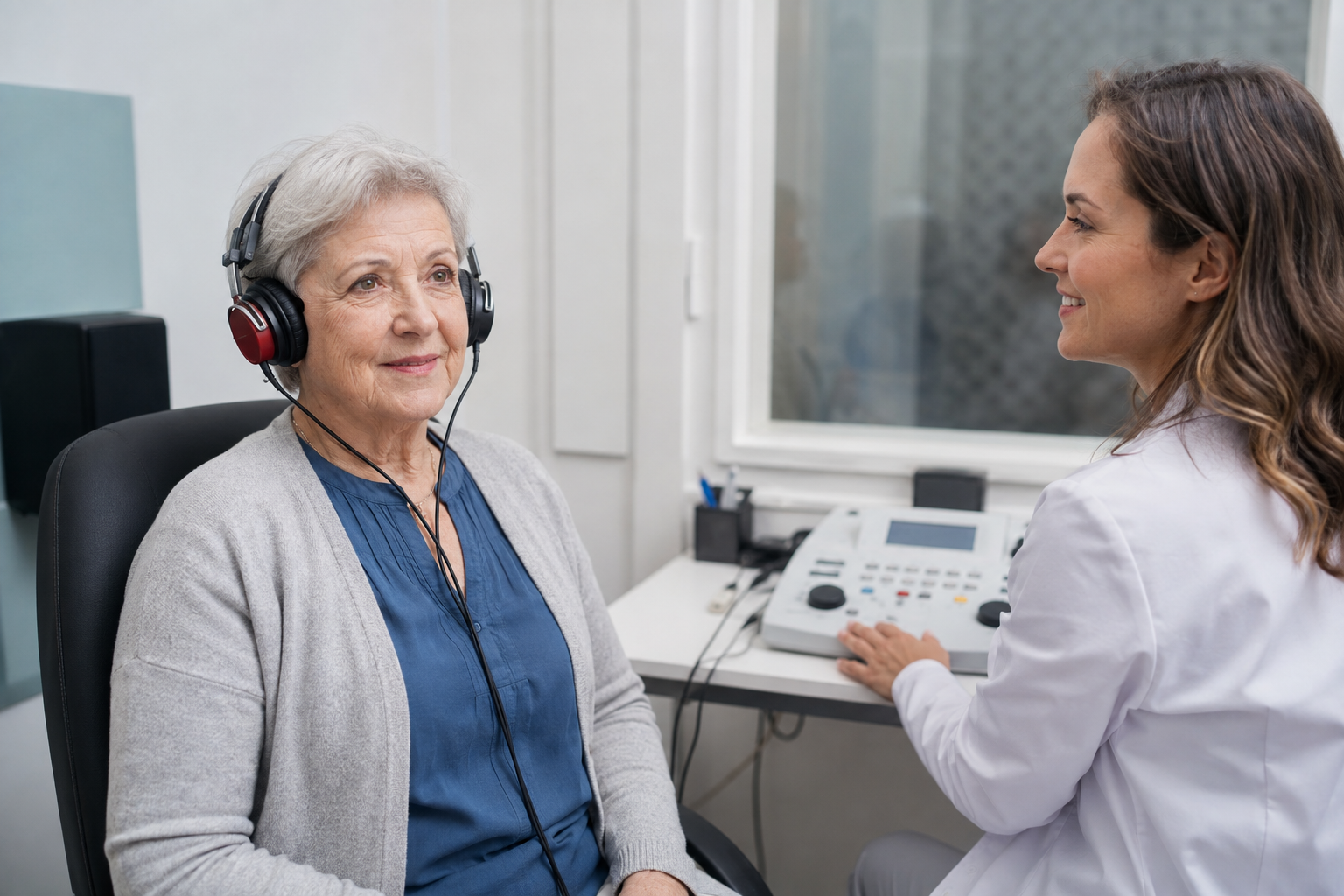
The natural question is why the ears should have anything to do with dementia, and researchers have proposed several plausible mechanisms, though the exact pathway remains a subject of study rather than settled fact. The leading explanations are intuitive once you consider what hearing loss does to the brain over years and decades.
One prominent idea is cognitive load. When hearing declines, the brain has to work much harder to decode the incomplete, degraded sound signals reaching it, straining to fill in what the ears no longer capture clearly, and this constant extra effort may divert mental resources away from memory and thinking, potentially wearing on the brain over time. The brain, in this view, is so busy struggling to hear that it has less capacity left for everything else.
A second major factor is social. Hearing loss tends to isolate people, because struggling to follow conversations makes social situations exhausting and embarrassing, so many people with untreated hearing loss gradually withdraw, and social isolation and loneliness are themselves recognized risk factors for cognitive decline. In this way hearing loss may harm the brain twice over, directly through the strain of poor hearing and indirectly by cutting a person off from the social and mental stimulation that helps keep the mind sharp. There may also be shared underlying processes affecting both hearing and cognition, which researchers continue to investigate. These mechanisms are not mutually exclusive, and the truth may well involve all of them working together. A brain straining to hear, a life narrowing as conversation becomes a chore, and perhaps a common thread of aging affecting ear and mind alike could compound one another over years. That layered picture is harder to summarize than a single clean cause, but it is probably closer to how the damage really unfolds in a real human life.
What the Evidence Does and Doesn’t Prove

Here real care is needed, because this is exactly the kind of finding that gets oversimplified, and the responsible version is more nuanced than the headline. What the research firmly establishes is an association, that hearing loss and later cognitive decline reliably travel together, and that the association is strong and consistent enough to take very seriously. What it does not yet fully prove is the direction and mechanism of cause.
The real complications are worth stating. It remains an open scientific question whether hearing loss directly causes decline, merely accelerates it, or is partly an early symptom of the same underlying brain changes that later produce dementia, and untangling these possibilities is truly difficult. Some researchers have also cautioned that the size of the risk estimates may be overstated in certain analyses, so the precise magnitude is debated even where the association itself is not.
None of this undoes the importance of the finding, but it does shape how to read it. The association between hearing loss and cognitive decline is real, robust and repeatedly confirmed, and treating hearing loss is low-risk and beneficial in its own right regardless of the dementia question, but it has not been proven that treating hearing loss will prevent dementia in a given person. The most accurate framing is that this is a strong, actionable association and a promising avenue for protecting the brain, not a guaranteed cure, and that distinction matters for setting realistic expectations.
The Treatment Hiding in Plain Sight

What makes this whole subject so compelling is that, unlike most dementia risk factors, hearing loss has a straightforward and widely available treatment, which is why it is so often described as the most treatable of them all. Hearing aids can substantially restore the hearing that has been lost, and doing so directly addresses the strain and isolation thought to link hearing loss to cognitive decline.
The evidence on treatment, while still developing, points in an encouraging direction. A significant clinical trial examining whether treating hearing loss could slow cognitive decline found that, among older adults at higher risk, the group that received hearing intervention experienced meaningfully slower cognitive decline than the group that did not, which is among the strongest signals yet that addressing hearing may help protect the aging brain. The effect was clearest in those most at risk, which is itself a useful clue. That pattern, a stronger benefit among those with more to lose, is exactly what you would expect if the link were real and treatment truly helpful, and it lends the finding extra credibility. It also suggests that the people who stand to gain most from treating their hearing are often precisely those already carrying other risks, which is a useful thing for a clinician and patient to weigh together when deciding how urgently to act.
The practical implication is refreshingly concrete. Getting a hearing check after around age fifty, and using a hearing aid if a loss is found, is a specific, low-risk, and evidence-supported step a person can take, one of the rare pieces of dementia-prevention advice that is this actionable, this available, and this backed by a plausible mechanism and encouraging trial data. Even setting the dementia question aside, treating hearing loss improves quality of life, communication and social connection immediately, so the case for acting is strong from every angle.
Why Europe Treats It Sooner

Here the story turns to a difference that has real consequences, because whether people do get their hearing treated depends enormously on how easy and affordable it is to do so, and on that front much of Europe is well ahead of some other wealthy countries, notably the United States. The gap is not about the science, which is the same everywhere, but about access.
The European advantage is largely about coverage and cost. In many European countries, hearing care is woven into the public system so that assessments and aids are either free or heavily subsidized, so that a person who begins to lose their hearing can get tested and fitted with devices at little or no cost, removing the financial barrier that so often causes people to delay. Some European health systems provide hearing aids at no charge, and others have introduced reforms to make a tier of hearing aids fully or largely reimbursed, precisely so that cost stops standing between people and treatment.
The contrast with the American situation has historically been stark. In the United States, hearing aids have traditionally been expensive, often thousands of dollars out of pocket and frequently not covered by standard insurance, which has led enormous numbers of people who need them to go without for years, or forever, simply because of the price. When treatment is costly and inconvenient, people put it off, and the hearing loss that the science links to cognitive decline goes unaddressed during exactly the midlife years when addressing it might matter most.
The Cost of Waiting
The consequence of this gap is that two people with identical hearing loss can end up on very different paths depending only on where they live and what treatment costs them, and that is a sobering thought given what the science suggests is at stake. The person who can easily and affordably get their hearing treated acts early, while the person facing a large bill and a fragmented system often waits, and those years of waiting are years of untreated hearing loss.
This is where the health stakes and the economic reality collide. If untreated hearing loss really is the largest treatable risk factor for cognitive decline, then the barriers that keep people from treating it, chiefly cost and access, are not merely financial inconveniences but potential brain-health issues, because every year of delay is a year the associated risk goes unaddressed. A system that makes hearing treatment cheap and easy is, in effect, making its most treatable dementia risk factor easy to treat, and one that makes it expensive is doing the opposite.
Encouragingly, the situation is beginning to shift in places where it lagged. Reforms aimed at making hearing aids more affordable and available without the traditional barriers have started to lower the cost and hassle in some countries that were behind, including new categories of more accessible devices, which over time may narrow the gap. But for now, the reality remains that where you live still heavily shapes how soon you are likely to get your hearing treated, and therefore, if the science holds, how well you may be protecting your brain.
Listening to the Evidence

The lasting message of this research is that something as ordinary and treatable as hearing loss may be one of the most important levers we have for protecting the aging brain, and that acting on it early is a concrete, available step in a field where such steps are rare. The finding that hearing loss is the largest modifiable risk factor for cognitive decline is powerful precisely because it points to something we can do, not just something we must fear.
What gives the finding its weight is the combination of strong evidence and easy action, tempered by the candid truth that treating hearing is a promising protection rather than a proven cure. Getting your hearing checked as you age, and treating any loss you find, is worthwhile for your quality of life alone, and it may, if the science holds, be doing something valuable for your mind as well, which makes it one of the most sensible and low-risk health steps an aging adult can take.
So if you or someone you love has been putting off dealing with fading hearing, treating it as a minor annoyance to be endured, the science offers a compelling reason to reconsider. Have the hearing checked, treat what needs treating, and do not let cost or inconvenience cause years of delay if you can help it, because the evidence increasingly suggests that caring for your hearing is a way of caring for your brain. Europe’s readier access to hearing care is, in this light, a quiet advantage worth learning from, and the rest of us would do well to listen.
If you have concerns about your hearing or your cognitive health, a doctor or audiologist can assess your situation and recommend appropriate steps.

About the Author: Ruben, co-founder of Gamintraveler.com since 2014, is a seasoned traveler from Spain who has explored over 100 countries since 2009. Known for his extensive travel adventures across South America, Europe, the US, Australia, New Zealand, Asia, and Africa, Ruben combines his passion for adventurous yet sustainable living with his love for cycling, highlighted by his remarkable 5-month bicycle journey from Spain to Norway. He currently resides in Spain, where he continues sharing his travel experiences with his partner, Rachel, and their son, Han.