
For decades, olive oil has been celebrated as a friend to the heart, the golden centerpiece of the Mediterranean diet, praised in study after study for its effect on cholesterol and cardiovascular risk. So when a team of Harvard scientists followed more than ninety thousand Americans for twenty-eight years and looked at what olive oil did to their brains, the finding was unexpected enough to make even seasoned heart specialists take a second look. The oil famous for protecting arteries turned out to carry a striking association with something else entirely, the risk of dying from dementia, and the size and robustness of that association surprised the researchers themselves.
The study, published in a major medical journal in 2024, is one of the largest and longest of its kind ever conducted on this question, and its central result is the kind of clean, memorable number that sticks in the mind. People who used a modest daily amount of olive oil had a substantially lower risk of dementia-related death than those who almost never touched it, and remarkably, this held true regardless of how healthy the rest of their diet was or what their genetic risk looked like. For a topic as frightening and as stubbornly hard to influence as dementia, that is a notable finding indeed.
Here is what the Harvard study really found, how it was conducted, what the numbers really mean and what they do not, and how to think about olive oil and brain health in light of it. This is a look at the research rather than medical advice, and no single study proves that one food prevents disease, so nothing here is a substitute for a doctor’s guidance, but the study is worth understanding clearly, because it adds a serious piece of evidence to a question that touches nearly everyone.
The Study That Turned Heads
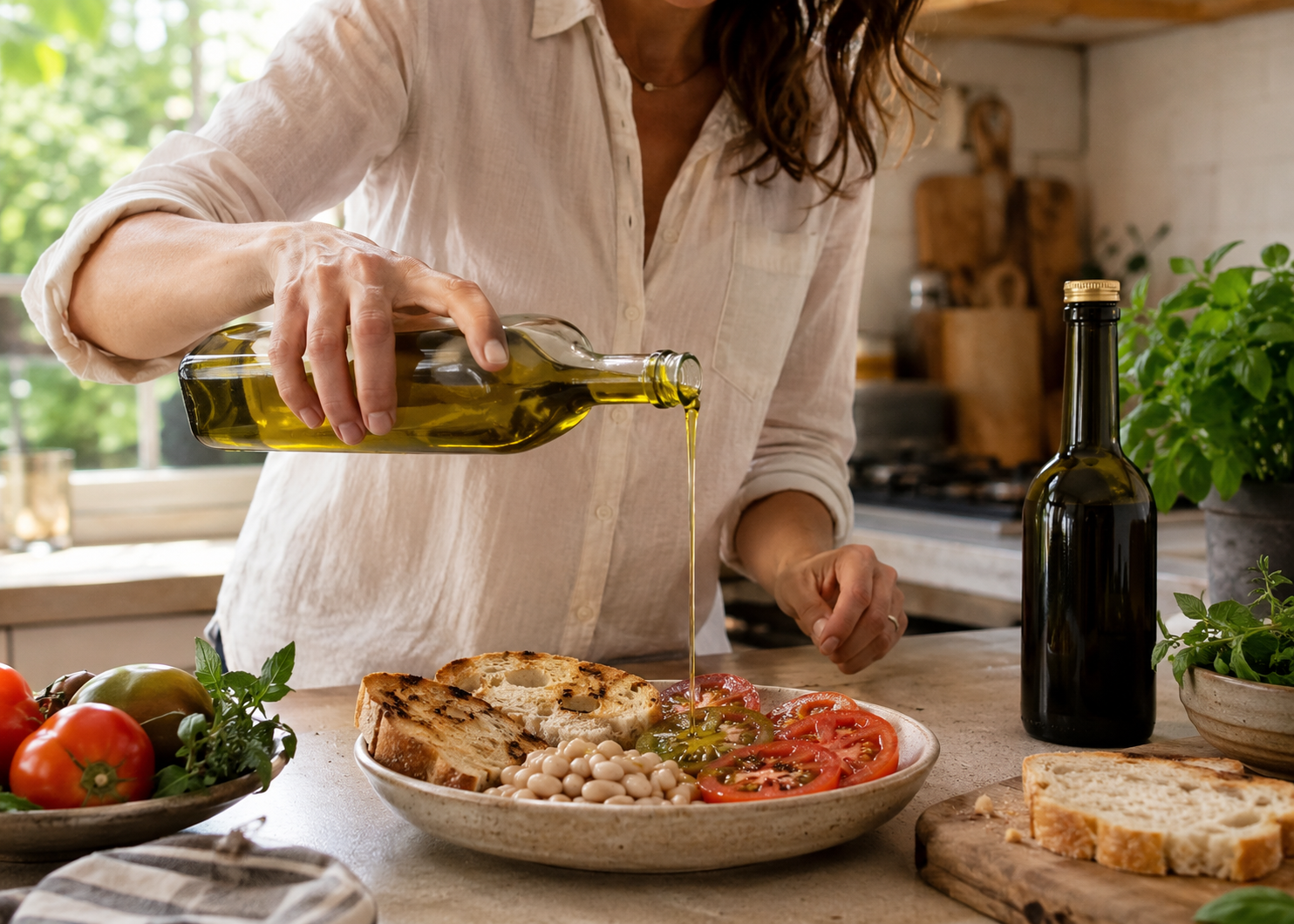
The research in question was a large, careful analysis led by scientists at the Harvard T.H. Chan School of Public Health, published in JAMA Network Open in May 2024. It set out to answer a question that, surprisingly, had gone largely unexamined, whether long-term olive oil consumption was linked to the risk of dying from dementia, a connection that previous research had left almost entirely unexplored.
The scale and duration of the study are what give it weight. The researchers drew on two of the most respected long-running health studies in the United States, the Nurses’ Health Study and the Health Professionals Follow-Up Study, following 92,383 adults over a remarkable 28 years, from 1990 to 2018. These were people free of cardiovascular disease and cancer at the outset, whose diets and health were tracked in detail across nearly three decades.
The method was rigorous by the standards of nutrition research. Participants reported their eating habits, including exactly how much olive oil they consumed, through detailed questionnaires repeated every four years, so their intake was measured again and again over the decades, not captured once and assumed constant. This repeated measurement, across such a large group over such a long span, is precisely what makes the study’s findings harder to dismiss than those of briefer or smaller investigations. Nutrition research is often plagued by short studies and one-time snapshots of diet, which capture a person’s eating at a single moment and assume it stays fixed for years, an assumption that rarely holds.
By returning to the same people every four years across nearly three decades, the Harvard team built a far more faithful record of how these adults truly ate over the long run, which is exactly the timescale on which a slow disease like dementia develops. That design is a large part of why the result deserves to be taken seriously.
The Number That Stuck

The headline finding is simple and striking. Participants who consumed at least seven grams of olive oil per day, which is a little over half a tablespoon, had a 28 percent lower risk of dementia-related death compared with those who never or rarely consumed it. That is a substantial difference tied to a very modest daily amount, roughly the oil you might use to dress a salad or finish a dish.
What impressed researchers most was how stubbornly the association held up. The lower risk persisted regardless of the participants’ overall diet quality, meaning it was seen even in people whose diets were not especially healthy otherwise, and it held regardless of genetic risk, including those carrying the APOE variant most associated with Alzheimer’s disease. In other words, the olive oil signal did not simply vanish once the researchers accounted for the other things that usually explain such findings.
That robustness is the heart of why the study drew attention. It would be easy to assume that olive oil users are simply healthier people whose lower dementia risk comes from their overall lifestyle, and the researchers took that possibility seriously, adjusting their analysis for diet quality, genetics and a range of lifestyle and demographic factors. When the association survived all of that adjustment, it became much harder to wave away as a mere reflection of healthy living in general. This is the crux of what separates a suggestive finding from a persuasive one. Skeptics of nutrition studies rightly point out that people who eat one healthy food tend to do many other healthy things, so any single food can look protective when it is really just a marker of a good life overall. The strength of this study is that the olive oil signal did not collapse when the researchers stripped away those other explanations, one by one, which is the closest an observational study can come to isolating a real effect.
The Swap That Mattered
Beyond the headline, the study contained a second finding that is arguably even more practical, concerning what happens when olive oil replaces other fats. The researchers modeled what the data suggested about substituting olive oil for the less wholesome fats many people use every day, and the result pointed in a consistent direction.
The substitution finding was specific and telling. Replacing about a teaspoon a day of margarine or mayonnaise with the equivalent amount of olive oil was associated with roughly an 8 to 14 percent lower risk of dementia-related death, a meaningful reduction from a small, achievable swap. This is the kind of change almost anyone can make, trading the margarine on toast or the mayonnaise in a sandwich for a drizzle of olive oil.
The appeal of the substitution finding is that it is framed as a swap rather than an addition, which matters for real life. Being told to add something to your diet is easy to ignore, but being shown that trading one fat you already use for another may lower your risk reframes the choice as free, a change in kind rather than quantity. For anyone who cooks or makes a sandwich, the lesson translates directly into the next thing they reach for.
Equally important is what the substitution analysis did not find. Swapping olive oil for other vegetable oils or for butter did not produce a statistically significant benefit in the same way, which suggests the association was somewhat specific to replacing those particular processed fats rather than a blanket effect of olive oil over all alternatives. That specificity in fact strengthens the finding’s credibility, since a result that applied equally to everything would be more suspicious than one with clear boundaries.
Why Olive Oil Might Protect the Brain
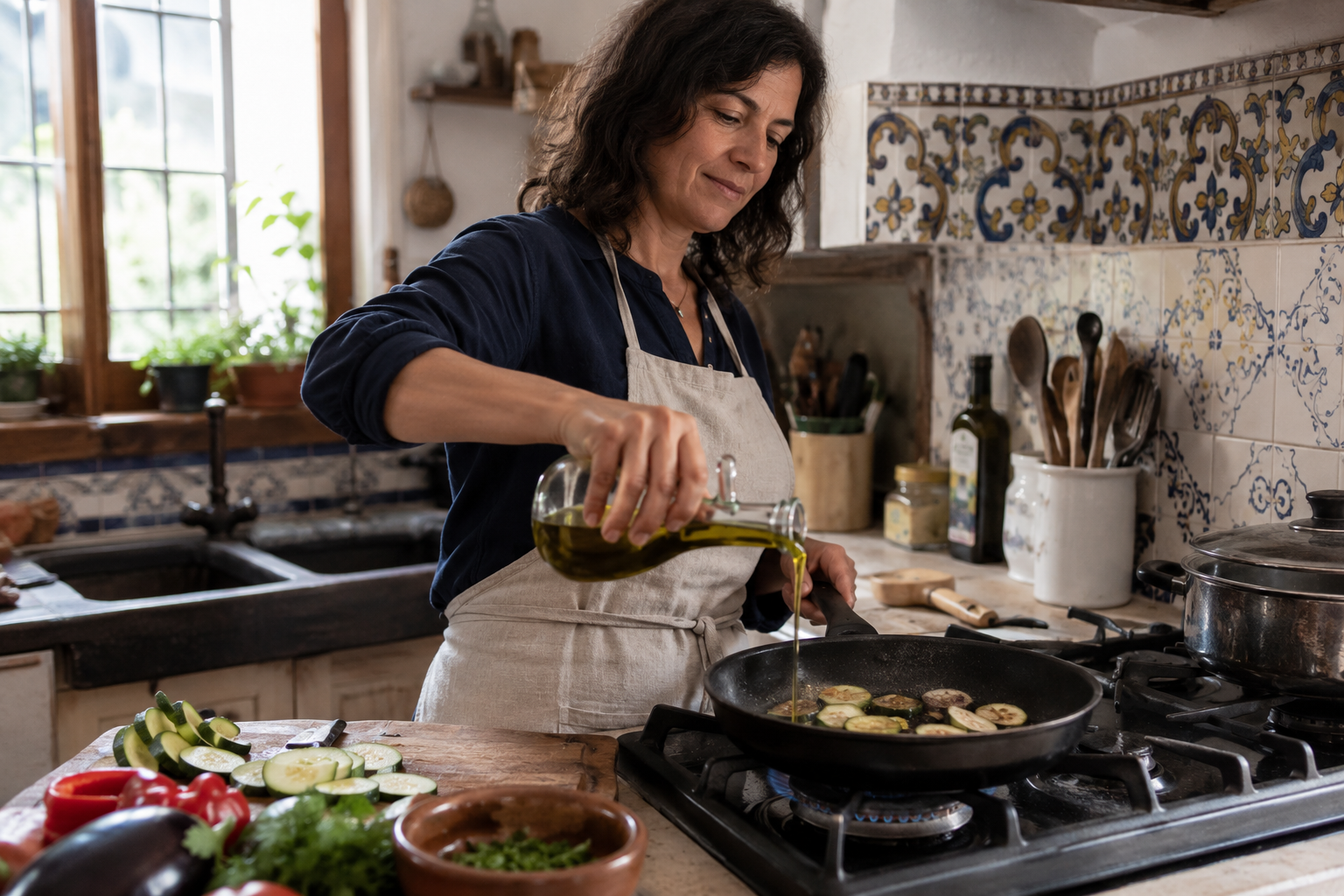
The natural question is why olive oil, of all foods, would show such a link to brain health, and while the study itself could not prove a mechanism, the leading explanations are grounded in what olive oil contains. The researchers and other scientists point to the oil’s distinctive composition as the likely source of any protective effect.
Two features stand out. Olive oil, especially in its extra virgin form, is rich in monounsaturated fats and in antioxidant compounds called polyphenols, and both have biological plausibility as brain protectors, the healthy fats supporting the blood vessels that feed the brain and the antioxidants helping to counter the kind of oxidative stress and inflammation implicated in neurodegeneration. The brain is an intensely metabolically active and vascular organ, so what protects blood vessels and dampens inflammation may plausibly protect it.
This vascular link is worth understanding, because a large share of dementia in older adults is not purely the plaques and tangles of classic Alzheimer’s disease but is bound up with the health of the small blood vessels that supply the brain. Anything that keeps those vessels supple and clear, and that reduces the chronic low-grade inflammation which damages them, has a credible path to protecting cognition over decades. Olive oil’s known effects on exactly those systems are why its brain association is biologically believable rather than mysterious.
There is also a tidy connection to the heart-health story. The same properties that make olive oil good for the cardiovascular system, its effect on blood vessels and inflammation, may be exactly what benefits the brain, since brain health and vascular health are deeply intertwined and much dementia has a vascular component. In that sense the brain finding is not a contradiction of the heart findings but an extension of them, which is part of why it made cardiovascular specialists take notice rather than dismiss it.
What the Study Does Not Prove
Understanding this research fairly means being just as clear about its limits as its findings, because an observational study of this kind, however large, has real boundaries that responsible reporting must respect. The most important point is that this study shows association, not causation, and cannot on its own prove that olive oil prevents dementia.
Several specific cautions matter. Because it is an observational study, it can show that olive oil consumption and lower dementia mortality go together, but it cannot rule out that some other unmeasured factor explains the link, nor can it establish that olive oil directly causes the lower risk. It measured dementia-related death specifically, not the onset of dementia or the pace of cognitive decline, which are related but distinct outcomes. And it relied on self-reported dietary questionnaires, which are useful but imperfect records of what people really eat.
The finding is not weak, only in need of appropriate care. A single study, even a large and rigorous one, is one piece of a larger evidentiary puzzle, and the fair conclusion is that this research strengthens the case for olive oil as part of a brain-healthy diet without proving that it single-handedly wards off dementia. It aligns with a broad body of evidence favoring the Mediterranean pattern of eating, which is exactly the context in which its authors framed it. No responsible scientist would tell you a single spoonful of oil is a shield against dementia, and the study’s own authors were careful not to. What they offered instead is a strong new thread woven into an already substantial fabric of evidence.
How to Think About It

For someone reading this and wondering what to do with it, the sensible response is neither to dismiss the finding nor to treat olive oil as a magic shield, but to fold it into a reasonable, evidence-based approach to eating. The study offers real support for a simple, low-risk, and frankly pleasant dietary habit, and that is worth something.
The practical takeaway is modest and appealing. Using olive oil as your everyday fat, especially in place of margarine and mayonnaise, is a small change well supported by this and other research, costs little, carries essentially no downside for most people, and fits naturally into a way of eating that is enjoyable rather than restrictive. A daily half-tablespoon is not a demanding prescription but an easy and flavorful habit, the kind of change that survives contact with real life because it asks for no sacrifice. People abandon difficult health rules within weeks, but a habit that makes food taste better is one they tend to keep.
It belongs, though, in the context of the whole picture. Olive oil is not a substitute for the other things that support brain health, the physical activity, the sleep, the management of blood pressure and blood sugar, the rich and varied diet, and anyone with specific concerns about dementia risk should talk with their doctor rather than rely on any single food. Seen as one helpful piece of a larger, sensible pattern, though, the humble bottle of olive oil looks like an even better everyday choice than we already thought.
A Small Habit With a Long Reach
The lasting significance of the Harvard study is how it extends olive oil’s reputation from the heart to the brain, backed by an unusually large and long investigation whose central finding survived every attempt to explain it away. A food already prized for cardiovascular health now carries serious evidence of an association with lower dementia mortality, and it did so across twenty-eight years, ninety thousand people, and every adjustment the researchers could throw at it.
What makes the finding resonate is the combination of a frightening disease and a truly easy habit. Dementia is among the most feared diagnoses there is, and options for reducing its risk feel frustratingly scarce, so evidence that something as simple, pleasant and accessible as a daily spoonful of olive oil is associated with a lower risk of dying from it lands with real force. It is the rare piece of health news that asks almost nothing of you and offers something meaningful in return.
So while no one should overstate what a single study can prove, this one earns its place in the conversation about eating for a long and healthy life. The Mediterranean instinct to pour olive oil over nearly everything, it turns out, may be quietly protecting more than the heart, and the second look those cardiologists gave the finding is one the rest of us might reasonably give our own kitchens. The bottle was always good for us. It now appears to be good for us in one more way than we knew.

About the Author: Ruben, co-founder of Gamintraveler.com since 2014, is a seasoned traveler from Spain who has explored over 100 countries since 2009. Known for his extensive travel adventures across South America, Europe, the US, Australia, New Zealand, Asia, and Africa, Ruben combines his passion for adventurous yet sustainable living with his love for cycling, highlighted by his remarkable 5-month bicycle journey from Spain to Norway. He currently resides in Spain, where he continues sharing his travel experiences with his partner, Rachel, and their son, Han.