
An American sits down to dinner in Spain, spreads their napkin, and looks for the small plate to the upper left of their setting where the bread is supposed to go. There is no such plate. The bread arrives, and their host places a piece of it directly on the tablecloth, right next to the dinner plate, with no side plate in sight, and no butter either. To the American this looks like an oversight, or a very casual table, or possibly a hygiene lapse, when in fact it is simply how Spain does bread, and has always done it. The missing bread plate is one of the small, quietly baffling differences that greet an American at a Spanish table, and understanding it, along with the other table customs that go with it, is a lesson in how differently two cultures can arrange the same meal.
The absence of a bread plate is not carelessness but a different and perfectly coherent set of table conventions, one in which bread has a role and a place unlike the American one, and in which several other rules of the table run opposite to American habit. For the visitor, these differences can produce a string of small missteps and moments of confusion, each one harmless but each one marking them subtly as a foreigner. Learning the Spanish way with bread and the table turns those stumbles into ease and shows your hosts a welcome respect for their customs.
Here is why there is no bread plate in Spain, how bread is truly handled at the Spanish table, the related table manners that surprise Americans most, and how to navigate a Spanish meal gracefully. This is a look at dining custom rather than rigid law, and practices vary by region, formality and generation, but understanding these conventions transforms a potentially awkward meal into a comfortable one and deepens your enjoyment of one of Spain’s great pleasures, the shared table.
No Bread Plate, and Often No Butter
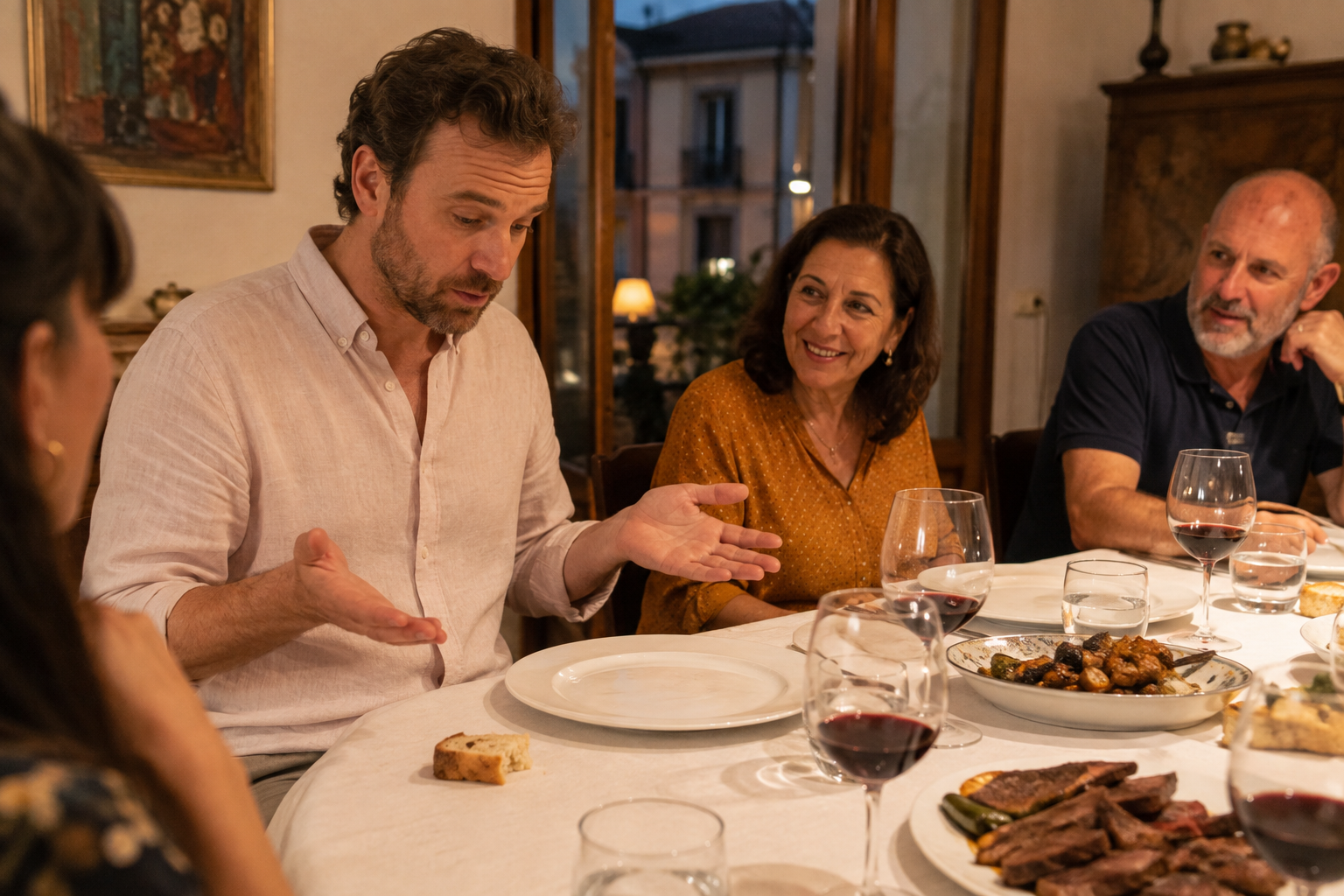
The first thing to understand is the plain fact of it, that in Spain bread is not given its own plate but placed directly on the table beside your setting. Rather than the small side plate an American expects, the bread in Spain goes straight onto the tablecloth next to your dinner plate, or sometimes on the rim of the main plate itself, which is entirely normal and correct even in good restaurants and the most proper of homes.
Just as surprising to many Americans is the frequent absence of butter. In Spain bread is usually served plain, without butter, and there is often no butter and no butter knife on the table at all, because Spanish bread is not treated as a buttered starter but as a savory accompaniment to the food, eaten alongside the meal rather than slathered and eaten on its own. The American reflex to reach for butter and a bread plate finds neither, which is exactly the moment of confusion this custom produces.
None of this signals a casual or careless table. Placing bread directly on the cloth is the established Spanish way, as proper at a formal dinner as at a family lunch, reflecting a different conception of what bread is for rather than any lapse in standards. Once you know that the missing plate and butter are the norm rather than an oversight, the whole thing stops looking strange and starts looking simply like a different, perfectly sensible convention. It helps to remember that the American bread plate is itself a convention, not a universal law of dining, however natural it feels to someone raised with it. Every culture makes choices about how to lay a table, and the Spanish choice to skip the bread plate is no more arbitrary than the American choice to include it, only unfamiliar. Seeing your own habits as one option among several, rather than as the default, is half the work of feeling at ease abroad.
What Bread Is For
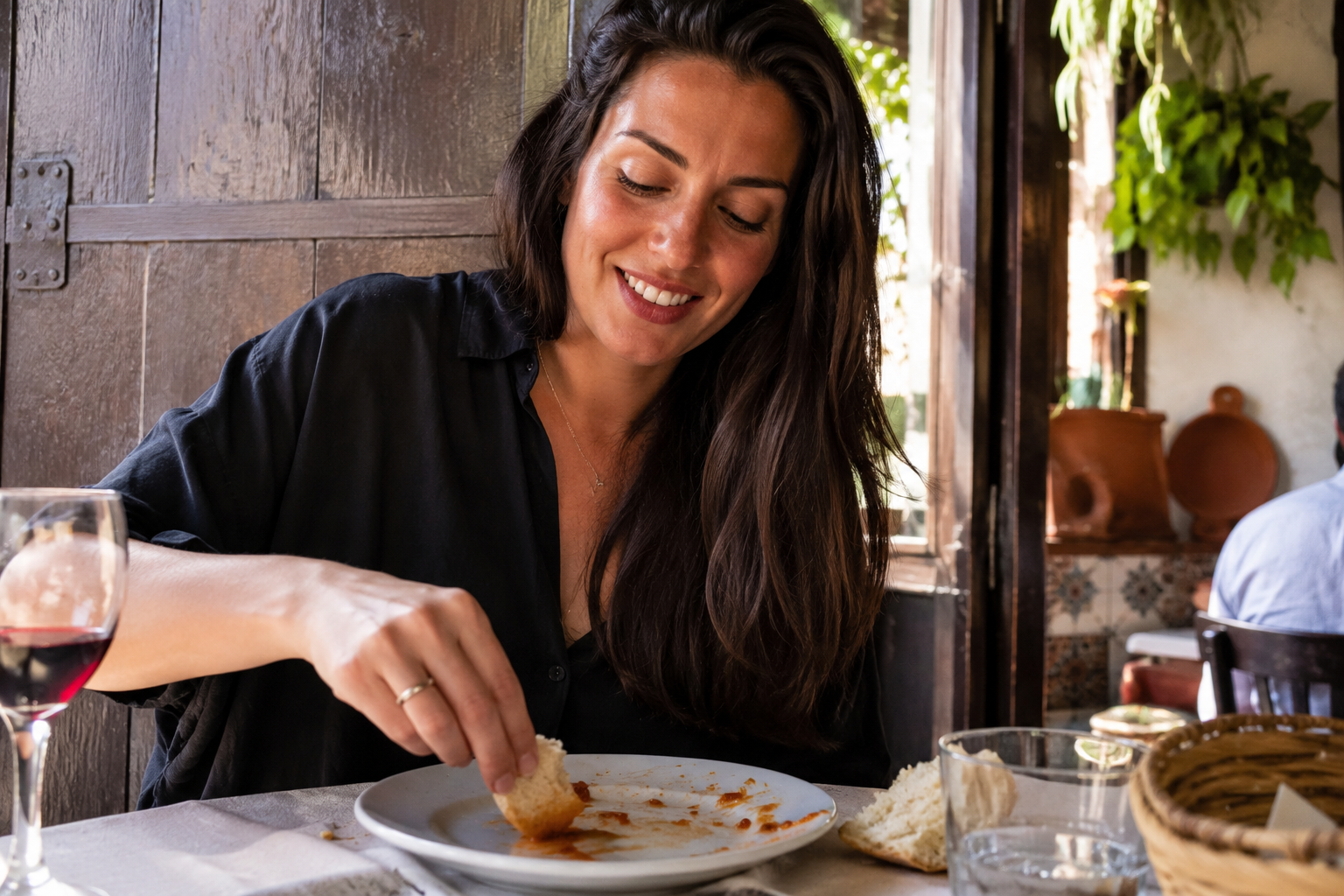
To make sense of the missing plate, you have to understand what bread does at a Spanish meal, because its role is different from the American one. In Spain bread is a functional companion to the food, there to be eaten with each bite and, above all, to mop up the sauces and juices on the plate, rather than a standalone item to be buttered and consumed on its own before the meal.
This mopping role is central and even has its own charm. Using a piece of bread to soak up the sauce left on your plate is not only permitted in Spain but expected and enjoyed, a practice so beloved it is a normal part of finishing a dish, and it explains why bread sits ready beside your plate throughout the meal rather than being cleared as a separate course. The bread is a tool of the meal as much as a food in itself. This is why Spaniards can seem almost affectionate about a good piece of bread and a saucy plate, since the two are made for each other. The final act of a well-sauced dish, running a torn crust around the plate until it gleams, is a small ritual of appreciation as much as a way of not wasting good food, and it would feel incomplete without the bread waiting right there. Far from an afterthought, the humble loaf is woven through the whole experience of the meal.
Because bread plays this working role, it naturally belongs beside the plate rather than on its own dish. Kept right there on the tablecloth within easy reach, the bread is always available to accompany a bite or wipe up a sauce, which is exactly why it needs no separate plate of its own, since it is not a distinct course but a constant companion to the whole meal. The placement follows perfectly from the purpose, once you understand the purpose.
How to Handle the Bread
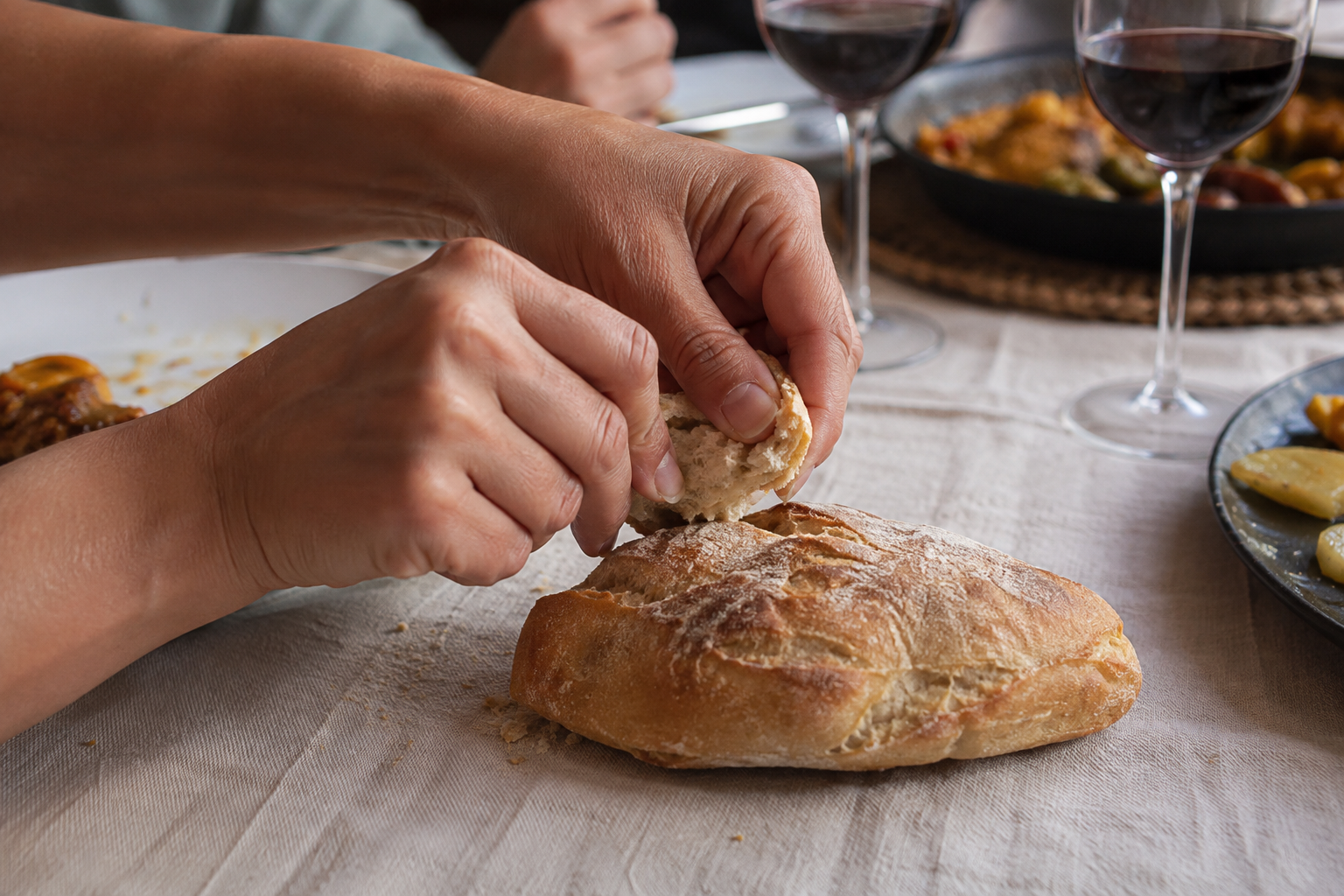
Spanish custom has its own small rules for handling bread, and knowing them keeps you looking comfortable rather than clumsy. The most important is that you tear bread rather than cut it, breaking off small, bite-sized pieces with your hands as you eat rather than cutting it with a knife or biting directly from a large piece, which is the mark of someone who knows the custom.
If butter does appear, it too has its etiquette. On the occasions when butter is offered, the polite approach is to butter individual torn pieces rather than a whole slice at once, applying butter bite by bite as you go, which mirrors the tearing custom and keeps the handling neat. But in most everyday settings the question does not arise, since the bread comes plain.
There are a couple of gentle prohibitions worth knowing too. Dipping your bread into your soup is generally frowned upon in Spain, considered poor manners despite the enthusiasm for mopping up sauces, a distinction that catches some visitors out, so save the bread for wiping the plate rather than dunking it in the bowl. And while using bread to help nudge food onto your fork is common and fine in casual settings, it is best avoided at a formal table, where more decorous handling is expected.
Keep Your Hands on the Table
The bread plate is only the beginning of the surprises, and the rule that confuses Americans most deeply concerns where you put your hands, because it runs exactly opposite to the American habit. In Spain, and much of continental Europe, you keep your hands visible above the table throughout the meal rather than resting one in your lap as Americans are taught to do.
The specifics are worth getting right. The Spanish custom is to keep both hands visible, typically by resting your wrists or forearms lightly on the edge of the table when you are not actively using your cutlery, while keeping your elbows off the table, so that your hands are always in view rather than tucked away below. The American habit of keeping a hand in the lap reads, in Spain, as slightly odd and even a touch suspicious.
This has a long and rather charming history. The convention of visible hands is often traced to the old idea that keeping your hands where everyone could see them showed you were not concealing anything, a gesture of trust and openness at the shared table, and while no one thinks in those terms today, the custom endures as simple good manners. For the American, retraining the instinct to drop a hand into the lap is one of the small adjustments that most marks the transition to eating the Spanish way.
The Other Rules That Surprise Americans
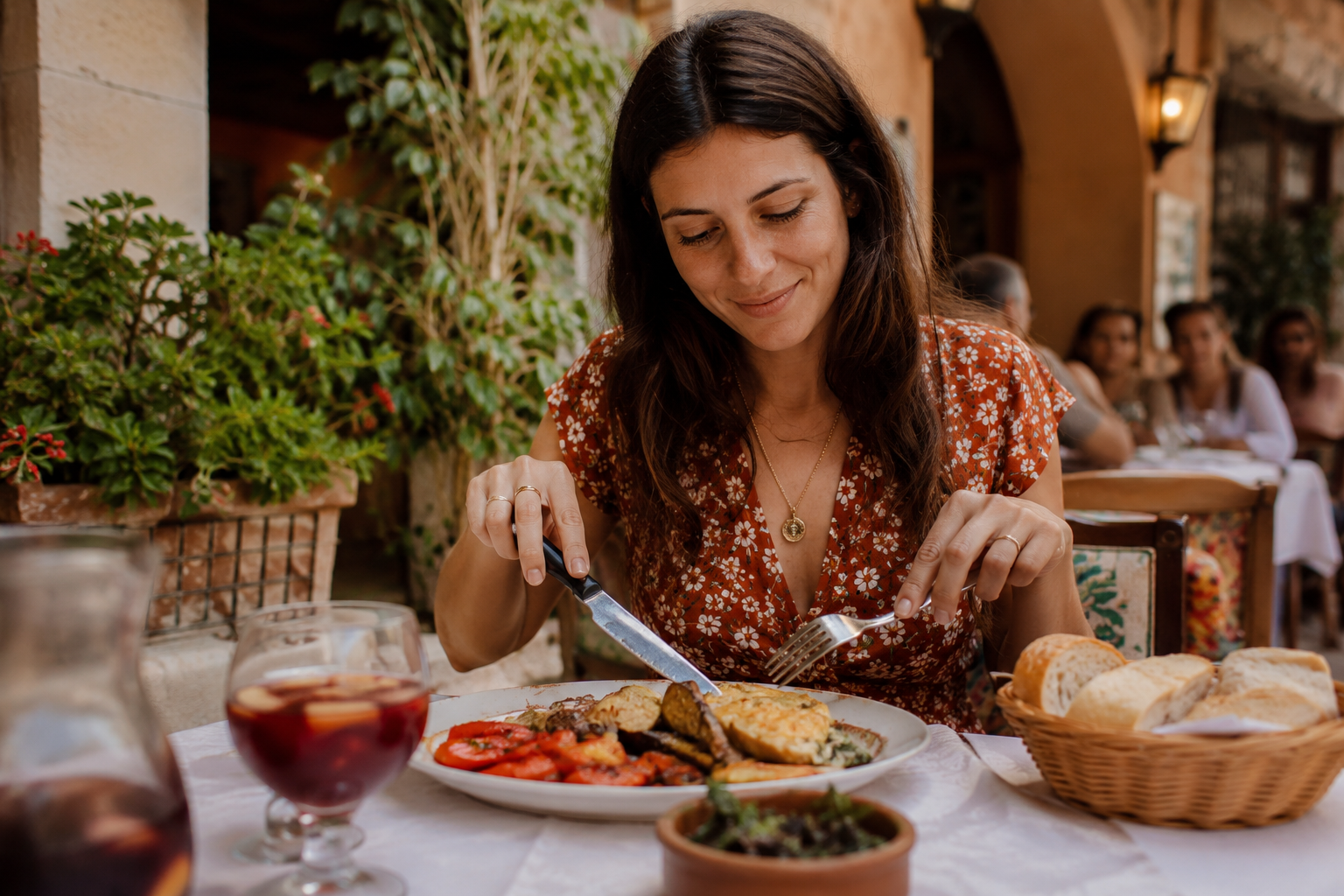
Beyond bread and hands, a few more Spanish table customs tend to catch Americans off guard, and knowing them rounds out your fluency at the table. The style of using cutlery is the most pervasive, since Spain follows the continental method, keeping the fork in the left hand and the knife in the right throughout the meal rather than the American habit of switching the fork after cutting.
The signals your cutlery sends are worth learning too. In Spain the position of your knife and fork tells the waiter whether you are still eating or finished, with utensils placed together to signal you are finished and left apart or crossed to show you are merely pausing, so how you rest your cutlery communicates something and is worth doing deliberately. Setting your knife and fork down carelessly can send the wrong message and see your plate whisked away before you are done, or left in front of you long after you have finished. A little deliberateness with the cutlery spares you both small frustrations.
The pace of the whole meal is perhaps the biggest adjustment of all. Spanish meals are long, leisurely, social affairs, not to be rushed, with the lingering conversation after the food, the sobremesa, being a cherished part of the experience rather than a prelude to a quick exit, so the American instinct to eat efficiently and leave promptly is out of step with a culture that treats the table as a place to stay. Slowing down and settling in is part of doing it right.
Why These Differences Matter
It would be easy to dismiss these customs as trivial, but they matter more than their small scale suggests, because observing them shows respect and observing them wrongly marks you as an outsider who has not bothered to learn. Getting the table manners right is a way of honoring your hosts and their culture, signaling that you value their traditions enough to adopt them, which is warmly appreciated at a table where dining is taken seriously as a social art.
The customs also make more sense than they first appear. Each of these conventions, the bread beside the plate, the hands on the table, the continental cutlery, the leisurely pace, follows a coherent logic once you understand it, so learning them is not a matter of memorizing arbitrary rules but of grasping a different and internally sensible way of sharing a meal. The apparent strangeness dissolves into simple difference once the reasons are clear. This is worth holding onto whenever a foreign custom seems baffling, because the impulse to judge it as wrong usually just means the reason has not yet been explained. The Spanish table, examined closely, turns out to be thoroughly logical, each of its rules serving the larger goal of a relaxed, sociable, unhurried meal. What looked like a collection of quirks reveals itself as a coherent philosophy of how people should eat together.
There is also the sheer practical benefit of not standing out for the wrong reasons. An American who spreads butter on a whole slice, hunts for a bread plate, switches their fork between hands, keeps a hand in their lap, and rushes to leave marks themselves at every turn as a foreigner unfamiliar with the table, while one who has learned the customs blends in comfortably and enjoys the meal as the locals do. The small effort of learning pays off in ease and belonging.
Sitting Down to the Spanish Table
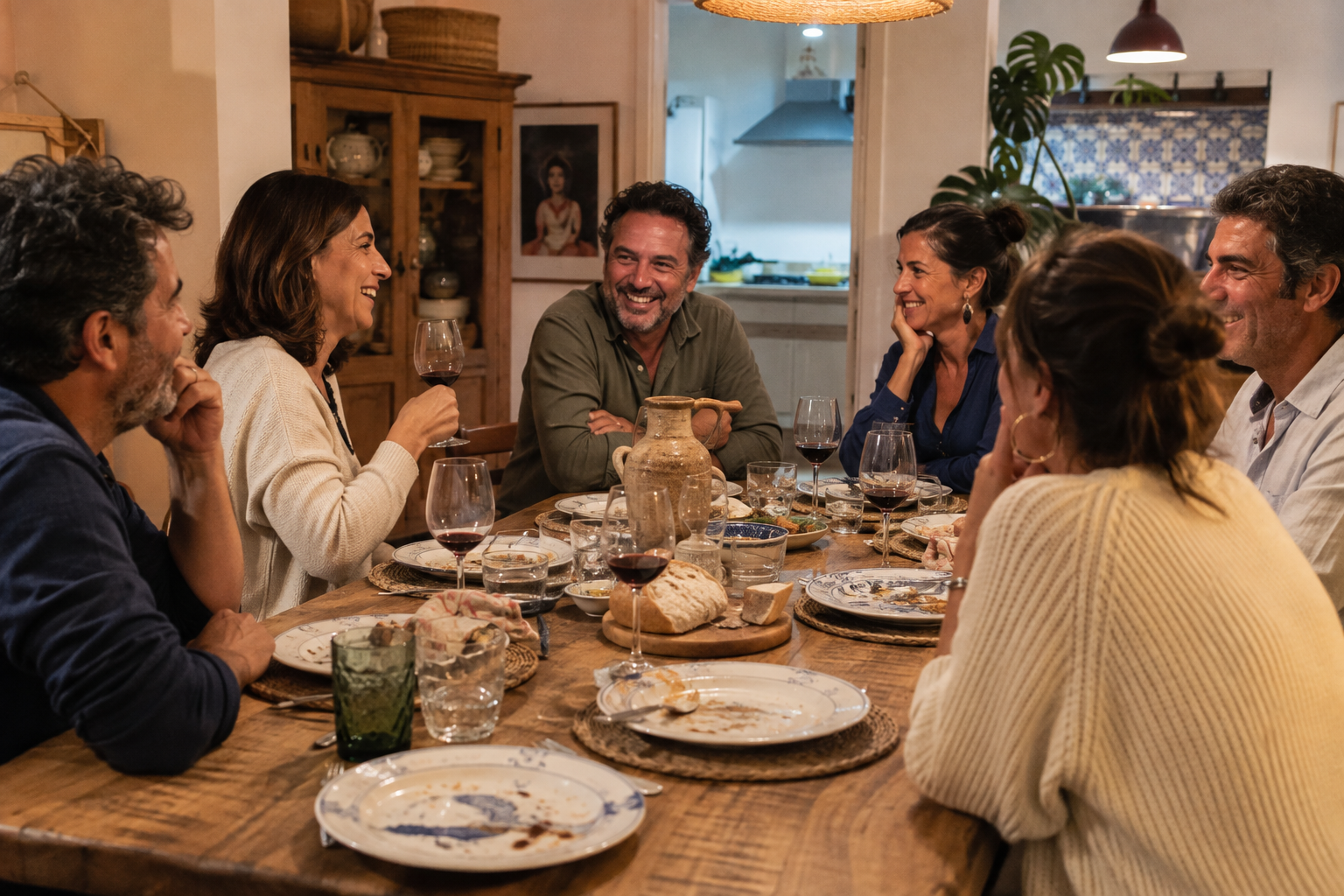
The lasting lesson of the missing bread plate is that a table setting encodes a whole culture’s way of eating, and that the differences between the Spanish table and the American one, small as each may be, add up to truly distinct approaches to the shared meal. The bread on the cloth, the visible hands, the continental cutlery, and the unhurried pace are not random quirks but the expression of a dining culture that treats the meal as a relaxed, social, sauce-mopping, conversation-filled event rather than a brisk refueling.
What makes learning these customs so rewarding is how much they enrich the experience of eating in Spain. Once the bread beside your plate looks normal, your hands rest easily on the table’s edge, your cutlery moves in the continental way, and you settle in for the long, lingering Spanish meal, you are no longer a confused guest fumbling with unfamiliar rules but a comfortable participant in one of Spain’s great pleasures. The customs stop being obstacles and become simply the way you dine.
So the next time you sit down at a Spanish table and find no bread plate waiting, no butter beside it, and your host resting their wrists on the table’s edge, do not reach for the missing plate or drop your hand into your lap. Tear your bread and set it on the cloth, keep your hands in view, hold your fork in your left hand, use a crust to mop up the good sauce at the end, and settle in for a long and happy meal. You will have learned that the absent bread plate was never a mistake but an invitation to eat as the Spanish do, and the table will feel, from that point on, like a place where you belong rather than a puzzle to be solved.

About the Author: Ruben, co-founder of Gamintraveler.com since 2014, is a seasoned traveler from Spain who has explored over 100 countries since 2009. Known for his extensive travel adventures across South America, Europe, the US, Australia, New Zealand, Asia, and Africa, Ruben combines his passion for adventurous yet sustainable living with his love for cycling, highlighted by his remarkable 5-month bicycle journey from Spain to Norway. He currently resides in Spain, where he continues sharing his travel experiences with his partner, Rachel, and their son, Han.