
Walk into a kitchen anywhere around the Mediterranean and you will see the same thing, a generous glug of olive oil hitting a hot pan, sizzling vegetables, frying fish, sputtering away under a piece of meat, every single day. Spaniards, Italians and Greeks have fried in olive oil for thousands of years and think nothing of it. Yet many Americans have absorbed a firm rule that you must never cook with good olive oil over high heat, that its low smoke point makes it unsuitable for frying, even dangerous, and that heat destroys it. This warning, so widely believed, turns out to be mostly a myth, and the gap between the American caution and the European habit is a small lesson in how a half-understood piece of science can override thousands of years of practice.
The smoke-point warning that keeps so many good bottles of olive oil trapped in the pantry, reserved only for salad and bread, rests on an incomplete understanding of what truly makes a cooking oil perform well under heat. The real science, which has grown clearer in recent years, tells a different and more reassuring story, one in which good olive oil is not merely acceptable for cooking but among the more stable and sensible fats you can heat. The Europeans frying away every day were right all along, and the science has caught up to them.
Here is what the smoke-point warning really claims, why the science says it is misleading, what really matters when you heat a cooking oil, and how to use olive oil for cooking with confidence. This is a look at the current food science rather than medical or dietary advice, individual needs vary, and every oil has its limits, but understanding what the research really shows dispels a persistent myth and frees you to cook the way the Mediterranean always has.
The Warning Americans Learned
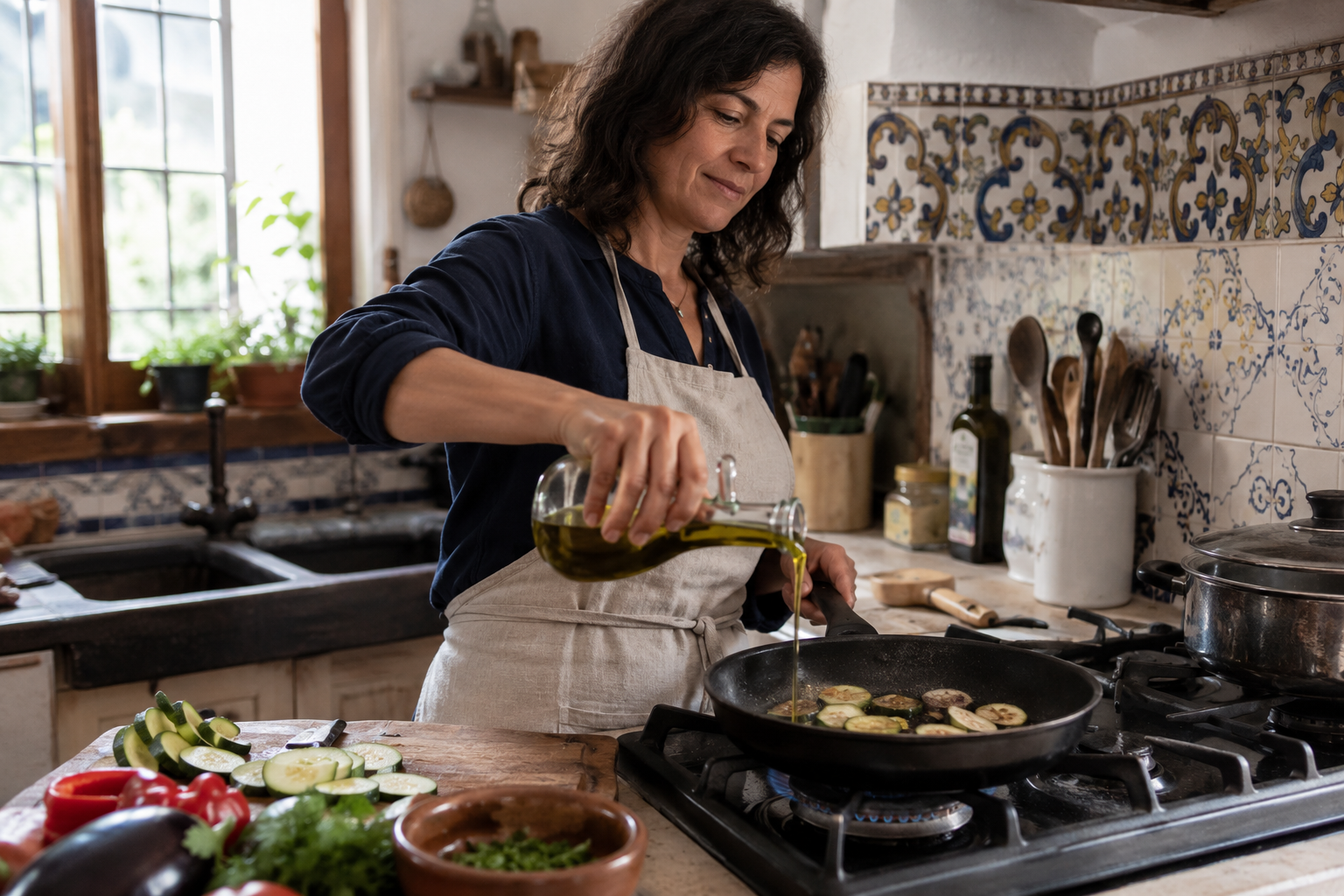
The rule that many Americans absorbed is simple and firmly stated, that you should not cook with extra virgin olive oil over high heat because its smoke point is too low. According to this widely repeated warning, heating good olive oil past its smoke point ruins it, destroys its beneficial compounds, produces harmful substances, and even poses a health risk, so olive oil should be saved for finishing and dressing while cooking is done with higher-smoke-point oils.
The warning rests entirely on the concept of the smoke point. The smoke point is the temperature at which an oil begins to visibly smoke, and the reasoning behind the warning is that because extra virgin olive oil has a relatively modest smoke point compared to some refined oils, it must therefore be unsuitable for high-heat cooking and prone to breaking down into harmful compounds when heated. It sounds logical, and it has been repeated so often that it has hardened into accepted kitchen wisdom.
The trouble is that this tidy piece of reasoning turns out to be built on a flawed premise. The whole warning depends on the assumption that smoke point is the key measure of whether an oil is safe and suitable to cook with, and it is precisely that assumption that modern research has undermined, revealing the smoke-point rule to be a poor guide to how an oil behaves in the pan. The warning is not so much wrong about the smoke point as wrong about what the smoke point tells you. This is a subtle but important distinction, because it means the people repeating the warning are not lying or foolish, only working from an outdated model. They correctly note that extra virgin olive oil smokes at a lower temperature than some refined oils, and they draw the seemingly obvious conclusion that it must therefore be worse for cooking. The premise is true and the conclusion is false, which is exactly the kind of tidy error that spreads easily and lodges deep.
Why Smoke Point Is the Wrong Measure

The central finding of the recent science is that smoke point is simply not a reliable predictor of how an oil performs and holds up when heated, which pulls the rug out from under the entire warning. Research has shown that an oil’s smoke point does not correlate well with its stability, its safety, or the compounds it produces during cooking, so choosing an oil for high heat based on smoke point alone is a mistake.
There are good reasons the smoke point misleads. For one, the smoke point is a somewhat subjective and variable measurement, the temperature at which a thin stream of smoke is first visually observed, which depends on conditions and on the judgment of the observer and varies with the oil’s freshness and acidity, making it a shaky number to build a rule on. A single oil can be reported with quite different smoke points depending on who measured it and how. That variability alone should give pause to anyone treating the smoke point as a hard scientific threshold. A number that shifts depending on the observer, the equipment, the freshness of the sample and its acidity is not the sort of precise, fixed property a firm kitchen rule can be built on, yet the warning treats it as though it were an exact and meaningful line. Much of the confusion comes from mistaking a soft, variable measurement for a hard one.
More fundamentally, the smoke point does not capture what really matters when an oil is heated. What really determines whether a cooking oil breaks down into undesirable compounds under heat is not the temperature at which it happens to start smoking, but its underlying chemical stability, and these two things do not track together, so an oil can have a modest smoke point and yet be highly stable, or a high smoke point and yet degrade readily. This is exactly the case with olive oil, whose real behavior under heat is far better than its smoke point implies.
What Actually Matters, Oxidative Stability
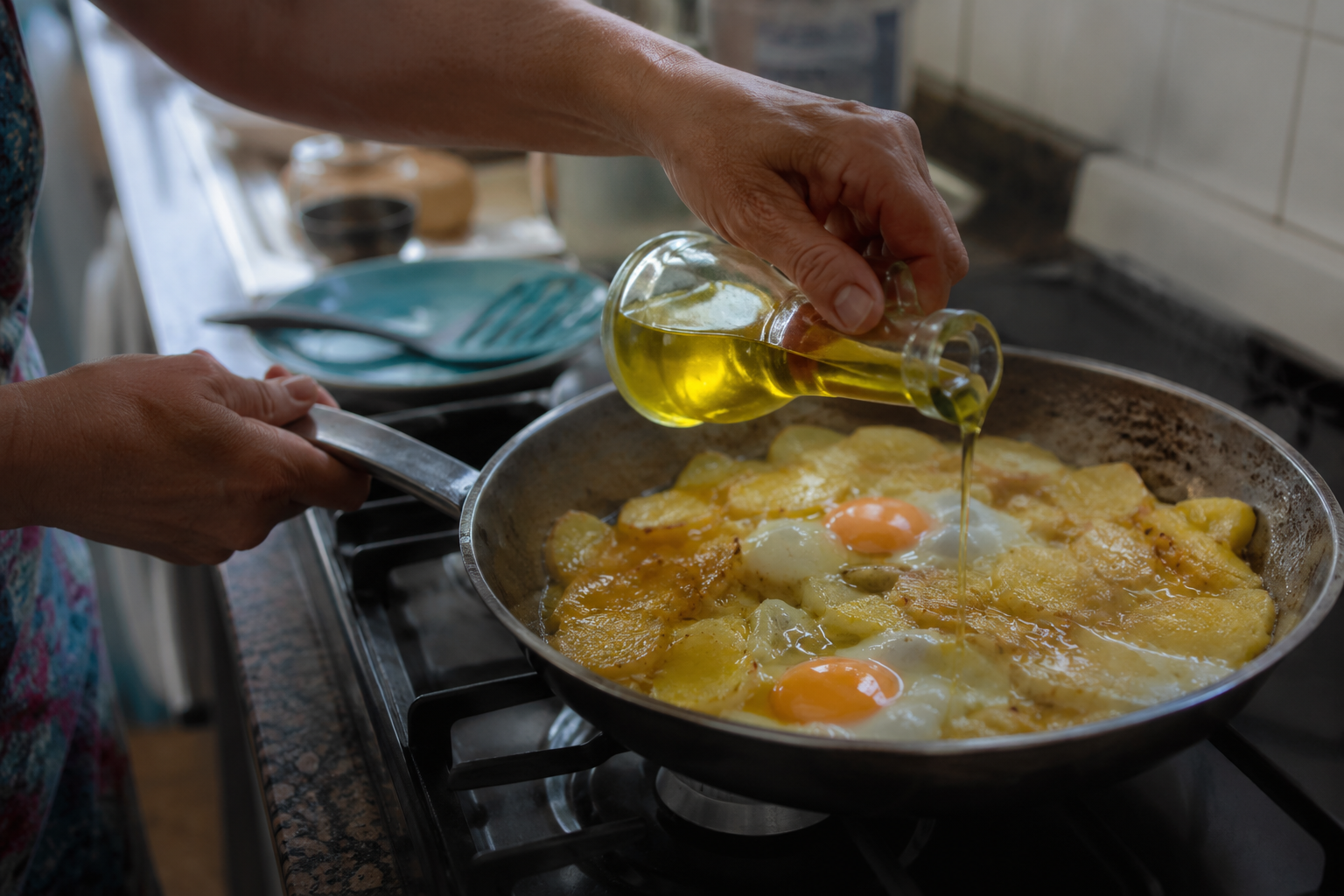
The measure that really predicts how a cooking oil performs under heat is its oxidative stability, its resistance to breaking down and oxidizing when exposed to heat and air, and this is where the whole picture flips in olive oil’s favor. Oxidative stability, rather than smoke point, is what determines how much an oil degrades and how many undesirable compounds it forms during cooking, and by this real measure extra virgin olive oil performs remarkably well.
Two features of olive oil give it this stability. The first is its fat composition, because olive oil is high in monounsaturated fat and low in polyunsaturated fat, and it is the polyunsaturated fats that oxidize most readily when heated, so an oil low in them, like olive oil, resists breaking down far better than oils high in them, such as many common seed oils. The second is olive oil’s natural antioxidants, the polyphenols in extra virgin olive oil, which actively protect the oil from oxidation during cooking, a protection that refined oils have had stripped away.
The research bears this out directly and strikingly. In controlled studies that heated various oils to real cooking temperatures and held them there, extra virgin olive oil consistently produced fewer harmful compounds and showed greater stability than many oils with higher smoke points, meaning that by the measure that truly matters, olive oil outperformed the very oils the smoke-point rule would have you choose instead. The oil the warning told you to avoid turns out to be one of the best performers under heat. It is worth sitting with how complete this reversal is, because it is not that olive oil merely scrapes by. In the comparisons, it did not just survive the heat but bettered oils specifically prized for their high smoke points, producing fewer of the breakdown compounds that the whole warning was meant to help you avoid. The rule, followed faithfully, would steer you away from the more stable oil and toward a less stable one, achieving the opposite of its intent.
What the Europeans Knew All Along
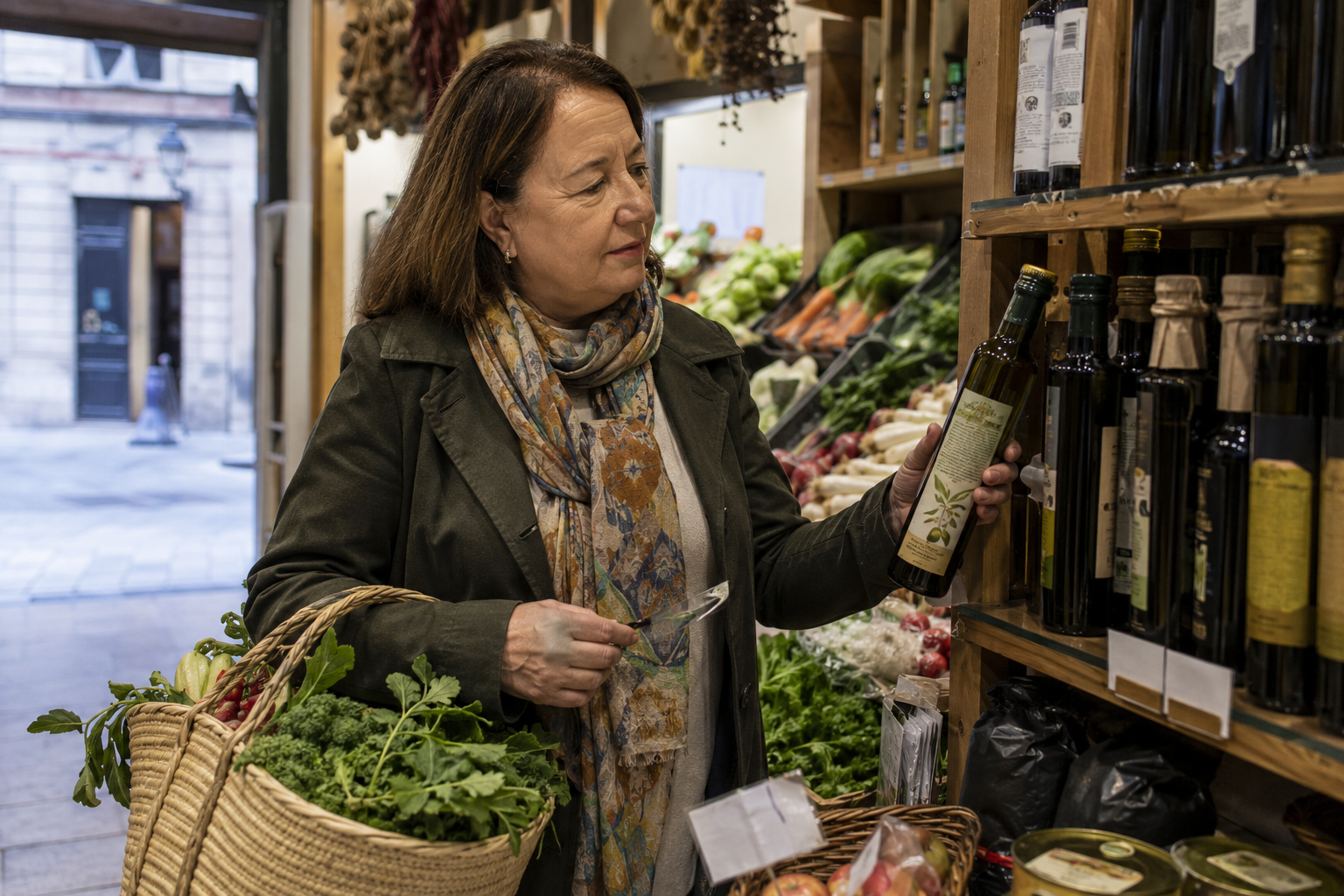
None of this would surprise a cook in Andalusia or Naples, because the Mediterranean has been frying in olive oil for millennia with excellent results, and that long practical tradition is itself a kind of evidence. Across southern Europe, olive oil is the everyday cooking fat, used for sauteing, roasting and deep-frying alike, and the resulting cuisines are among the world’s most celebrated and, by many measures, its healthiest.
The Mediterranean approach treats olive oil as a cooking fat first. Where the American warning casts good olive oil as a delicate finishing product too precious and fragile to heat, the Mediterranean cook simply fries with it, using it generously and at real heat for everything from a quick sofrito to a pan of crisply fried fish, exactly as generations have done before. The idea that olive oil cannot handle a hot pan would strike such a cook as bizarre, contradicted by daily experience.
This lived tradition aligns perfectly with what the science now confirms. The Mediterranean cultures were not ignoring some danger but responding to reality, that good olive oil fries beautifully and holds up well, which is why they built their entire cuisines around doing exactly that. When thousands of years of successful practice and the latest laboratory research point to the same conclusion, it is fair to say the smoke-point warning was the outlier, not the European habit.
The Grain of Truth in the Warning
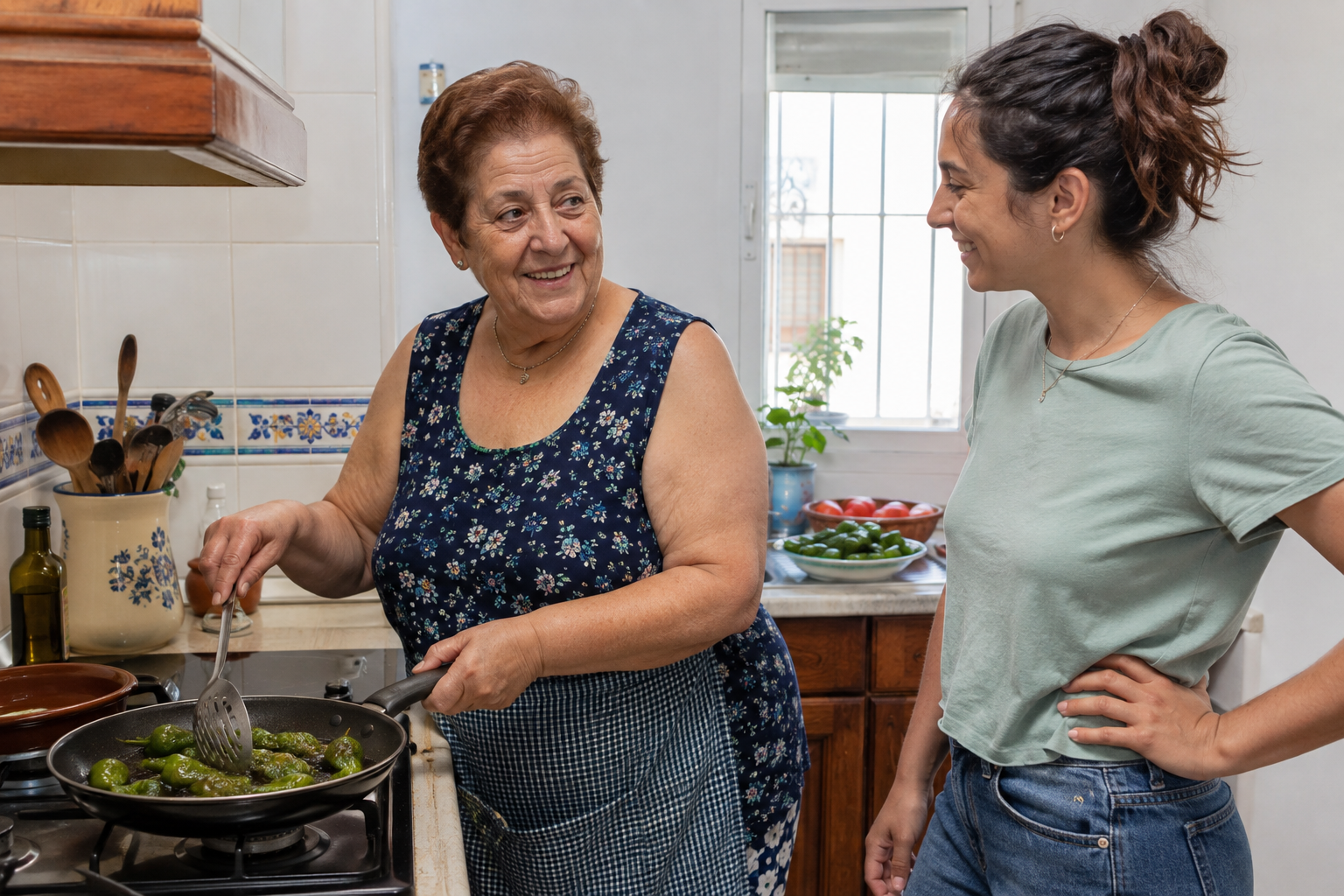
A fair look at the science means acknowledging that the warning is not pure fiction, and there are real limits worth respecting, even if the headline caution is misleading. Extra virgin olive oil does have a genuine smoke point, generally somewhere in the range of the middle of the frying spectrum, and heating any oil extremely high or for a very long time will eventually degrade it, so the point is not that olive oil is indestructible.
The sensible reading is about proportion rather than absolutes. Most everyday cooking, including sauteing, pan-frying and even most deep-frying, happens at temperatures comfortably within what good olive oil handles well, so for the overwhelming majority of home cooking the oil performs excellently, while truly extreme, prolonged high-heat applications are where any oil, olive oil included, faces real strain. The warning takes a real but narrow limit and inflates it into a blanket prohibition.
Quality and freshness matter too, which is a fair caveat. A high-quality, fresh extra virgin olive oil with low acidity performs better and has a higher smoke point than an old, degraded, or low-quality one, so the stability described here applies best to good oil in good condition, and a rancid bottle is a different matter. The reasonable conclusion is not that smoke point never matters at all but that it matters far less than the warning claims, and that good olive oil is an excellent and safe cooking fat across the normal range of heat.
How to Cook With Olive Oil Confidently
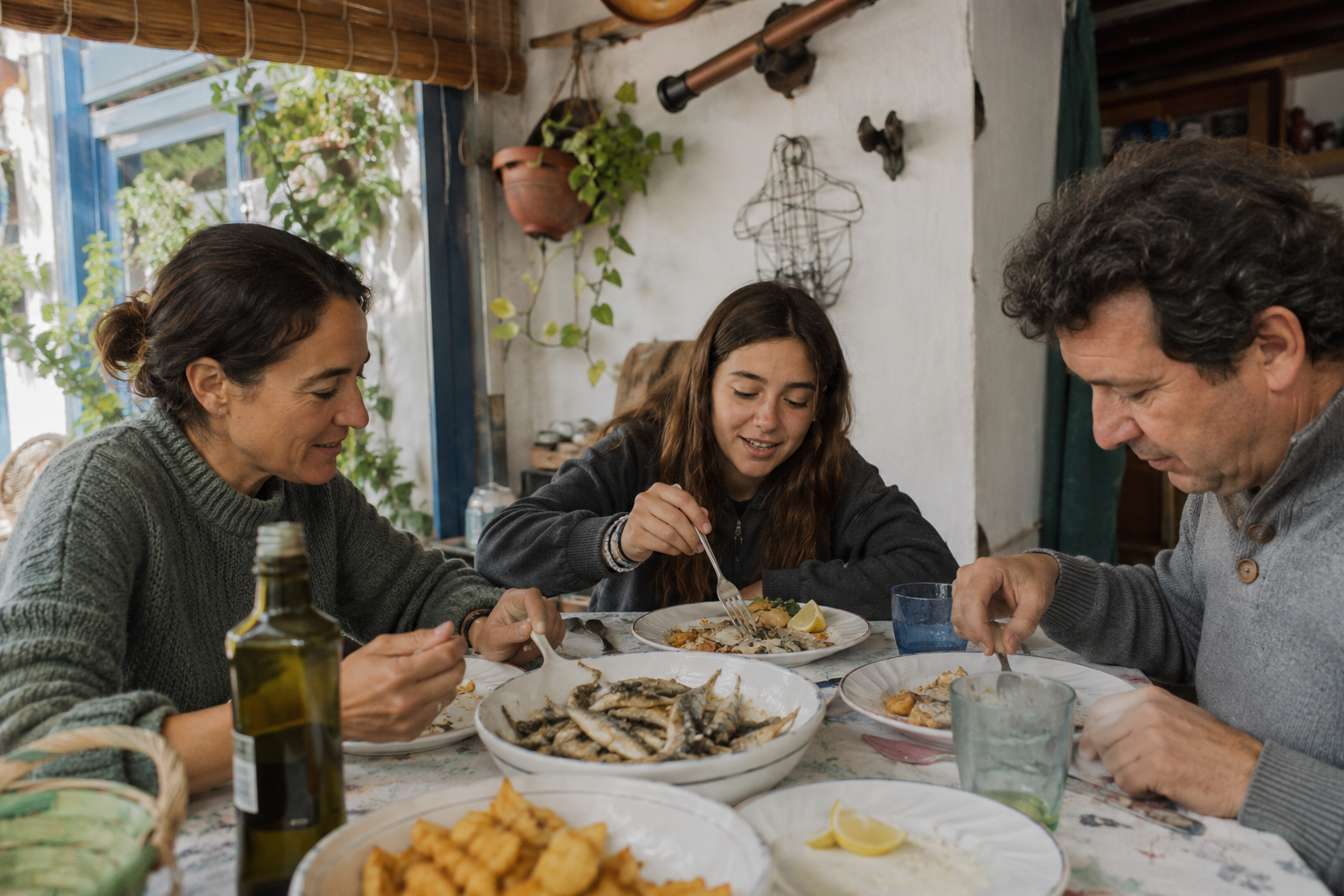
Freed from the myth, you can use olive oil for cooking with confidence, and a few sensible practices let you get the best from it. For the great majority of your cooking, sauteing vegetables, frying eggs, pan-frying fish or meat, building the base of a sauce, good extra virgin olive oil is an excellent choice, handling the heat well while adding flavor and its beneficial compounds to the food.
A little attention to heat is all that is really needed. If your olive oil is smoking heavily in the pan, the pan is simply too hot, hotter than most cooking requires, so turning the heat down brings it back into its comfortable range and often improves the cooking anyway, since scorching heat is rarely what a dish needs. Cooking at moderate, sensible temperatures lets olive oil do its job beautifully without ever approaching its limits.
There is room for a practical middle path on which oil to use where. Many cooks reserve their finest high-polyphenol extra virgin olive oil for finishing and dressing, where its flavor and antioxidants shine uncooked, while using a good standard olive oil or a everyday extra virgin for the actual cooking, which is a reasonable way to balance cost and quality. But the key point stands, that cooking with olive oil, including extra virgin, is not the mistake the warning claims but a sound and traditional choice.
Frying Like the Mediterranean
The lasting lesson of the olive oil smoke-point myth is how easily a single oversimplified number can override both good science and long experience, keeping people from a practice that was sound all along. The warning took one measurement, the smoke point, treated it as the whole story, and produced a rule that contradicted thousands of years of successful Mediterranean cooking, when the fuller science shows that olive oil is in fact one of the more stable and sensible fats to heat.
What makes this worth understanding is that it frees you to cook better and more traditionally. Rather than leaving your good olive oil in the cupboard and reaching for blander, more refined oils out of misplaced caution, you can fry, saute and roast with olive oil as the Mediterranean always has, confident that the science supports what those kitchens have demonstrated for millennia. The bottle of good olive oil is not too precious to cook with but exactly what you should be cooking with.
So the next time you stand at the stove, do as the Spaniards and Italians and Greeks do, and reach for the olive oil without hesitation. Heat it sensibly, keep it from scorching, use good oil in good condition, and let it fry and sizzle and flavor your food the way it has flavored Mediterranean cooking since ancient times. The warning that told you not to was built on an incomplete understanding, and the truth is far more generous, that the finest everyday cooking fat is the one that has been sitting in your pantry all along, waiting to be used as it was always meant to be. The pantry was never where it belonged.

About the Author: Ruben, co-founder of Gamintraveler.com since 2014, is a seasoned traveler from Spain who has explored over 100 countries since 2009. Known for his extensive travel adventures across South America, Europe, the US, Australia, New Zealand, Asia, and Africa, Ruben combines his passion for adventurous yet sustainable living with his love for cycling, highlighted by his remarkable 5-month bicycle journey from Spain to Norway. He currently resides in Spain, where he continues sharing his travel experiences with his partner, Rachel, and their son, Han.