
You spread your towel on a Spanish beach, light a cigarette the way beachgoers have for a century, and a lifeguard walks over to tell you, politely, that this is a smoke-free beach. A few years ago this would have been almost unthinkable across much of southern Europe. In the summer of 2026 it is increasingly the rule, and the map of where you may and may not light up on the sand is being redrawn faster than most travelers realize. Europe’s beach smoking bans are spreading, and if you are heading for the coast this year, it is worth knowing where they now apply.
The change is genuine and it is accelerating, driven by concerns about health, litter and the sheer volume of cigarette butts fouling the sand. What began as a scattering of voluntary local schemes has grown, in Spain especially, into a network of hundreds of smoke-free beaches, while France has gone furthest of all with a sweeping nationwide ban, and Spain’s national government has just moved to follow. The beach as a place to smoke is quietly disappearing across a continent, and 2026 is the year the shift became impossible to miss.
Here is where Europe’s beach smoking bans currently stand, country by country, what the fines are, and how to stay on the right side of rules that are changing every season. This is general travel information rather than legal advice, the rules are evolving quickly and vary by region and beach, and you should always check locally, but this is the state of the 2026 map as the summer unfolds.
Spain, Hundreds of Smoke-Free Beaches
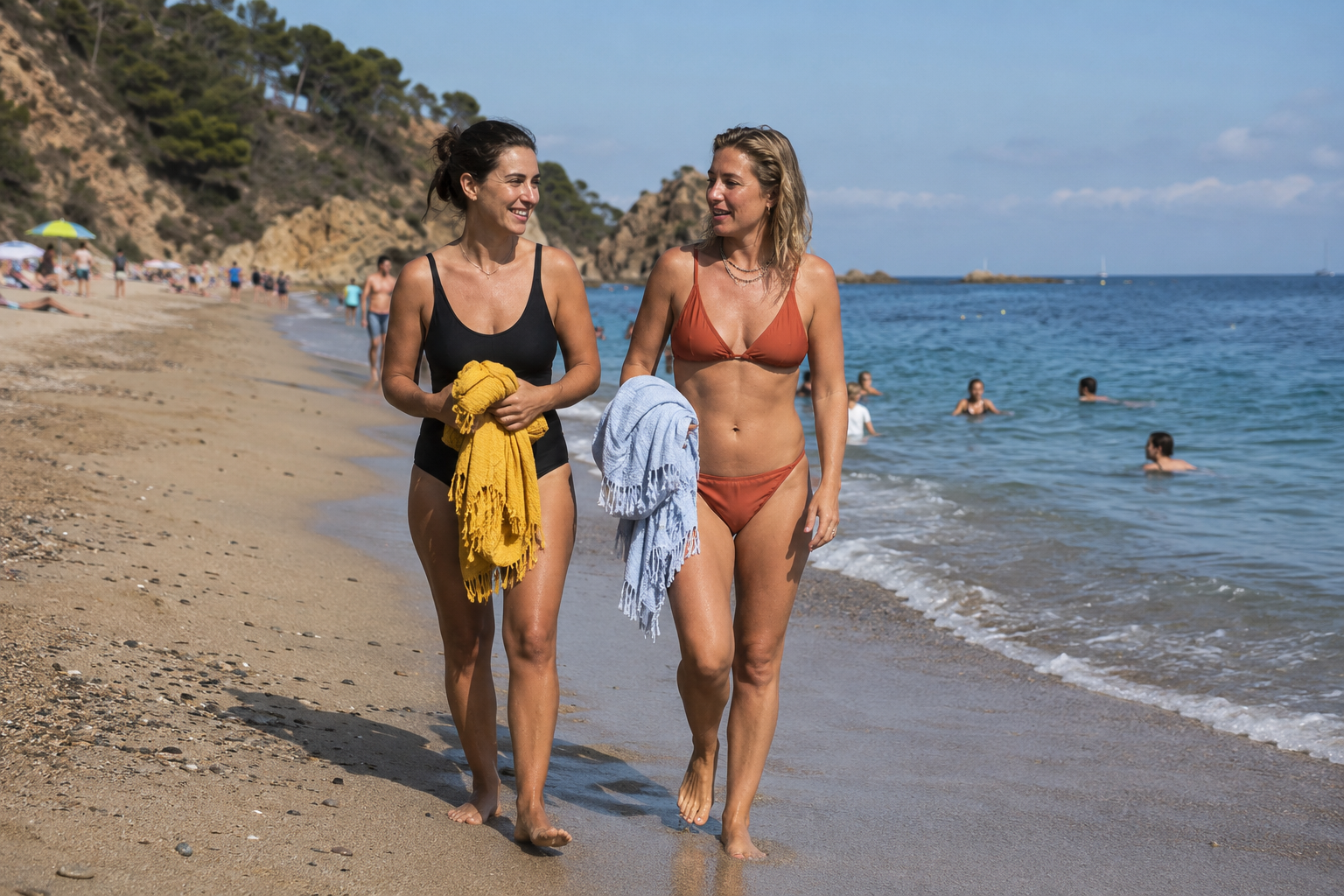
Spain is at the center of the story, having spent several years steadily turning its coastline into one of the most smoking-restricted in Europe. As of 2025 the country had well over six hundred smoke-free beaches, a number that has grown season by season as more municipalities and regions join in, making Spain a leader in the movement to clear tobacco from the sand.
The bans are spread across many of the country’s coastal regions rather than concentrated in one. Regions enforcing smoke-free beach rules include Galicia, Andalusia, the Balearic Islands, Murcia, Asturias and the Canary Islands, so a traveler moving around the Spanish coast will encounter these restrictions in many of the most popular holiday areas. The patchwork is wide, and it is filling in.
Barcelona has been a pioneer of the approach. All of the city’s beaches have been smoke-free and vape-free since 2022, making one of Spain’s most visited urban coastlines entirely off-limits to smoking, and the city enforces the rule with fines. For the millions who visit Barcelona’s beaches each year, lighting up on the sand has already been against the rules for several summers, a fact that still surprises many arriving visitors. The vape ban alongside it catches people out especially, since many assume an e-cigarette sidesteps a smoking rule. In Barcelona and a growing number of Spanish beach zones it does not, with vaping treated the same as smoking, so the traveler who reaches for a vape as a workaround on a smoke-free beach may find they have simply broken the same rule by another means.
The Balearic Playas Sin Humo Network
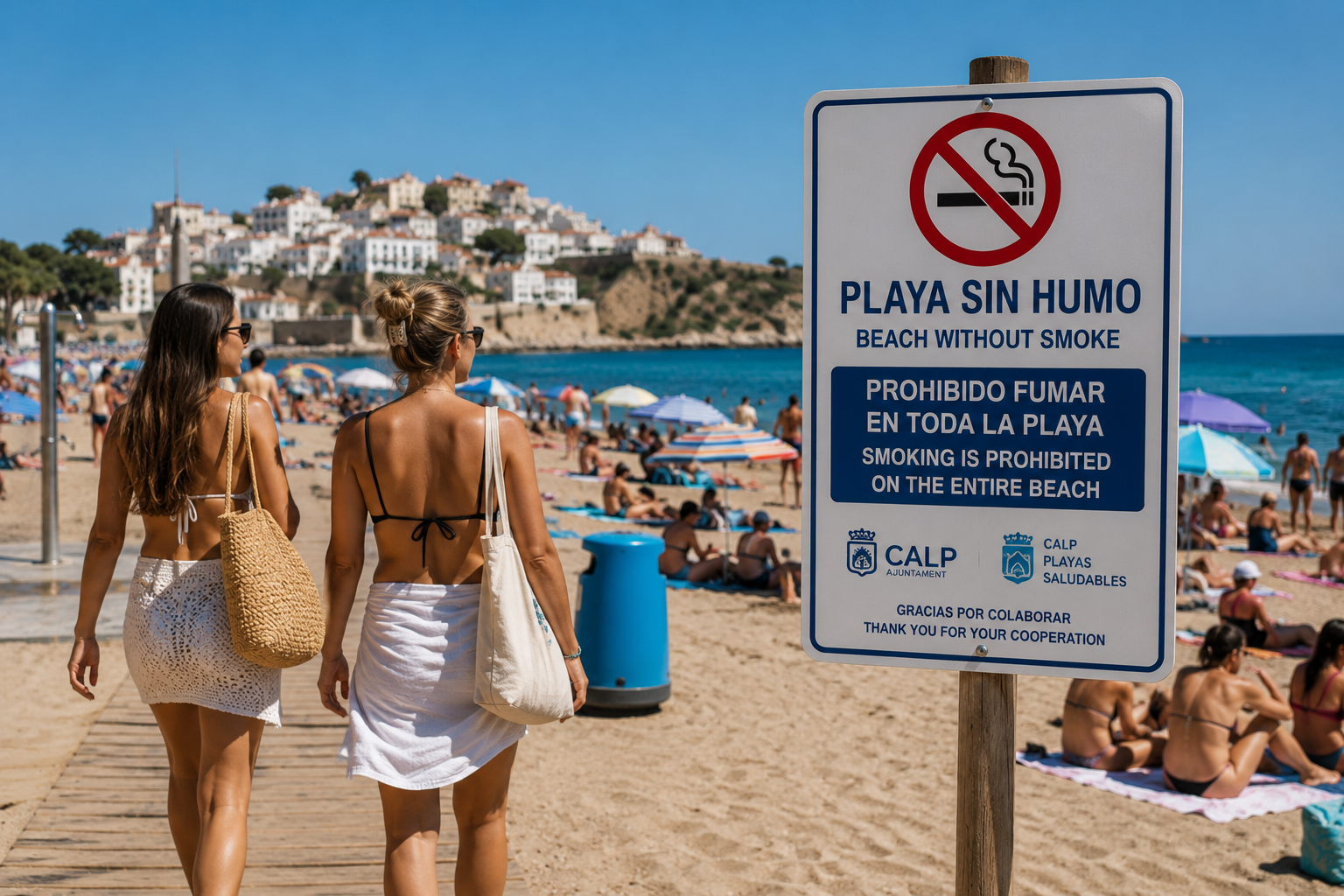
The Balearic Islands run one of the most developed smoke-free beach networks in Spain, and it goes by a name worth knowing, the Playas Sin Humo initiative, or smoke-free beaches. Launched to cut cigarette litter, protect marine life and create more family-friendly shores, it has grown from a mere two beaches at its start into a substantial network across Mallorca, Ibiza, Menorca and Formentera.
The network reaches into some of the islands’ best-loved beaches. In Mallorca, participating beaches include spots in Alcúdia, Andratx, Artà, Calvià and beyond, from Sant Joan to Santa Ponsa to the celebrated Caló des Moro, while Ibiza contributes beaches like Cala d’Hort and Es Cavallet, Menorca adds coves such as Cala Binissafúller and Punta Prima, and Formentera includes Platja des Pujols. The map of participating beaches is extensive and still expanding across all four islands, and a beach that permitted smoking on a past visit may well not on the next.
For a visitor to the Balearics, this means smoke-free signs are an increasingly common sight, and worth heeding. The islands mark participating beaches with banners and signage, sometimes carrying QR codes linking to campaign information, so that beachgoers know where the rules apply. Enforcement varies between municipalities and some schemes lean more on persuasion than on penalties, but the direction is unmistakable, and the smoke-free beach is fast becoming the Balearic norm rather than the exception. It is worth understanding the spirit of the Balearic scheme, because it shapes how it feels on the ground. Much of it began as a voluntary, persuasion-led campaign rather than a heavy-handed crackdown, framed around healthy, family-friendly, litter-free beaches rather than punishment, so the tone at many participating beaches is one of gentle signage and social expectation rather than lifeguards writing tickets. That said, the softer approach is steadily hardening into firmer rules as the national mood shifts.
The Big News, a National Ban in Motion
The most significant development of 2026 is happening at the national level, and it would change the picture entirely. In July 2026, Spain’s Council of Ministers approved a draft anti-tobacco bill that would extend smoke-free rules nationwide to cover, among other spaces, all sea and river beaches as well as bar and restaurant terraces, taking the country’s patchwork of local bans and making the beach ban universal across Spain.
It is important to be precise about the status of this. The bill has been approved by the government at second reading and now heads to the Spanish Parliament to begin its legislative process, which means it is a proposal in motion rather than a law yet in force. The health minister framed it as a step in expanding the right to breathe clean air and protecting future generations, and it also tightens rules on vaping, treating e-cigarettes more like tobacco.
If it passes, and the political momentum behind it is considerable, Spain would move from a country of hundreds of individually smoke-free beaches to one where the entire coast is smoke-free by national law. For travelers, the practical takeaway is to watch this closely, since the rules on Spanish beaches may broaden significantly during the life of this legislation, and what is a local ban today could be a national one before long. The trend line points in a single direction. For a traveler this year, the safest way to read the Spanish situation is as a country mid-transition, with a dense and growing patchwork of local bans overlaid by a national ban working its way through Parliament. What that means in practice is that the ground is shifting under your beach towel, and a rule that did not exist last summer may exist this one, so relying on old memories of smoking freely on a Spanish beach is a good way to be caught out in 2026.
France, the Nationwide Leader
While Spain builds its national ban, France has already arrived, and it stands alone in Europe for the reach of its rules. Since July 2025, France has enforced a nationwide ban on smoking in outdoor spaces frequented by children, and crucially this includes all beaches, making France the first and so far only European country to enforce a truly national beach smoking ban rather than a regional patchwork.
The French ban is broad and part of a larger ambition. It covers not just beaches but parks, public gardens, bus stops, school entrances and sports venues, all the outdoor spaces where children gather, and it forms part of President Macron’s stated goal of creating the first tobacco-free generation by 2032. This is not a narrow beach measure but a sweeping reordering of where smoking is permitted in French public life.
For travelers to France, the rule has real teeth and applies to everyone, tourists included. Lighting up on a French beach or in a covered public space can bring a fine of around ninety euros if paid promptly, rising to about a hundred and thirty-five euros otherwise, so an unaware visitor can easily be caught out. Notably, café and bar terraces are currently exempt, as are e-cigarettes for now, though vaping rules are tightening, so the one place you can still smoke outdoors in France is often the very terrace an American might not expect. This inversion often confuses visitors, because it is the reverse of the intuition many arrive with. In much of the United States the terrace or patio is where smoking gets pushed outdoors and the beach is a free-for-all, whereas France has drawn the line in almost the opposite place, protecting the open spaces where children gather while leaving the adult social terrace alone. Learning to read the French logic, children’s spaces off-limits, adult spaces less so, is the key to staying compliant.
The Rest of the European Map
Beyond Spain and France, the picture across Europe is more mixed, and knowing the pattern helps a traveler anticipate what to expect. Italy, like Spain before its national move, restricts beach smoking only at the local and regional level rather than nationally, so some Italian towns and specific beaches ban it while others do not, and enforcement varies widely from place to place. There is no blanket Italian beach smoking ban, only a scattering of local ones.
The broader European trend, though, is clearly toward more restriction rather than less. Across the continent, governments are steadily clamping down on outdoor smoking to protect health and cut litter, with the United Kingdom having long banned smoking in enclosed public spaces and many local councils extending restrictions outdoors, and the European Union having issued a recommendation aimed at reducing secondhand smoke in certain outdoor areas. The momentum is continental, even where it has not yet reached every beach.
What ties it all together is a shared set of motivations that are worth understanding, because they explain why this will keep spreading. The drivers are consistent everywhere, the health case against secondhand smoke, the desire to denormalize smoking for children, and above all the environmental scourge of cigarette butts, which are among the most common forms of litter on beaches and a genuine hazard to marine life. These pressures are not going away, which is why the smoke-free beach is spreading and unlikely to reverse. These are not the kind of pressures that fade with a change of government or a shift in fashion. Public health authorities are not going to decide secondhand smoke is harmless, children are not going to stop gathering on beaches, and the tide of plastic filters is not going to recede on its own, so the forces driving these bans are structural and durable. A traveler betting that the rules will loosen again is betting against every current trend.
Why Cigarette Butts Drive the Bans

It is worth dwelling on the litter argument, because it is often the decisive one and it surprises people who think of these bans as purely about health. Cigarette butts are one of the most discarded waste items in the world and one of the most common forms of plastic litter found on beaches, and the sheer scale of them fouling the sand has become a powerful practical argument for clearing smoking from the coast entirely.
The environmental harm is real and specific. Cigarette filters are made of plastic and leach their trapped toxins into sand and seawater, harming marine ecosystems and contributing to the microplastic problem, so a butt flicked into the sand is not a trivial piece of litter but a small, toxic, slow-degrading pollutant in a fragile coastal environment. Multiply it by the millions discarded on popular beaches and the case for a ban becomes hard to argue against.
This environmental framing is part of why the bans command such broad support and keep spreading. A smoker may resent being told not to smoke on health grounds alone, but the image of a beach strewn with plastic filters leaching poison into the sea is a powerful one, and it reframes the smoke-free beach not as an attack on personal freedom but as a matter of protecting a shared natural place. The litter argument, more than any other, is what has made these bans politically unstoppable.
How to Stay on the Right Side of the Rules

For a traveler, the practical challenge is navigating a map that changes every season, and a few simple habits keep you clear of trouble. The first is to assume more restriction rather than less, treating the smoke-free beach as the emerging default across much of southern Europe rather than the exception, and looking actively for signs rather than assuming that smoking is permitted until told otherwise. The safe assumption in 2026 is that the beach may well be smoke-free.
Watch for the signage, which is usually clear where it exists. Smoke-free beaches are typically marked with banners, signs or symbols, sometimes with QR codes for more information, so a quick look around as you arrive will usually tell you whether you are on a smoke-free beach, and when in doubt it costs nothing to ask a lifeguard or check the local rules. A moment’s attention saves a fine and an awkward confrontation.
Above all, understand that the fines are real and that tourists are not exempt. From the thirty-euro penalties of some Spanish schemes to the two-thousand-euro maximum of the strictest, and the roughly ninety to a hundred and thirty-five euro fines in France, the cost of an unaware cigarette can be significant, and ignorance of a local rule is no defense. The simplest course, given how fast and how far these bans are spreading, is to treat European beaches as smoke-free unless clearly told otherwise, and to step away to a permitted spot if you must smoke. The map is only moving in one direction, and in 2026 the smoke-free beach is well on its way to becoming simply the European beach. Pack the sunscreen, not the ashtray.

About the Author: Ruben, co-founder of Gamintraveler.com since 2014, is a seasoned traveler from Spain who has explored over 100 countries since 2009. Known for his extensive travel adventures across South America, Europe, the US, Australia, New Zealand, Asia, and Africa, Ruben combines his passion for adventurous yet sustainable living with his love for cycling, highlighted by his remarkable 5-month bicycle journey from Spain to Norway. He currently resides in Spain, where he continues sharing his travel experiences with his partner, Rachel, and their son, Han.