
The letter or the app reminder arrives, and it lands differently when you are living abroad. Your US passport is heading toward expiration, and you are not in Ohio where you can pop into a post office, but in Spain or France or Italy, where renewing the little blue book means dealing with a US embassy, an overseas process you have never used, and a timeline that is longer and trickier than the one back home. Worse, the process has a built-in trap that catches the unwary, a stretch of weeks during which you are effectively without a passport at all, unable to travel and short of your most important piece of identification. Understanding the real timeline, and that trap, before you begin is what separates a smooth renewal from a stressful one.
Renewing a US passport from Europe in 2026 is entirely manageable, and for most people it goes fine, but it is not the same as renewing at home, and the differences are exactly the ones that catch people out. The processing is done through the embassy and the State Department, the timeline runs longer once you account for international shipping, and the requirement to surrender your current passport creates a window of vulnerability that domestic renewers rarely have to think about. All of it is navigable, but only if you plan around the parts that bite.
Here is how renewing a US passport from Europe really works in 2026, what the real end-to-end timeline looks like, and where the trap weeks lie so you can plan around them. This is general information rather than official guidance, the exact process and times vary by country and embassy and can change, and you should always follow the instructions of your specific US embassy or consulate, but this is the shape of it as the year stands.
The Overseas Process Is Its Own Thing
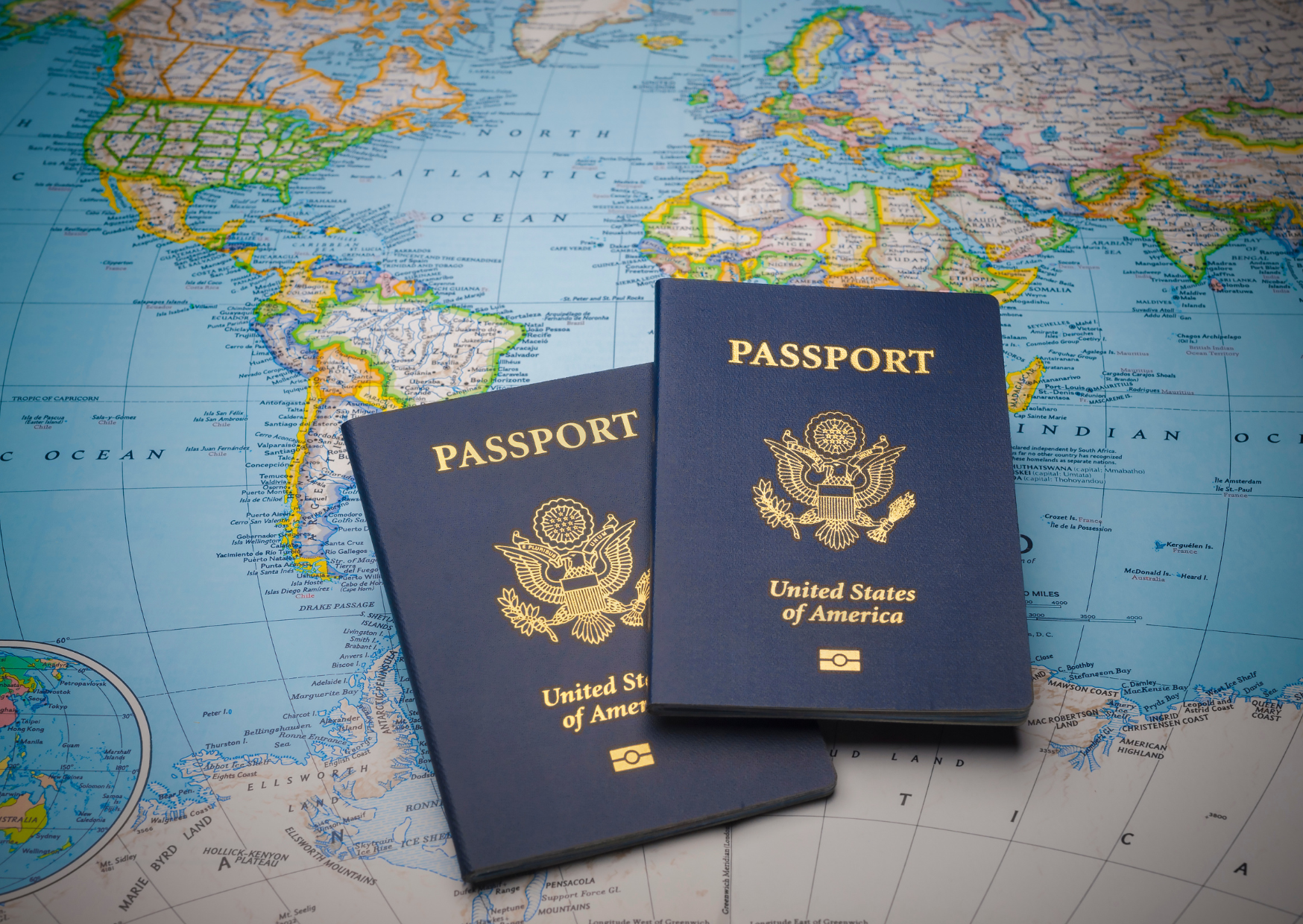
The first thing to understand is that renewing from abroad is not the same procedure as renewing within the United States, and assuming it is will lead you astray. Americans at home can now often renew entirely online through the State Department’s system, a convenience that has made domestic renewal truly easy, but that online path is generally not the route for Americans living overseas, who must instead go through their US embassy or consulate.
The overseas process runs on paper and through the mission. For an eligible adult renewal from a country like Spain, you complete the Overseas DS-82 renewal form, and rather than uploading it to a website you assemble a physical application package and submit it to the embassy or consulate, either by mail or at an in-person appointment depending on the post. It is a more hands-on, document-heavy process than the slick domestic online option, and it is run by your local mission rather than a stateside center.
This distinction matters from the very first step, because it shapes everything that follows. A resident of Europe who assumes they can simply renew online like their friends back home will quickly discover that the overseas route is different, requiring a paper form, a physical package and dealings with the embassy, so the sooner you grasp that you are on the overseas track rather than the domestic one, the sooner you can follow the right instructions and avoid a false start. The confusion is understandable and common, because the domestic online system has been so heavily promoted that many Americans assume it is now the universal way to renew. It is not, at least not from most of Europe, where the embassy remains the gateway, so the friend back home describing a five-minute online renewal is describing a process you cannot use. Recognizing that gap early saves you from wasting time trying to force the wrong path.
What Goes in the Package

The application package itself is specific, and getting it exactly right the first time is the single best thing you can do for your timeline. Errors and omissions are the great cause of delay, so precision here pays off directly in weeks saved. The core of the package is the completed and hand-signed DS-82 form, which you fill out and print, since an unsigned or undated form will simply not be processed.
Several other pieces must accompany it. You include your most recent US passport, the very book you are renewing, along with one US-size passport photo meeting the strict specifications, which are not the same as the local Spanish or European photo sizes, so a photo taken to local standards may be rejected. You also include proof that you have paid the fee, which for a passport book is one hundred and thirty dollars in 2026, paid online through the government’s Pay.gov system, with the confirmation printed and enclosed.
There is one more item that overseas renewers must supply and domestic ones do not, and it is easy to overlook. You generally must include a prepaid express return shipping label, often a DHL Express label, so that the embassy can send your documents and your finished passport back to you, which means the return postage is your responsibility to arrange and pay for. Forgetting this, or getting the photo or the payment wrong, is exactly the kind of small error that turns a clean renewal into a delayed one. It is worth being almost pedantic about the checklist, because every item is a potential point of failure and the cost of a mistake is measured in weeks. The embassies publish precise instructions for exactly this reason, and following them to the letter, the right form printed and signed, the right photo size, the right fee paid the right way, the return label included, is the whole art of a fast renewal. There is no cleverness required, only care, and care here is unusually well rewarded.
The Real Timeline, End to End
Now the timeline, which is the part people most underestimate, because the headline processing figure is only a fraction of the true wait. The embassy will typically cite a processing time of around four to six weeks, and that number is accurate as far as it goes, but it describes only the processing itself, not the full journey your application takes from your kitchen table to your new passport in hand.
The full picture is longer once you add the shipping and the steps around it. Your package has to reach the embassy, then the application is generally sent onward to a US passport processing center, then the finished passport must travel back across the Atlantic to the embassy, undergo the mission’s own quality checks and handling, and finally be shipped to you, each leg adding days or more. Stack it all together and the realistic end-to-end timeline is better thought of as roughly six to ten weeks, not the bare four to six of processing alone.
And there is a final detail that surprises people, concerning your old passport. Your previous passport is generally returned to you separately from the new one, often arriving around four weeks after the new passport does, so even once your shiny new book is in hand, the process is not fully closed and your old document is still in transit. None of this is cause for alarm, but all of it is cause for planning, because a person who counted on the four-to-six-week figure and booked travel accordingly can find themselves badly caught out. The mismatch between the quoted number and the real one is the source of most of the trouble, because the four-to-six-week figure is technically true and therefore trusted, yet it quietly omits the international shipping that only overseas applicants face. Planning to the processing figure alone is planning to be surprised.
The Trap Weeks

Here is the part that deserves the most attention, because it is the one that truly traps people, and it follows from a simple requirement. When you renew, you must submit your current passport with your application, sending away the very document that is your proof of citizenship, your travel document, and often your primary identification, and you do not get it back until the process is complete. For the entire processing window, you are effectively without a valid passport.
This creates a stretch of weeks with real consequences. During that window you cannot travel internationally, since your passport is sitting in an embassy or a processing center, so any trip home, any European getaway, any travel at all is off the table until your new book arrives. For a retiree who likes to move around, or anyone with family across borders, this enforced grounding of six to ten weeks is a serious constraint that has to be planned around rather than discovered mid-renewal.
The trap has a second edge beyond travel, which is identification. In much of Europe, your passport is a key piece of identity for all sorts of everyday business, from banking to residency errands to any official transaction that asks for ID, and being without it for weeks can complicate ordinary life in ways a domestic renewer never faces. The lesson is stark and simple, that you must choose the timing of your renewal for a window when you are certain you will need neither to travel nor to prove your identity with your passport, because for those weeks you will not have it.
Planning Around the Deadline
Given all this, the overwhelming rule is to renew early, well before you are forced to, and this single habit defuses almost every problem the process can throw at you. Because so many countries and airlines enforce a rule that your passport must be valid for at least six months beyond your travel dates, your practical expiration is effectively half a year sooner than the date printed in the book, so a passport that expires in the spring is already a problem for summer travel.
The safe approach is to start renewing months ahead of the real deadline. Beginning the process at least three to four months before your passport expires gives you room to absorb the full six-to-ten-week timeline, to choose trap weeks that fall in a quiet stretch with no travel, and to handle any error or delay without panic, which is exactly the cushion that a last-minute renewal denies you. Renewing early is not caution for its own sake but the thing that makes the trap weeks harmless.
The alternative, leaving it late, is where the real trouble lives. A European resident who waits until their passport is nearly expired, or until a trip looms, collides with the full timeline, the trap weeks and the six-month validity rule all at once, and may face either an expensive scramble for expedited or emergency service through the embassy or a cancelled trip. Almost every passport horror story abroad traces back to starting too late, and almost every smooth renewal to starting early. The single most valuable thing you can do is simply to begin before you have to.
When You Need It Faster

Sometimes life does not allow the leisurely timeline, and it is worth knowing that faster options exist, though they are more limited abroad than at home. If you have urgent travel while a renewal is in progress or looming, the path is to contact your embassy directly, since missions have procedures for genuine emergencies and for urgent travel, typically requiring proof of your imminent trip such as an itinerary, and they can sometimes expedite or arrange an emergency travel document. It helps to know that a genuine emergency is treated very differently from mere impatience. If a family crisis back home demands that you fly at once, or your passport is lost or stolen, the embassy can often issue an emergency or limited-validity travel document quickly to get you moving, which is a real and valuable safety net. What the system will not do is rush an ordinary renewal simply because you left it too late, so the emergency route is best understood as protection against the unforeseeable rather than a fallback for poor planning.
These urgent routes come with conditions and are not a substitute for planning. Expedited and emergency services abroad vary by country and embassy, may require an in-person appointment, and are generally reserved for genuine, provable travel needs rather than mere convenience, so they are a safety net for emergencies rather than a way to shortcut a renewal you simply left too late. Relying on them by default is a mistake, and the embassies make clear they are for genuine urgency.
The wiser course is to treat the emergency options as exactly that, a backstop you hope not to need. Build your renewal on the assumption of the full ordinary timeline, start early enough that you never require the urgent path, and keep the embassy’s emergency procedures in mind only as insurance against the unexpected, a lost passport or a sudden family crisis abroad. The traveler who plans for the slow timeline rarely needs the fast one, which is the position you want to be in.
Getting It Done Without the Stress
Renewing a US passport from Europe in 2026 comes down to a few clear truths that, once grasped, make the whole thing straightforward. You are on the overseas track, not the domestic online one, so you deal with your embassy and a paper package. The real timeline is six to ten weeks end to end, not the four to six of processing alone. And you will be without your passport for that whole stretch, the trap weeks, unable to travel or to use it as identification.
Hold those truths and the strategy writes itself. Assemble the package precisely, with the signed form, the correct US-size photo, the Pay.gov payment confirmation and the prepaid return label, to avoid the errors that cause most delays. Start months early, well ahead of both your expiration date and the six-month validity cushion, so the timeline and the trap weeks fall harmlessly in a quiet period. And keep the embassy’s emergency options in reserve for genuine crises rather than as a plan.
Do all that and renewing from abroad becomes what it should be, a slightly tedious administrative chore rather than a source of dread, ending reliably with a fresh passport and years of travel ahead. The Americans who find it stressful are almost always the ones who assumed it worked like renewing at home and left it late, colliding with the longer timeline and the trap weeks at the worst possible moment. The ones who find it easy simply understood the overseas process, respected the real timeline, and started early enough that the passport was back in the drawer long before they needed it. Renew before you must, and Europe’s version of this small chore holds no traps at all.

About the Author: Ruben, co-founder of Gamintraveler.com since 2014, is a seasoned traveler from Spain who has explored over 100 countries since 2009. Known for his extensive travel adventures across South America, Europe, the US, Australia, New Zealand, Asia, and Africa, Ruben combines his passion for adventurous yet sustainable living with his love for cycling, highlighted by his remarkable 5-month bicycle journey from Spain to Norway. He currently resides in Spain, where he continues sharing his travel experiences with his partner, Rachel, and their son, Han.