
Ask the internet what a woman over fifty should eat in summer and you will drown in cleanses, green juices, restriction plans and lists of foods to fear. So let me offer something different, which is not a plan at all but a portrait. This is roughly what a real day of eating looks like for the women I have come to know in Spain and across the Mediterranean, women in their fifties and sixties and beyond who eat wonderfully well and think about it hardly at all. There is no detox here, no cleanse, no deprivation. There is just good food, eaten with pleasure, all day long. That word, pleasure, is the one the wellness industry keeps leaving out, and it turns out to be the one that matters most.
What strikes an outsider first is how abundant it is. These are not women picking at sad little portions of virtuous food, but women who eat real bread and good olive oil and ripe fruit and proper meals with wine, and who nonetheless tend to move through later life with an ease and vitality that the diet industry promises and rarely delivers. The secret, if it is one, is that there is no secret, only a way of eating that has never treated food as the enemy.
Here is what a Mediterranean woman over fifty might really eat across an ordinary summer day, from morning coffee to evening, offered as a real and abundant menu rather than a detox or a diet to follow. This is a descriptive cultural portrait rather than medical or nutritional advice, everyone’s needs and health are different, and it is meant to inspire rather than prescribe. But as a picture of how to eat well and happily in later life, this way of eating is worth knowing.
Morning, Unhurried and Simple
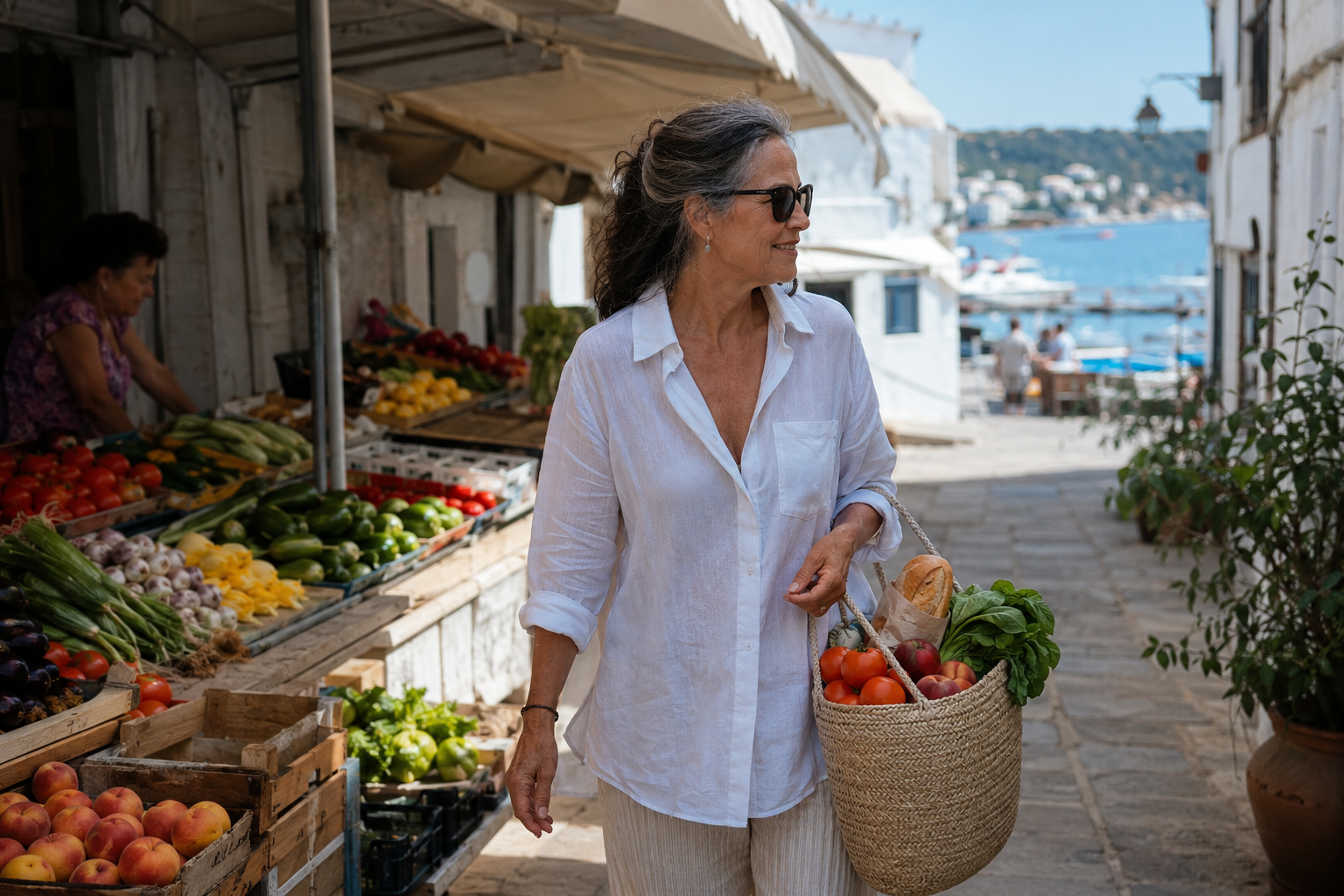
The Mediterranean summer day tends to begin gently, with a breakfast that is modest but never grim. For many women it starts with coffee, a proper strong coffee taken slowly, often with warm milk, and something simple alongside rather than an elaborate spread. This is not a skipped meal or a punishing one, just a light and pleasant start to the day taken at an unhurried pace.
What is on the table is real and unfussy. It might be good bread, perhaps toasted and rubbed with tomato and drizzled with olive oil in the Spanish way, or a piece of fruit, or a bit of cheese, the kind of breakfast that is satisfying without being heavy in the summer heat. There is no anxious calculation here, no protein target or superfood powder, just a few real foods enjoyed in the cool of the morning before the day warms up.
The spirit of it matters as much as the food. Breakfast is taken calmly, often sitting down, sometimes at a café over conversation, treated as a small civilized pause rather than something grabbed on the run. This unhurried beginning sets the tone for a day in which food is a pleasure to be savored rather than a problem to be managed, and it is the first quiet lesson of the Mediterranean table. It is worth noticing what is absent from this morning as much as what is present. There is no anxiety, no ritual of weighing and logging, no sense that the day’s eating is a battle to be won or lost before it has begun. The woman starting her day this way is not managing her food. She is simply enjoying it, and that ease, carried through every meal, is as much a part of her wellbeing as anything on the plate.
Midmorning, a Pause Not a Snack
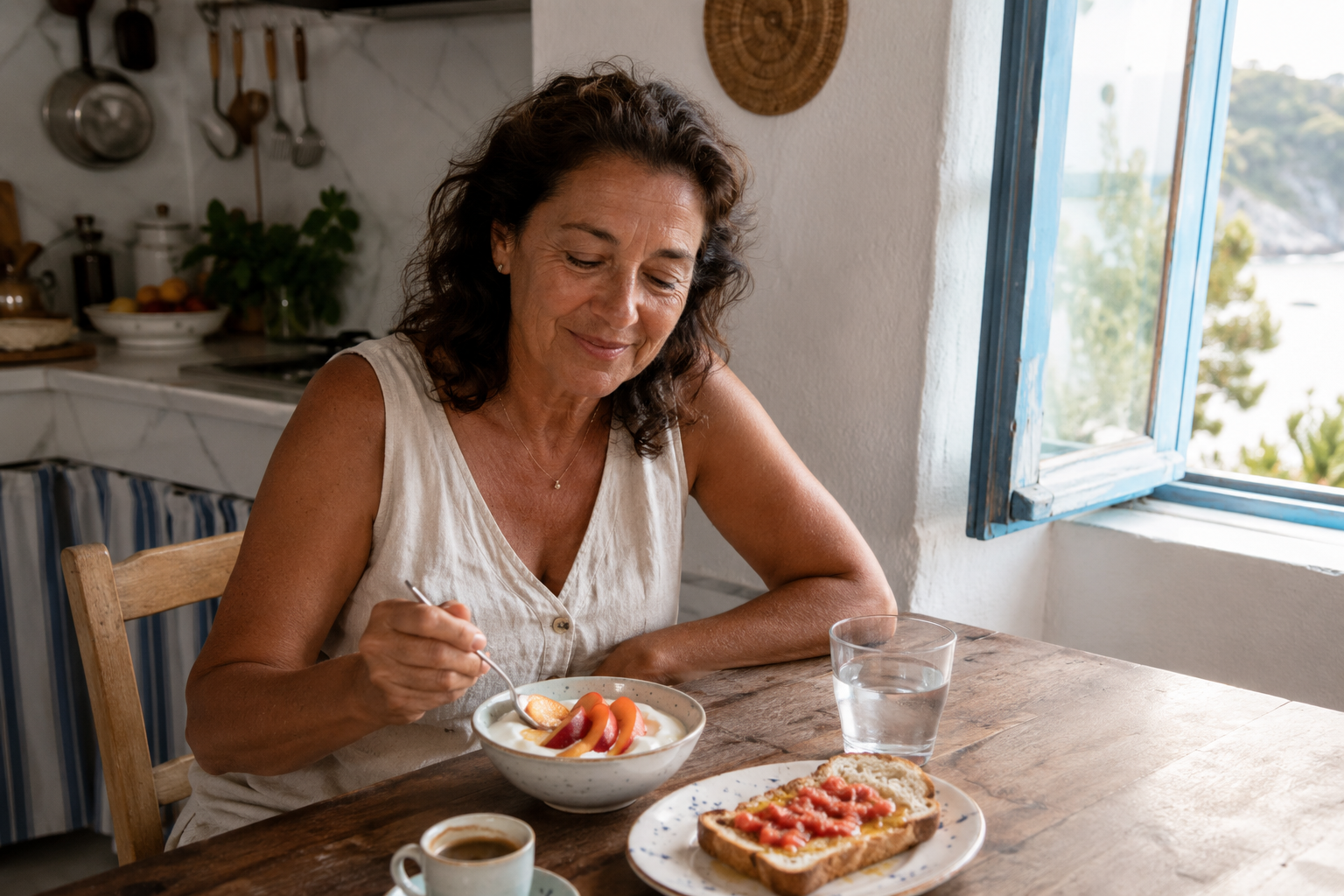
Later in the morning there may be a second small coffee and a little something, but it is worth noticing what this is and is not. It is not the anxious, mindless snacking that fills so many modern mornings, the handful of this and the packet of that eaten standing at a counter, but a deliberate small pause, perhaps a coffee with a piece of fruit or a few nuts or a small pastry, taken as its own little moment.
The distinction is subtle and important. Where snacking in much of the world has become a constant background grazing, ungoverned and often unnoticed, the Mediterranean midmorning pause is a discrete, modest, enjoyed thing with a beginning and an end, more ritual than habit. It punctuates the morning rather than blurring it, and it is small because the day’s real meal is still to come and everyone knows it.
This is part of a larger rhythm worth appreciating. The Mediterranean day has a shape, a series of distinct eating occasions each with its own character, rather than the formless all-day grazing that has replaced structured meals elsewhere. The midmorning pause knows its place in that rhythm, a light bridge to the main event, and it neither spoils the appetite nor pretends to be more than it is. This structure is quietly protective in a way modern eating has lost. When the day has clear eating occasions, each with its own place and purpose, there is little of the aimless grazing that leads people to eat far more than they notice, not through discipline but through shape. The pause is enjoyed and then it is over, and the appetite is left intact for the meal that deserves it.
Midday, the Real Meal of the Day
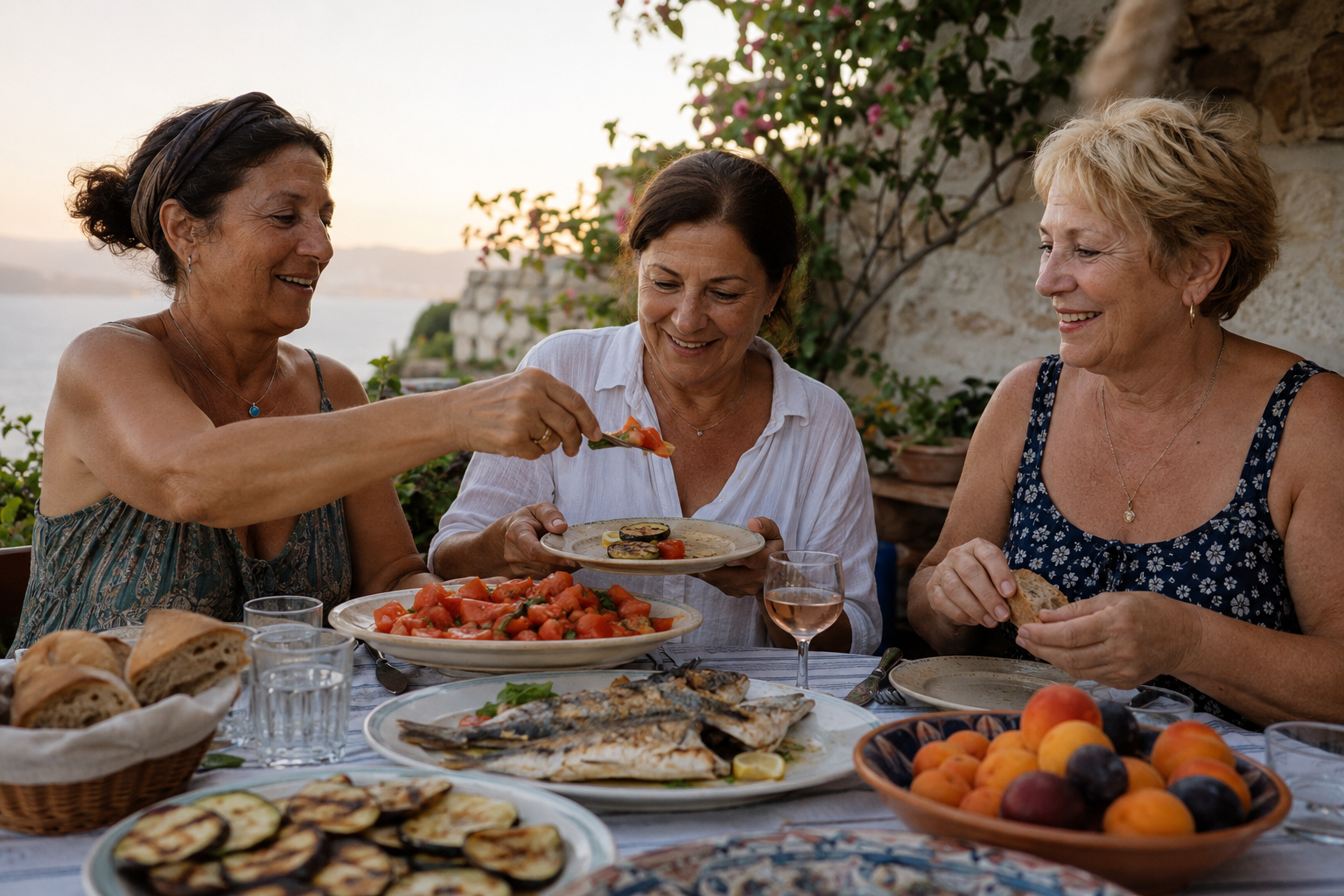
Then comes lunch, and here is the heart of the whole day, because in much of the Mediterranean the midday meal is the largest and most important one, not a hurried sandwich but a proper, multi-part, sit-down affair. This is where the abundance lives, and it is worth lingering on, because it defies everything the detox culture would predict. The main meal is generous, varied and thoroughly enjoyed.
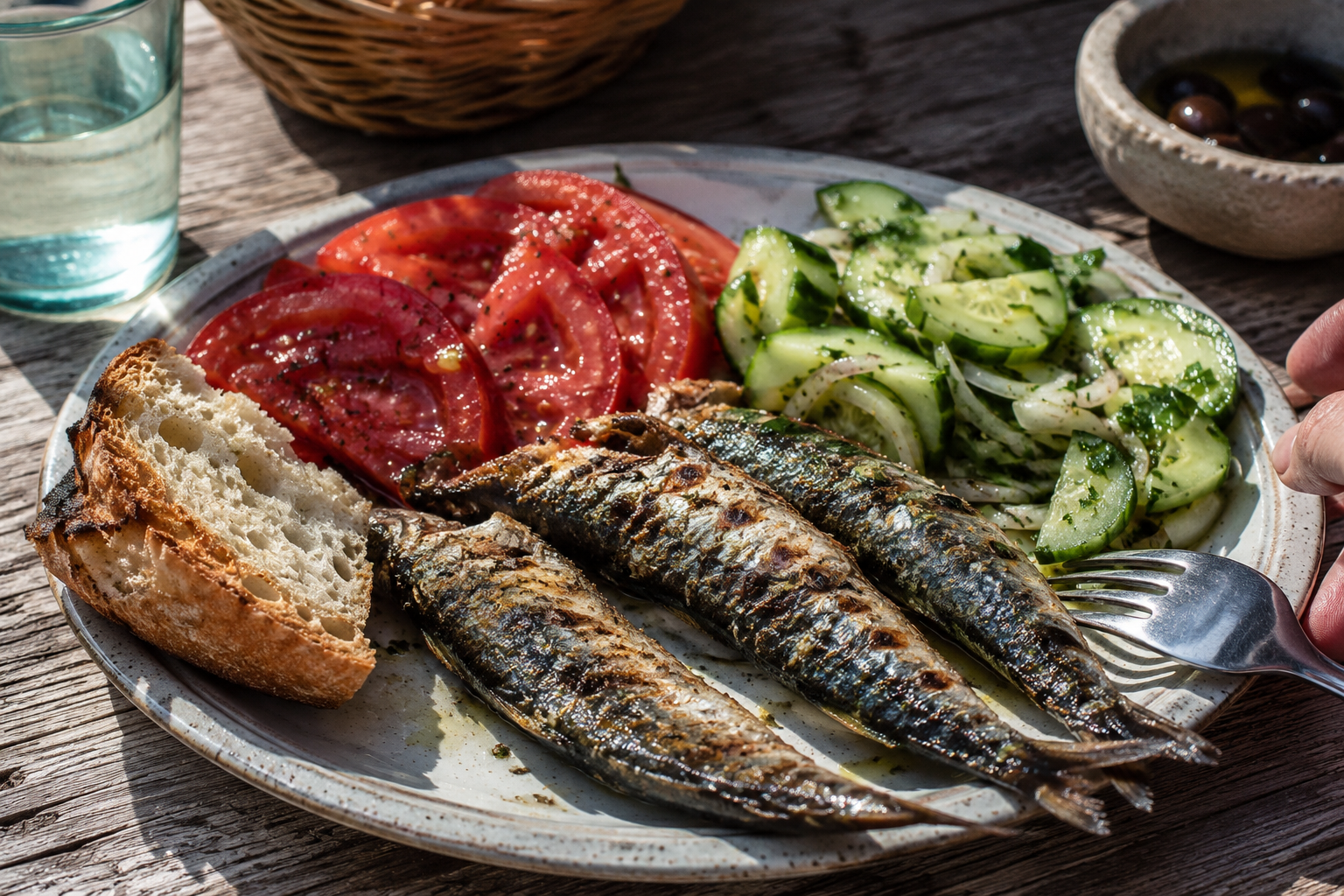
Picture what might be on the table. Perhaps a first course of vegetables or a salad glistening with olive oil, or a bowl of gazpacho in the summer heat, then a main of fish or a modest portion of meat, or a dish of beans or lentils, or a rice dish, accompanied by more vegetables and always by good bread. There may be a glass of wine. It is a real meal, colorful and satisfying and unmistakably a pleasure, eaten slowly and usually in company.
Nothing about it resembles restriction. The food is real and whole and generous, built on vegetables and legumes and good oil and fish with bread on the side, the very things a diet culture treats with suspicion, and it is eaten with evident enjoyment rather than guilt. Watch these women at a long summer lunch and you will see no one pushing food around a plate or apologizing for a second helping of anything. This is the meal that anchors the day, and its size and pleasure are precisely why the rest of the day can be light without any sense of deprivation. A woman well fed at midday needs nothing dramatic later. This is the pivot the whole day turns on, and it is worth saying plainly that the generosity of the lunch is a feature and not a lapse. Far from being the indulgence a diet would flag, the big midday meal is precisely what makes the rest of the day effortless, satisfying the body so thoroughly that the evening can be light without any hunger or willpower. The abundance is not in tension with eating well. It is the mechanism of it.
The Long Table and the Afternoon
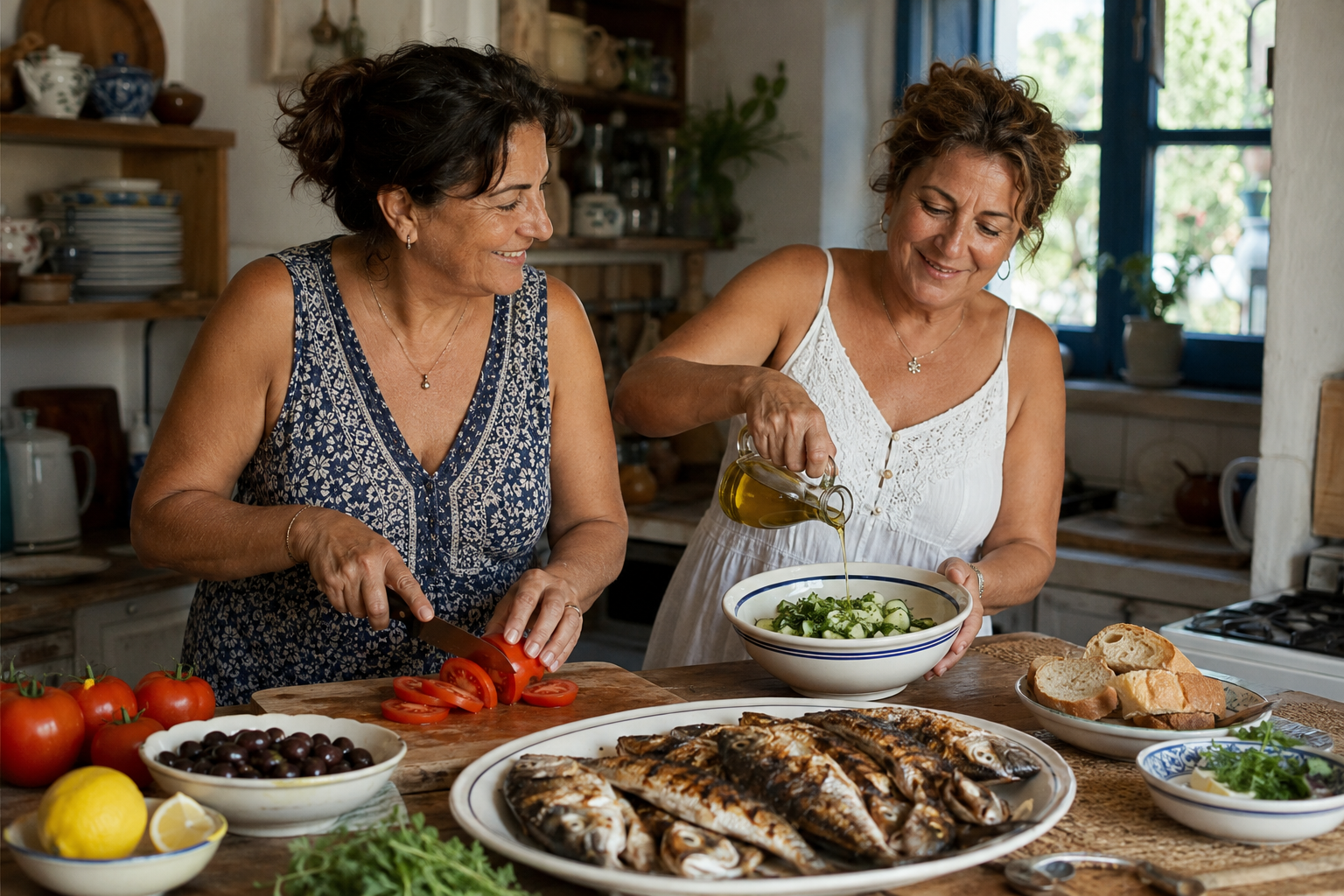
Just as important as what is eaten at midday is how, because the Mediterranean lunch is famously slow and social, and this is not incidental to how these women eat but central to it. The meal is stretched over time, eaten at a table with family or friends or colleagues, lingered over with conversation, so that a lunch is as much a social occasion as a refueling, often followed by a quiet rest in the heat of the afternoon.
This slowness quietly shapes everything. Eating a generous meal slowly and in company gives the body time to feel its fullness and the spirit time to feel satisfied, so that a large, pleasurable lunch settles into genuine contentment rather than excess, and the person rises from the table full in every sense. The pace turns abundance into satisfaction, which is a trick the hurried eater never learns.
The afternoon that follows is part of the pattern too. In the summer heat the hours after lunch are for slowing down, for rest and shade, and the heavy midday meal fits this rhythm perfectly, digested at leisure rather than worked off in a panic. This is a way of life arranged around the meal rather than the meal squeezed into a life, and it is one of the reasons the food nourishes so completely.
Evening, Light by Nature
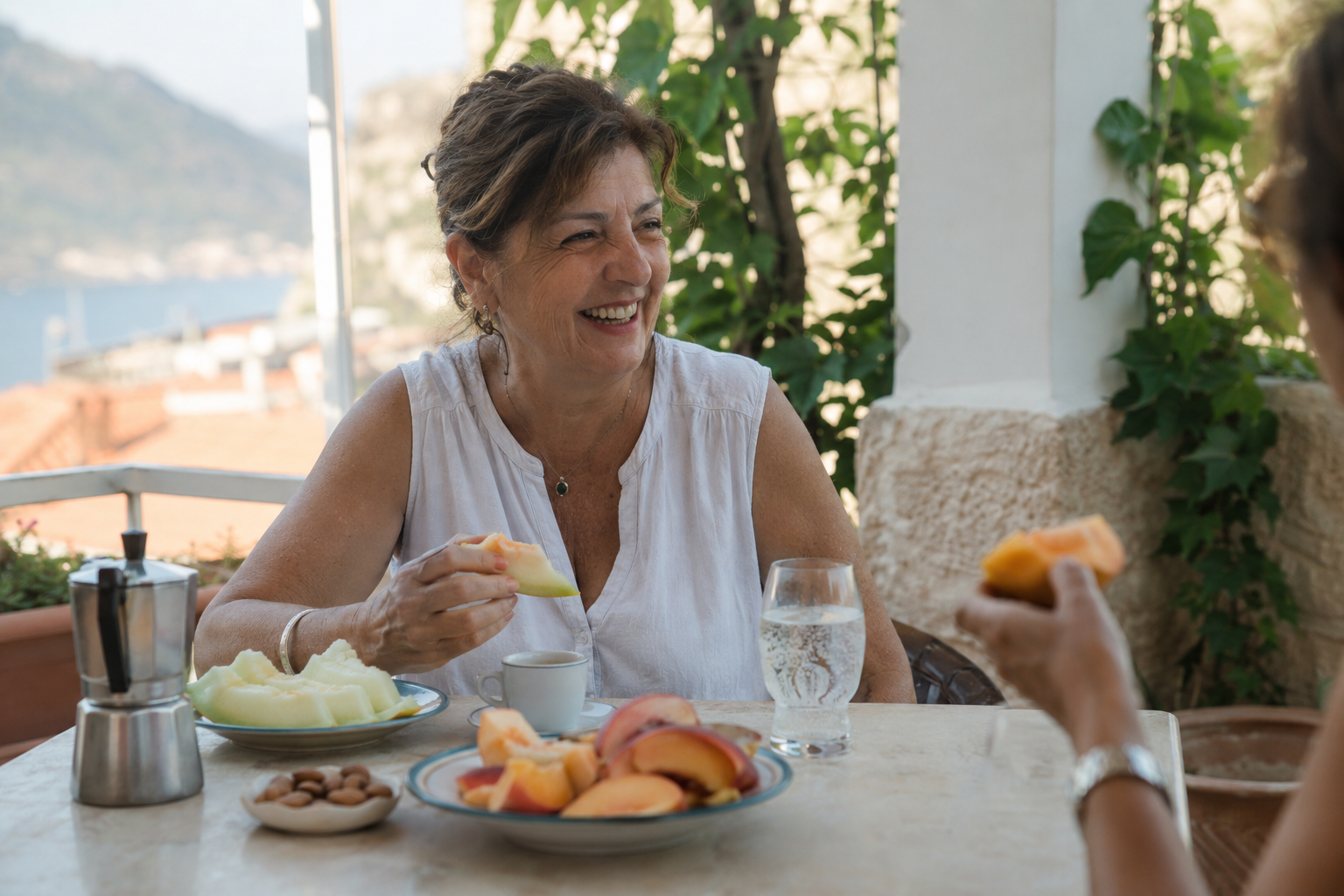
By evening, after a substantial and satisfying midday meal, dinner tends to be a lighter affair, and this is the natural consequence of the day’s shape rather than any act of restraint. Having eaten well at lunch, a Mediterranean woman is simply not very hungry in the evening, so dinner is smaller and simpler, taken later in the cool of the night when the heat has broken.
What appears is modest and appealing. It might be a simple salad, some vegetables, a little cheese and bread, a bowl of soup, a few slices of tomato with oil, or some fruit, the kind of light supper that satisfies a modest evening appetite without weighing on the body before sleep. In summer especially, when the days are hot, this lightness feels natural and welcome rather than imposed, a cool and easy end to the day, the kind of supper you eat on a terrace as the temperature finally drops.
The key thing to understand is that this is not dieting. The lighter dinner is not a sacrifice made to lose weight but the effortless result of having eaten a real, satisfying meal earlier, so no willpower is involved and no hunger is endured. The body simply wants less, and the evening meal answers that want gently. It is restriction’s opposite, a lightness that comes from being well fed rather than from holding back.
The Wine, the Oil, the Bread
Now to the things a detox culture would forbid, because they are present all day and they matter. There is olive oil, and lots of it, poured generously over vegetables and bread and into cooking, the central fat of the whole cuisine and one of its glories, treated not as a guilty indulgence but as a daily staple. Nobody here is measuring it out in cautious teaspoons.
There is bread, real bread, on the table at meals, and there is often wine, a glass with lunch or dinner enjoyed slowly and in the context of food and company. These are not cheats or exceptions sneaked past a diet but ordinary, expected, pleasurable parts of the day, present without anxiety because the whole way of eating has room for them. The presence of these supposedly forbidden foods is not a flaw in the Mediterranean way. It is part of its wisdom.
This is perhaps the deepest contrast with the detox mentality. Where the cleanse defines itself by what it excludes, building its whole identity on deprivation and fear, the Mediterranean day is defined by what it includes, an abundance of good things eaten without guilt, and it produces better health and far more happiness than any regime of exclusion. The oil and the bread and the wine are not obstacles to eating well in later life. For these women, they are part of what eating well means. There is a lesson in this for anyone who has spent years afraid of one food or another. A way of eating built on fear tends to collapse, because the forbidden thing eventually wins, whereas a way of eating built on generosity and pleasure has no forbidden thing to collapse around. These women are not thin despite the oil and bread and wine, nor healthy in spite of them, but well precisely because their food is a source of joy rather than dread.
Why This Beats Any Detox
Step back from the day and the reason it works becomes clear, and it has nothing to do with restriction. This way of eating supports wellbeing across later life not by cutting and fearing and cleansing but by building a whole day around real, whole, satisfying food eaten with pleasure and in company, which nourishes the body and the spirit at once. It is sustainable precisely because it asks for nothing that anyone would want to stop.
The contrast with the detox could not be sharper. A cleanse is a brief, miserable, unsustainable ordeal that ends and leaves nothing behind but the wish for the food it denied, while the Mediterranean day is not a temporary fix at all but simply how these women eat, every day, for their whole lives, which is why it truly shapes their health. One is an event to be endured. The other is a life to be enjoyed.
So if you take anything from this portrait, let it be permission rather than a plan. The women who eat this way are not following a diet or bracing for a cleanse but simply eating real food, generously and slowly and happily, all day and every day, and thriving on it well past fifty. You do not need a detox. You need good bread and good oil and ripe fruit and a proper lunch eaten slowly with people you like, and the freedom to enjoy it all without fear. That is not a diet to survive but a way of eating to love, and it is available to anyone willing to put down the cleanse and pick up the pleasure. These women were never on a plan, only ever at the table, and that, in the end, is the whole of the menu.

About the Author: Ruben, co-founder of Gamintraveler.com since 2014, is a seasoned traveler from Spain who has explored over 100 countries since 2009. Known for his extensive travel adventures across South America, Europe, the US, Australia, New Zealand, Asia, and Africa, Ruben combines his passion for adventurous yet sustainable living with his love for cycling, highlighted by his remarkable 5-month bicycle journey from Spain to Norway. He currently resides in Spain, where he continues sharing his travel experiences with his partner, Rachel, and their son, Han.