
Somewhere in Italy right now, on a Sunday afternoon, a table is set that will not be cleared for hours. Around it sit grandparents and parents and children, three generations in one room, and on that table will pass an endless procession of dishes, course after course, while the talk rises and falls and nobody thinks to check the time. The phones are away. The afternoon belongs entirely to this. It is the Italian Sunday lunch, the pranzo della domenica, and it is one of the last great weekly rituals of the Western world.
To an outsider it can look almost impossible, a long midday meal that swallows an entire Sunday, demanding hours at the table with the whole family and no escape into a screen. To Italians it is simply the shape of the week, the fixed point everything else bends around, a tradition so deep and so cherished that skipping it can feel like a small betrayal. The Sunday table is not just a meal but the ritual that holds an Italian family together, week after week, generation after generation.
Here is what the Italian Sunday lunch really is, why it endures when so many family traditions have faded, what happens across those long hours at the table, and what the rest of us might learn from a culture that still stops for one long meal a week. This is a real and living tradition rather than a nostalgic myth, and while every family keeps it differently, the shape of it is remarkably constant across Italy.
The Weekly Ritual That Anchors Everything
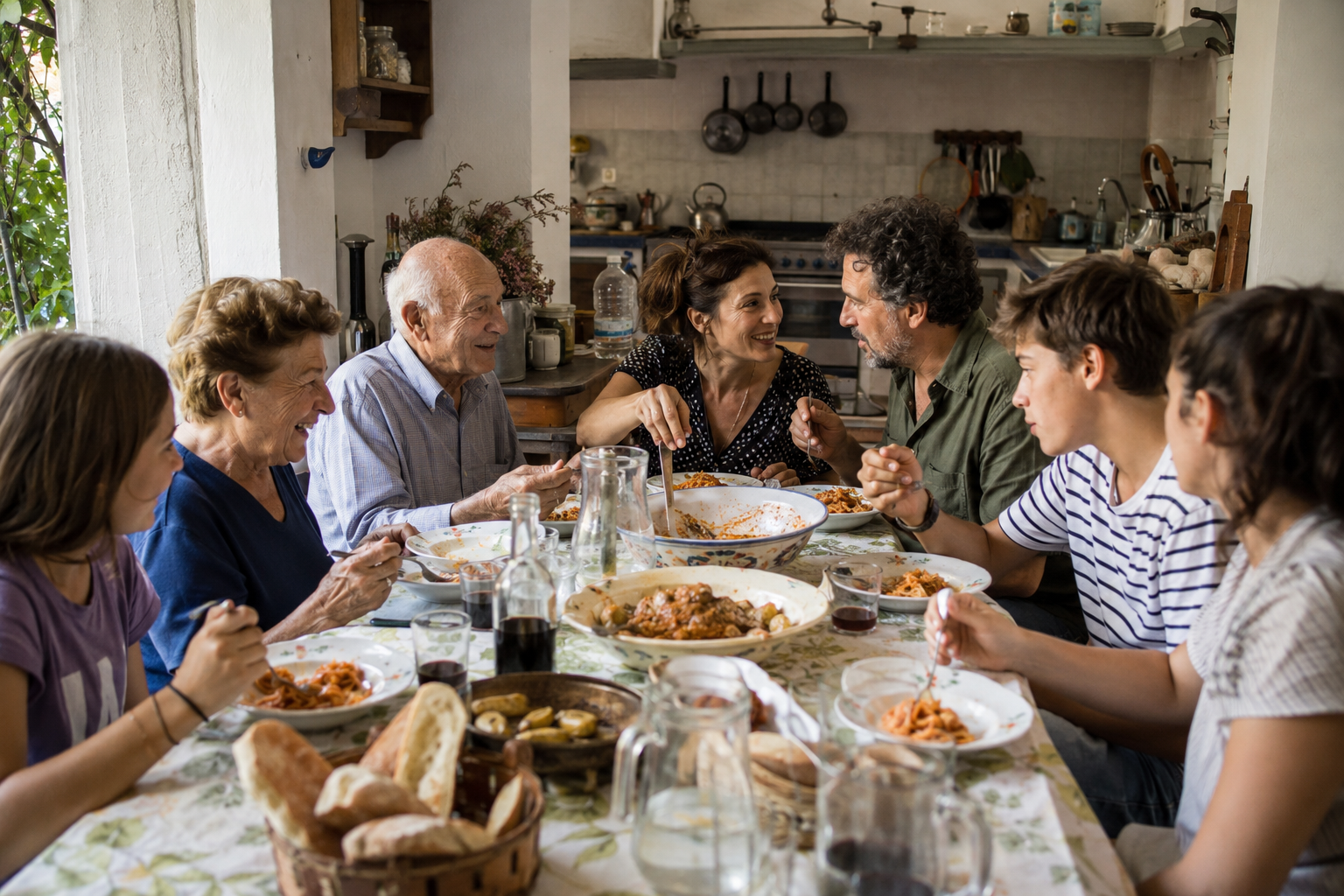
The Italian Sunday lunch is the most important meal of the week, and understanding it begins with grasping how central it is. This is not an occasional family dinner or a holiday gathering but a weekly institution, repeated every Sunday, the reliable anchor around which the rhythm of Italian family life is organized. Everything else in the week flows toward it and away from it.
Its permanence is the point. Where so much of modern life has grown fluid and negotiable, the Sunday lunch stays fixed, a standing appointment that the whole family keeps without needing to arrange it each week, because it simply happens, as it always has. Children grow up knowing that Sunday means the family table, and that knowledge becomes part of the architecture of their lives, a certainty they can count on in a world short of certainties.
This reliability does quiet work over years. A family that gathers every single Sunday accumulates a continuity that occasional gatherings cannot match, a steady weekly thread that keeps relationships current and connected through all the seasons of a life. The Sunday table is where an Italian family stays a family in practice and not just in name, and its power comes precisely from the fact that it never stops. There is a lesson in that constancy for anyone who has watched a family drift apart without any single dramatic rupture. Connection erodes not through big betrayals but through the slow accumulation of missed chances, the gatherings that never quite get arranged, and the Sunday table defeats that erosion simply by refusing to be optional. It happens whether or not anyone feels like organizing it, and that automatic quality is exactly its strength.
Three Generations Around One Table
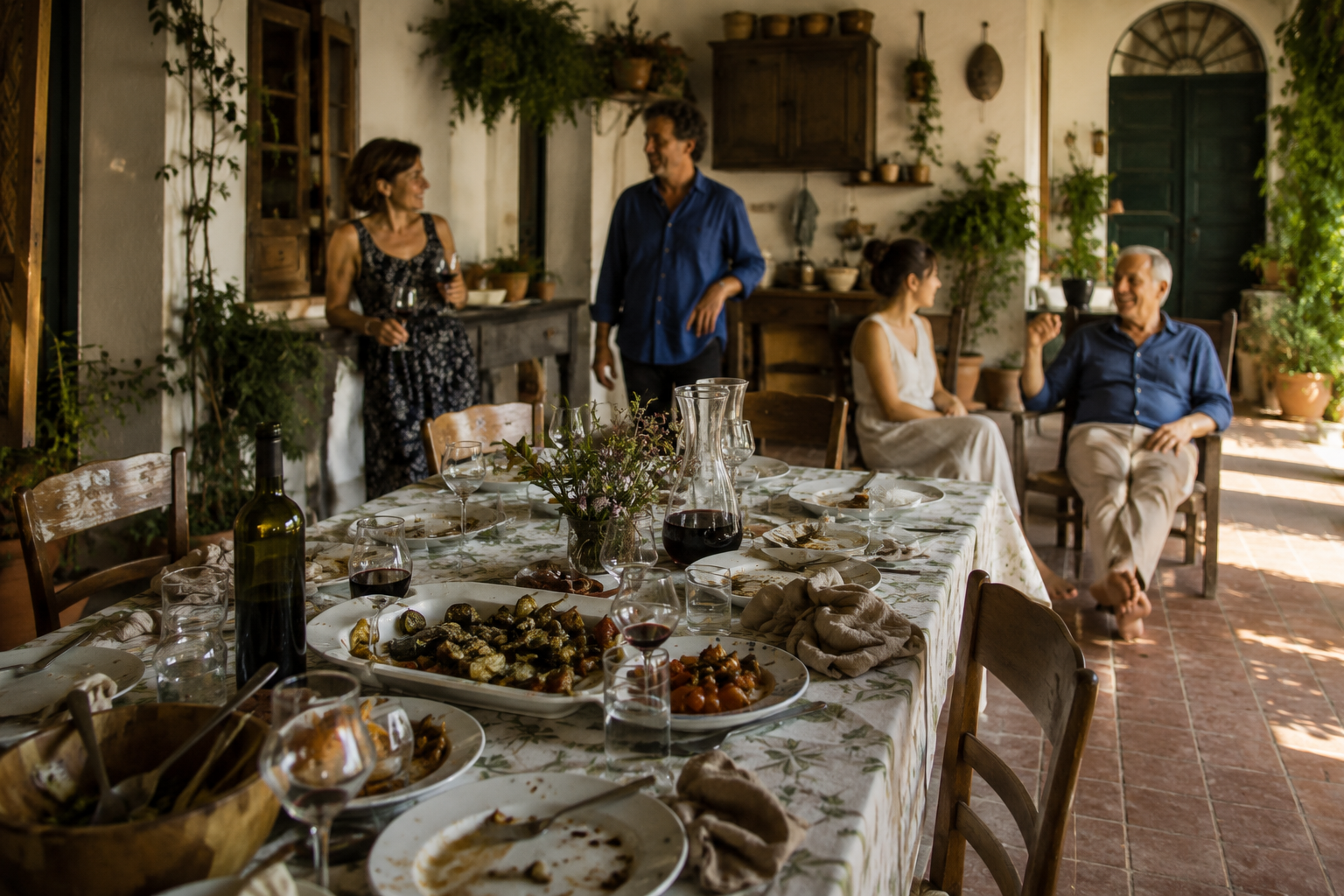
The heart of the tradition is who sits at the table, because the Sunday lunch is explicitly a gathering across the generations. Grandparents, parents and children come together in one room, and often the circle widens to aunts, uncles and cousins, so that the very old and the very young share the same meal and the same afternoon, side by side.
This mixing of ages is the tradition’s deepest gift. In much of modern life the generations are separated, the old in one place and the young in another, meeting rarely and briefly, but the Sunday table pulls them back into constant contact, week after week, so that a child grows up truly knowing their grandparents while a grandparent stays woven into the daily texture of a family’s life. The table is where the generations truly meet.
At the center of it all, very often, stands the nonna, the grandmother, whose cooking anchors the whole ritual. The Sunday lunch is frequently her creation and her domain, the dishes made from recipes carried down through the family, and in feeding three generations she passes something more than food across the table. The tradition is a channel through which a family’s history, its recipes, its stories and its identity flow from the oldest to the youngest, and the nonna is often the one who keeps that channel open.
The Long Slow Procession of Food
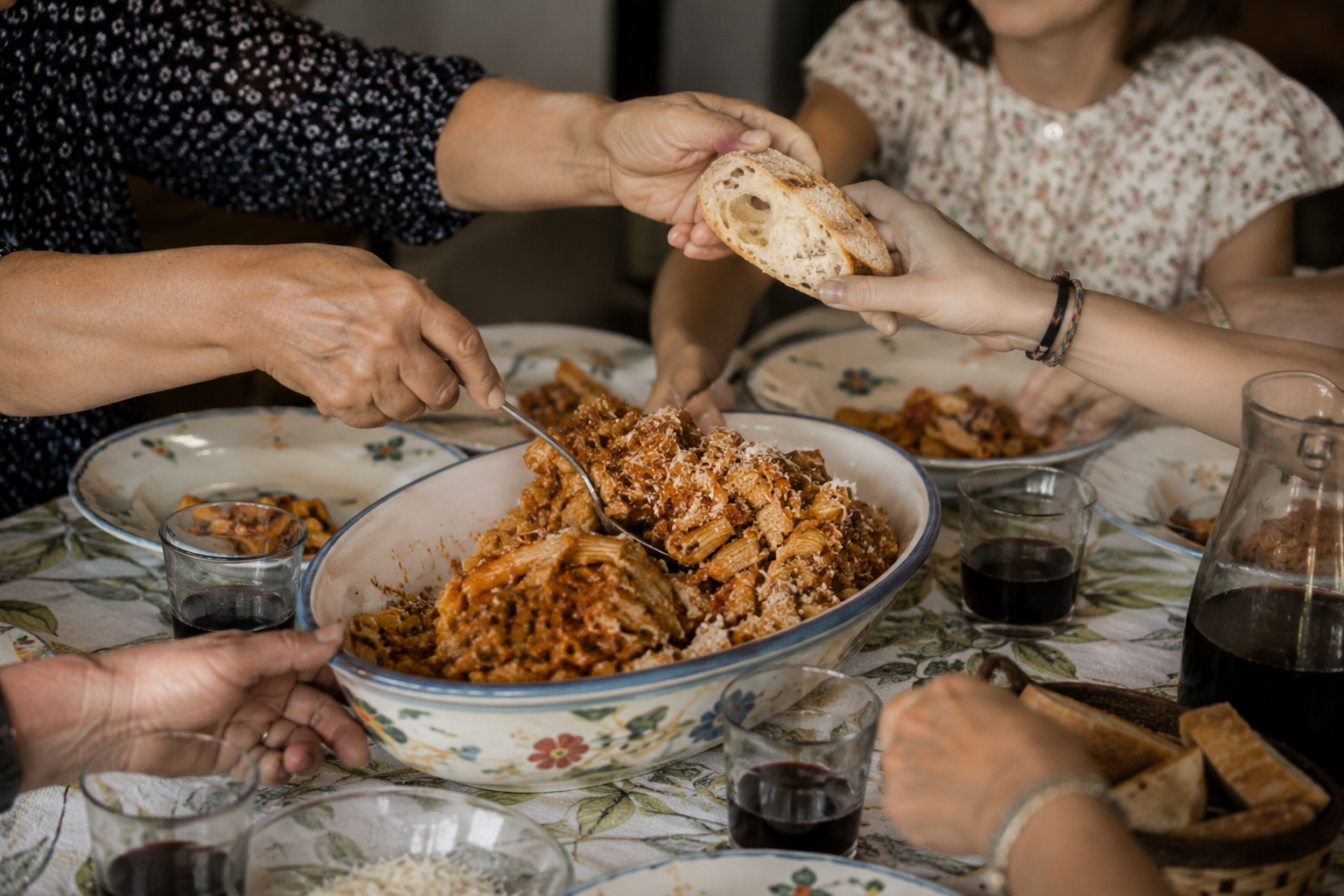
Then there is the food itself, and the Sunday lunch is above all a feast that unfolds slowly across many courses. This is not a single plate eaten and cleared but a long procession, the traditional Italian meal structure extended to its full and generous length, each course arriving in its turn with time to breathe between them.
The sequence has a shape that Italians know by heart. It begins with the antipasto, the opening spread of cured meats and cheeses and little bites, moves to the primo, the first course of pasta or risotto or soup that is often the soul of the meal, and then to the secondo, the main course of meat or fish with its contorno, the vegetable side. Only then come the sweet things, the dolce, the fruit, the coffee, and perhaps a digestivo to close, each stage lingered over rather than rushed.
The point of all these courses is not merely abundance but time. A meal built this way cannot be hurried, because it is designed to unfold over hours, each course a fresh reason to stay at the table and a fresh occasion for conversation. The food is magnificent, but it is also the engine of the gathering, the thing that keeps everyone seated and together for long enough that the real work of the afternoon, which is being a family, can finally happen.
Three Hours, and Why the Length Matters
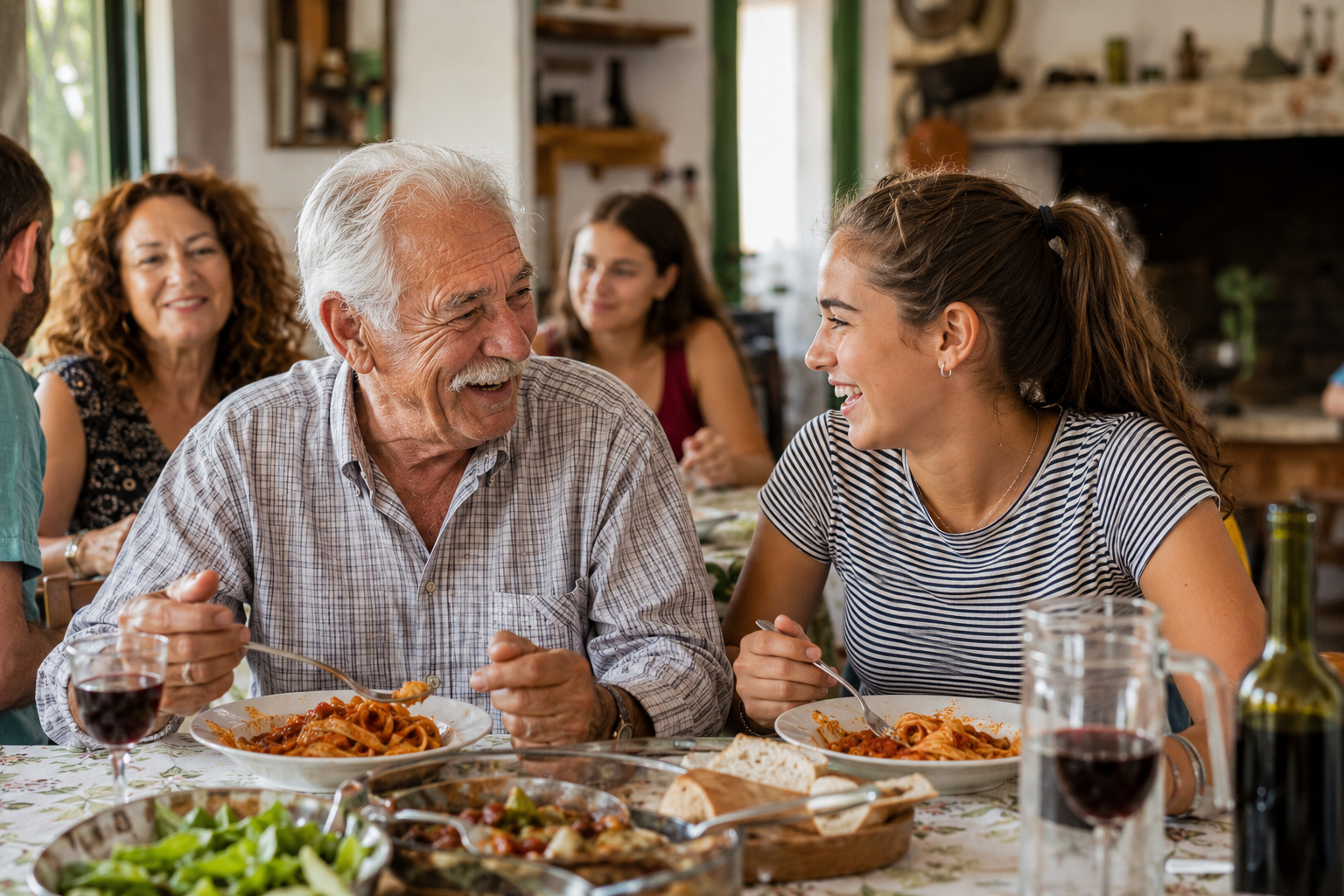
The duration is not incidental to the Sunday lunch but essential to it, and the meal routinely stretches across three hours or more. This length can astonish outsiders used to meals measured in minutes, but to Italians the hours are the whole point, because it is the time itself, not just the food, that does the tradition’s work.
The length matters because connection cannot be rushed. A quick meal feeds the body and little else, but a long one, unhurried and open-ended, creates the space for the slow, meandering, unforced conversation in which a family openly shares its life, the small news and old stories and gentle arguments that never emerge in a hurried half hour. The three hours are not the price of the tradition but its substance.
There is a particular Italian art to this lingering, a pleasure taken in sitting on at the table long after the eating is done. Much of the best of the Sunday lunch happens in this extended tail, the coffee drunk slowly, the last of the wine, the conversation that drifts and deepens once nobody is any longer really eating, when the table becomes simply a place to be together. The meal, in the end, is the occasion, and the company is the point. Outsiders sometimes mistake the length for indulgence, as though three hours at a table were mere excess, but that misses what the time is for. The hours are not spent eating so much as being together, the food thinning out into coffee and talk while the gathering itself becomes the activity. To rush it would be to miss the entire purpose, which is not to be fed quickly but to be together slowly.
No Phones, and What That Protects
In an age of screens, one feature of the traditional Sunday table has taken on new importance, which is the expectation that phones are set aside. The meal is meant to be a time of genuine presence, of real attention paid to the people in the room rather than the devices in the pocket, and the long table is one of the last places where that undivided presence is still expected and protected.
The absence of phones is what keeps the connection real. A family gathered around a table but lost in separate screens is together only in the thinnest sense, and the Sunday tradition, at its best, refuses that hollow version of togetherness, insisting instead on the full attention that genuine connection requires. Putting the phone away is a small act with a large effect, clearing the space for the conversation and the presence that the whole ritual exists to create.
This protection matters more now than it ever did. The pressures that pull families apart, the screens and the schedules and the endless distractions of modern life, are exactly the pressures the Sunday table holds at bay for a few hours each week, carving out a protected zone of real human contact in a world increasingly short of it. In defending the phone-free table, Italian families are defending something the rest of the world is rapidly losing, which is the simple experience of a family fully present with one another.
The Table as a Classroom
Beyond the food and the company, the Sunday table quietly teaches, and much of what a child learns there could be learned nowhere else. Around it a young Italian absorbs, without anyone setting out to teach it, how to sit at a long meal, how to listen and wait a turn, how to talk with adults and with the very old, how to be part of a group that stretches across the generations. It is an education in belonging conducted entirely by example.
The lessons are cultural as much as social. The recipes passed from the nonna’s hands, the family stories told and retold, the dialect words and the old sayings, the way a particular dish is made in this family and no other, all of it is transmitted across the Sunday table, so that a child inherits not just a meal but a whole identity. The table is where an Italian learns what it means to belong to this family and this place, one Sunday at a time.
This is why the presence of the oldest generation matters so much. A grandparent at the table is a living link to a family’s past, carrying memories and ways and stories that would otherwise vanish, and the Sunday lunch is the reliable occasion on which that inheritance is handed down. Take away the regular gathering and the transmission falters, the old stories go untold and the old recipes unlearned, which is part of what a culture loses when the shared table fades.
There is a reciprocity in it too that serves the old as well as the young. The grandparent who feeds three generations every Sunday is not a burden set aside but a valued center of the family, needed and honored and kept in the flow of life, which protects against the isolation that so often shadows old age elsewhere. The table gives the young their roots and gives the old their place, and both halves of that exchange are part of why the tradition is worth defending.
Why the Tradition Survives
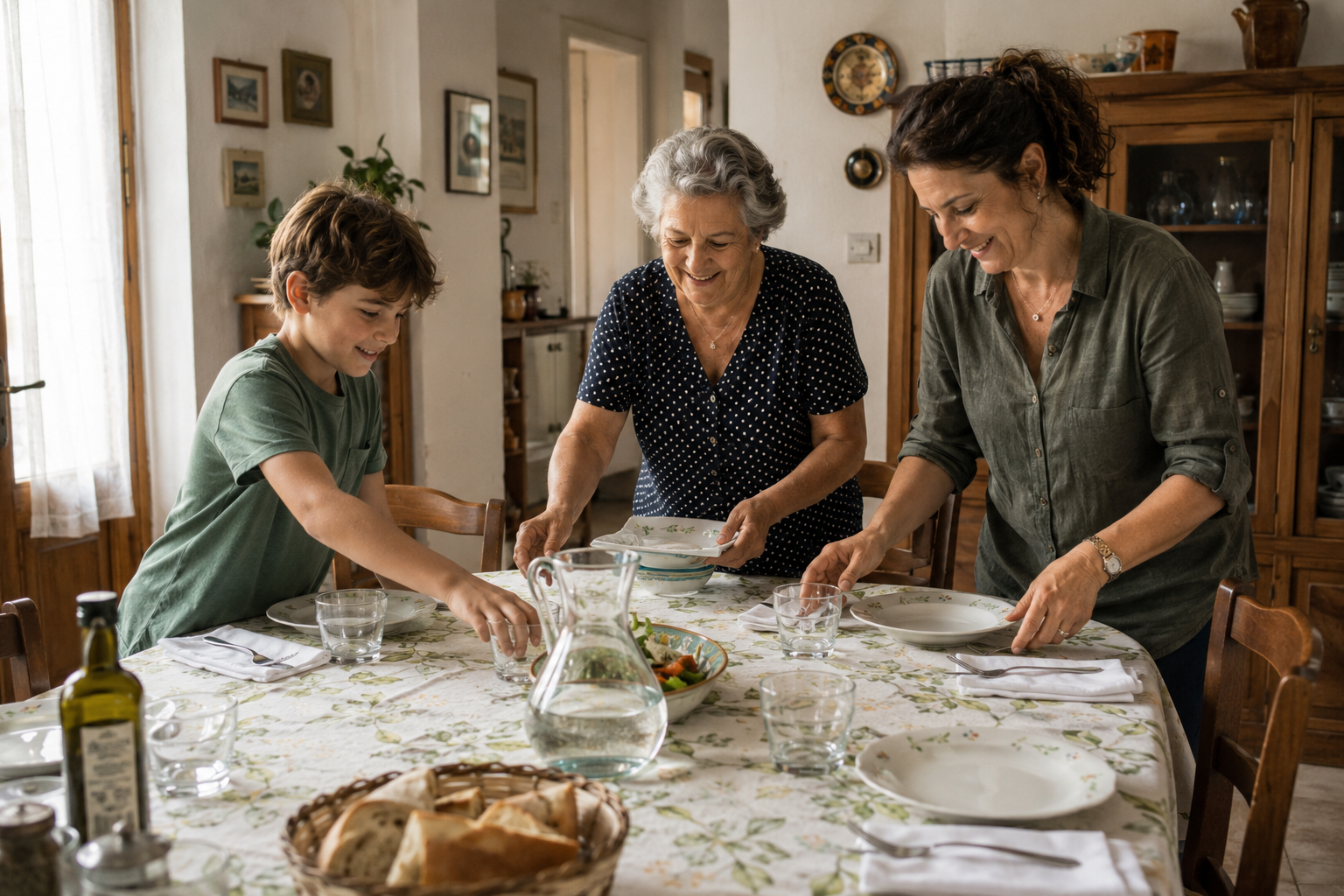
It is worth asking why this ritual has endured when so many others have faded, and the answer lies in what it gives back. The Sunday lunch survives because the people who keep it are rewarded for keeping it, with a weekly dose of belonging and connection and continuity that most modern lives are starved of, and that reward is enough to carry the tradition forward even against the pressures of a busy world.
The benefits run deep and quiet. A family that gathers every Sunday builds bonds that occasional contact cannot, gives its children a secure sense of belonging and identity, keeps its elderly connected and valued rather than isolated, and passes its culture and memory down the generations through the simple act of sharing a meal. These are not small things, and a tradition that delivers them reliably every week earns its own survival.
The tradition is not untouched by modern pressures, and it would be false to pretend every Italian family keeps it perfectly. Busy schedules, scattered families and changing lives have worn at the Sunday lunch as they have worn at everything, and plenty of Italians keep it less faithfully than their grandparents did. But the remarkable thing is how much of it survives, how deeply the instinct persists, and how strongly even a lapsed version of the ritual still pulls at the Italian sense of what a family is for.
What the Rest of Us Might Take From It
The Italian Sunday table offers a lesson that travels well beyond Italy, and it is not that everyone should adopt a three-hour lunch but that the elements behind it are available to anyone. A regular time, protected and non-negotiable. The generations deliberately brought together. A meal long enough to be unhurried. The phones set aside. These are choices any family anywhere can make, in whatever form fits their life.
The deeper lesson is about the value of the fixed point. What gives the Sunday table its power is precisely that it is regular and protected, a standing commitment that does not have to be renegotiated each week and therefore reliably happens, where a merely hoped-for family gathering tends to dissolve under the pressure of busy lives. The magic is less in the length or the food than in the reliability, the simple fact of a time that the family keeps no matter what.
In the end the Italian Sunday lunch endures because it answers a need that modern life has sharpened rather than removed, the need to belong, to be known, to sit for a while among the people who are yours with nothing to do but be together. A culture that still stops for one long meal a week, that still gathers three generations around one table for three unhurried hours with the phones away, is holding onto something the rest of us keep losing and keep missing. The table is set every Sunday, and around it a family remembers, week after week, what it is. That is a rule worth keeping, wherever in the world the table happens to stand.

About the Author: Ruben, co-founder of Gamintraveler.com since 2014, is a seasoned traveler from Spain who has explored over 100 countries since 2009. Known for his extensive travel adventures across South America, Europe, the US, Australia, New Zealand, Asia, and Africa, Ruben combines his passion for adventurous yet sustainable living with his love for cycling, highlighted by his remarkable 5-month bicycle journey from Spain to Norway. He currently resides in Spain, where he continues sharing his travel experiences with his partner, Rachel, and their son, Han.