
Getting invited to a Spanish home for dinner is a small honor, a sign you have been let past the restaurant-and-bar layer of Spanish social life into the warmer world within. It is also a minefield of good intentions, because the American instincts about what a good guest brings do not all translate, and a few of them can quietly land wrong. The wine you thought was a safe bet is the most complicated of all.
None of this comes from Spanish hosts being difficult, since they are among the most generous people you will ever be fed by. It comes from a different set of assumptions about hospitality, gifts and the roles of host and guest, and from a few specific cultural landmines that an outsider has no way of knowing about. Bring the wrong thing and nobody will scold you, but you may cause a flicker of awkwardness you never intended.
Here are seven things never to bring to a Spanish dinner party, starting with the drink everyone assumes is foolproof and is not. These are general guidelines rather than absolute laws, and every household differs, but knowing them will make you a far better guest.
Wine You Expect to Be Poured
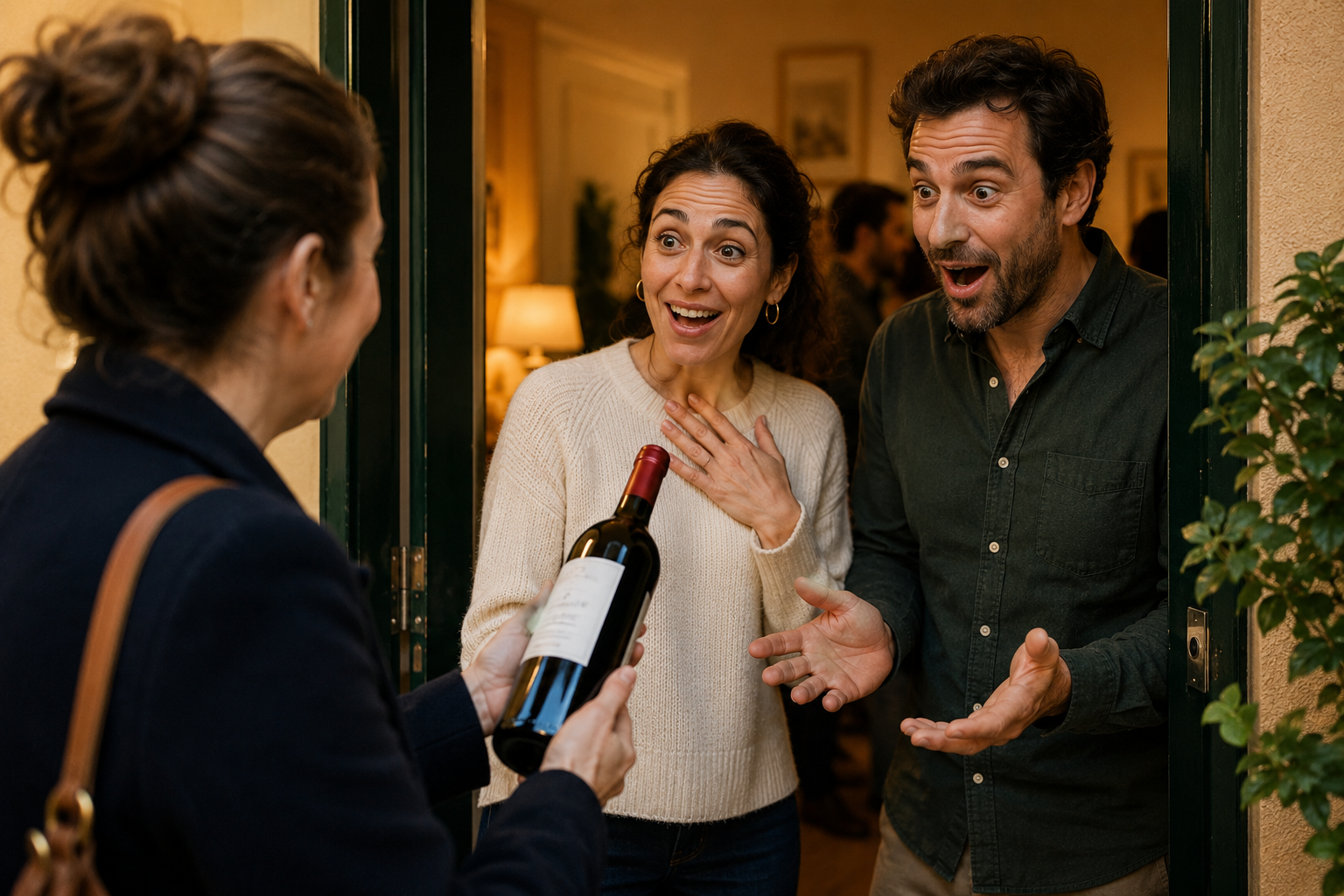
Wine seems like the perfect gift, and it can be a lovely one, but it carries a complication most guests never suspect. A Spanish host has usually chosen the wine for the meal with care, matching it to the food, and a guest who arrives with a bottle and expects it opened can unintentionally suggest that the host’s own choice was not good enough. The bottle then creates a small dilemma at the door rather than a simple pleasure.
The safe approach is to give any wine you bring as a gift for later, saying clearly that it is for the host to enjoy another time, which removes the pressure to serve it that night. It also matters what you bring, since turning up with a cheap, thoughtless bottle reads worse than bringing nothing, in a country where good wine is inexpensive and everyone knows roughly what things cost. A little care in the choice goes a long way.
The deeper point is that the meal is the host’s composition, and the wine is part of it. Barging in with your own bottle to be poured alongside theirs treats the dinner like a shared free-for-all rather than something they have designed, which is why the gesture can misfire. Bring wine by all means, but bring it as a present, not as a contribution to a meal that is already complete. There is one clean exception worth knowing. If a host asks you directly to bring wine, or the gathering is explicitly casual and collaborative, then of course you should, and the whole complication falls away. The trouble only arises when you assume, uninvited, that your bottle belongs on a table someone else has carefully set. When in doubt, a quiet word beforehand settles it.
A Dish to Add to the Table
The American potluck instinct, that warm urge to contribute a dish to the spread, does not belong at a Spanish dinner party. The host has planned and cooked the entire meal, often for days, and arriving with a casserole or a salad or a tray of something to add to the table can land as an insult, an implication that you doubted there would be enough or that their cooking needed help.
This runs deep, because feeding you generously is the whole point of the invitation, and a Spanish host takes real pride in providing everything themselves. To bring your own food is to step on that pride, and worse, to imply that their hospitality was somehow incomplete without your rescue. The kitchen, and the credit for the meal, belong entirely to them, and a good guest leaves both untouched.
The same caution applies to dessert, however tempting it is to bring one. A host who has planned a full meal has almost certainly planned its ending too, and a guest sweeping in with a cake can imply they forgot. If you want to bring something sweet, offer it as a gift for another day rather than presenting it as that night’s dessert, and let the host’s own plan stand. The exception, again, is the direct ask. A host who says bring a dessert has handed you a job, and you should do it gladly and well. Absent that invitation, though, assume the meal is complete from first bite to last, and that your role is to show up hungry and appreciative rather than to fill a gap the host does not believe exists.
The Wrong Flowers
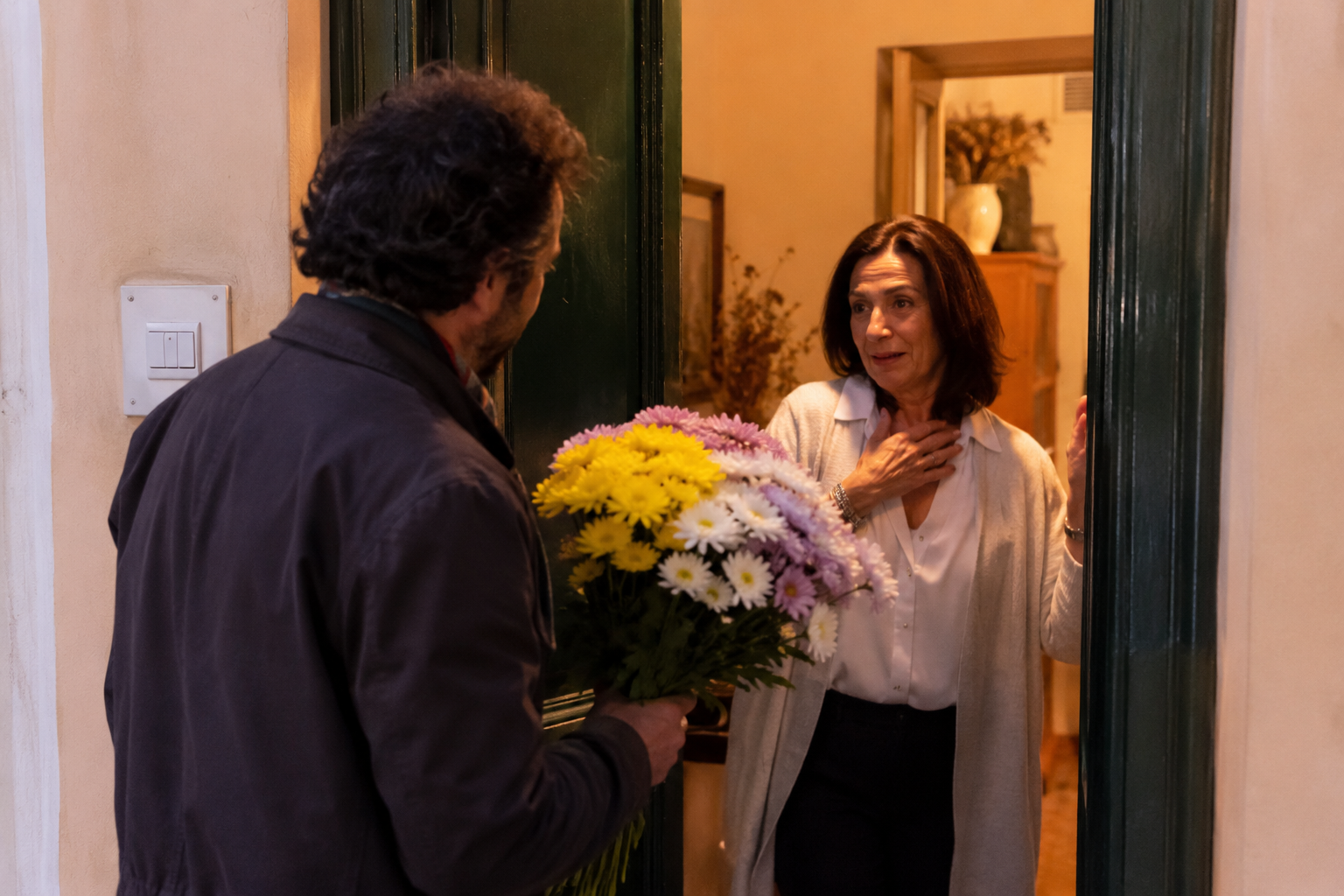
Flowers feel like the safest gift of all, and they can be, but only if you avoid a serious hidden trap. In Spain, as across much of Europe, chrysanthemums are the flowers of death, associated with cemeteries and All Saints Day and the graves of the departed, and bringing them to a dinner is a genuine faux pas that will land with a chill. The lovely bouquet becomes a funeral offering.
Chrysanthemums are not the only flowers to think twice about. Red roses carry a clear romantic charge, and turning up with a dozen for your friend’s spouse sends a message you almost certainly do not intend, while very showy or expensive arrangements can feel like too much. The goal of a flower gift is warmth, not a statement, and the wrong bloom makes a statement all its own.
If you want to bring flowers, a simple, cheerful mixed bouquet of ordinary seasonal blooms is perfect, and it is worth a moment with the florist to make sure you are not carrying something with the wrong meaning. Better still, a small potted plant lasts longer and carries none of the coded messages that cut flowers can. A little knowledge turns a risky gift back into a lovely one. It is worth knowing that the chrysanthemum rule holds across much of Europe, not only Spain, so the same caution serves you in France, Italy and beyond. The association is strong and old, tied to the tradition of honoring the dead in early November, and it is not the kind of thing a host will find charming in a foreigner who did not know. Five minutes of care at the flower stall saves an awkward moment at the door.
An Extravagant Gift
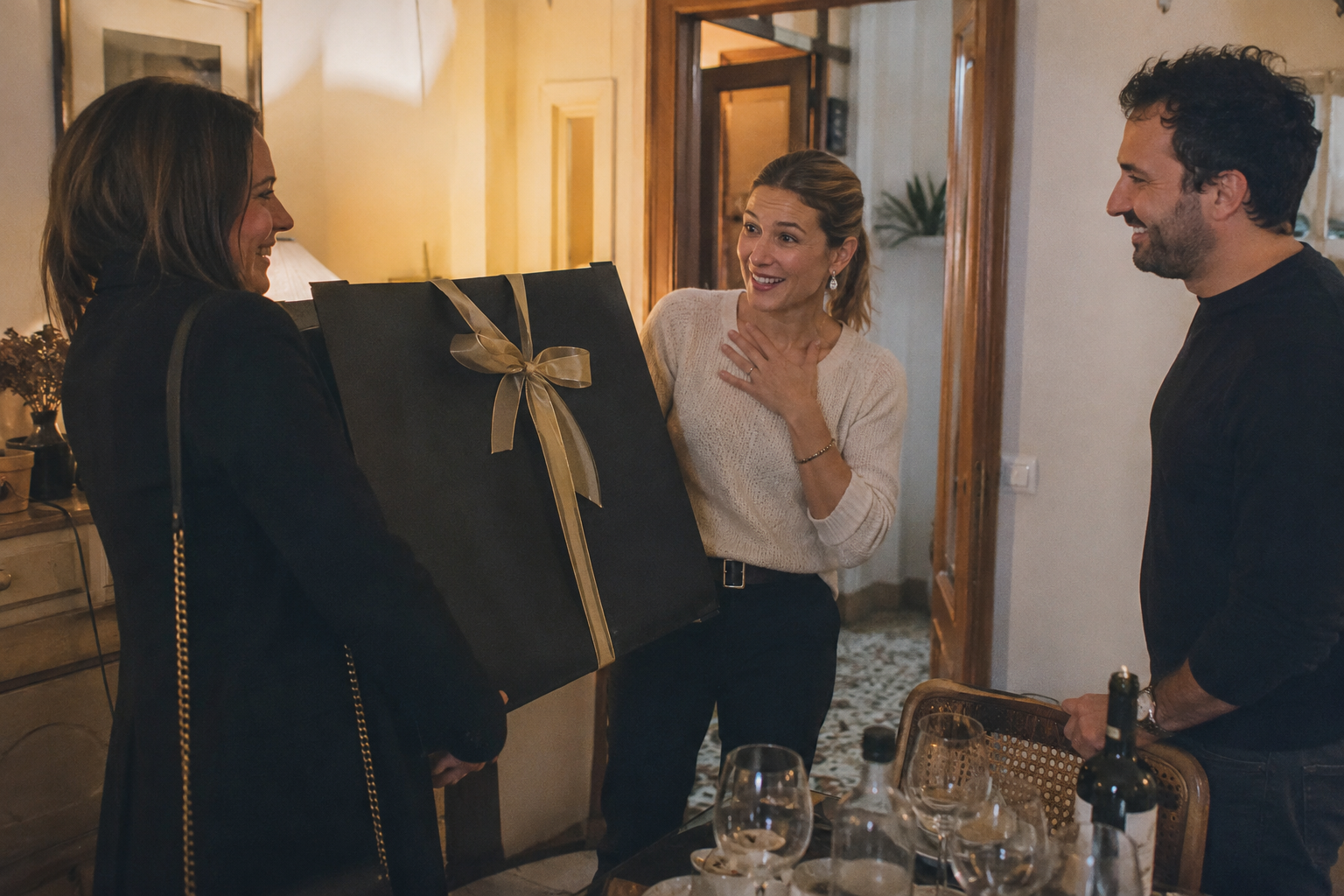
Americans sometimes reach for the generous, impressive gift as a way of showing appreciation, but at a Spanish dinner an extravagant present tends to backfire. A lavish or clearly expensive gift embarrasses the host rather than pleasing them, because it creates an awkward sense of obligation and throws the easy balance of friendship off, turning a warm evening into a transaction that must somehow be repaid.
Spanish gift-giving among friends runs modest and warm rather than grand, and the thought behind a small, well-chosen token matters far more than its price. A nice box of pastries from a good bakery, some quality chocolates, a small plant, a jar of something special from your own country, all of these say thank you perfectly without putting anyone in your debt. The gift is a gesture, not a payment.
There is a quiet cultural logic here, the same one that keeps money off the dinner conversation. A friendship is not a ledger to be balanced, and a gift that is too large forces the host to think in exactly those terms, working out how they must reciprocate. The kindest gift is one that can be received with a simple smile and a thank you, and then forgotten, which is precisely what a modest one allows. This can feel counterintuitive to an American raised to believe that more generous is always better, but the logic holds once you see it. The point of the gift is to express warmth, not wealth, and anything that shifts attention to its cost works against that warmth. A hand-carried treat from your own country, however humble, will nearly always beat something expensive and impersonal.
Uninvited Guests
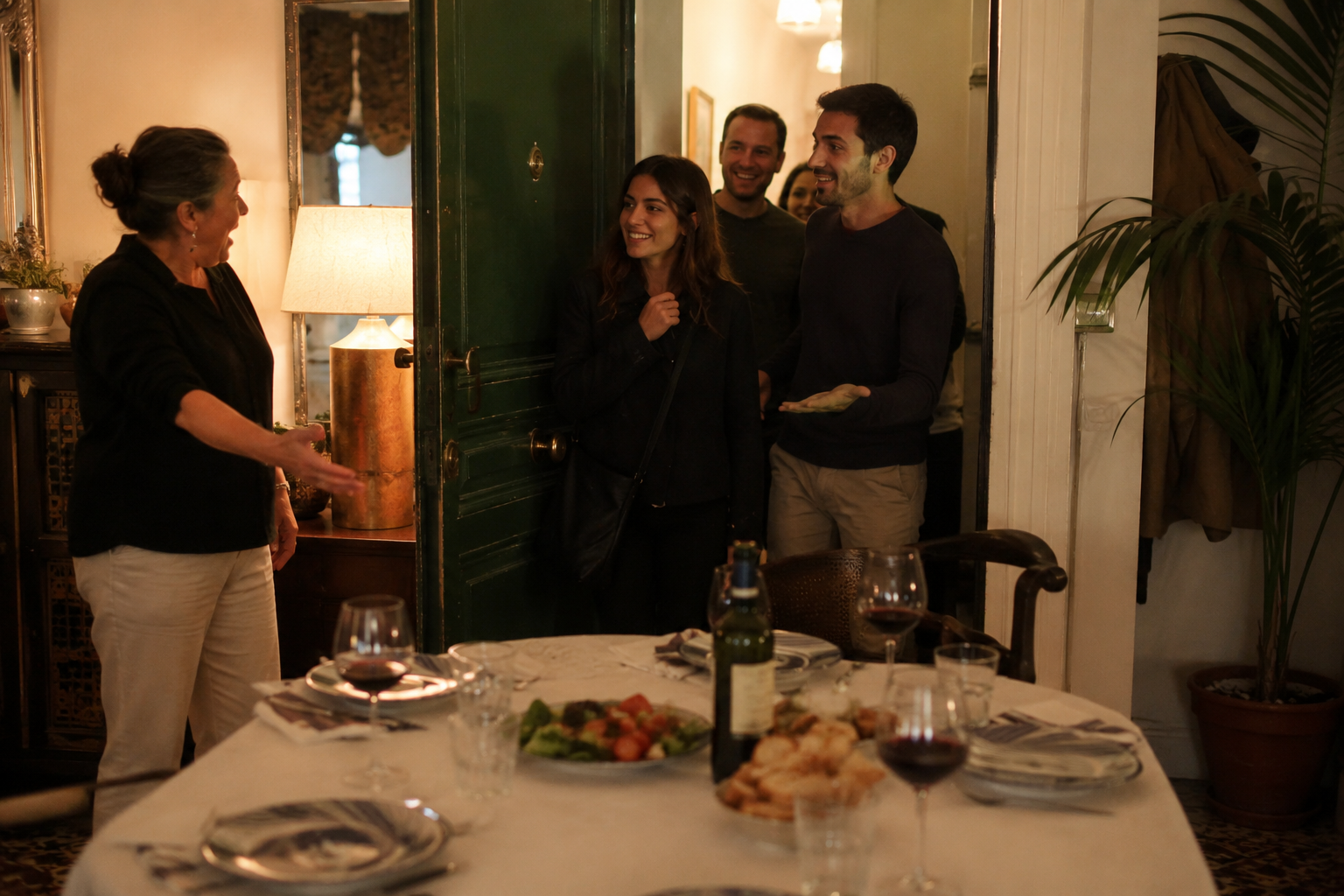
The relaxed warmth of Spanish social life can fool an outsider into thinking that one more person is always welcome, but bringing an uninvited guest to a dinner party is a real breach. The host has planned the meal, the table, and the numbers with care, and an unexpected extra body throws all of it into disarray, forcing them to stretch the food and reset the table and quietly absorb the stress.
This includes a partner who was not specifically invited, a friend who happens to be visiting, and, in many cases, children, unless the invitation made clear they were welcome. When you are unsure whether an invitation extends to your plus-one or your kids, the answer is to ask in advance rather than to arrive with them and hope, since surprising a host with extra mouths is one of the surer ways to strain a friendship.
The principle is simple respect for the work behind the meal. A dinner party is a carefully assembled thing, and the guest list is part of the composition just as much as the menu, so adding to it uninvited undoes some of the host’s careful planning. Come as the person or people who were asked, and if you genuinely need to bring someone along, clear it first. A quick message a day or two ahead solves the whole problem, and a Spanish host will almost always say yes with genuine warmth when asked properly. What they cannot easily handle is the surprise, the extra place that has to appear at the last second, so the courtesy is entirely in the asking rather than in the number. Ask, and almost anything is fine. Assume, and you have created a problem.
Your Dietary Demands on Arrival
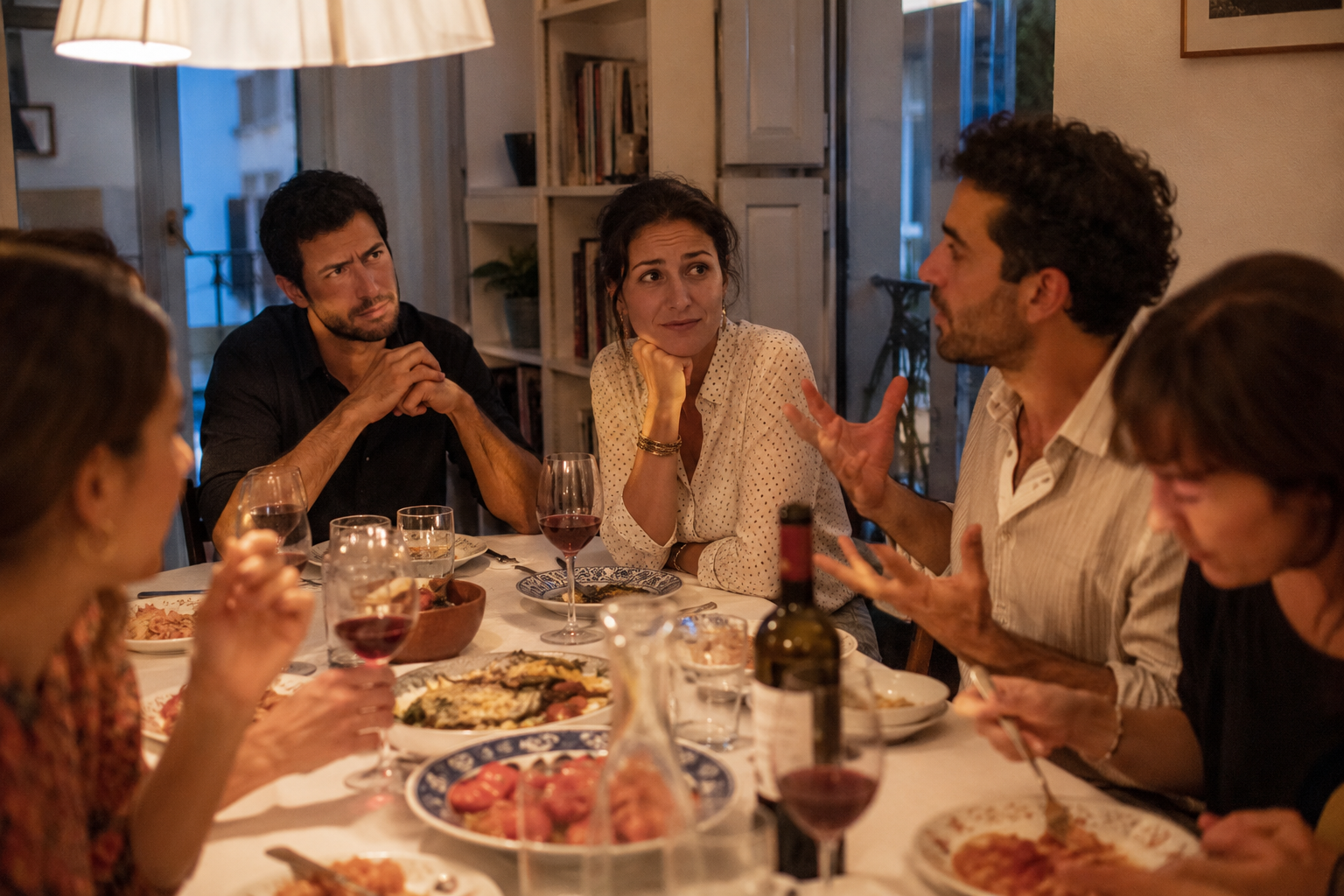
There is nothing wrong with having dietary needs, but there is a great deal wrong with unveiling your dietary demands for the first time at the table. A guest who announces on arrival that they do not eat this or cannot touch that, after the host has shopped and cooked around a menu, puts their host in an impossible position and casts a shadow over the meal that the whole table feels.
The fix is easy and is all about timing. Real dietary restrictions, whether an allergy, a condition, or a firm choice, should be mentioned warmly and early, when the invitation is accepted, so the host can plan around them without stress or embarrassment. Handled that way, they are no trouble at all, and a good host will happily accommodate them. Sprung at the last moment, the same needs become a problem that sours the evening.
Bringing your own separate food to eat instead of the meal is worse still, short of a serious medical necessity discussed in advance, because it publicly rejects the host’s cooking in front of everyone. The Spanish table runs on the shared pleasure of eating the same food together, and opting out of it visibly breaks something at the heart of the occasion. Sort the details quietly beforehand, and simply enjoy the meal when you arrive. A useful way to think about it is that you are protecting the host’s evening as much as your own comfort. Given fair warning, they can weave your needs seamlessly into the menu and no one will even notice. Given no warning, they are left scrambling and embarrassed in front of their other guests, which is a burden no thoughtful guest should ever hand a friend who is trying to feed them well.
American Punctuality
The last thing never to bring is the one that will surprise Americans most, which is strict punctuality. Arriving exactly on time to a Spanish dinner party, or heaven forbid a few minutes early, is not the courtesy it would be in the United States but a small imposition, likely to catch your host still cooking, still dressing, or still setting the table, and thoroughly unready for you.
Spanish social time runs later and looser than the American clock, and for a relaxed dinner at someone’s home, arriving a comfortable fifteen or twenty minutes after the stated hour is normal, expected and polite. It gives the host the breathing room those final minutes provide, and it signals that you understand the unhurried rhythm of a Spanish evening rather than treating it like a business appointment with a hard start.
This does not mean drifting in an hour late without a word, which is its own kind of rudeness, but it does mean leaving your American precision at the door. Bring instead a relaxed sense of time, an empty stomach, and the willingness to stay far longer than you would at home, since the meal will stretch for hours and the best conversation often comes after midnight. That, more than any gift, is what a Spanish host truly wants you to bring. The mental shift is to stop treating the start time as a deadline and start treating it as the rough opening of a long, unhurried evening. Nobody is watching the clock, the night has no fixed end, and the whole point is to let time loosen and stretch. An American who can relax into that, rather than fighting it, has understood something essential about how Spain enjoys itself.
Put all of this together and the pattern is reassuring rather than intimidating. Nearly every rule comes down to respecting the host’s role, trusting them to provide, and keeping the evening warm and unencumbered rather than turning it into a transaction. Bring a small and thoughtful gift, leave the food and the extra guests and the rigid clock at home, choose your flowers and your wine with a little care, and come ready to eat and talk for hours. The irony an American slowly discovers is that Spanish hospitality asks for less than the American kind rather than more, since the contributing and the gift-piling that feel like good manners back home are precisely the things a Spanish host would rather you left at the door. Do that, and you will not just avoid the pitfalls. You will be the kind of guest a Spanish host invites back again and again.

About the Author: Ruben, co-founder of Gamintraveler.com since 2014, is a seasoned traveler from Spain who has explored over 100 countries since 2009. Known for his extensive travel adventures across South America, Europe, the US, Australia, New Zealand, Asia, and Africa, Ruben combines his passion for adventurous yet sustainable living with his love for cycling, highlighted by his remarkable 5-month bicycle journey from Spain to Norway. He currently resides in Spain, where he continues sharing his travel experiences with his partner, Rachel, and their son, Han.