
An American moves into a lovely apartment in Germany, wakes up on a sunny Sunday morning, and decides to mow the little patch of lawn out back. Within minutes a neighbor appears, then another, and the conversation is not friendly. Before long there may be a knock from the local authorities. The newcomer has not done anything an American would consider wrong. They have simply broken the law, because in Germany quiet is not a courtesy but a rule with real teeth.
The German concept of Ruhezeit, or quiet time, is one of the things that most astonishes newcomers, and it is not folklore or mere neighborly preference. Quiet hours are written into law at the federal, state and local levels, they cover specific times and specific activities, and breaking them can bring complaints, official visits, and fines. The Sunday lawn is only the most famous trap. For a country that prizes personal freedom in so many ways, Germany draws this one line with striking firmness, and the firmness is precisely the point. Quiet here is not left to chance or good manners. It is guaranteed by law.
Here is how Germany’s quiet-hours law really works, what it forbids and when, and what happens if you cross it. This is a general overview rather than legal advice, and the details vary by state, city, and even building, but the core of it is remarkably consistent across the country.
Quiet Time Really Is the Law
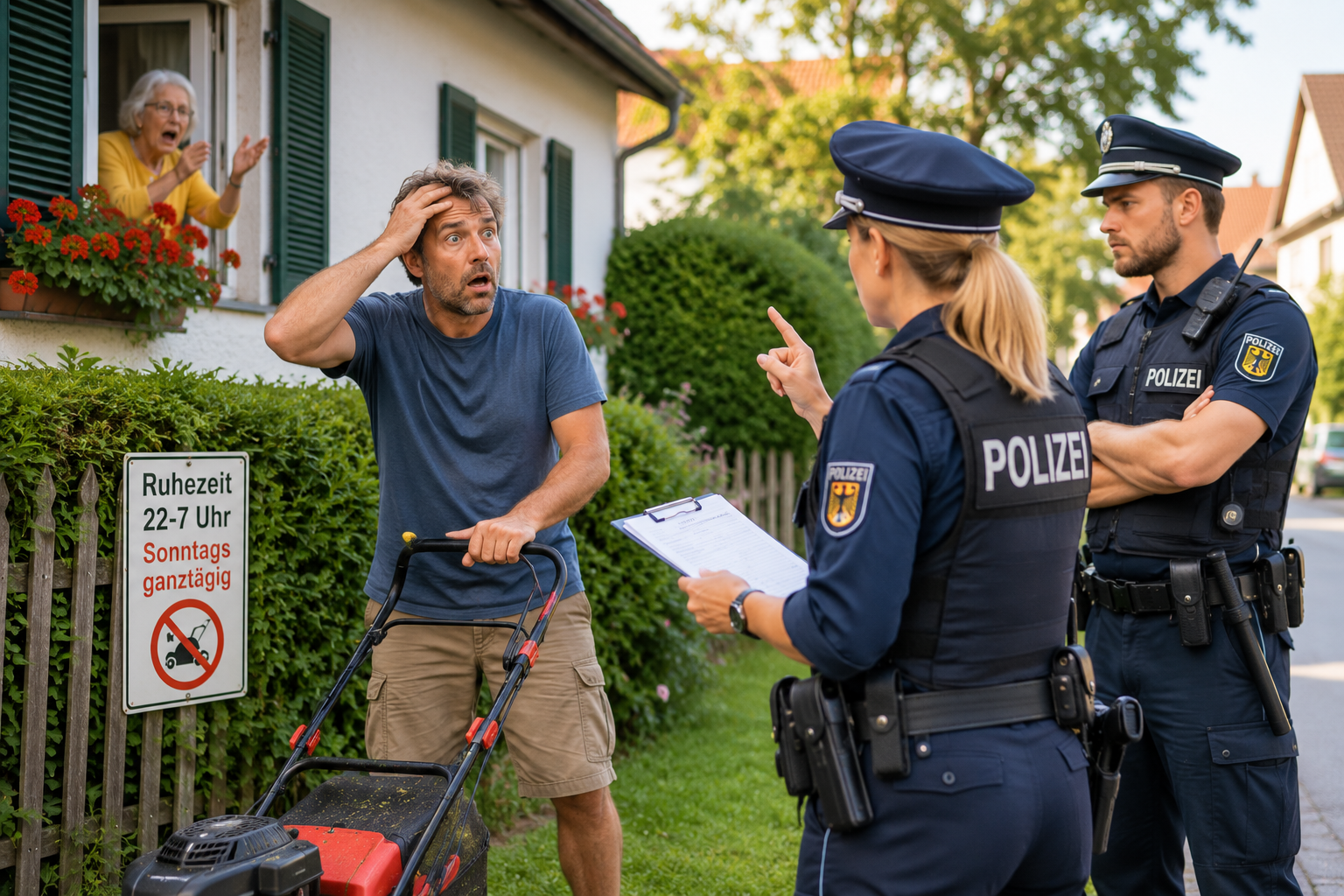
The first thing to understand is that Ruhezeit is a real legal framework, not a vague social custom. It grows out of a stack of overlapping rules, from federal noise-protection regulations down through each state’s emissions-protection law to individual municipal ordinances and the house rules of your own building. Together they define when you must keep the noise down, and they carry real consequences when you do not.
The standard against which noise is measured is Zimmerlautstärke, or room volume, which means roughly that during protected quiet periods any sound you make should not be audible beyond the walls of your own home. Normal living is fine, since talking, cooking, showering and a television at a reasonable level are all permitted, but anything that carries into a neighbor’s space, like loud music, drilling, or a lawn mower, is not.
What surprises Americans most is how seriously all of this is taken. In a country as densely populated as Germany, where a great many people live in apartments stacked close together, the right to peace and quiet is treated as a genuine legal entitlement rather than a nice idea. Your neighbor’s quiet is your legal obligation, and the system exists to enforce it. This layering is part of what confuses newcomers, since there is no single rulebook to consult. The federal machinery ordinance sets one set of limits, each state’s noise law sets the night hours, the municipality may add its own midday quiet, and your building’s own house rules can be stricter than all of them. The rules are real and enforceable at every one of these levels, and ignorance of them is no defense at all.
The Great Silence of the German Sunday
The most powerful quiet period of all is Sonn- und Feiertagsruhe, the protection of Sundays and public holidays, and it turns the German Sunday into something an outsider finds almost eerie. For the entire twenty-four hours of a Sunday, and on every official public holiday, loud activity is prohibited for the full twenty-four hours, and much of the country falls into a deep, deliberate hush.
This is why a German Sunday can feel like a ghost town to newcomers. Most shops are closed by law, construction stops, and the noisy business of ordinary life, the mowing and the drilling and the loud chores, simply ceases for the day. The silence is not an accident of everyone happening to rest at once but a legally protected condition, rooted in a long tradition of the Sunday as a day set apart. Grocery shopping in particular has to be planned around it, since the shops that stay open through a normal week fall silent and shuttered on Sunday, and a newcomer who forgets can find themselves with an empty fridge and nowhere open to fill it.
That tradition runs deep, reaching all the way to the German constitution, which enshrines Sundays and recognized holidays as days of rest. What began as a religious and social protection of a day for church and family has hardened into a legal rhythm that the whole country still keeps, believer or not. The German Sunday is quiet because the law, and centuries of habit behind it, insist that it must be. For an American raised to treat the weekend as prime time for chores and projects, this takes real adjustment. Sunday is not merely a slow day here but a legally different day, on which the ordinary noisy business of life is set aside by common agreement and by statute alike. Newcomers learn quickly to front-load their loud tasks onto Saturday, because Sunday offers no window for them at all.
The Lawn Mower That Can Land You in Trouble
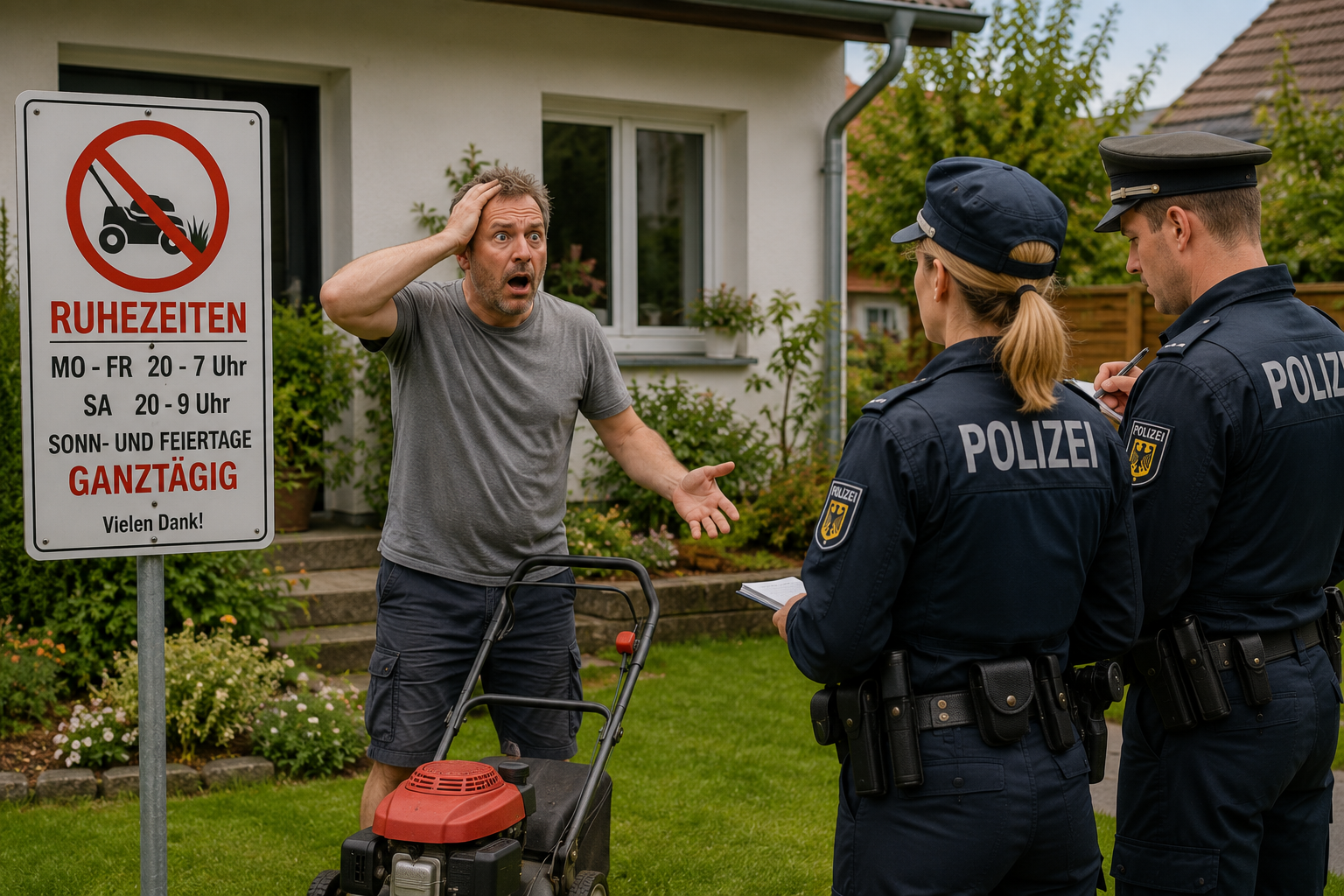
Nowhere does the Sunday rule catch foreigners more often than on the lawn, and here the law is wonderfully specific. Under a federal regulation governing noise from equipment and machinery, known in legal shorthand as the 32nd ordinance, garden machines like lawn mowers, leaf blowers, hedge trimmers, and the like are tightly restricted in residential areas, and the restrictions are not optional.
On weekdays and Saturdays, these machines may generally be used only during the day, roughly from seven in the morning until eight in the evening, and they are banned outright on Sundays and public holidays for the full twenty-four hours. The instinct that Sunday is the perfect day to catch up on the yard work, so natural to an American, is precisely the instinct that gets newcomers in trouble, because in Germany Sunday is the one day you absolutely may not mow.
Particularly loud equipment faces even tighter limits, permitted only in certain windows of the weekday. The upshot is that the humble act of mowing your own grass is governed by federal law down to the hour, and doing it at the wrong time, above all on a Sunday, is a genuine violation rather than a mere annoyance. The lawn is where American habits and German law collide most reliably. The specificity of it can seem almost comic until you are on the wrong end of it. A federal regulation that dictates the precise hours at which a citizen may mow their own grass strikes many Americans as an astonishing reach of the state into private life. To Germans it is simply sensible, a clear rule that spares everyone the guesswork and guarantees that no one’s Sunday is ruined by a neighbor’s engine.
The Nightly Quiet After Ten
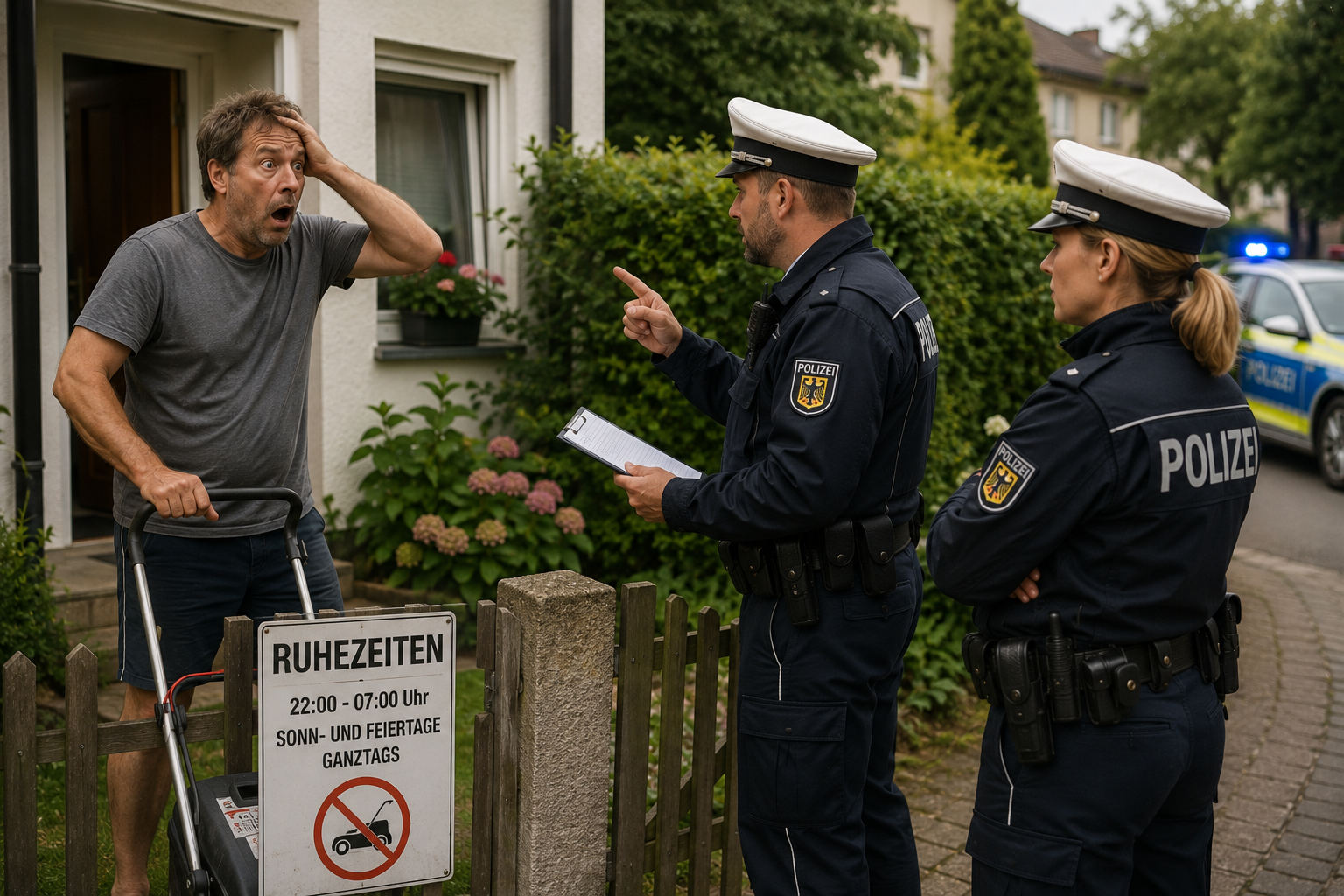
Alongside the Sunday rule sits the most universal quiet period of all, the nighttime peace known as Nachtruhe. Across most of Germany, loud activity is prohibited every night from ten in the evening until six or seven the next morning, and this rule applies every single day of the week, including the Saturday nights that Americans might assume are fair game.
During these hours the room-volume standard rules absolutely. You cannot run a washing machine or a vacuum, you cannot drill or hammer, you cannot play loud music or host a noisy party, and even a long, loud shower in an old building with thin pipes can technically draw a complaint. The night belongs to sleep, and the law guards it firmly, on the reasonable theory that people packed closely together need protection to rest.
There are regional twists worth knowing. Bavaria, famously, shifts its night quiet an hour later to accommodate its beer-garden social life, so the peace there runs from eleven at night, and many southern areas add a midday quiet period in the early afternoon on top of the nightly one. But the basic bargain holds everywhere, which is that the late hours are for silence, and the law will back up any neighbor whose sleep you disturb. The Saturday-night point catches people out more than any other. In much of America a Saturday night is when noise is most expected and most tolerated, but in Germany the ten o’clock rule applies just as firmly then as on any weeknight. A party that runs loud past ten on a Saturday is as much a violation as one on a Tuesday, and a tired neighbor is fully within their rights to bring it to an end.
What Happens When You Break It
The enforcement is where Americans truly grasp that this is law rather than etiquette. A disturbed neighbor will often start with a direct request or a note, but if the noise continues, they can escalate, and the escalation is real. They can summon the local public-order office, the Ordnungsamt, and in many situations the police, who will come and address the disturbance in person.
The penalties are not trivial. Fines for quiet-hours violations commonly run to a few hundred euros, and for serious or repeated offenses, especially those involving prohibited machinery, the statutory penalties climb much higher. Beyond the fines, persistent noise can bring a formal warning from your landlord, and in Germany a pattern of such warnings is a genuine step on the road to losing your apartment, since repeated breaches of the house rules can be grounds for ending a tenancy.
This is the part that reframes the whole thing for a newcomer. In much of America a noise complaint is a minor social friction, but in Germany it plugs into a real enforcement system, with officials who will appear, fines that will be levied, and consequences that can reach as far as your housing. The friendly neighbors are friendly right up until you break the peace, at which point they hold cards you did not know they had. It is worth being clear that most disputes never reach this stage, since a polite request or a note usually settles things, and Germans are not generally eager to call in the authorities over a first offense. But the option is always there, and it is used when needed, which gives the whole system its weight. The quiet holds because everyone knows the escalation is real, even when it is rarely reached.
Why Germany Guards Its Quiet So Fiercely
To an American this can all seem impossibly rigid, but there is a coherent philosophy underneath it that is worth understanding. Germany is a crowded country where a large share of people live in apartments, sharing walls, floors and courtyards with many others, and in that setting one household’s noise is another household’s misery. The quiet-hours law is a collective agreement that everyone’s peace is worth protecting.
Seen that way, Ruhezeit is less an imposition than a bargain, a trade in which you accept limits on your own noise in exchange for a guaranteed right to quiet of your own. The German who cannot mow on Sunday is also the German who will never be woken by a neighbor’s mower on Sunday, and across a whole society that trade produces a calm and order that many people come, in time, to treasure. The rigidity is the price of the peace. Once an American internalizes this trade, the resentment often softens into something like appreciation. You give up the freedom to mow at dawn or drill at midnight, and in return you gain a life largely free of your neighbors doing the same to you. In a crowded apartment building, that guarantee is worth a great deal, and it is one many expats come to miss sharply when they return to noisier countries.
There is also the deep cultural weight of rest itself, the old idea that a day and a set of hours should be protected from the relentless churn of activity, kept clear for family, recovery and quiet. In a world that increasingly never stops, the German insistence on protected silence can start to look less like fussiness and more like wisdom, a legal guarantee of the rest that other societies leave everyone to fight for alone.
Living With the Rules Without Getting Fined
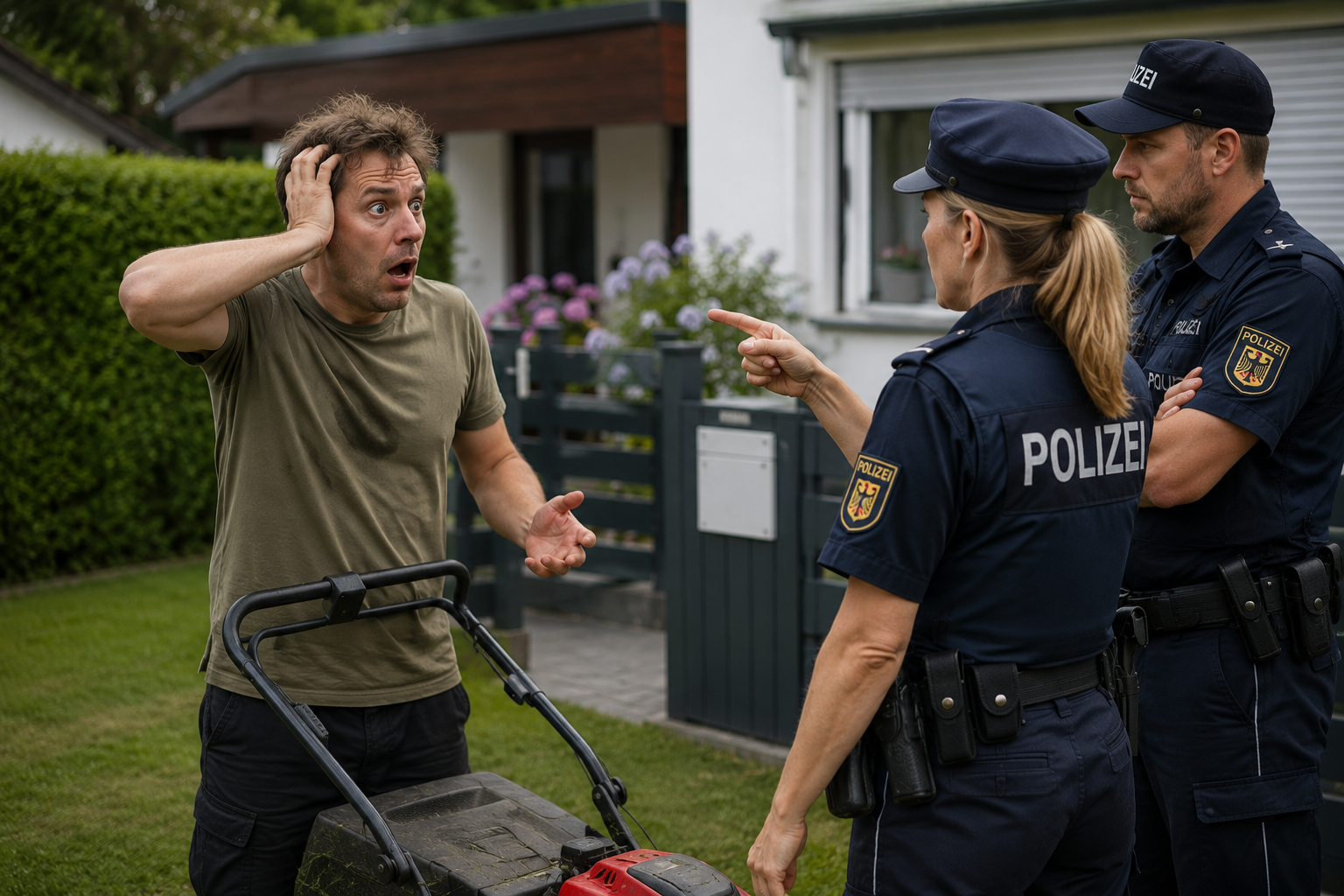
For the newcomer, the practical lesson is simple once you know it, and the rules are easy enough to live within. Keep the loud activities to weekday and Saturday daytime hours, treat Sunday as sacred and silent, stop the mowing and the drilling and the loud chores by the evening, and hold the noise to room volume after ten at night. Do that, and you will never have a problem.
It also helps to read the specific rules of your own state, city and building, since the details shift from place to place, with different night hours, possible midday quiet periods, and house rules that can be stricter than the law. A few minutes with your rental contract and a look at local ordinances will tell you exactly where the lines are drawn where you live, and knowing them is far easier than learning them through a fine. A good first move on arriving is simply to ask a neighbor or your landlord what the local rules are, since Germans are usually happy to explain the quiet hours to a newcomer who asks in good faith. It signals that you intend to respect the shared peace, which is exactly the reassurance your new neighbors are looking for, and it turns a potential source of conflict into a small act of goodwill.
Above all, the smart approach is to lean into the culture rather than fight it. The quiet is not there to spite you but to protect a shared peace that, once you adjust to it, is genuinely lovely to live in, and the German Sunday in particular becomes, for many who stay, a cherished island of calm in the week. There is a final irony worth sitting with. The American arrives seeing only the loss of freedom, the Sunday chores forbidden and the late-night noise banned, and leaves, often, having discovered the freedom on the other side of it, the freedom to rest undisturbed in a crowded place. Mow on Saturday, rest on Sunday, keep the nights quiet, and you will find that the law you first resented is quietly making your life more peaceful, one protected silence at a time.

About the Author: Ruben, co-founder of Gamintraveler.com since 2014, is a seasoned traveler from Spain who has explored over 100 countries since 2009. Known for his extensive travel adventures across South America, Europe, the US, Australia, New Zealand, Asia, and Africa, Ruben combines his passion for adventurous yet sustainable living with his love for cycling, highlighted by his remarkable 5-month bicycle journey from Spain to Norway. He currently resides in Spain, where he continues sharing his travel experiences with his partner, Rachel, and their son, Han.