
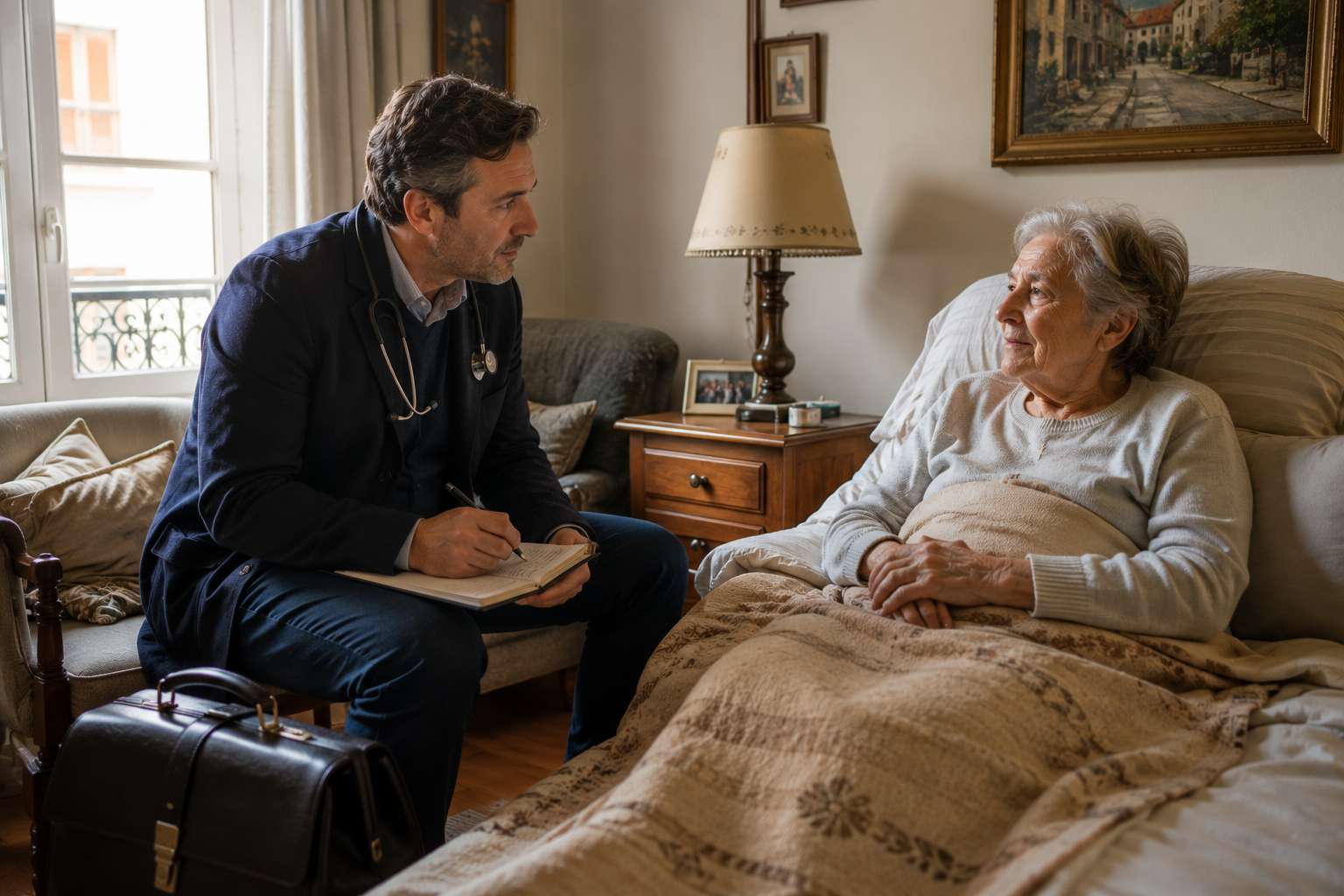
For most Americans, the house call belongs to a lost world, a scene from an old television show where a kindly doctor with a black leather bag climbs the porch steps to tend a sick child in bed. Somewhere in the last century it vanished, replaced by the waiting room, the urgent-care clinic, and the fluorescent-lit misery of sitting among other sick people for hours. Yet in Spain and France, the house call never died. A doctor still comes to you, and the whole thing works.
To an American who has spent a lifetime dragging feverish children to clinics and waiting rooms, the idea that a real doctor will arrive at your door, examine you in your own bed, and hand you a prescription can sound almost too good to be true. In much of Europe it is simply how a certain kind of care has always been delivered, unremarkable to the locals and astonishing to the newcomer. The service America forgot existed is alive and well across the Atlantic.
Here is how home doctor visits actually work in France and Spain, why the United States let the practice die, and what it is like to have a doctor come to you again. This is a general overview of the systems rather than medical advice, and the details differ by country and region, but the reality is real.
The Service America Left Behind
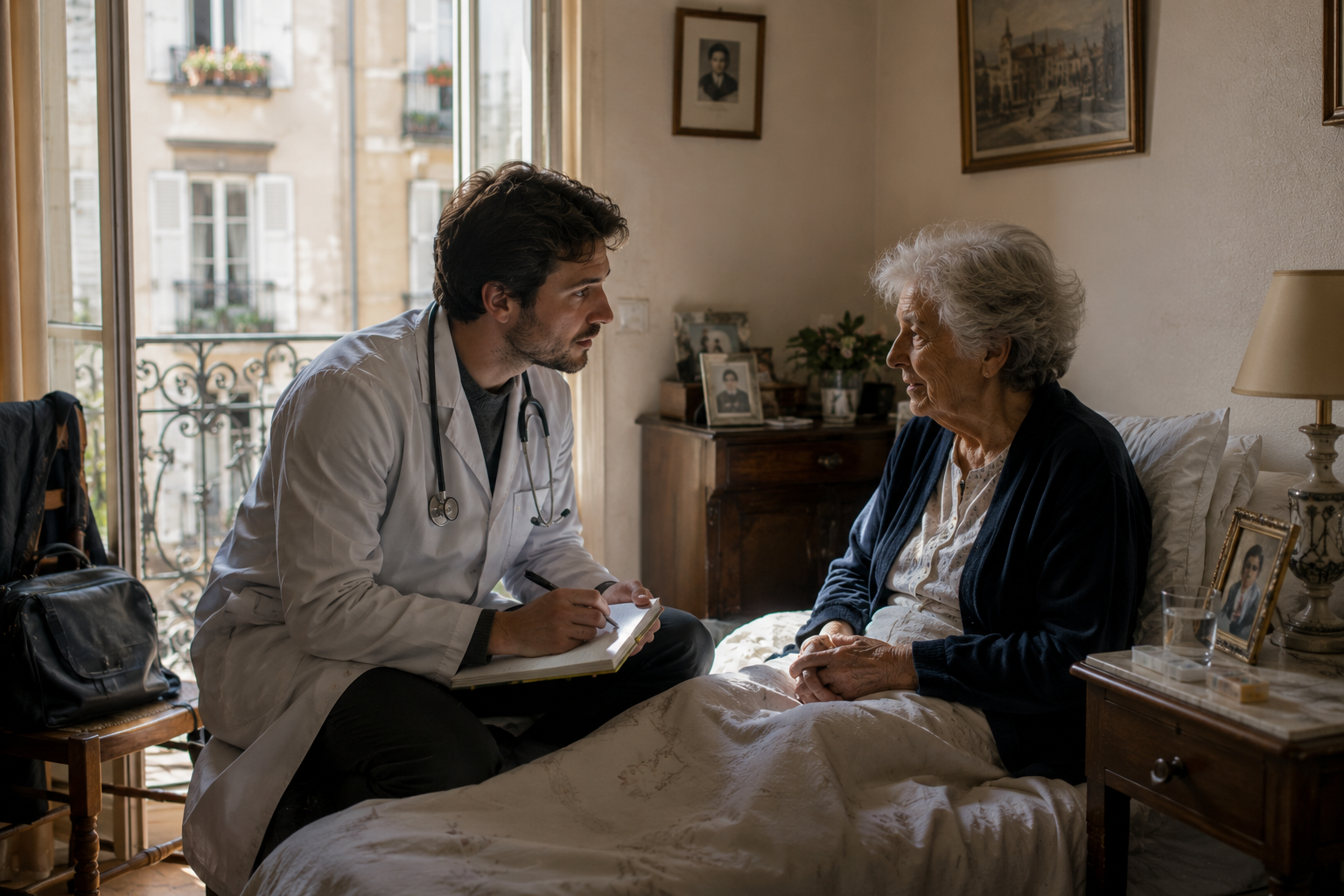
It is worth remembering how completely the house call disappeared in America, because its absence has come to feel natural. A century ago, doctors visiting patients at home was ordinary medicine, the default way care was delivered, and the black bag on the doorstep was a familiar sight. Over the following decades it faded almost entirely, until the phrase house call became a piece of nostalgia rather than a description of anything real.
The reasons were structural rather than sinister. Medicine centralized around hospitals and clinics packed with expensive equipment, the economics of insurance rewarded seeing many patients quickly in one place, and the sheer scale and sprawl of America made door-to-door visits inefficient. The house call was not banned. It was simply squeezed out by a system that came to value throughput above the old intimacy of a doctor at your bedside.
What replaced it is familiar to every American, which is the waiting room and the urgent-care clinic, where a sick person hauls themselves out of bed, travels while ill, and sits for an hour or more among strangers coughing the same misery back and forth. It is efficient for the system and miserable for the patient, and most Americans have simply accepted it as the only way, never imagining that a doctor might come to them instead. The loss was so complete that the very expectation vanished. An American with a sick child at eleven at night weighs the emergency room against waiting until morning, and the thought of simply calling a doctor to the house never enters the calculation, because in their world no such thing exists. The house call did not just disappear from practice. It disappeared from imagination.
France and the Doctor Who Comes to You
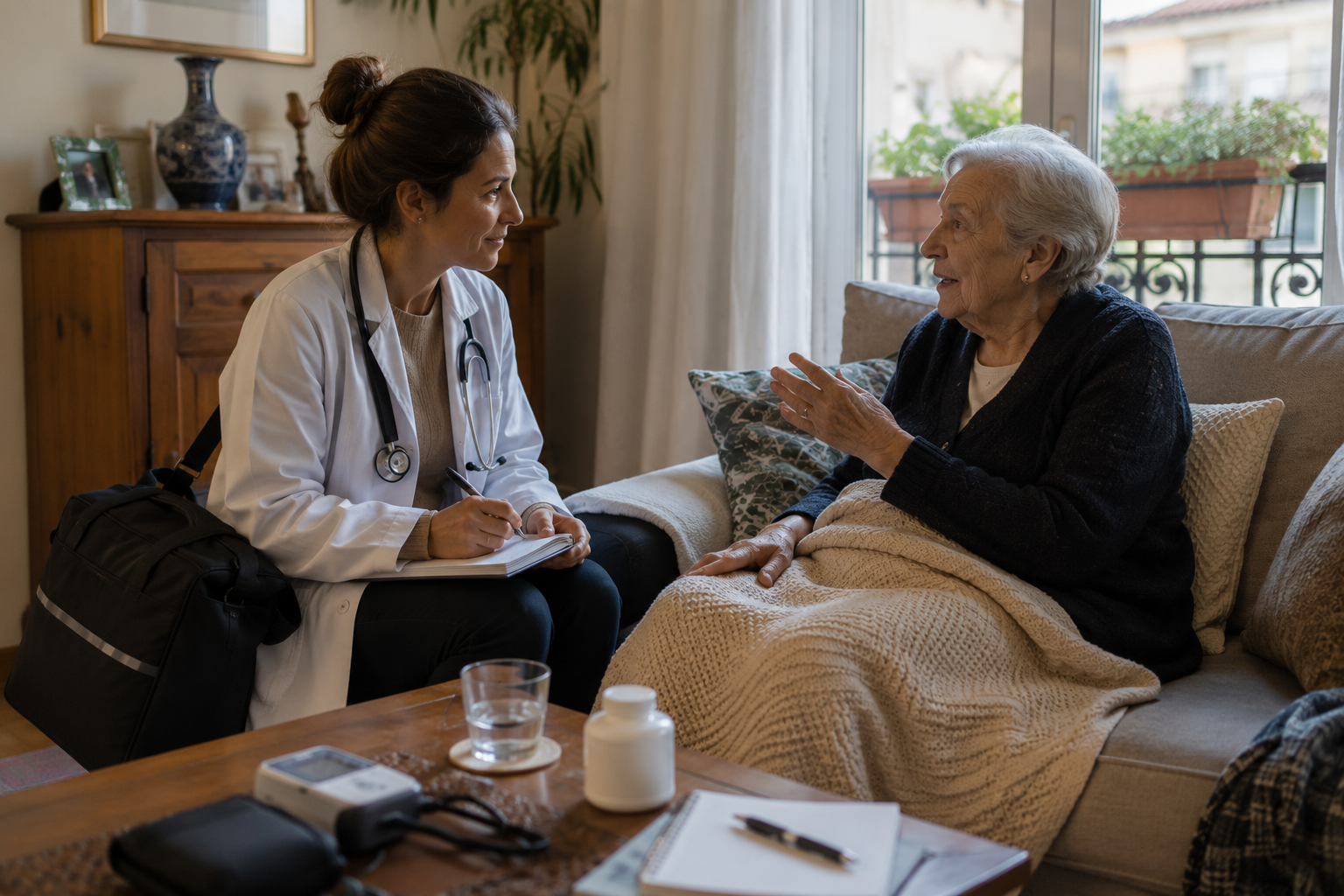
France never lost the house call, and it has built it into something remarkable. The famous service, SOS Médecins, is a nationwide network of doctors who make home visits around the clock, every day of the year, dispatched to your door around the clock when you are too ill to travel or need care outside office hours. When a French person is sick at night or over a weekend, calling for a doctor to come to the home is an ordinary and expected option. What strikes Americans most is how normal it all is. There is no sense of calling in a special favor or paying for a rare luxury, just a routine phone call and a doctor on the way, the same way an American might phone a clinic for an appointment. The house call in France is not exotic but mundane, a standard tool in the ordinary kit of getting medical care.
The scale of it is striking. The network runs on roughly a thousand full-time doctors working through dozens of regional associations, covering a large share of the country, and it handles millions of calls a year that translate into some two and a half million home visits. These are not stripped-down assessments but real medical consultations, with doctors carrying stethoscopes, diagnostic tools, and even the means to run basic tests and give certain treatments on the spot.
Crucially, the service is woven into the public system rather than being a luxury for the rich. A home visit costs modestly more than a standard office appointment, and it is reimbursed under France’s universal health insurance like any other care, so an ordinary person can have a doctor come to their bedside for a small out-of-pocket sum. The house call in France is not a nostalgic indulgence but a normal, funded, everyday part of how the country delivers medicine. The service also plays a quieter public-health role that few patients see. Because so many home visits flow through a coordinated system, the pattern of what doctors are treating across a city can reveal the early signs of an outbreak, and that information feeds into the country’s disease surveillance. The doctor at your door is part of a larger web that helps the whole system see and respond to illness faster.
How Spain Brings the Doctor Home
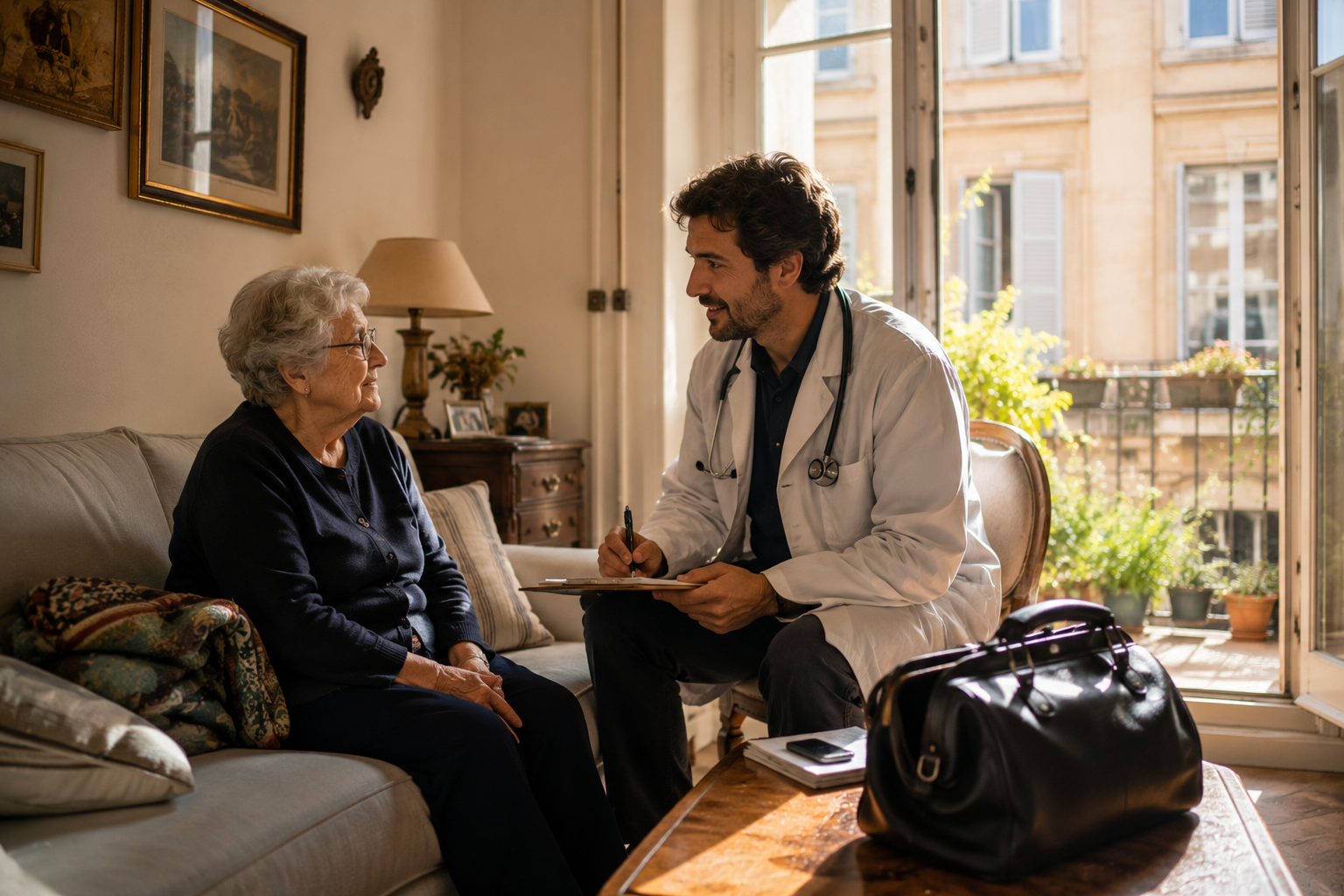
Spain keeps the house call alive too, though it works differently and more quietly than the French model. Within the public health system, home visits are a standard part of primary care, above all for the people who most need them, the elderly, the chronically ill, the bedridden, and those receiving palliative care at home. A family doctor or a nurse attached to your local health center will come to the house when a patient truly cannot come in.
This is care aimed at those for whom a trip to the clinic is a real hardship, rather than an on-demand service for every sniffle, and it forms a dignified backbone of Spanish primary medicine. An elderly person managing several conditions, or someone recovering at home after a hospital stay, can be seen and monitored in their own home by the same public system that runs the clinics, without the ordeal of being transported while frail or unwell.
Alongside the public provision sits a growing private market for home visits, which fills the gaps and serves those who want a doctor at the door on demand. Private services and many insurers now offer a doctor to your home or hotel, often within an hour and frequently with English-speaking physicians, for a reasonable fee, which is especially useful for visitors and newer arrivals. Between the public and private routes, having a doctor come to you in Spain is entirely possible, and often surprisingly easy. The Spanish approach reflects a sensible sorting of needs. The public system reserves its home visits for those whose health or age makes travel a genuine hardship, ensuring that the frailest are cared for where they live, while the private market handles the convenience cases and the visitors. Between them they cover the ground, and the result is that a doctor at the door remains a living part of Spanish medicine.
Why the House Call Still Makes Sense
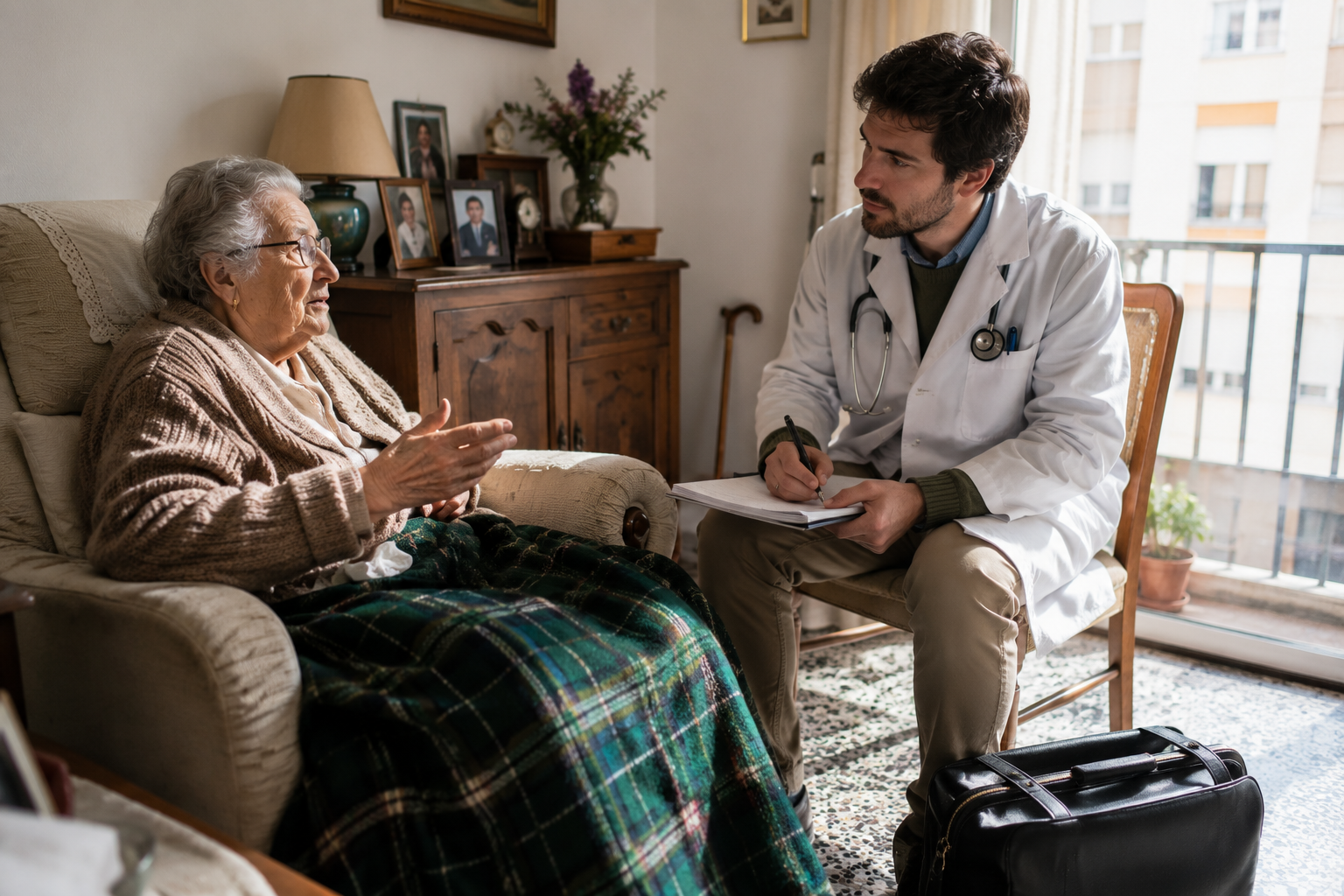
The persistence of the house call in Europe is not mere sentiment, because there are solid reasons it endures. Seeing a patient at home gives a doctor information a clinic never could, a view of how someone really lives, what their home is like, and what might be making them ill or hindering their recovery, and that context can be genuinely valuable to good care. The bedside has always taught doctors things the examining table cannot.
There is a hard practical logic to it as well. Sending a doctor to treat a non-urgent illness at home keeps that patient out of the emergency room and off the ambulance service, easing the load on the parts of the system reserved for true crises. Far from being an expensive frill, the home visit can save the wider system money by handling minor problems cheaply and keeping hospitals clear for the cases that truly need them.
It is also simply better for the sick person, which ought to count for something. A feverish patient recovering in their own bed, seen by a doctor who came to them, is spared the exhausting and infectious ordeal of the waiting room entirely. For the frail, the elderly, the contagious, and the truly unwell, being cared for at home is not a luxury but the humane and sensible option, and Europe never forgot it. There is dignity in it that is easy to overlook until you or someone you love needs it. An elderly person spared a difficult journey, a new parent with a feverish infant, a patient too weak to sit for hours in a clinic, all of them are served far better by a doctor who comes to them. The home visit meets people at their most vulnerable with a gentleness the modern clinic struggles to match.
What It Costs, and Who Pays
For an American used to the terrifying arithmetic of medical bills, the cost of a European house call is one of the most startling parts. In France, as noted, the home visit is reimbursed by the public system and costs the patient only a small sum, a fraction of what an American urgent-care trip runs even before any complications. The doctor comes to your door, treats you, and the bill is measured in tens of euros, not hundreds or thousands of dollars.
In Spain, public home visits for those entitled to them come through the same tax-funded system that provides the rest of the country’s care, meaning there is no separate bill for the visit at all. The private option carries a fee, but even that is modest by American standards, typically a manageable flat rate for a doctor at your door within the hour, and often covered by insurance policies designed for expats and visitors.
The contrast with the United States could hardly be sharper. Where an American faces a costly, uncertain bill for the privilege of sitting in a waiting room while sick, a European can have a doctor arrive at their bedside for a small, predictable, often reimbursed amount. This is one of those places where the different philosophies of the two systems become vivid, and where the European approach quietly wins on both comfort and cost. It is worth being clear that these systems are funded very differently, through taxes and universal insurance rather than the American mix of private plans and out-of-pocket bills, so the comparison is not quite like for like. But from the patient’s chair, the difference is simple and stark. In Europe a house call is affordable and often reimbursed, while in America the whole idea, and its price, would be unthinkable to most.
Getting a Doctor to Your Door as a Newcomer
For an expat or a long-term visitor, tapping into all this is more straightforward than it looks. In France, learning how the home-visit service works, and keeping the number to hand, means you can summon a doctor when you or your children fall ill outside office hours, exactly as the locals do, and be reimbursed through the system once you are registered in it. It quickly becomes one of the small daily reassurances of living there.
In Spain, registering with your local public health center connects you to the primary-care team that provides home visits for those who need them, while the private services stand ready for anyone wanting a doctor on demand or preferring to be seen in English. A little research into the options where you live, done before you are sick rather than during, means you will know exactly whom to call when the moment comes.
The larger lesson for any American abroad is simply to know that the option exists at all, since so many never think to ask. Raised in a country where the house call is a museum piece, they default to hauling themselves to a clinic even when a doctor could come to them. Learning to expect the house call again, and to use it, is one of the quiet upgrades in quality of life that a move to Spain or France can bring. It is one of those differences that only reveals itself when you are sick, which is precisely the worst time to be figuring out a foreign system. A little preparation while healthy, knowing whom to call and how the visit is paid for, turns a moment of illness in a strange country from a source of panic into a simple phone call, and that peace of mind is worth a great deal.
A Small Piece of a Bigger Difference
The house call, in the end, is a small window onto a much larger difference in how these societies think about medicine. It reflects a view of healthcare as a service that should meet people where they are, gently and humanely, rather than an industry that processes them as efficiently as possible through central facilities. The doctor at the door is medicine that still bends toward the patient.
The European systems are of course far from perfect, since they have their own strains, waiting lists, and frustrations like any others. But on this particular point, the survival of the house call, they have held onto something valuable that America discarded, and the newcomer who experiences it for the first time rarely fails to be moved by it. There is a kindness in a doctor coming to your bedside that a waiting room can never replicate.
For the American arriving in Spain or France, the return of the house call is one of those experiences that quietly reframes what healthcare can be. The first time a doctor climbs your stairs, examines you in your own home, and hands you a prescription without drama or ruinous cost, something long forgotten clicks back into place. The service America forgot existed turns out to have been worth remembering all along, and in this corner of the world it never went away, but waited quietly at the bedside all along, black bag and all.

About the Author: Ruben, co-founder of Gamintraveler.com since 2014, is a seasoned traveler from Spain who has explored over 100 countries since 2009. Known for his extensive travel adventures across South America, Europe, the US, Australia, New Zealand, Asia, and Africa, Ruben combines his passion for adventurous yet sustainable living with his love for cycling, highlighted by his remarkable 5-month bicycle journey from Spain to Norway. He currently resides in Spain, where he continues sharing his travel experiences with his partner, Rachel, and their son, Han.