
In a Portuguese kitchen, fish is not a special occasion. It is Tuesday. The women of Portugal, and especially the older generation, have eaten fish several times a week their entire lives, grilling sardines on the balcony, simmering salt cod into a hundred dishes, and treating the daily catch of the Atlantic as the ordinary center of the plate. They never called it a health rule. It was simply dinner.
Now American doctors and heart specialists are urging their patients to do more or less exactly what these Portuguese women have always done, to eat oily fish regularly, to reach for the real thing over supplements, and to make fish a routine part of the week rather than a rarity. What Portugal arrived at through culture, modern medicine has arrived at through research, and the two now point to the same simple habit. It is a striking thing when the frontier of nutritional science and the kitchen of an eighty-year-old woman arrive at the identical conclusion, and it happens more often than you might think. The oldest food traditions of the healthiest places keep turning out to be right, and the fish habit of Portugal is one of the clearest examples of it.
Here is the fish rule these women live by, why doctors have come around to it, and how to follow it yourself. This is general information rather than medical advice, and anyone with a health condition should talk to their own doctor, but the underlying habit is about as well supported as dietary advice gets.
The Rule Is Simple
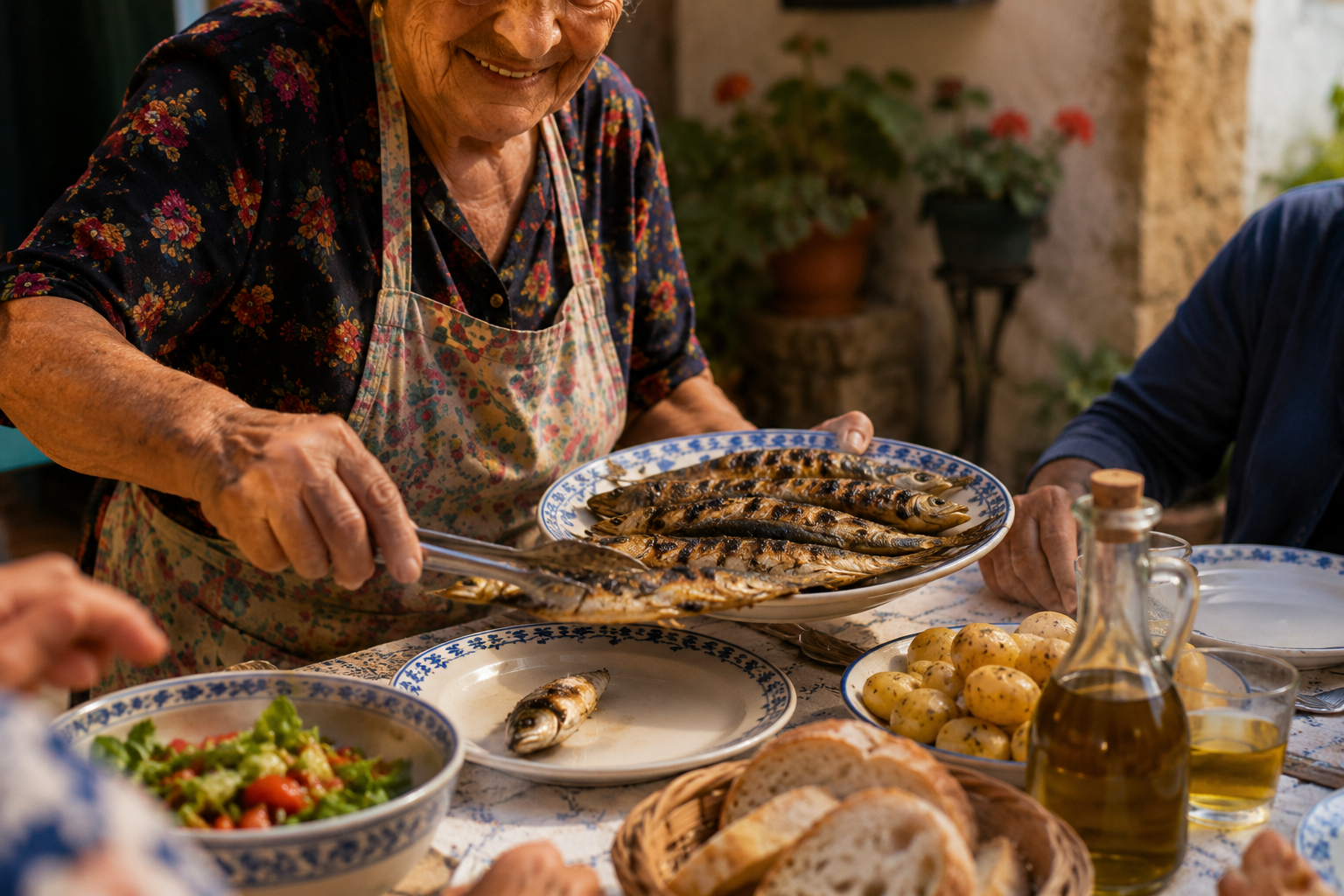
The fish rule could not be more straightforward. Eat oily fish two or three times a week, choose the whole fish over a pill, and let it take the place of some of the meat on your plate. That is the entire thing, and its power lies in its simplicity, since it is easy to remember, easy to do, and easy to keep up for a lifetime.
Portuguese women follow it without any sense of following a rule at all. Fish is woven so deeply into the cuisine that eating it several times a week requires no effort or discipline, it is just how people eat, and that effortlessness is precisely why the habit lasts where stricter diets fail. A rule you never have to think about is a rule you never break. That effortlessness is the deepest lesson of the whole thing. Most dietary advice fails not because it is wrong but because it is hard to sustain, demanding a willpower and vigilance that wear out within weeks. The fish rule survives because it asks for almost nothing, a swap here and a habit there, folded so naturally into normal eating that it never feels like a diet. The Portuguese woman is not being disciplined when she grills her fish. She is simply making dinner, which is exactly why the habit lasts across a lifetime rather than a fortnight.
The key is the kind of fish. The real benefit comes from oily fish, the sardines, mackerel, and their relatives that are rich in the fats the body needs, rather than from lean white fish alone. Portuguese cooking happens to lean heavily on exactly these oily species, which is part of why the Portuguese plate has been so quietly good for the women who grew up on it.
What Portuguese Women Really Eat
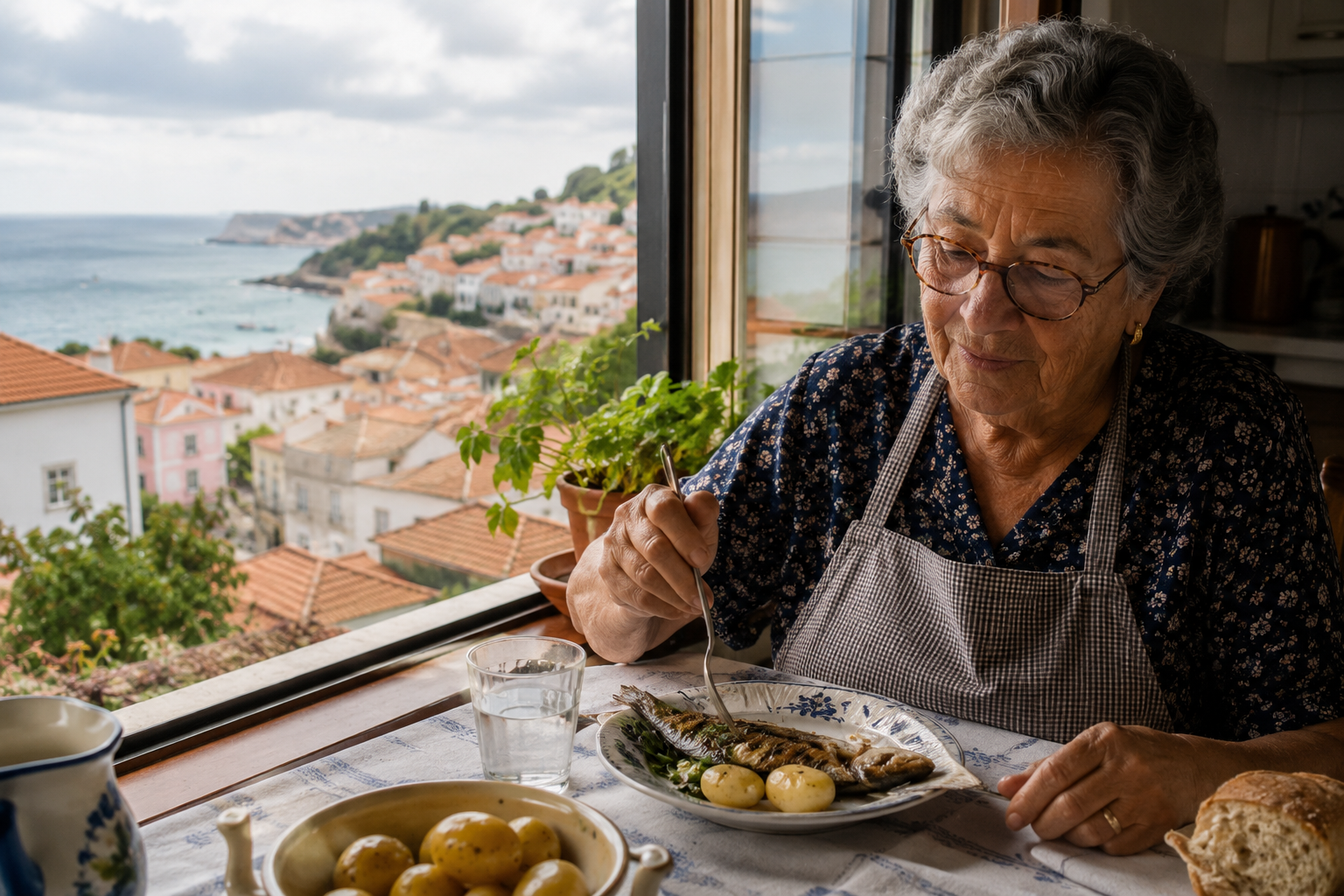
Step into the fish culture of Portugal and the daily reality of the rule becomes clear. Grilled sardines, charred over coals and eaten whole, are a national icon, cheap and abundant and adored, and they are one of the richest sources of healthy fish fats there is. In summer especially, the smell of grilling sardines fills whole neighborhoods.
Then there is bacalhau, the salt cod that Portugal has built an entire cuisine around, said to have a different recipe for every day of the year. Alongside it come fresh mackerel, horse mackerel, sea bass, octopus and whatever else the Atlantic gives up, cooked simply and often, grilled or stewed or baked without fuss. Fish is not dressed up here but treated as the honest everyday food it is.
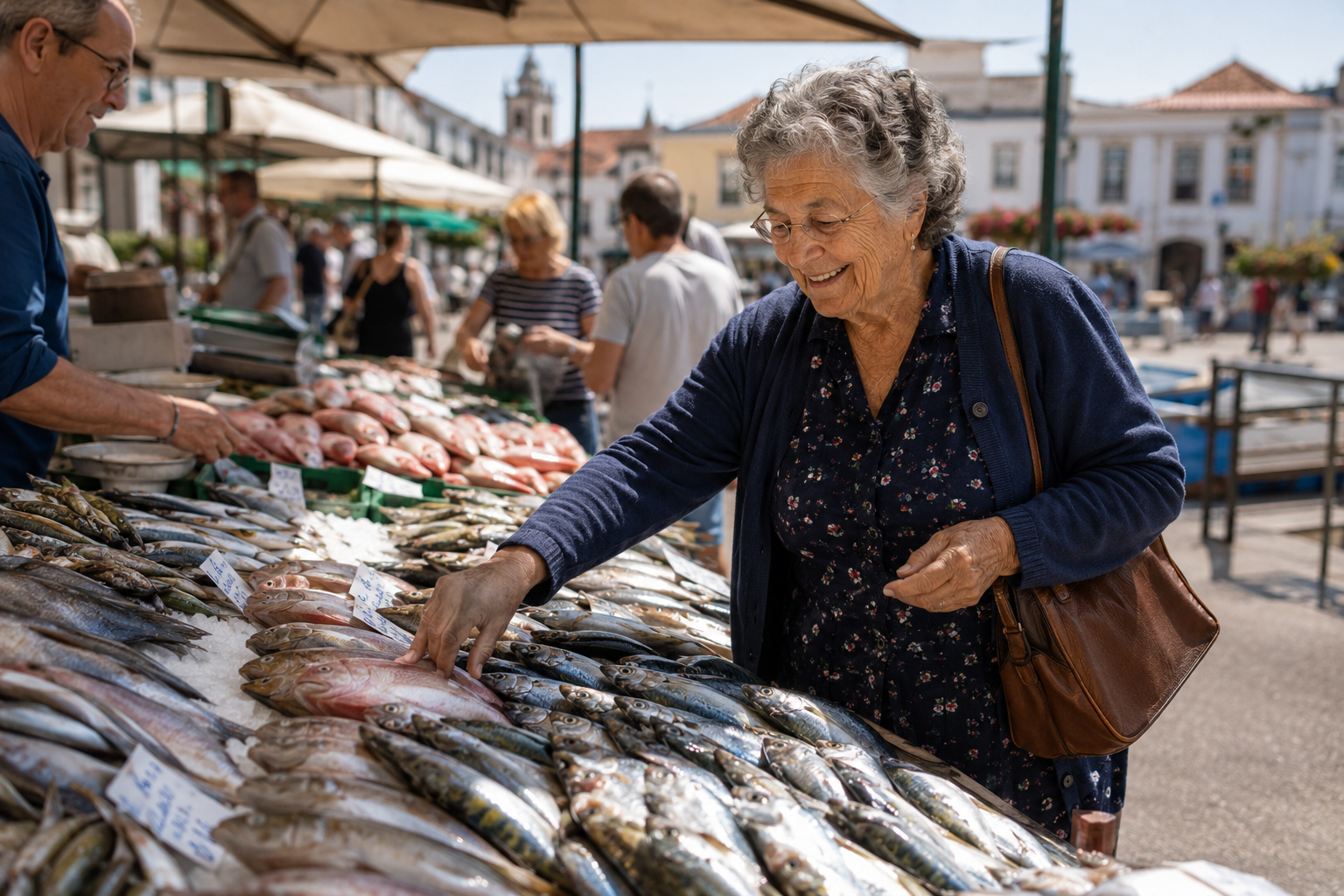
What makes this so effective is that the fish is fresh, whole and simply cooked, rather than breaded and fried or processed into something else. A Portuguese woman eating grilled fish and vegetables is getting the full benefit of the fish in its most natural form, and she has done so week in and week out for seventy years or more, which is a dose of healthy eating no supplement bottle can match. The economics matter here as much as the nutrition. Sardines and mackerel are among the cheapest fish in the sea, and the salt cod tradition grew up precisely because it was affordable food that kept without refrigeration. This is not a wealthy person’s health habit built on expensive fillets but a working people’s diet, which is part of why it spread through every level of Portuguese society and endured for centuries. Good health, in this case, came cheap, arriving on ordinary family tables as a matter of course rather than as a luxury for the few. There is also the matter of freshness, which the Portuguese coast supplies almost automatically. Fish landed in the morning and cooked that evening keeps more of its nutrients and needs less doing to it, and the whole culture is built around eating the catch quickly and simply. That freshness is part of the benefit, and it is the one thing a landlocked eater has to work a little harder to match.
Why Doctors Care

The reason medicine has landed on this same habit is a family of fats called omega-3s, and specifically the two known as EPA and DHA that are found in oily fish. These fats are strongly associated with a healthier heart, and research has linked regular fish eating to lower rates of heart disease, the leading killer in the Western world.
The heart is not the only beneficiary. Omega-3s are also tied to better brain health and a possible role in slowing cognitive decline, to reduced inflammation throughout the body, and to benefits for the eyes and the joints. A diet rich in oily fish appears to support the body in a remarkable number of ways at once, which is why it keeps turning up in study after study of the world’s healthiest populations.
None of this is new advice, and that is worth being clear about. Heart organizations such as the American Heart Association have recommended eating oily fish about twice a week for many years, and the guidance has been steady for a long time. What has changed is the strength of the emphasis and the way doctors now frame food itself as a form of medicine, which has pushed the humble fish habit back into the spotlight. The consistency of the evidence is what makes doctors confident. Unlike many nutrition claims that flare up and then fade, the link between oily fish and heart health has held up across decades of research and across very different populations, from Japan to the Mediterranean to the far North. When a dietary pattern shows the same protective signal again and again in places that share little else, researchers take it seriously, and oily fish is one of the few foods to have earned that kind of durable respect. That durability is exactly what separates the fish rule from the endless parade of fad foods and passing superfoods. It is not a trend but a finding, one of the most settled conclusions in all of nutrition, and precisely the kind of advice a person can build a lifetime of eating around without fear of it being overturned next year.
Eat the Fish, Not the Pills
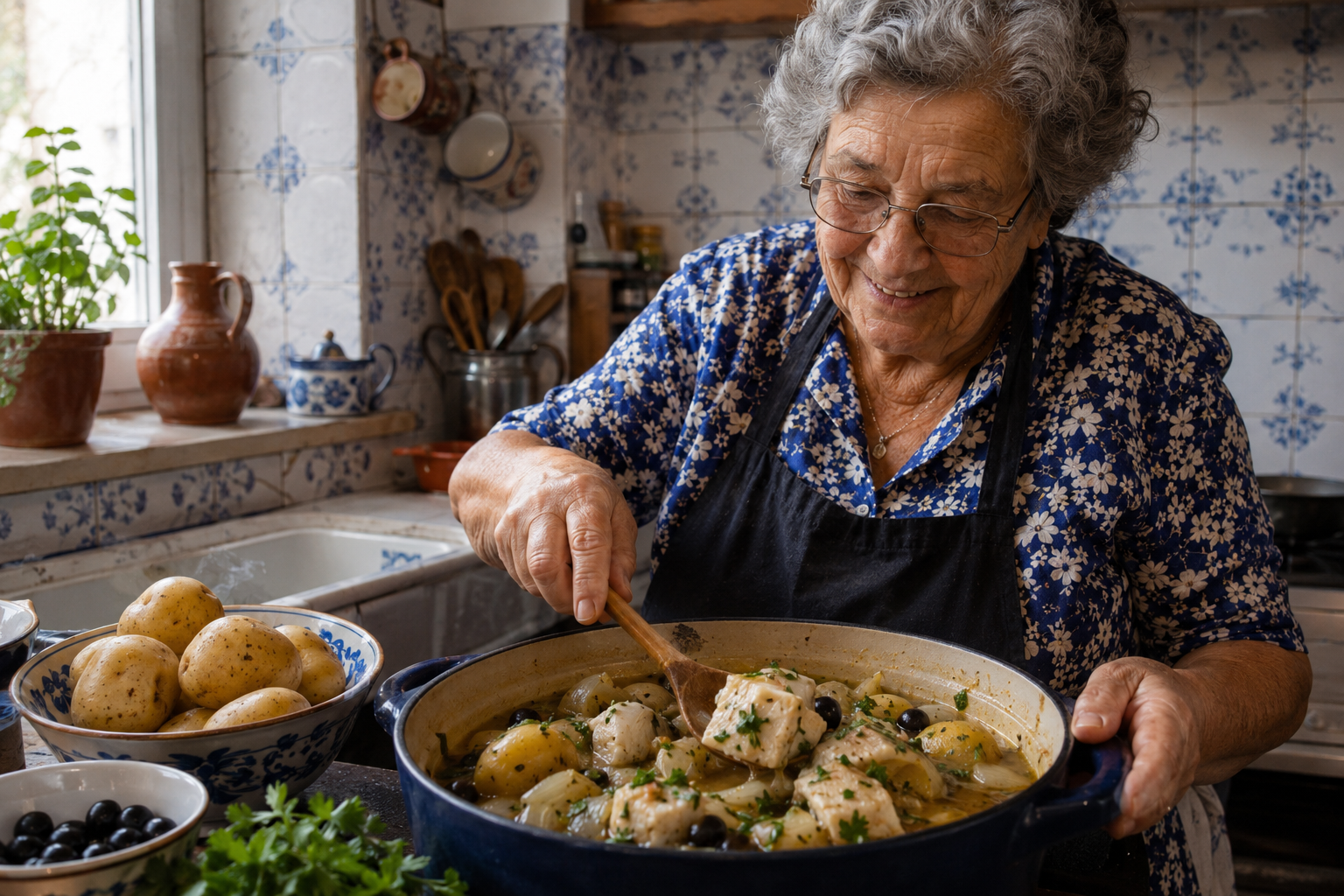
Here is where the Portuguese approach quietly beats the modern one. For years, many people tried to shortcut the benefit by swallowing fish-oil supplements instead of eating fish, and the evidence has turned out to favor the fish. For most people, eating the whole fish appears to do more good than taking a pill, and routine fish-oil capsules are no longer broadly recommended for the general population.
There are good reasons the plate beats the capsule. Whole fish delivers its omega-3s alongside protein, vitamins, minerals and other nutrients in a natural package, and it replaces less healthy foods on the plate at the same time. A supplement isolates one component and misses all of that, and the research on capsules for otherwise healthy people has been underwhelming compared with the strong record of fish itself.
This is the deepest wisdom of the Portuguese rule, and the older women never had to learn it because they never left the fish for the pill. They simply ate the food, the way people always had, and got the whole benefit in the process. The modern lesson, after a long detour through the supplement aisle, is essentially to do what they never stopped doing. This matters in practice, because the supplement industry is enormous and its promise is seductive, offering the benefit of fish in a convenient daily capsule. The trouble is that the convenient version has largely failed to deliver in the trials, while the inconvenient version, cooking and eating real fish, has succeeded. It is a small parable of nutrition in general, where the whole food so often beats the extracted pill, and where the tempting shortcut turns out to be no shortcut at all.
The Prescription Angle
There is a literal prescribing story too, for those who need it. For certain high-risk patients, particularly people with very high triglycerides and existing heart risk, doctors do now prescribe a purified, high-dose omega-3 medication, a genuine prescription drug derived from fish oil. For that specific group, the omega-3 story has moved from the dinner table to the pharmacy.
More broadly, the whole movement often called food as medicine has gained real ground in recent years, with doctors increasingly treating diet as a frontline tool rather than an afterthought, and oily fish sitting near the center of the heart-healthy plate they describe. Some programs even connect patients with healthy food directly, a recognition that what people eat may matter as much as what they are prescribed.
So the headline holds a real kernel of truth, even if the twice-a-week advice itself is decades old. Between the prescription omega-3 for high-risk patients and the growing food-as-medicine emphasis, American medicine really has, in its own way, started prescribing the fish habit, catching up to a rule Portuguese women have followed all along. There is something quietly humbling in that catching-up. The most advanced medical systems in the world, with all their research and technology, have circled back to the wisdom of a Portuguese grandmother at her stove and confirmed with data what she knew by tradition. It is a pattern that repeats across nutrition science, where the newest findings keep validating the oldest habits of the world’s healthiest peoples, and where the future of dietary advice often looks a great deal like its distant past.
Beyond the Fish, the Whole Atlantic Plate
The fish is the star, but it never sits alone on the Portuguese plate, and the wider diet is part of why it works so well. Researchers have given the traditional eating pattern of Portugal and northwestern Spain its own name, the Atlantic diet, and it has begun to attract the same kind of scientific attention as its better-known Mediterranean cousin.
The Atlantic diet pairs the region’s abundant fish with plenty of vegetables and potatoes, beans, whole grains and good olive oil, along with modest amounts of dairy and wine, all cooked simply and eaten in season. A recent trial found that families who adopted this traditional pattern showed measurable improvements in their metabolic health, real evidence that the whole plate, and not the fish alone, is doing good.
For the older women of Portugal, the fish and the rest of the plate are inseparable. The grilled sardine comes with boiled greens and potatoes and good bread and oil, the salt cod is stewed with chickpeas and vegetables, and a bowl of simple vegetable soup opens many meals. The fish delivers its omega-3s, but it does so as part of a balanced, plant-rich, barely processed diet that supports health from several directions at once.
This is the real context for the fish rule, and it matters. Eating more oily fish while otherwise living on processed food will still help, but the full benefit these women enjoy comes from the whole way of eating, fish at its center and vegetables and beans and oil all around it. The fish is the headline, but the Atlantic plate is the story.
How to Follow the Fish Rule

Living by the rule is easy and cheap, which is the best part. Aim for two or three servings of oily fish a week, choosing from salmon, sardines, mackerel, herring, trout, or whatever good oily fish is available and affordable where you are. Tinned sardines and mackerel count fully and cost very little, so this is not an expensive habit to build.
Keep the cooking simple, since the point is the fish itself. Grill it, bake it, or eat it straight from the tin on good bread, and let it take the place of red or processed meat a couple of times a week rather than adding to an already heavy plate. Pair it with vegetables and olive oil, the way the Portuguese do, and you have built the heart of the healthiest diet in the world for very little money.
A final word of care belongs here. Fish choices can matter for people who are pregnant or who have specific conditions, and anyone considering omega-3 supplements or making big dietary changes for a medical reason should speak to their own doctor first. Within those bounds, though, the fish rule is one of the simplest and best-supported habits a person can adopt, and the older women of Portugal have been quietly demonstrating it for generations. It asks for no special products, no expensive supplements and no complicated plan, only a willingness to put a piece of oily fish on the plate a couple of times a week and let it do its quiet work. The most modern nutrition advice, it turns out, is also some of the oldest, and it tastes like a grilled sardine on a summer evening.

About the Author: Ruben, co-founder of Gamintraveler.com since 2014, is a seasoned traveler from Spain who has explored over 100 countries since 2009. Known for his extensive travel adventures across South America, Europe, the US, Australia, New Zealand, Asia, and Africa, Ruben combines his passion for adventurous yet sustainable living with his love for cycling, highlighted by his remarkable 5-month bicycle journey from Spain to Norway. He currently resides in Spain, where he continues sharing his travel experiences with his partner, Rachel, and their son, Han.