
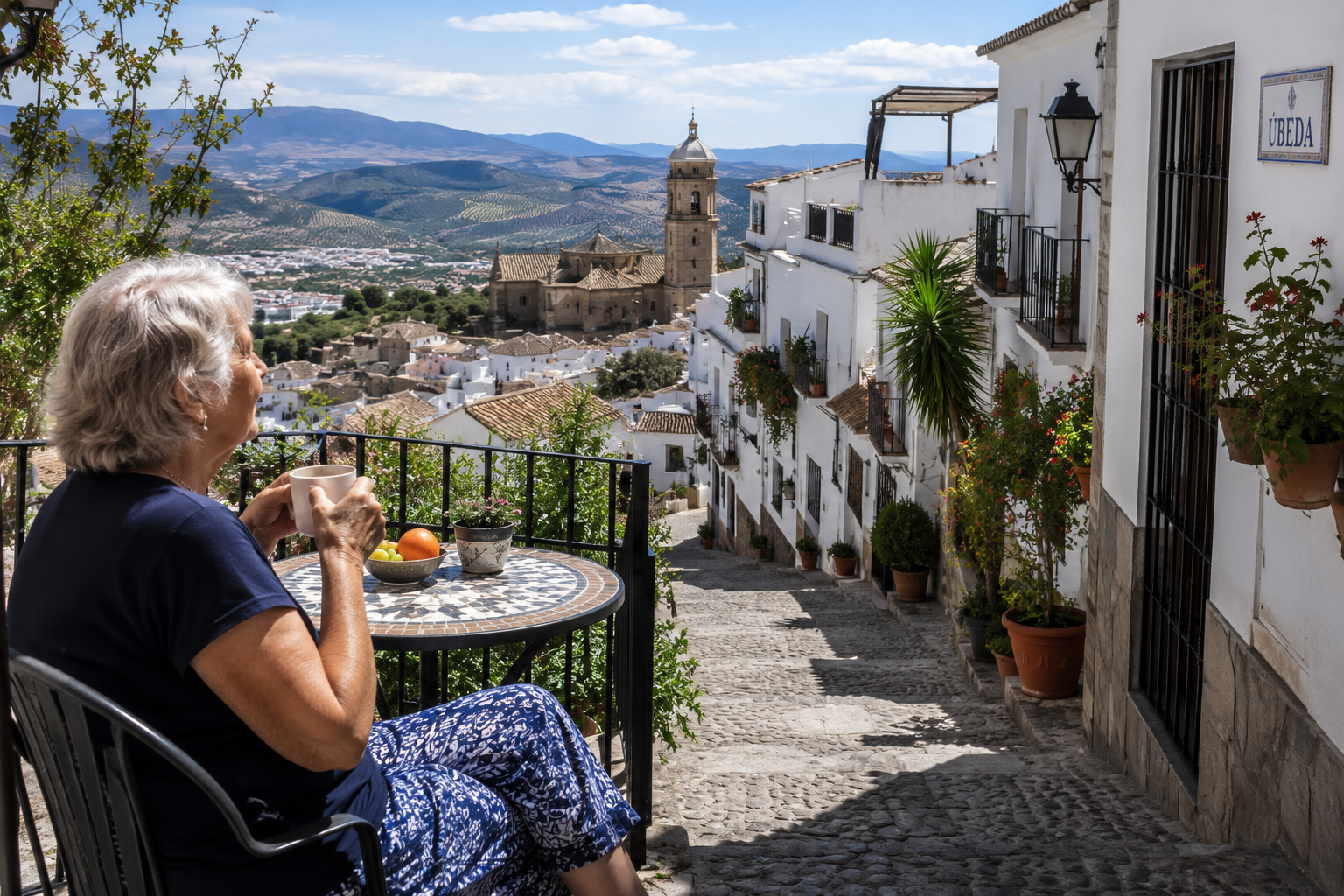
In most of the United States, a Social Security check of $1,847 a month is a tight, anxious income for a single person. It might cover rent alone in a modest apartment, leaving little for anything else, and in an expensive city it would not even do that. It is a figure that keeps millions of American retirees counting carefully to the end of every month.
Carry that same check across the Atlantic to a small town in inland Andalusia, in the sun-baked south of Spain, and it becomes something else entirely. There, $1,847 a month is not survival money. It is a comfortable, unhurried, genuinely full life, with a decent apartment, good food, healthcare, and money left over most months. The check does not change. The place it is spent does, and that single difference can reshape an entire retirement.
Here is what that number really is, where in Spain it stretches so far, and the honest accounting of what a full life on it really involves. The figures here are representative rather than any one person’s exact budget, and no one should move abroad on the strength of an article, but they show the shape of the thing clearly enough.
The Number
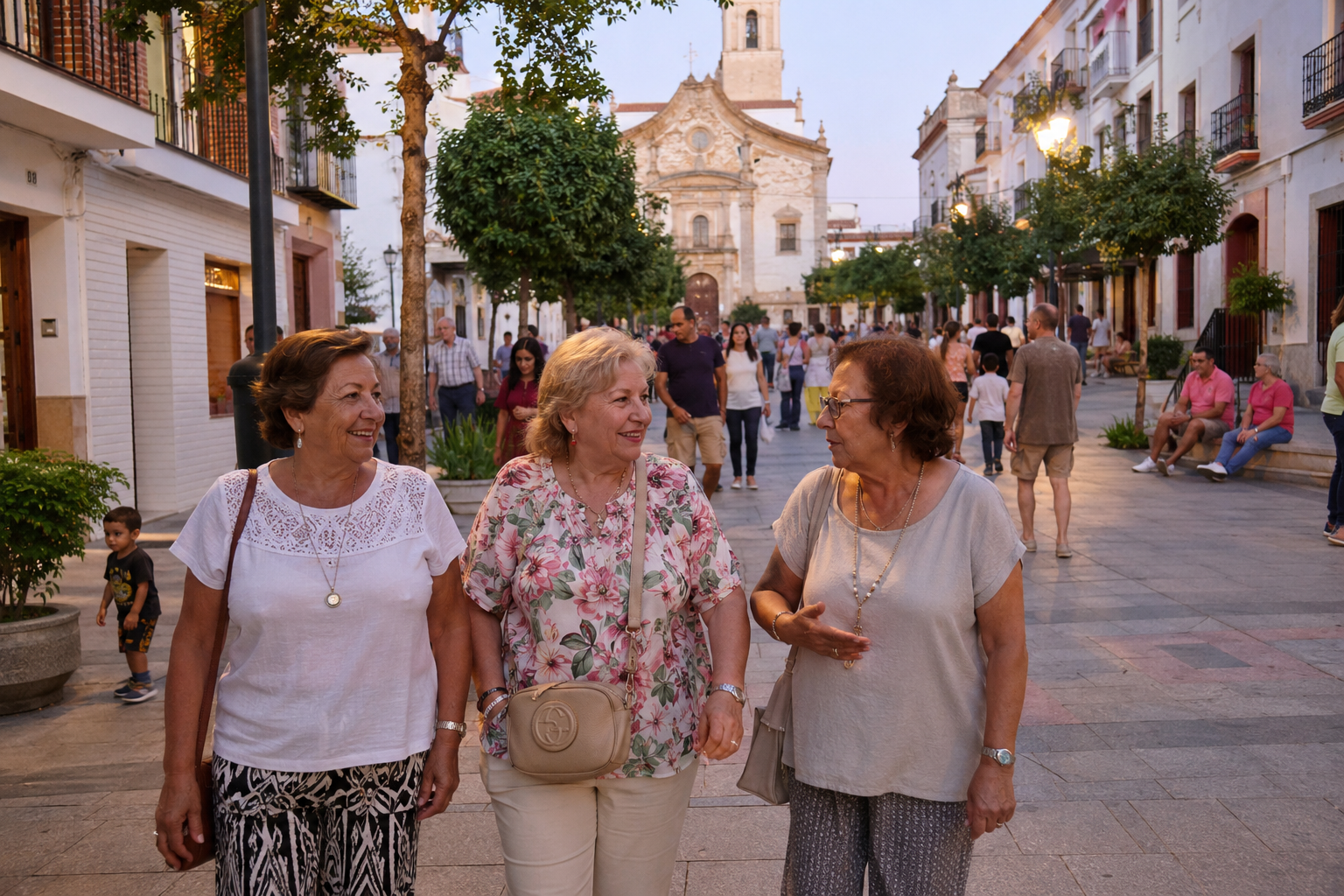
Start with the check itself, because $1,847 is not an unusual amount, sitting close to what a typical American receives from Social Security, a little below the overall average for a retired worker and right around the average for women, whose benefits tend to run lower after careers with lower pay or time taken out to raise families. This is not a story about a large pension but about an ordinary, even modest, benefit going a very long way.
Converted into the currency it would be spent in, $1,847 comes to somewhere around €1,570 a month, give or take with the exchange rate. That is a real and useful sum in inland Spain, well above what a careful single person needs to live there comfortably, which is the whole reason the arithmetic works. The same figure that means scarcity in America means margin in Andalusia. It is worth pausing on how ordinary that check is. Roughly half of American retirees receive less than the average benefit, and a figure in the range of $1,847 is squarely within the reach of a normal working life rather than the preserve of high earners. The story here is not one of clever wealth but of an unremarkable income finding a place where it goes remarkably far.
The gap is not about Spain being poor but about the cost of the basics, housing above all, being dramatically lower in the parts of Spain that tourists never see. A retiree who would spend most of an American check on rent alone finds, in an inland Andalusian town, that rent takes a small fraction of it, and everything that was impossible on the same money at home suddenly becomes easy.
The Town
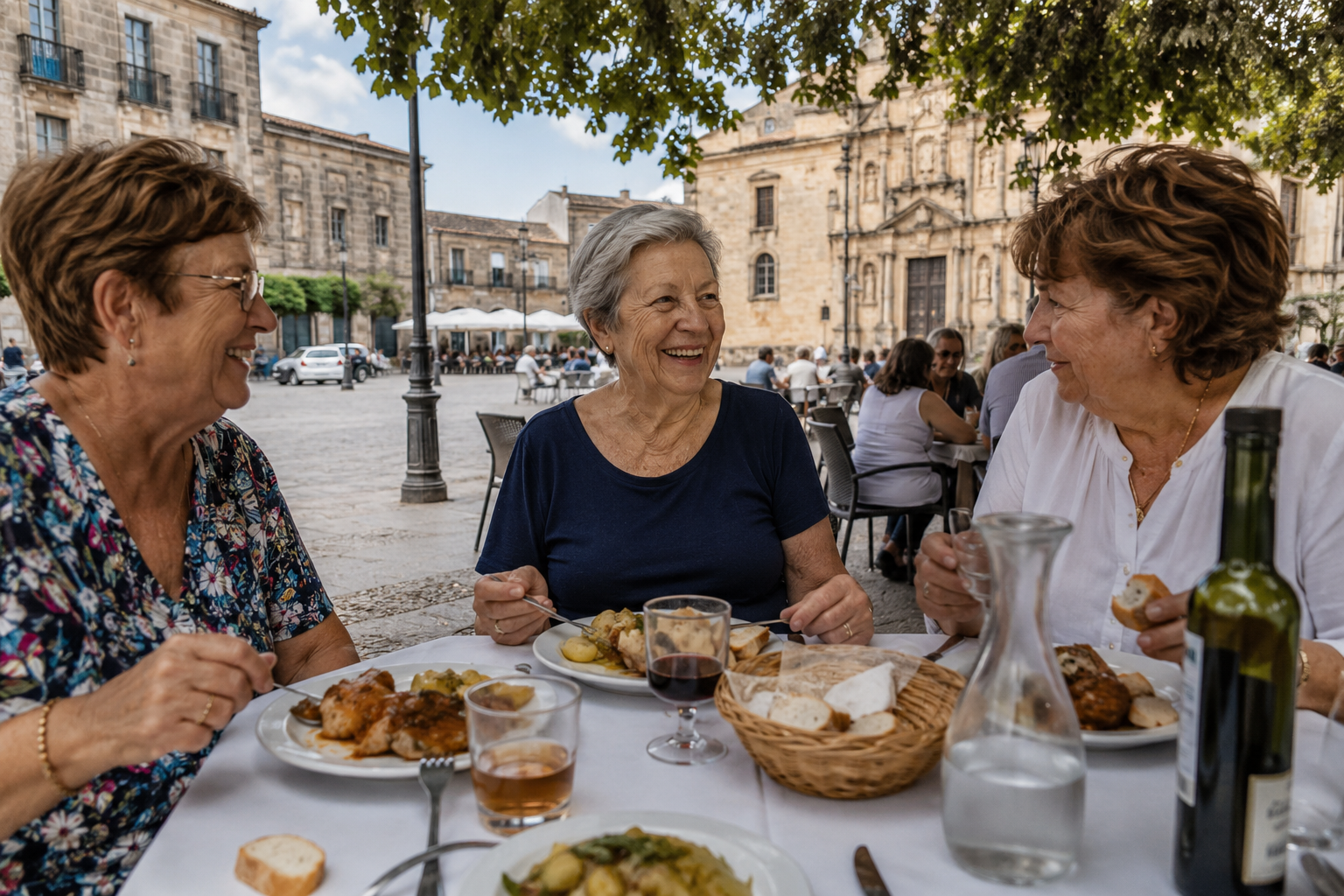
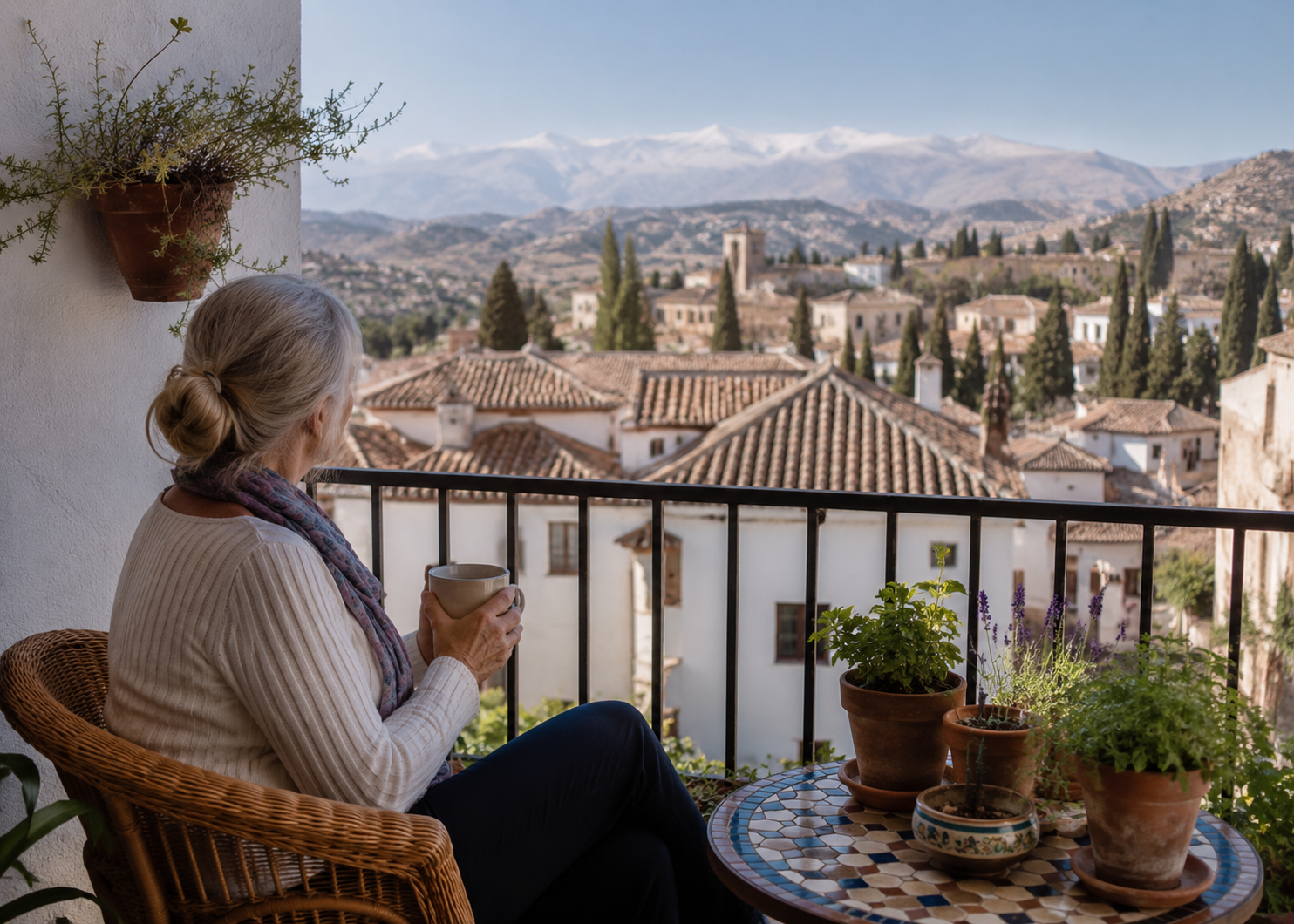
The magic depends heavily on where in Spain you land, and the answer is inland Andalusia, the interior of Spain’s southernmost region and the most affordable corner of the country. This is not the glossy Costa del Sol of the property brochures, with its marinas and its foreign money, but the Spain behind it, the whitewashed towns and small cities of the provinces of Granada, Jaén and Córdoba, where life is cheap and deeply Spanish.
These are places of olive groves and mountains, of towns built around a church and a plaza, where a good apartment rents for a few hundred euros and a coffee costs little more than a euro. The Alpujarra villages tumbling down the flanks of the Sierra Nevada, the old towns of the Jaén countryside, the small cities like Úbeda and Baeza with their honey-colored stone, all offer the same bargain, a warm, beautiful, unhurried life at a fraction of coastal or American prices.
What you give up is the expat bubble. Inland Andalusia has fewer foreign residents, less English spoken, and less of the ready-made international community you find on the coast, so it asks more of a newcomer in the way of Spanish and self-reliance. In exchange, it offers the real thing, an authentic Spanish town at authentic Spanish prices, which is exactly what makes a modest check go so far.
The climate is part of the deal too. This is one of the warmest, sunniest parts of Europe, with long hot summers and short mild winters, which keeps heating bills low and life lived outdoors for much of the year. For a retiree, a place where you can walk to everything under near-constant sun, without a car and without much of a winter, removes a whole category of cost and difficulty at once. There is a practical bonus in the property market, too. Because these inland towns are not on the foreign-buyer radar, rents have not been bid up the way they have on the coast, and long-term apartments at truly local prices are still there for anyone willing to look and to deal in Spanish. The absence of the expat market that makes the coast feel familiar is the very thing that keeps the interior cheap.
The Monthly Ledger
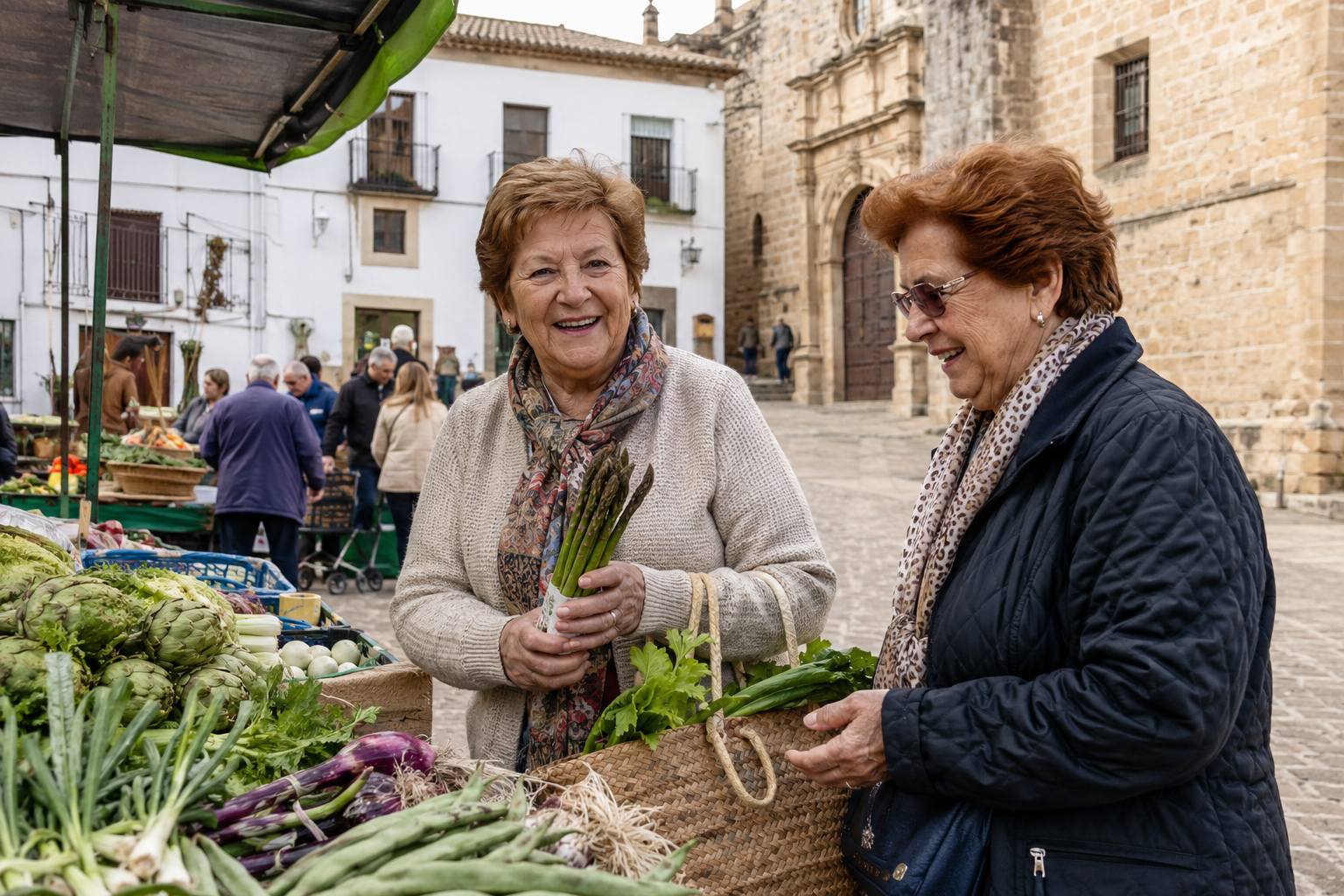
Set out the actual spending and the surplus becomes clear. Rent for a comfortable one or two-bedroom apartment in an inland Andalusian town runs somewhere around €400 a month, roughly $470, and often less, which is the single figure that makes everything else possible. In much of the United States that would not rent a parking space, and here it rents a whole home.
The rest of the ledger stays modest. Utilities, the electricity and water and internet together, come to around €100. Groceries for one person run near €220 at Spanish supermarket prices, where fresh produce and bread and local wine cost a fraction of American prices. Private health insurance, or the public buy-in scheme many retirees use, adds perhaps €120. Eating out, a genuine pleasure here rather than a splurge, might take €150, at prices where the menú del día, a three-course lunch, runs ten or twelve euros.
Add in a phone plan, local transport, and the ordinary miscellany of a life, and the whole month lands somewhere around €1,100 to €1,250, roughly $1,300 to $1,470. Against the €1,570 the check provides, that leaves a cushion of several hundred euros every single month. It is not a life of scraping by but a life with real breathing room built into it, on an income that would be a struggle almost anywhere in America.
That surplus is what turns a survival budget into a full one. It pays for travel, for the occasional flight home to see family, for a cushion of savings, or simply for the peace of not counting every euro to the end of the month. On a check most Americans would consider small, an inland Andalusian retiree lives with a margin that many wealthier people at home never manage to find.
The Same Check, Three Places
Nothing makes the point as sharply as following the same $1,847 across three different homes. In an expensive American city, a coastal metro or anywhere with real housing pressure, that check is swallowed almost entirely by rent, leaving a retiree choosing between groceries and utilities and putting off the doctor to save money. It is the income of a truly difficult retirement, the kind that grinds a person down by the twentieth of every month.
Move to Spain but choose the wrong part of it, the fashionable stretches of the coast or the center of a big city like Madrid or Barcelona, and the check does better but still feels tight. Rents in those places have climbed toward northern European levels, and $1,847 there buys a modest, careful life rather than a comfortable one, closer to breaking even than to breathing room. The Spain of the glossy property supplements is not where a small check performs its magic.
It is only in the affordable interior, the inland Andalusian town, that the same figure opens all the way up. Here the rent that ate the whole American check takes a quarter of it, the healthcare terror disappears, and the surplus at the end of the month is real. Same check, same person, same needs, and yet three completely different retirements, decided almost entirely by the map.
That spread is the whole story in miniature. A retirement income does not carry a fixed amount of comfort around with it, but cashes out differently in every place, and the art of retiring well on a modest check is largely the art of choosing where to cash it. Inland Andalusia is simply one of the spots on earth where a modest American check cashes out best.
What a Full Life Means
The money is only half of it, because a full life is made of more than a balanced ledger, and inland Andalusia is generous with the parts that do not show up in a budget. The daily texture of life there is rich in ways that cost almost nothing, and that is where the real value of the place lies.
There is the food, cheap and fresh and central to the culture, eaten slowly and often in company. There is the plaza life, the evening walk and the long coffee and the neighbors greeting each other by name, a built-in social world that costs nothing to join. There is the near-constant sun, the walkable town, the sense of safety, and the unhurried pace that turns ordinary days into pleasant ones. None of this appears on the ledger, and all of it is part of what the check buys.
Healthcare deserves its own mention, because the fear of a catastrophic medical bill that shadows so much American retirement simply lifts in Spain. Between the excellent, inexpensive public system and cheap private cover, a retiree here can get sick, see a specialist, or need a hospital without the financial terror that comes with the same events at home. That security is worth more than money, and it comes as part of the package.
Put together, this is what a full life on a modest check means. It is not luxury, and it is not idleness. It is a secure, comfortable, socially rich daily existence in a beautiful place, funded easily by an income that would buy anxiety rather than ease in most of the United States. The retiree who makes this move is not just saving money. She is buying a materially better life with the same check.
The Catch Nobody Mentions

The other side of the ledger matters just as much, because the picture is not all sunshine, and a few real obstacles sit between the check and the life. The first and largest is the visa. To retire in Spain as a non-EU citizen, an American needs the non-lucrative visa, and that visa demands proof of income well above €2,400 a month, considerably more than a $1,847 check provides. The comfortable living cost and the visa income bar point in opposite directions, and a retiree on this budget typically has to show savings on top of the check to satisfy the paperwork, even though the life itself costs far less than the visa demands.
The exchange rate is the second catch. Because the income is in dollars and the life is in euros, the real value of the check rises and falls with the currency markets, and a weak-dollar stretch quietly shrinks the monthly budget without anyone changing their habits. Living close to the line means feeling those swings, which is why the wiser approach keeps a euro cushion for the lean months.
There are further complications worth naming. Once a retiree becomes a Spanish tax resident, by living there more than half the year, they face an annual Spanish tax return on their worldwide income, Social Security included, softened but not erased by the treaty between the two countries. Private health premiums climb with age. And inland Andalusia, for all its charm, is far from American family, thin on English, and a real adjustment for anyone who has never lived abroad. The language especially deserves weight in the decision. In a small inland town daily life runs almost entirely in Spanish, from the doctor to the town hall to the neighbors, and a retiree who never learns it will find the place isolating rather than welcoming. The bargain of the interior comes bundled with the work of learning to live in it, a cost that shows up on no ledger at all. None of this cancels the bargain, but all of it belongs in the decision.
What the Number Really Shows
The deeper lesson of $1,847 in an Andalusian town is that a retirement income is not a fixed quantity of comfort but a figure whose meaning depends entirely on where it is spent. The same check that means a careful, constrained life in much of America means an easy, generous one in the right corner of Spain, and the difference is almost entirely the cost of the basics in the two places.
That is not an argument that everyone should pack up and move, since the visa, the distance, the language and the sheer upheaval are all real, but simply a demonstration of how far geography can stretch a modest income, and of why a growing number of Americans on ordinary Social Security checks are looking hard at the affordable interior of southern Europe. The shift is already visible on the ground, in the slow growth of small international communities in towns that a decade ago had none, drawn by exactly this arithmetic. What the coast has long offered at a premium, the interior increasingly offers at a discount, and word of it travels.
Anyone weighing it should price their own version carefully, with current rents and their own benefit amount and a proper look at the visa and tax rules, and ideally with professional advice, rather than trusting a representative sketch like this one. Done with eyes open, though, the arithmetic holds, and it explains why a check that buys anxiety in one country can buy a full and pleasant life in another, under the same sun that has drawn people to Andalusia for a very long time.

About the Author: Ruben, co-founder of Gamintraveler.com since 2014, is a seasoned traveler from Spain who has explored over 100 countries since 2009. Known for his extensive travel adventures across South America, Europe, the US, Australia, New Zealand, Asia, and Africa, Ruben combines his passion for adventurous yet sustainable living with his love for cycling, highlighted by his remarkable 5-month bicycle journey from Spain to Norway. He currently resides in Spain, where he continues sharing his travel experiences with his partner, Rachel, and their son, Han.