
Two people need to get from Paris to Lyon on the same morning. The tourist books a flight, because a flight is what you book when two cities feel far apart and an hour in the air sounds faster than anything on the ground. The local books the train without a second thought. On this route, and on dozens like it across Europe, the local is walking out of the station in the middle of Lyon while the tourist is still waiting for a bag at an airport on the edge of town.
There is a rule that quietly governs how Europeans move between their cities, and most visitors never learn it. If the train takes under about four hours, you take the train. Not for the romance of it, though the romance is real, but because on those journeys the train is simply faster once you count the whole trip rather than the hour that happens at cruising altitude.
The gap between how locals travel and how tourists travel on these corridors is one of the most useful things an American can learn before a European trip. It saves money and time, and it spares you a great deal of standing in line.
The Door-to-Door Math

The plane looks faster because people compare the wrong numbers. One hour in the air against three on the rails is no contest, until you remember that almost none of a flight is the flight. The real journey starts the moment you leave your accommodation and ends when you reach where you are really going, and by that measure the plane sheds its advantage in a hurry.
Consider what a short-haul flight quietly asks of you. You travel out to an airport that usually sits well outside the city, sometimes an hour from the center. You arrive a recommended two hours early, more in summer. You queue for bag drop, then for security, then at the gate, then to board. You fly. You wait for luggage. Then you travel back in from another airport on the far edge of the destination city. Stacked end to end, a one-hour flight routinely becomes a five-hour door-to-door ordeal, most of it spent standing, waiting, or riding to and from a runway.
The train inverts almost every step. The station sits in the heart of the city, a short walk or metro ride from where you are staying. There is no two-hour buffer, since ten minutes before departure is comfortable and you can cut it finer than that. There is no security theater to speak of, no liquid limits, no boarding-group hierarchy to observe. You walk to your platform, step aboard, and from the moment the train pulls out you are already moving toward the center of the next city rather than toward a terminal miles away from it.
Run the arithmetic fairly on a journey of two or three hours by rail and the plane loses nearly every time. The flight wins the sky by two hours and gives all of it back, with interest, on the ground at either end.
Put real numbers on London to Paris and the point lands. The Eurostar is two hours and twenty minutes, plus perhaps thirty minutes to reach the station and clear the light check, so call it three hours in total. The flight is around ninety minutes in the air, but add the run out to the airport, the two-hour buffer, security, boarding, the wait for bags, and the trip back into the city, and you are closer to five hours from door to door. The train wins by two, on the very route where the plane is supposed to be faster.
The Corridors Where It Is No Contest
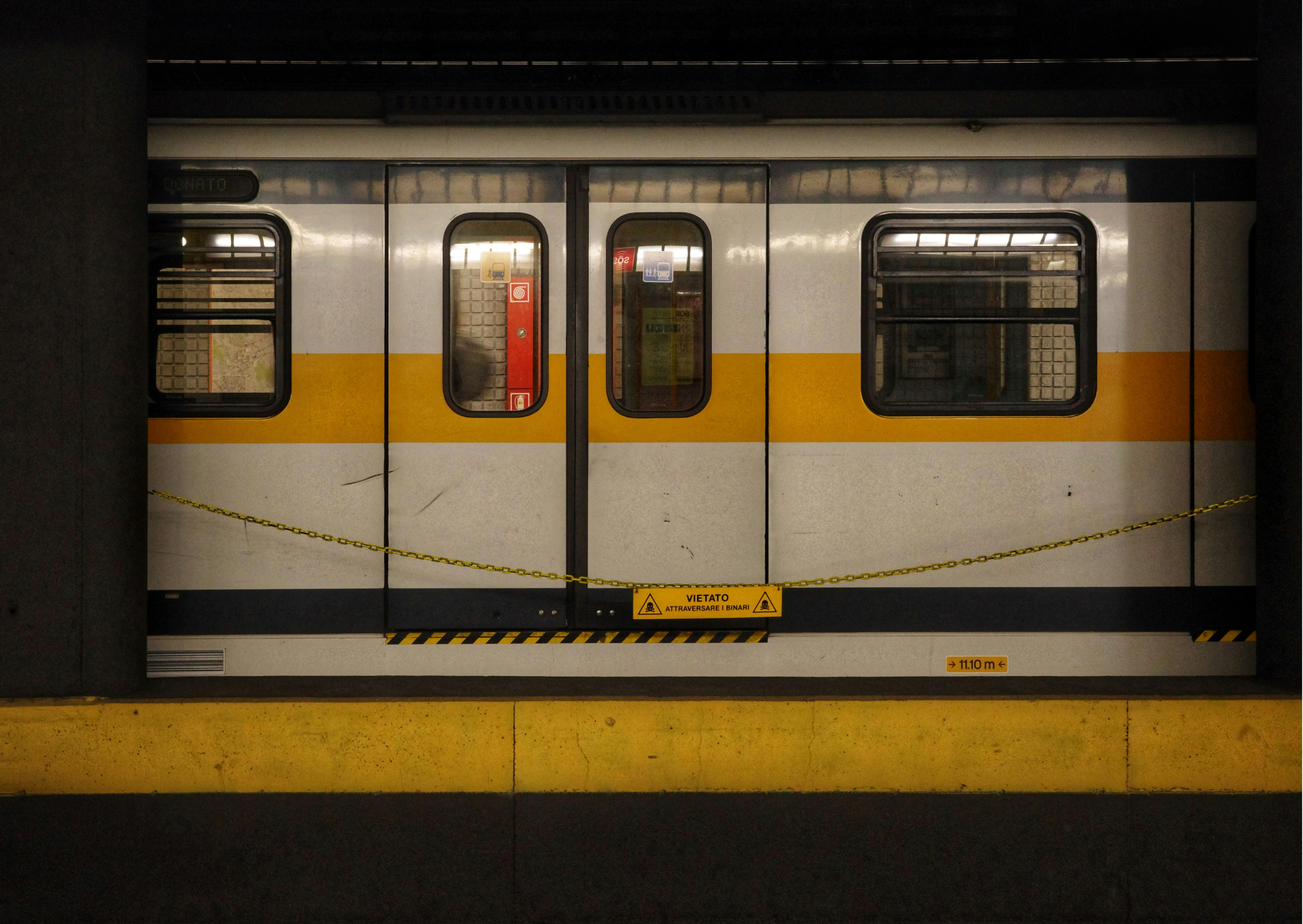
The rule is easiest to see on the routes people ride. London to Paris on the Eurostar takes about two hours and twenty minutes, city center to city center, against a flight that is nominally shorter and reliably slower once the two airports are folded in. It is the cleanest illustration of the whole principle, which is why the train carries the large majority of travelers between the two capitals.
The continent is full of the same story. Paris to Lyon runs about two hours on the TGV. Madrid to Barcelona takes roughly two and a half hours on Spain’s AVE, which crosses the country at up to 300 kilometers per hour, about 186 miles per hour. Rome to Milan is around three hours on the Frecciarossa. Amsterdam to Paris is a shade over three hours on the Eurostar network that absorbed the old Thalys routes, and Paris to Brussels is well under an hour and a half. Each of these is a city pair where a local would look at you oddly for flying, and where the timetable, not sentiment, is the reason.
What these corridors share is high-speed rail built specifically to compete with the plane and beat it. France pioneered it with the TGV, Spain has laid down the largest high-speed network in Europe, and Italy and Germany run their own fast intercity services at similar speeds. Germany’s ICE network ties the same knots, with Cologne to Frankfurt in about an hour and Berlin to Munich in under four, while the Eurostar brand now runs as a single network across France, Belgium, the Netherlands, and Germany after absorbing the old Thalys routes. On the trunk lines between major cities the trains top out around 300 to 320 kilometers per hour, quick enough to turn distances that once demanded a flight into a comfortable half-day sit with a window seat and a table to work at.
The Rule Is Becoming Law
What individual travelers have long done by instinct, governments are now beginning to require. In 2023, France banned domestic flights on routes where a high-speed train can make the same trip in under two and a half hours, a measure written into its Climate and Resilience Law. In practice it grounded the flights between Paris and cities like Lyon, Bordeaux, and Nantes, on the plain logic that flying made little sense where the train already did the job well.
The detail worth knowing is that the original proposal was far more sweeping. France’s citizens’ climate convention had suggested banning flights wherever a train under four hours existed, the very same four-hour mark travelers use as a rule of thumb. Airlines, led by Air France-KLM, and several regions pushed back hard, and the threshold was cut to two and a half hours before the law passed. The instinct and the legislation started from the identical number, then, before the lobbying trimmed the legal version down to a fraction of the routes.
France is not alone in nudging travelers off short flights. Austria tied a similar restriction to its rail network, targeting flights where a train under three hours exists, such as Vienna to Salzburg. Spain has floated its own version at the two-and-a-half-hour mark, while Germany and Belgium lean on taxes and fees rather than outright bans. Underneath all of it sits the European Union’s stated aim to double high-speed rail traffic by 2030, a continent deliberately steering its shortest trips onto the tracks and away from the gate.
Why Tourists Keep Flying Anyway
If the train is so plainly better on these routes, the natural question is why so many visitors still fly them. The answer is mostly habit wrapped around a pricing illusion. Budget airlines advertise fares that look unbeatable, a headline €20 seat, about $22, between two cities, and the number does its work before the traveler ever thinks to compare it with a train.
That headline rarely survives contact with the full bill. The cheap fare tends to arrive without a checked bag, often without a carry-on of any real size, and the add-ons stack up fast. Then come the transfers, and this is where the budget airlines hide their real cost, since many fly not to the main airport but to a distant secondary one. Beauvais, sold as Paris, sits about 85 kilometers from the city. Frankfurt-Hahn is a striking 120 kilometers from Frankfurt. Stansted is an hour out of London. The bus in from one of these can cost as much as the flight and eat two more hours, so the €20 ticket becomes an €90 afternoon, about $100, and still lands you further from the center than the train would have.
The deeper reason is that many visitors do not know the rail option exists, or how good it has become. An American often arrives with a mental model in which trains are slow and quaint, a charming irrelevance, a picture formed in a country where that is frequently true. Europe’s fast intercity network does not fit that picture at all, so travelers who never think to check a rail timetable book the flight by default, paying for the assumption in money and hours without realizing there was a better option sitting right there on the departures board.
Europeans themselves have been drifting the other way. The Swedish word flygskam, or flight shame, gave a name to the unease of flying for a trip a train could easily handle, and the carbon arithmetic backs the feeling, since a short-haul flight throws off several times the emissions of the same journey by rail. For a growing number of younger travelers on the continent the train has become the default not despite the extra minutes of planning but because of what the plane quietly costs.
What the Train Gives You That the Plane Cannot
Beyond the clock, the experience is not close. On a train there are no liquid limits and no ritual at security, so a full water bottle and a proper lunch board with you. Your luggage rides at your seat or on a rack a few feet away, never in a hold you queue for later. You keep your phone on, your laptop open, and a working internet connection for most of the route, which turns a three-hour journey into three hours of reading or sleep rather than three hours of enforced idleness in a terminal.
Then there is the window. A plane offers cloud and a wing. A fast train crosses actual country, with vineyards and rivers and hill towns sliding past a wide pane a foot from your face, before it arrives in the historic heart of the next city rather than at a retail shed beside a motorway. For anyone who cares about the trip and not only the destination, that difference on its own is worth the rule.
The trains are built for the long sit, too. Most fast services run a quiet coach for people who want silence and a café car for those who do not, with generous seat pitch and a proper table you can spread out on. Reserve a seat and it is yours for the whole journey, no boarding scramble and no middle-seat lottery, and no fee to sit beside the person you are traveling with.
Flexibility finishes the case. Miss your flight and you are usually buying a fresh ticket at a punishing price. Miss your train and the next one is often along within the hour, and many fares simply let you take it. The whole thing runs at human scale, walk up, sit down, arrive, in a way that air travel gave up on decades ago.
Where the Rule Breaks Down

The four-hour rule is a guide, not a law of physics, and it is worth being clear about where it stops holding. The obvious case is water. No train reaches the Greek islands, Sicily, Sardinia, or the Balearics, so for those you fly or you take a ferry, and the rule simply does not apply. Large stretches of Europe also lack high-speed rail altogether, particularly in the east and the Balkans, where the train may be lovely but slow, and a flight genuinely saves a day.
Distance matters too. Once a daytime rail journey climbs past four or five hours, the plane starts to reclaim its edge on pure speed, and for the long hauls, Lisbon to Berlin, Athens to almost anywhere north, flying is the sane choice. And once in a while a budget fare really is cheap, bags and transfers included, in which case the honest answer is that the plane wins on cost even where the train wins on comfort.
None of this dents the core point. It just sets its boundaries. The rule earns its keep on the dense web of medium-distance city pairs where high-speed rail exists, which happens to be exactly where most visitors do their traveling, and there it holds almost without exception.
How to Use the Rule
The heuristic is easy to carry in your head. When you are planning to move between two European cities, check the rail time first, and if it comes in under about four hours, take the train and do not think twice. Between two and three hours it is barely a contest. Around four it is roughly even on the clock, and the train still wins on comfort and on landing you in the middle of town. Only past four or five hours of daytime rail does the plane truly earn its place again.
Booking rewards a little planning. High-speed fares are cheapest bought weeks ahead and climb as the train fills, so the traveler who books the AVE or the Frecciarossa early often pays less than the walk-up flight in the end. National railways sell directly, and cross-operator sites gather routes across borders in one place, which helps when a single journey hops from one country’s network to the next.
There is one exception that points somewhere better rather than back to the airport. When the daytime train would run too long, the answer on many routes is the night train, which folds the journey into a bed and hands you the next morning in a new city with a hotel night saved. Short of that, the rule holds across most of the map. Under four hours, the person who takes the train is the one who arrives first and rested, standing in the center of town while the flight is still circling for a gate. Learn the rule once and you stop overpaying, in money and in hours, for the habit of assuming the sky is always the faster way.

About the Author: Ruben, co-founder of Gamintraveler.com since 2014, is a seasoned traveler from Spain who has explored over 100 countries since 2009. Known for his extensive travel adventures across South America, Europe, the US, Australia, New Zealand, Asia, and Africa, Ruben combines his passion for adventurous yet sustainable living with his love for cycling, highlighted by his remarkable 5-month bicycle journey from Spain to Norway. He currently resides in Spain, where he continues sharing his travel experiences with his partner, Rachel, and their son, Han.