
The car is reserved, the confirmation is printed, and the family is standing at the rental counter in Florence with the luggage and a plan for Tuscany. Then the agent asks for the International Driving Permit, the American does not have one, and the whole plan stalls at the desk while everyone works out what to do next. It is one of the most avoidable ways a European trip goes sideways, and it turns on a document that costs about $20, roughly €18, and takes fifteen minutes to sort out at home.
The International Driving Permit, or IDP, is the thing most Americans have never heard of and a surprising number of European countries quietly expect. It is not a bureaucratic nicety. In several countries it is a legal requirement to drive, in several more the rental company will not release the keys without it, and in almost all of them it costs nothing like what the scam websites want to charge for a fake version.
Here is what it is, where it truly matters, and how to get the real one before you get on the plane. Most travelers who skip it are not being careless. They simply never learned it existed, since nothing in the online booking flow forces the question and nothing about renting a car back home ever asked for one.
What the IDP Really Is

The IDP is a translation of your existing driver’s license, nothing more and nothing less. It is a small gray booklet that restates your license details, your name, your photo, and the categories of vehicle you are cleared to drive, in about ten languages, so that a police officer or rental agent who cannot read English can still confirm you are licensed. It exists because of a 1949 United Nations treaty, the Geneva Convention on Road Traffic, and the permit it defines is recognized in more than 150 countries.
There is a second, later treaty worth knowing about, the 1968 Vienna Convention, which defines a slightly different permit that some countries prefer. The United States issues the older 1949 Geneva version, and across Western Europe that is the one you will be handed and the one that is accepted. For the countries most Americans visit, the distinction is academic, but it explains why the paperwork sometimes references two different conventions.
The single most important thing to understand is that the IDP is not a license. It has no standing on its own. It is valid only when you carry it alongside your actual physical driver’s license, and if you leave your real license at the hotel, the IDP in your pocket is just a pamphlet. The two travel together or they do not work at all.
It is also strictly time-limited. An IDP is valid for one year from the date of issue and cannot be renewed. When it lapses you simply apply for a fresh one. For a two-week holiday that hardly matters, but it means there is little sense getting one months before a trip you have not fully planned, and none in hanging on to an old one for the next trip.
Where It Is Required by Law
The rules vary country by country, and that variation is exactly what trips people up. In some places your U.S. license alone is legally fine. In others the IDP is mandatory, and driving without it counts as driving without valid documentation, whatever your home license says back in the States.
Italy is the country Americans most often get caught out in. Italian law requires a foreign license to be accompanied by an IDP or an official Italian translation, and the police can and do fine drivers who cannot produce one, sometimes well over €100, around $110. Spain runs on similar logic, honoring the U.S. license but expecting a translation to go with it, which the IDP conveniently supplies. Hungary is a sharper case still, since it does not formally recognize a U.S. license on its own but does recognize the IDP, so the booklet is effectively the thing that makes you legal to drive there.
Austria, Greece, Germany, and Croatia each carry their own version of the same expectation, ranging from formally required to strongly advised depending on the specifics. The pattern across the continent is that the IDP is somewhere between mandatory and prudent almost everywhere, and pointless almost nowhere.
The frustrating part is that enforcement is uneven, which lulls people into treating the rule as optional. Plenty of Americans have driven across Europe for years without an IDP and never been asked, right up until the one time they are, at a roadside check or after a minor scrape, when the missing document turns a small problem into a larger and more expensive one. Because the requirements shift by country, the sane move is to read the specific rules for every country on your route before you go. The U.S. State Department keeps country-by-country driving information, and ten minutes with the entries for wherever you are headed is time well spent.
The easiest way to think about a multi-country road trip is to get the permit once and stop studying the map. A single IDP covers you across every country that recognizes it, so a two-week loop through Italy, Austria, and Slovenia needs exactly one twenty-dollar booklet rather than a fresh calculation at each border crossing. The permit is cheap enough that buying it to cover a route you are only half-sure of is the obvious call.
The Rental Counter and the Insurance Trap
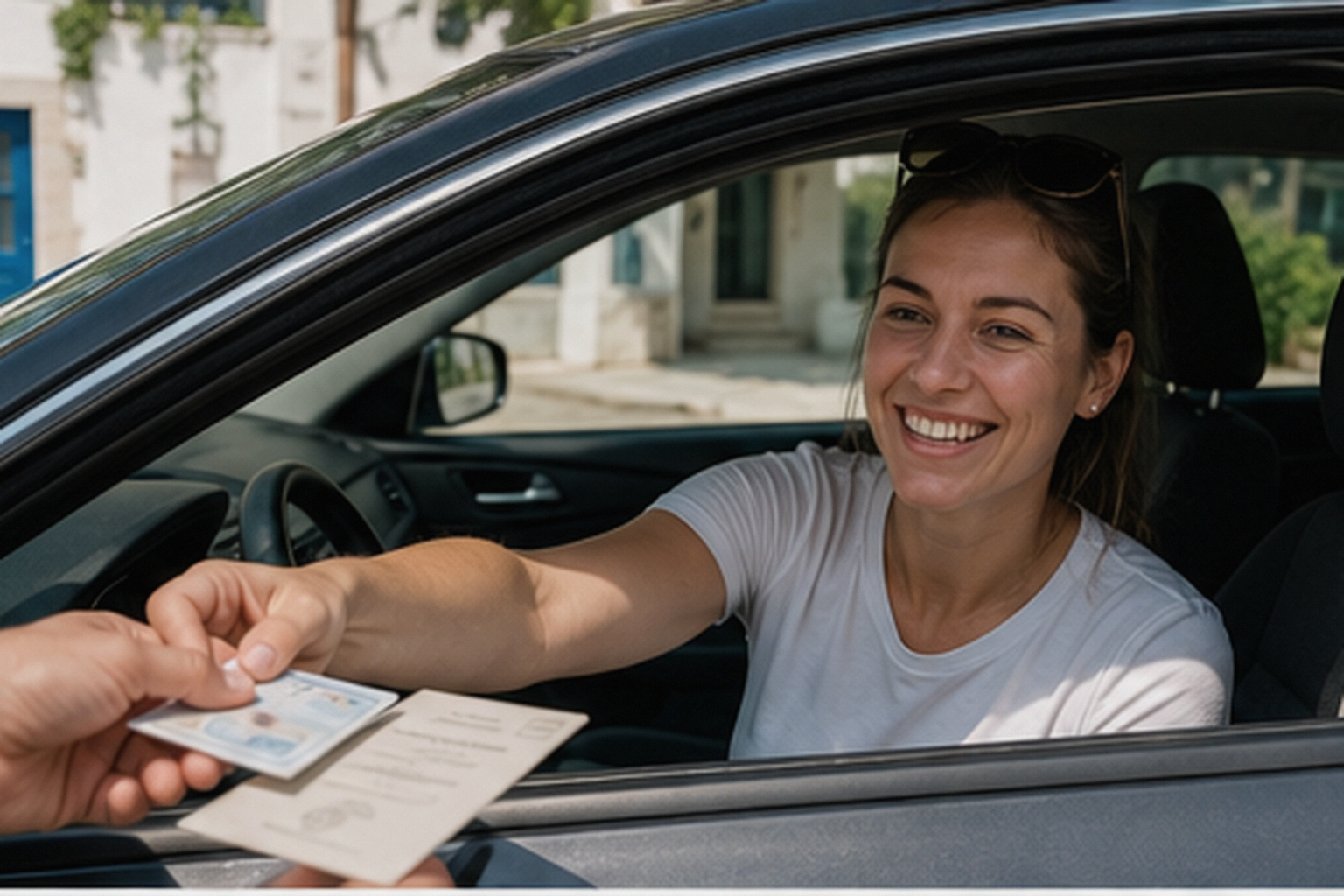
Even in countries where the government does not strictly require an IDP, the rental company often does, and the rental company is the one holding your keys. Major agencies operating in Europe frequently list an IDP as a condition of rental for drivers with non-EU licenses, and a booking made online with no mention of it is no guarantee the counter will not ask for it in person. Turn up without one and you can find yourself arguing with an agent who is entirely within their rights to refuse you the car you already paid for.
The quieter risk sits inside the insurance. If a country or a rental contract requires an IDP and you drive without one, an insurer can take the position that you were not legally licensed to drive at the time, which is exactly the kind of gap that lets a claim be denied. A minor collision that should have been a routine paperwork exercise turns into a bill you cover yourself, because a missing twenty-dollar booklet quietly undercut the coverage you believed you had.
That is the real reason to treat the IDP as non-optional even when it is technically optional. The downside of carrying one you did not strictly need is nothing at all. The downside of skipping one you did need runs from a refused rental to a voided claim after a crash. For a document this cheap, the decision is not a close call, and the travelers who learn that lesson tend to learn it at the worst possible moment.
The requirement also hides in the fine print of the booking you already made. Rental terms for non-EU drivers routinely mention the IDP in a clause most people scroll straight past, which means the counter is not springing a surprise on you so much as enforcing something you agreed to without reading. Screenshotting the driver-requirements section of your reservation before you fly is a two-minute habit that has rescued more than one holiday.
The $20 Part Most People Overpay
Here is where the scams cluster, so it is worth being precise about the facts. In the United States there are exactly two organizations authorized by the State Department to issue International Driving Permits: the American Automobile Association (AAA) and the American Automobile Touring Alliance (AATA). That is the entire list. Any other website offering an IDP is not issuing a valid document, whatever it claims to be.
The real cost is small. The base AAA fee is $20, about €18. If you need the two passport-style photos that go inside the booklet, a branch can take them for roughly $10 to $15, or you can bring your own and pay only the twenty. No AAA membership is required at most branches. In person the whole errand usually takes fifteen to thirty minutes, and you walk out with the permit the same day.
Against that, the fraudulent sites are brazen. They advertise “international driver’s licenses” or slick “digital IDPs,” charge anywhere from $50 to well over $200, and deliver a worthless PDF or laminated card that no authority anywhere recognizes. The U.S. government has warned about them by name, because a fake IDP is worse than carrying none at all. It costs more, it protects you from nothing, and it can hand a foreign officer a genuine document-fraud problem stacked on top of the original licensing one.
The rule of thumb is blunt. If it is not AAA or AATA, it is not real, no matter how official the website looks or how quickly it promises delivery to your inbox. The other tell is the language itself. A real IDP is a physical booklet issued by a physical organization, so any site advertising a “digital” or “instant download” permit is selling a fiction, however polished the checkout page.
Why You Cannot Get One Once You Have Landed

The catch that surprises people most is the timing. An IDP has to be issued in the same country that issued your driver’s license, which for an American means the permit must be obtained inside the United States, before departure. There is no counter at the airport in Rome, no office in the city center, no way to patch the omission once you are on the ground in Europe.
This is not a bureaucratic quirk so much as the internal logic of the whole system. The IDP is a certified translation of one specific national license, and only that license’s home country can vouch for it. A Spanish office has no authority to translate and certify an American document, in the same way that AAA cannot issue an IDP to someone holding a British license.
So the deadline is your flight. Once you are abroad, your choices shrink to driving on your home license and hoping the country and the rental company both allow it, or not driving at all. Neither is a position anyone wants to discover at the rental counter with a reservation in hand and a week of countryside planned around a car you now cannot collect.
What the Permit Does Not Do
It helps to be clear about the IDP’s limits, because it is often oversold in the other direction too. It does not upgrade your driving privileges. If your home license is suspended, expired, or restricted, the IDP inherits every one of those limits, since it is only a translation of the license as it stands. It cannot make you more licensed than you already are.
It also does not cover you once you stop being a visitor. The IDP is built for tourists and short-term travelers. If you move to a European country and become a legal resident, usually somewhere past the six-month mark, the permit stops doing its job, and you are expected to exchange your license for a local one or sit the local test. Anyone relocating rather than holidaying should plan for that local license from the start rather than leaning on an IDP that was never meant to carry them.
For the ordinary traveler none of this is a problem. It simply means the IDP is a narrow tool that does one job well, translating a valid tourist’s license into languages a foreign official can read, and does not stretch beyond it. Treat it as that and it will never let you down. Expect it to be a driving license, a residency workaround, or a way around a bad record, and it will.
Britain and Ireland make one further limit vivid. The IDP translates your license, but it does nothing to teach you to drive on the left. Americans renting in the UK, Ireland, Malta, or Cyprus face a real adjustment that no document smooths over, and the booklet in the glovebox is no substitute for a slow, careful first hour of roundabouts on the opposite side of the road.
How to Get It Before You Fly
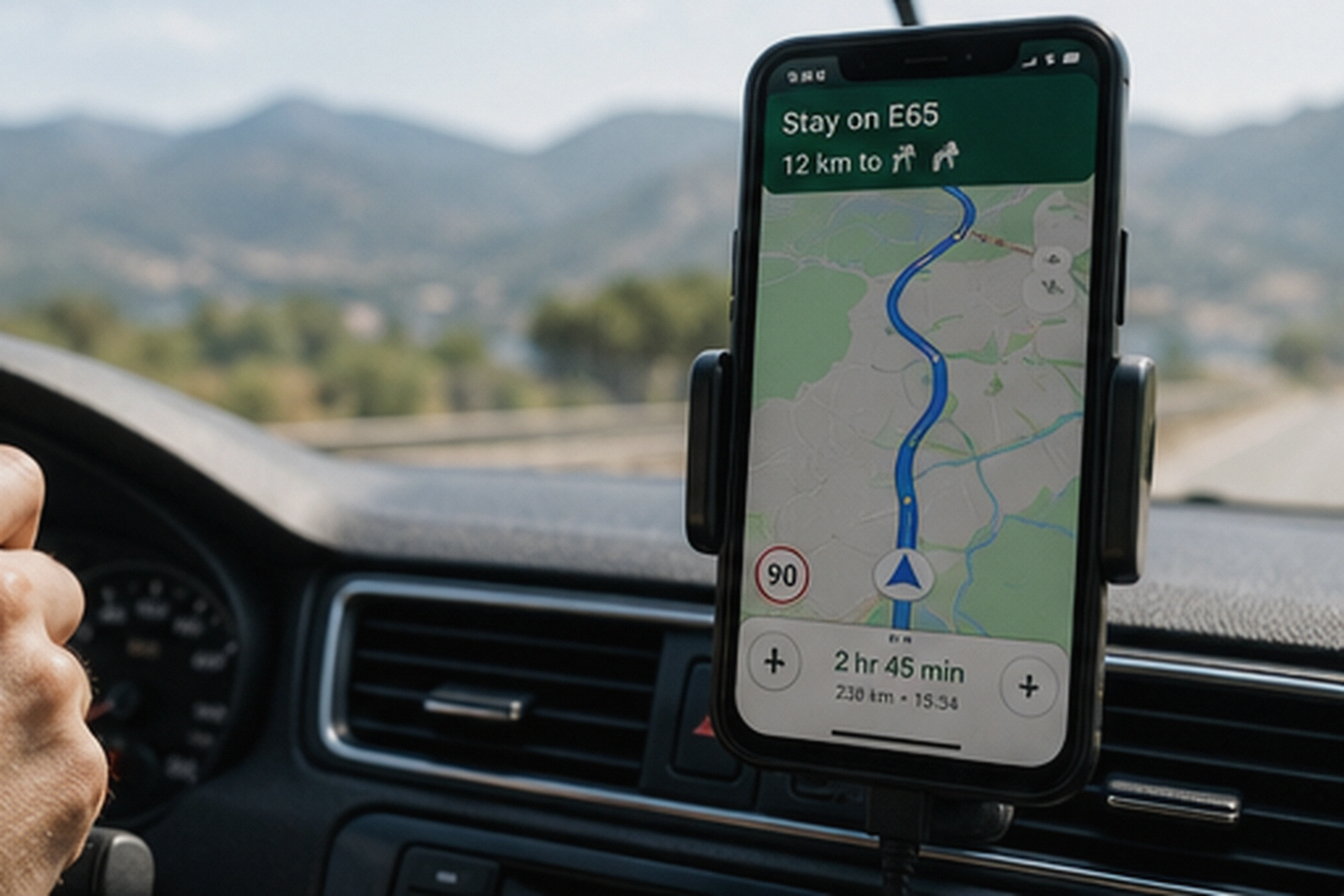
The process is quick if you start before you leave. Gather a valid U.S. driver’s license that will not expire during your trip, two passport-style photos measuring two inches by two inches on a white background, the completed AAA application, and the $20 fee, about €18. An IDP cannot outlive the license beneath it, so if your license is close to expiring, renew that first and come back to the permit afterward.
You have two realistic routes. The fastest is walking into a AAA branch that offers same-day IDP service, where you can leave with the permit in half an hour, though it pays to call first, since not every small branch processes them on every day of the week. If a branch is inconvenient, both AAA and AATA will issue an IDP by mail, which just means starting a couple of weeks ahead so the booklet lands before you pack.
Some AAA clubs now offer an online application too, where you upload a digital photo and a scan of your license and have the finished permit mailed out without ever setting foot in a branch. It runs slower than the counter but easier than a trip across town, and it is a real option for anyone who left this to the last comfortable minute rather than the last frantic one. Whichever route you take, the permit that arrives is identical, the same booklet carrying the same legal standing abroad.
Give yourself that lead time, carry the IDP folded alongside your real license rather than buried in a bag you might leave in the room, and read the driving rules for each country on your route before you go. The permit costs about the price of two airport water bottles and a sandwich, and it is the whole difference between driving off in your rental car and standing at the counter explaining why you cannot, the reservation useless in your hand.

About the Author: Ruben, co-founder of Gamintraveler.com since 2014, is a seasoned traveler from Spain who has explored over 100 countries since 2009. Known for his extensive travel adventures across South America, Europe, the US, Australia, New Zealand, Asia, and Africa, Ruben combines his passion for adventurous yet sustainable living with his love for cycling, highlighted by his remarkable 5-month bicycle journey from Spain to Norway. He currently resides in Spain, where he continues sharing his travel experiences with his partner, Rachel, and their son, Han.