
Talk to enough American retirees who have built happy lives in Spain, and a pattern starts to emerge. It is not that the ones who thrive are richer, or younger, or better at Spanish, or luckier in their choice of town. The thing they have in common is something they did before they ever committed to the move, a single habit that separates the retirees who flourish from the ones who quietly struggle or give up and go home.
The habit is simple: they tried the life before they committed to it. They rented before they bought. They experienced the place across the seasons before signing anything permanent. Instead of leaping straight from a sunny holiday into a purchased home, they gave themselves a trial period in which the fantasy of Spain had to survive contact with the reality of daily life there. Almost everyone who thrives did some version of this, and a striking number of those who regret their move skipped it.
The Habit: Try Before You Commit

At its core, the habit is about resisting the urge to make the move permanent too fast. The retirees who do best treat their arrival in Spain not as a final destination but as an extended test, renting a home rather than buying one, and living an ordinary life in their chosen place long enough to learn what it is actually like.
This runs against a powerful instinct. When people fall in love with a place on holiday, the natural impulse is to seize it, to buy the dream home and make the fantasy real and permanent as quickly as possible. The thrivers resist that impulse. They understand that a holiday and a life are different things, and that the only way to know whether a place works as a home is to live in it as a resident, through the ordinary weeks, not just to visit it as a tourist through the good ones. So they rent, they settle in, and they let the place prove itself before they bind themselves to it.
The advice to rent first is close to universal among people who help others relocate, and for good reason. It is the single most reliable way to avoid the most expensive and painful mistakes a retiree can make abroad. Yet it is advice that the excited newcomer, high on the romance of the move, is strongly tempted to ignore, which is precisely why following it turns out to be such a strong predictor of who ends up happy. The habit is not complicated. It is just easy to skip in the rush of enthusiasm.
Why the Fantasy and the Reality Diverge

To understand why this trial period matters so much, you have to appreciate how different the imagined Spain can be from the lived one. The Spain that draws people is real, but it is only part of the picture, and the parts that are missing are exactly the parts you cannot learn from a holiday.
The fantasy is built from holidays and daydreams: sunlit terraces, long lunches, cheap wine, warm evenings, a slower and sweeter pace of life. All of that genuinely exists. But daily life as a resident also contains things the holiday never shows: the bureaucracy of residency and utilities, the specific noise of your particular street, the summer heat that a spring visit conceals, the challenge of making friends, the moments of loneliness or frustration, the gap between admiring a culture and living inside it. None of these appears in the brochure, and none is visible on a two-week trip.
The trial period exists to close that gap between fantasy and reality before any irreversible decision is made. By living somewhere as a resident for a while, the prospective retiree gets to meet the whole of the place, the unglamorous alongside the beautiful, and to find out whether they still love it once the holiday glow has worn off. Some do, and they buy with confidence. Others discover that the reality does not suit them, and they are enormously glad they found out while still free to change course rather than after committing everything to it.
The Summer Heat Test
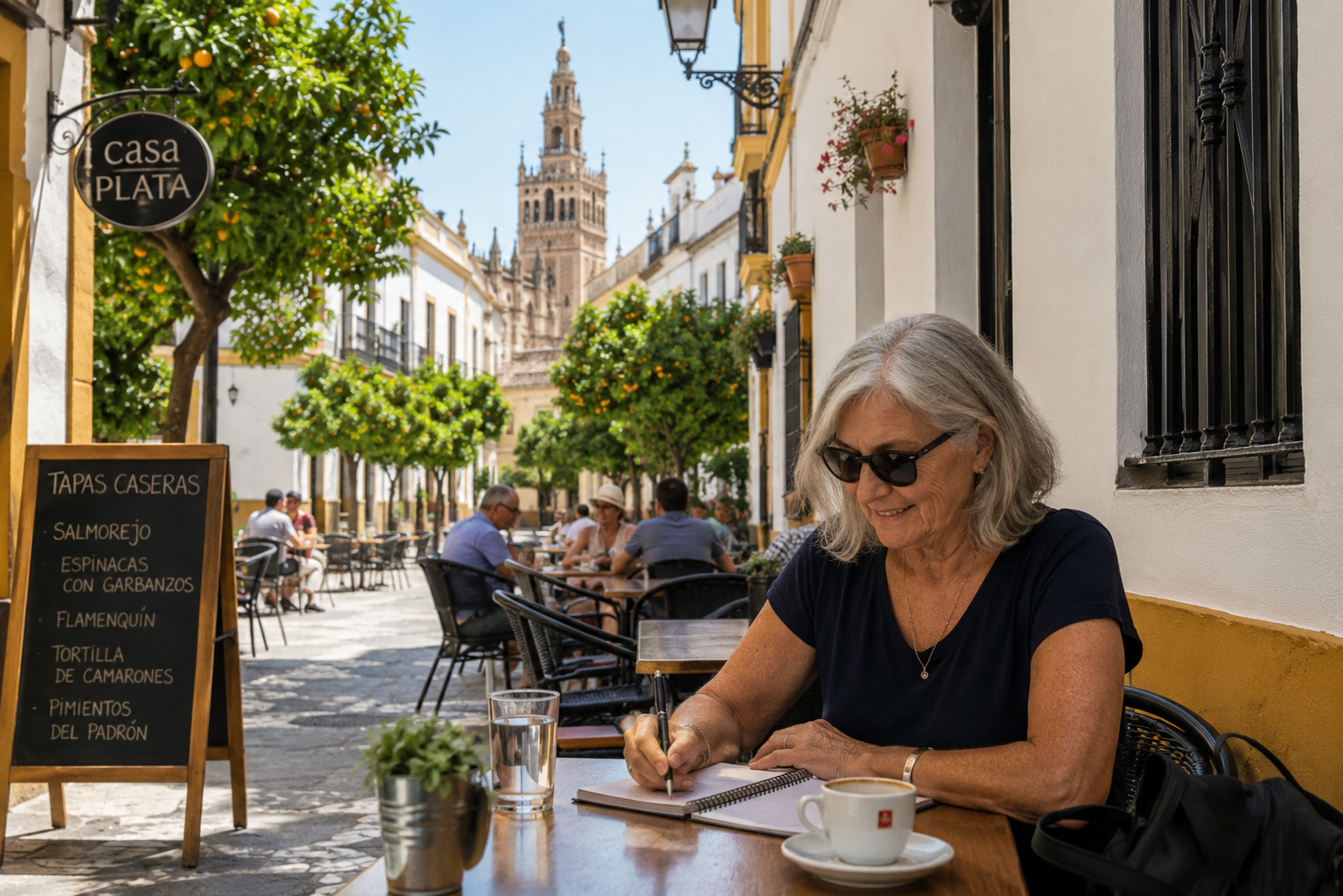
The clearest single example of why a full trial matters is the weather, and specifically the heat. A great many Americans fall for Spain in the spring or autumn, when much of the country is close to perfect, mild, sunny, and gentle. On the strength of that experience, they imagine year-round paradise. Then they meet an Andalusian or inland summer.
In cities like Seville, Córdoba, and much of the Spanish interior, summer heat is genuinely brutal, regularly pushing past forty degrees Celsius, over a hundred Fahrenheit, for weeks on end. Life reshapes itself around it: shutters close, streets empty in the afternoon, and anyone without good air conditioning suffers. A person who visited only in April has no idea this is coming, and some who buy on the basis of a spring visit find the summers unbearable in a way that poisons the whole experience. Experienced advisers put it bluntly: visit in August before you decide you are definitely a hot-weather person.
This is the essence of the try-before-you-commit habit distilled into a single variable. You cannot know a place’s climate from one season; you have to live through its extremes to know whether you can happily tolerate them. The heat is only the most obvious example, but it stands for a general truth: the trial period lets a person experience the full annual cycle of a place, the hard months as well as the easy ones, before deciding it is home. Skipping that is how people end up trapped somewhere that is glorious for half the year and miserable for the other half.
The Neighbourhood You Can Only Learn by Living
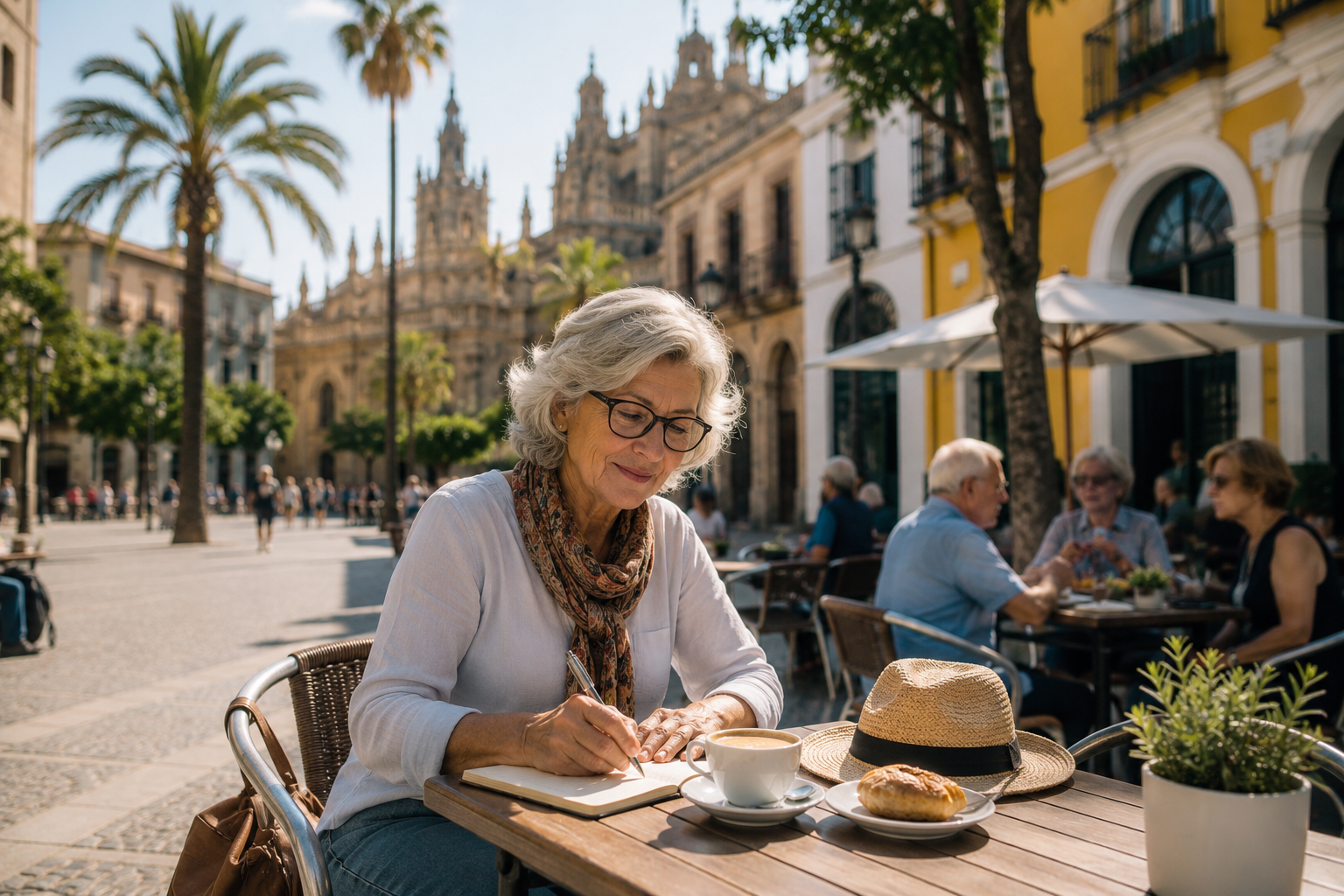
Beyond the climate, there is the far more granular question of the specific place, the actual street and neighbourhood, which no amount of research can fully reveal from a distance. Two apartments a few hundred metres apart can offer completely different lives, and only living there uncovers the difference.
The things that make or break a home are stubbornly local and often invisible in advance. Is the street noisy at night, or quiet? Does the apartment get light, or sit in permanent shade? Are there shops, cafés, and a doctor within an easy walk, or is everything just far enough to be a chore? Is there a sense of community and are the neighbours friendly, or does it feel anonymous and closed? Does it feel safe walking home after dark? These questions determine daily happiness, and none of them can be reliably answered from photographs, a rental listing, or even a short visit. They reveal themselves only over weeks of ordinary living.
Renting first is what makes this knowledge attainable at low cost. A retiree who rents in an area for several months learns its real texture, and can then either commit to it with confidence or move on to somewhere better, having lost nothing but a lease. A retiree who buys first, by contrast, gambles a huge sum on a place they do not really know yet, and if the specific street turns out wrong, they are stuck with it or must sell at a loss. The trial period turns an irreversible gamble into a reversible experiment, which is exactly its value.
The Costly Mistake of Buying First
It is worth spelling out just how expensive the alternative can be, because the downside of buying too soon is not merely inconvenience; it is real financial loss. Buying property in Spain, like anywhere, carries substantial transaction costs, and Spanish property can be slow to sell, which makes a hasty purchase a genuinely risky bet.
The costs of buying and then reversing course are steep. A purchase typically attracts a property transfer tax that can run around ten percent of the price, on top of notary, registry, and legal fees, so a significant chunk of money evaporates in the transaction itself. If the retiree then discovers the place, the town, or Spain itself does not suit them, selling means paying agent fees, potentially accepting a lower price in a slow market, and swallowing all those original transaction costs as a dead loss. A wrong purchase can cost tens of thousands of euros to unwind, and can trap a person somewhere unhappy while they wait for a buyer.
Renting first sidesteps this entire category of risk. A lease can simply end; there are no transfer taxes to lose, no property to offload, no capital tied up in a place that turned out wrong. The retiree stays financially nimble, free to move neighbourhoods, cities, or even countries as they learn what they actually want, at a fraction of the cost of getting it wrong through a purchase. Given that the whole point of the early period is to find out what suits you, keeping that freedom rather than spending it on a premature purchase is simply prudent, and the thrivers grasp this instinctively.
What Renting First Actually Teaches

The trial period is not just about avoiding mistakes; it actively teaches the retiree things they need to know, turning a vague dream into a tested plan. A year or so of renting functions as a low-stakes education in the reality of the life, and that education is what allows the eventual big decisions to be made wisely.
The lessons are numerous and practical. Renting first reveals the true cost of living for your particular lifestyle, rather than the optimistic averages in an article. It exposes the bureaucracy and shows you how to navigate it. It makes plain how much Spanish you really need and motivates you to learn it. It tests whether you can build a social life and find community, or whether you feel isolated. And, most fundamentally, it answers the biggest question of all: whether you personally actually enjoy living there, day to day, once the novelty fades. These are things no amount of pre-move research can settle; they have to be lived.
There is a compounding benefit, too: each lesson learned while renting makes the next decision sharper. By the time a thriver is ready to commit, they are not guessing about anything that matters, which is why their permanent choices so rarely go wrong. The rental year is less a delay than a rehearsal, and the people who treat it that way tend to walk into home ownership, or a permanent lease, already knowing the answer to every question that would otherwise have kept them up at night.
Armed with that hard-won knowledge, the retiree who has rented for a while is in a vastly better position to make permanent choices. They know which city and neighbourhood truly suit them, what their real budget is, and whether Spain is genuinely their place. If it is, they can then buy or settle with confidence, having tested every assumption. If it is not, they have lost very little and can adjust. Either way, the decision is made from knowledge rather than hope, which is why it so reliably leads to a good outcome.
The Thrivers and the Regretters
Put all this together, and a clear divide emerges between two kinds of American retiree in Spain, sorted largely by whether they followed the habit. On one side are the thrivers, who trialled the life, rented before buying, experienced the seasons, and committed only once they knew what they were committing to. On the other are the regretters, who bought on a holiday high, sight largely unseen, and discovered the mismatch too late.
The regretters’ stories tend to rhyme. They fell in love on a perfect autumn visit and bought quickly; then the summer heat, or the isolation, or the wrong neighbourhood, or simply the gap between fantasy and daily reality caught up with them, and they found themselves stuck in an expensive property in a place that did not fit, facing a costly and dispiriting unwinding. The thrivers, by contrast, gave reality a chance to speak before they were locked in, and so either confirmed their dream or adjusted it cheaply. The habit did not guarantee happiness, but it dramatically improved the odds.
None of this rests on a precise statistic, and it would be dishonest to invent one; it is a pattern observed again and again by the people who watch retirees move to Spain, and by the retirees themselves. But the pattern is consistent enough to be treated as wisdom. The single most useful thing a prospective retiree can do to improve their chances of thriving is also one of the simplest and cheapest: slow down, rent, live the life for a while, and let the place earn a permanent commitment rather than being handed one on faith.
The Cheapest Insurance There Is
In the end, the one habit that the happy retirees share is a form of humility in the face of a big decision. They resist the seductive certainty of the holiday high and admit that they cannot really know a place until they have lived in it, so they build in a period to find out before the choice becomes irreversible. That modest patience is the whole secret.
For anyone dreaming of a Spanish retirement, this is the most valuable and least glamorous advice available. Do not buy first. Rent, arrive with an open mind and a return option, live through the seasons, learn the reality, and let your commitment grow from experience rather than from a brochure. It costs a little time and a little of the romance of a grand irreversible leap, and it repays that many times over in mistakes avoided and confidence earned.
So when the fantasy of Spain takes hold, as it does for so many, the wisest response is not to chase it as fast as possible but to test it as honestly as possible. The retirees who thrive are simply the ones who gave the dream a chance to prove itself before they bet everything on it. Try before you commit is not the most exciting advice, but it is, reliably, what separates the people who build a wonderful life in Spain from the ones who wish they had done it differently.

About the Author: Ruben, co-founder of Gamintraveler.com since 2014, is a seasoned traveler from Spain who has explored over 100 countries since 2009. Known for his extensive travel adventures across South America, Europe, the US, Australia, New Zealand, Asia, and Africa, Ruben combines his passion for adventurous yet sustainable living with his love for cycling, highlighted by his remarkable 5-month bicycle journey from Spain to Norway. He currently resides in Spain, where he continues sharing his travel experiences with his partner, Rachel, and their son, Han.