

Picture a single American retiree who traded a mid-sized US city for the Spanish coast, and now rents a two-bedroom apartment in Alicante for six hundred and fifty euros a month, roughly seven hundred and ten dollars. Back home, that figure would not have covered a small one-bedroom, let alone left anything over. Here, it is the largest single line in a monthly budget that, added up in full, comes to less than many Americans pay for rent alone.
The number tends to draw disbelief, and understandably so. A comfortable life on the Mediterranean, in a two-bedroom flat with room for visiting grandchildren, for a total monthly outlay that would barely register in much of the United States, sounds too good to be true. It is not, though it comes with honest caveats. Here is the full budget, line by line, including the parts the headline leaves out.
The €650 Apartment, and the Honest Catch
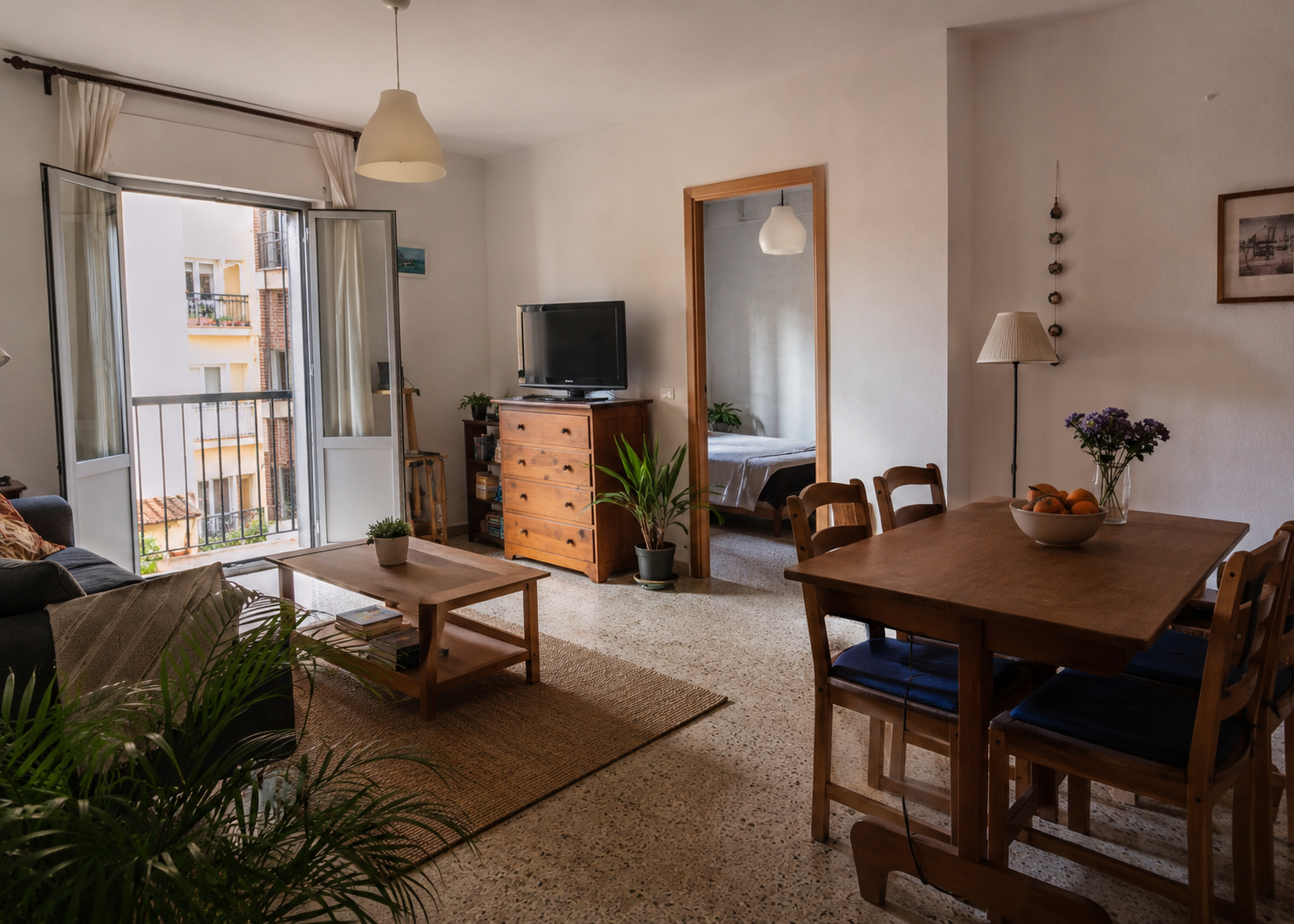
Let us be straight about the rent first, because the €650 figure is real but it is not the Alicante average, and pretending otherwise would be dishonest. In the heart of the city or right by the beach, a modern two-bedroom apartment more typically runs from about nine hundred to thirteen hundred euros a month in 2026. The €650 flat exists, but you have to know where to look for it.
What gets you to that number is some combination of three things: an older building rather than a new block, a location a little away from the tourist centre and the seafront, and a bit of timing and luck. Neighbourhoods outside the polished centre, or a nearby town like El Campello a short tram ride up the coast, offer two-bedroom flats in decent buildings for meaningfully less than the central beachfront rate. The trade-offs are real: a dated kitchen, perhaps no fitted air conditioning, an older lift or none at all. But the space is genuine, the location is still coastal Spain, and the saving is large.
The honest summary is that €650 for a two-bedroom in the Alicante area is achievable but sits at the lower end of the market, reached by looking beyond the center, accepting an older flat, and avoiding the summer rental crunch when landlords hold out for higher rates. It is not the number a relocation brochure would quote, and it is not what you will pay for a shiny apartment overlooking the Mediterranean. But for a retiree willing to live a little like a local rather than a tourist, it is a real figure, and it anchors a budget that genuinely works.
What the Utilities Actually Cost
On top of rent come the running costs of the flat, and here Spain is reasonable rather than remarkable. Electricity, water, gas, and rubbish collection together typically come to somewhere around one hundred to one hundred and fifty euros a month for a modest apartment, call it a hundred and twenty euros, about a hundred and thirty dollars, as a working figure across the year.
That figure moves with the seasons and with habits. The single biggest variable is climate control: air conditioning through the fierce coastal summer and a little heating on cool winter evenings are where the electricity bill climbs, and a retiree who runs the air conditioning hard in July and August will see higher bills those months. Someone who leans on the mild climate, opening windows and using the sea breeze rather than the compressor, keeps the bill toward the lower end. Water and rubbish are cheap and stable.
Add to the utilities a home internet and phone package, which in Spain is inexpensive and generally excellent, often bundling fast fibre broadband and a mobile line for around thirty euros a month, roughly thirty-three dollars. Spain’s telecommunications are genuinely good value, and connectivity is rarely something a resident has to think much about once it is set up. Rolled together, the flat’s utilities and communications land at roughly a hundred and fifty euros a month, a small and predictable slice of the budget.
Eating Well for Very Little

Food is where Spain quietly delights the American newcomer, because eating extremely well costs remarkably little. A single person shopping sensibly at supermarkets like Mercadona or Lidl, supplemented by the local market for fresh produce and fish, can eat very well on around two hundred to two hundred and fifty euros a month. Two hundred and twenty euros, about two hundred and forty dollars, is a comfortable working figure.
The reason is not deprivation but genuinely low prices for good food. Fresh fruit and vegetables are cheap and excellent, olive oil is a staple rather than a luxury, fish is abundant on the coast, and Spanish wine is very good at three to five euros a bottle. A shopper filling a basket with real, fresh ingredients spends a fraction of what the same basket costs in the United States, and the quality is often higher. This is one of the great quiet pleasures of the move, and one of its most reliable savings.
Eating out, too, is built into ordinary life rather than reserved for special occasions. The menú del día, the set three-course lunch with a drink that is a fixture of Spanish restaurants, runs about ten to fifteen euros in normal, non-touristy spots, and a coffee costs well under two euros. Allowing a decent budget for regular meals out and coffees with friends, say a hundred and seventy-five euros a month, still leaves the retiree eating out several times a week for the price of a couple of restaurant dinners back home. Sociable, unhurried, and cheap, the Spanish table is a large part of what the budget buys.
The Healthcare Line

For an American retiree, healthcare is the line that causes the most anxiety, and it deserves a clear answer, because it is central to whether the whole budget holds. The reassuring news is that quality healthcare in Spain costs a fraction of the American equivalent, and there are two main routes to it.
The first is private health insurance, which many residents use and which is required for certain visas. A comprehensive private policy with a good Spanish insurer costs far less than American coverage, though the premium rises with age, so a retiree in their sixties will pay more than a younger person, landing in a range that might sit around a hundred and fifty to two hundred and fifty euros a month depending on age and the policy. The second route, for legal residents who have completed a year of registered residence, is the public system’s pay-in scheme, the convenio especial, which charges a flat monthly fee, higher for those over sixty-five, and grants access to public healthcare. For our budget, a healthcare allowance of around a hundred and seventy-five euros a month, about a hundred and ninety dollars, is a realistic figure for solid private cover.
Whichever route she takes, the point is that comprehensive healthcare is a manageable monthly line rather than the budget-breaking terror it can be in the United States. There is no equivalent of American premiums, deductibles, and surprise bills; the cost is known, modest, and predictable. For many retirees, this single fact, more than the cheap rent or the cheap food, is what makes the European move financially and psychologically possible.
Getting Around Without a Car
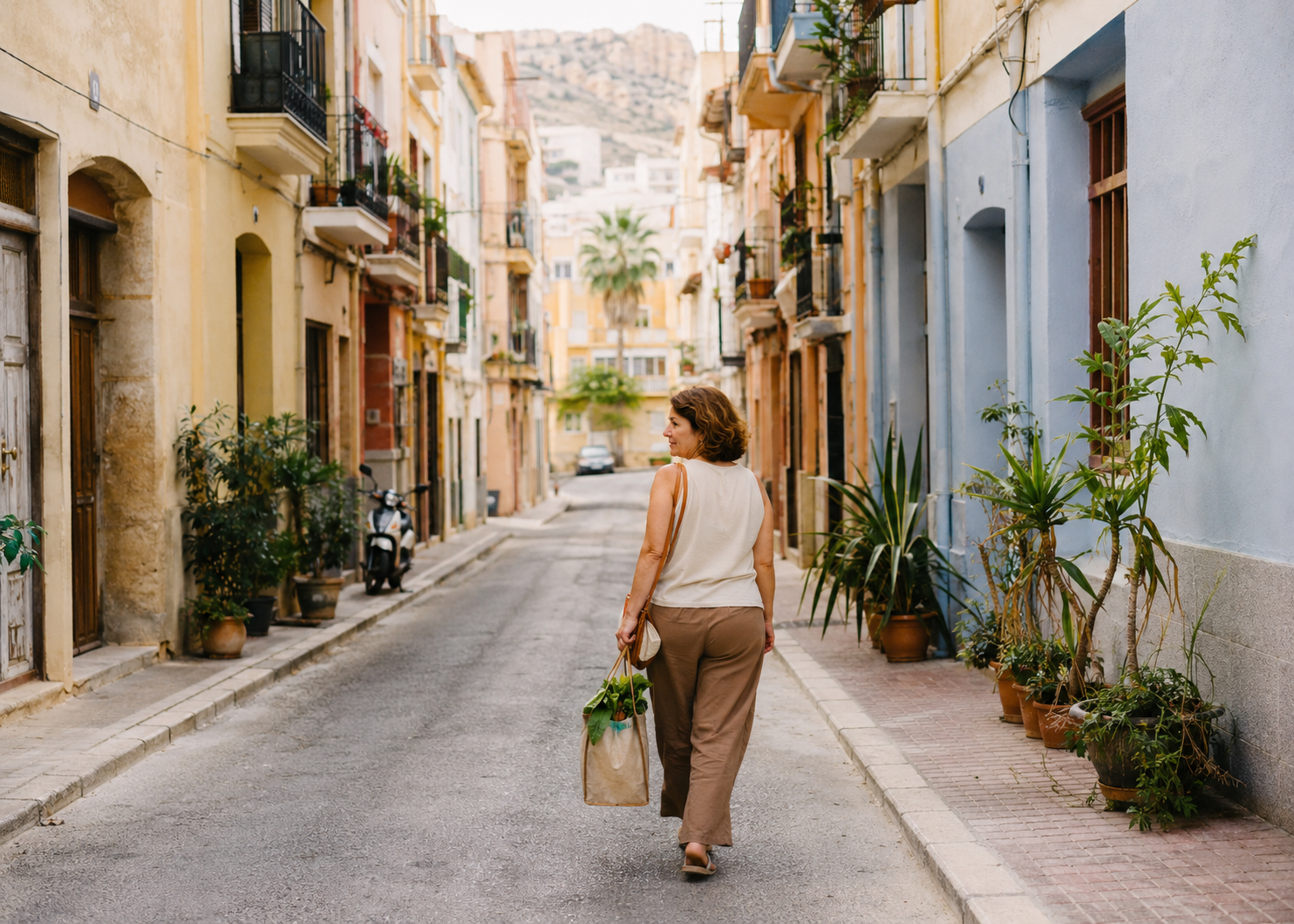
One of the budget’s quiet heroes is the line that is nearly empty: transport. In Alicante, as in most Spanish cities of any size, a car is simply not necessary for daily life, and shedding one removes a whole category of American expense: the car payment, the insurance, the fuel, the maintenance, the parking.
The city is walkable, and it is served by buses and a tram network, the TRAM, that connects the centre to the beaches and the coastal towns. A monthly transport pass costs only around thirty to forty-five euros, and many residents spend even less, walking most places and taking public transport occasionally. For a retiree, this is both a financial saving and a lifestyle upgrade, replacing the isolation of car-dependent living with the daily movement and incidental social contact of a walkable city. Forty euros a month, about forty-four dollars, covers it comfortably.
For travel further afield, Spain’s excellent train network does the job, and here an older resident has a particular advantage. The Renfe Tarjeta Dorada, a senior discount card costing just six euros a year, cuts train fares by up to forty percent for anyone over sixty, making trips to Valencia, Madrid, or anywhere on the national network genuinely cheap. Between a walkable home city and discounted national trains, a retiree can live richly and travel widely without ever owning a vehicle, which is one of the largest structural savings the European move offers.
The Full Monthly Budget, Line by Line
Adding it all together produces the number that strains belief. Start with the rent at six hundred and fifty euros. Add roughly a hundred and fifty for utilities and communications, two hundred and twenty for groceries, a hundred and seventy-five for healthcare, forty for local transport, and a hundred and seventy-five for eating out and social life. Allow a further hundred and twenty or so for the miscellaneous realities of any life, a phone top-up, a gym membership, the odd bit of clothing, a haircut, small pleasures and small emergencies.
That comes to a total in the region of fifteen hundred and thirty euros a month, roughly one thousand six hundred and seventy dollars, for a full, comfortable, unhurried life in a two-bedroom apartment on the Mediterranean coast of Spain. It is not a survival budget or a bare-bones existence; it includes eating out several times a week, comprehensive healthcare, and money for leisure and the occasional trip. It is simply what an ordinary good life costs in this particular corner of the world.
The figure will flex, of course, with choices and circumstances. A pricier central flat, heavier travel, or more indulgent habits push it up; a cheaper flat, careful spending, and the public healthcare route pull it down. But the shape of it holds: a complete, dignified life on the Costa Blanca for somewhere around fifteen hundred euros a month, all in. That is the number that so many people simply refuse to believe when they first hear it.
The Costs Behind the Costs
A monthly budget captures ongoing life, but it hides the one-off costs of getting that life started, and an honest account has to name them. Setting up in Spain involves real upfront spending before the comfortable monthly figure ever applies.
There is the rental deposit, typically one or two months’ rent, plus any agency fee and the cost of furnishing a flat that may come bare. There is the bureaucracy of residency: the NIE and TIE paperwork, and often the fee for a gestor, the administrative agent many newcomers hire to steer them through Spanish officialdom. There are visa costs, the flights, shipping or replacing belongings, and the general friction of a first year in a new country. A realistic setup budget runs into the low thousands, and it is money the monthly figure does not show.
Two further caveats keep the picture honest. First, currency: a retiree whose income arrives in dollars is exposed to the euro-dollar exchange rate, which can move the real cost of living by several percent in either direction from year to year. Second, this budget is for one person; a couple sharing the same flat spends more overall but splits the rent, so the per-person cost often falls, while a couple wanting two incomes’ worth of comforts naturally spends more. None of this undermines the headline, but all of it belongs in any budget told in good faith.
Why Nobody Believes It
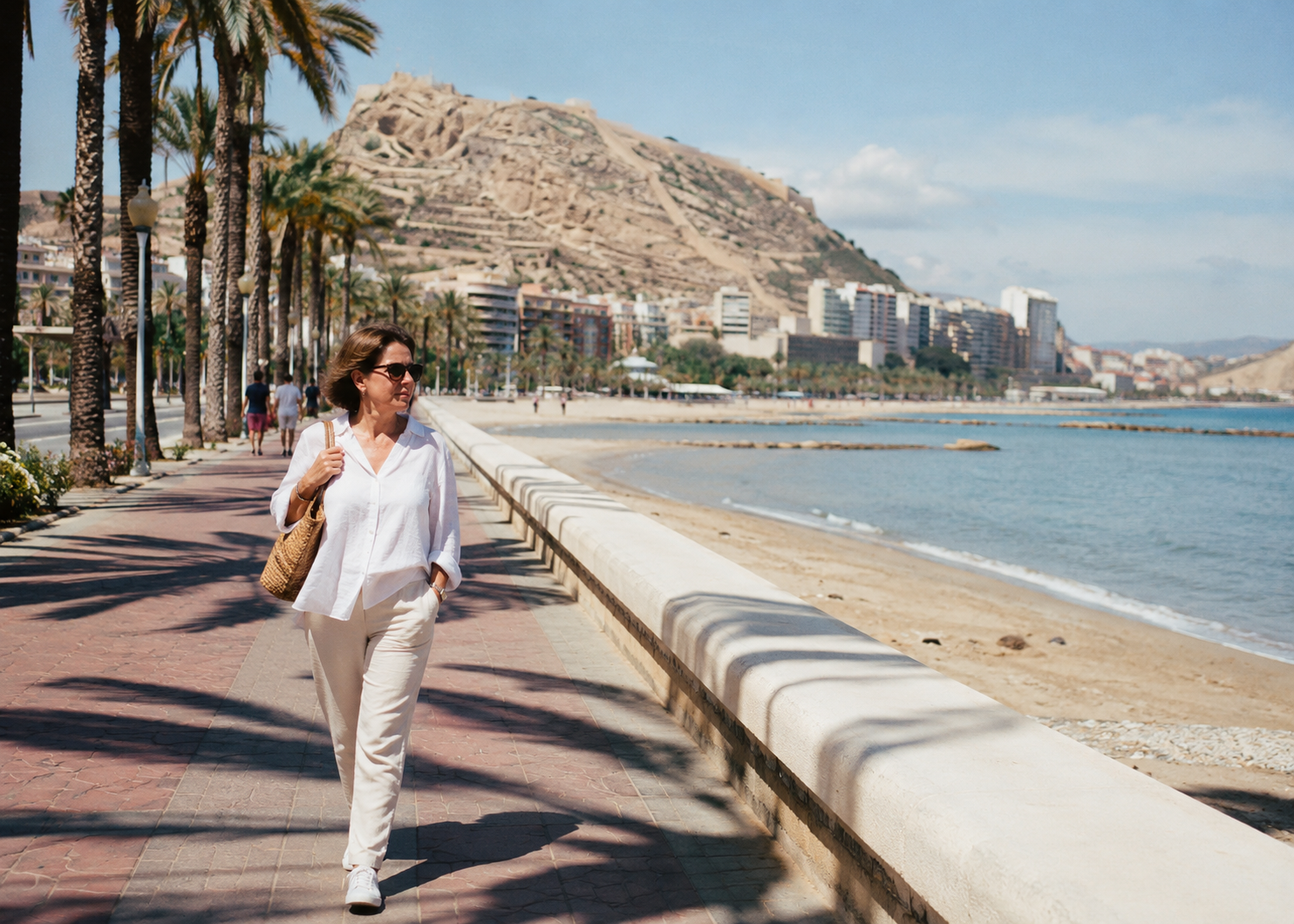
The disbelief is not irrational; it comes from comparing the figure to American reality, where the numbers are wildly different. In much of the United States, fifteen hundred dollars a month does not cover rent alone in a decent area, let alone rent plus healthcare plus food plus everything else. So a full European budget at roughly that level, in euros no less, sounds like either a mistake or a con.
It is neither, and the explanation is structural rather than magical. Rent is dramatically cheaper than in comparable American coastal cities. Healthcare costs a fraction of the American figure and carries no risk of catastrophic bills. Food is cheap and excellent, eating out is affordable, tipping is not expected, and the car, that great American money pit, is unnecessary. Each of those differences is real and large, and stacked together they transform the total. The Spanish life is not a cut-rate version of the American one; in many respects it is richer, and it costs far less.
None of this erases the honest caveats. The €650 flat takes effort to find and means living a little outside the polished centre. Setting up a life abroad carries one-off costs and real bureaucracy. And the budget assumes a settled resident, not a first-week tourist. But once those caveats are acknowledged, the core claim stands: a single retiree really can live well in the Alicante area for around fifteen hundred euros a month, two-bedroom flat included. The disbelief says less about the budget than about how expensive ordinary life has quietly become back home.
A Real Number, Honestly Told
The point of laying it all out, line by line and caveat by caveat, is to show that the headline is not a trick. The €650 apartment is real, if lower than average and found with effort. The full budget around it is real too, and it delivers a genuinely comfortable life rather than a pinched one. Nothing here depends on hardship or on hiding the awkward numbers.
What the budget really illustrates is the size of the gap between the cost of a good life in coastal Spain and the cost of one in much of the United States. It is not that Spain is impossibly cheap; it is that the essentials, housing, healthcare, food, and mobility, are all priced within reach of an ordinary retirement income, in a place most people would consider beautiful. That combination is what makes the total look unbelievable to American eyes and entirely ordinary to Spanish ones.
So when the figure draws the inevitable disbelief, the honest response is to show the arithmetic and name the caveats, which is exactly what turns an unbelievable headline into a credible plan. A two-bedroom in Alicante for €650, inside a full life for around fifteen hundred euros a month, is not a fantasy. It is a budget, and for a growing number of retirees, it is simply the new arithmetic of a life they could not quite afford back home.

About the Author: Ruben, co-founder of Gamintraveler.com since 2014, is a seasoned traveler from Spain who has explored over 100 countries since 2009. Known for his extensive travel adventures across South America, Europe, the US, Australia, New Zealand, Asia, and Africa, Ruben combines his passion for adventurous yet sustainable living with his love for cycling, highlighted by his remarkable 5-month bicycle journey from Spain to Norway. He currently resides in Spain, where he continues sharing his travel experiences with his partner, Rachel, and their son, Han.