
An American checks into a charming hotel in Florence, unpacks, and heads to the bathroom to wash their face, reaching for the small square washcloth that is always there. It is not there. That night they pull back the top sheet to get into bed, except there is no top sheet, only a duvet. And when they want ice for a drink, they go looking for the machine down the hall, which does not exist either. Nothing is wrong with the hotel. This is simply how Europe does things.
For American travellers, European hotels come with a set of small surprises, and three of the most common are the missing washcloth, the absent top sheet, and the nonexistent ice machine. None of these is a sign of a bad hotel or poor service. They reflect genuinely different ideas about hygiene, comfort, space, and the environment, and understanding them, along with what Europe provides instead, turns a series of little shocks into a smoother, better-prepared trip.
Three Things You Will Not Find
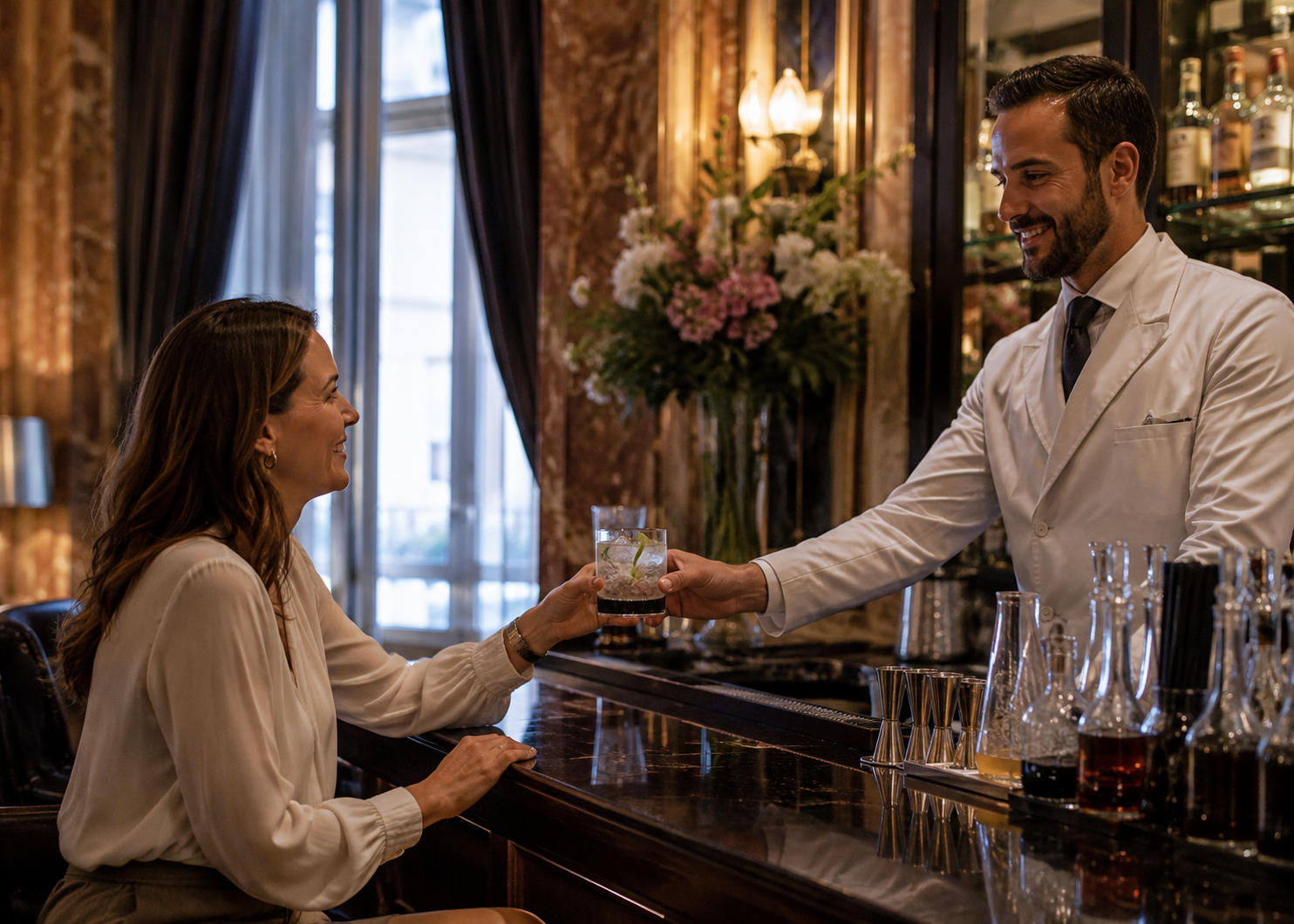
Before explaining each one, it is worth naming the pattern, because these three absences trip up first-time visitors again and again. In a typical European hotel, especially outside the big American chains, you should not expect a washcloth in the bathroom, a top sheet on the bed, or an ice machine anywhere in the building.
It is important to frame this correctly from the start: these are differences, not deficiencies. An American instinct is to read a missing amenity as a downgrade, a corner cut, a sign the hotel is cheap or careless. That instinct is wrong here. These items are absent not because European hotels are worse but because European habits are different, and in each case there is a reasonable, often rather sensible, logic behind the absence.
It is also worth adding the usual caveat: this is a generalisation, and generalisations have exceptions. The big international chains, the Hiltons and Marriotts, often import American expectations, which is part of why business travellers favour them. Britain is more likely to provide washcloths than the continent. Star rating matters too. But across the great mass of ordinary European hotels, the pattern holds, and knowing it in advance is far better than discovering it at bedtime.
There is a version of this list for almost every category of American amenity, but these three come up most, precisely because they touch the most basic daily routines: washing, sleeping, and having a cold drink. Get these three clear in your mind and the rest are footnotes.
The Missing Washcloth
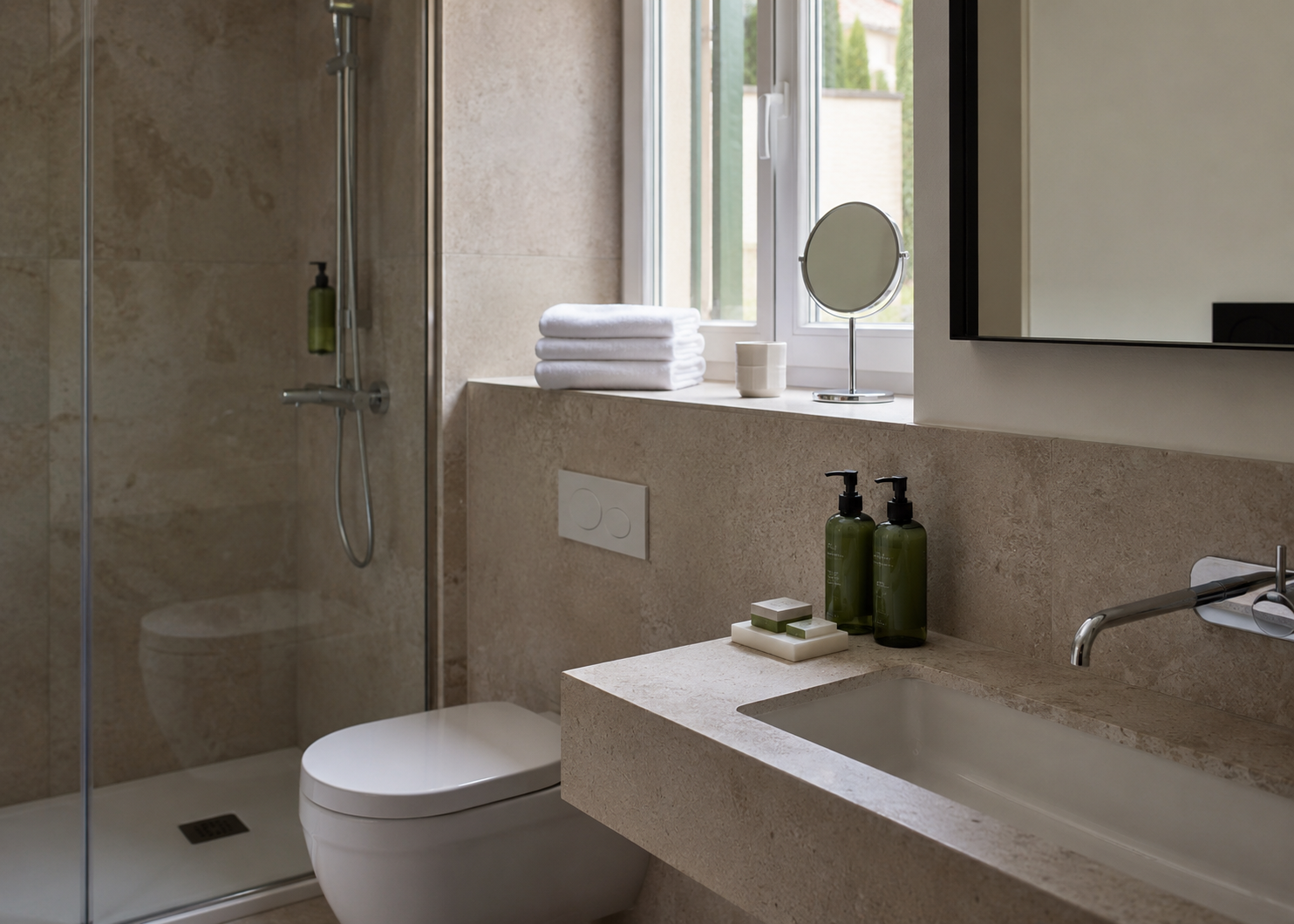
The washcloth is perhaps the most universally noticed absence, and Americans feel it keenly because for them it is a bathroom staple. In European hotels, it is simply not part of the standard kit. You will typically find a bath towel, a hand towel, and a bath mat, but no small cloth for washing your face or body.
The reasoning is partly cultural and partly environmental. In much of Europe, the washcloth is regarded as a deeply personal item, the sort of thing a person owns and brings themselves rather than shares with strangers, a little like a toothbrush. There is also an environmental logic that has grown stronger over time: not stocking washcloths means not laundering thousands of small cloths, which saves water, energy, and detergent across a hotel’s operation. Travel writers like Rick Steves have long advised visitors that washcloths are a bring-your-own item in Europe.
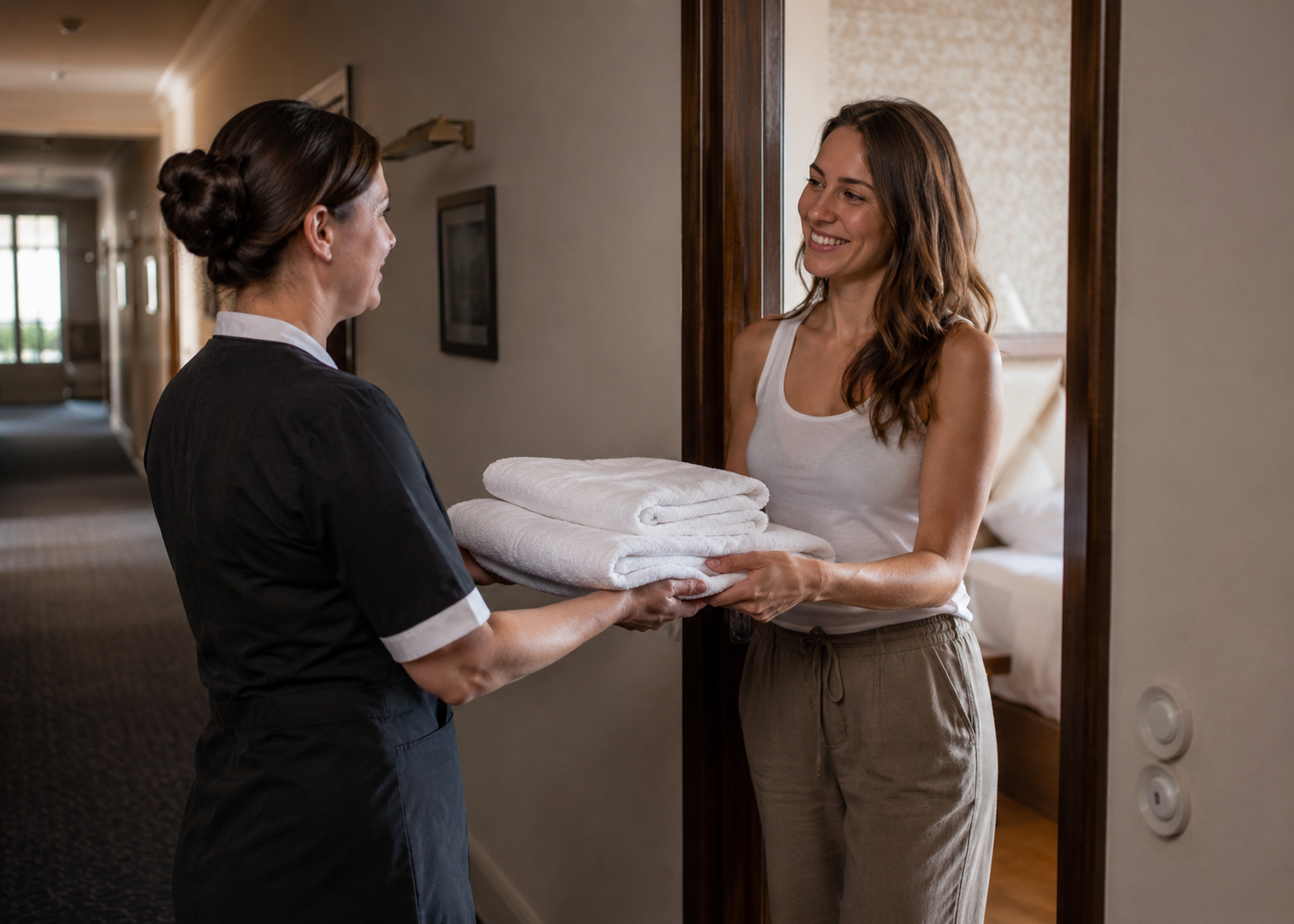
The fix is trivial once you know. Pack a washcloth or two, ideally quick-drying travel ones that take up almost no space, and the problem vanishes for the whole trip. Some travellers use thin baby washcloths, which dry fast and weigh nothing. You can also ask the front desk, and occasionally they can produce one, but it is far simpler to bring your own and never think about it again. The washcloth is the single easiest European hotel quirk to prepare for.
The Duvet Instead of the Top Sheet
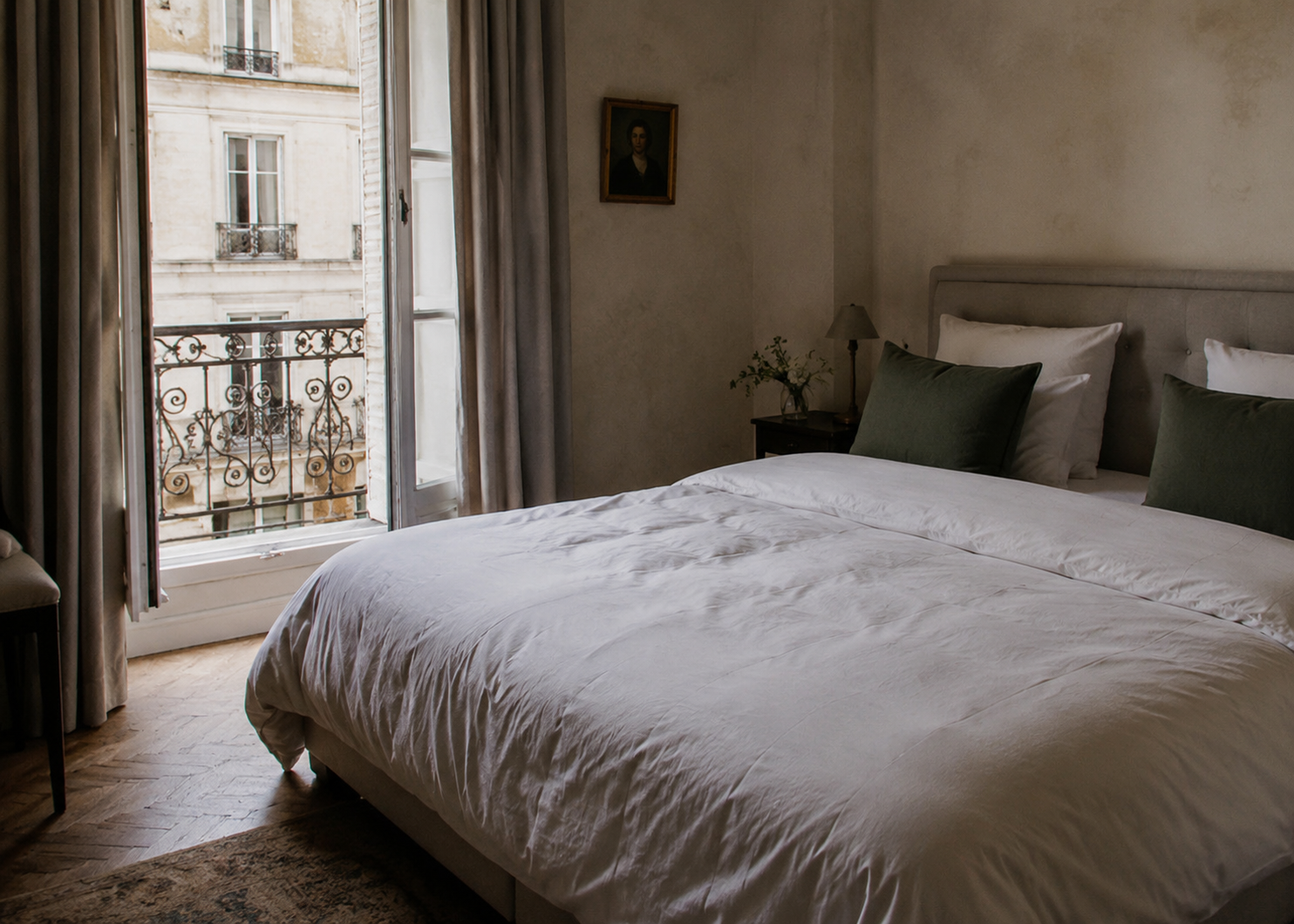
The bed is the second surprise, and it is a more interesting one, because the missing top sheet is really a whole different bedding philosophy. Most European hotels do not use the American arrangement of a fitted bottom sheet, a flat top sheet, and a separate blanket or comforter over it. Instead, they use a fitted bottom sheet and a duvet.
The duvet is a soft, filled quilt encased in a removable cover, and that cover is the key to the whole system. It does the job the top sheet does in America, sitting directly against you, but it is a washable cover that is laundered between guests. In fact, many Europeans consider this more hygienic than the American setup, because a duvet cover can be stripped off and washed easily and often, whereas a heavy comforter or blanket in an American hotel may not be washed nearly as frequently. What looks like a missing layer is, by this logic, a cleaner one.
There is one wrinkle worth knowing. Because a European double bed is very often two twin beds pushed together, a couple may find two separate duvets rather than one shared cover, a his-and-hers arrangement that can leave a gap down the middle. It is excellent for couples who disagree about blankets and slightly awkward for those who do not. Either way, the duvet is the norm, there will be no top sheet to pull back, and once you adjust, most people find it perfectly comfortable, and the covers reassuringly fresh.
No Ice Machine Down the Hall
The third absence is the one that most reveals the cultural gap, because it is not really about hotels at all but about a whole different relationship with ice. In American hotels, the ice machine down the corridor, and the little bucket to fill from it, is a fixture of the experience. In Europe, it is almost entirely absent.
European hotels rarely have self-service ice machines, and the reason is simply that Europeans do not share the American love of ice-cold drinks. Where an American might want a glass packed with ice, many Europeans find that odd, preferring drinks cool rather than frigid, and ice is used far more sparingly as a result. There is even gentle mockery of the American ice obsession in European culture. With no cultural demand for endless ice, hotels never built the machines to supply it.
If you do want ice, the European approach is to ask rather than to fetch. The hotel bar or reception can usually provide some, or room service will bring a bucket, and nicer rooms may have a minibar or small fridge where you could chill things or make a little ice if trays are provided. It is less convenient than a machine down the hall, certainly, but it is rooted in the simple fact that ice is a minor player in European drinking rather than the constant companion it is in the United States. Adjust your expectations, and ask when you need it.
What They Give You Instead
Focusing only on what is missing tells half the story, because European hotels provide plenty that American ones typically do not, and some of it is genuinely superior. The trade is not simply subtraction; things appear as well as disappear.
The most notable addition is the bidet, the low second basin beside the toilet that is a standard fixture in much of Europe, particularly Italy and Spain, and practically unheard of in American hotels. Alongside it, European bathrooms almost always feature a handheld shower wand, which is far more useful than it sounds and something Americans often come to miss once they go home. Rooms frequently include an electric kettle for tea or instant coffee, and while the towels may be smaller, the toiletries and the linens are often of high quality. In nicer places you may find slippers and a robe. European hotels tend to invest in a smaller number of good things rather than a large number of standard ones.
There is also the matter of the building itself, which is frequently part of the appeal. European hotels are often housed in historic structures with real character, thick walls, high ceilings, odd angles, and views that a purpose-built American hotel simply cannot offer. The rooms may be smaller, a genuine consequence of fitting modern hospitality into centuries-old buildings on narrow streets, but many travellers find the trade more than worth it. You give up the washcloth and the ice machine; you gain a room with a soul.
The Other Surprises Worth Knowing
The famous three are not the end of the list, and a handful of smaller quirks catch Americans out too, all worth a brief mention so nothing lands as a shock. Most are minor, and all are easy to handle once anticipated.
European rooms and their towels tend to run smaller, a direct consequence of fitting hotels into old buildings, so travellers who like to spread out or want a big bath sheet may want to request extra towels on arrival. Electrical outlets differ, not just in shape but in number, with single sockets far more common than the doubled American ones, so a plug adapter and perhaps a small power strip earn their place in the bag. Many rooms use a key-card slot by the door that must hold your card for the lights and power to work, which baffles people until they spot it. Showers are frequently walk-in, with a glass panel and a handheld wand rather than a curtained tub, which can leave the bathroom floor wetter than expected.
A few non-room details round it out. Hotels will almost always ask for your passport at check-in, which is normal and required, not suspicious. A clothes iron in the room is far from guaranteed. And air conditioning, as noted, may be absent or switched off out of season. None of these is a real obstacle, but knowing them in advance means arriving relaxed rather than repeatedly caught off guard by a building that simply runs on different assumptions than the one you left.
Why the Differences Exist
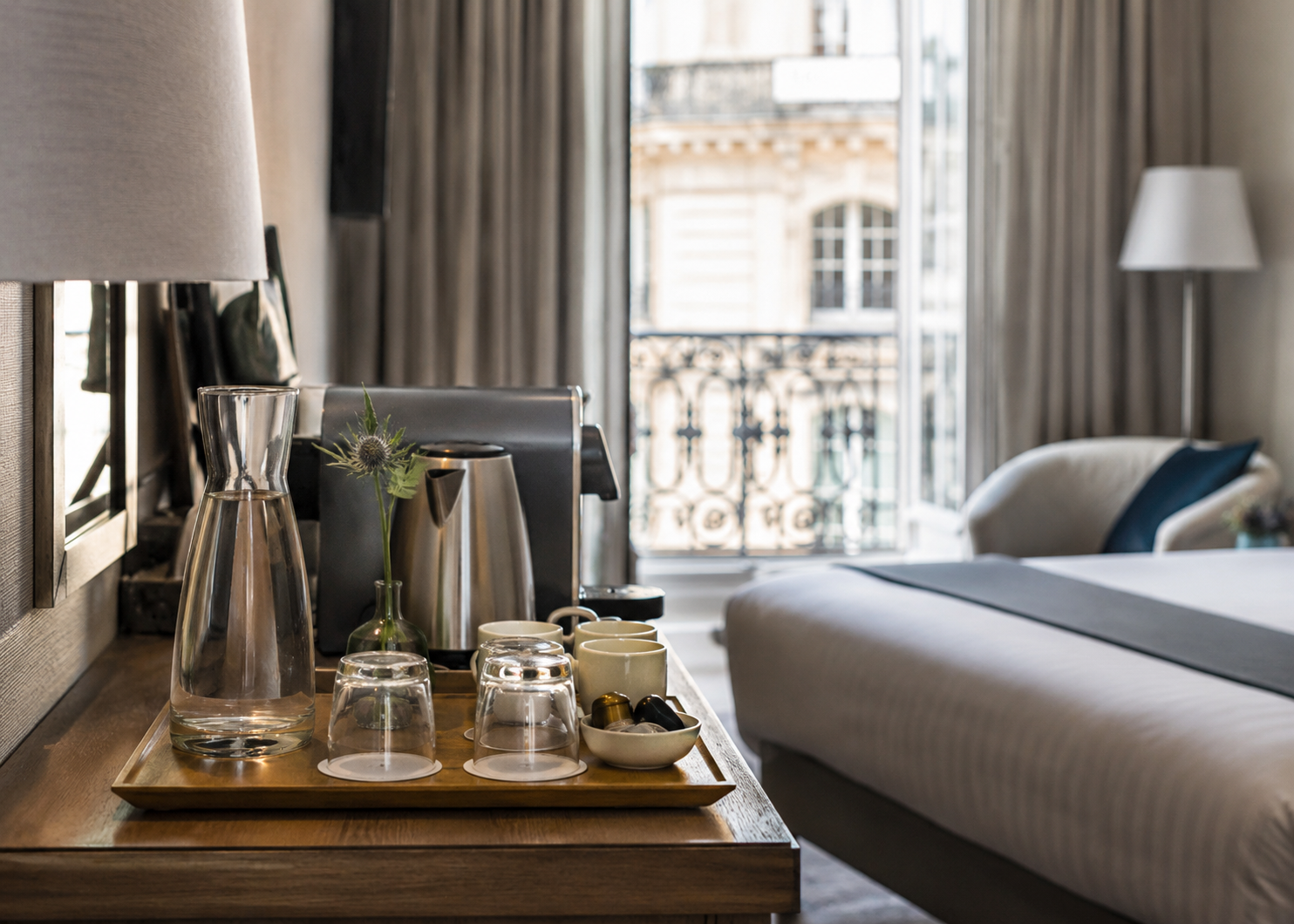
Step back, and the pattern makes sense, because each of these choices flows from a coherent set of European priorities that differ from American ones. Once you see the underlying logic, the quirks stop feeling random and start looking almost reasonable.
Space is one driver. European hotels are often carved out of old buildings where every square metre is precious, which shapes everything from the small rooms to the compact bathrooms to the walk-in showers that replace bulky tubs. Hygiene philosophy is another, visible in the duvet-cover system that prioritises washable layers. Environmental consciousness runs through much of it, from skipping the laundry-heavy washcloths to the general European wariness of waste, and it is only strengthening as sustainability becomes a bigger concern. And plain culture explains the rest: the bidet, the sparing use of ice, the tea kettle, even the widespread lack of air conditioning, which lingers because for most of European history the climate did not demand it.
None of this is accidental or careless. It is a different optimisation, a set of hotels designed around European bodies, European habits, European buildings, and European values rather than American ones. The American traveller who understands this stops grading European hotels against an American checklist and starts appreciating them on their own terms, which is both fairer and far more enjoyable. The differences are the point, not a failure to match a standard that was never the goal.
How to Prepare for It
Knowing all this, the practical response is simple, and a little preparation removes essentially all the friction. The goal is not to fight the European way but to pack and plan around it, so the surprises never become problems.
Bring your own washcloths, the quick-drying kind, and you will never miss the ones the hotel does not stock. Expect the duvet and the absence of a top sheet, and you will not spend a confused minute hunting for bedding that was never there. Assume there will be no ice machine, and simply ask at the bar or reception on the rare occasions you want ice, rather than wandering the corridors in search of a machine. A few other small habits help: remember that the ground floor is floor zero and your room may be a level higher than you expect, pack a plug adapter, and do not count on air conditioning unless the booking promised it.
The larger point is one of mindset. The travellers who struggle with European hotels are the ones expecting an American hotel in a European city; the ones who thrive are the ones who arrive knowing it will be different and are ready to enjoy the difference. Pack the washcloth, embrace the duvet, ask for the ice, and the small adjustments fade into the background, leaving you free to enjoy the character and quality that European hotels do so well.
Different, Not Worse
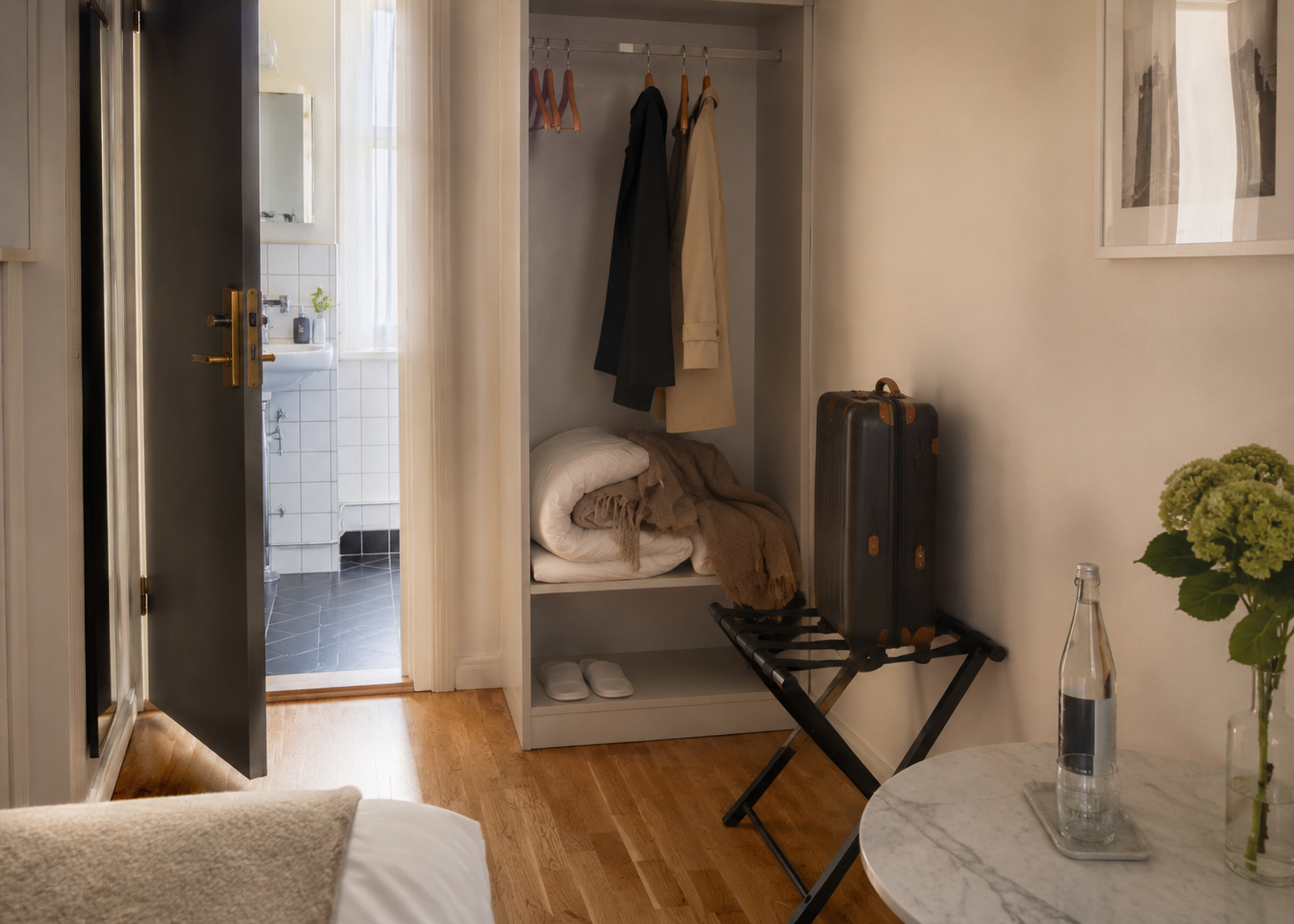
In the end, the missing washcloth, the absent top sheet, and the vanished ice machine are not a story about European hotels falling short. They are a story about two travel cultures that solved the same problems in different ways, each perfectly logical within its own world. Europe simply made different choices, and once you understand them, the choices are easy to live with and often easy to admire.
For the American visitor, the value is in arriving prepared and open-minded rather than surprised and disappointed. Bring what you need, expect what is different, and appreciate what is offered in exchange, the washable duvet, the handy shower wand, the bidet, the historic room with a view down a narrow old street. These are not lesser hotels; they are simply European ones, shaped by European priorities.
So when you reach for a washcloth that is not there, or pull back a top sheet that never existed, take it as a small welcome to a different way of doing things rather than a disappointment. The ice machine down the hall is an American comfort, not a universal right, and a great deal of the pleasure of travel lies exactly in these small reminders that other places do things their own way. The prepared traveller does not just tolerate that. They come to enjoy it.

About the Author: Ruben, co-founder of Gamintraveler.com since 2014, is a seasoned traveler from Spain who has explored over 100 countries since 2009. Known for his extensive travel adventures across South America, Europe, the US, Australia, New Zealand, Asia, and Africa, Ruben combines his passion for adventurous yet sustainable living with his love for cycling, highlighted by his remarkable 5-month bicycle journey from Spain to Norway. He currently resides in Spain, where he continues sharing his travel experiences with his partner, Rachel, and their son, Han.