
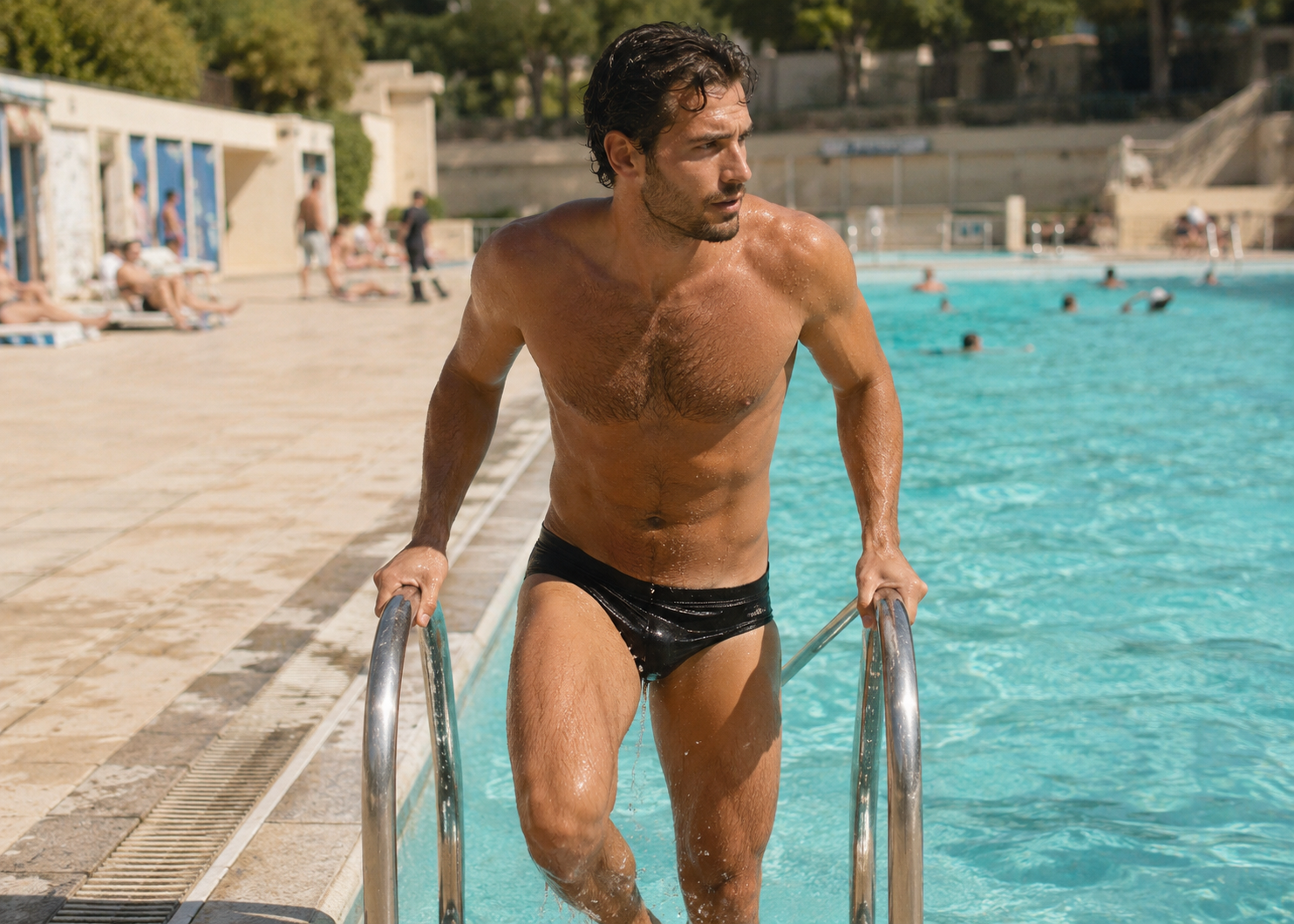
An American man walks up to a public swimming pool in France, ready for a swim, wearing the same knee-length board shorts he wears at every pool back home. The attendant stops him at the entrance and refuses to let him in. The problem is not the man, or his behaviour, or his ticket. It is his shorts. In France, they are not allowed in the water, and he will either change into something far smaller or not swim at all.
This is one of those travel facts that sounds like a prank the first time you hear it, and Americans routinely refuse to believe it until they run into it themselves. French public pools require men to wear tight-fitting swimwear, the small, close-cut kind, and they ban the loose board shorts that most American men consider standard. It is a real, enforced, surprisingly old rule, and there is a genuine logic behind it, even if that logic catches visitors completely off guard.
The Rule That Sounds Made Up
Let us state it plainly, because the plain statement is what people struggle to accept. In French public swimming pools, men are required to wear tight, close-fitting swimwear, and loose or baggy swim shorts are prohibited. The acceptable garment is a snug brief or a short, tight trunk; the forbidden one is the roomy, knee-length short that dominates American and British poolside life.
The French have names for the permitted styles. A slip de bain is the brief, the small Speedo-style suit; un boxer is a tight, short-cut trunk. What is not allowed is anything loose: the board short, the Bermuda-length short, the baggy trunk with a mesh lining that American men wear without a second thought. Walk in wearing those, and you will be turned away.
To an American, this feels backwards, even absurd. In the United States, the tight brief is the unusual, slightly self-conscious choice, worn mainly by competitive swimmers, while the loose short is the comfortable default. France inverts that completely: the loose short is the problem and the tight suit is the norm. The disbelief this provokes in visitors is so common that it is practically part of the experience, and many a traveller has learned the rule the hard way, at the turnstile, with a family already through and waiting on the other side.
It Is About Hygiene, Not Fashion
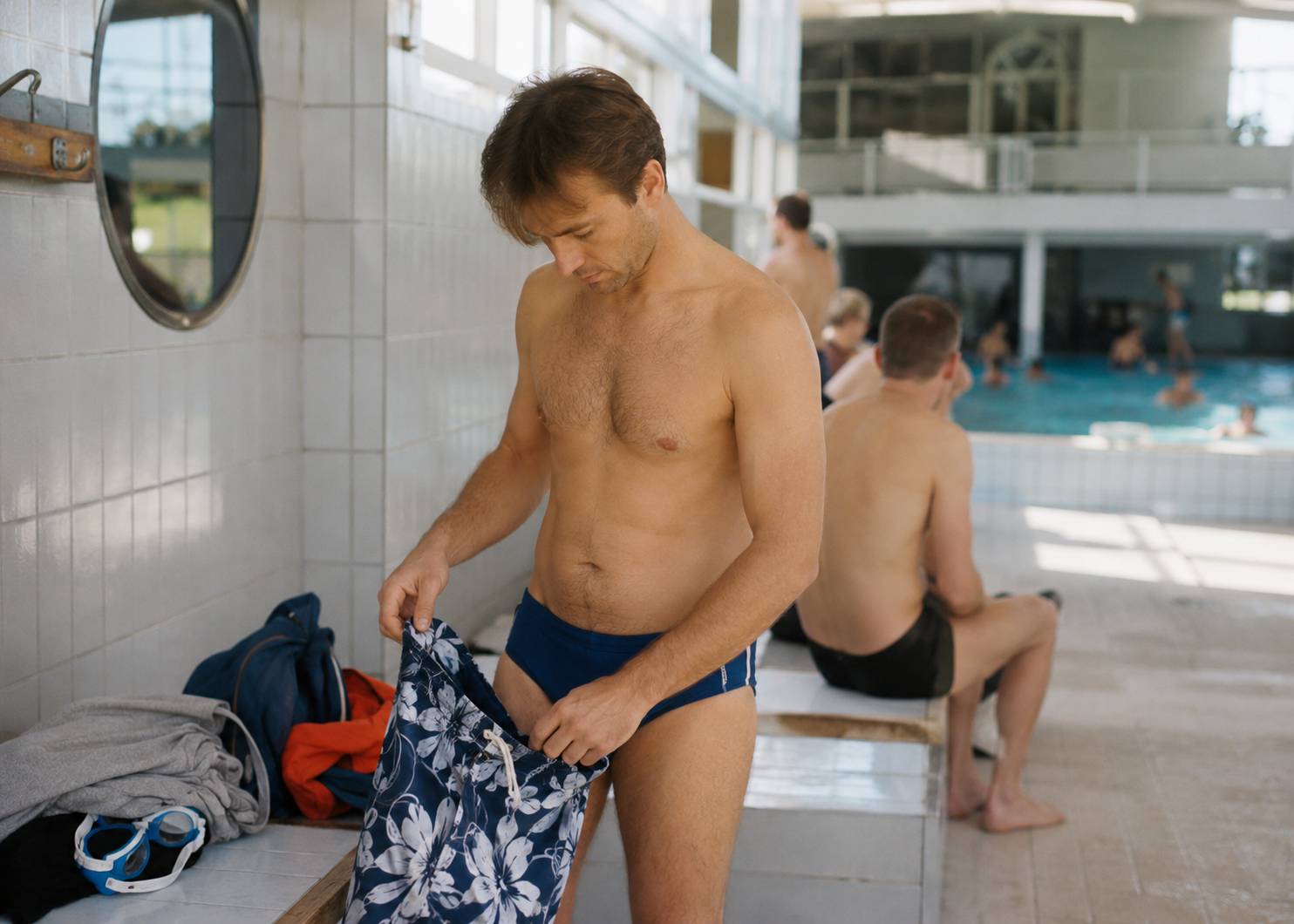
The natural assumption is that this is some quirk of French taste, a national preference for a particular look, but that is not it at all. The official justification is hygiene, and once you hear it, it is more sensible than it first appears. The concern is about what loose shorts bring into the water.
The reasoning runs like this. Baggy swim shorts are the kind of garment a man might wear all day as ordinary shorts, walking around town, sitting on the ground, picking up dust, dirt, sand, and whatever else along the way. If he then wears those same shorts into the pool, all of that goes into the shared water, degrading its cleanliness. A tight swimming brief, by contrast, is a single-purpose item; nobody wanders the streets in a slip de bain, so when it goes into the pool it is clean, worn for swimming and nothing else. As one Paris pool official has explained, small tight trunks are only ever used for swimming, while larger shorts get worn elsewhere and carry in outside matter.
There is a secondary strand to it as well. Loose, absorbent fabric, and especially cotton, holds and then sheds water and fibres, spilling water onto the pool surround and making it slippery, and shedding lint that can clog the filtration system. This is also why many French pools ban swimming in a t-shirt. Seen this way, the rule is not about aesthetics or prudishness at all; it is a piece of public-health logic about keeping shared water clean, applied more strictly than most countries bother to.
A Law From 1903

The rule is not a recent bit of bureaucratic fussiness, either. It is astonishingly old, tracing back to French regulations from 1903, which makes the tight-suit requirement well over a century in force. This is a rule with roots in the early days of public bathing and public hygiene, not a modern invention.
Its longevity is not for want of challenge. The subject has come up repeatedly over the years, and the most notable recent test came in 2022, when the city of Grenoble attempted to loosen the rules and permit other kinds of swimwear in its public pools. The French national government rejected the move, keeping the hygiene rule in place, and pools across the country continue to enforce it. Far from fading away, the rule was effectively reaffirmed, which is a good indication of how seriously the French take it.
For a visitor, the age of the rule is oddly reassuring, because it explains why it is so consistent and so firmly held. This is not a policy that varies with the mood of a particular attendant or the fashion of the moment; it is a long-standing national norm, understood by everyone locally and applied as a matter of course. When something has been the rule for over a hundred years, the staff enforcing it are not improvising, and there is little point arguing. The board short was never going to win an argument that predates it by decades.
How Strictly It Is Enforced
None of this would matter much if the rule were quietly ignored, but it is not. French pool attendants tend to enforce the swimwear requirement seriously, and enforcement usually happens right at the entrance, before you ever reach the water. This is not a rule you can slip past.
In practice, staff often inspect swimmers’ attire on the way in, and someone in the wrong shorts will be stopped and told to change or leave. If a non-compliant swimmer somehow makes it to the pool, an attendant may well blow a whistle and call them out of the water, which is about as public as a correction can be. The stories travellers bring home, of being fished out or marched off, are exaggerated for comic effect but rest on a real core: the staff mean it, and they will act.
Helpfully, the French have made compliance easy for the caught-out visitor. Many public pools have vending machines near the entrance selling the tiny approved trunks, along with swim caps and goggles, precisely because so many people arrive not knowing the rule. Some pools also rent or sell suitable swimwear at the desk. So being turned away is rarely the end of the swim; it usually just means a small, faintly embarrassing purchase and a quick change. But the machine exists because the rule is real and enforced, not in spite of it.
The vending machine is, in a way, the perfect symbol of the whole rule: a country so committed to the requirement that it has industrialised the solution for the tourists who keep failing to anticipate it. You are expected to comply, but you are also, thoughtfully, handed the means to comply on the spot. It is enforcement with an escape hatch built in, which is a very French combination of strictness and practicality.
What You Are Actually Allowed to Wear
Faced with all this, the practical question is simple: what can a man actually wear to swim in France? The answer is any swimwear that is close-fitting and purpose-made, and there is more range within that than the word brief might suggest. You do not have to squeeze into the smallest possible garment if that is not your preference.
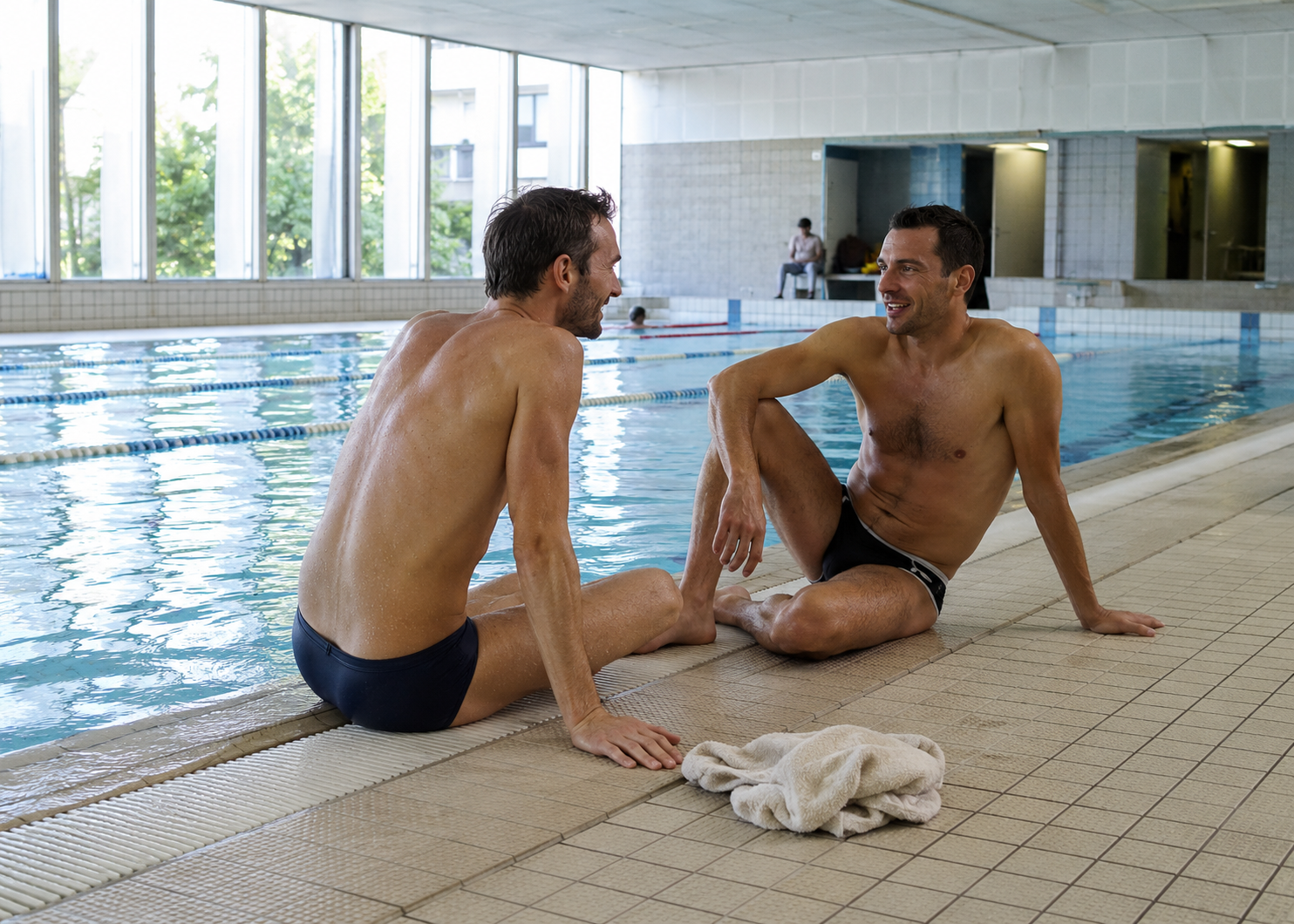
The clearly acceptable options are the slip de bain, the classic swimming brief, and un boxer, a tight, short-legged trunk that offers a little more coverage while still fitting closely. For men who want still more leg without breaking the rule, there are jammers, the longer, thigh-length suits worn by competitive swimmers, which extend well down the leg but remain tight to the body and are generally accepted because they are unmistakably swim-specific. What unites all the permitted styles is that they are snug and made only for swimming.
What remains off-limits is anything loose and multi-purpose: board shorts, Bermuda-length shorts, baggy lined trunks, and swimming in a t-shirt. The simple test a visitor can apply is whether the garment could plausibly be worn as normal clothing; if it could, it is probably banned, and if it obviously could not, it is probably fine. Pack a brief, a boxer-style suit, or a pair of jammers, and you are covered for any French pool, with the jammers being the usual compromise for men uneasy about the smaller styles.
Why This Rule and Not Others

It is worth pausing on a question the rule naturally raises: why does France police men’s swim shorts so precisely while so much else about a pool goes unregulated? The answer says something about how the country approaches shared public space, and it makes the rule feel less like an oddity and more like a piece of a pattern.
France has a long tradition of treating public facilities as genuinely communal, with rules designed to protect the shared resource rather than the individual’s convenience. The pool water belongs, in a sense, to everyone using it, so the state feels entitled to set conditions that keep it clean, even conditions that inconvenience the swimmer. The swim-shorts rule is of a piece with the swim-cap requirements many pools also impose, and with the insistence on showering before entering: all of them subordinate personal preference to the cleanliness of the common water. It is a collective logic, not an individual one.
Seen in that light, the tight-suit rule stops looking like a random French eccentricity and starts looking like a consistent philosophy applied to swimwear. The same instinct that produces the rule also produces the vending machine that sells you a compliant suit and the attendant who checks you at the door. The system assumes the water is worth protecting and organises everything, including your wardrobe, around that assumption. Whether or not you love the result, it is coherent, and coherence is easier to respect than caprice.
Where the Rule Applies, and Where It Does Not
An important clarification saves a lot of confusion: this rule is about pools, not the sea. The tight-swimwear requirement applies to public swimming pools and similar controlled facilities, not to France’s beaches, where the usual relaxed swimwear rules apply and board shorts are perfectly fine.
Within the pool category, the rule reaches widely. It covers public municipal pools, indoor and outdoor, and typically extends to waterparks, and it can apply at some hotel pools and campsite pools as well, though private facilities vary more. The safe assumption is that any public or semi-public pool in France may enforce it, while the open coast will not. A man can wear his board shorts happily on the beach at a French seaside town and then be refused at the town’s public pool an hour later, which is exactly the kind of inconsistency that makes the rule so bewildering until you know the logic.
Because the details can vary between individual facilities, the sensible move is to check in advance where you can. Many pools state their swimwear policy on their website, and most display clear signage at the entrance, often with simple images showing the permitted and forbidden styles. A quick look before you go, or a glance at the pictures at the door, removes all the guesswork. When in doubt, the tight suit is always safe and the loose short is the gamble.
How to Handle It as a Visitor
Turning all this into a plan is easy, and a little preparation means the rule never spoils a swim. If there is any chance you will use a public pool in France, simply pack an appropriate suit before you leave home, a brief, a tight trunk, or a pair of jammers, and the whole issue disappears before it arises.
If you are caught out without one, do not treat it as a disaster. Check whether the pool has a vending machine or a desk selling approved swimwear, make the small purchase, and get on with your swim; plenty of visitors before you have done exactly the same. What is not worth doing is arguing with the attendant, who is enforcing a national rule far older than the disagreement and has heard every objection before. The rule will not bend, and the only real choice is to comply or to skip the pool.
The better mindset is to treat it as one of the small, characterful realities of travelling somewhere genuinely different, rather than as an affront. France does this its own way, for its own reasons, and adapting to it is part of being there. Pack the right suit, keep a sense of humour about the smaller silhouette, and you will swim in French pools without a hitch, quietly in on a rule that stops so many other visitors cold at the door.
The Rule Is Real, So Pack Accordingly
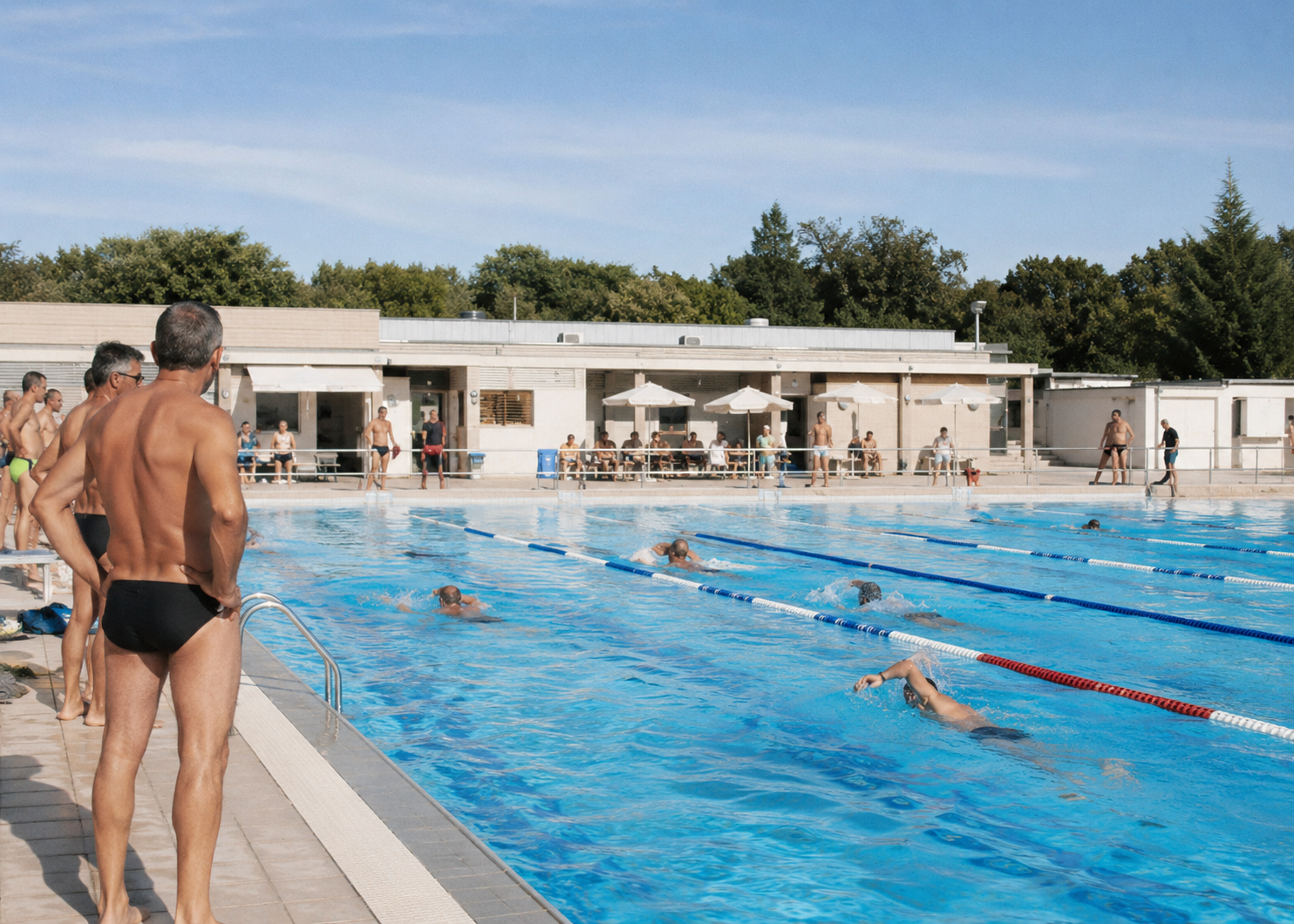
In the end, the tight-suit rule is exactly what it appears to be: a genuine, enforced, century-old French requirement that men wear close-fitting swimwear in public pools, however hard it is for newcomers to believe. It is not a myth, not a misunderstanding, and not a joke at tourists’ expense. It is simply how French pools work.
Once you accept that, the rest is straightforward, because the fix costs nothing but a moment’s packing. A brief, a tight trunk, or a pair of jammers in the suitcase turns a potential turnstile humiliation into a non-event, and understanding the hygiene logic behind the rule makes it feel reasonable rather than arbitrary. The French are not being difficult; they are keeping their pool water clean by a standard most countries never adopted.
So if a swim in France is anywhere in your plans, believe the rule that so many refuse to, and pack the smaller suit. You will glide into the pool while the disbelievers are still at the vending machine, fishing for coins and a size that fits, learning the hard way what you already knew. Sometimes the strange foreign rule is real, and the only sensible response is to come prepared.

About the Author: Ruben, co-founder of Gamintraveler.com since 2014, is a seasoned traveler from Spain who has explored over 100 countries since 2009. Known for his extensive travel adventures across South America, Europe, the US, Australia, New Zealand, Asia, and Africa, Ruben combines his passion for adventurous yet sustainable living with his love for cycling, highlighted by his remarkable 5-month bicycle journey from Spain to Norway. He currently resides in Spain, where he continues sharing his travel experiences with his partner, Rachel, and their son, Han.