
The waiter in Barcelona brings the card machine, and as an American taps their card, the screen offers a choice: pay in euros, or pay in US dollars. Relieved to see something familiar, the tourist presses dollars. The transaction goes through, the amount shown looks reasonable, and they hand back the machine feeling savvy. They have just paid several percent more than they needed to, and they will never know it.
This is dynamic currency conversion, and pressing that home-currency button is one of the most common and most expensive small mistakes a traveller can make. It feels helpful, it feels transparent, and it quietly costs money on transaction after transaction, adding up to a real sum over a trip. Here is what the dollars button actually does, why nearly everyone falls for it, and the simple rule that avoids it entirely.
What the Dollars Button Really Is

The technical name for the dollars button is dynamic currency conversion, usually shortened to DCC. It is the service that lets a foreign card machine, ATM, or website offer to charge you in your home currency instead of the local one, so an American in Spain sees a price in dollars rather than euros, and a Briton sees pounds.
The crucial detail, and the source of all the trouble, is who does the conversion. Normally, when you pay in the local currency, the conversion from euros to dollars happens later, handled by your card’s network, Visa or Mastercard, at a rate very close to the wholesale interbank rate that banks use among themselves. With DCC, the conversion is done on the spot instead, by the merchant, the ATM operator, or their DCC provider, and they get to set the exchange rate themselves. That shift, from your card network to the merchant’s provider, is where your money leaks away.
So the dollars button is not a neutral convenience. It hands control of the exchange rate to the party standing in front of you, whose interest is in making money on the conversion, rather than to your card network, whose rate is set by competitive wholesale markets. The screen presents it as a friendly option, letting you see the price in your own currency, but underneath, it is quietly changing who profits from turning your euros into dollars. And it is almost never you.
The Markup Hiding in the Convenience
The reason DCC costs more is a markup, an extra margin added on top of the real exchange rate by the provider doing the conversion. When you accept DCC, the rate you are given is not the true market rate but that rate plus a markup, and that markup is pure cost to you.
The size of it varies, but it is rarely small. Across Europe, DCC markups commonly run in the range of three to seven percent above the interbank rate, with an average around five percent, and they can climb considerably higher. Figures of up to twelve percent appear, and one widely cited study found an extreme case of over thirteen percent at an ATM. On a single coffee that difference is trivial, a few cents, but across a two-week trip of meals, hotels, shops, and cash withdrawals, a consistent several-percent surcharge on everything you buy adds up to a meaningful amount of money, all of it avoidable.
Compare that to what happens when you pay in the local currency. Your own card issuer converts the transaction at close to the interbank rate, and while your card may add a foreign transaction fee of its own, typically somewhere from zero to three percent depending on the card, that fee is usually far smaller than the DCC markup, and with the right card it can be zero. In almost every realistic case, paying in local currency and letting your own bank convert is cheaper, often substantially so, than accepting the merchant’s dollars. The convenience of seeing dollars on the screen is bought at a price most people would refuse if it were shown to them plainly.
Why Everyone Presses It

If DCC is such a bad deal, why do so many travellers accept it? The answer is a mix of psychology and design, and the system is, frankly, built to encourage the expensive choice. It exploits perfectly natural instincts.
The first pull is comfort. Seeing a price in your own currency feels safer and clearer; it removes the small mental effort of wondering what the euros mean in real money, and on holiday, when people are tired and out of their element, that reassurance is tempting. The second is presentation. On many screens the home-currency option is placed as the obvious, forward-moving choice, sometimes on the right where a next button would sit, while declining it looks like a step backward, and some terminals highlight the DCC option in ways that nudge you toward it. The third, and worst, is that the choice is sometimes taken away entirely: in some restaurants, staff simply key in your home currency without asking, and you never even see the option to decline.
The result is a service that most people accept without understanding it, exactly as its economics intend. The traveller is not being foolish; they are responding sensibly to a screen designed to make the costly option feel like the natural one. Understanding that the comfort is a trap is most of the battle, because once you know the dollars button is the wrong one, ignoring the nudge becomes easy.
Why Local Currency Always Wins
The remedy rests on a single principle that holds almost everywhere: let your own bank do the conversion, not the merchant. When you choose to pay in the local currency, you hand the exchange back to your card network, which converts at a rate close to the true market rate, and you sidestep the merchant’s markup entirely.
Even accounting for a foreign transaction fee, this is the better deal in the overwhelming majority of cases. A card network’s conversion at near-interbank rates, plus a fee of a percent or two, is still cheaper than a DCC rate carrying a three-to-twelve-percent markup. And if you carry a card with no foreign transaction fee, which many travel-oriented cards now offer, then paying in local currency costs you essentially nothing beyond the true exchange rate. The math almost never favours DCC; the only thing it reliably offers is the illusion of clarity, and clarity you can get for free by simply knowing roughly what the local currency is worth.
This is why the advice from banks, consumer groups, and even the card networks themselves is so consistent: decline DCC and pay in local currency. Visa and Mastercard both require that you be given the choice and not be pushed toward one option, and both effectively acknowledge that the local-currency route is the cheaper one. When the companies that operate the payment rails are telling you to press the other button, it is worth listening.
The Deceptive Versions

Most DCC is technically legal, resting on the requirement that the markup and the choice be disclosed, but the practice shades into genuinely deceptive territory often enough to be worth naming. The regulations exist precisely because the temptation to abuse the system is so strong.
The clearest abuse is removing the choice. Card network rules say you must be offered the option and allowed to decline, and that staff must not choose for you, yet there are well-documented cases of restaurant staff confirming the home currency on your behalf, and of terminals where the currency is changed after the customer has entered their PIN, producing a receipt that falsely states the customer consented. ATMs get in on it too, with screen layouts that make accepting DCC look like the default and declining it look like a cancellation. The scale of all this is not trivial: by one estimate, British travellers alone are charged hundreds of millions of pounds a year in DCC fees, much of it from people who never understood they had a choice.
Knowing this changes how you behave at the machine. It means watching the screen rather than trusting it, checking whether it is quietly offering dollars, and being willing to speak up if a waiter or a terminal seems to have chosen your home currency without asking. If you are not given a genuine choice, or the required details are missing, the sensible move is to decline the conversion and, if it has already happened, to note it and raise it with your card issuer. Vigilance is not paranoia here; it is simply the appropriate response to a system with a built-in incentive to nudge you.
It Is Not Only Card Machines
The dollars button is easiest to picture as a restaurant card terminal, but DCC shows up in more places than that, and the same rule covers all of them. Knowing where else it lurks means you are never caught out by an unfamiliar version of the same trick.
It appears at ATMs, where after you request your cash the screen offers to bill you in your home currency, using exactly the same marked-up conversion. It appears at hotel checkout, where a front desk may hand over a bill already converted to dollars, and at car-rental counters, which are notorious for it. It appears online, too, on foreign websites that detect your card’s country and offer to charge you at home, a version sometimes called eDCC. It even reaches contactless and mobile-wallet payments through Apple Pay and Google Pay, where the currency choice can flash past quickly.
The unifying lesson is that the rule does not change with the setting. Whether you are at a shop terminal, a cash machine, a hotel desk, or a checkout page, the question is the same, and so is the answer: pay in the local currency and decline the home-currency conversion. Once you internalise that the dollars offer can appear anywhere a foreign card is used, you stop being surprised by it and simply apply the same two-second habit wherever it turns up.
The One Rule to Remember

For all the detail, the practical takeaway reduces to a single, memorable rule that works everywhere in the world: always choose to pay in the local currency. In the Eurozone, that means euros; in Britain, pounds; in Japan, yen. Whatever country you are standing in, pay in its money, and let your own bank handle the rest.
In concrete terms, when a card machine or ATM asks whether you want to pay in your home currency or the local one, choose the local one. Press the button for euros, not dollars. If the machine phrases it as pay with conversion or without, decline the conversion. If a receipt or screen shows your home currency when you did not choose it, question it before you sign or confirm. The entire defence against DCC fits in that one habit, repeated calmly at every payment, and it becomes automatic within a day or two of a trip.
It helps to remember why the rule works, because that makes it stick. Choosing local currency simply keeps the conversion in the hands of your card network, which does it cheaply, rather than the merchant, which does it expensively. There is no situation on an ordinary holiday where accepting the dollars is the smart financial move. The button that looks helpful is the one that costs you, and the button that looks like extra effort is the one that saves you. Once that is clear, the choice is never in doubt again.
The Card in Your Wallet Matters Too
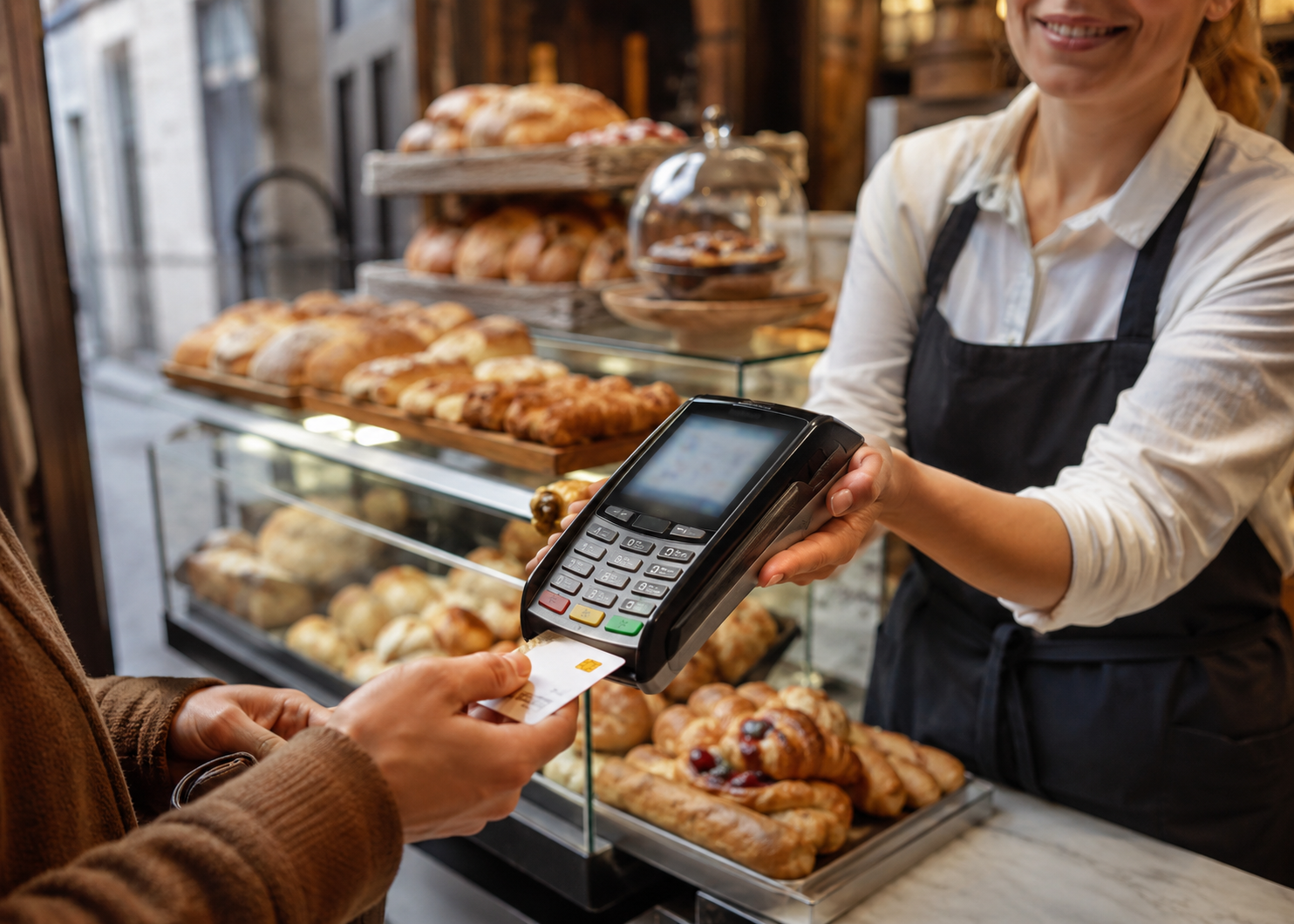
Declining DCC is the single biggest win, but it pairs naturally with one more piece of preparation: the card you travel with. Since the small remaining cost of paying in local currency is your own card’s foreign transaction fee, choosing a card that does not charge one removes even that. None of this is personalised financial advice, and the right choice depends on your circumstances, but the general landscape is worth knowing.
Many travel-focused credit cards now waive foreign transaction fees entirely, and a number of multi-currency accounts and cards, designed for travellers and people who deal in several currencies, convert at or near the market rate for very low fees. Carrying one of these, and using it while always selecting local currency, gets you close to the cheapest possible way to spend abroad. Cash has its place too, but withdrawing it from a foreign ATM raises the very same DCC question, so the same rule applies at the cash machine: decline the conversion and take your euros as euros.
The broader point is that spending abroad well is a combination of a habit and a tool. The habit is always choosing local currency; the tool is a card that does not punish you for foreign spending. Together they turn what can be a leaky, overpriced process into a nearly frictionless one. Sort out the card before you go, adopt the local-currency rule while you are there, and the whole murky business of currency conversion stops costing you anything worth worrying about.
Two Seconds That Save Real Money
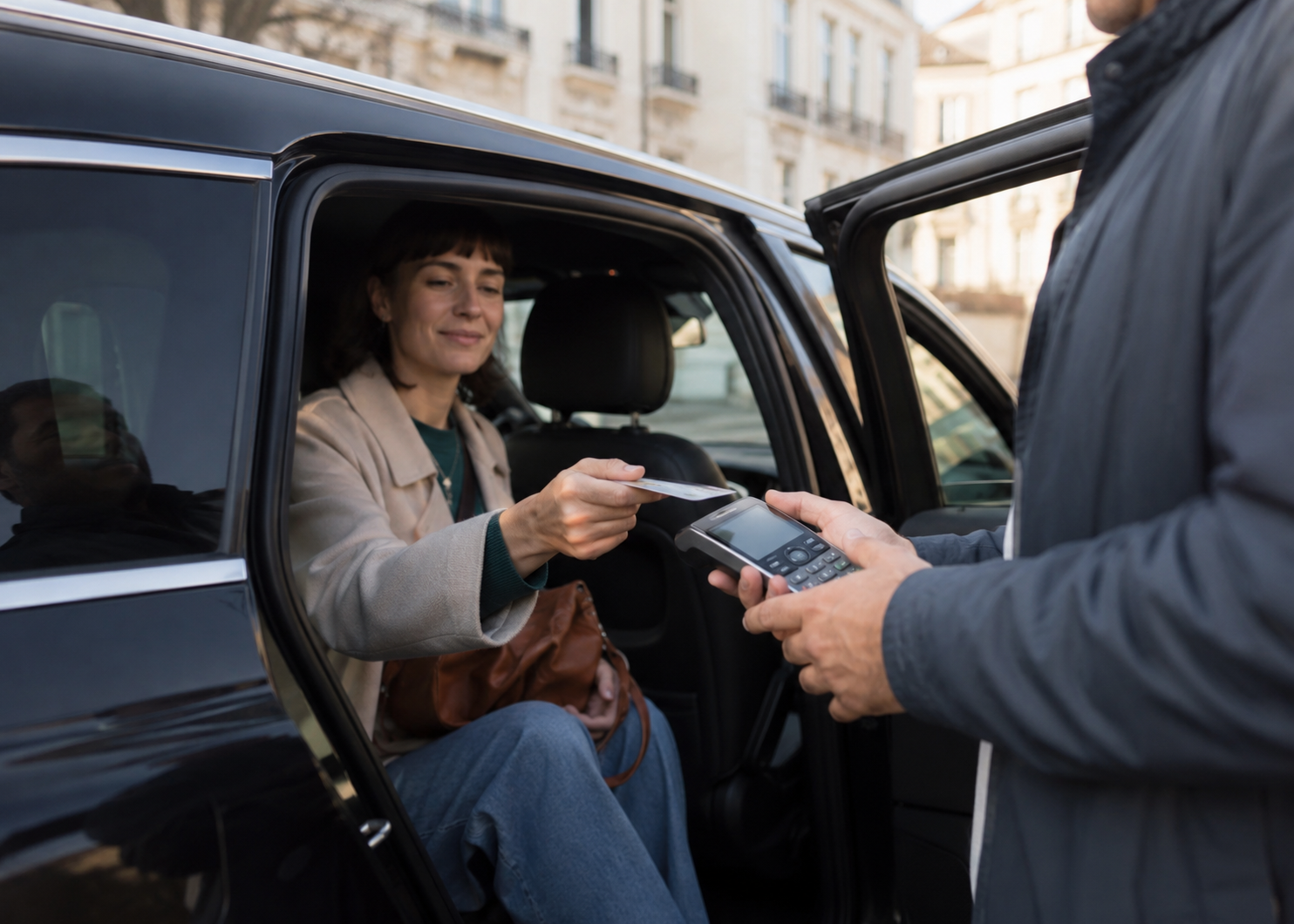
The dollars button is a small thing, a single tap on a screen, which is exactly why it is so effective at separating travellers from their money. It hides in the flow of an ordinary transaction, dressed as a convenience, and asks only that you take the path of least resistance. Most people do, and pay for it quietly, a few percent at a time.
The fix costs nothing and takes no longer than falling for it. Choose local currency, every time, and carry a card that does not charge foreign transaction fees. That is the entire strategy, and across a trip full of meals, tickets, hotels, and cash withdrawals, it can save a genuinely worthwhile amount, all for the sake of pressing the less obvious button and understanding why.
So the next time a machine in Europe offers to charge you in dollars, recognise the offer for what it is and decline it. Pay in euros, let your own bank do the conversion, and keep the several percent that DCC would have taken. It is one of the rare moments in travel where the right financial choice is also the easy one, requiring only that you know which button to press. Now you do.

About the Author: Ruben, co-founder of Gamintraveler.com since 2014, is a seasoned traveler from Spain who has explored over 100 countries since 2009. Known for his extensive travel adventures across South America, Europe, the US, Australia, New Zealand, Asia, and Africa, Ruben combines his passion for adventurous yet sustainable living with his love for cycling, highlighted by his remarkable 5-month bicycle journey from Spain to Norway. He currently resides in Spain, where he continues sharing his travel experiences with his partner, Rachel, and their son, Han.