
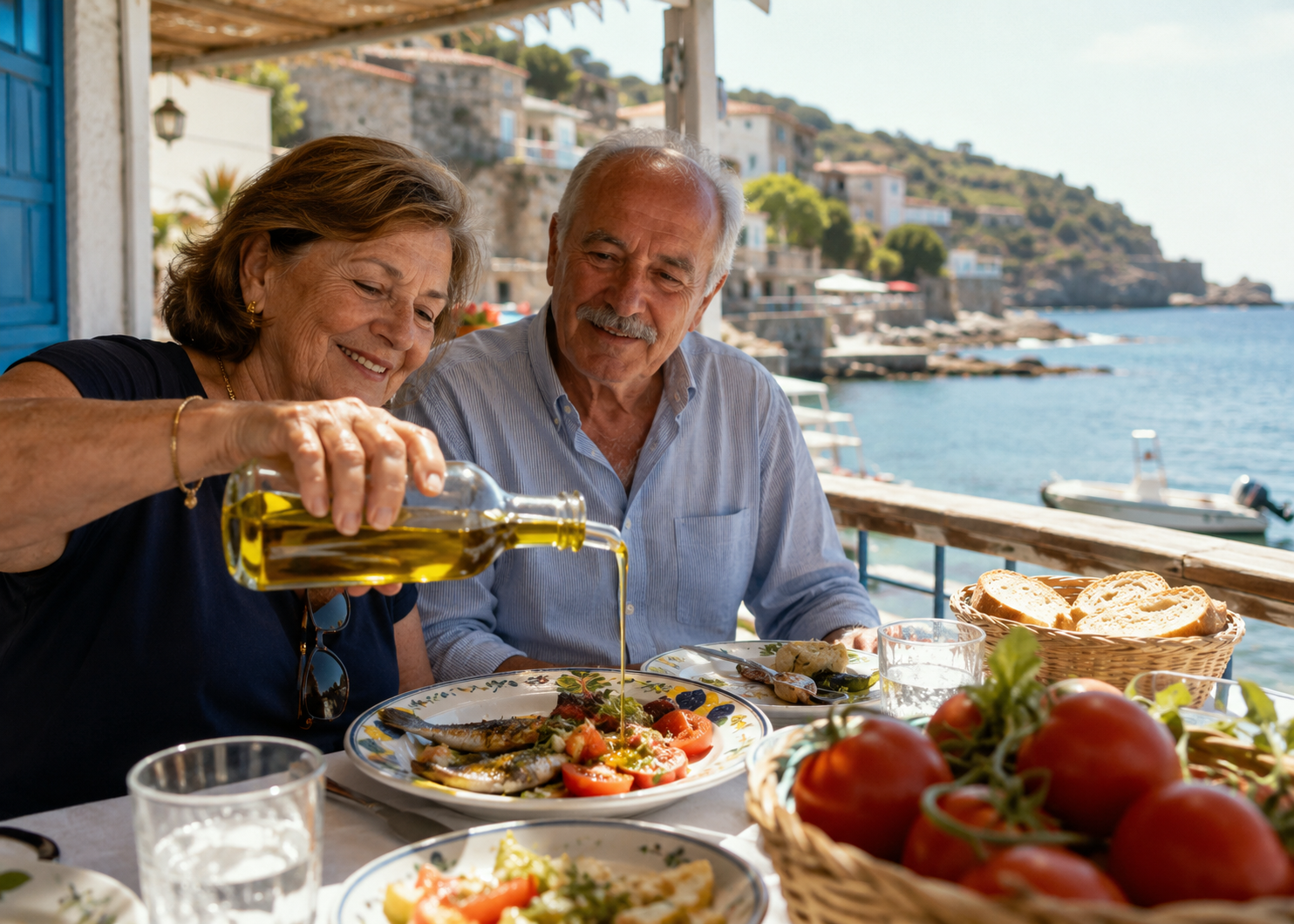
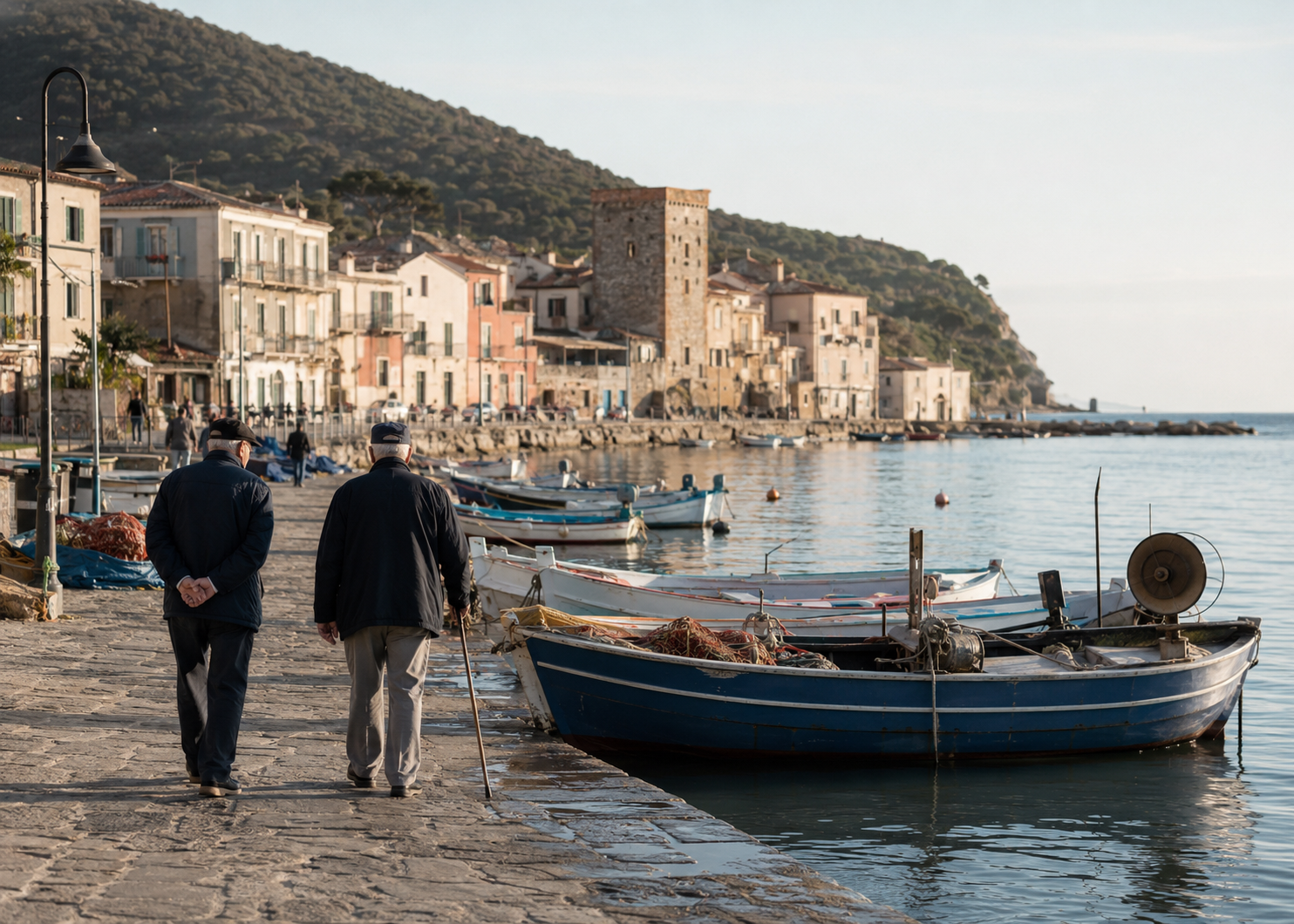
Tucked along the Cilento coast in southern Italy, about 85 miles south of Naples, sits a small fishing village called Acciaroli. It has cobblestone streets, stone houses, a working harbour, and one very unusual statistic: a strikingly high share of its residents live past 100. In the study that made it famous, more than one in ten had reached a century.
Researchers have spent years trying to work out why, and among the many things they have examined, one homely detail keeps getting mentioned. The people of Acciaroli grow, and eat, an enormous amount of rosemary. They put it on nearly everything. Whether that herb is a genuine key to their longevity or simply one thread in a much larger story is a question worth pulling apart carefully, because Acciaroli is both more remarkable and more complicated than the tidy headlines suggest.
A Village Full of Centenarians
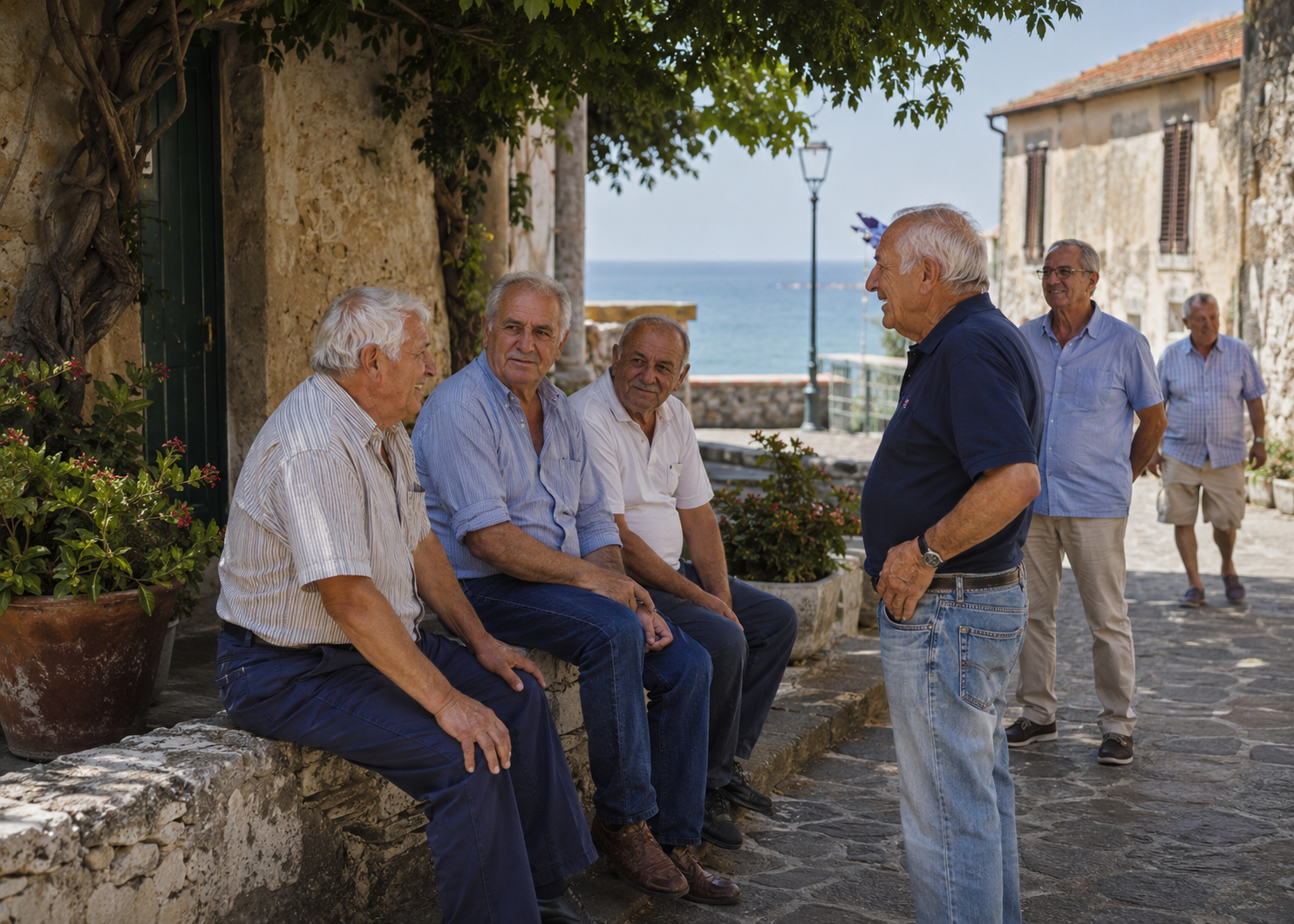
Acciaroli sits on the Cilento peninsula in the Campania region, a stretch of coast known for rugged hills, clear water, and a slow, traditional way of life. The village itself is small, home to only a couple of thousand people, which makes its concentration of very old residents all the more startling. In the cohort researchers focused on, some 300 individuals had passed the age of 100.
More striking than the raw numbers is the condition of these elders. They are not simply surviving into extreme old age in decline; many remain active, independent, and sharp. Studies have reported unusually low rates of the diseases that typically define later life in the developed world, including Alzheimer’s, heart disease, and cataracts. The old people of Acciaroli, by many accounts, do not just live long. They live well, staying mobile and engaged into their nineties and beyond.
The broader Cilento region shows the same fish at a larger scale. It was here, decades ago, that the very idea of the Mediterranean diet took root, and the area has long carried a reputation for the longevity of its people. Acciaroli is the concentrated, photogenic heart of that reputation, a place small enough to study closely and remarkable enough to be worth the effort.
It is worth being precise that the exact figures vary between reports, as they often do with small, closely studied places. Different accounts cite somewhat different population and centenarian counts depending on how the village and its surroundings are defined. What stays consistent across them is the direction: an unusually high proportion of very old people for a settlement this size, and unusually good health among them.
The Researchers Who Came to Study Them
The village’s fame owes a great deal to a specific research effort. Beginning in 2016, scientists from Sapienza University in Rome teamed up with the University of California, San Diego, to study Acciaroli’s oldest residents in depth, an ongoing project that became known as the Cilento Initiative on Aging Outcomes.
The team, whose figures included the UC San Diego cardiologist Alan Maisel and the Sapienza researcher Salvatore Di Somma, spent months examining the villagers’ blood, genetics, diets, and daily habits. One of their most quoted findings concerned circulation. The elderly residents showed unusually good blood flow for their age, comparable in some cases to people many decades younger. The researchers linked this to notably low levels of a hormone called adrenomedullin, which over time causes blood vessels to narrow, so keeping its levels down appears to help preserve healthy circulation deep into old age.
The scientists have been careful, to their credit, about what they claim. They have described their goal as building a fuller picture of how these people live and age, using genetic analysis alongside detailed study of diet and behaviour, rather than announcing a single cause. A decade into the work, the team continues to gather data, treating Acciaroli as a living laboratory of healthy ageing rather than a source of neat, marketable secrets.
That restraint is itself a good sign. The most trustworthy longevity research tends to be the least dramatic, offered with caveats and a long time horizon rather than a press release promising the fountain of youth. The Acciaroli team’s patience, a decade of quiet data-gathering, is precisely what lends their findings more weight than the average viral longevity claim.
What They Put on Everything
Which brings us to the rosemary, the detail that captured the public imagination. The residents of Acciaroli consume the herb in genuinely large quantities, and it turns up almost everywhere in their cooking, from salad dressings and pasta to marinades for the local seafood.
The rosemary is not a supermarket afterthought. It grows abundantly in the hills around the village, both cultivated in gardens and springing up wild across the surrounding landscape, so it is fresh, plentiful, and woven into daily cooking as a matter of course rather than an occasional flourish. When researchers looked at what set the village’s diet apart, this heavy, habitual use of rosemary stood out as distinctive.
There is a plausible scientific thread here, though it must be handled honestly. Rosemary contains a compound called carnosic acid, and laboratory studies have suggested that compounds in the herb may support memory and brain health and carry anti-inflammatory and antioxidant properties. That is intriguing, and it is easy to see why it made headlines. But it is a long way from a few promising laboratory findings to the claim that an herb explains why a whole village reaches 100, and the honest researchers have never made that leap. Rosemary is a striking part of the picture, not a proven cause of it.
It is a distinction worth holding onto whenever a longevity story fixes on one food. The human urge to find a single magic ingredient is powerful, and the media obliges it, but real diets are systems, not lists. Rosemary earns its place in the Acciaroli story as a marker of a certain kind of cooking, fresh, local, and herb-forward, rather than as a pill in disguise.
The Rest of the Acciaroli Diet
Focusing only on rosemary misses the forest for one fragrant tree, because the herb sits inside a broader diet that is close to a textbook Mediterranean model. The people of Acciaroli eat much as their ancestors did, from the sea and the land immediately around them.
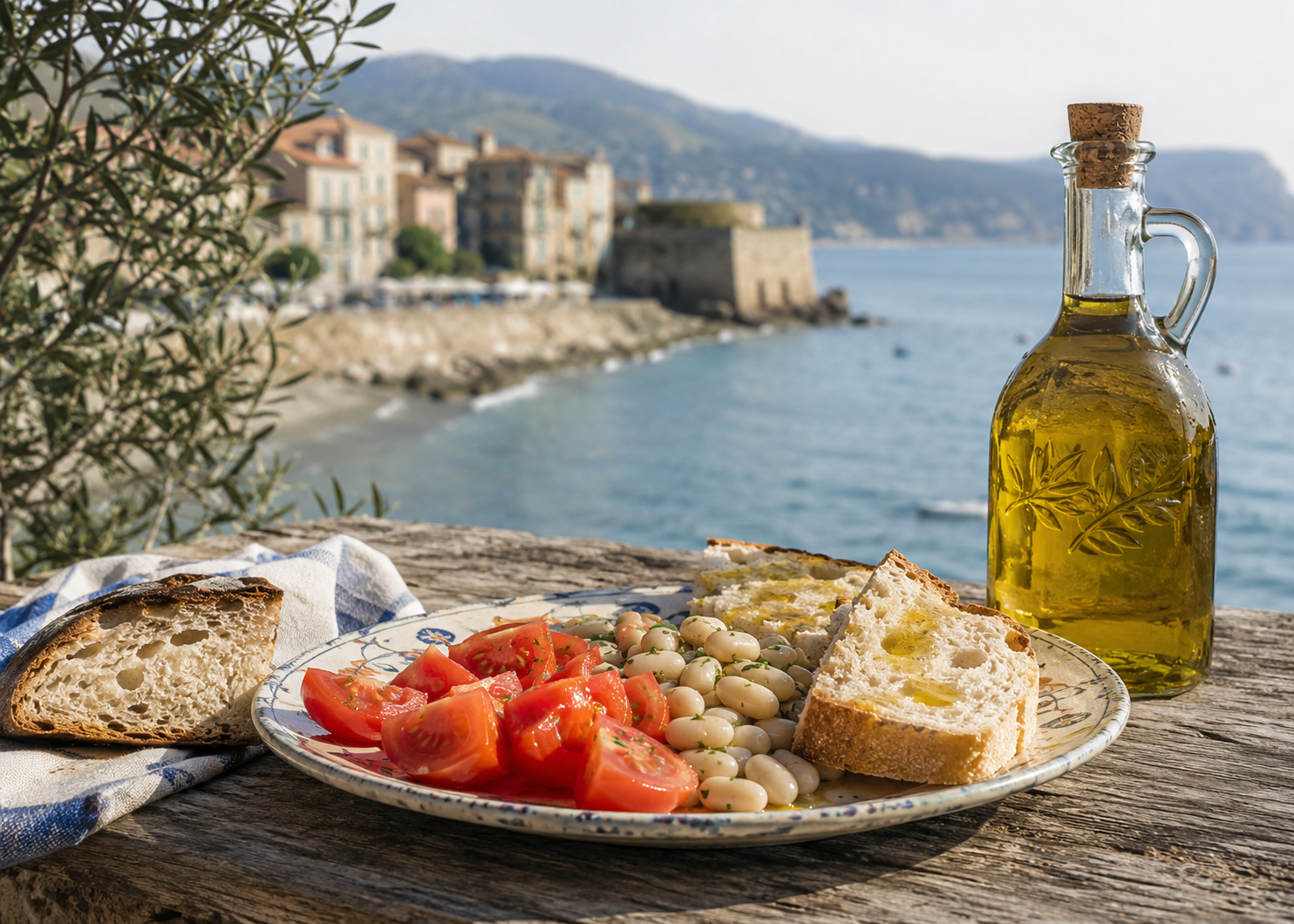
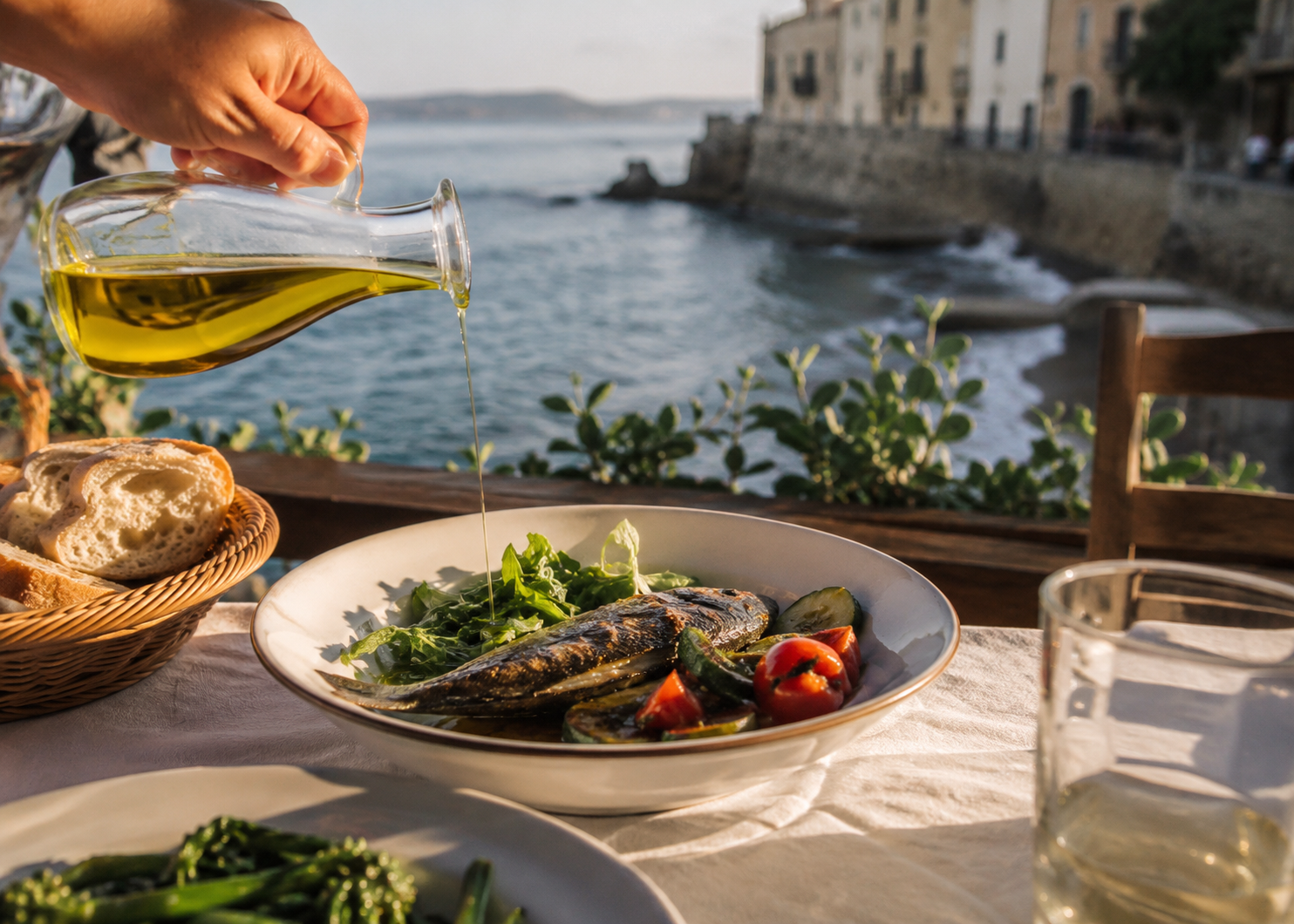
Their food is built on locally caught fish, including the anchovies of the coast, along with rabbit, chicken, home-grown vegetables, and generous amounts of olive oil. It is fresh, seasonal, minimally processed, and low in the packaged and sugary foods that dominate so many modern diets. This is the Mediterranean diet not as a marketing label but as a lived, unbroken tradition, and decades of research have tied that pattern of eating to lower rates of cardiovascular disease and better ageing.
Diet is only part of it, too. The village’s hilly terrain means residents walk and climb as a matter of daily life, building constant, gentle physical activity into their routines without ever calling it exercise. Their social lives are close-knit and active, family and community woven tightly together, and researchers even noted that many of the elderly maintained lively personal relationships well into old age. Taken together, it is a whole way of living, food, movement, and connection reinforcing one another, and the rosemary is one flavourful ingredient within that larger recipe.
The Ancel Keys Connection
The story has a deep historical root that is worth knowing, because it lends the place real scientific pedigree. Back in the 1950s, an American physiologist named Ancel Keys came to the Cilento region to study the relationship between diet and health, and it was largely here that he developed and popularised the concept of the Mediterranean diet.
Keys was so taken with the region and its way of life that he moved there and stayed for decades. He died two months short of his 101st birthday, having spent much of his long life living out the very dietary pattern he had spent his career studying. It is a neat, almost too-perfect coda: the scientist who identified the Mediterranean diet living to nearly 100 in the region that inspired it.
That history matters because it grounds Acciaroli in something more substantial than a viral longevity trend. The interest in this stretch of coast did not begin with a rosemary headline; it began with serious mid-century science that reshaped how the world thinks about food and health. The modern researchers studying the village are, in a real sense, continuing work that started more than half a century ago.
How It Fits With the Blue Zones
Acciaroli is often mentioned in the same breath as the so-called Blue Zones, the handful of regions around the world, popularised by the writer Dan Buettner, said to hold unusual concentrations of very old people. The classic five are the Italian island of Sardinia, the Japanese islands of Okinawa, the Greek island of Ikaria, the Nicoya Peninsula in Costa Rica, and Loma Linda in California.
Strictly speaking, Acciaroli is not one of the official Blue Zones, but it belongs to the same family of longevity hotspots and shows many of the same features. Across these places, researchers keep finding a similar cluster of traits: a plant-heavy, minimally processed local diet, constant low-intensity movement built into daily life, strong family and community bonds, a sense of purpose in old age, and relatively low stress. The specific foods differ, beans in Nicoya, sweet potato in Okinawa, fish and rosemary in Acciaroli, but the underlying pattern rhymes.
That convergence is actually the most persuasive part of the whole longevity story. When very different cultures on opposite sides of the planet arrive at long, healthy lives through the same broad habits, those habits look far more credible than any single local ingredient. It also means Acciaroli’s lesson is not really about Acciaroli. It is one more data point pointing at the same unglamorous conclusion the Blue Zones keep reaching.
The Skeptics Have a Point
Now for the necessary dose of caution, because stories about longevity hotspots deserve genuine scepticism. In recent years, some researchers have raised pointed questions about how reliable the world’s famous clusters of extreme old age really are, and their concerns apply here as much as anywhere.
The critique is uncomfortable but important. Much of the data on regions boasting exceptional numbers of centenarians has been shown to correlate suspiciously well with poor birth records, historical clerical errors, and, in some places, incentives to overstate ages, such as continued pension payments. Where record-keeping is patchy and old, some claimed centenarians may simply not be as old as the paperwork says. This does not mean Acciaroli’s residents are not genuinely long-lived, but it is a reason to treat precise figures with care and to prefer the measurable findings, like the blood-circulation results, over the eye-catching headcounts.
The same caution applies to the rosemary itself. Laboratory evidence that a compound shows promise in a dish or a mouse is not evidence that eating the herb extends human life, and correlation is not causation. A village that eats a lot of rosemary and lives a long time does not prove the rosemary is why, especially when that same village also eats fresh fish, walks up hills all day, and enjoys strong social bonds. Good science holds these threads apart; good marketing tangles them together and sells the herb.
This is not cynicism for its own sake. The point of the scepticism is to protect the genuinely useful findings from being drowned out by the sensational ones. The circulation results and the low adrenomedullin are real, measurable, and interesting, and they deserve better than to be buried under a pile of rosemary supplements sold on the strength of a headline. Taking the science seriously means being willing to doubt the parts that are too good, too simple, or too sellable to be quite true.
What Is Actually Worth Copying
None of this scepticism means there is nothing to learn from Acciaroli. It means the lessons are the boring, durable ones rather than the exciting, purchasable one. The village is not proof that rosemary is a miracle, but it is a vivid, living example of a way of eating and living that decades of solid research already support.
The genuinely transferable habits are unglamorous and familiar. Eat real, whole, largely unprocessed food, heavy on vegetables, fish, and olive oil. Use fresh herbs generously, rosemary among them, for flavour and, quite possibly, a modest bonus. Build movement into ordinary life rather than outsourcing it to a gym. Stay socially connected, and keep a reason to get up and engage with the world. None of this requires a plane ticket to Campania or a particular herb, and none of it is medical advice, only the consistent direction of a large body of evidence.
The mistake would be to reduce a whole culture of health to a single ingredient, to buy a pot of rosemary and imagine you have bottled Acciaroli. The village’s real lesson is the opposite of a shortcut. It is that living long and living well seem to come from many ordinary good things done together, over a lifetime, in a place and a community that make them easy.
A Village Worth Learning From
So Acciaroli earns its fame, with caveats. It really does have a remarkable concentration of very old, and often very healthy, residents, and its people really do put rosemary on nearly everything. Both parts of the story are true and worth telling.
What the honest version resists is the leap from those facts to a single secret. The most solid findings, the excellent circulation and the low adrenomedullin, are biological clues, not endorsements of one herb, and the broader explanation is the familiar Mediterranean package of food, activity, and community that Ancel Keys was documenting seventy years ago. The rosemary is a wonderful, aromatic detail, not a magic bullet, and the sensible researchers studying the village have always known the difference.
Seen clearly, Acciaroli is less a source of secrets than a beautiful confirmation of things we already largely know. It is a place where ordinary healthy living has been sustained, unbroken, for generations, and where the results are visible on every sunlit street. That is a quieter story than a miracle herb, but it is a truer one, and in the end a far more useful guide to living a long and good life.

About the Author: Ruben, co-founder of Gamintraveler.com since 2014, is a seasoned traveler from Spain who has explored over 100 countries since 2009. Known for his extensive travel adventures across South America, Europe, the US, Australia, New Zealand, Asia, and Africa, Ruben combines his passion for adventurous yet sustainable living with his love for cycling, highlighted by his remarkable 5-month bicycle journey from Spain to Norway. He currently resides in Spain, where he continues sharing his travel experiences with his partner, Rachel, and their son, Han.