
At the end of almost every meal, I used to reach for something sweet and packaged. A couple of biscuits with my coffee, a square or four of chocolate, a little pot of some dessert I had bought precisely so it would be there. It was automatic, the full stop at the end of the sentence of eating, and I never questioned it.
Then I paid attention to how the Spanish families around me finish a meal on an ordinary weeknight. Someone says postre, dessert, and what appears is a bowl of fruit. An orange, an apple, a handful of cherries, maybe a yogurt. The cakes and pastries come out for Sundays and celebrations, not for a random Tuesday. So for thirty days I followed the Spanish fruit-for-dessert default exactly, and two things dropped that I had not expected: my grocery bill and my afternoon energy crashes.
The Spanish Dessert Default
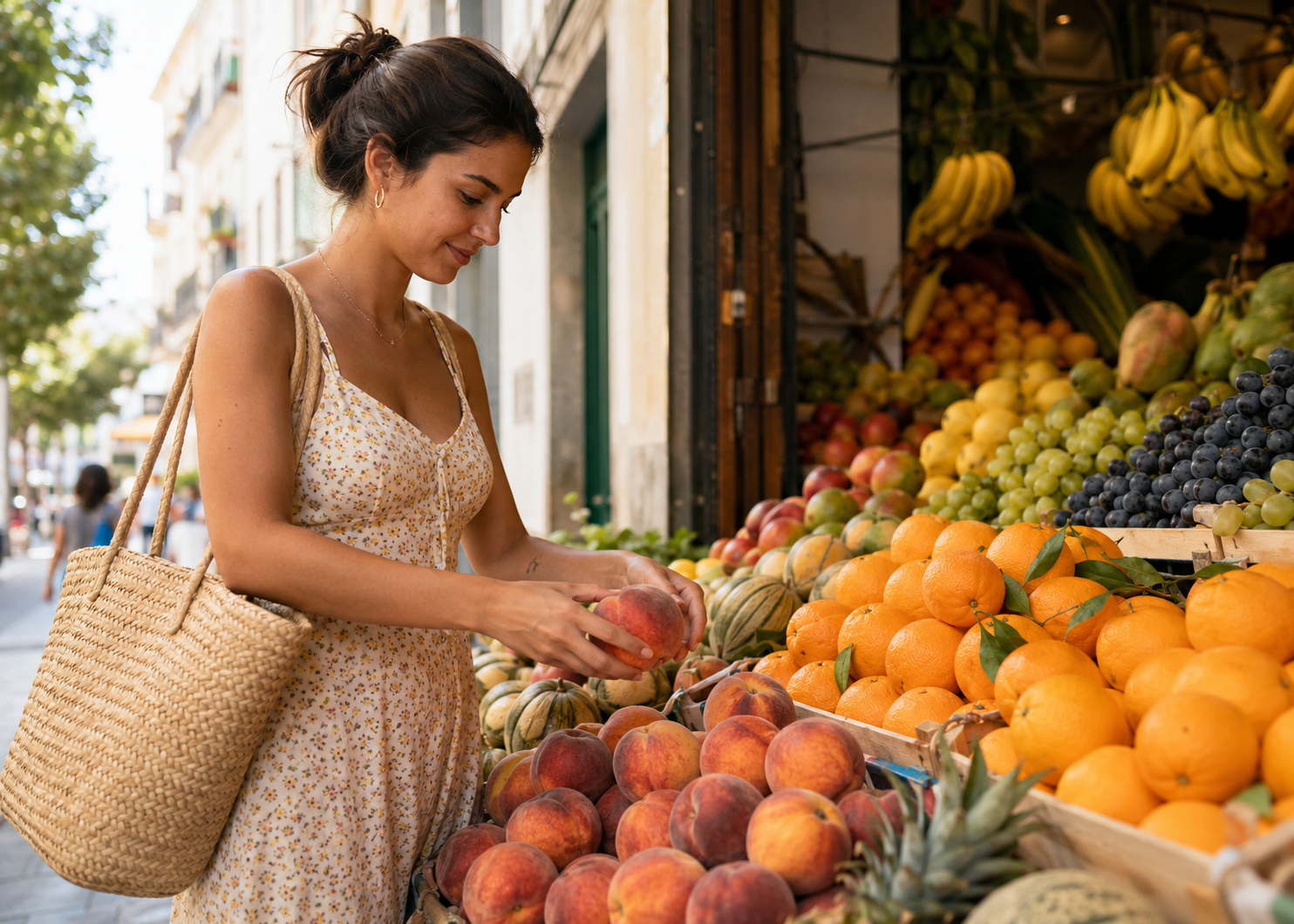
The first thing to understand is that this is not a health fad in Spain. It is simply how the day normally ends. In most Spanish homes, the everyday postre after lunch and dinner is a piece of fresh fruit or a plain yogurt, and this is so routine that children will call for it by name the moment their plates are clear.
That does not mean Spaniards do not love sweets, because they absolutely do. Turrón at Christmas, torrijas at Easter, an elaborate cake for a birthday, a pastry with weekend coffee: Spain has a serious sweet tooth and a deep tradition of rich desserts. The difference is when. The showy sweets are attached to weekends, holidays, and occasions, while the ordinary weekday meal is closed with fruit. As one Spanish friend put it to me, the secret is not avoiding sweets but keeping them special.
That framing is the whole thing, and it is worth stressing because it is the opposite of a diet. Nothing is forbidden. The rich dessert is not banned; it is simply moved to its proper place, the weekend or the celebration, so that it stays a treat rather than becoming wallpaper. On the everyday plate, fruit is the default, and the default is doing almost all the work.
There is an old line Spaniards use when you ask how they square a serious sweet tooth with the famously healthy Mediterranean table: moderation, and a lot of walking. The daily fruit is a big part of that moderation. Nobody in Spain thinks of ending a weekday dinner with an orange as a diet; it is simply the normal, unremarkable thing to do, no more a sacrifice than having bread with the meal. That ordinariness is exactly what makes it stick.
What I Was Doing Before
My own habit had drifted a long way from that. Somewhere over the years, a sweet after a meal had stopped being a treat and become a fixture, as unremarkable and unnoticed as clearing the plates. Every lunch and every dinner ended with something from a packet.
The trouble with a treat you have every single day is that it stops being a treat. The chocolate after Tuesday’s dinner tasted no different from the chocolate after Monday’s, and neither one felt like anything special, because there was nothing special about it. I was eating the celebratory food on the most ordinary occasions, which meant I got the sugar and the cost of a treat without any of the pleasure of one. I had, without noticing, made dessert boring.
I was also buying it constantly. My shopping trolley always held a rotating supply of biscuits, chocolate, and little packaged puddings, bought on the assumption that a meal without a sweet ending was somehow incomplete. That assumption, it turned out, was quietly expensive in more ways than one.
The Rule, and How I Kept It

The experiment was simple to state. For thirty days, the everyday postre would be fruit or a plain yogurt, and anything richer would be reserved for weekends and genuine occasions. That was the entire rule.
In practice, it meant keeping a proper fruit bowl stocked and treating it as the default end to a weekday meal. Whatever was in season and cheap at the market went in: oranges and mandarins in winter, cherries and melon and peaches in summer, apples and pears year round. When I wanted the ending to feel a little more special without breaking the rule, I leaned on the Spanish trick of a slice of membrillo, quince paste, with a small piece of Manchego cheese, which feels indulgent but is really just fruit and cheese.
Crucially, I did not ban sweets. On Saturday I could have the pastry, the cake, the chocolate, whatever I fancied, and I did. Knowing the weekend was coming made the weekday fruit easy to accept, because I was not giving anything up, only rescheduling it. I counted nothing, weighed nothing, and set no targets. This was a swap in the default, not a restriction, and that distinction turned out to matter enormously for whether I could actually stick to it.
How I Made Fruit Feel Like Dessert
The one fear I had going in was that fruit would feel like a consolation prize, a worthy substitute I would quietly resent. The Spanish, it turns out, have long since solved that, and a few small touches made the fruit bowl feel like a real end to a meal rather than a penance.
The biggest lesson was to let the seasons do the work. Fruit eaten in its proper season, ripe and cheap, is not sad diet food; it is one of the best things you can eat. Winter mandarins so easy to peel you finish four without noticing, June cherries by the handful, a melon in August so cold and sweet it needs nothing beside it. When the fruit is genuinely good, dessert takes care of itself, and Spain’s markets make good seasonal fruit almost absurdly easy to find.
Presentation helped more than I expected, too. Fruit sliced onto a plate and chilled reads as dessert in a way a whole apple grabbed from the bowl does not. A spoon of plain yogurt with a drizzle of honey and some chopped fruit felt genuinely indulgent. And the old Spanish standby of membrillo with a sliver of Manchego gave me a grown-up, almost restaurant ending that was still, underneath, only fruit and cheese. None of it took more than a minute, and all of it turned the default from a sacrifice into a choice.
My Grocery Bill Dropped
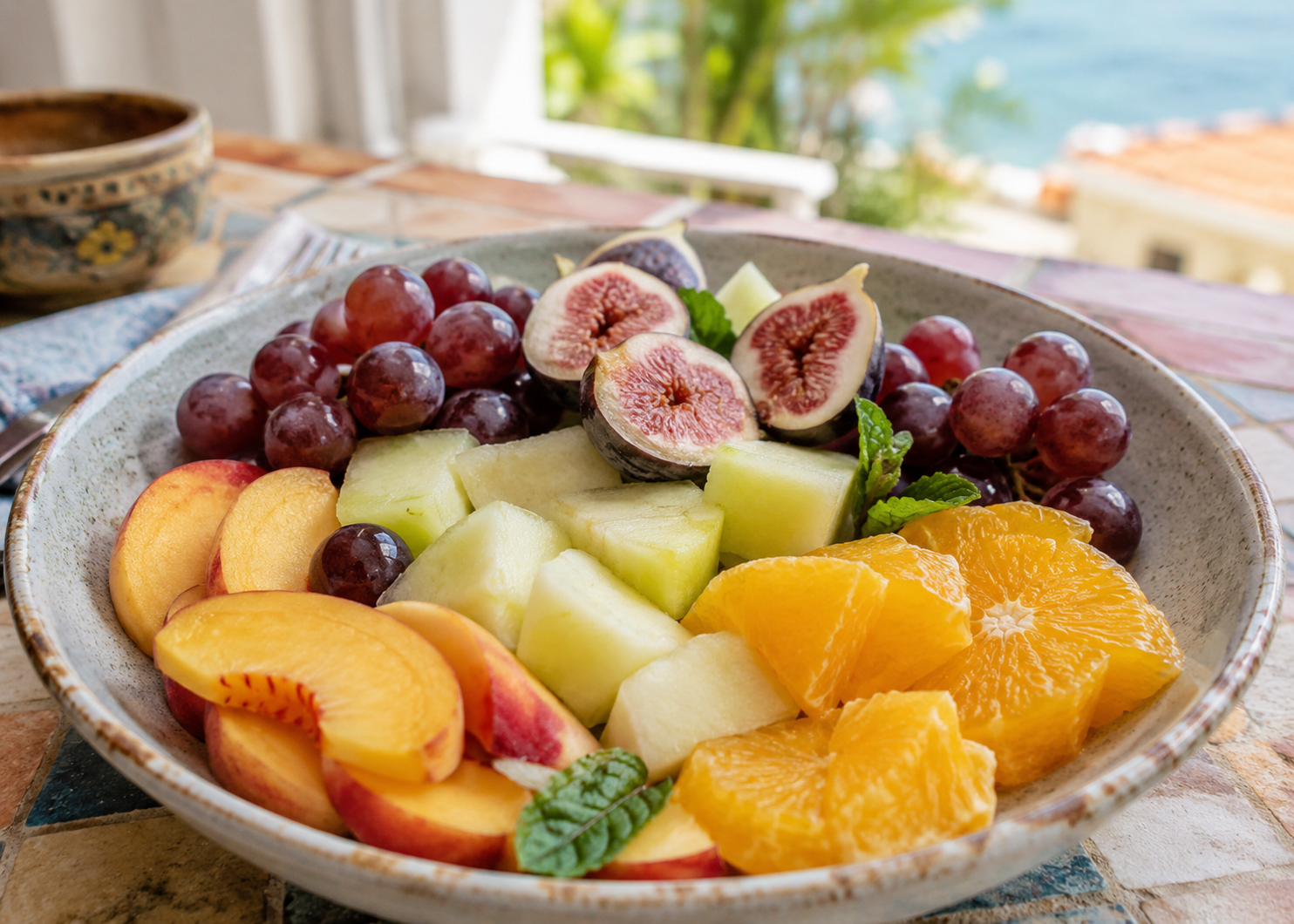
The first surprise was financial, and it was larger than I expected. Fresh seasonal fruit, especially bought at a Spanish market or fruit shop, is remarkably cheap, while packaged desserts and snacks quietly add up every single week.
The numbers made the point plainly. A kilo of in-season oranges or apples at the frutería often costs somewhere around €1 to €2, roughly $1.10 to $2.20, and feeds several meals’ worth of dessert. Compare that to a box of good biscuits, a bar of decent chocolate, and a few individual dessert pots, which can easily run €3 to €5, about $3.30 to $5.50, each and get used up in days. When I stopped buying the packaged sweets for weekday eating and leaned on seasonal fruit instead, that whole category of spending shrank noticeably.
Over the month it added up to real money, the kind of saving you actually notice on a receipt. And there was a hidden bonus: buying seasonal fruit pulled me toward the local market and the frutería rather than the supermarket’s confectionery aisle, which was cheaper and, frankly, more pleasant. I had assumed eating fruit for dessert might feel like a sacrifice. Instead it quietly trimmed one of the more pointless lines in my grocery budget.
It was a strange kind of saving, too, because it never once felt like economising. I was eating well, often better than before, and spending less at the same time, which is not a trade-off you get to make very often. Usually cutting a cost means cutting a pleasure. Here the cost fell and the pleasure, if anything, rose.
The Afternoon Crashes Eased
The second change is the one I want to describe most carefully, because it is my own experience and not a medical claim of any kind. Over the month, the sharp afternoon energy slumps I was used to seemed to soften, and I connect that, rightly or wrongly, to changing what I ate after lunch.
My old pattern of a sugary, packaged dessert after every meal gave me, or seemed to give me, a familiar rhythm of a small lift followed by a definite dip an hour or two later, the classic mid-afternoon crash that used to leave me foggy and reaching for more sugar. Ending lunch with a piece of whole fruit felt different. Whole fruit comes bundled with fibre and water, which is a genuinely different thing to eat than a refined-sugar biscuit, and my afternoons felt steadier for it, with fewer of those hard crashes.
I need to be honest about the limits of that observation. I did not measure my blood sugar or run any kind of controlled test; I simply noticed feeling more even through the afternoon. Plenty of things could contribute to that, and everybody’s body responds differently, so I would not promise anyone else the same result. But the shift was noticeable enough, and consistent enough over the month, that it became one of the main reasons I wanted to keep going.
If I had to guess at a mechanism, and it is only a guess, it is that a whole orange simply is not the same fuel as three biscuits, even if a chart might call them similar. The fruit came with fibre and water and took longer to eat and to digest, and my afternoons seemed to ride more smoothly on it. I offer that as a hunch about my own body, not a rule about anyone else’s, but it was a hunch that held up across thirty fairly ordinary days.
It Was Never About Cutting Sugar Out
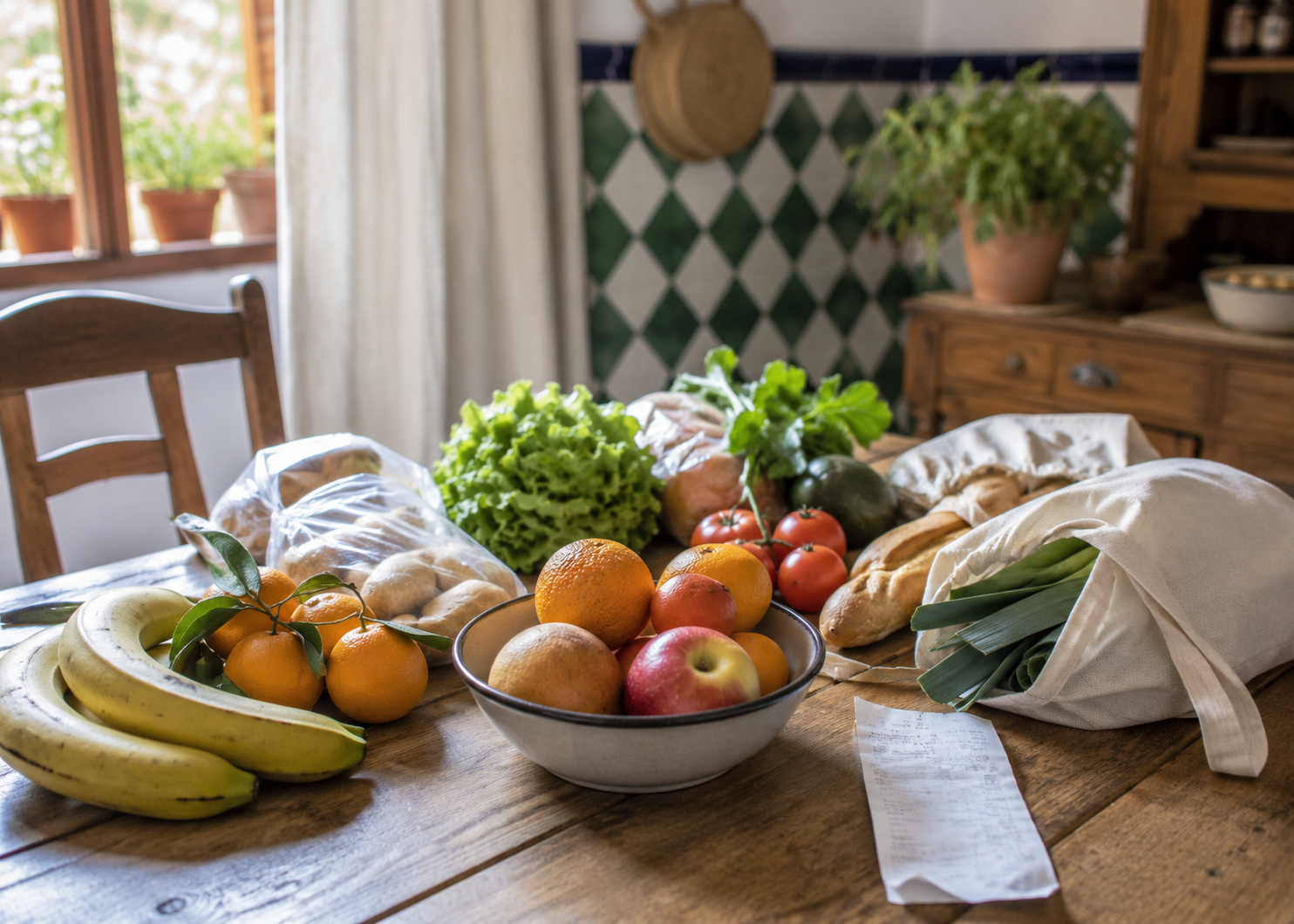
If there is one thing I would want to correct, it is the assumption that this was some austere sugar detox. It was not, and it would not have lasted a week if it had been. Fruit contains sugar too, and I was not trying to eliminate anything.
The whole approach hinged on not banning sweets but relocating them. The rich dessert kept its place in my life; it just moved to the weekend, where it belonged, and became a genuine treat again in the process. That first Saturday pastry, after five days of fruit, tasted better than any of the dozen absent-minded sweets it replaced, precisely because it had become an occasion rather than a habit. Making the treat special again was, if anything, the most enjoyable part of the whole experiment.
This is why I think the Spanish default is so sustainable while diets so often are not. A diet works by forbidding, and forbidding creates the craving that eventually breaks it. The fruit-for-dessert rule works by rescheduling, which asks for far less willpower because nothing is truly off the table. You are not resisting the cake. You are just having it on Sunday, and looking forward to it all week.
The Honest Limits
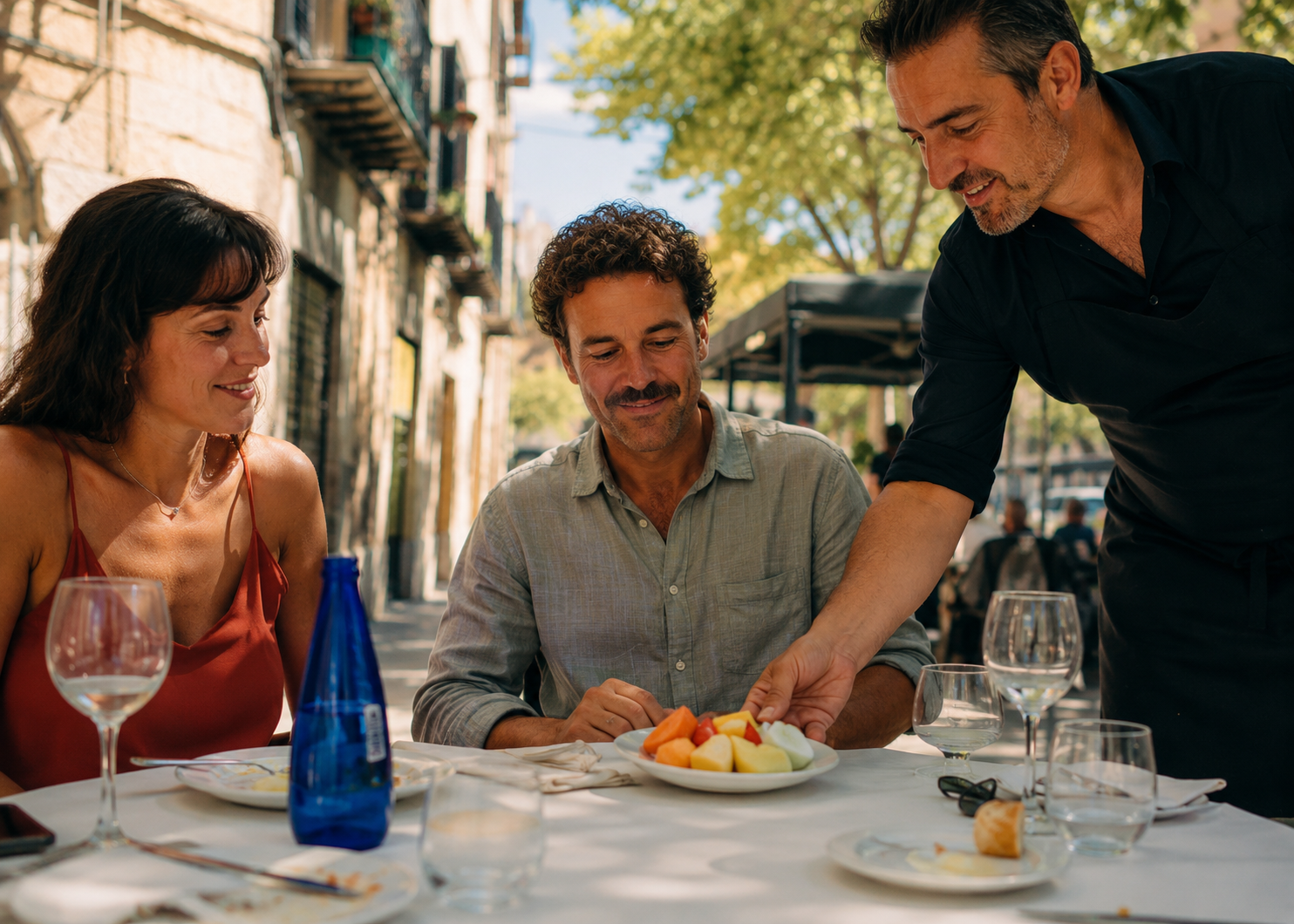
As with any month-long experiment by one person, this comes with caveats I would not want to skip. Some meals simply wanted a real dessert, and on a hard day I sometimes had one midweek and thought nothing of it, because the point was a gentle default and not an iron law. The rule survived precisely because I held it loosely.
I also want to be clear about what this is not. It is not medical or nutritional advice, and it is not a weight-loss plan; I was not tracking any of that and would be uneasy seeing a relaxed cultural habit turned into a strict regime with rules and numbers attached. Fruit is not magic, sugar is not poison, and how any of this affects a particular person depends on that person. If you are making changes for a real health reason, that is a conversation for a professional, not a takeaway from my thirty days.
The one firm thing I will say is that the version that worked was the loose, pleasurable one. The moment fruit-for-dessert starts to feel like punishment, or the weekend treat starts to feel like cheating, the whole spirit of it is lost. The Spanish do not experience their fruit bowl as deprivation. It is just how a normal meal ends, with the good stuff saved for when it counts, and that easy, unanxious relationship with food is the real thing worth borrowing.
The Habit That Stuck
A month later, I have kept it, more easily than almost any food change I have ever attempted, and I think it is because it never felt like a change I had to defend against myself. The fruit bowl is simply the default now, the weekend treat is genuinely a treat again, and both my receipts and my afternoons are the better for it.
The lesson that stuck is that the default matters more than the willpower. I did not become more disciplined; I just changed what sat on the table at the end of an ordinary meal, and let the ordinary meal do the rest. The rich dessert did not need to be conquered, only moved, and that small rescheduling turned out to be almost effortless to live with.
So I would happily recommend the experiment, with every caveat above firmly attached. Keep a good fruit bowl, let fruit be the weekday ending, and save the real sweets for the weekend, when they will taste twice as good. You may find, as I did, that the change costs you nothing you will miss and hands you back a little money and a steadier afternoon. The Spanish have been ending their meals this way for generations, entirely without calling it a wellness trick. It is just dinner, finished the sensible way.

About the Author: Ruben, co-founder of Gamintraveler.com since 2014, is a seasoned traveler from Spain who has explored over 100 countries since 2009. Known for his extensive travel adventures across South America, Europe, the US, Australia, New Zealand, Asia, and Africa, Ruben combines his passion for adventurous yet sustainable living with his love for cycling, highlighted by his remarkable 5-month bicycle journey from Spain to Norway. He currently resides in Spain, where he continues sharing his travel experiences with his partner, Rachel, and their son, Han.