
Walk into a modest restaurant in a Spanish town at half past one on a weekday, and you can eat three courses, with bread and a drink included, for around €14, roughly $15. A starter, a main, and a dessert, cooked that morning, brought to your table by someone who has done it ten thousand times. It is the best-value meal in the country, and most tourists walk straight past it without knowing what it is.
This is the menú del día, the menu of the day, and it is one of the load-bearing institutions of Spanish daily life. It has outlasted dictatorship, deregulation, recession, and a pandemic. It survives because it does something no fancier format can: it feeds an ordinary working person a proper hot lunch, at a fair price, every single weekday. Here is where it came from and why it refuses to die.
What You Get for €14
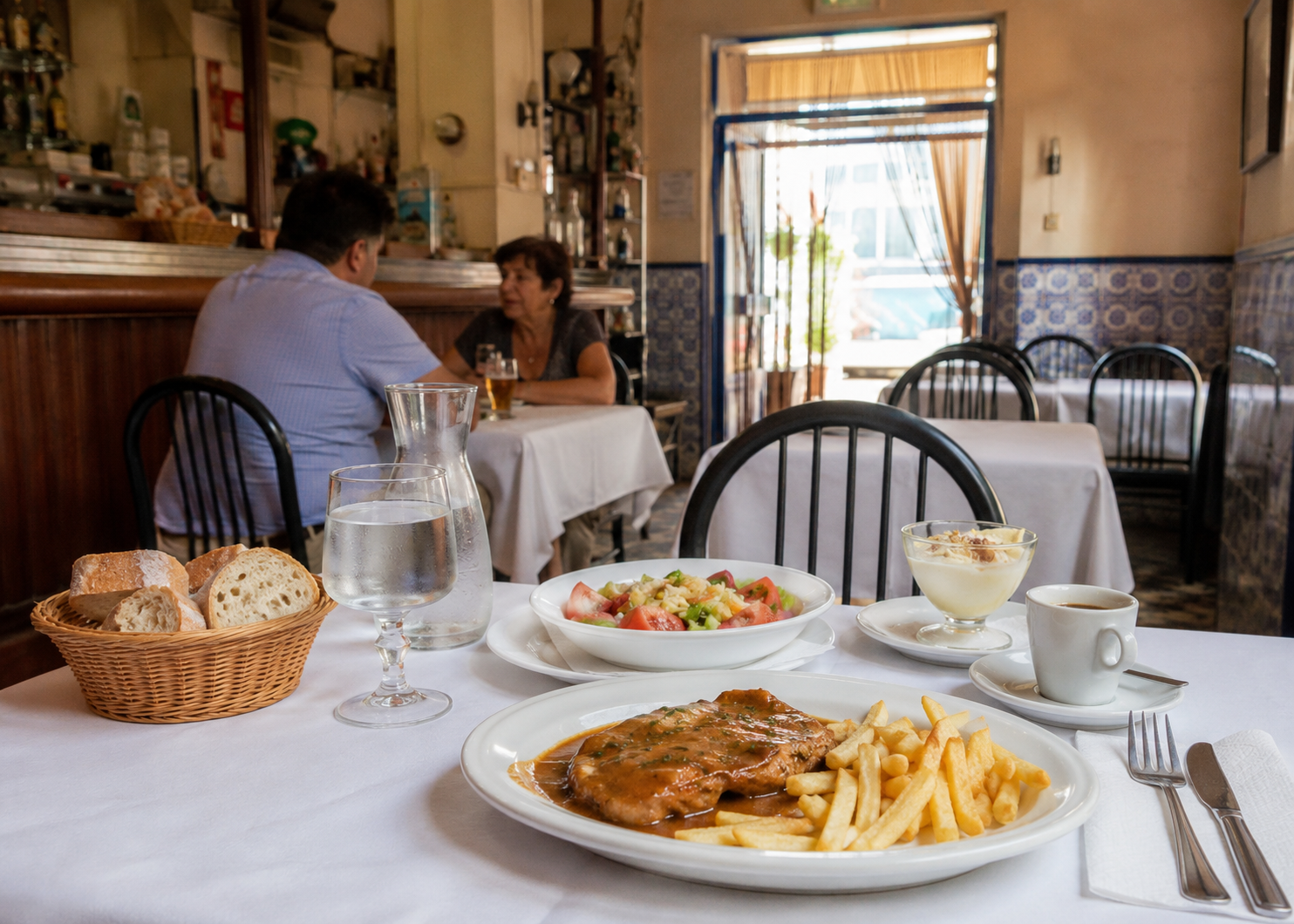
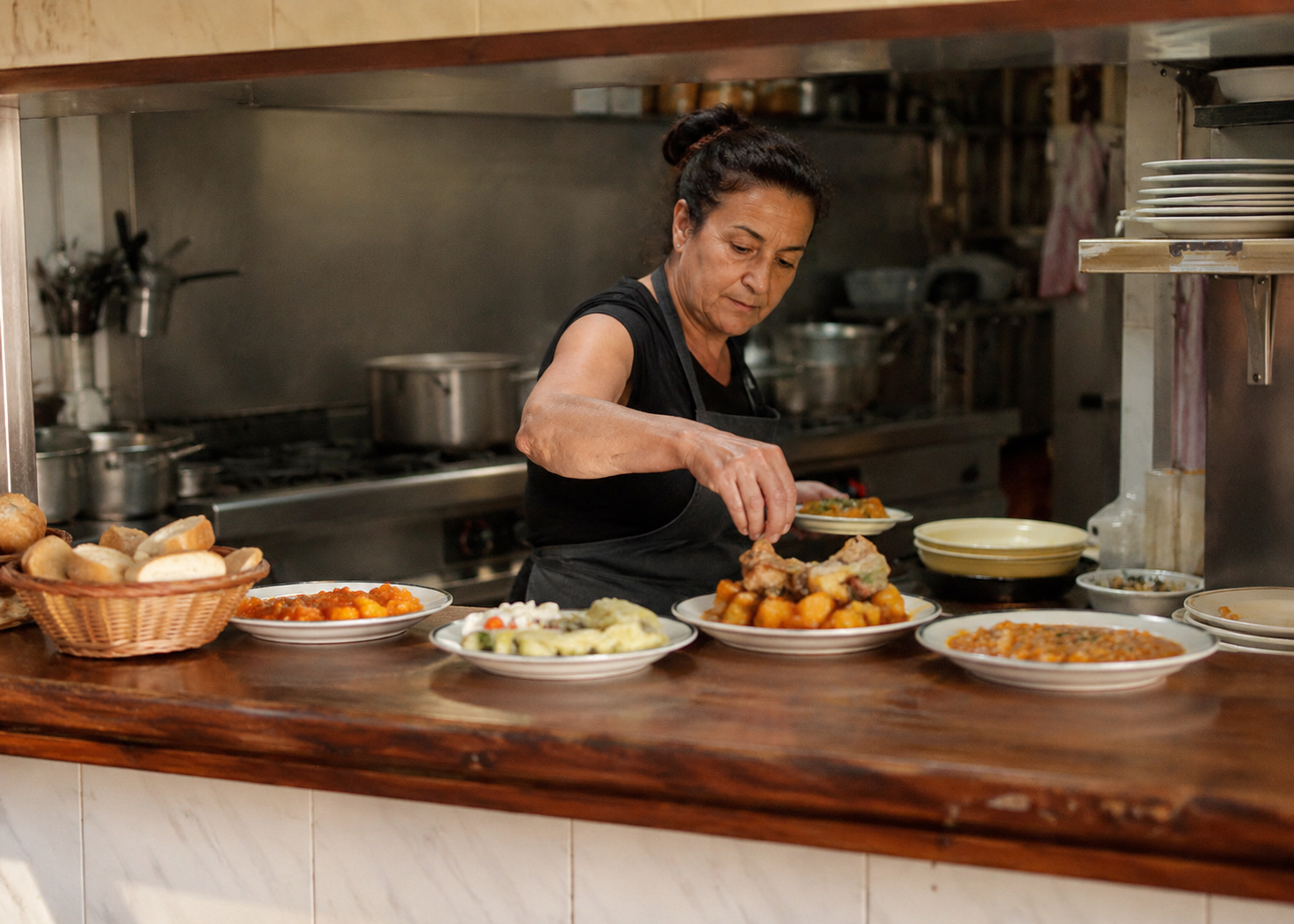
The format is fixed and generous. A menú del día is a set-price lunch built around three courses, and the price, typically €10 to €14 outside the big cities and €12 to €18 in Madrid and Barcelona, covers the whole thing rather than any single plate.
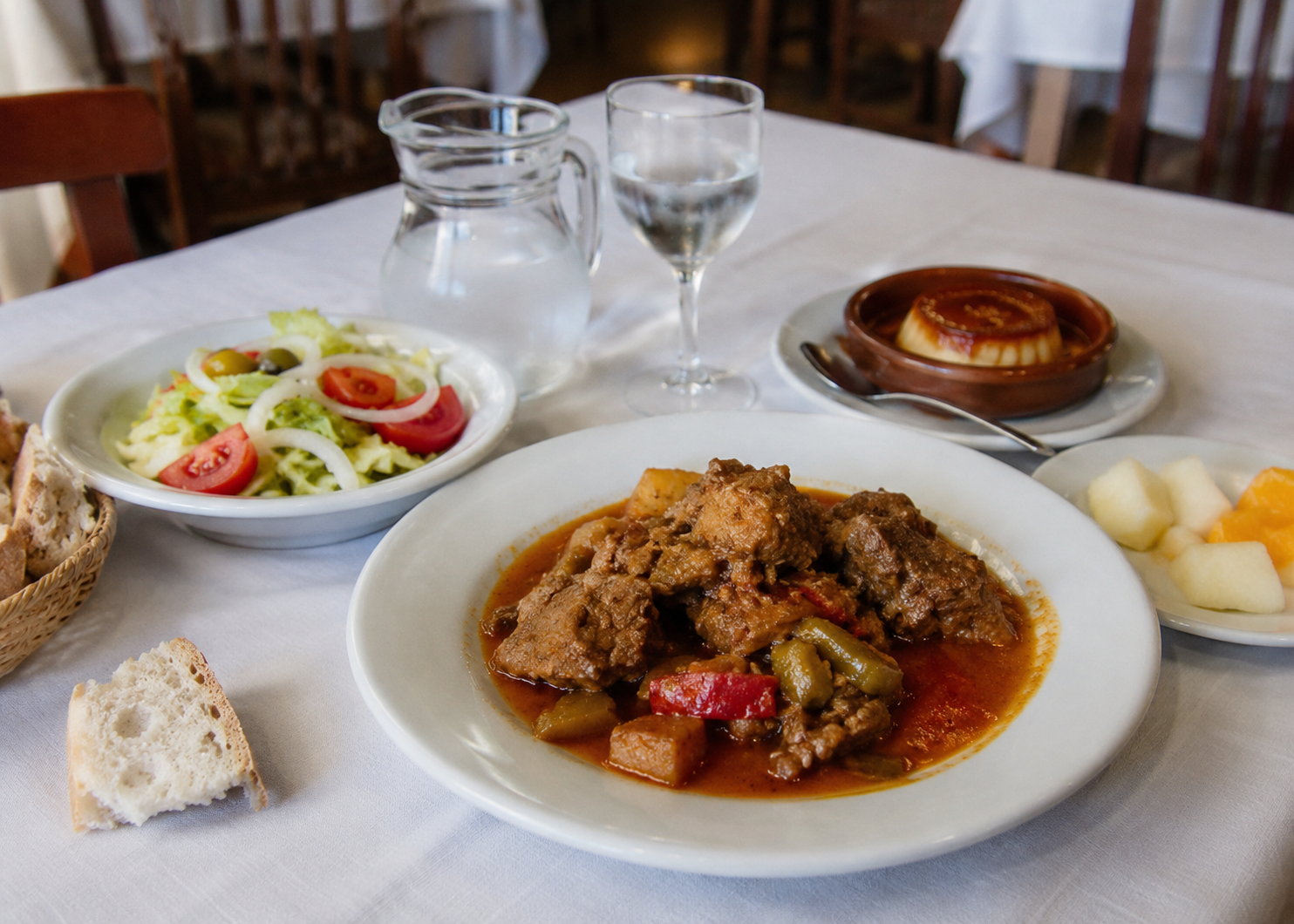
The first course, the primer plato, is usually a choice of two or three options: a soup, a salad, a plate of lentils or beans, a pasta, or a rice dish. The second course, the segundo plato, is the main event, again with a choice, typically a fish and a meat, perhaps a grilled hake, a stew, or a pork loin. The third is dessert, the postre, most often fruit, a flan, a yoghurt, or the day’s cake. Coffee is sometimes included, sometimes a small extra.
The rest arrives without asking. Bread comes to the table automatically. A drink is included, and this is the detail that stuns first-time visitors: the drink can be a glass, or even a small carafe, of house wine, the vino de la casa, at no extra charge. Water, beer, or a soft drink work too. For €14, a diner in Spain gets what would cost three or four times as much, without the wine, in much of northern Europe or the United States.
The portions match the ambition. A menú del día is designed to be a full working lunch, not a light bite, so the plates arrive substantial and nobody leaves hungry. The quality does vary, and the same fixed price buys a very different meal in a careful kitchen than in a careless one, but the structure is always the same: enough food, properly served, at a price fixed before you sit down. There are no surprises on the bill, which is a large part of the appeal.
A Law Born Under Franco
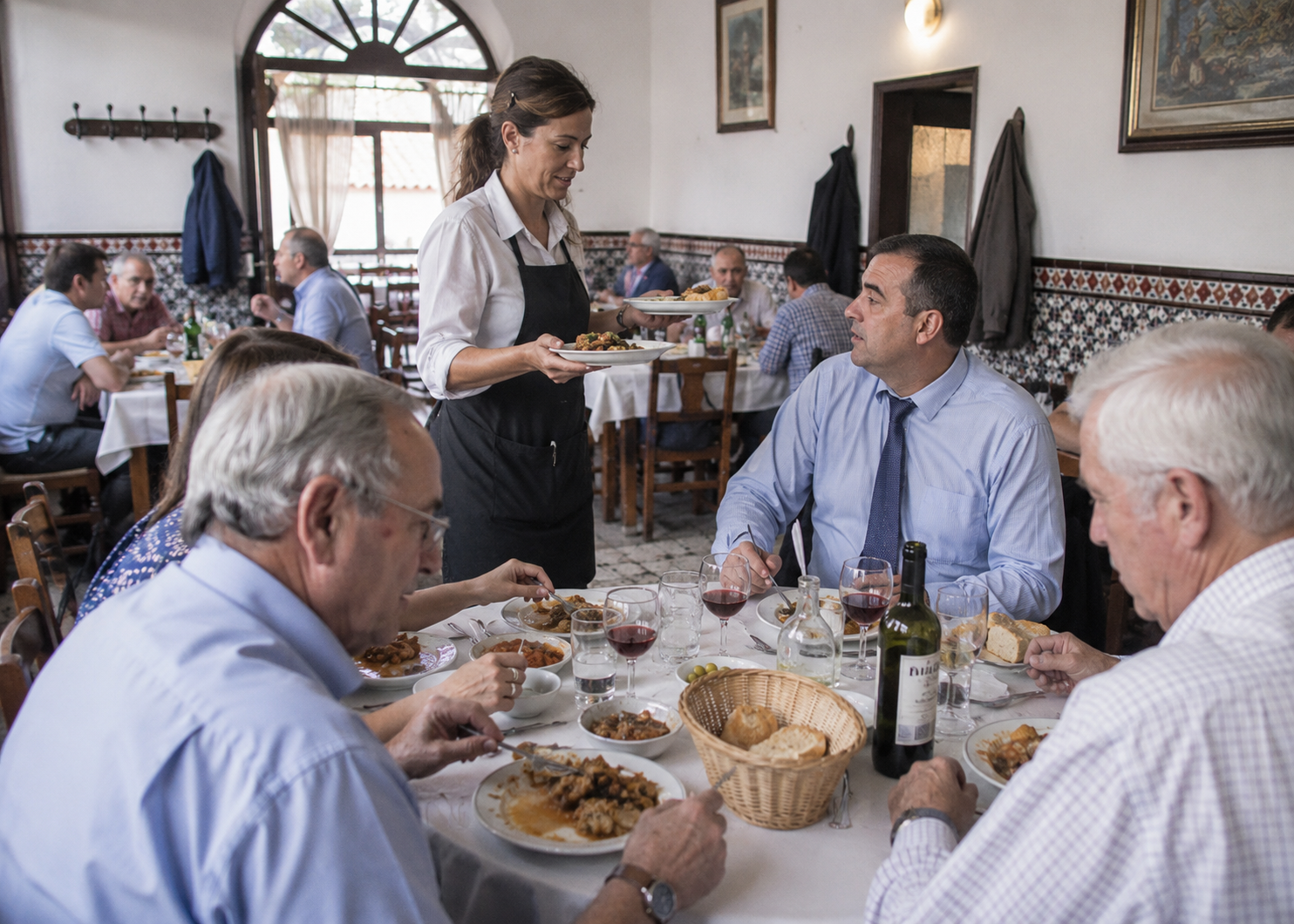
The menú del día is not a charming tradition that simply evolved. It began as a law, and a fairly authoritarian one, in the middle of the Franco dictatorship. Its architect was Manuel Fraga, then the regime’s Minister of Information and Tourism.
The context was a tourism boom. Spain went from receiving 2.9 million visitors in 1959 to 11.1 million in 1965, drawn by the government’s cheap-sun campaign under the slogan Spain is different. To protect those tourists from being overcharged and to standardise the experience, the government created the menú turístico, the tourist menu, by law in 1964. Every establishment serving food was obliged to offer a fixed menu of set composition: a first course, a second of meat, fish, or eggs with a garnish, a dessert, bread, and a quarter-litre of wine or another drink, displayed prominently and served promptly.
At first it failed. Waiters quietly steered customers toward the à la carte menu, claiming the tourist menu was inferior. So in 1965 the regime tightened the rules, forcing restaurants to build the menu from their actual à la carte dishes and setting maximum prices by category, from 50 pesetas at a fourth-tier restaurant up to 250 at a luxury one. A newspaper of the day was careful to note that this was not a menu for the poor, but a protected menu whose price the state fixed and whose contents the customer chose.
How It Stopped Being Mandatory
The rigid version did not last, and the menu changed names as the country changed. Over the years the menú turístico became the menú de la casa, the house menu, and finally the menú del día that everyone uses today. Each renaming loosened it a little from its bureaucratic origins.
The price controls went first. In 1981, six years after Franco’s death, the state stopped fixing the maximum prices, letting restaurants set their own. The underlying 1965 regulation, remarkably, stayed formally on the books far longer. It was not properly dismantled until the European Union‘s services directive forced Spain to review its tourism laws, and the obligation to offer a daily menu was repealed in 2010.
Today there is no single national law requiring it. Responsibility passed to the autonomous communities, and they diverge. A few, including Asturias, Aragón, and Navarra, still legally require lower-category restaurants to offer a daily menu. Others, such as Madrid and the Basque Country, have no specific regulation at all. Yet the menú del día did not vanish when the law releasing it arrived. By then it had stopped being a rule and become a habit, one restaurants and customers both wanted to keep.
Why It Survives Every Crisis
Here is the genuinely interesting part. A legal obligation created the menú del día, but the law is gone and the menu remains, thriving, in almost every town in Spain. It survives because it answers a permanent need rather than a temporary policy.
The menu is, at heart, an affordable hot lunch for a working person who cannot go home in the middle of the day. That need does not disappear in hard times. It intensifies. Through the deep recession that began in 2008, through the pandemic, and through the sharp inflation of recent years, the menú del día has been a fixed point of value, a way to eat properly without spending what a restaurant dinner costs. When money is tight, it becomes more important, not less.
Restaurants have their own reasons to keep it. The daily menu fills the dining room at lunch with reliable local trade, uses ingredients efficiently across a set number of dishes, and builds the loyal weekday custom that carries a small restaurant through lean seasons. It is a bargain for the diner and a steady engine for the kitchen at the same time, which is precisely why no economic crisis has ever managed to kill it. The format bends to the times, the price creeps up with inflation, but the institution holds.
There is a discipline in that pricing worth noting. Because the menú is judged so directly on value, restaurants raise its price slowly and reluctantly, absorbing some cost rises rather than scaring off the regulars who anchor their week around it. That restraint is why, even after several years of steep food inflation, a three-course menú for €14 or so still exists at all. The menu acts as a kind of public benchmark for what a fair lunch should cost, and kitchens cross it at their peril.
Who Sits Down for the Menú
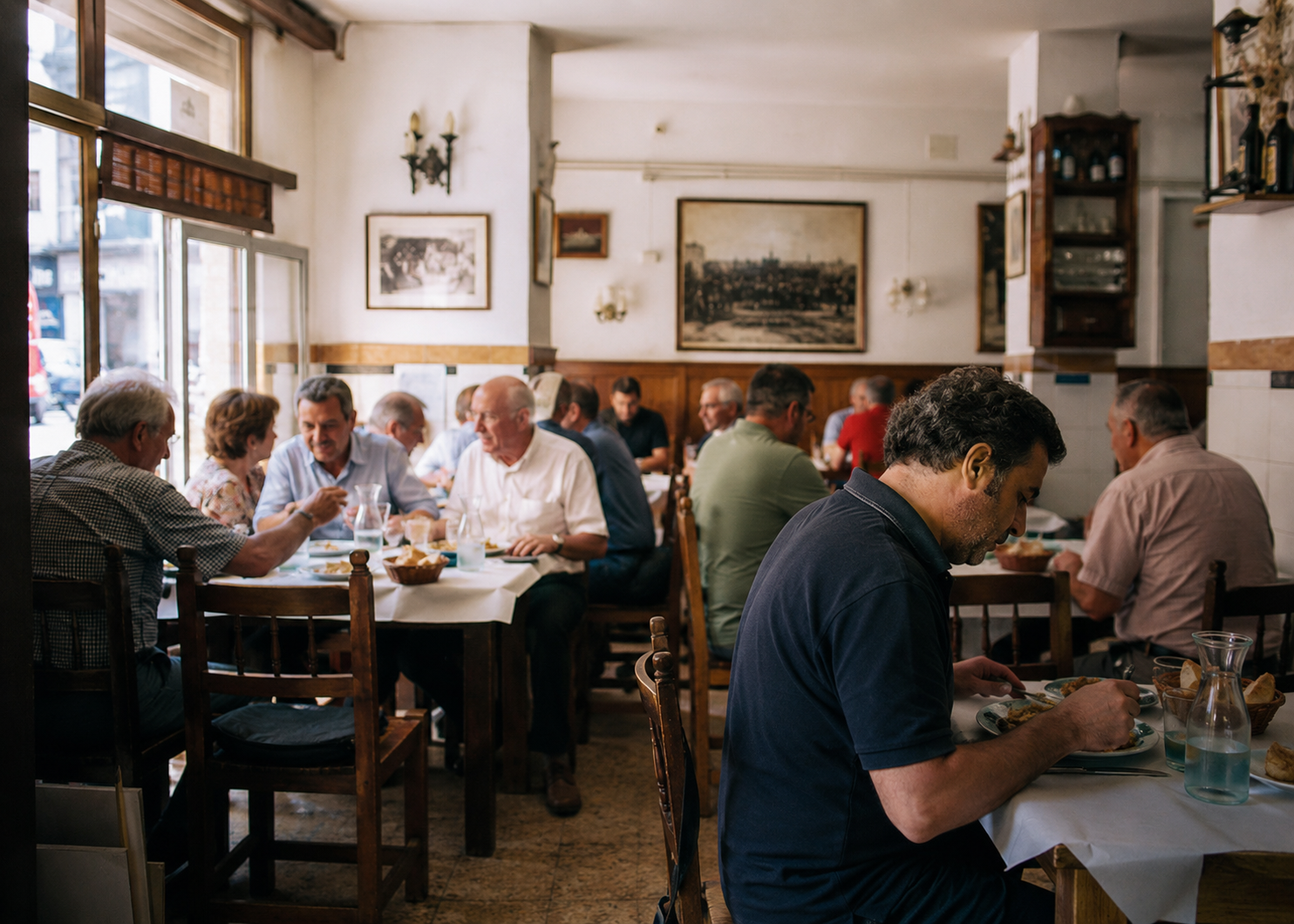
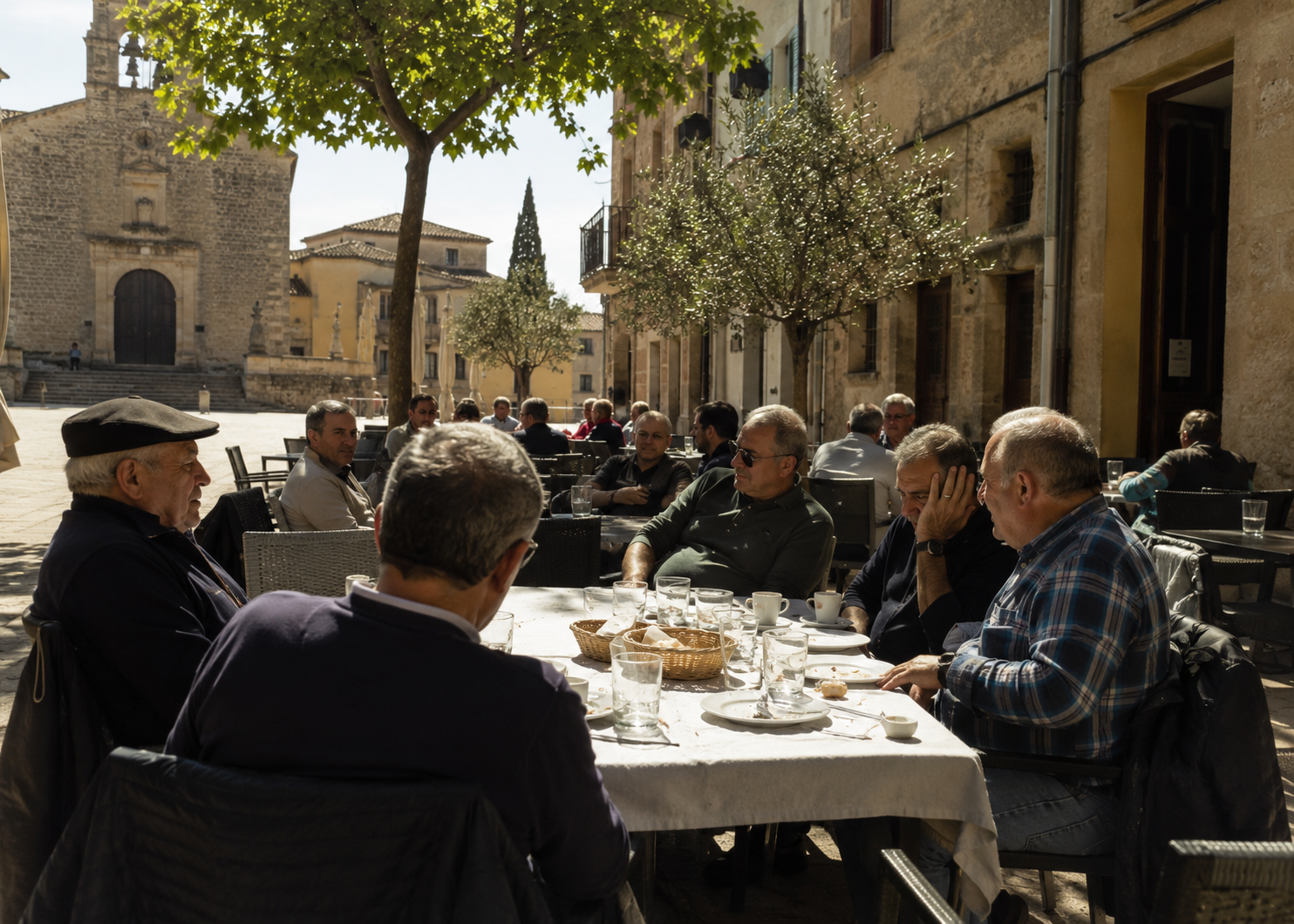
Part of what makes the menú del día endure is who eats it, which is very nearly everyone. It is one of the few genuinely classless meals in Spain, filling a single dining room across lines that usually keep people apart.
At a good menú restaurant at two in the afternoon you will find a table of construction workers in dusty boots beside a pair of lawyers, a lone pensioner who eats there every day, a couple of nurses on a break, and a student stretching a thin budget. They are all paying roughly the same modest price for roughly the same food, and nobody thinks twice about it. The menú is neither a downmarket option nor an upmarket one. It is simply lunch.
That breadth is central to its resilience. A format that served only tourists, or only the poor, or only office workers would rise and fall with the fortunes of that one group. The menú del día serves all of them at once, which means there is always demand for it somewhere, in good times and bad. It is woven into the working day of the entire country, and a habit that universal is very hard to dislodge.
The Unwritten Rules of Ordering
Getting the most from a menú del día means knowing its conventions, most of which are never posted anywhere. The first and most important: it is a lunch, served Monday to Friday, roughly from 1pm to 4pm, and it is generally not available at dinner or on weekends. Some places offer an evening or weekend version, but it is less common and usually pricier. The weekday-only nature is worth planning around, since a visitor hoping for the menú on a Saturday will often find only the pricier à la carte carta instead, and the kitchen running a different service entirely.
Timing rewards the informed. Arriving around 1:30pm hits the sweet spot, when the kitchen is at full capacity and the full range of first courses is still available. Turn up at three and the best options may have sold out. The menu is often chalked on a board or printed on a single sheet by the door rather than handed over as a glossy card, so it pays to look for it before sitting down.
A couple of small charges can surprise the unwary. In some restaurants, particularly in tourist areas, a pan y servicio or cubierto charge for bread and table service appears on the bill, a euro or two per person, and it is worth knowing it is often optional. The wine, by contrast, really is included. None of this is complicated, but a visitor who understands the rhythm orders like a local and eats far better for it.
Regional Variations Worth Knowing
The menú del día is a national format, but its content and price shift markedly from region to region, and knowing the local version is part of the pleasure. In much of the country, the €10 to €14 range holds, but the extremes are wide.
In the Basque Country, where food is close to a religion, the equivalent menú, sometimes called the menú txikia, tends to be more elaborate and more expensive, often €16 to €25, about $17 to $27. In rural Galicia and other less pressured areas, a full three-course menu can still be found for around €10, roughly $11. Madrid and Barcelona sit in the middle to upper part of the range, and the exact same €12 menu can buy a frozen disappointment in one place and a genuinely good meal in another.
There is even a folk tradition baked into the weekly menu. In many regions Thursday is paella day, a custom with several origin stories, from using up the week’s leftovers in a rice dish to a persistent legend that Franco liked to eat paella when he dined out on Thursdays, prompting Madrid restaurants to keep it ready. Whatever the truth, a diner who sees paella on a Thursday menú del día is touching a small, strange piece of Spanish culinary history.
How It Compares to the Rest of Europe
Set against how the rest of Europe handles a weekday lunch, the Spanish menú del día looks almost implausibly generous. Other countries have their own versions, but few match it for value.
France has the formule and the plat du jour, a fixed lunch deal that is often very good but usually two courses, dearer, and rarely including wine. Italy has its own working lunches, and much of northern Europe has largely surrendered the midday meal to the sad desk sandwich and the supermarket meal-deal. Against all of these, three cooked courses with bread and a glass of wine for €14, about $15, is an outlier, the kind of price that makes visiting Europeans quietly recalculate their own lunch habits.
The comparison also explains why the menú feels like such a discovery to tourists. Many arrive braced for European restaurant prices and find, in the unassuming place around the corner from the sights, a full hot lunch for less than they would spend on a fast-food combo at home. That gap between expectation and reality is exactly why the menú del día is the single best piece of budget advice anyone can hand a first-time visitor to Spain.
How to Spot a Good One
Not all daily menus are equal, and the difference between a great one and a sad one is easy to read once you know the signs. The single best indicator is the clientele. A menú restaurant full of local workers at 2pm, tradespeople and office staff eating quickly and happily, is telling you everything you need to know. An empty dining room at peak lunchtime, in a country this devoted to the menú, is itself a verdict.
Look at how the menu is presented and composed. A handwritten or freshly printed board that changes daily signals a kitchen cooking to what is fresh and seasonal, which is the whole point. A laminated menu that never changes, heavy on fried everything, points the other way. In the first course, a properly cooked dish of lentils or a real vegetable preparation beats an assembled salad, and in the second, fresh fish grilled to order beats a frozen fillet with frozen chips at the identical price.
The final tell is the wine and the room. A house wine chosen by someone who actually drinks it, and a dining room that is busy and unpretentious rather than empty and touristy, mark out the places worth returning to. Master this, and the menú del día stops being a mystery on a board by the door and becomes what it is for millions of Spaniards: the best and most reliable meal of the working day, for the price of a sandwich and a coffee somewhere less wise.

About the Author: Ruben, co-founder of Gamintraveler.com since 2014, is a seasoned traveler from Spain who has explored over 100 countries since 2009. Known for his extensive travel adventures across South America, Europe, the US, Australia, New Zealand, Asia, and Africa, Ruben combines his passion for adventurous yet sustainable living with his love for cycling, highlighted by his remarkable 5-month bicycle journey from Spain to Norway. He currently resides in Spain, where he continues sharing his travel experiences with his partner, Rachel, and their son, Han.