
A family of four checking into a Barcelona hotel for a week in the summer of 2026 can now expect a line on the final bill that did not sting nearly as much a year ago. The city’s tourist tax climbed again this spring, and for a stay in a good hotel the charge can add up to well over a hundred euros before anyone has bought a coffee. Meanwhile, a family doing the same in Seville or Madrid pays nothing at all.
That gap is the whole story of tourist taxes in Spain right now. There is no single national charge. Instead there is a patchwork of regional and local levies that rose sharply in some places for 2026 and remain entirely absent in others. Knowing which is which can shift a week’s budget by real money, so it pays to see the map clearly before booking.
How Spain’s Tourist Tax Actually Works

The first thing to understand is that Spain has no nationwide tourist tax, and probably never will in the near term. The power to charge visitors sits with the autonomous communities, the regional governments, and in some cases with individual town halls.
The result is that two hotels a few hours apart can treat the tax completely differently, because they answer to different authorities. Two regions run well-established systems, Catalonia and the Balearic Islands, while a scattering of individual cities have added their own smaller charges. Most of mainland Spain has nothing.
In practice the tax is charged per person and per night, and it is the guest who pays but the accommodation that collects it. Your hotel, apartment, or campsite adds the levy to the bill, usually at check-in or check-out, and is then legally responsible for handing the money to the regional authority. That is why the charge often appears as a separate line rather than being folded into the room rate quoted online, and why it can feel like a surprise even to travelers who researched their hotel carefully.
There is a practical reason it is collected on arrival rather than at booking. A booking platform shows the room rate, but the levy is a separate obligation the accommodation owes the region, so most properties simply gather it in cash or on a card at the desk. For a traveler, that means the true cost of a night can sit a few euros above the figure that sealed the reservation, multiplied by every guest and every night of the stay.
Barcelona Just Got a Lot More Expensive

The biggest change for 2026 is in Catalonia, and Barcelona sits at the sharp end of it. On the first of April 2026, the region raised its rates significantly, roughly doubling the base charge, and the city layered its own increase on top.
A stay in Barcelona now carries two separate charges stacked together. There is the regional Catalan levy, known as the IEET, which applies across the whole region and scales with the star rating of the accommodation. On top of that, and only within the city, Barcelona adds a municipal surcharge that rose again this year, reaching around €6.60, roughly $7.10, per person per night for 2026. Combine the two and a guest in a high-end Barcelona hotel can face a total in the region of €12, about $13, per person per night.
The city has not finished. The municipal surcharge is on a multi-year climb, set to keep rising toward €8 by 2029, and the regional framework carries a legislative ceiling of €15, about $16, per person per night for the most expensive stays by the end of the decade. Barcelona has openly framed this as a deliberate strategy to manage overtourism and fund housing, with a quarter of the revenue earmarked for the region’s housing policies. For visitors, the upshot is simple: Barcelona is now one of the most heavily taxed tourist cities in Europe, in the same conversation as Paris and Venice. Booking a lower hotel category is the one lever a visitor still controls, since the charge scales with star rating, so a three-star stay carries a materially smaller tax than a five-star one for the identical week.
The Rest of Catalonia Followed

Barcelona grabs the headlines, but the April increase applied across all of Catalonia, so the Costa Brava, the Costa Dorada, and cities like Girona and Tarragona saw their charges rise too.
Outside Barcelona, guests pay only the regional IEET, without the city surcharge, which keeps the totals lower. Even so, the base rates rose in steps: a 50% increase from the first of April 2026, with the full doubling scheduled to arrive on the first of April 2027. A stay in a four-star hotel on the Costa Brava now carries a regional charge of a few euros per person per night, still modest against Barcelona but noticeably higher than it was.
There is a further wrinkle worth watching. The new Catalan law gives any municipality in the region the power to add its own surcharge of up to €4, about $4.30, per night on top of the regional rate. Most towns outside Barcelona have not yet done so, but the option now exists, and it would not be a surprise to see popular coastal resorts adopt it in the coming years as the idea normalises. For 2026, though, the rule of thumb holds: Barcelona is expensive, and the rest of Catalonia is meaningfully cheaper.
Where the Money Goes, and Why
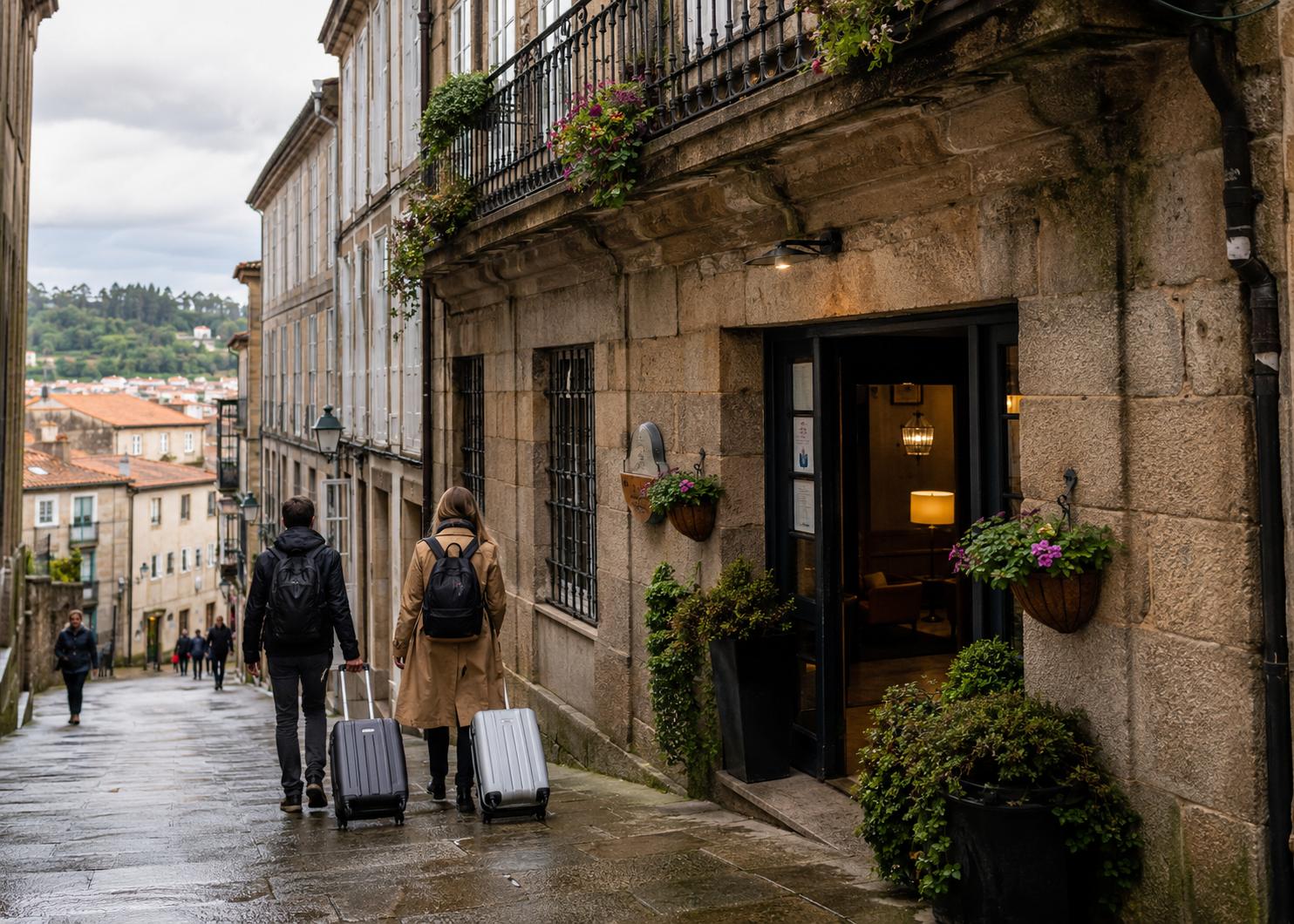
It is worth asking what these charges are actually for, because the answer shapes where they are heading. Spanish tourist taxes are pitched not as a simple revenue grab but as a tool for managing the strain that mass tourism puts on popular places.
The revenue is generally ring-fenced for tourism-related and public purposes rather than poured into a general budget. In Catalonia, a share of the money is now legally earmarked for housing policy, a direct response to residents who blame holiday lets and visitor demand for pushing rents beyond local reach. The rest funds tourism promotion and the upkeep of the infrastructure that visitors themselves lean on. The Balearic ecotax has long been justified on similar lines, financing environmental protection and the conservation of the very coastline and countryside that draw people in.
That framing explains the trajectory. As long as visitor numbers keep climbing and housing pressure stays acute, the political logic points toward higher charges in the busiest places, not lower ones. The taxes are also reasonably popular with residents, or at least far less unpopular than the tourism they are meant to temper, which gives local governments little reason to reverse course. For the traveler, the honest takeaway is that this year’s rates look more like a waypoint than a ceiling.
The Balearics Charge, but Held Steady
This is where a common assumption trips people up. The Balearic Islands, Mallorca, Menorca, Ibiza, and Formentera, have charged a tourist tax since 2016, but they did not raise it for the summer of 2026, despite plenty of headlines suggesting they might.
The Balearic sustainable tourism tax, often called the ecotax, ranges from about €1 to €4, roughly $1.10 to $4.30, per person per night, depending on the season and the category of accommodation. High season runs from May to October, low season covers the winter, and from the ninth night in the same establishment the rate drops by half. A 10% VAT is already included in those figures, and guests under 16 are exempt.
The regional government did propose a reform that would sharply raise rates during the peak months of June, July, and August, with talk of pushing the top rate as high as €6 per night. After fierce pushback from the hotel and travel industry in early 2026, those peak-season increases were left unconfirmed and may be delayed until 2027 or beyond. As of the middle of 2026, the long-standing €1 to €4 rates remain in force. So Mallorca charges a tax, and always has since 2016, but it is not among the places that raised the cost of a visit this year. That distinction matters for anyone weighing the islands against the Catalan coast on price alone, where the gap widened this spring.
The New Entrants

Beyond the two big systems, a handful of smaller places have introduced or are about to introduce their own charges, and this is where the map is changing fastest.
Galicia has become the most active new region. Santiago de Compostela began charging visitors from September 2025, at roughly €1 to €2.50, about $1.10 to $2.70, per night for a maximum of five nights. The nearby port city of Vigo is due to introduce a similar charge from October 2026, at around €0.80 to €2 per night. A Coruña has added its own comparable levy. None of these is large, but together they mark Galicia’s arrival as a taxing region.
The Canary Islands, long a tax-free exception, cracked open in a small but symbolic way. The town of Mogán, in Gran Canaria, became the first municipality in the archipelago to charge a daily tourist tax, at a token €0.15, about $0.16, per night. Separately, some Tenerife councils have begun charging eco-fees of €3 to €15 to enter major natural attractions such as Mount Teide, though those are entrance fees for specific sites rather than an overnight accommodation tax. Elsewhere, the historic city of Toledo has floated a charge aimed specifically at day-tripping tour-bus visitors, and the regional government of Asturias has discussed a tax that could apply from the summer of 2026.
Further north, the Basque Country has been formally exploring a regional tourist levy of its own, and the debate now resurfaces somewhere in Spain almost every season. The pattern is consistent. A city under heavy visitor pressure floats a modest per-night charge, the hotel sector objects, and after a delay some version of it usually arrives. Today’s short list of taxing cities is very unlikely to be next year’s.
The Cities Still Free
For all the new charges, the striking fact is how much of Spain still asks visitors for nothing at all. Whole regions and major cities remain entirely free of any general overnight tourist tax in 2026.
Madrid is the headline example. Spain’s capital, for all its tourism, applies no per-night tourist tax, a point the city has defended deliberately even as Barcelona leaned the other way. The entire region of Andalusia is likewise free of a general accommodation tax, which means Seville, Málaga, Córdoba, Granada, and the whole Costa del Sol add nothing to a hotel bill on this front. For a sun-and-culture holiday, southern Spain is quietly the cheaper choice on tax alone.
Valencia belongs on the free list too. The region flirted with introducing a tourist tax in recent years, but it is not charging one in 2026, leaving Valencia city and the wider Costa Blanca untaxed for now. Across most of the Canary Islands, aside from that single symbolic charge in Mogán, visitors also pay no overnight levy. The pattern is clear: the tax clusters in the most pressured, most visited destinations, Barcelona and the islands above all, while much of the rest of the country has chosen, at least for now, to keep the welcome free.
Small Print That Trips People Up
A few details separate travelers who budget accurately from those who get an unwelcome surprise at the desk, and they are worth knowing before you book.
In both Catalonia and the Balearics, children are exempt, under 16 in the Balearics and 16 and under in Catalonia, so a family’s bill is smaller than a simple headcount suggests. Catalonia caps the tax at seven nights per stay, meaning a longer holiday does not keep accruing the charge indefinitely, while the Balearics halve the rate from the ninth night onward. A 10% VAT applies on top of the Catalan figures and is already baked into the Balearic ones, which is why the totals quoted in different guides can look slightly inconsistent.
Two more points catch people out. The tax is almost always paid locally at the accommodation, not at the time of online booking, so it will not appear in the price a booking site first shows you. And the eco-fees now charged to enter places like Mount Teide are not a tourist tax at all but an entrance charge for a specific site, easy to confuse with one on a Canary Islands trip. Cruise passengers are a category of their own, with Barcelona charging day visitors a separate flat fee in the region of €6 to €9 per person regardless of how briefly they are ashore.
What to Actually Budget for 2026

Pulling it together, the practical picture for a summer 2026 trip is easy to hold in your head. Assume a real, rising charge in Barcelona, a smaller one elsewhere in Catalonia and across the Balearic Islands, a token or emerging charge in a few Galician and island cities, and nothing at all across most of the mainland.
For a couple spending a week in a mid-range Barcelona hotel, the tourist tax alone can now run to the price of a nice dinner, so it belongs in the budget rather than as an afterthought at check-out.
A rough way to estimate it is to multiply the per-night rate for your accommodation category by the number of guests and the number of nights, cap Catalonia at seven nights, and remember that children are usually exempt. In Barcelona that sum quickly reaches real money for a family, while almost everywhere else it stays in loose-change territory or disappears altogether. For the same couple in Seville, Madrid, or Valencia, it is simply not a line on the bill. None of these charges is large enough to reroute a holiday on its own, but they are large enough that a traveler comparing two cities should know which one adds the levy and which one waves them through. The map is still being drawn, and every year a few more names move from the free column into the paying one.

About the Author: Ruben, co-founder of Gamintraveler.com since 2014, is a seasoned traveler from Spain who has explored over 100 countries since 2009. Known for his extensive travel adventures across South America, Europe, the US, Australia, New Zealand, Asia, and Africa, Ruben combines his passion for adventurous yet sustainable living with his love for cycling, highlighted by his remarkable 5-month bicycle journey from Spain to Norway. He currently resides in Spain, where he continues sharing his travel experiences with his partner, Rachel, and their son, Han.