
Last updated on September 2nd, 2026 at 01:26 pm
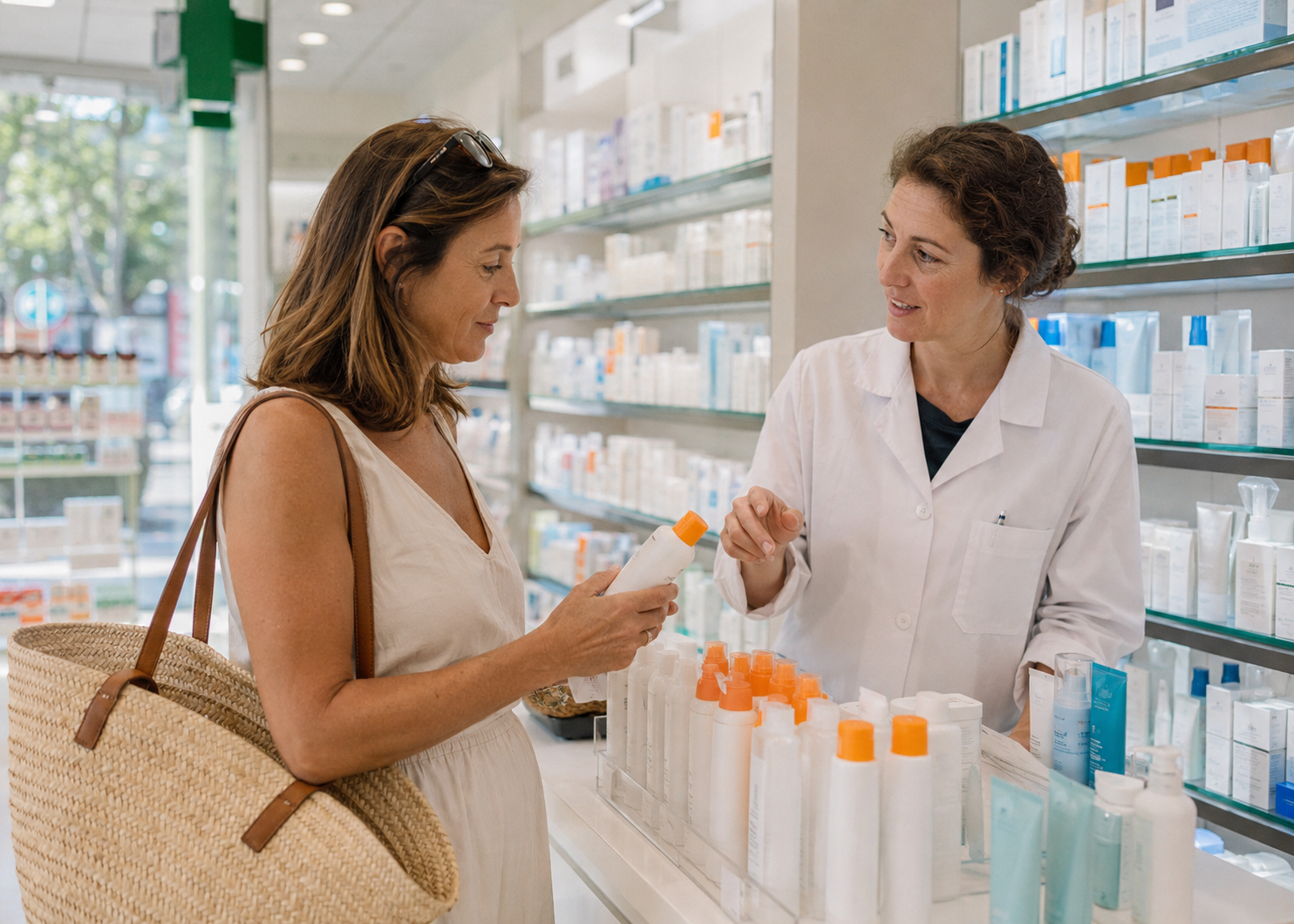
Stand near the sunscreen wall of any Spanish farmacia in July and you can watch the phenomenon in person. The wall itself is impressive, a floor-to-ceiling display of ISDIN, La Roche-Posay, Avène, and Vichy that gets prime real estate in even the smallest village pharmacy. The phenomenon is the American tourists in front of it, photographing labels, consulting screenshots from their dermatologists, and filling baskets with bottles to carry home in checked luggage.
The pharmacist participates fully, because in Spain sun protection is pharmacy-counter medicine. She will ask about skin type, recommend a texture, and hand over a bottle of ISDIN, the Barcelona-born brand that dominates Spanish dermatology, with the confidence of someone dispensing a prescription.
They are not buying souvenirs. They are buying sunscreen technology that, until a few weeks ago, the United States had never approved, and their dermatologists sent them.
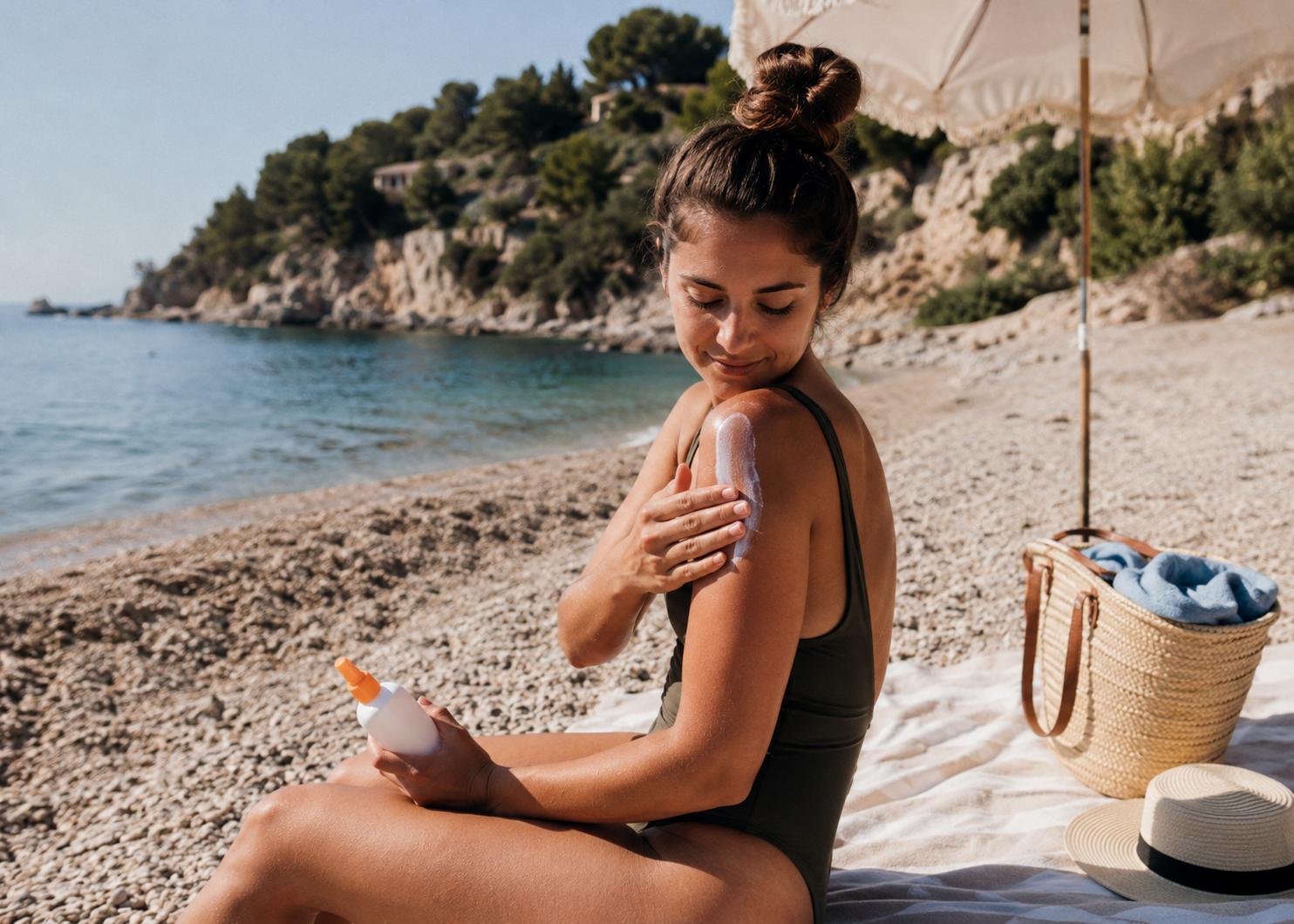
On June 9, 2026, the Food and Drug Administration approved bemotrizinol, sold in Europe as Tinosorb S, as an active sunscreen ingredient. It is the first new UV filter approved in the United States in over 25 years, and Europe has been using it since 1999. The approval is being celebrated as a breakthrough, and it is one. It is also the quietest possible admission that an entire generation of Americans wore worse sunscreen than the rest of the developed world, and that the doctors filling suitcases in French and Spanish pharmacies were right the whole time.
The Filter That Took Two Decades To Cross The Atlantic
The timeline deserves to be laid out plainly, because it is the story.
Bemotrizinol was developed in the late 1990s and cleared for use in Europe in 1999. The first application to bring it to the American market was filed in 2005. That application sat, and sat, through a regulatory process so slow it was eventually discontinued, until Congress created a new pathway and the manufacturer refiled in October 2024. Approval came in June 2026, with the final order taking effect on August 9, and the first American products containing it are expected in late 2026 or 2027.
Run the arithmetic and it is a 21-year wait for a single ingredient with, by the time of approval, a 27-year safety record across Europe, Australia, Canada, and most of Asia. During those years it became one of the most-used sunscreen filters on earth, the workhorse inside the elegant European and Korean formulas that built cult followings among Americans, while remaining, in the eyes of American regulation, an unapproved substance.
The people who noticed first were the people who treat skin cancer for a living. Which brings us to the shopping.
Why Your SPF Number Was Never The Problem
To understand what the dermatologists were chasing, you need one piece of sunscreen science, and it fits in a paragraph.
Ultraviolet light comes in two relevant kinds. UVB burns you, and it is what the SPF number measures. UVA goes deeper, driving photoaging, wrinkles, pigmentation, and a meaningful share of skin cancer risk, and it does its work silently, without a sunburn to warn you, through window glass and on cloudy days. A sunscreen can carry a heroic SPF number and still let UVA through, and for decades that described a large part of the American shelf.
The reason was the filter toolkit. The main UVA filter available to American formulators, avobenzone, approved back in the 1980s, has a known flaw: it is photounstable, degrading in the very sunlight it is meant to block unless it is propped up with stabilizing ingredients. European chemists solved this problem in the 1990s by inventing new molecules, big, photostable filters that cover UVA and UVB together and do not fall apart in the sun. Bemotrizinol was one of them. The FDA approved none of them, so American formulators spent 25 years engineering increasingly clever workarounds with the old toolkit while European labels simply used the better ingredients.
The daily-life consequence of the UVA gap is the part your mirror reports. Dermatologists estimate that the large majority of visible facial aging is driven by sun exposure rather than birthdays, and the UVA band is the workhorse of that damage. A population wearing high-SPF, weak-UVA sunscreen for decades was buying burn protection and calling it age protection, which is one under-discussed reason the well-sunscreened American and the well-sunscreened European were not actually wearing the same defense.
Europe also measures the gap. EU rules require a sunscreen’s UVA protection to be at least one third of its labeled SPF, marked with the circled UVA logo on the bottle, a standard the American system has no equivalent for. When a dermatologist says European sunscreen is better, this is what they mean: not the SPF number on the front, but the UVA performance behind it.
What The European Shelf Had That The American One Didn’t
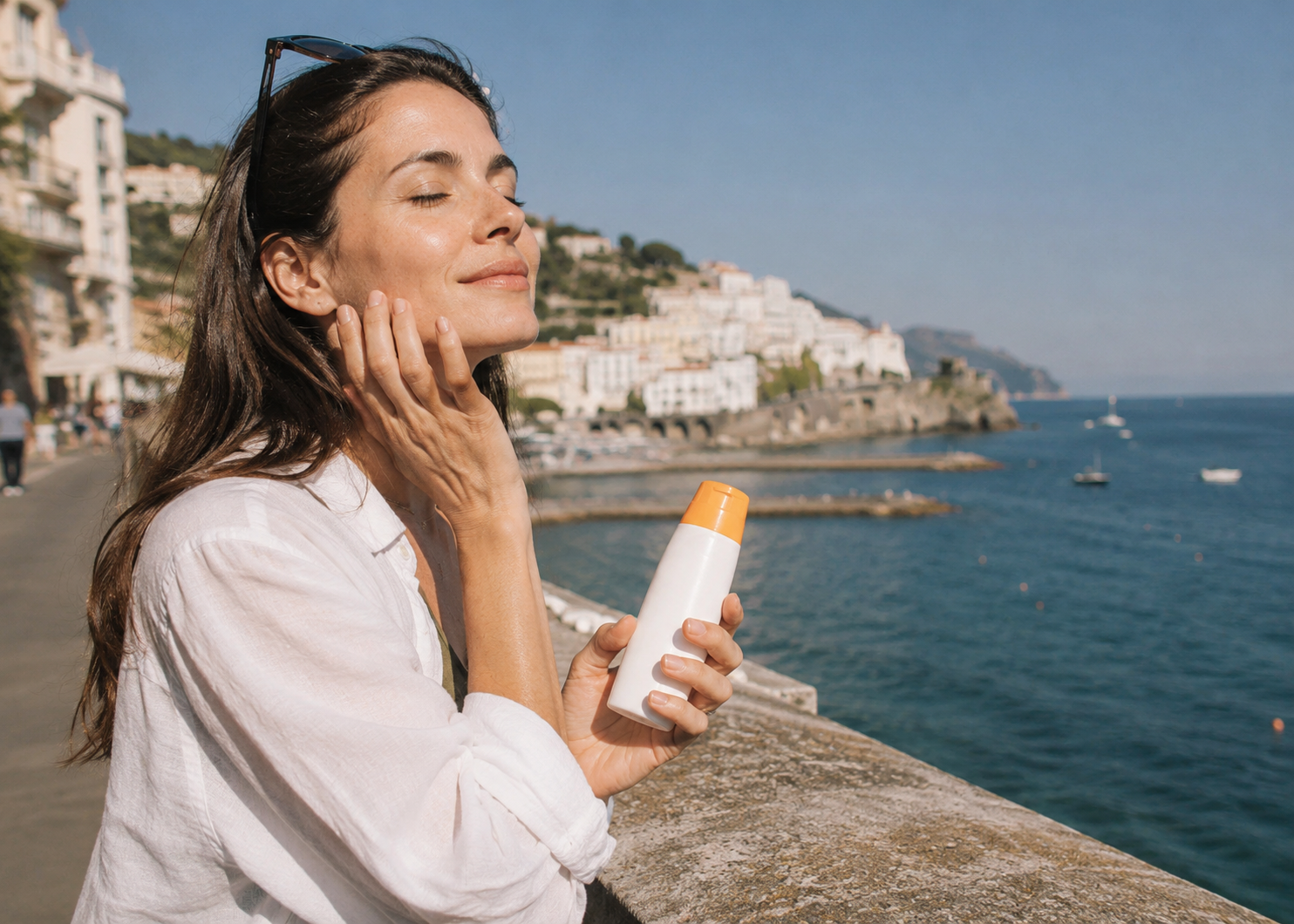
Bemotrizinol, the filter the FDA just approved, was not Europe’s only advantage. It was one item on a list.
Tinosorb M, its sibling, is a hybrid filter that absorbs, scatters, and reflects UV at once and remains unapproved in the United States. Mexoryl XL, L’Oréal’s photostable UVA filter, is unapproved. Uvinul A Plus and Uvinul T 150, mainstays of German and Asian formulas, are unapproved. A short version of the roster is that European regulators have cleared roughly twice as many UV filters as the FDA’s list, and the modern half of the profession’s favorites all sit on the European side.
The gap is still widening. In 2022, La Roche-Posay launched UVMune 400 in Europe, built on a genuinely new filter designed to catch the deepest ultraviolet-A wavelengths that older filters miss. It is on the shelf of the farmacia down the road from us for around €25 ($27). It is not on any American shelf, and under the current pace it belongs to some future decade of FDA decisions. The filter the United States just approved with fanfare is the technology of 1999. Europe is selling 2022.
The Suitcase Economy The Gap Created
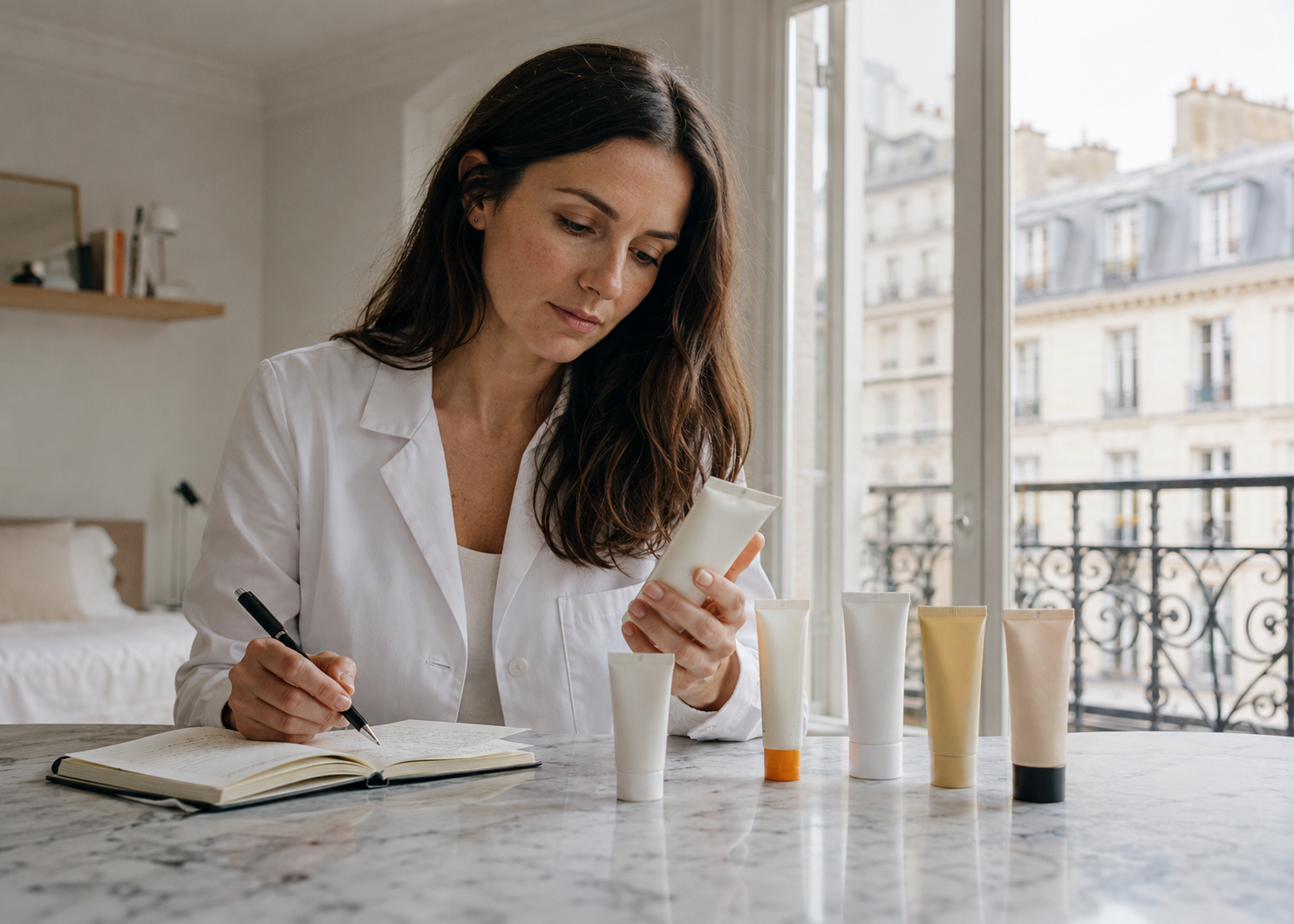
The toolkit then shrank further for reasons that had nothing to do with Washington. Hawaii banned oxybenzone and octinoxate, two of the old American standbys, over coral reef concerns starting in 2021, with other beach destinations following, which meant the filters the FDA did allow were increasingly the ones travelers could not use at the exact beaches sunscreen exists for. A smaller list, aging science, and now geography working against it.
Into that gap grew one of the stranger consumer behaviors in modern skincare: American dermatologists, the country’s most credentialed sun-safety authorities, quietly directing patients to foreign pharmacies.
The behavior long ago stopped being a whisper. It is standard content in American beauty journalism, a running theme in dermatologists’ own social media, and a fixture of the skincare forums where the phrase “bring back sunscreen” attaches itself to every European vacation thread.
The advice shows up everywhere once you look. Dermatologists interviewed in American magazines name La Roche-Posay Anthelios bought in France, ISDIN bought in Spain, and Asian sunscreens bought online as their personal picks. The French pharmacy haul became a full travel genre, with Parisian pharmacies like the famous discount warrens near Saint-Germain processing lines of American tourists buying sunscreen by the armful. Online, gray-market importers built businesses shipping European and Korean sunscreen to American customers who had read enough to want it, and travelers routinely pack an extra toiletry bag for the return leg, a practice common enough that nobody at the pharmacy counter blinks at a purchase of eight identical bottles.
The clearest evidence of the gap was what global brands did at the American border. Korean and European sunscreens sold in the United States are routinely reformulated for the American market, with Tinosorb-class filters stripped out and older approved ones substituted, so an American buying the US version of a beloved international sunscreen was often buying the same bottle with the best ingredient removed. The devoted learned to check the actives list and order the original.
The prices sharpen the irony. In a Spanish farmacia, ISDIN Fusion Water runs about €20 ($22) and a large Anthelios around €25, pharmacy-counter prices for formulas Americans pay $35 and up to import, when the same brands’ American versions, reformulated around the FDA’s older filter list, sell for less and protect worse. The customer was not paying extra for luxury. They were paying a markup to escape their own regulator’s shelf.
How A Sunscreen Becomes A Drug, And Why That Took 25 Years
The explanation for the gap is structural, and it is genuinely more boring than a conspiracy. The United States classifies sunscreen as an over-the-counter drug, which routes every new filter through a drug-grade evidence process. Europe classifies it as a cosmetic with its own safety dossier system, which has proven able to evaluate and approve new filters in years rather than decades.
The drug classification also explains the fear that froze the process. In 2019 and 2020, the FDA published its own studies showing that several of the old American chemical filters absorb into the bloodstream at levels above the agency’s threshold for requiring safety data, findings that did not show harm but demanded answers nobody had gathered in forty years of use. The result was a regulator newly nervous about the old filters and still unmoved on the new ones, which left American formulators squeezed from both ends of their shrunken toolkit.
The American process then effectively seized. No new filter cleared after 1999. A frustrated Congress passed the Sunscreen Innovation Act in 2014 specifically to speed things up, and it approved nothing. In 2019 the FDA went the other direction, proposing that only zinc oxide and titanium dioxide be considered fully settled as safe and effective while demanding new absorption data for the older chemical filters already on every American shelf. It took the pandemic-era CARES Act rebuilding the process again, a fresh industry application in 2024, and two more years of review to produce June’s single approval.
Meanwhile the stakes compounded. Skin cancer is the most common cancer in the United States, with current estimates that about one in five Americans will develop it, and every year of the filter gap was a year in which the tools for preventing the UVA share of that damage sat legally out of reach. That is the cost column of regulatory caution, and it is why the dermatologists stopped waiting and started writing shopping lists.
What June’s Approval Changes, And What It Doesn’t
The approval is real progress, and its limits deserve equal billing, because the headlines are already overselling it.
One filter was approved, not the list. The final order takes effect August 9, 2026, manufacturers must then formulate, stability-test, and produce, and the realistic arrival of bemotrizinol sunscreens on American shelves is late 2026 into 2027. Tinosorb M, Mexoryl XL, the Uvinuls, and the 2022-generation filters remain exactly where they were, unapproved, with no committed timeline. The approval also confirmed something useful along the way: the FDA’s review found bemotrizinol minimally absorbed at concentrations up to 6 percent, below the agency’s threshold of concern, which is the on-paper vindication of the ingredient Americans had been importing on faith.
There is also a price question waiting on the other side. European and Asian sunscreens are cheap partly because their markets are enormous and mature, while the first American bemotrizinol products will launch as premium novelties, and nobody should be surprised if the drugstore version of 1999’s filter debuts at a price the farmacia would find funny. Competition will fix that eventually. The suitcase fixes it now.
So the practical picture for the next year or two is unchanged. The European pharmacy wall remains a generation ahead, the suitcase remains rational, and the dermatologists’ shopping advice remains in force, now with a federal approval attached to its logic.
The Case For The FDA’s Caution, Stated Once

One section of fairness, because the story is not pure dysfunction. The FDA’s demand for American-grade absorption data is the same instinct that has protected Americans from genuinely bad actors before, some jurisdictions that approved filters quickly have lighter evidence standards, and the agency’s insistence on systemic-absorption studies produced real data the world now benefits from. It is also true that the American shelf was never unprotected: zinc oxide sunscreens, fully approved and available in every US drugstore, offer excellent broad-spectrum protection, and their main crime is cosmetic, the white cast and heavy feel that cause people to skip wearing them. The honest indictment is not that the FDA endangered anyone directly. It is that a 21-year review of a well-studied molecule made the pleasant, wearable version of protection a foreign import, and adherence is where sun protection is actually won and lost.
What To Do Between Now And 2027
The playbook, for anyone standing in front of a European pharmacy wall this summer or ordering from home, is short.
Look for the circled UVA logo on any European bottle, which certifies the one-third UVA standard. The names worth knowing are the ones on the dermatologists’ lists: La Roche-Posay Anthelios, including the UVMune 400 line, ISDIN Fusion Water, Avène, and the major Korean brands, most running €15 to €25 at a European pharmacy counter. Travelers bring these home for personal use as a matter of routine, and pharmacists in Spain and France are used to the bulk purchase, though anything bought online should come from a seller you would trust with any imported product, since gray-market goods carry gray-market handling.
One storage note earns its place after a Spanish summer: sunscreen is chemistry, and a bottle cooked in a beach bag or a hot car degrades ahead of its expiry date, so the stockpile from the pharmacy haul belongs in a cool cupboard and gets replaced yearly regardless of how the label reads.
And watch the American shelf in 2027, when the first bemotrizinol formulas arrive, because the labels to look for will say bemotrizinol, BEMT, or Tinosorb S in the active ingredients. The dermatologists will be easy to spot in the aisle. They will be the ones checking whether the American version finally matches the bottle they have been carrying home from Paris for twenty years.

About the Author: Ruben, co-founder of Gamintraveler.com since 2014, is a seasoned traveler from Spain who has explored over 100 countries since 2009. Known for his extensive travel adventures across South America, Europe, the US, Australia, New Zealand, Asia, and Africa, Ruben combines his passion for adventurous yet sustainable living with his love for cycling, highlighted by his remarkable 5-month bicycle journey from Spain to Norway. He currently resides in Spain, where he continues sharing his travel experiences with his partner, Rachel, and their son, Han.