
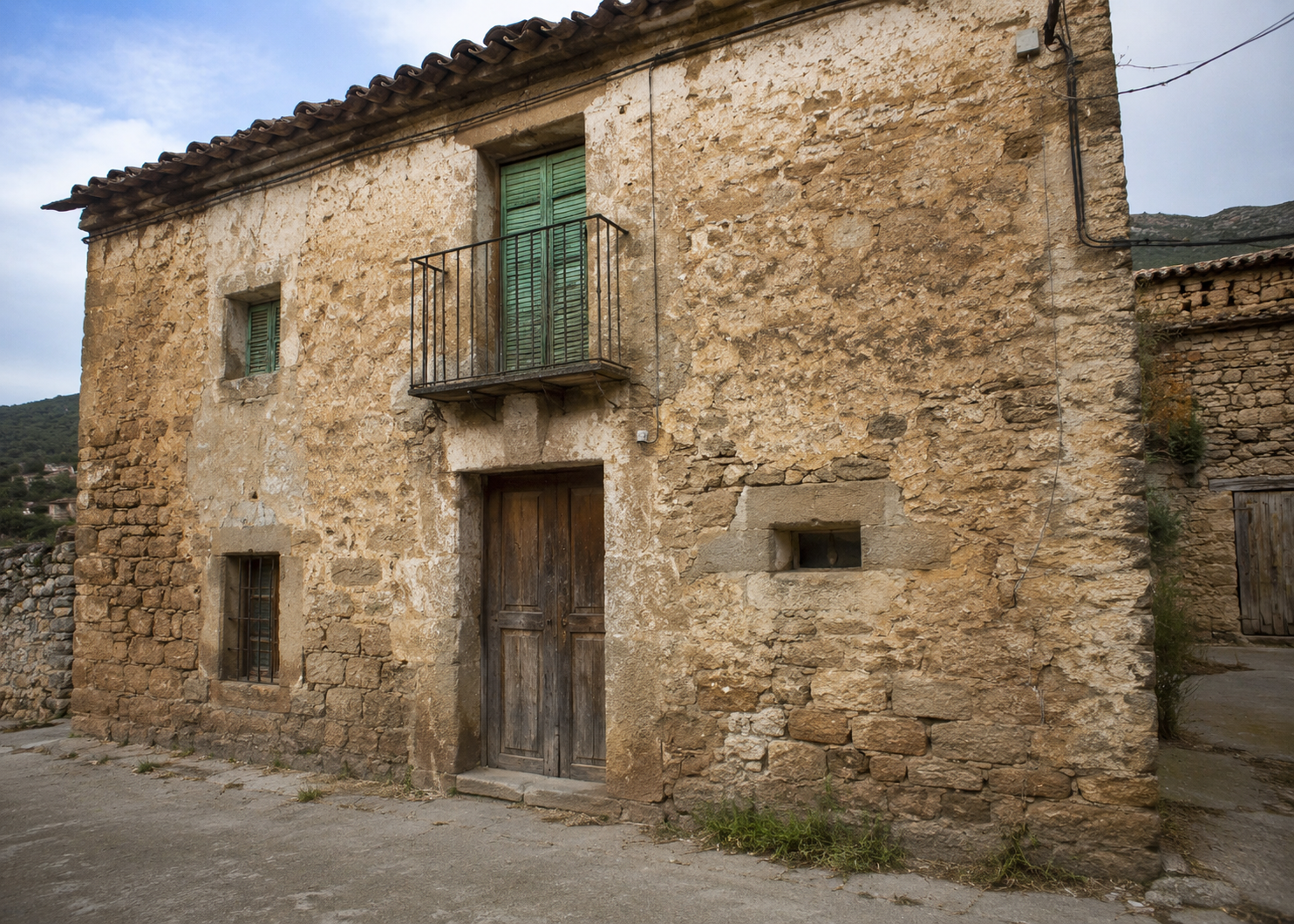
On Idealista, Spain’s biggest property site, a stone house in a Teruel village can be had for €8,000, about $8,600. It will be a ruin. For €19,000, roughly $20,500, you can find one with walls that still stand true and a roof that has not entirely given up. Either way you are buying into one of the strangest bargains in Western Europe, and the number on the listing is the smallest one you will deal with.
Rural Aragón, and the province of Teruel above all, is the heart of what Spaniards call la España vaciada, the emptied Spain. Whole villages have drained toward the cities across two generations, leaving sturdy old houses and almost nobody to live in them. The result is real estate priced like a used car. What follows is really about the second number, the one that turns a cheap listing into either a home or a mistake.
Why Rural Aragón Costs So Little
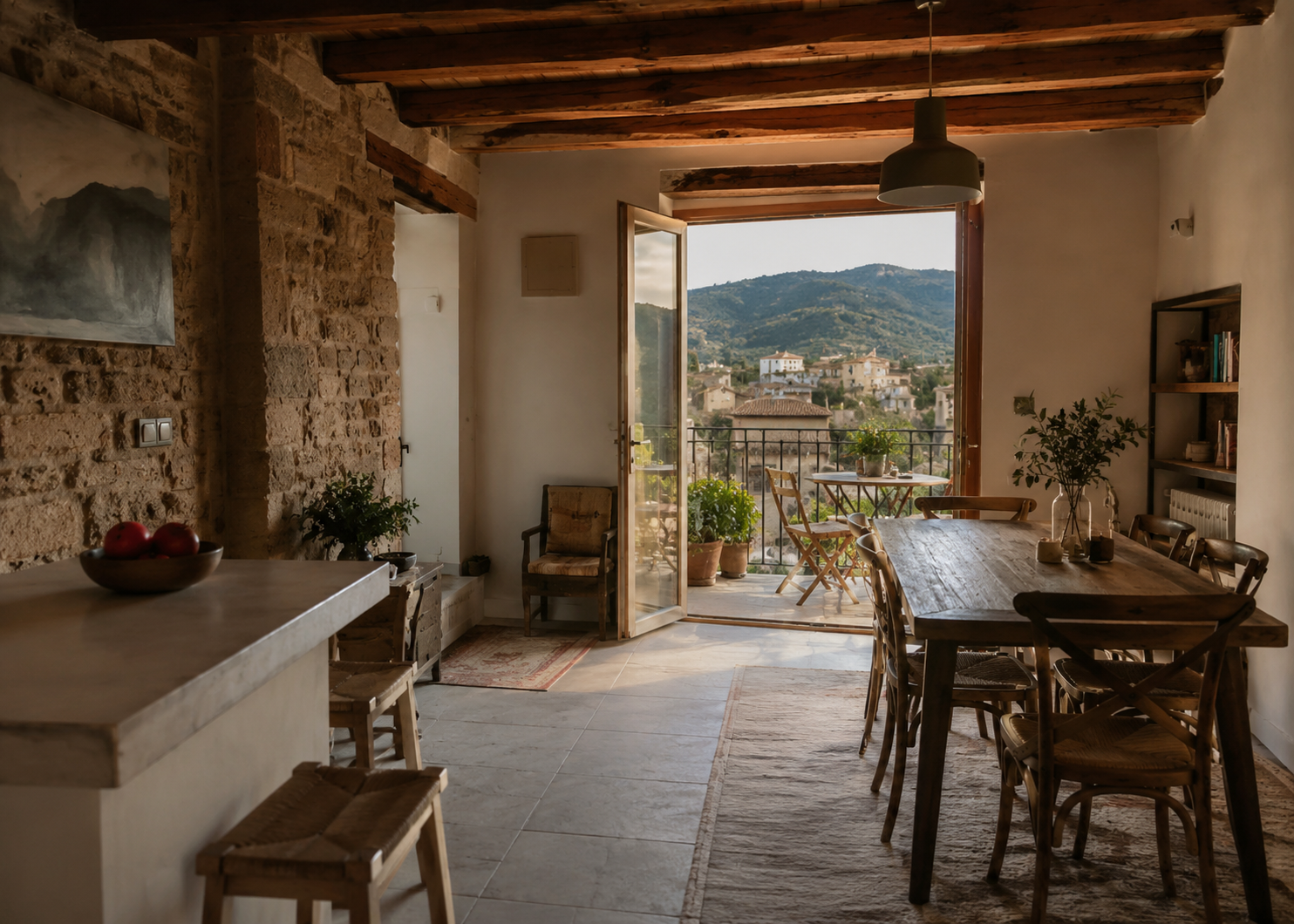
The cheapness is not a gimmick. It is demographics.
According to analysis of OECD data, roughly 84% of Spain’s territory is rural, yet only 16% of Spaniards live outside the cities. Between 2014 and 2023, while the national population grew, the rural population fell by more than 4%. Teruel became the emblem of the whole thing, so much so that a local protest movement, Teruel Existe, “Teruel Exists,” grew into an actual political party demanding the state remember the province at all.
The numbers behind it are stark. Teruel is the least densely populated province in mainland Spain, emptier than parts of Lapland, a fact locals repeat with a mix of pride and despair. Some rural areas have lost a third of their people since the 1950s. Drive an hour off the main roads and you pass shuttered schools, a bar that opens only in August, and streets where the newest car is twenty years old.
When young people leave a village for work and never come back, the houses do not vanish. They sit. Grandparents die, heirs scatter across Zaragoza and Barcelona and beyond, and a family stone house that nobody wants goes on the market for the price of a modest car, mostly to be rid of it. The emptying was less an accident than a century of the young following work to the cities and never finding a reason to return.
What €19,000 Actually Buys
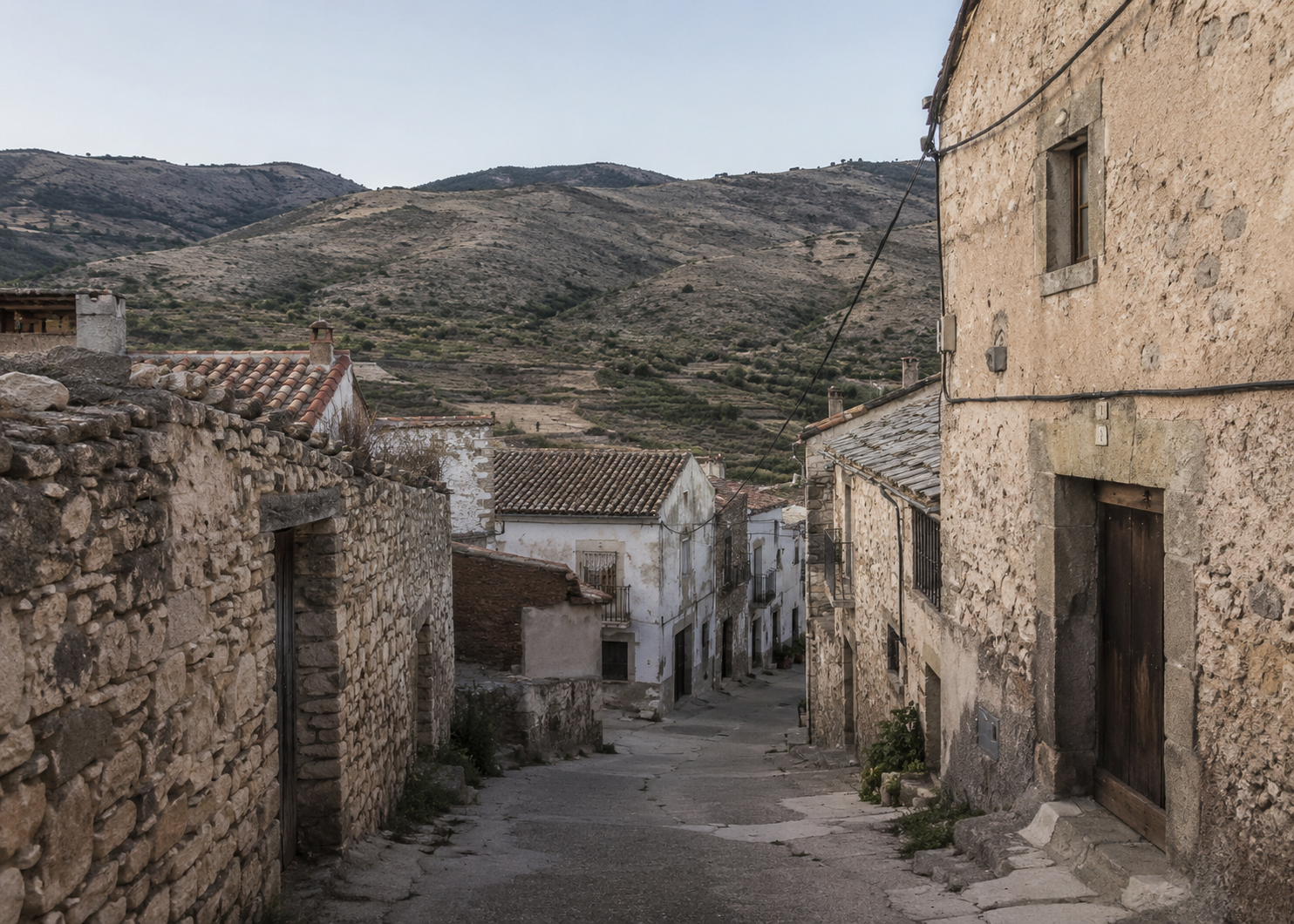
The listings lean on a phrase worth learning: para reformar, “to renovate.” It is doing enormous work.
A €19,000 house in a Teruel village is typically old, built of stone or adobe, two or three narrow floors, charming from the street and rough behind the door. Many have no heating beyond a fireplace, wiring that predates modern appliances where it exists at all, and plumbing that ranges from ancient to entirely absent. Some are sold openly as structures to gut or even demolish. The photographs flatter them. The staircases rarely do.
It is worth separating two listings that can sit at similar prices. One, described as “to modernize,” is usually habitable but dated, needing a kitchen, a bathroom, and rewiring, the kind of job you can live through. The other, sold “in ruins,” needs its roof, its floors, and sometimes its walls rebuilt before anyone can move in. The photos can look alike, and the renovation bills are worlds apart. Learning to read that gap from a listing’s wording and pictures, before a single euro changes hands, is most of the skill in buying well out here.
None of that makes them a bad buy. It makes them a project. The €19,000 is not the cost of a home. It is the cost of the right to start building one.
The Renovation Is the Real Number
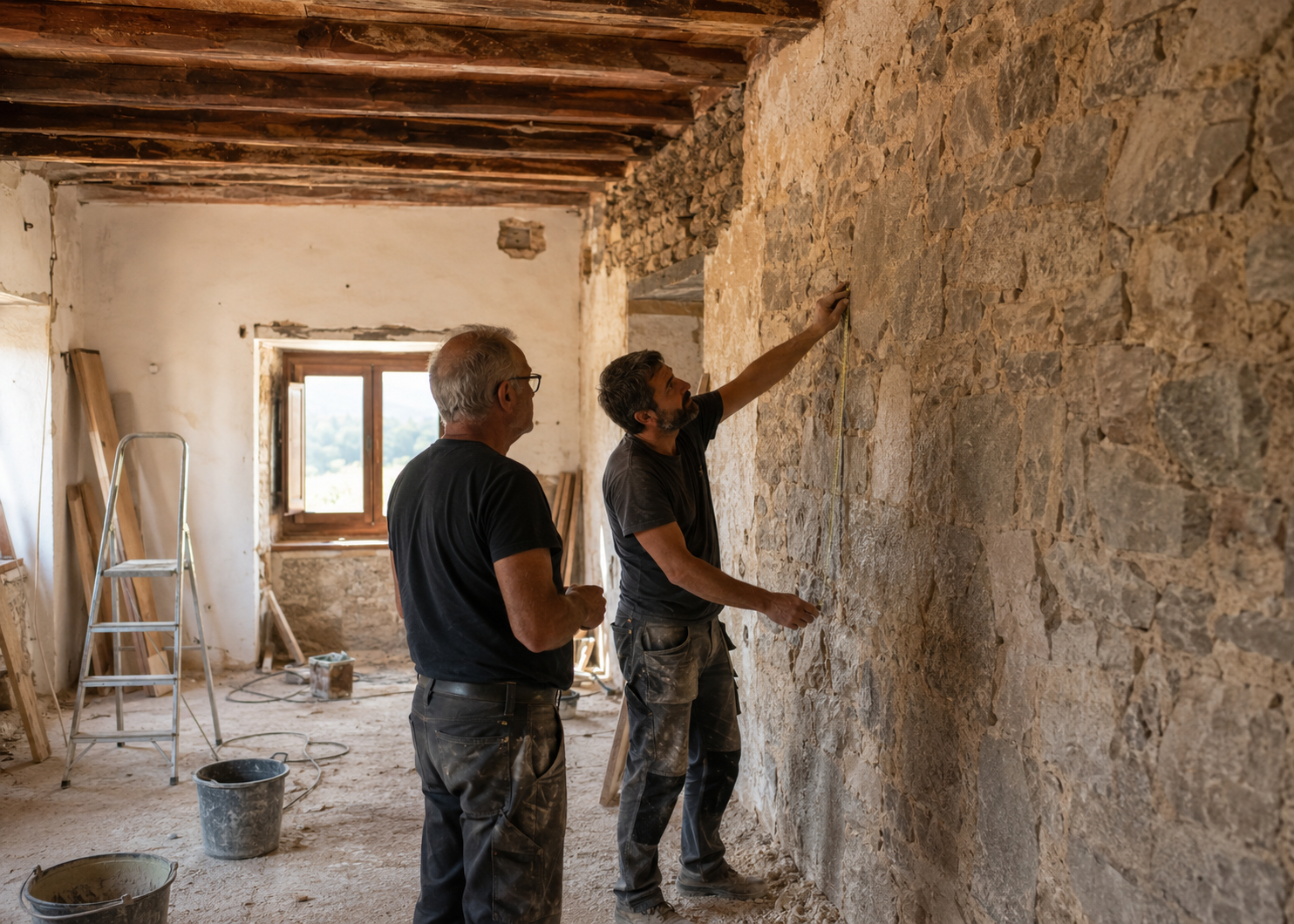
Here is the figure the headline never prints, and the one that decides the whole thing.
A serious renovation routinely costs several times the purchase price. Bringing a rural stone house up to a warm, dry, modern standard means some combination of a new roof, structural repairs, damp proofing, a full rewire, fresh plumbing, insulation, heating, windows, a kitchen, and a bathroom, often all at once. Depending on size and ambition, that work commonly lands between €40,000 and €100,000, roughly $43,000 to $108,000, and a large or badly decayed house can run past that.
The expensive parts are rarely the visible ones. A new roof on a stone house can swallow €15,000 to €25,000, about $16,000 to $27,000, on its own. Damp that has crept through half-metre walls for decades takes real money to stop. Add Spain’s VAT on building work, an architect’s fee that often runs a tenth of the project, and the cost of hauling materials and trades out to a remote village, and the total climbs in ways a coastal renovation never taught anyone.
Time is the other hidden cost. A full renovation of a rural house commonly takes one to three years, stretched by permit waits, scarce builders, and the surprises that appear once the walls come open. Many owners live in a single finished room while the rest of the house slowly catches up around them. Spreading the work across several years also spreads the spending, which is how a lot of owners afford it at all, one finished room at a time.
Do the arithmetic and the real story appears. A €19,000 purchase plus a €70,000 renovation is an €89,000 house, about $96,000, still a fine price for a restored stone home in Europe, but a very different figure from the one that first pulled you in.
The Permits Nobody Mentions
Rural renovation in Spain runs on paperwork that catches foreign buyers off guard, and skipping it is how projects go wrong.
Structural work needs a licencia de obra mayor, a major-works permit, which usually requires an architect’s project and sign-off in turn. To legally live in the finished house you generally need a cédula de habitabilidad, an occupancy certificate confirming the place meets habitability standards. And a great deal of rural land is classed as no urbanizable, non-developable, which can limit what you may rebuild or extend, sometimes severely. A municipal planning check before you buy is not optional, whatever the seller implies.
Foreign buyers are sometimes told a renovation needs no permit because “everyone just does it.” That advice is how houses end up unregistrable, uninsurable, and impossible to sell later. The paperwork is the dull backbone of actually owning the place. Budget for the architect, budget for the permits, read the zoning, and never take the seller’s word for what is allowed.
What the Careful Buyers Do
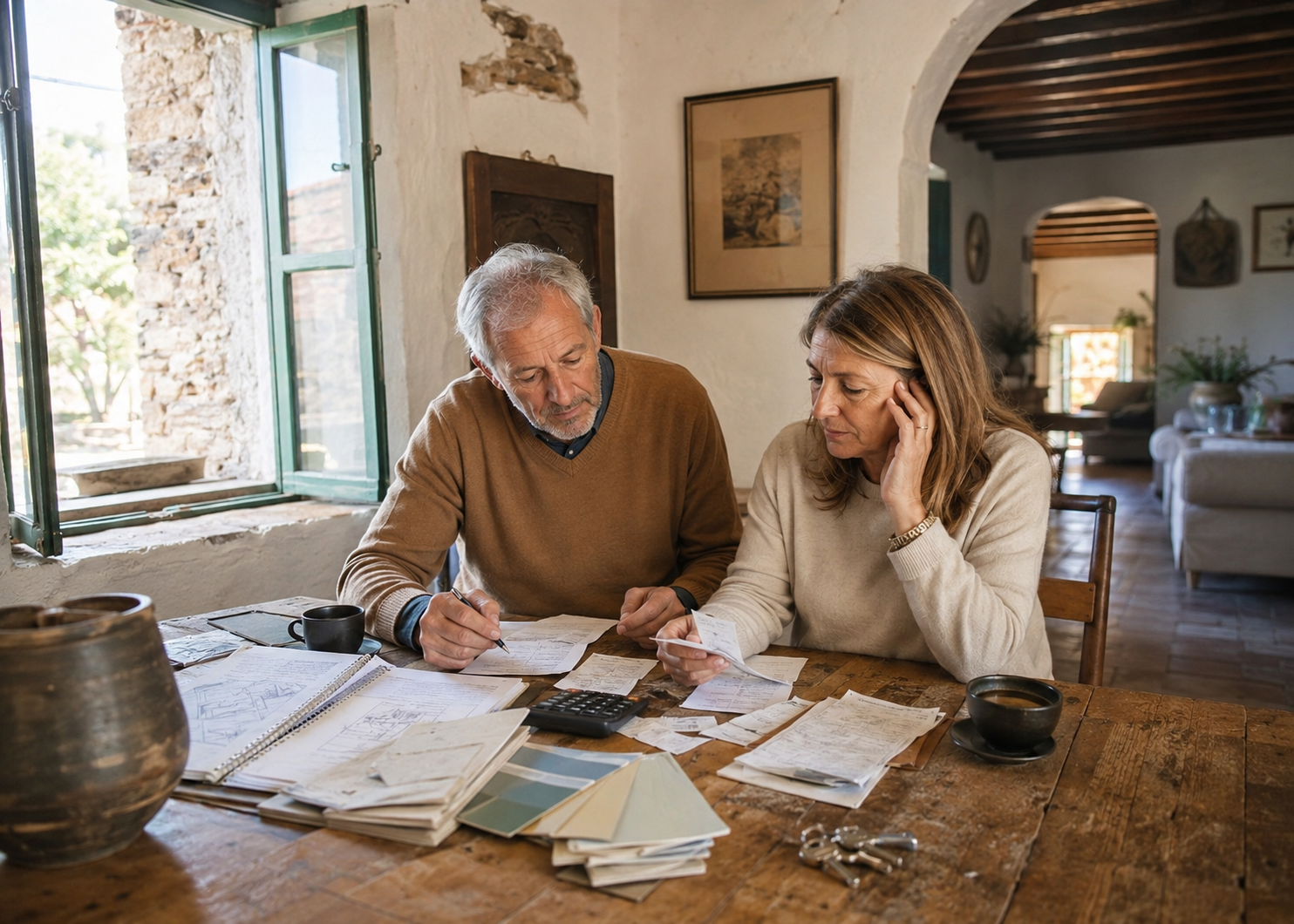
The people who come out of this happy tend to follow the same unglamorous playbook.
They buy the least ruined house they can afford, not the cheapest, since a sound roof and standing walls save far more than the few thousand euros shaved off the purchase. They get a builder’s estimate before signing and then pad it, because stone houses hide their worst surprises behind the plaster. Local tradespeople do the work, knowing how these buildings behave and costing a fraction of anyone imported from the coast, and the job gets phased so the house is dry and habitable first, with the handsome kitchen left for last.
Above all they treat the purchase price as a deposit on a multi-year commitment, not the price of a finished thing, and they budget the years as carefully as the euros.
The Grants That Actually Exist
The encouraging news is that Spain genuinely wants people back in these villages, and there is real money on the table, though less of it and messier than the headlines suggest.
Aragón offers tax deductions for people who relocate to municipalities under 3,000 residents, on the order of €1,200 a year. A national scheme has offered buyers under 35 direct aid of up to €10,800, roughly $11,650, toward a village home, provided the town has fewer than 10,000 people and the price stays under €120,000. Individual villages run their own deals, and Griegos, in Teruel, has offered cheap rent and a bonus for each school-age child to families who settle there. Other regions run parallel schemes, from Galicia to Castilla-La Mancha, and much of the funding traces back to national and EU rural-development money aimed squarely at reversing the exodus.
It is worth deflating one myth here. The symbolic “one-euro house” schemes that made headlines in Italy are largely not a Spanish thing, and where knockdown prices do exist they come bundled with strict commitments to renovate and stay. Projects like Holapueblo work specifically to match newcomers with empty villages and walk them through the process. The catch is that these incentives are conditional, modest, and rarely a simple cheque. They reward people genuinely committing to live there, not buyers chasing a quick flip.
The Village Comes With Rules of Its Own
A cheap house is only half the equation. The village is the other half, and it has a character no listing captures.
These are small, old, tight communities, sometimes a few dozen permanent residents, many of them elderly. A newcomer, especially a foreign one, arrives as a curiosity and earns a place slowly, through showing up, greeting people, and not treating the place as a film set. Get that right and a Spanish village will fold you in with a warmth that is hard to find in a city. Get it wrong and you spend years as the outsider who bought old Manuel’s house.
The practical side is starker. Many villages have no shop, no doctor, and a bus that comes twice a week if at all. Winters are long and quiet, and the population can halve when the summer people leave in September. For some buyers that emptiness is the entire appeal. For others it becomes a slow, isolating shock that no renovation budget can fix.
Who Should Take It On
Now the honest part, because a €19,000 house is not for everyone the idea charms.
It suits hands-on people with time, some construction sense, and a renovation budget sitting behind the purchase price, and it suits anyone who truly wants rural village life, with its silence, its tight community, and its long drive to a large hospital. It is a poor fit as a passive investment, since resale in a depopulating village is slow and the rental market thin, and it rewards patience measured in years rather than weekends, because rural builders are scarce and the good ones stay booked well ahead. It helps enormously to speak some Spanish, or to be genuinely willing to learn, because the builders, the town hall, and the neighbours will rarely meet you in English out here.
For the right person, the maths is lovely. A warm stone house in a quiet Spanish valley, restored slowly and lived in fully, for less than the cost of a small apartment almost anywhere else in Europe.
Before You Fall for a Photo
If a listing has already sunk its hooks into you, do three unglamorous things first. Visit in winter, when the house shows its damp and the village shows how empty it truly gets. Get a local builder to walk through and give a rough renovation figure before you buy, not after. And confirm with the town hall exactly what you are allowed to do to the place. A single morning at the ayuntamiento can save a year of regret later.
None of these steps is expensive, and each has saved buyers from a purchase that would have quietly ruined them. The €19,000 house is real, and it can be genuinely wonderful. It simply asks for its true price up front, and it rewards the buyers who insist on hearing that price before they sign.

About the Author: Ruben, co-founder of Gamintraveler.com since 2014, is a seasoned traveler from Spain who has explored over 100 countries since 2009. Known for his extensive travel adventures across South America, Europe, the US, Australia, New Zealand, Asia, and Africa, Ruben combines his passion for adventurous yet sustainable living with his love for cycling, highlighted by his remarkable 5-month bicycle journey from Spain to Norway. He currently resides in Spain, where he continues sharing his travel experiences with his partner, Rachel, and their son, Han.