
For years the conversation about retiring in Portugal has been dominated by three places, Lisbon, the Algarve, and to a lesser extent Porto, and all three have grown steadily more expensive as the world has discovered them. But there is another Portugal, the green and cooler north, the region of Braga and the Minho and the Douro valley, where the prices remain gentle, the summers are far more bearable than the baking south, and a growing number of expats priced out of Lisbon are quietly relocating. With a nest egg of around a hundred and forty-five thousand dollars, the north of Portugal offers something increasingly hard to find, a beautiful, affordable, temperate corner of Western Europe where that sum genuinely buys a foothold.
We want to be precise and honest about what that money does and does not do, since a hundred and forty-five thousand dollars is a meaningful sum but not a magic one, and the realities of cost, visa, and tax all matter. Here is the cooler northern region of Portugal that Lisbon expats are quietly moving to, what a hundred and forty-five thousand dollars realistically means there, and how to think about it honestly.
The Northern Portugal Most People Overlook

First it helps to understand the northern region itself, since it is genuinely different from the Portugal most people picture.
Northern Portugal is a green, lush, cooler region quite different from the hot dry south, centered on the handsome city of Porto and extending through the Minho province in the northwest, the elegant city of Braga, and the famous terraced vineyards of the Douro valley, a landscape of green hills, river valleys, and a milder, wetter, more temperate climate than the baking Algarve and interior. This is the Portugal that most foreign retirees overlook, drawn instead to the southern sun, but it offers a beautiful, green, temperate alternative, the cooler summers and the lush landscape and the lower prices making it increasingly attractive, especially as the southern heat intensifies. The north is a different and lovely Portugal, green and cool and affordable, hiding behind the famous south.
The cities and towns of the north are part of the appeal, Porto itself, a magnificent historic city on the Douro, smaller and cheaper than Lisbon but full of character, Braga, an elegant and notably affordable city less than an hour from Porto, the towns of the Minho and the Douro, and the green countryside between, all offering the northern combination of beauty, character, and affordability. These northern places offer real Portuguese life, handsome cities, charming towns, spectacular landscape, in a cooler climate and at lower prices than the famous south, the region rewarding the retiree willing to look past the southern sun to the green north. Understanding the northern region, its green temperate character, its handsome affordable cities, its lovely landscape, is understanding why it is increasingly drawing those who look beyond the obvious Portugal.
Why Lisbon Expats Are Moving North
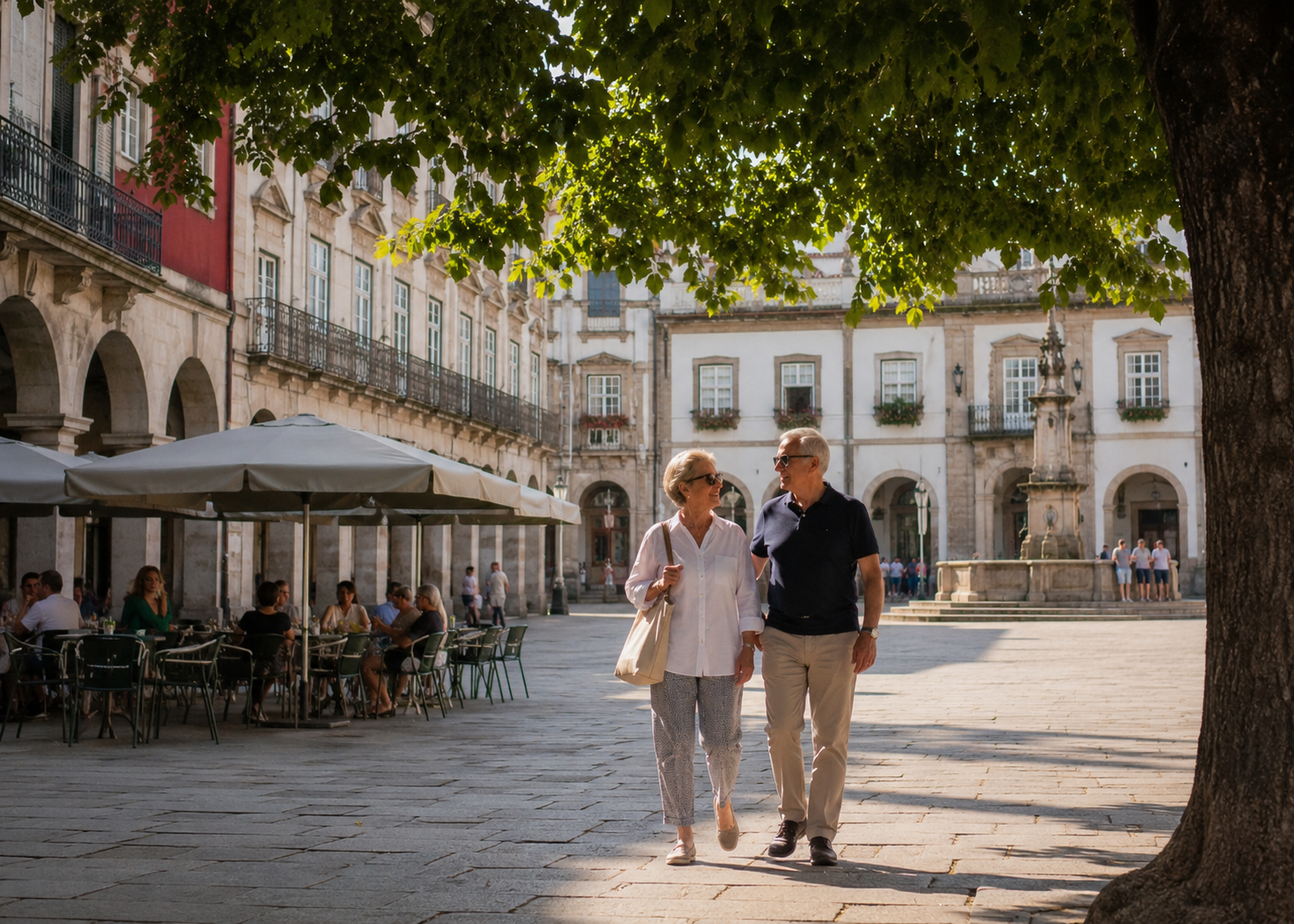
The trend of expats relocating from Lisbon to the north is real and worth understanding, since it reveals what the north offers.
Lisbon has grown markedly more expensive in recent years, its property prices and rents driven up by its popularity with expats, remote workers, and investors, to the point where the affordability that once drew people has eroded, the capital becoming pricey by Portuguese standards and straining the budgets of those who came for value. As a result, a growing number of expats and would-be retirees are looking beyond Lisbon to more affordable parts of Portugal, and the cooler green north, with its lower prices and its appealing cities like Porto and Braga, is a prime destination for this internal migration, the priced-out and the value-seeking heading north. So the move north is driven substantially by the erosion of Lisbon’s affordability, the north offering the value that the capital has lost.
The north offers these relocating expats much of what they wanted from Portugal at a lower price, the European life, the good healthcare, the culture and beauty, the relaxed pace, all available in the north for less than Lisbon now costs, with the bonus of the cooler more temperate climate. Porto in particular offers a similar urban European appeal to Lisbon at a notably lower cost, while Braga and the smaller northern places offer even greater affordability, so the expat moving north trades the capital’s prestige and heat for the north’s value and cooler climate, often a very good trade. The movement of expats from Lisbon to the north reflects the north’s real advantages, the lower cost and the cooler climate and the genuine appeal, so understanding why they are moving is understanding what makes the north such a smart choice for the value-conscious.
What $145,000 Realistically Means Here

Now the honest specifics of what a hundred and forty-five thousand dollars actually means in northern Portugal, since precision matters.
A hundred and forty-five thousand dollars is best understood as a property-buying budget or a substantial savings cushion rather than as an income, and as a property budget it goes meaningfully far in parts of the north, since while Porto city center has grown pricey, the smaller northern cities, towns, and especially the interior and rural areas offer real property at that level, with houses in the more affordable northern and interior areas findable in that range, though prices vary widely by exact location. So the sum can buy a modest home or apartment in the more affordable parts of the north, particularly outside the priciest center of Porto, in Braga, the smaller towns, or the countryside, giving the retiree a paid-for home, though in the most desirable spots it would stretch less far. As a property budget, a hundred and forty-five thousand dollars buys a real foothold in the affordable north, with the exact home depending heavily on location.
It is crucial to be clear, though, that a hundred and forty-five thousand dollars is a capital sum, not an income, so it does not by itself fund ongoing living costs indefinitely nor, importantly, does it satisfy the income requirement of the retirement visa, which is a separate matter requiring proof of steady monthly passive income. The sum can buy a home and provide a cushion, but the retiree still needs ongoing income for living costs and to meet the visa’s income threshold, so the hundred and forty-five thousand dollars is one piece of the picture, the property and cushion piece, not the whole financial basis of a retirement. Understanding that the sum is capital for property and security rather than income for living and visa qualification is essential to using it realistically, the money buying a foothold and a cushion but not, by itself, funding or qualifying the whole retirement.
The Cost Of Living In The North

Beyond the property, the ongoing cost of living in the north is part of what makes it attractive, and the figures are encouraging.
The cost of living in northern Portugal is among the lowest in Western Europe, particularly outside the center of Porto, with the smaller cities, towns, and rural areas offering very affordable daily life, the rents lower than Lisbon, the food cheap, the overall costs gentle, so that a retiree can live well on a modest budget. In Porto the cost of living runs meaningfully below Lisbon, perhaps a quarter to a third cheaper, while Braga and the smaller northern places are cheaper still, so the north offers genuine affordability, the daily costs of living comfortably below those of the famous expensive spots. The low cost of living means a modest income stretches far in the north, the retiree living a good European life without a large budget, the affordability being a central part of the region’s appeal.
To put rough numbers on it, a couple can generally live comfortably in the more affordable parts of Portugal, including much of the north, on something in the range of two thousand to three thousand dollars a month, with the cheaper northern towns and interior at the lower end, while a single person can live on considerably less, the exact figure depending on location and lifestyle. These are livable, modest, achievable budgets, far below what a comparable life would cost in the United States or in pricier parts of Europe, so the north offers a comfortable European retirement on a moderate income, the low cost of living being the foundation. Understanding the genuinely low cost of living in the north, the gentle rents and cheap daily life especially outside central Porto, is understanding how a moderate income funds a good life there, the affordability making the northern retirement work.
The Climate Advantage
The cooler climate of the north is a real and growing advantage, especially as the southern heat intensifies, and it is worth emphasizing.
The northern climate is notably cooler, greener, and more temperate than the hot dry south of Portugal, the Atlantic influence and the green landscape giving the north milder summers and a lusher environment, so that while the Algarve and the interior bake in the summer heat, the north stays more comfortable, its summers far more bearable. This climate advantage is increasingly valuable as European summers intensify and the southern heat becomes more extreme, the cooler north offering a refuge from the punishing summers that increasingly afflict the south, so the retiree who chooses the north gains not just affordability but a more comfortable climate. The cooler greener north is, in the age of intensifying heat, an increasingly wise choice, its temperate summers a real advantage over the baking south.
The trade-off, to be honest, is that the cooler greener north is also wetter and cloudier than the sunny south, the same Atlantic influence that keeps it cool and green bringing more rain, so the retiree who wants guaranteed sunshine should know the north is less reliably sunny than the south, the climate milder and greener but also wetter. For many, though, this is a worthwhile trade, the comfortable temperate summers and the green beauty being worth the greater rain, especially for those who find the southern heat oppressive, so the northern climate, cooler and greener if wetter, suits those who prefer the temperate to the scorching. Understanding the climate advantage of the north, its cooler more bearable summers, along with the honest trade-off of more rain, is understanding another real reason the north appeals, especially to those who feel the heat.
The Visa And Tax Realities To Know

No honest account is complete without the visa and tax realities, since these shape the practical feasibility of the northern retirement.
On the visa, the American retiree will generally need Portugal’s D7 passive income visa to reside long-term, which requires proof of steady passive income around the Portuguese minimum wage level, roughly eight hundred to nine hundred euros a month for an individual, a separate requirement from the hundred and forty-five thousand dollars of capital, so the retiree needs both the qualifying income and, if buying, the property funds. This means the northern retirement requires not just the capital for a home but the ongoing passive income to satisfy the visa and fund daily life, the two financial pieces, the income for the visa and living and the capital for property and cushion, both being necessary. So the visa reality is that steady passive income, separate from the capital sum, is required, an essential piece of the practical picture.
On tax, an important recent change matters, since Portugal’s once-famous NHR tax regime, which gave new foreign residents very favorable tax treatment on foreign income including pensions, has been closed to new applicants and replaced with a far narrower scheme that most retirees do not qualify for, so new arrivals now generally face standard Portuguese income tax on much of their income. There is an important exception, since US Social Security and US government pensions are generally protected from Portuguese tax under the treaty, but other retirement income now faces standard Portuguese tax for new arrivals, so the tax picture is less favorable than it was during the NHR era, a reality the prospective retiree must factor in. Understanding the visa requirement of separate passive income and the changed, less favorable tax situation with NHR gone is essential to planning the northern retirement realistically, these practical realities shaping what the move actually involves financially.
Is The Northern Portugal Retirement Right For You

Pulling it together, the honest question is whether this northern Portuguese retirement suits you, and the answer depends on your situation and preferences.
The northern Portugal retirement suits the person who wants an affordable, beautiful, temperate European life, who has both a capital sum like the hundred and forty-five thousand dollars for property and a steady passive income to qualify for the visa and fund living, and who prefers the cooler greener north to the hot sunny south, accepting the greater rain for the milder summers and lower prices. If that describes you, the north offers a wonderful and increasingly smart choice, a green temperate affordable corner of Western Europe where your capital buys a home and your modest income funds a good life, away from the heat and the higher prices of the famous south. The north rewards the value-conscious, heat-averse, beauty-loving retiree with both the means and the right preferences.
If your situation or preferences differ, the north may suit you less, since the person who lacks the qualifying income, who craves guaranteed sunshine, or who wants the famous southern expat scene might find the north a poorer fit, so honest self-assessment matters. The north is not for everyone, but for the right person, the one with the capital and the income, the preference for cool green affordability over hot sunny prestige, it is a genuinely excellent and underappreciated choice, the quiet northern alternative to the crowded expensive south. Consider the north honestly against your means and preferences, and if it fits, it offers one of the best-value temperate European retirements available, the cooler greener affordable Portugal that the priced-out Lisbon expats have already discovered.

About the Author: Ruben, co-founder of Gamintraveler.com since 2014, is a seasoned traveler from Spain who has explored over 100 countries since 2009. Known for his extensive travel adventures across South America, Europe, the US, Australia, New Zealand, Asia, and Africa, Ruben combines his passion for adventurous yet sustainable living with his love for cycling, highlighted by his remarkable 5-month bicycle journey from Spain to Norway. He currently resides in Spain, where he continues sharing his travel experiences with his partner, Rachel, and their son, Han.