
The light comes early to the Algarve in summer, and by seven the sky over the Atlantic is already a pale gold, the air still cool with the night before the heat arrives. In a low white house on a hill above one of the smaller towns of Portugal’s southern coast, an American couple in their sixties are beginning a day that looks almost nothing like the days they lived for thirty years before they came here. This is a portrait of one such morning, drawn from the real rhythm of the many American retirees who have made this coast their home, a composite of a life rather than one particular couple, but true to the shape of the mornings they actually live.
We tell it this way, as a morning in a life, because the abstractions of retirement abroad, the costs and the visas and the comparisons, can obscure the thing that actually matters, which is what the days feel like. And the days, for the Americans who have retired well to the Algarve, feel like this. Here is a summer morning in the life of an American couple who retired to the Algarve, hour by hour, as a window into what this life actually is.
Before Seven, The Quiet
The morning begins early and quiet, in the cool before the heat, and the quiet itself is part of what they came for.
They wake early, earlier than they did in their working lives, not to an alarm but to the light and the birds, the summer sun rising over the Atlantic and filling the white room with a pale gold glow, the air still cool from the night. There is no rush, no commute, no schedule pressing on them, just the slow waking into a morning that belongs entirely to them, the first and most fundamental luxury of the retired life abroad, the ownership of one’s own time. They lie for a while in the cool quiet, then rise without hurry, the morning unfolding at its own pace, the absence of pressure being the very thing that the working life never allowed and the retired Algarve life restores.
This early quiet is precious to them, the cool still hour before the heat and the day, and they have learned to treasure it, the peace of the early Algarve morning being one of the unexpected gifts of the life. In their American working years the early morning was a time of stress and rush, the alarm and the commute and the day’s demands looming, but here it is a time of peace, the slow cool quiet beginning to a day that asks nothing of them, the transformation of the morning from stress to peace being one of the deepest changes the move has brought. They begin the day in quiet ownership of their own time, and that quiet is the foundation of everything that follows, the peace that the move was, in large part, for.
The Coffee On The Terrace
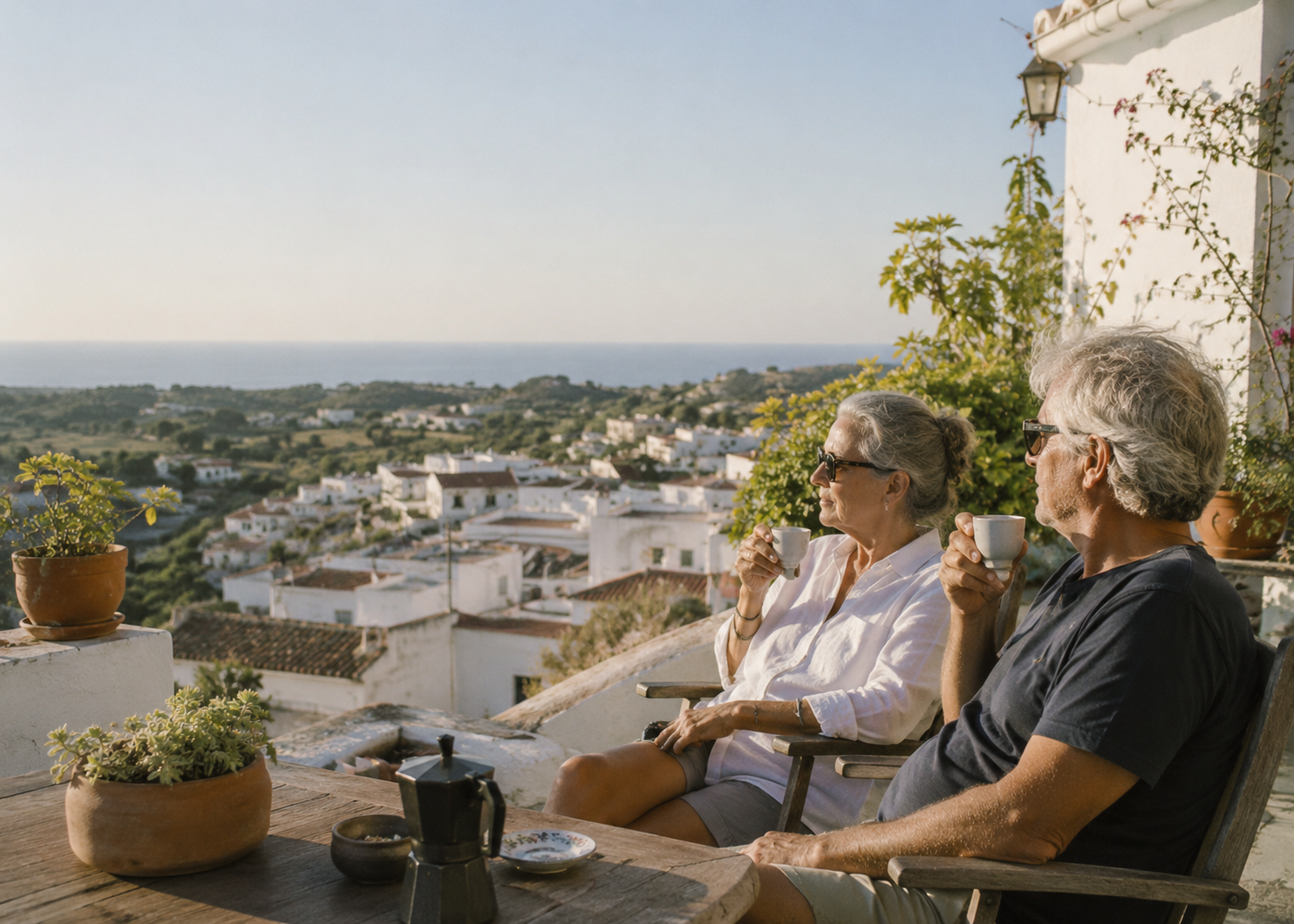
The first ritual of the day is coffee on the terrace, taken slowly, looking out at the coast, and it sets the tone for everything.
They make coffee, good strong Portuguese coffee, and take it out to the terrace, where they sit looking out over the white town and the hills and, in the distance, the blue Atlantic, the morning still cool, the light golden, the day ahead entirely open. This coffee on the terrace is the central ritual of the morning, taken slowly, without hurry, the two of them sitting together in the cool gold light, watching the coast wake, talking idly or simply being quiet together, the unhurried shared coffee being the heart of the morning and a small daily emblem of the whole life. It is the kind of thing they never had time for in America, the slow shared morning coffee with a view and no schedule, and it has become one of the most treasured rituals of their days.
The view is part of it, the white town and the hills and the distant sea, the beauty of the Algarve laid out before them each morning, a daily gift that they have not stopped appreciating even after years, the loveliness of the place being a constant quiet pleasure. But more than the view it is the unhurried togetherness, the two of them with their coffee in the cool morning, no rush, no demands, just the shared peace of the morning, that makes the ritual precious, the slow coffee being really about the time and the togetherness and the peace as much as the coffee or the view. They linger over it, the morning coffee on the terrace, in no hurry to move on, the lingering itself being the point, the luxury of the slow shared unhurried morning that the Algarve life has given them.
The Walk Down To The Town
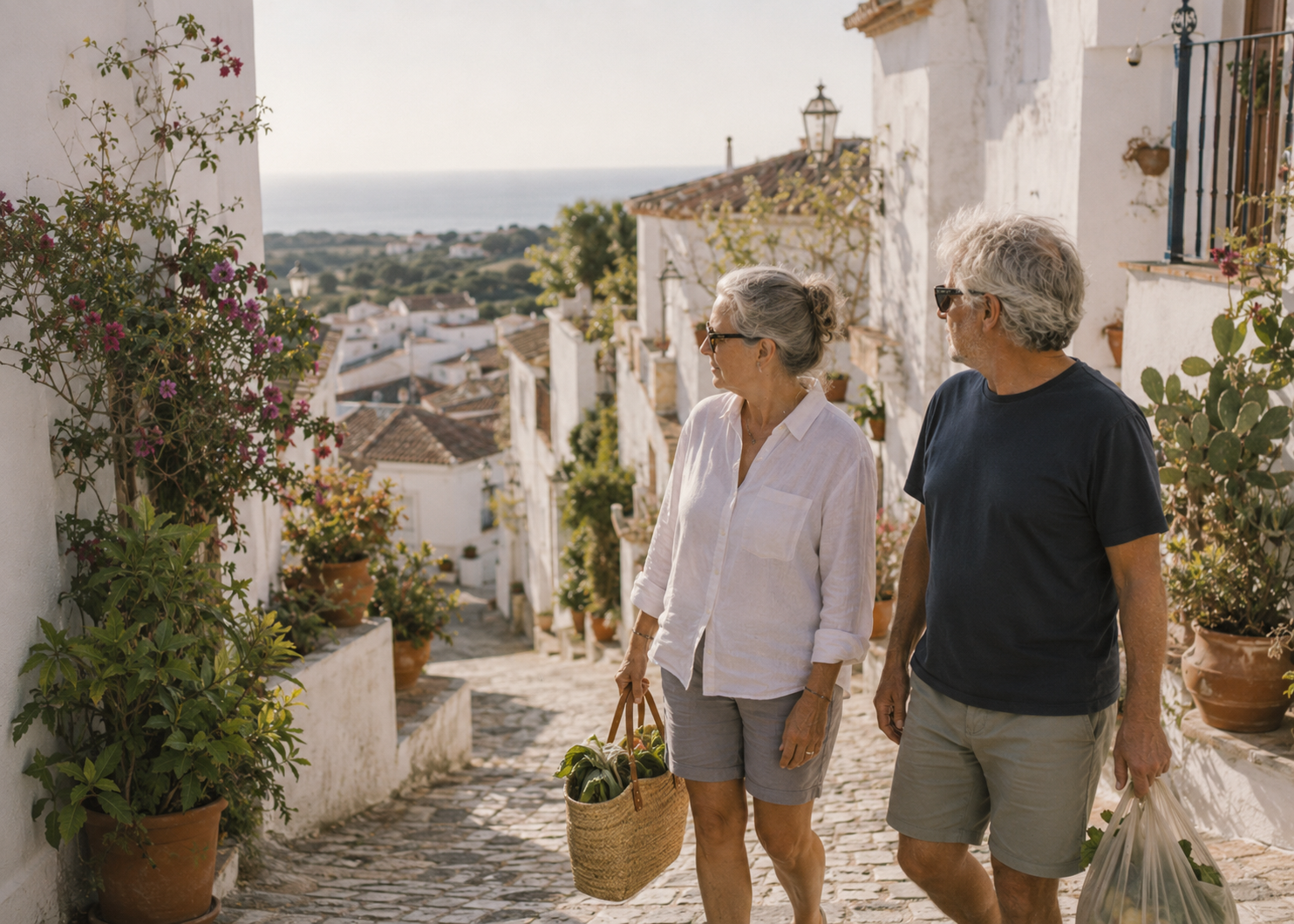
After the coffee, before the heat, they walk down into the town, and the walk is woven with the small human connections that make the place home.
When the coffee is done they walk down the hill into the town, in the still-cool morning, to buy the day’s bread and to pick up a few things, the walk itself a pleasure, the white streets, the flowers, the morning light, the gentle descent into the waking town. Along the way they greet people, the neighbors, the shopkeepers, the familiar faces of a small town where, after years, they are known, the morning walk woven with small human connections, the greetings and the brief chats in their now-decent Portuguese, the sense of belonging to a place and being known in it. This belonging, built over years of these morning walks and small interactions, is one of the deepest rewards of the life, the transformation from strangers to known members of a community, the morning walk being the daily renewal of that belonging.
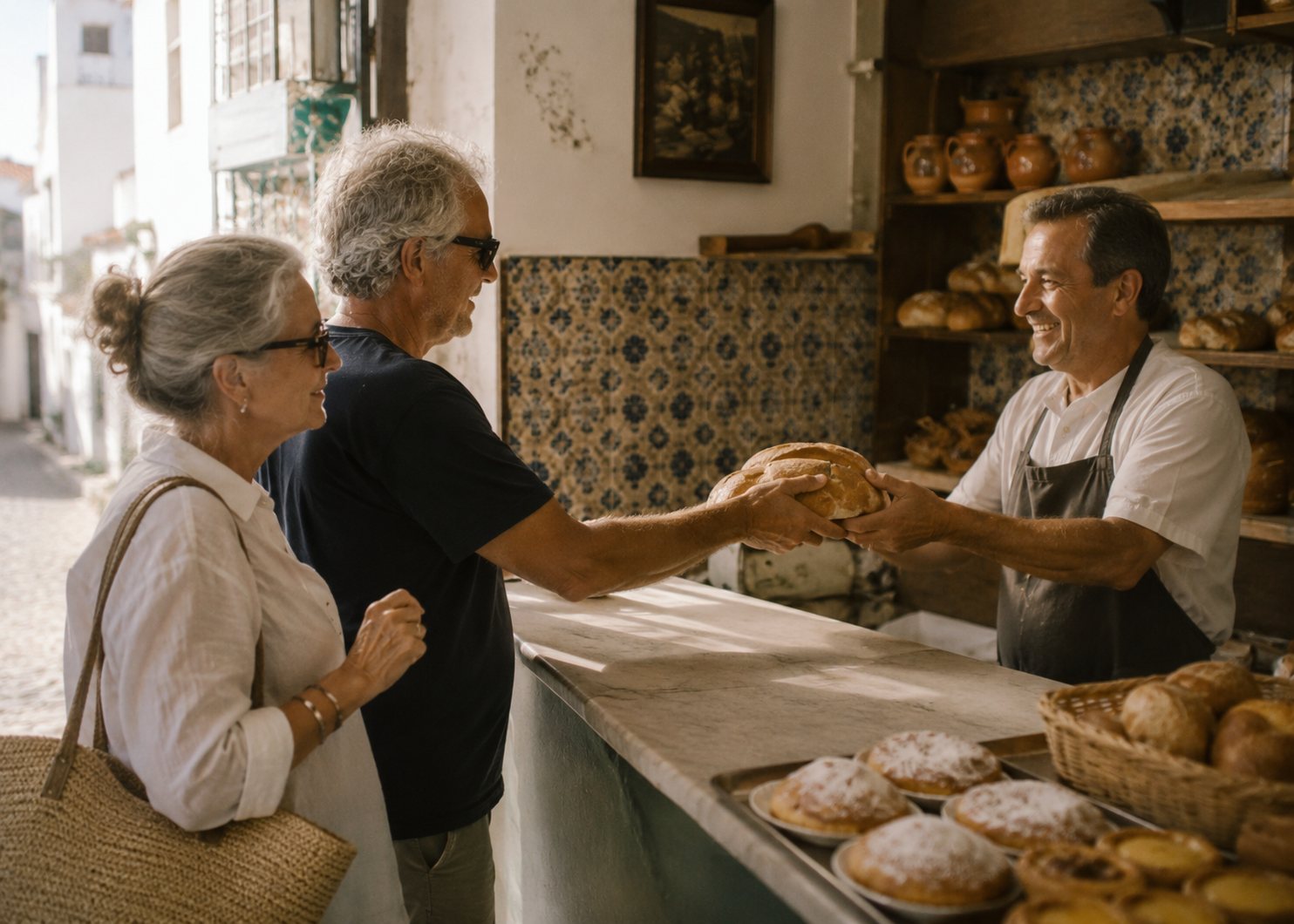
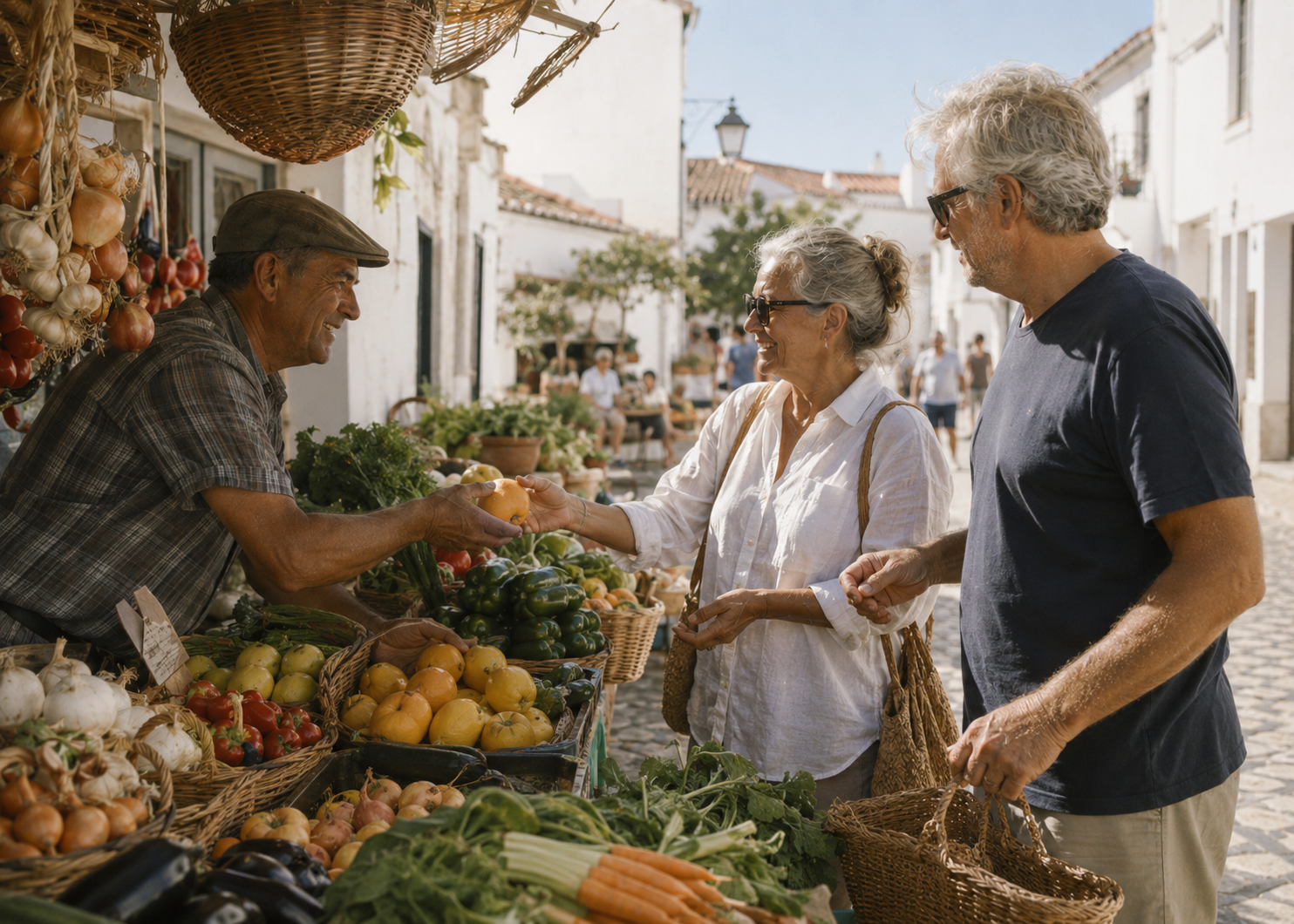
They stop at the bakery for the fresh morning bread, at the small market for fruit and vegetables, the daily shopping done on foot and in person, in the human, unhurried, connected way of the small town, so different from the car-and-supermarket anonymity of their American life. These small daily errands, done on foot, with greetings and chats and the buying of fresh food from people they know, are not chores but pleasures, the human texture of the morning, the connection and the freshness and the unhurried pace making the daily shopping a joy rather than a task. The walk down to the town, the bread, the market, the greetings, is the morning’s gentle engagement with the world and the community, the daily woven connection that makes the Algarve not just a beautiful place to live but a home where they belong.
Back Up The Hill, And The Late Breakfast
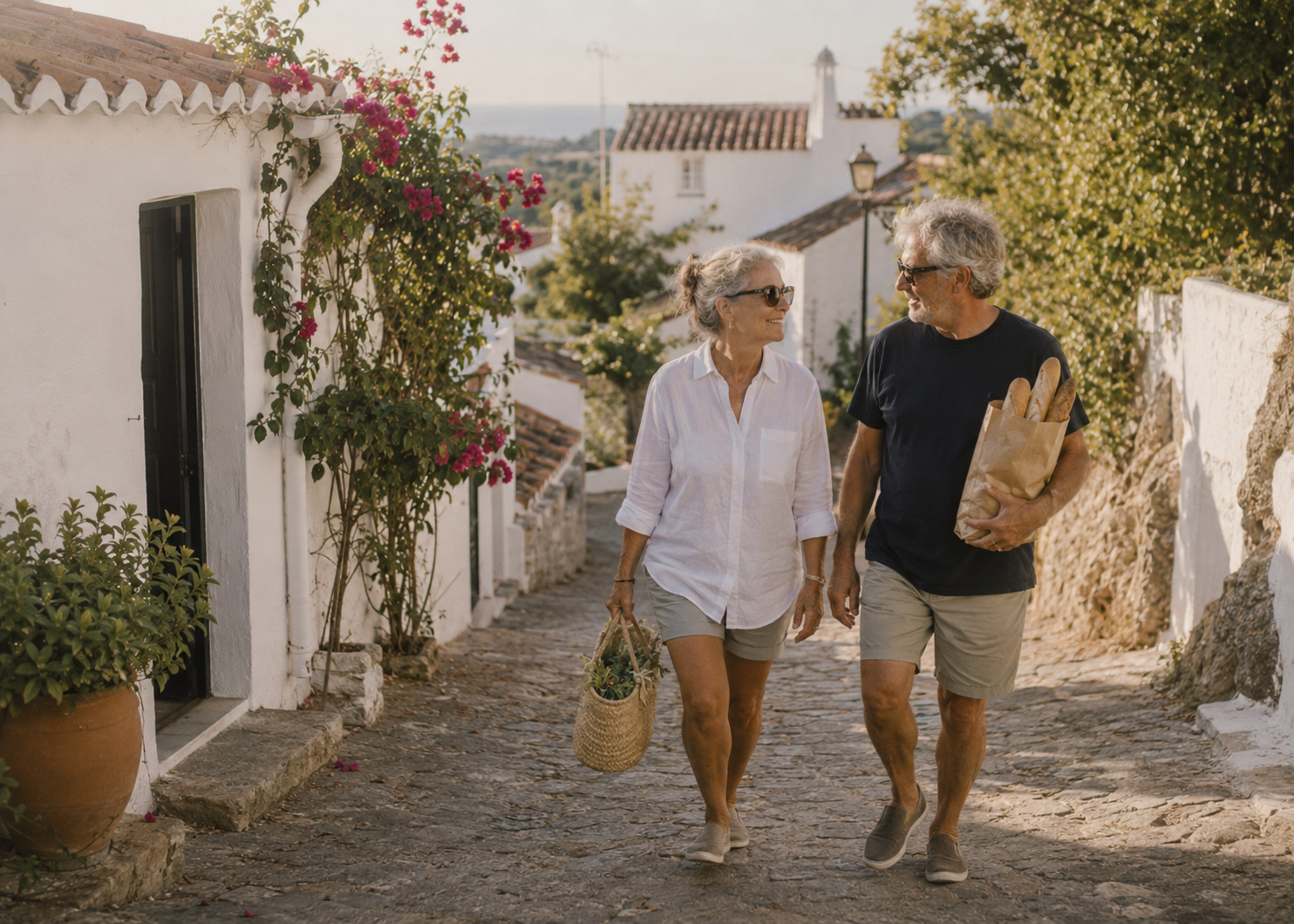
They climb back up the hill with the morning’s shopping and make a slow late breakfast, eaten on the terrace as the day warms.
The walk back up the hill is a little warmer now, the sun higher, the cool of the early morning beginning to give way to the heat of the day, the climb gentle exercise woven naturally into the day rather than a workout sought out. Back at the house they make breakfast, a slow late breakfast of the fresh bread and the fruit and good things, eaten on the terrace as the morning warms, another unhurried shared meal in the open air, the second leisurely ritual of the morning. This late slow breakfast, fresh and unhurried and shared in the warming air, is another of the small daily pleasures that the life is made of, the kind of meal they rarely had time for in their working years now an ordinary part of the day.
The breakfast is simple but good, the fresh bread from the bakery, the local fruit, perhaps some cheese or eggs, good coffee, the simple wholesome food of the place eaten slowly in the morning air, the simplicity and freshness and unhurried pleasure being the point. They eat and talk and watch the day brighten, in no hurry, the breakfast unfolding at the same gentle pace as the rest of the morning, the slow shared meal being another small daily emblem of the unhurried connected life they have built. By the time breakfast is done the morning is warm and the day is fully arrived, the gentle early hours having given way to the warmth of the Algarve summer day, the morning’s rituals complete.
What The Morning Costs, And What It Is Worth
It is worth pausing on what a morning like this actually costs, since the affordability is part of what makes it possible.
A morning like this, the good coffee, the fresh bread and fruit, the beautiful surroundings, the unhurried pleasure, costs remarkably little, since the Algarve, for all its beauty, remains affordable, the fresh food cheap, the cost of living low by American standards, the beautiful life accessible on a modest retirement income. This affordability is part of what makes the life possible, the morning’s simple pleasures, the fresh food and the good coffee and the beautiful place, being available cheaply, the low cost of living meaning a modest income stretches to a rich life, the affordability and the beauty together making the Algarve such a draw for the American retiree. The morning costs little in money, the richness coming from the place and the pace and the connection rather than from expense.
What the morning is worth, by contrast, is hard to measure, since the peace, the beauty, the unhurried togetherness, the belonging, the ownership of one’s own time, are worth a great deal to the people living them, the value of the morning being in the quality of life it represents, far exceeding its small cost. This is the real equation of the Algarve retirement, the small cost and the great worth, the modest money buying a morning, and a life, of peace and beauty and connection that would be priceless and largely unavailable in the rushed expensive American life they left. The morning costs little and is worth much, the gap between the two being the essence of why the move makes sense, the affordable beautiful unhurried life being the genuine bargain of the Algarve retirement.
The Morning As A Window Into The Life
This single morning is finally a window into the whole life, and what it reveals is worth drawing out.
The morning, the quiet early waking, the slow terrace coffee, the walk into the town, the greetings and the fresh bread, the late breakfast in the warming air, is a window into the whole shape of the Algarve retired life, unhurried, beautiful, connected, affordable, owned, the qualities of the morning being the qualities of the life. What the morning reveals is that the value of this retirement is not in any single grand thing but in the texture of the ordinary days, the unhurried pace, the small daily pleasures and rituals, the human connection and belonging, the beauty as a constant backdrop, the ownership of one’s own time, the life being made of mornings like this one, day after day. The morning is the life in miniature, and it is lovely.
For the American considering whether to retire abroad, to the Algarve or elsewhere, this is finally what is worth imagining, not the abstractions of cost and visa, important as those are, but the texture of the actual days, the question of what the mornings would feel like, since it is in the ordinary mornings that the life is really lived and its value really found. The Algarve morning, unhurried and beautiful and connected and affordable, is what the move can deliver, the daily reality behind the dream, and imagining it honestly, the slow coffee and the walk and the bread and the belonging, is the truest way to understand what retiring to such a place might actually mean. The life is made of mornings, and the Algarve mornings, for those who have found them, are very good ones indeed.
What Came Before This Morning
To understand the morning fully, it helps to remember the mornings it replaced, since the contrast is part of its meaning.
The mornings this couple lived for thirty years before the Algarve were the ordinary American working mornings, the alarm in the dark, the rushed coffee, the commute through traffic, the day of work already pressing before it began, the mornings a thing to get through rather than to savor, the stress beginning before the sun was properly up. Those mornings were not bad lives, they were ordinary good American working lives, but they were rushed and pressured and owned by the schedule rather than by the people living them, the mornings in particular being a daily small ordeal of haste and demand, the opposite in almost every way of the Algarve morning that has replaced them. The contrast between the rushed American working morning and the unhurried Algarve retired one is the measure of what the move has changed.
This contrast is part of why the Algarve morning is so treasured, since it is experienced against the memory of the mornings it replaced, the peace all the sweeter for the remembered rush, the ownership of time all the more precious for the years it was surrendered to the schedule. The couple do not take the morning for granted precisely because they remember the other kind, the rushed pressured mornings of the working years, so the slow coffee and the unhurried walk and the peace are savored as the hard-won opposite of what came before, the morning a daily quiet victory over the rush that once ruled their days. Remembering what came before is part of what makes the morning meaningful, the Algarve peace being not just pleasant in itself but redemptive against the remembered pressure, the reward of a life reshaped, the mornings reclaimed at last.

About the Author: Ruben, co-founder of Gamintraveler.com since 2014, is a seasoned traveler from Spain who has explored over 100 countries since 2009. Known for his extensive travel adventures across South America, Europe, the US, Australia, New Zealand, Asia, and Africa, Ruben combines his passion for adventurous yet sustainable living with his love for cycling, highlighted by his remarkable 5-month bicycle journey from Spain to Norway. He currently resides in Spain, where he continues sharing his travel experiences with his partner, Rachel, and their son, Han.